We’ve all seen the horror stories on Reddit. You know the ones: upperclassmen warning that the Bar Exam is a different challenge entirely, a grueling marathon that makes 1L look like a warm-up. Most students react to this fear by retreating into what feels safe: highlighting thousands of pages of outlines and re-watching hours of lecture video.
But here’s the cold, hard truth: passive reading won’t pass the Bar.
To actually master the mountain of material required to get that "Pass" notification, you have to stop being a consumer and start being a producer. You need to implement active recall for bar exam prep.
In this guide, we’ll look at why your current study habits might be lying to you and how to pivot to high-intensity retrieval practice that actually sticks.
The Passive Reading Trap: Why Highlighters Won’t Save You
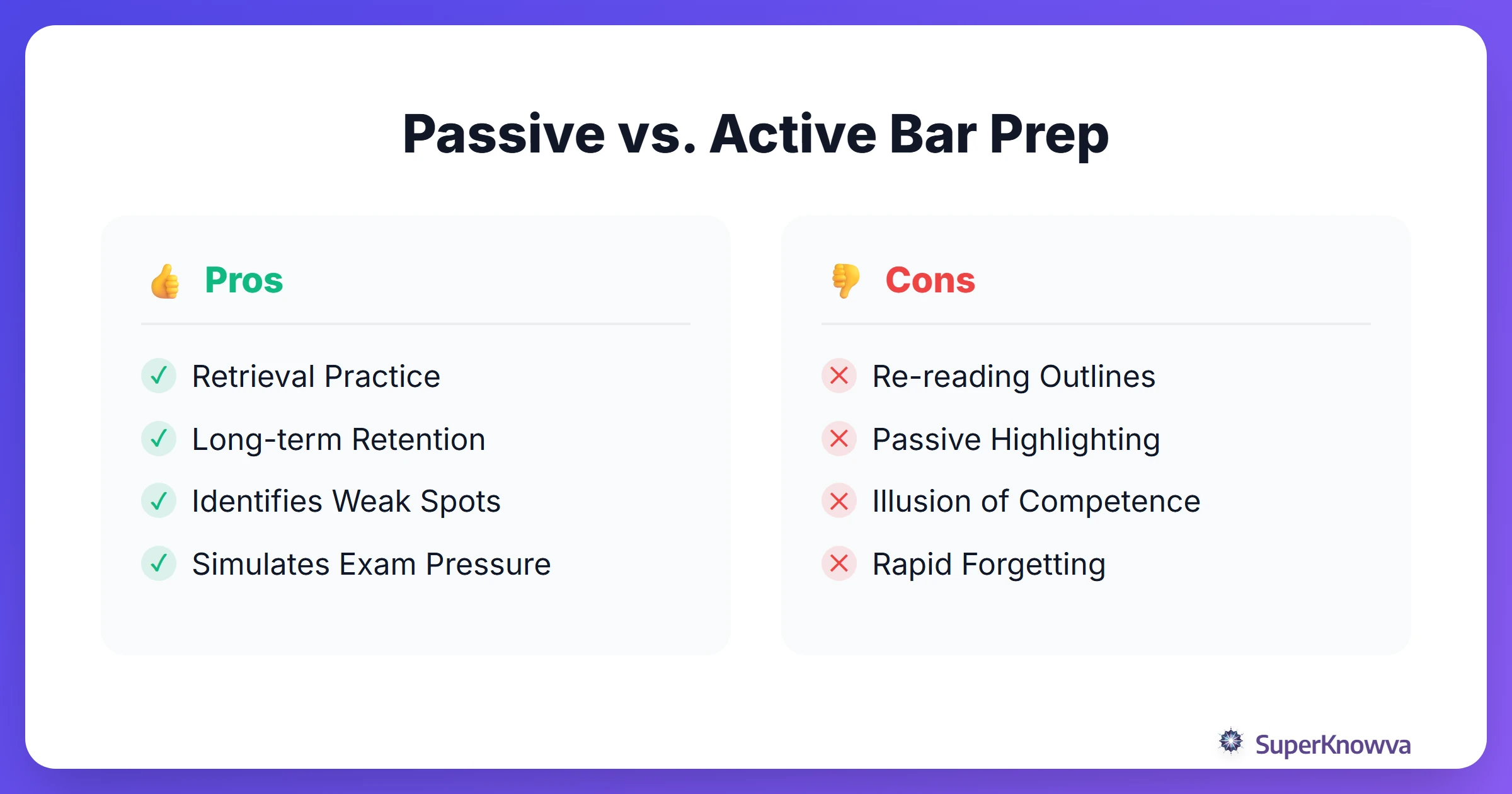
It feels productive, doesn't it? Sitting at your desk for eight hours, dragging a neon yellow highlighter across a 100-page outline on Evidence. Psychologists call this the "illusion of competence." Because the information is right there in front of you, your brain recognizes it. You feel like you know it.
But there is a massive, dangerous gulf between passive recognition (identifying a rule when you see it) and active production (pulling a rule out of thin air under exam pressure).
The Multistate Bar Exam (MBE) and the Multistate Essay Exam (MEE) don't care if you recognize the law. They demand that you retrieve complex legal doctrines instantly. If you haven't practiced that specific act of retrieval, your brain will likely freeze the moment the clock starts ticking.
Defining Active Recall for Legal Concepts
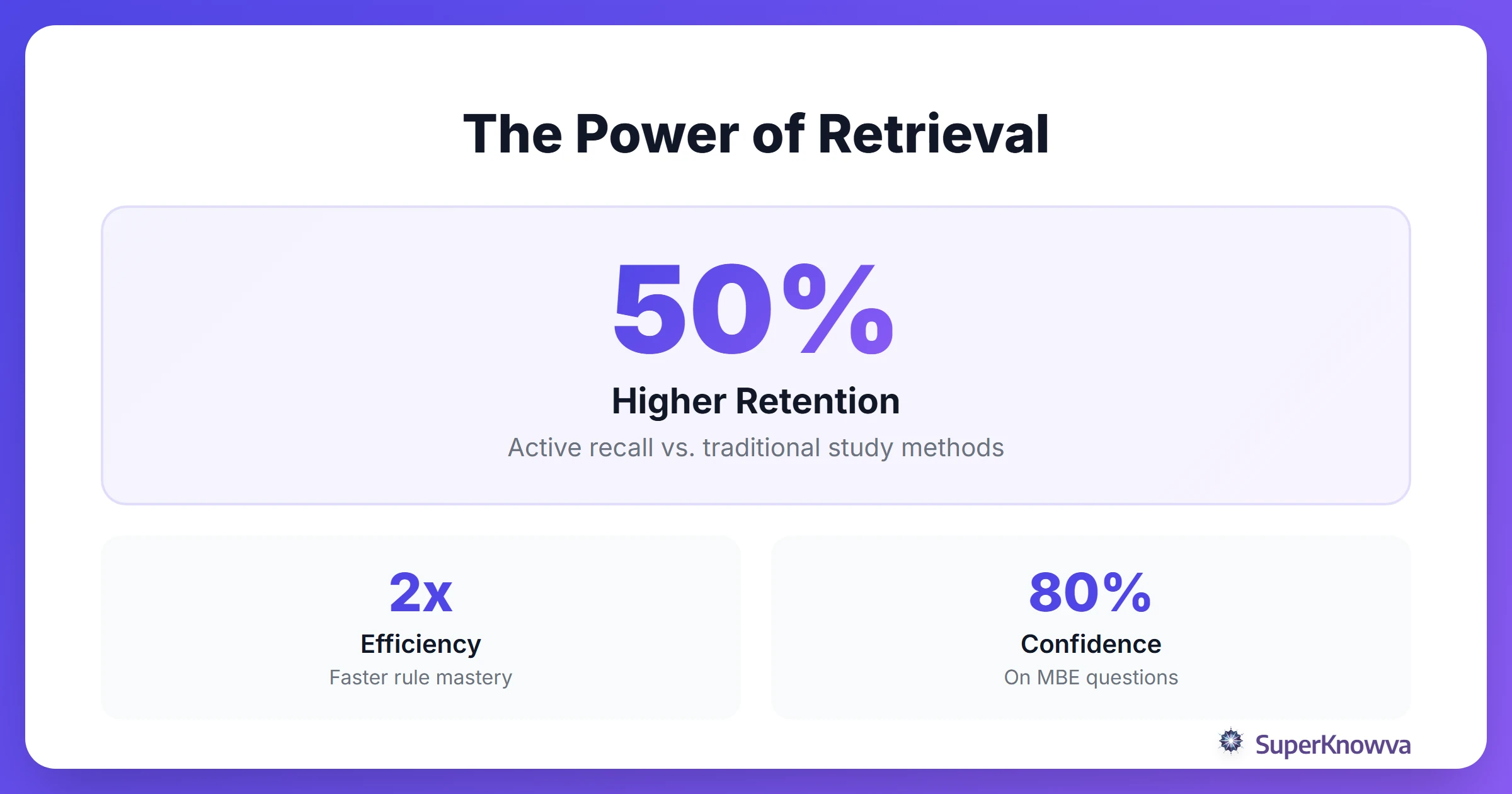
At its core, active recall is the act of forcing your brain to retrieve information from memory without looking at your notes. Think of it as a bicep curl for your brain. Every time you struggle to remember a rule, you are physically strengthening the neural pathways associated with that information.
This process is the secret sauce for the neuroscience of memory consolidation, turning short-term exposure into long-term mastery.
Active recall is uniquely suited for memorizing black letter law. Unlike a philosophy seminar where you might ponder the "why" of a statute, the Bar Exam demands you know exactly what the rule is. By using retrieval practice, you move past "getting the gist" and start mastering the precise elements required to score points.
The QList Method: Rule Reconstruction
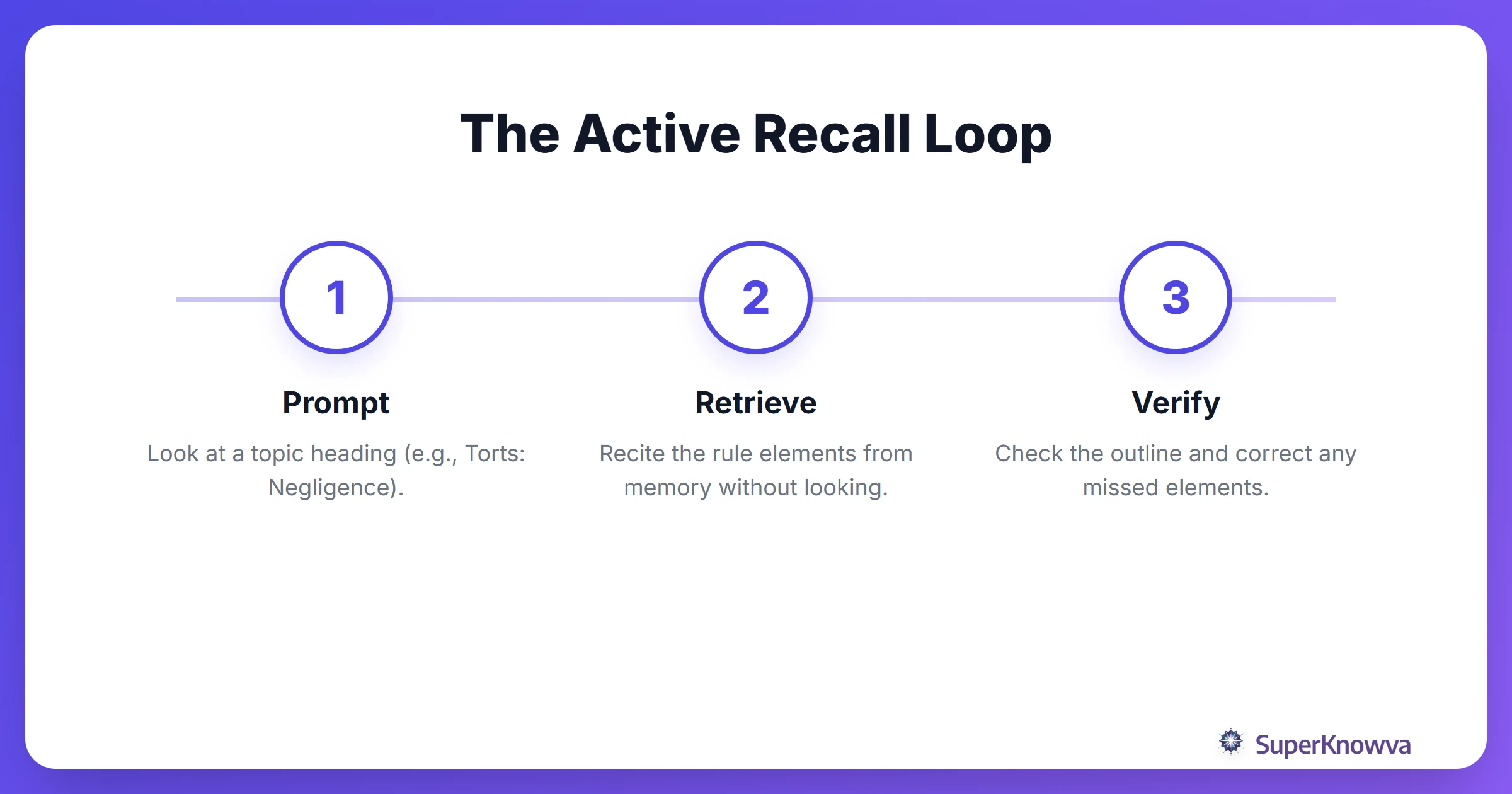
One of the most effective bar exam study strategies is the QList method. It’s simple: instead of reading a rule and moving on, you transform every major legal doctrine into a question-and-answer challenge.
- The Prompt: Read a rule (e.g., the requirements for a valid dying declaration).
- The Reconstruction: Close your eyes or look away from the page.
- The Execution: State the rule out loud in a complete, verbal sentence.
If you stumble or miss an element, don’t just shrug it off. That’s a "knowledge gap." You must immediately look back at the source material, re-read the specific element you missed, and attempt the recall again. This creates an immediate feedback loop that is far more punishing and effective than traditional review. For more structured systems, some students utilize the QList Active Recall System to organize their rule statements.
The Blurting Method for Bar Exam Rule Statements
Struggling with massive sub-topics like Hearsay or Adverse Possession? It’s time to use the blurting method for active recall. This technique is a favorite in the Reddit discussion on active learning for the bar.
How to "Blurt" for the Bar:
- Step 1: Spend 15 minutes reading a specific sub-topic in your outline.
- Step 2: Close the book. Take a blank sheet of paper and "blurt" out everything you remember: definitions, elements, exceptions, and even case names.
- Step 3: Open your outline and use a red pen to fill in what you missed.
Those red marks are your roadmap. They show you exactly where your memory failed, allowing you to stop wasting time on what you already know and focus your energy where it actually matters.
Leveraging AI for Instant Active Recall Quizzing
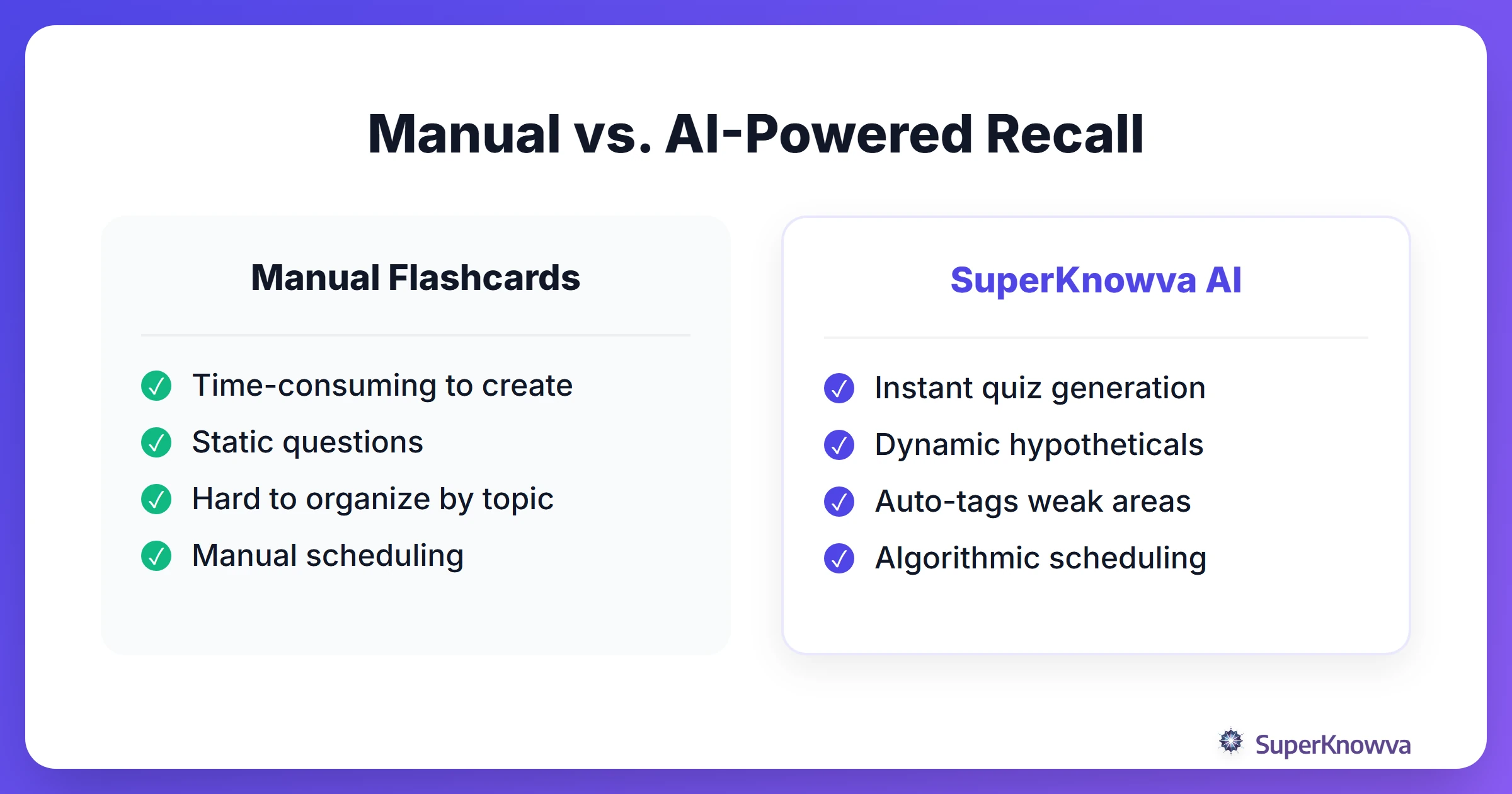
The biggest hurdle to active learning bar prep is the time required to create study materials. Manually writing flashcards for every Torts and Contracts rule can take weeks, which is time you do not have. This is where AI bar exam prep streamlines the process.
With SuperKnowva, you can transform static outlines into dynamic, interactive study sessions. Instead of you doing the manual labor, AI can instantly generate:
- Rule-based Quizzes: Upload your outline and have the AI quiz you on specific rule elements.
- Dynamic Hypotheticals: Don't just memorize the rule; ask the AI to generate a "hypo" to see if you can actually apply it to a new set of facts.
- Essay Feedback: Paste your practice rule statements into the AI to see if you’ve included all the "buzzwords" required by bar examiners.
Combining Active Recall with Spaced Repetition
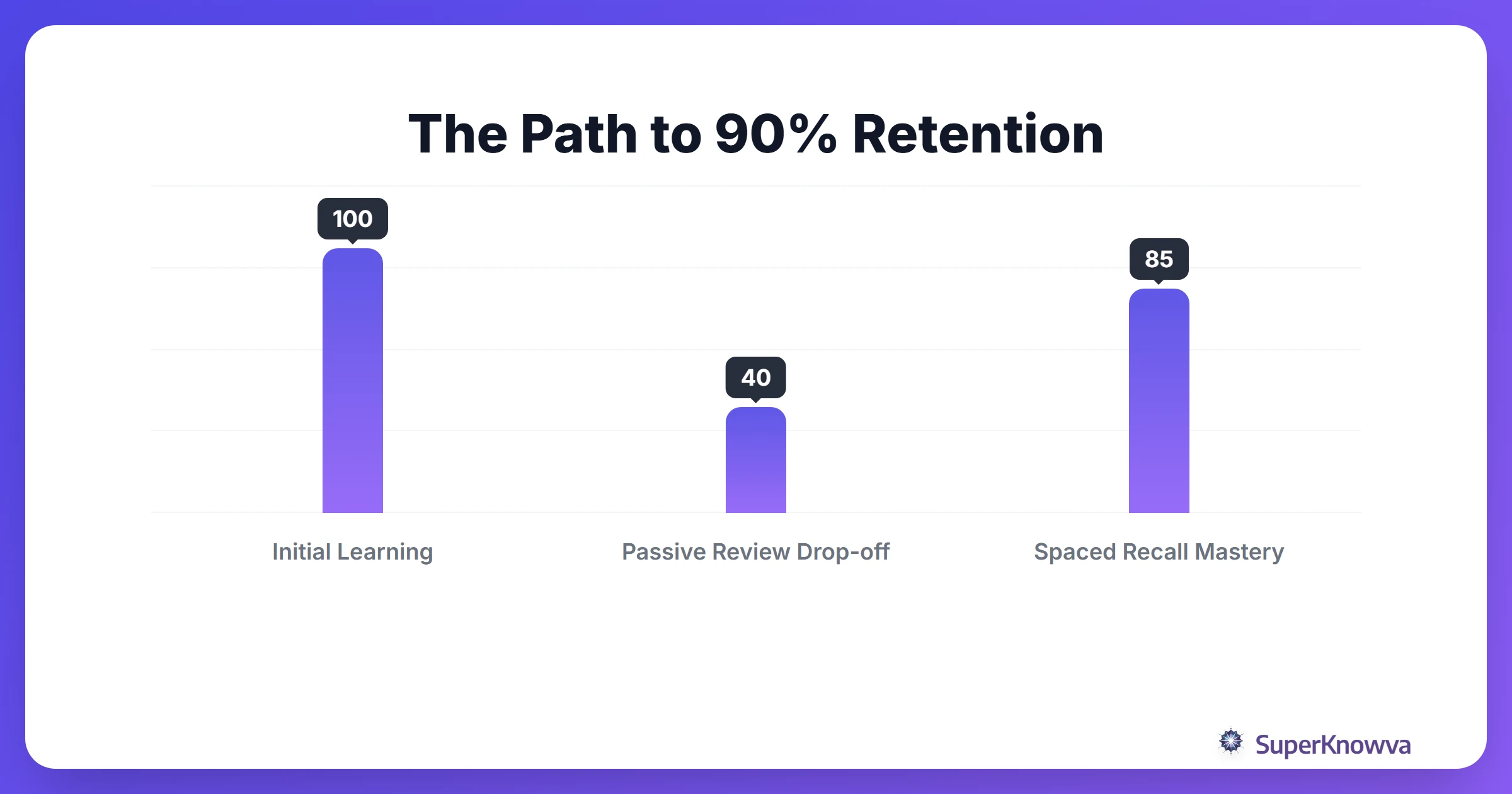
Memorizing a rule today doesn't mean you'll remember it on exam day. The "Forgetting Curve" is a brutal reality of a 10-week bar prep schedule. To beat it, you must pair active recall with spaced repetition legal rules.
Don't "cram" Property in week two and never look at it again until week nine. You have to revisit those concepts at increasing intervals. You might also use interleaving practice to mix different subjects, such as doing five Torts questions followed by five Criminal Law questions, to improve retention.
If a concept just won't "stick," try the Feynman Technique. Explain the rule out loud as if you were teaching it to someone with no legal background. If you can’t explain it simply, you don’t know it well enough yet.
Your Daily Active Recall Bar Prep Schedule
Ready to stop the passive scrolling? Here is how to structure a high-performance study day:
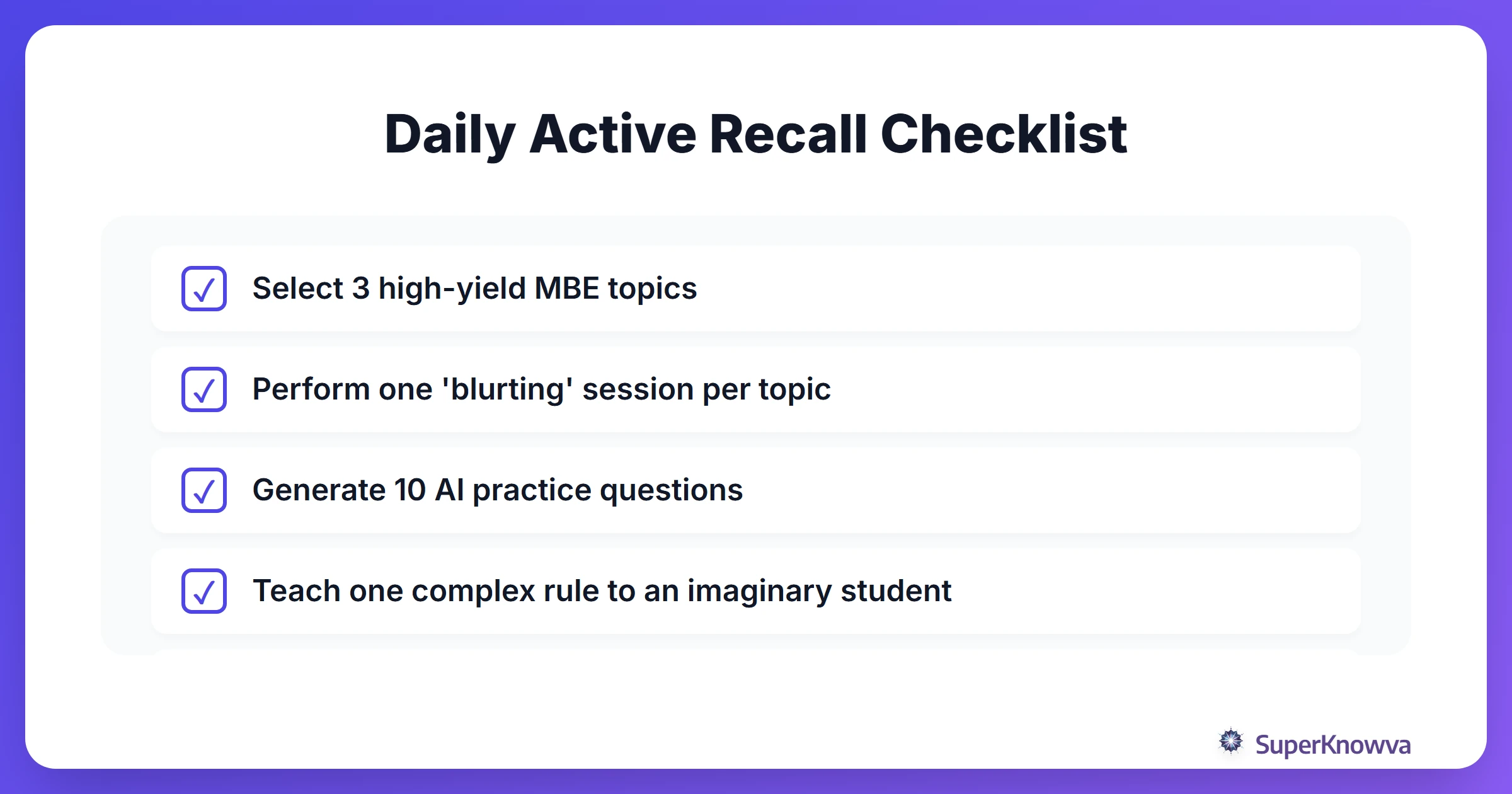
- Morning (High-Intensity): Start with 30-50 MBE practice questions. Follow this with a "blurting" session on the rules you missed. Your brain is freshest now. Use it for the most difficult tasks.
- Afternoon (Gap Filling): Use AI to generate quizzes on your weakest subjects. Focus on rule reconstruction and teaching complex concepts out loud.
- Evening (Light Review): Review your "missed" rules from the morning. Plan which 3-5 high-yield topics you will target for active recall tomorrow.
Conclusion
The Bar Exam isn't a test of how many pages you can read; it’s a test of how much law you can accurately retrieve and apply when the pressure is on. By walking away from the highlighters and embracing active recall for bar exam success, you’re giving yourself the best possible shot at passing the first time.
Stop reading and start recalling. Your future legal career starts with what you can remember today.