Ask any doctor about their medical training, and they will likely point to one specific nightmare: the USMLE Step 1. For decades, the path to a residency spot was paved with coffee-stained copies of First Aid and the relentless grind of 40-question blocks. But the game has changed. With the exam moving to pass/fail, the pressure hasn't disappeared; it has shifted. It's no longer about just surviving the volume; it’s about achieving deep, conceptual mastery.
That’s where AI tutors for USMLE prep come in.
We’re moving past the age of static textbooks and one-way lectures. Today’s USMLE Step 1 AI study tools are turning the way students synthesize pathology, pharmacology, and physiology upside down. They ensure you aren't just memorizing facts to pass a test, but actually building the clinical reasoning skills you'll need at the bedside.
The Evolution of USMLE Step 1 Preparation
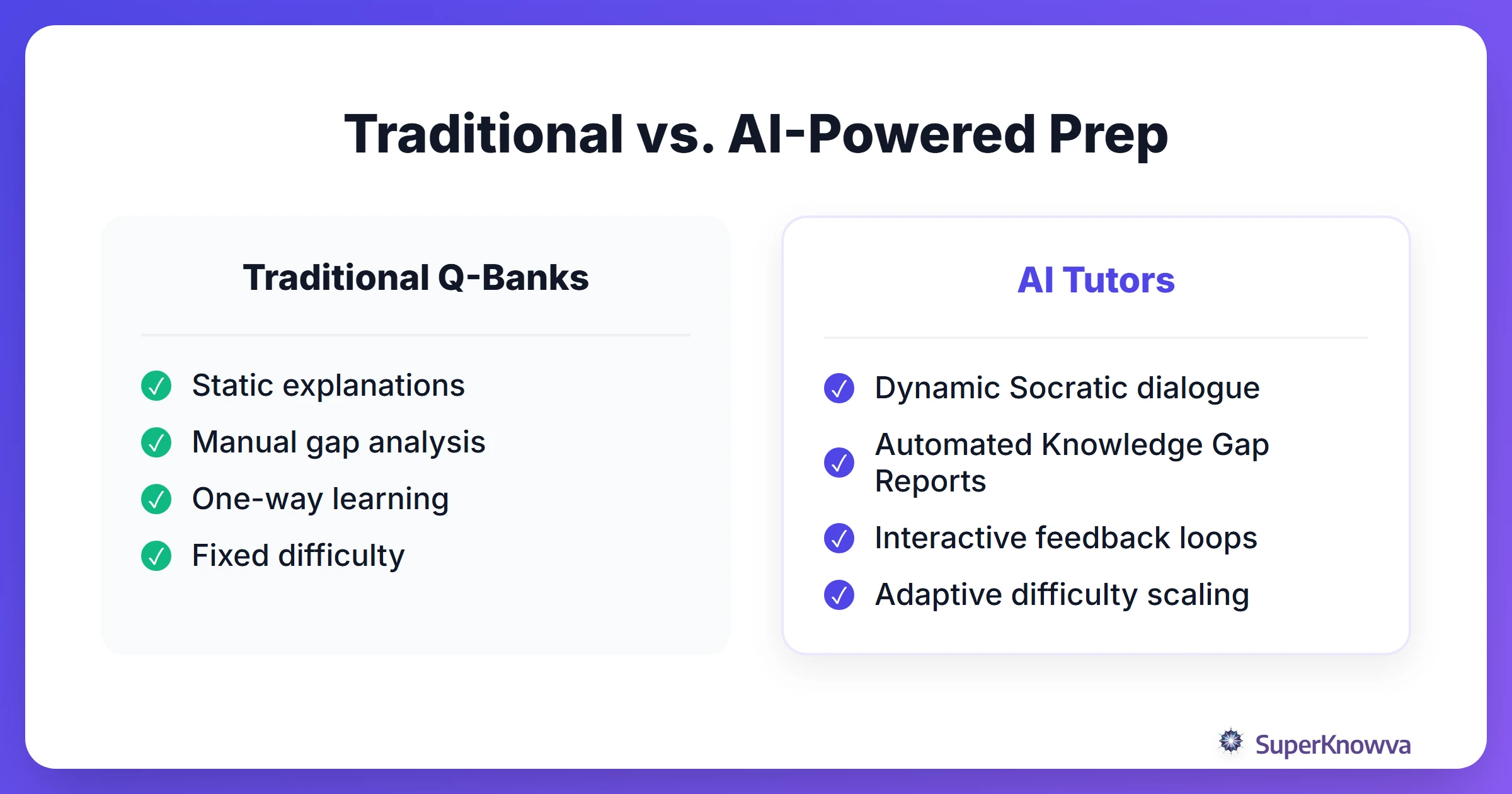
Historically, Step 1 prep felt like a marathon of passive reading. You’d highlight your review books until the pages were translucent, praying the information would somehow stick through osmosis. Then came the Q-bank era. Question banks introduced active recall, which was a massive leap forward. But even the best Q-banks have a ceiling. They can tell you what you got wrong, but they rarely help you untangle the "why" behind your specific logic.
We’ve officially entered the era of the "AI Co-Pilot."
Instead of studying in a vacuum, you can now use an ultimate guide to AI-powered preparation to turn a lonely study session into a dynamic conversation. This isn't just another resource to consume; it’s an interactive dialogue that helps you manage the sheer mountain of information required for the boards.
The Socratic Method: How AI Tutors Mimic Human Interaction
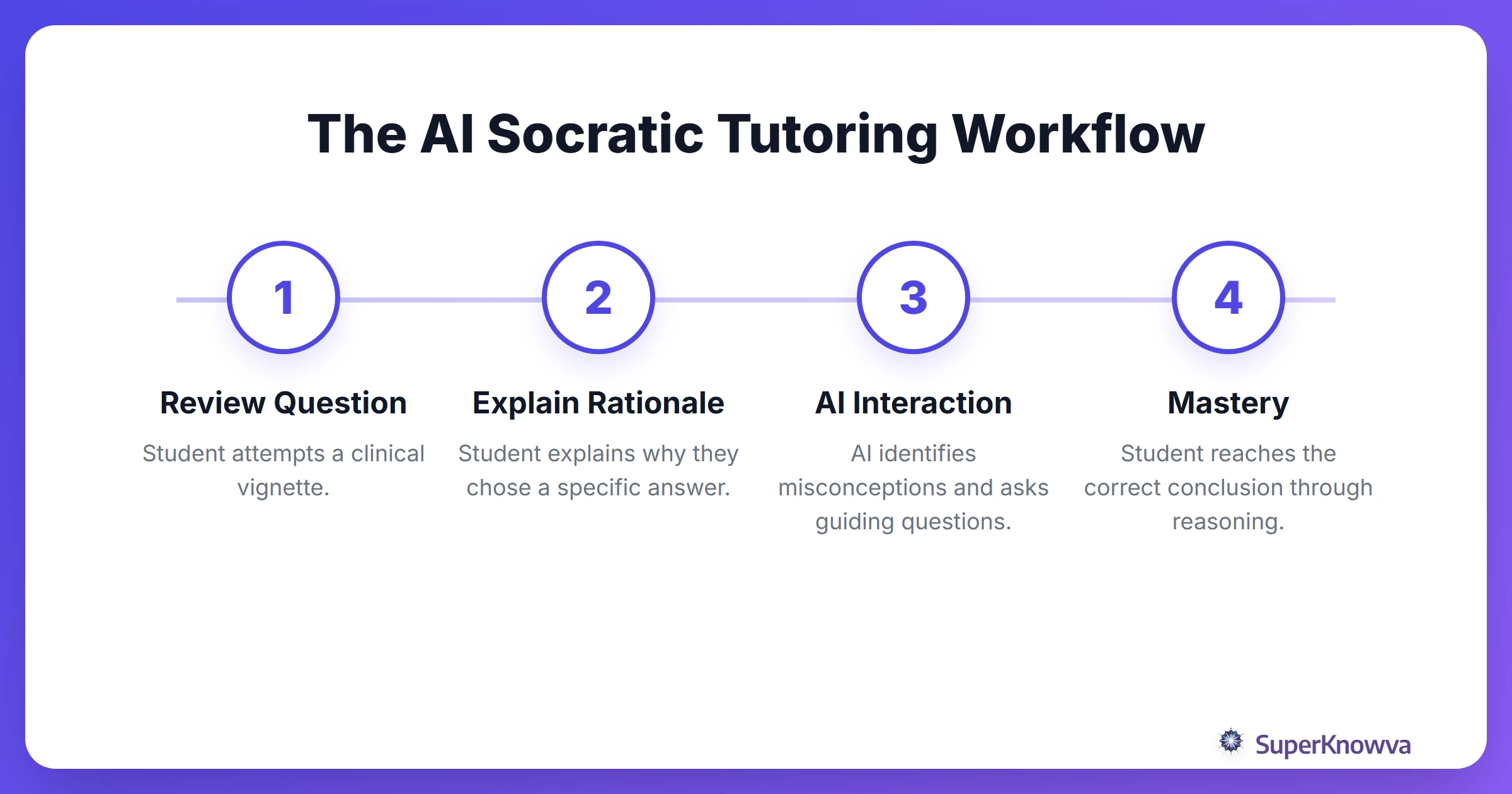
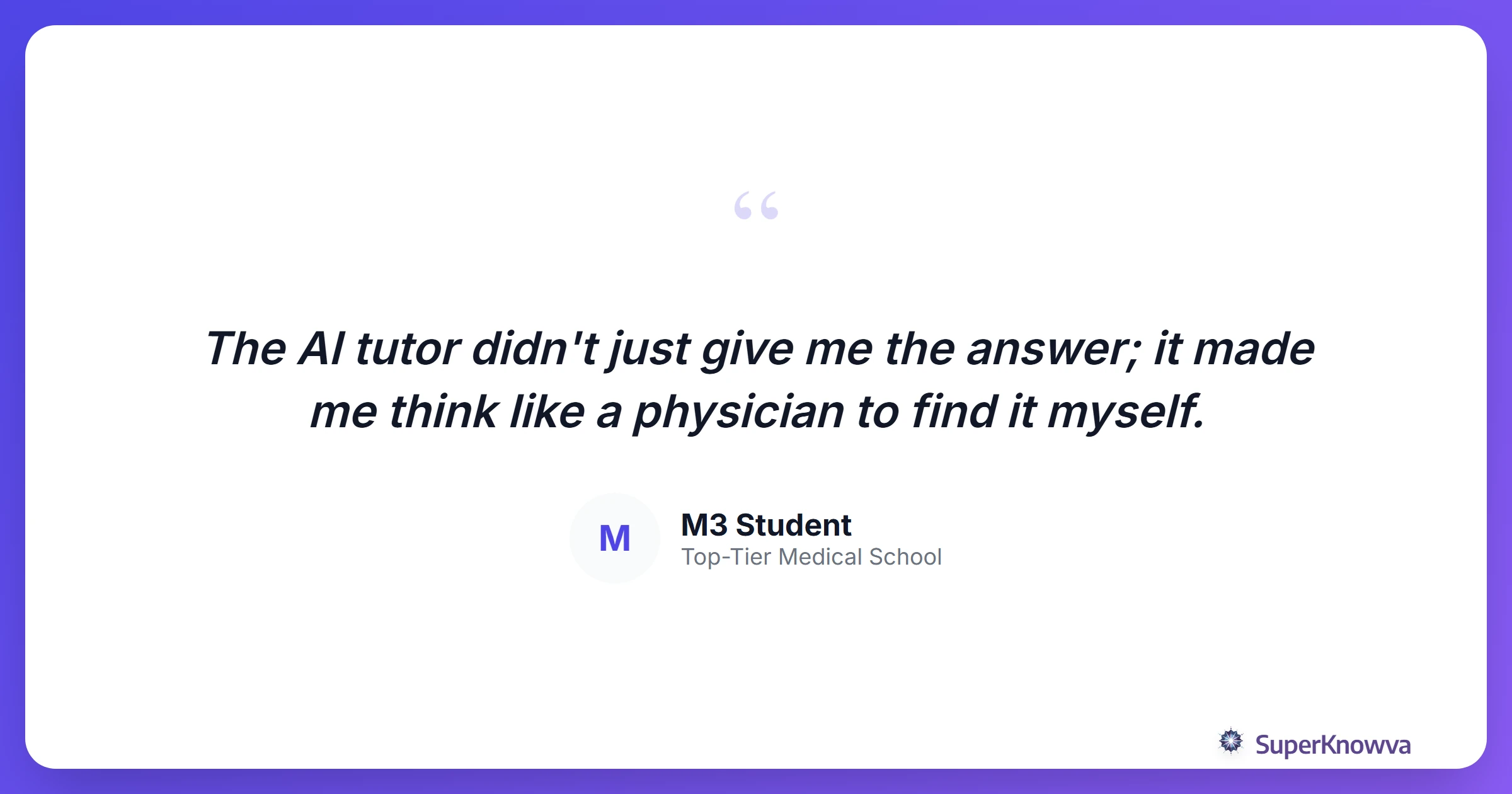
The best teachers don't just give you the answer; they lead you to it. This is the core of Socratic tutoring for USMLE. If you’re staring at a complex cardiology vignette and you’re stuck, a high-quality AI tutor (like the Elite AI Tutor Co-Pilot) won't just dump a paragraph of text on you. It probes.
- Guided Discovery: The AI might ask, "If the patient has a mid-systolic click, what does that tell you about the valve's structural integrity?"
- Clinical Reasoning: It forces you to link the murmur to the underlying pathophysiology before you ever see the diagnosis.
- Active Engagement: This feels exactly like being "pimped" on rounds, but without the public embarrassment. It’s a safe space to be wrong until you’re right.
Real-Time Diagnostic Insights and Knowledge Gap Reports
The hardest part of Step 1 prep? Knowing what you don't know. Traditional metrics give you a percentage score, such as a 65% in Renal. Great. But what part of Renal? Is it the electrolytes? The acid-base disorders? Or the histological nuances of glomerulonephritis?
Modern AI tools provide AI diagnostic insights medical students can use to surgically target their weaknesses.
Through Knowledge Gap Reports (KGR), the AI analyzes your thought process. If you consistently mix up the "starry sky" appearance of PSGN with the "crescents" of RPGN, the AI catches that pattern. This level of personalized medical board prep means you stop wasting time on the organ systems you’ve already mastered and start focusing on the data-driven gaps in your knowledge.
Personalized Feedback Loops for Clinical Reasoning
To pass Step 1 today, you must move beyond rote memorization to clinical application. AI tutors provide immediate feedback. When you explain your rationale for an answer, the AI evaluates your logic. If your reasoning is flawed, even if you chose the correct answer, the AI corrects the misconception.
This personalized feedback for USMLE success ensures your "lucky guesses" become concrete knowledge. By fixing these micro-errors during your daily practice, you build the stamina and precision needed to survive an eight-hour exam day.
Integrating AI Tutors with Traditional Resources
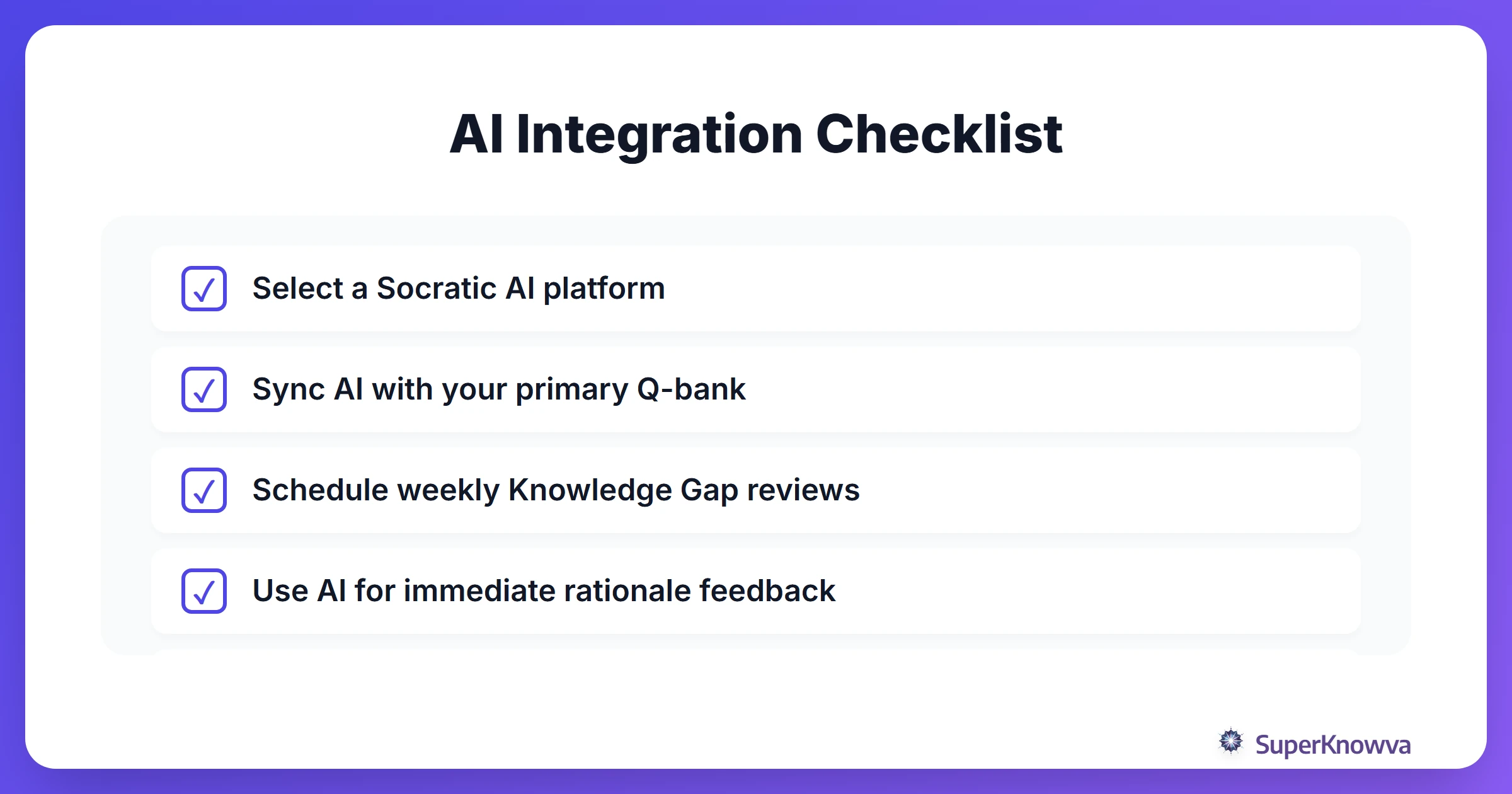
Let’s be clear: AI isn't here to replace the gold standards. It’s here to amplify them. You’re still going to use UWorld, Kaplan, and Amboss. Think of the AI tutor as the connective tissue between those resources.
- Supplementing Q-Banks: Use AI to analyze a UWorld explanation that just isn't clicking.
- Maximizing Courses: If you're in a prep course, use AI to clarify lecture points the moment they get confusing.
- Cohesive Integration: Platforms like the Elite Medical Prep AI Tutor help you synthesize information across every platform you use.
Not sure where to start? Check out our breakdown of the best AI-powered question banks for USMLE to find the right fit for your workflow.
The Logistics of 24/7 On-Demand Tutoring
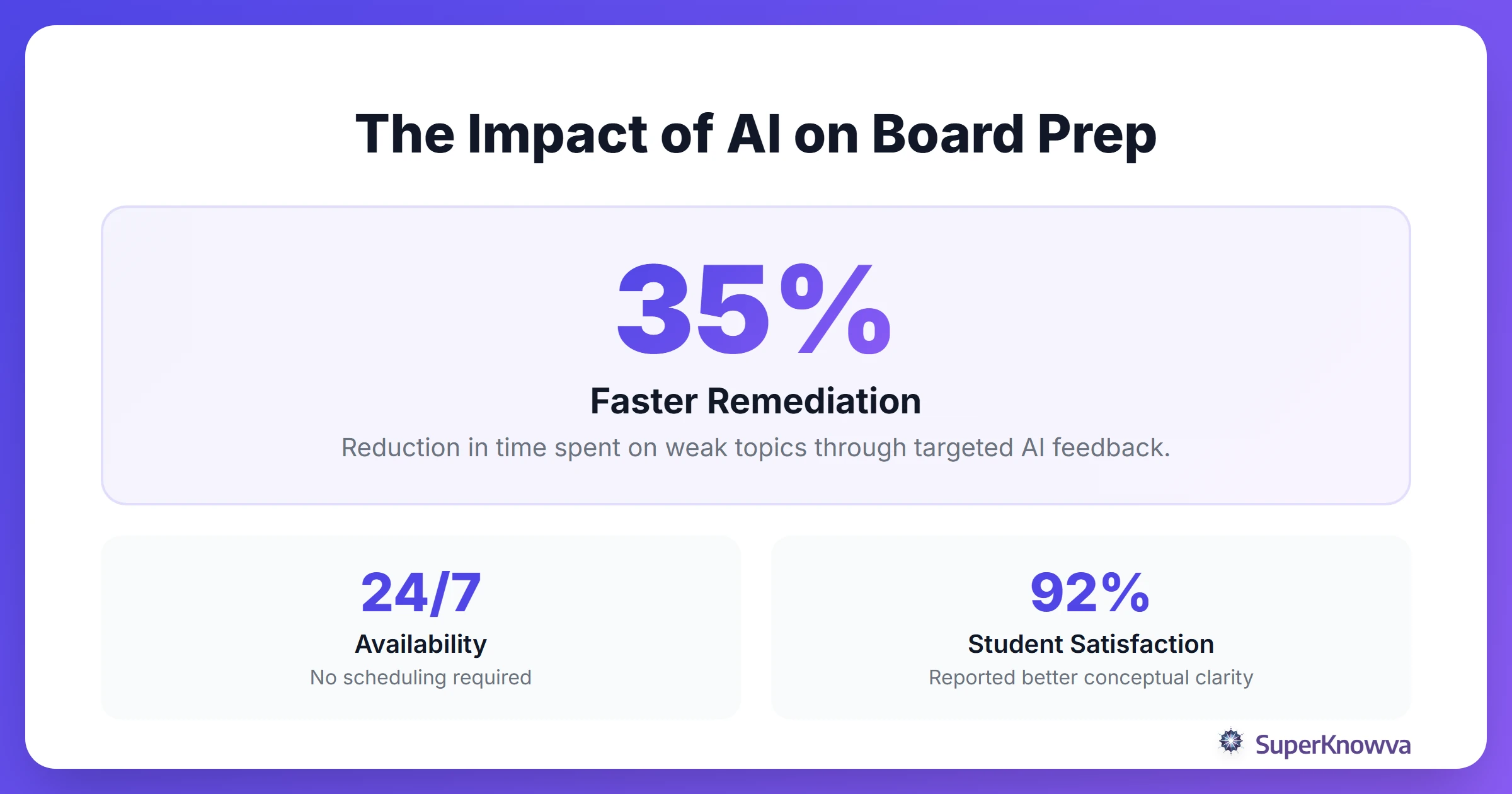
Human tutors are incredible mentors, but they’re also expensive and have lives of their own. A medical school AI tutor doesn't care if it’s 3:00 AM and you’re having a breakdown over the brachial plexus. It’s there.
Scalability makes high-level tutoring accessible to every student, regardless of their budget. It prevents getting stuck on one concept and losing hours of productivity. With AI, you get the answer and the logic when you need it.
The Future of Medical Licensing Exams and AI
Step 1 is just the beginning. We’re already seeing AI become a staple for Step 2 CK and Step 3, where the focus shifts even more toward clinical management.
As you move into residency, the ability to use AI to quickly synthesize new research and clinical guidelines will be a mandatory skill. Adopting these tools now doesn't just help you pass the boards; it trains you for the future of digital medicine. For a look at how the industry is shifting, check out the Kaplan AI Tutor for USMLE Step 1 initiatives.
Final Tip: Don't wait for your dedicated study period to start using AI. Integrate it into your M1 and M2 curriculum now. Build a foundation so solid that when Step 1 finally rolls around, it feels like just another day at the desk.