Becoming a licensed attorney is a marathon. You’ve likely spent months drowning in case law, flipping through thousands of flashcards, and living under the constant, looming shadow of the written exam. For most candidates, the Multistate Essay Examination (MEE) or state-specific essay portions are the ultimate "final boss."
But here is the real struggle: how do you actually know if your writing is any good?
Traditionally, you had two choices: guess if you’re doing it right or wait weeks for a busy tutor to send back a marked-up PDF. It’s a frustrating bottleneck. Today, bar exam essay ai feedback is changing that dynamic, giving students the ability to troubleshoot their legal writing in real-time.
Let’s look at how AI-powered tools are helping students move past the "guessing game" to master the IRAC structure and secure the scores they need.
The Bottleneck of Manual Bar Essay Grading
During bar prep, essay grading is often a "black box." You finish a practice prompt, look at the model answer, and then... what? You’re usually left with two imperfect options.
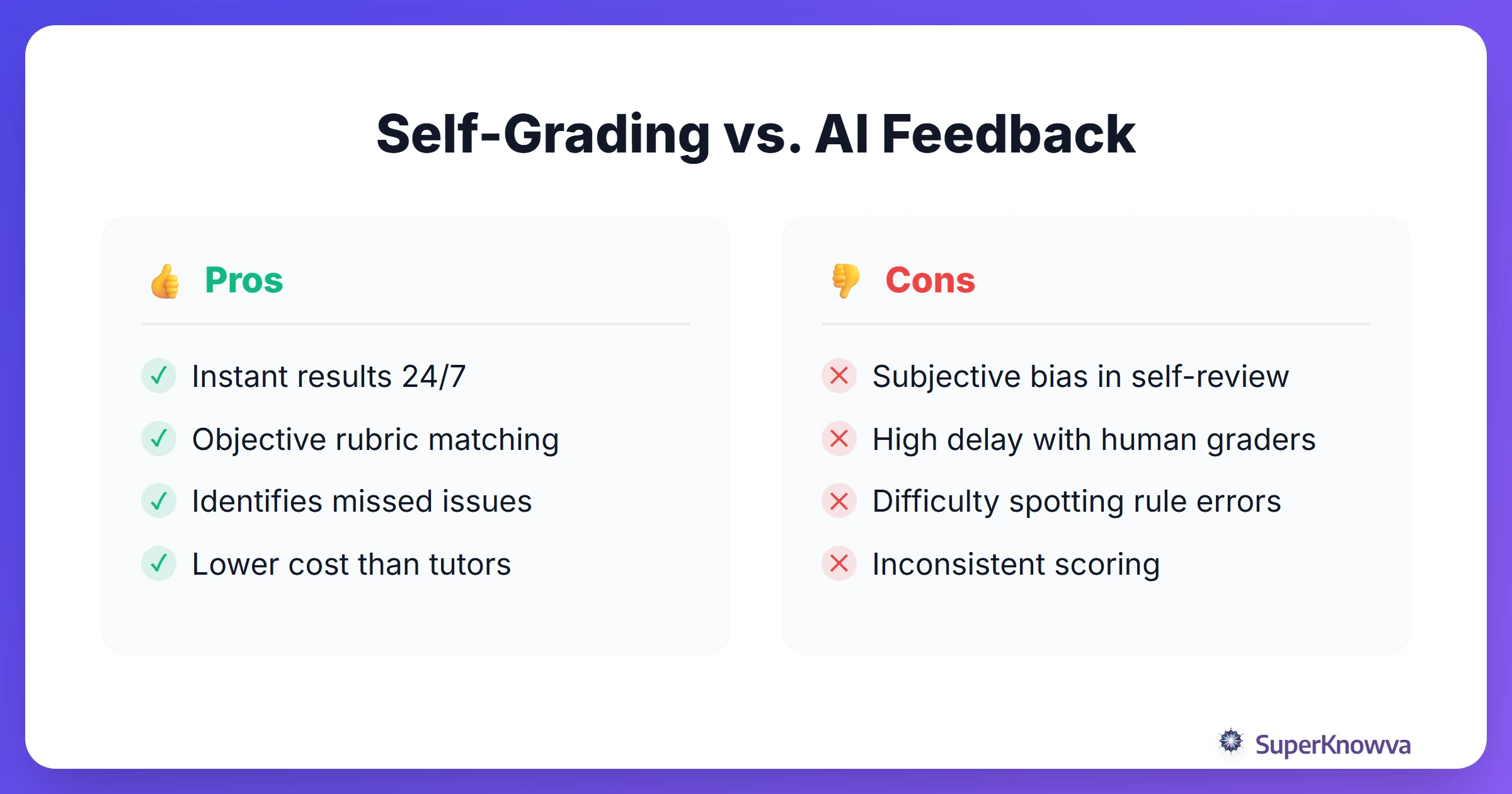
First, there’s self-grading. It’s notoriously difficult. When you’re tired and stressed, it’s nearly impossible to be objective. Did you actually hit that subtle "Issue," or are you just convincing yourself you did? Was your "Rule" statement precise, or just "close enough"?
Then there are professional grading services. They’re great, but they’re expensive and slow. In the final, high-pressure weeks before the exam, waiting five days for feedback feels like an eternity.
Immediate feedback is a necessity. Without it, you risk practicing the wrong way, reinforcing bad habits like weak transitions or "conclusory" arguments until they are ingrained.
How AI Feedback Actually Works (It’s Not Just Spell-Check)
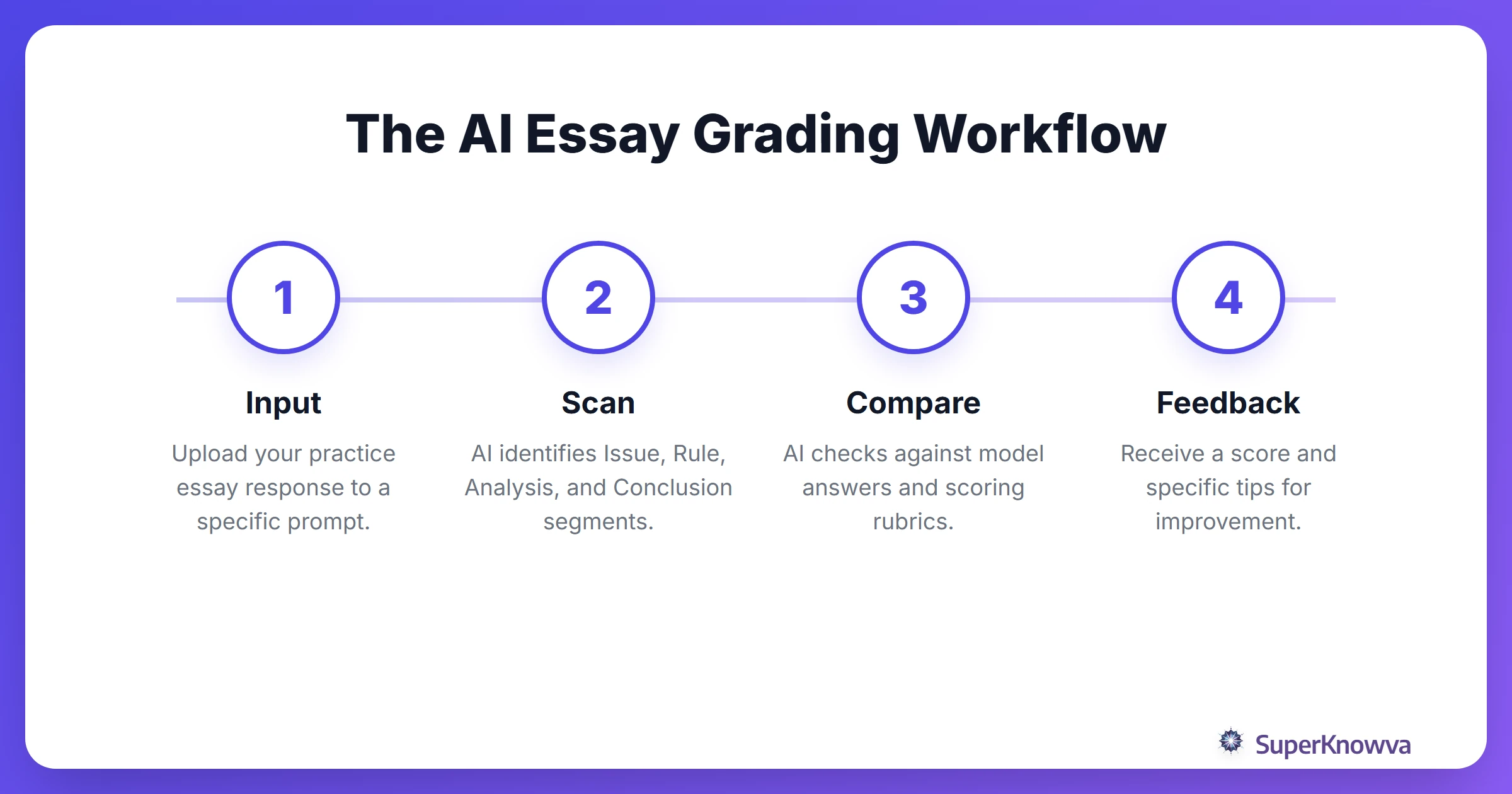
Modern AI legal writing feedback has evolved far beyond simple grammar corrections. These tools now use Natural Language Processing (NLP) to deconstruct your essay the same way a human examiner would.
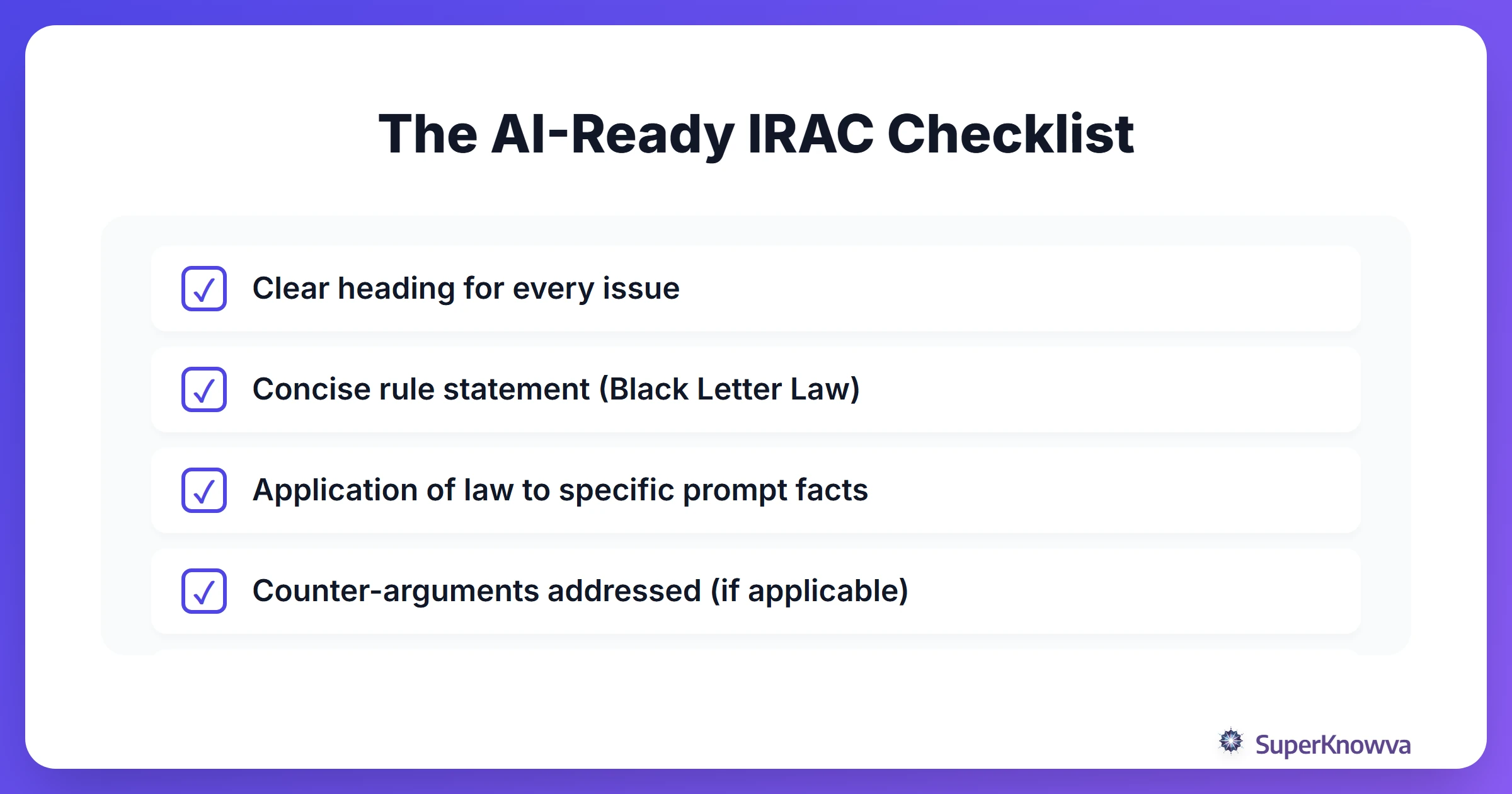
The goal is to analyze the IRAC structure AI tools can now dissect with surgical precision:
- Issue: Did you spot the specific legal questions buried in the fact pattern?
- Rule: Does your "Black Letter Law" statement match the actual legal principles, or is it too vague?
- Analysis: This is where most students lose points. AI evaluates whether you are actually applying the facts to the law or just jumping straight to a conclusion.
- Conclusion: Is your answer definitive and responsive to the prompt?
By breaking your essay down into these components, AI shows you exactly where your logic falters. It turns your MEE essay grading practice into a targeted training session rather than a shot in the dark.
Can a Robot Really Grade Like an Examiner?
It’s a fair question. Can an algorithm understand the nuance of a complex Property Law essay?
The reality is that modern AI models are trained on decades of high-scoring essays and official rubrics from the NCBE and various state bars. Whether you’re staring down the Uniform Bar Exam (UBE) or the specific hurdles of California Bar essay practice, these tools can be calibrated to what your specific jurisdiction demands. They know that a Florida Constitutional Law essay requires a different "flavor" than a New York Torts response.
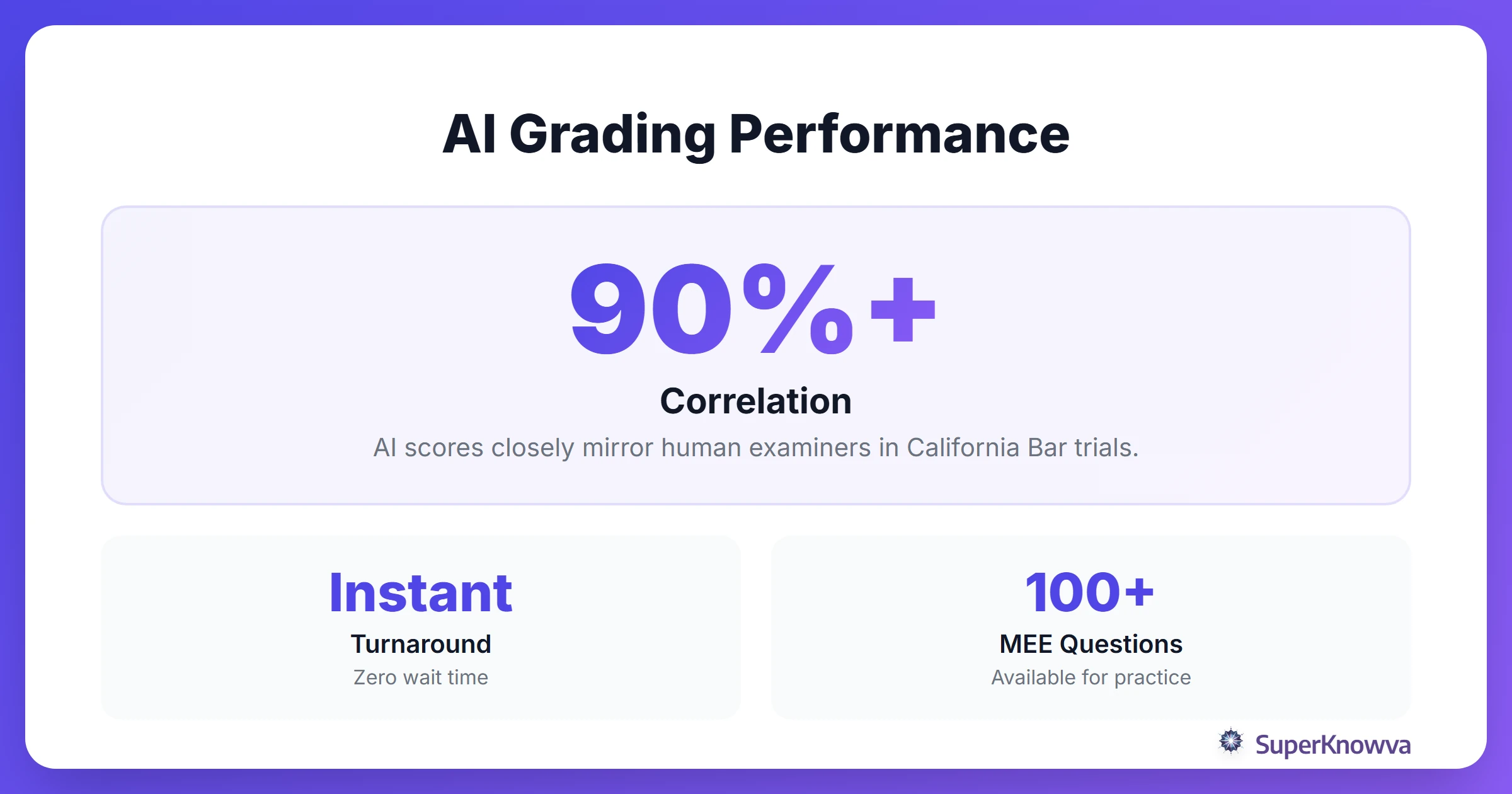
In fact, recent trials show that AI scoring correlates remarkably well with human examiners. It provides a reliable, objective benchmark so you know exactly where you stand before you ever set foot in the exam hall.
The Secret to Passing: Volume Without Burnout
Passing the bar requires volume, not just "studying." The more essays you write, the faster issue spotting becomes second nature. Bar exam essay ai feedback enables "high-frequency practice" without the delay of waiting for reviews.
Imagine writing three essays in a single afternoon and getting detailed critiques on all of them instantly. This rapid-fire cycle allows you to:
- Pinpoint recurring weaknesses in subjects like Evidence or Con Law.
- Track your score improvements numerically over time.
- Build the stamina required to produce clean, logical prose under a ticking clock.
How to Fit AI Into Your Study Routine
To get the most out of these bar exam prep tools, don't treat them as a replacement for your main course (like Barbri or Themis). Instead, treat AI as your 24/7 personal coach.
- Write: Set a timer and complete an essay using AI-driven bar exam practice questions.
- Submit: Upload your draft to a platform like the BarEssayGrader Platform.
- Review: Look specifically at the "missed issues" flagged by the AI.
- Rewrite: Don't just move on. Quickly re-draft the sections where you struggled. This "active correction" is where the real learning happens.
While AI is incredible for technical structure and rule accuracy, you can still lean on human mentors for high-level strategy. Combine this with your MBE multiple-choice work for a balanced, bulletproof study plan.
Leveling the Playing Field
For a long time, the students who could afford expensive private tutors had a massive advantage. AI is changing that. High-quality, instant feedback is now accessible to everyone, regardless of their budget.
Beyond just passing the bar, the skills you sharpen here, including precision, brevity, and logical mapping, are the exact skills you’ll need in your legal career. Embracing the future of the bar exam means using these tools now to lower your anxiety and raise your score.
If the stress is starting to feel like too much, remember that managing bar exam stress with AI is all about taking back control of your preparation. For more tips and to see how other students are navigating the process, check out the r/barexam Community Discussion.
Summary: Don't just read the law; apply it. Use AI as a grader to ensure your writing is ready for the exam.