It’s 11:00 PM on a Sunday. You’re staring at a physics problem that might as well be written in ancient Greek. Your teacher is asleep, your classmates aren't answering the group chat, and a private tutor would cost a small fortune, assuming you could even find one willing to hop on a Zoom call at midnight.
We've all been there. This "stuck" moment is usually where learning grinds to a halt and frustration takes over. But the narrative is shifting. On-demand AI tutoring is stepping in to bridge that gap, offering students a way over academic roadblocks exactly when they hit them.
Why is immediate, personalized AI assistance becoming the new standard for how we learn? Let’s break it down.
No More Waiting Lists: Learning in the Moment
The traditional tutoring model is rigid. It’s built on calendars, commute times, and "see you next week." If you lose the thread of a concept on Tuesday, waiting until your Thursday appointment is a recipe for disaster. By the time you get help, the class has moved on, and that one point of confusion has likely snowballed into a mountain of catch-up work.
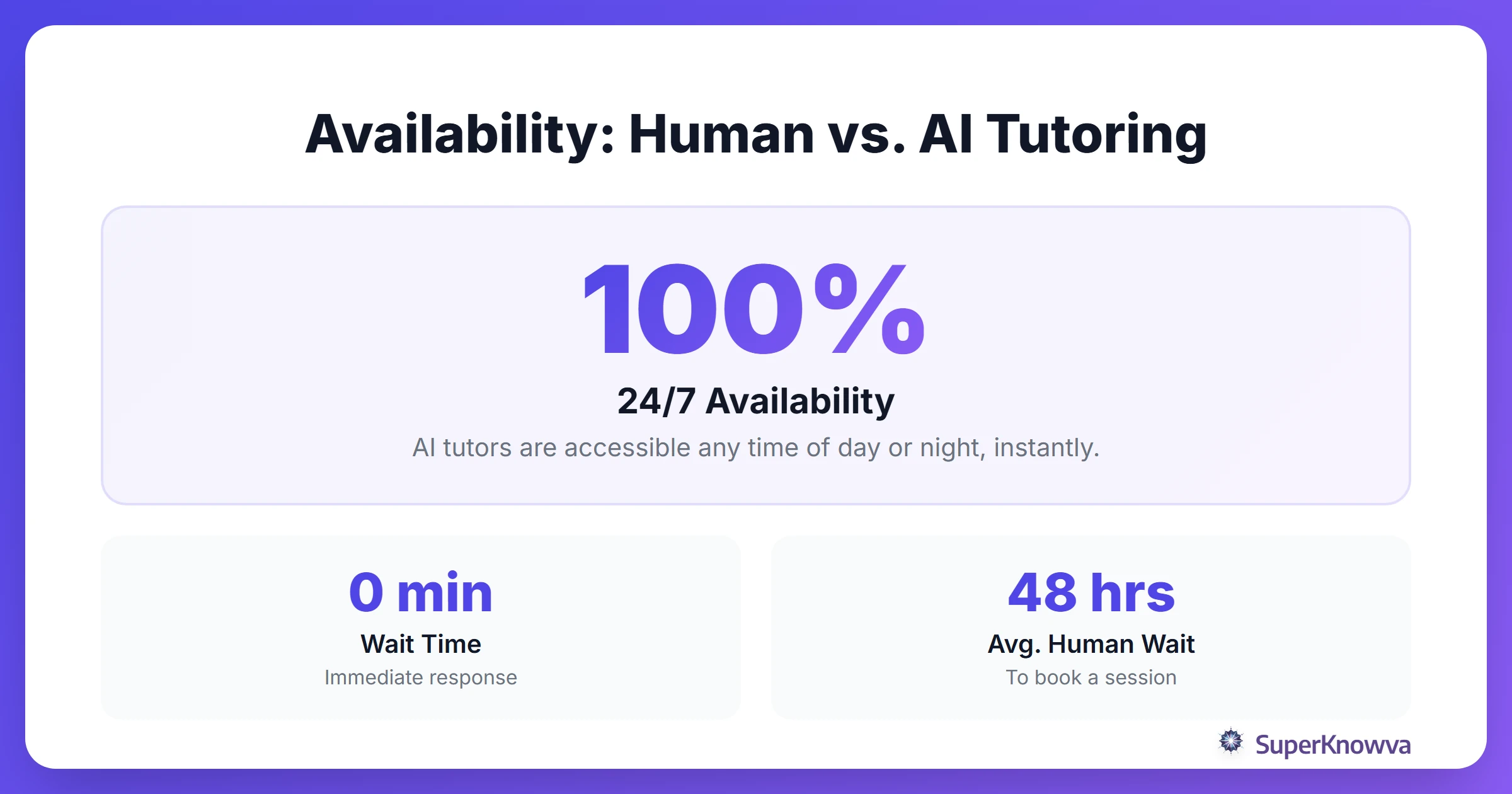
24/7 tutor access improves learning efficiency. When you correct a misconception the moment it happens, you stop bad habits before they take root. This supports students with non-traditional schedules, such as those balancing jobs, sports, or family responsibilities. With an AI teaching assistant, there is no waiting. Whether you use AI-powered note taking to organize your thoughts or start a new chapter, help is available immediately.
Personalized Support That Actually Scales
In a classroom of 30, a teacher has to aim for the middle. It’s a survival tactic, but it often leaves advanced students bored and struggling students completely lost. This is where on-demand AI tutoring shines through "personalized scaffolding." This is just a fancy way of saying the AI meets you exactly where you are.
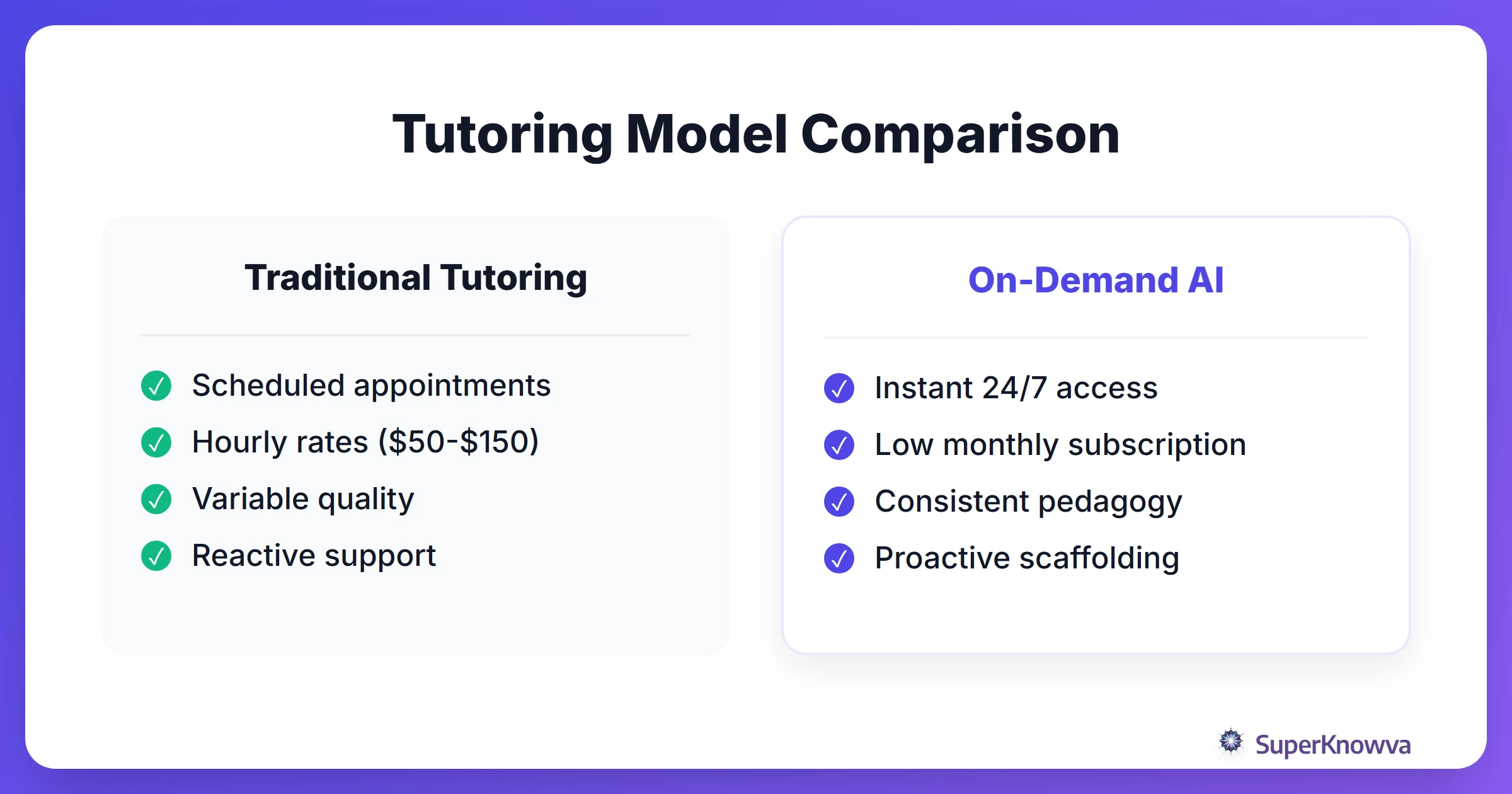
Unlike a static textbook that just repeats the same words, AI adapts. If you’re struggling with a calculus derivative, it doesn't just bark the formula at you. It might try a visual analogy or break the problem into smaller, bite-sized steps based on how you solved the last one. This level of personalized learning is vital for STEM subjects, where one missed step can derail the whole process. By providing this 1-on-1 attention at scale, AI ensures that rigid instruction is no longer the standard. To see how this stacks up against traditional methods, check out our guide on AI Tutors vs. Human Tutors: Which is Best for Your Learning Style?
The Judgment-Free Zone
Let's be honest: the biggest barrier to learning isn't usually a lack of brainpower. It’s the fear of looking stupid. Asking a "simple" question in front of a class or a high-priced tutor can be paralyzing.
AI creates a safe space to fail. An AI doesn’t get annoyed if you ask the same question six different ways. It doesn't have a subconscious bias, and it doesn't judge your progress. This psychological safety net lets students take risks and embrace their curiosity. There is a direct link between this low-stakes environment and AI for test anxiety reduction. When you know there’s a safety net to catch your "silly" mistakes, your confidence grows, and the material actually starts to stick.
From Answer-Givers to Socratic Guides
There’s a common worry that AI is just a "cheat code" for homework. While some basic bots might just hand over the answer, dedicated platforms like Khanmigo act as Socratic tutoring AI.
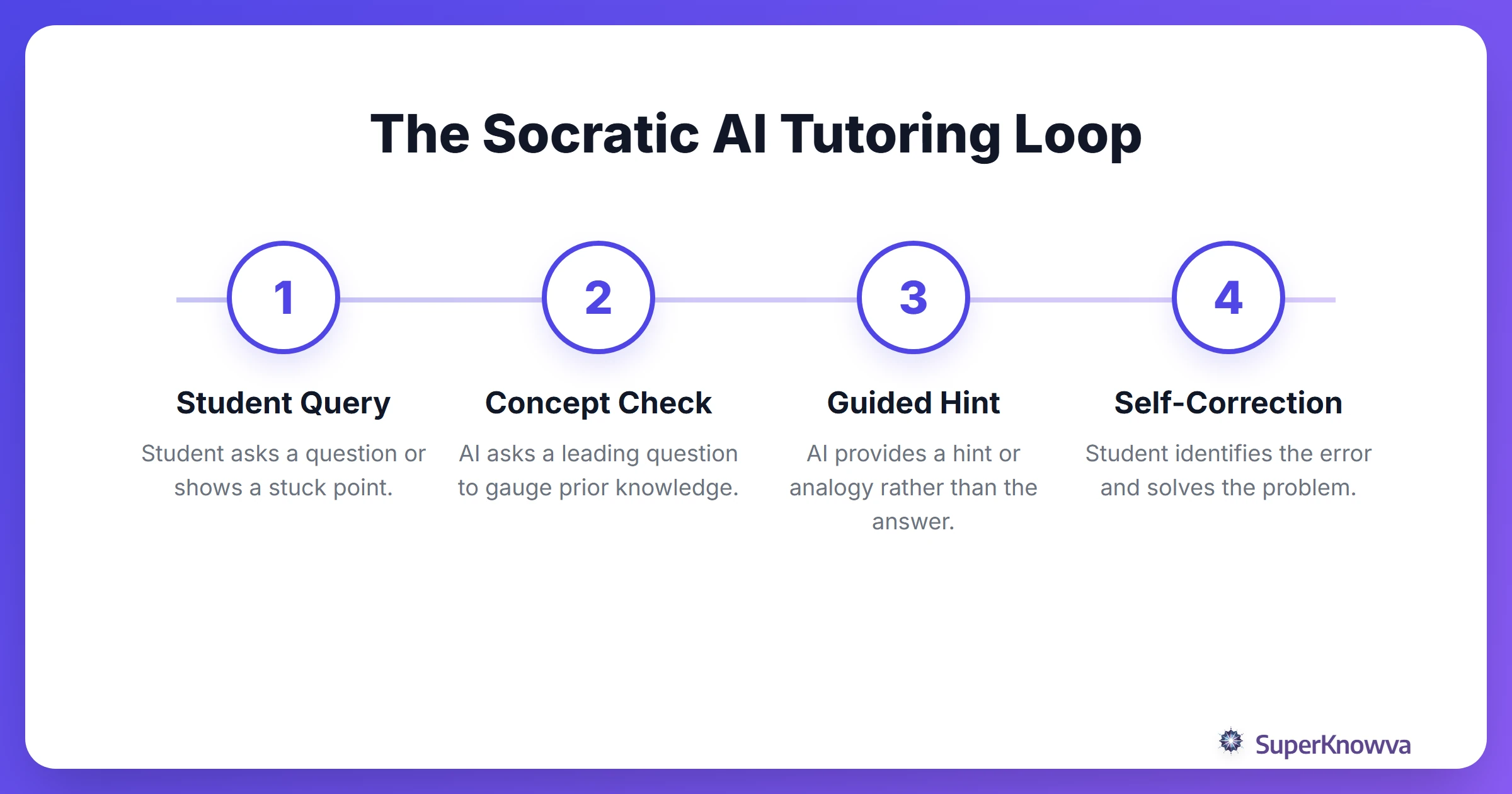
Instead of doing the work for you, the AI asks leading questions. It prompts you to think critically, guiding you toward the solution rather than just handing it over on a silver platter. This approach stops the "copy-paste" habit and builds actual understanding. You're not just finishing an assignment; you're developing problem-solving skills that last long after the tab is closed.
Leveling the Playing Field
For a long time, elite 1-on-1 tutoring was a luxury for the few. This created a massive gap in who got ahead and who fell behind. AI in education is the great equalizer. It makes high-tier academic support affordable and accessible to anyone with an internet connection.
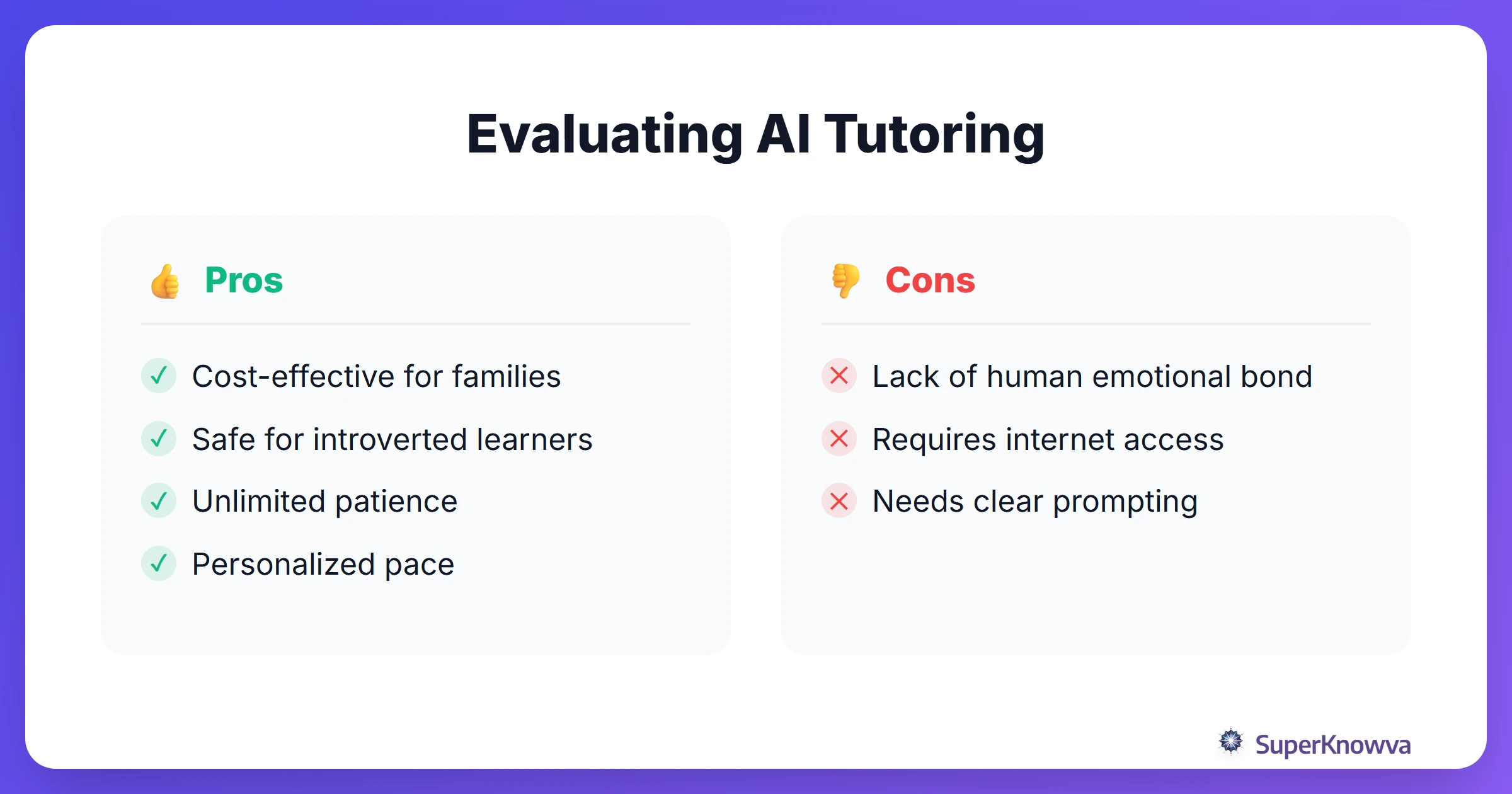
For underserved schools and students with limited resources, AI offers a way to close the achievement gap. Human experts are a finite resource, but AI is infinitely scalable. It can support millions of students at once without getting tired or losing quality. This democratization even extends to accessibility; see how AI supports students with disabilities by offering tailored interfaces and self-paced learning.
The Future: Humans and AI, Better Together
The goal isn't to kick teachers out of the classroom. It’s to give them superpowers. By handling the repetitive drills, basic grading, and 2:00 AM questions, AI frees up human educators to do what they do best: mentor, inspire, and lead complex projects.
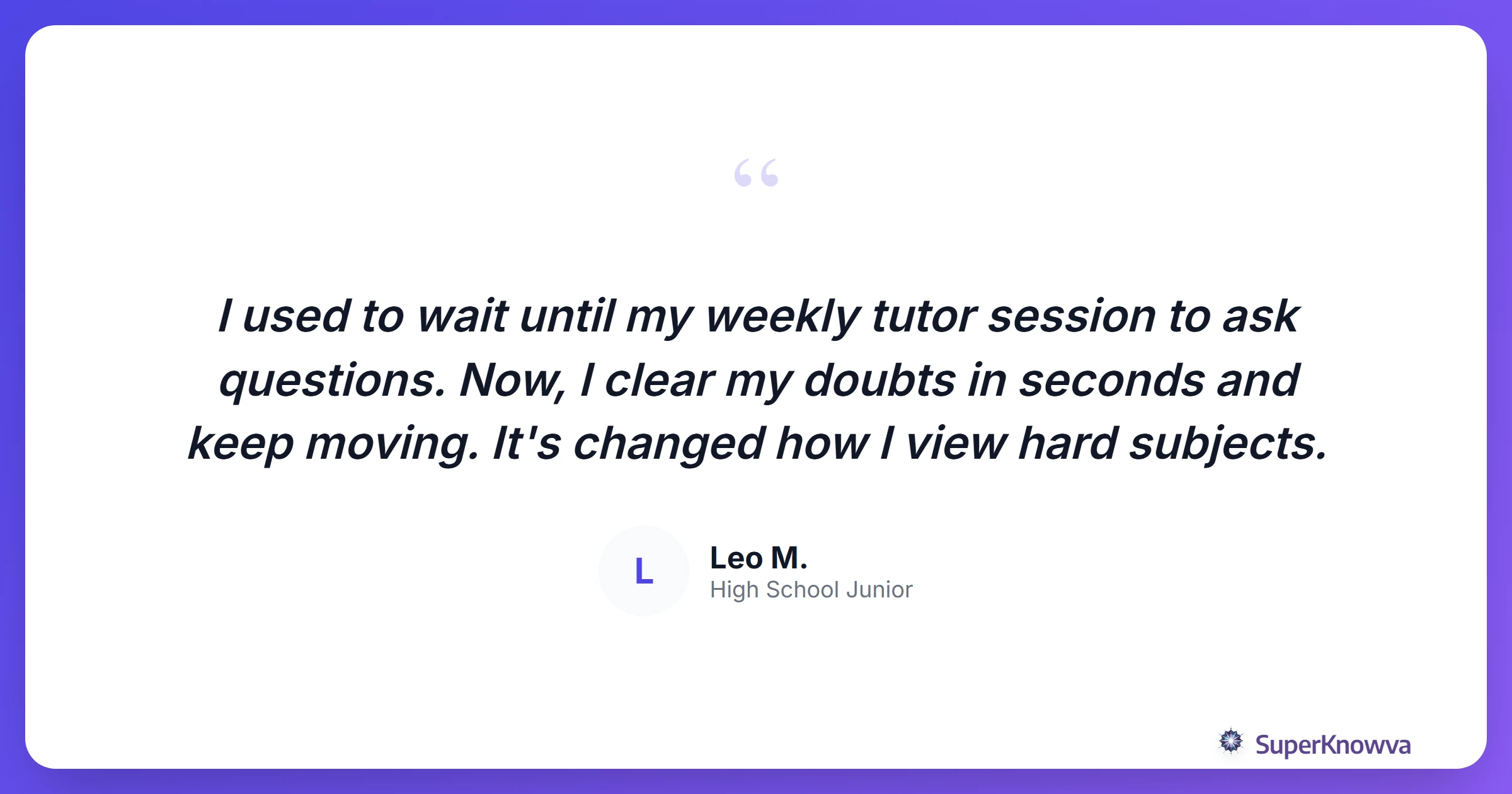
Soon, we’ll see a hybrid model where teachers use AI data to spot class-wide gaps before they even start the lesson. As this AI tutoring deep dive points out, students who learn to work alongside AI today are building the exact skills they'll need for the workforce of tomorrow.
On-demand AI tutoring is more than a convenience; it is a significant change. By removing barriers like cost and scheduling, every student can access the support they need to succeed.