The sun is out, the pool is calling, and your textbooks are currently serving as a very expensive coaster. We’ve all been there. The FOMO is real when your friends are posting beach selfies while you’re stuck inside with a highlighter and a dream. But here’s the secret: summer shouldn’t be a zero-sum game where you either fail your future self or miss out on the best months of the year.
By building a flexible study plan, you can manage challenging subjects, complete your SAT summer prep, and still have time for road trips and summer activities. This guide shows how to use AI-powered tools and proven learning strategies for a productive and enjoyable summer break.
Why Traditional Study Methods Fail in the Summer
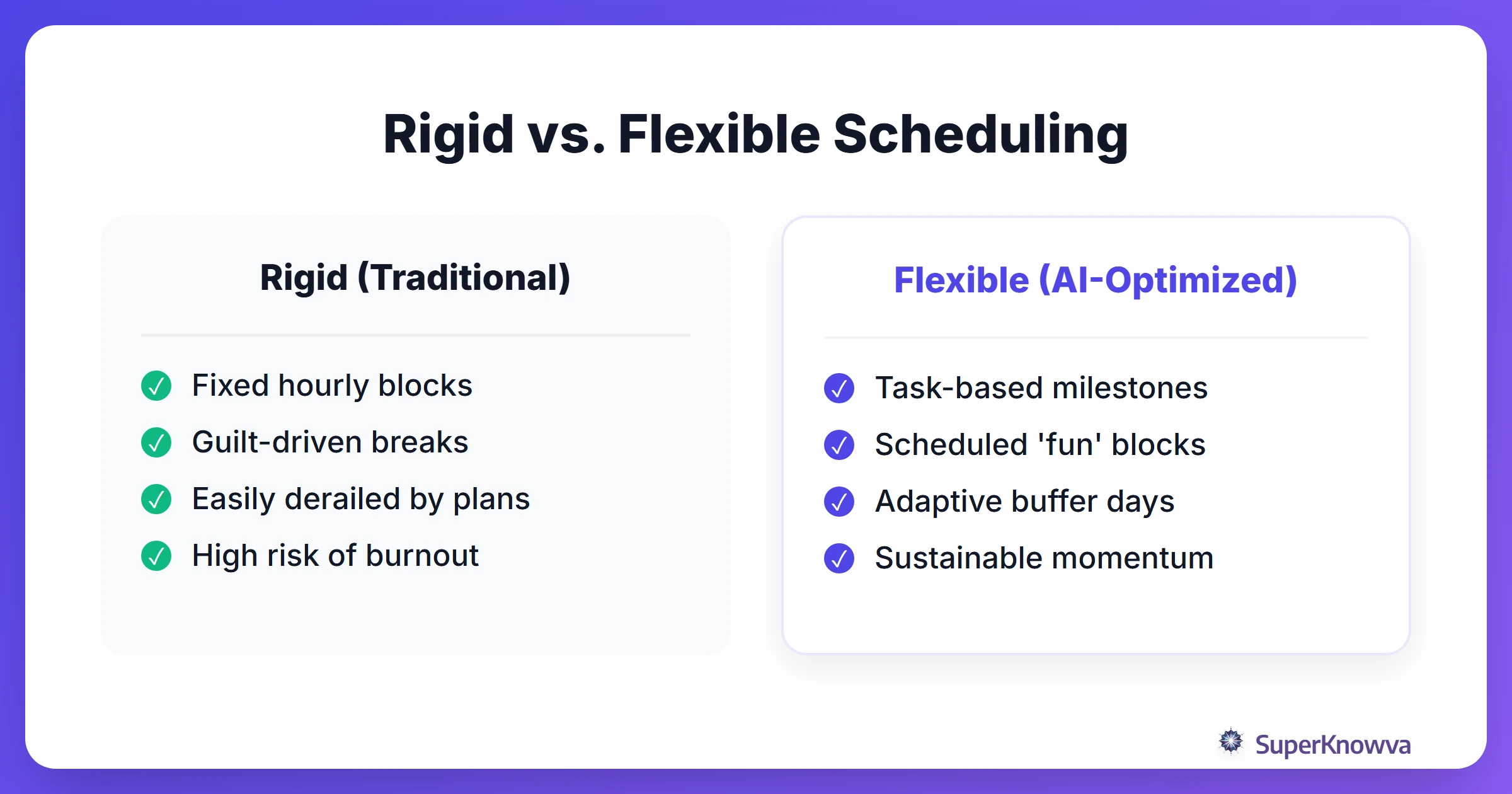
We’ve all done it. June 1st arrives, and you’ve got a color-coded calendar that looks like a work of art. You promise to be an "academic weapon" from 9-to-5 every single day. By June 15th? That schedule is usually at the bottom of a trash can.
Why? Because traditional, rigid schedules don't account for "summer mode." During the school year, your life is dictated by bells and deadlines. In the summer, spontaneity is the whole point. If your plan doesn't have room for an impromptu lake day, you’ll end up ditching the entire thing the second a better offer comes along. That’s a one-way ticket to burnout and lost momentum.
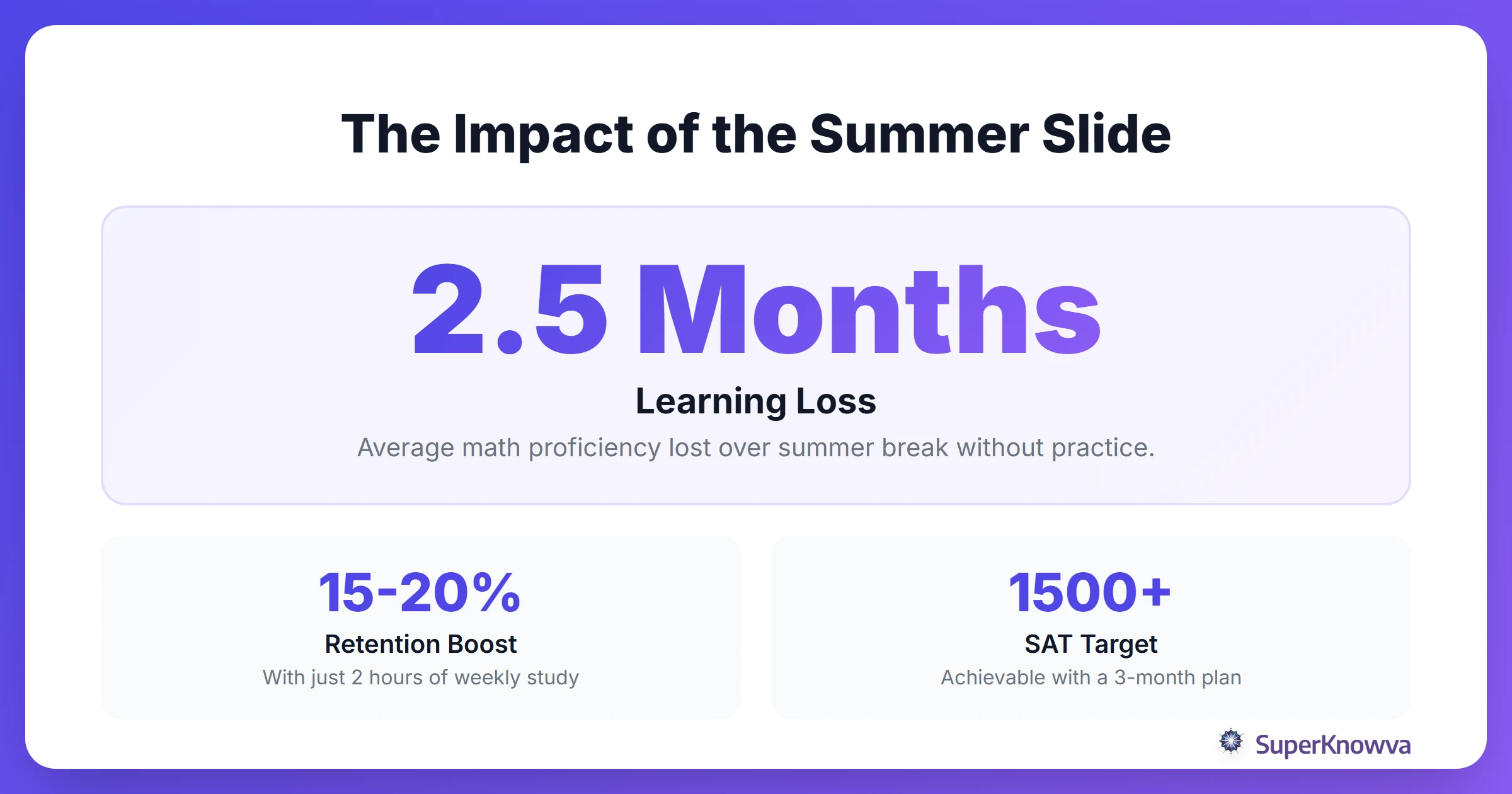
To actually make progress, you need a system that breathes. You need to beat the "summer slide" without feeling like you're still trapped in a classroom.
Phase 1: Finding Your 'Why'
Before you even touch a highlighter, you need to know where you're headed. What are your summer academic goals? Without a clear target, you’re just flipping pages and hoping for the best.
- Set SMART Goals: Are you chasing a 1500+ on the August SAT? Are you trying to survive next year’s Chemistry class? Or maybe you're getting a head start on AP Calculus so you don't drown in September?
- Categorize by Energy: Identify which subjects are "high-drain" (the ones that make your brain hurt) and which are "low-drain" (simple review).
- The 'Worker Bee' Method: Spend the first week of summer just getting organized. Figure out the best time of day to study for your specific internal clock. Some people are morning grinders; others don't truly wake up until the sun goes down.
The 3-Phase Summer Timeline: From Review to Mastery
Success in the summer isn't a sprint; it’s a slow burn. Breaking your break into phases is the only way to maintain a real study life balance.
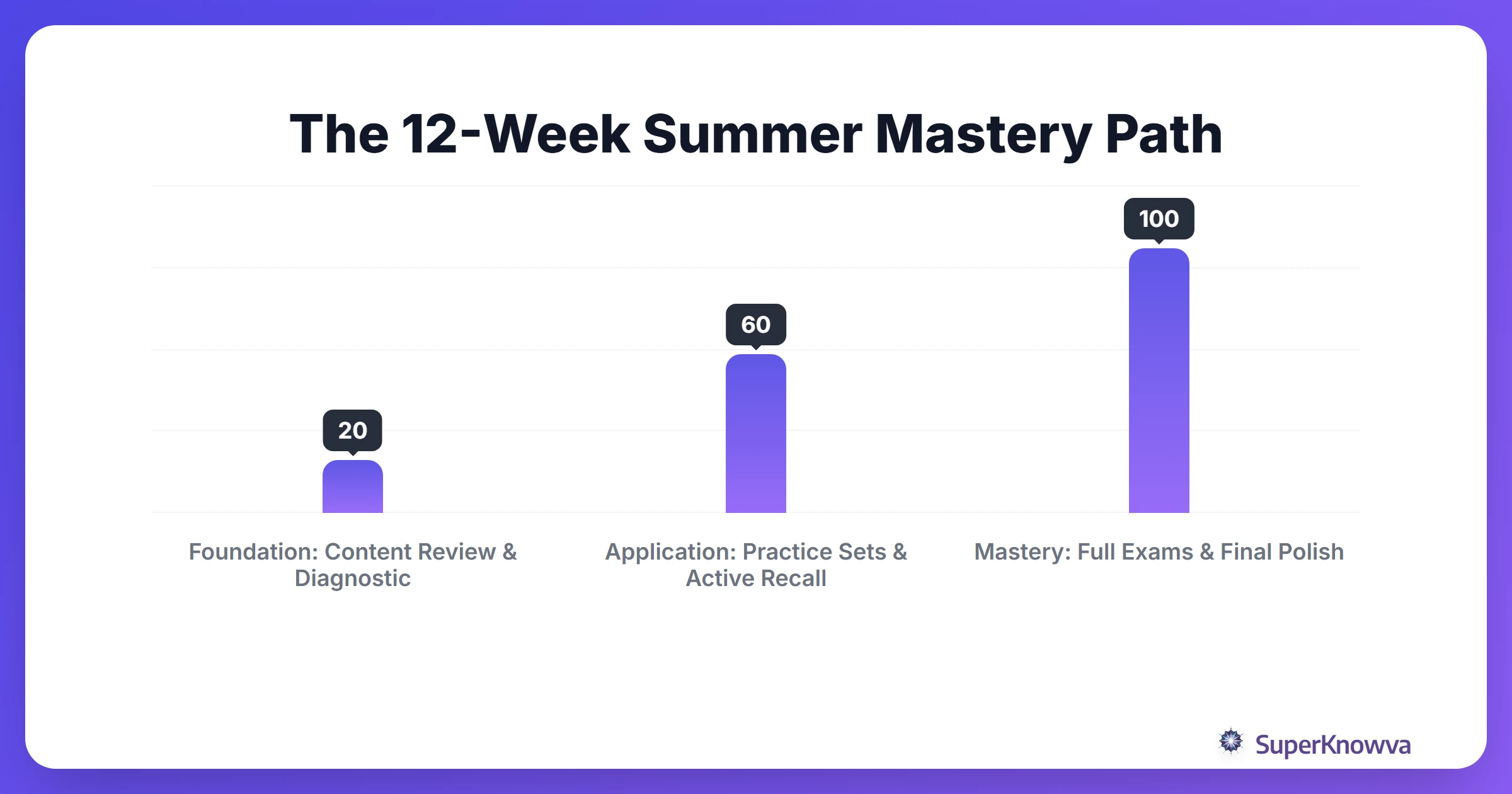
- Month 1: Content Review. This is about finding the holes in your knowledge. If you're doing SAT summer prep, now is the time to relearn those grammar rules you haven't thought about since middle school.
- Month 2: Intensive Practice. Stop reading and start doing. Use active recall to put your brain to work. This is where you take everything you reviewed in Month 1 and apply it to actual problems.
- Month 3: Mastery & Polishing. If you have an exam in late August, this is your "game time." Focus on full-length practice tests under real-world conditions.
The best part? This is your schedule. If your family vacation is in July, move your intensive practice to June so you can actually unplug when you’re at the beach.
Balancing the 'Fun Factor': The Cornell Approach
You might think that grinding for eight hours straight is the path to an Ivy League acceptance, but the experts at Cornell University would disagree. According to the Cornell University Study Guidelines, the most effective schedules are the ones that actually include a life.
Cornell’s learning experts recommend stopping study sessions to hang out with friends. This is not "slacking"; it is science. Your brain needs "diffuse mode" thinking time to process complex information while you do something else.
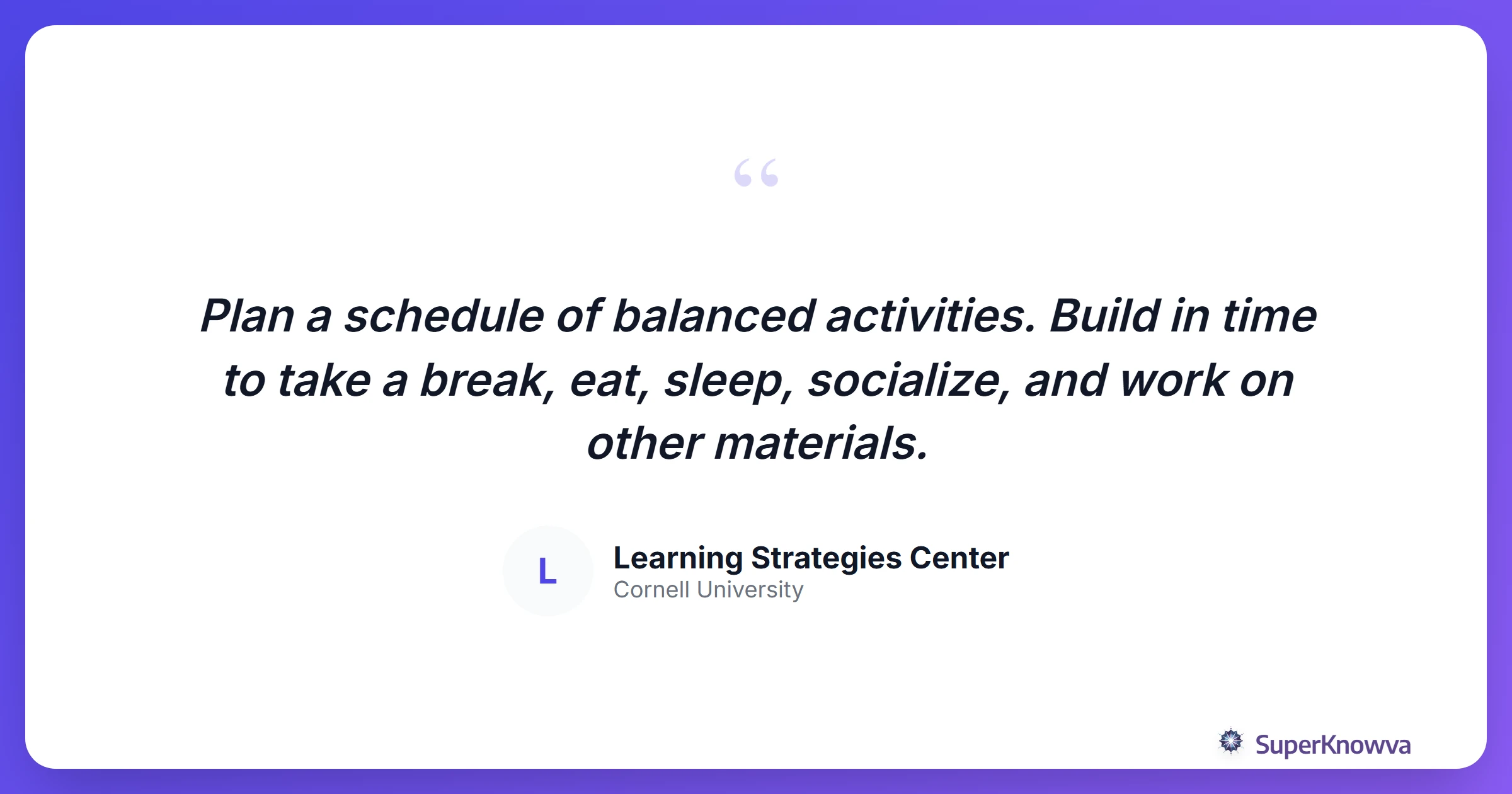
To make this work, build in "buffer days." These are "get out of jail free" cards: days with zero tasks scheduled. Use them for unexpected trips or to catch up if you slept in on Tuesday. Learning to balance a high GPA with a social life is as important as the material itself.
Letting AI Do the Heavy Lifting
The biggest problem with a paper planner? It’s judgmental. If you miss a day, that blank page just stares at you until you feel guilty enough to quit. This is where an AI study planner like SuperKnowva changes the game.
SuperKnowva’s AI doesn’t just give you a to-do list; it builds a personalized roadmap for your learning.
- Adaptive Progress: Crushed a concept faster than you thought? The AI automatically pivots your focus to your weakest spots.
- Predicting the Forgetting Curve: The AI knows exactly when you’re about to forget that math formula and schedules a quick review right before it slips away. You end up studying fewer hours but remembering way more.
By letting technology handle the logistics, you can figure out how to study for long hours without burning out because every minute you spend working is actually moving the needle.
Overcoming the 'Summer Slide' and Procrastination
Even the perfect plan won't save you from a Tuesday afternoon when you just don't want to do anything. The "summer slide" isn't just about forgetting math; it's about losing your rhythm.
When the procrastination hits hard, try the 5-minute rule for productivity. Tell yourself you’ll only work for five minutes. That’s it. Usually, the hardest part is just opening the laptop. Once you’re five minutes in, the momentum usually takes over.
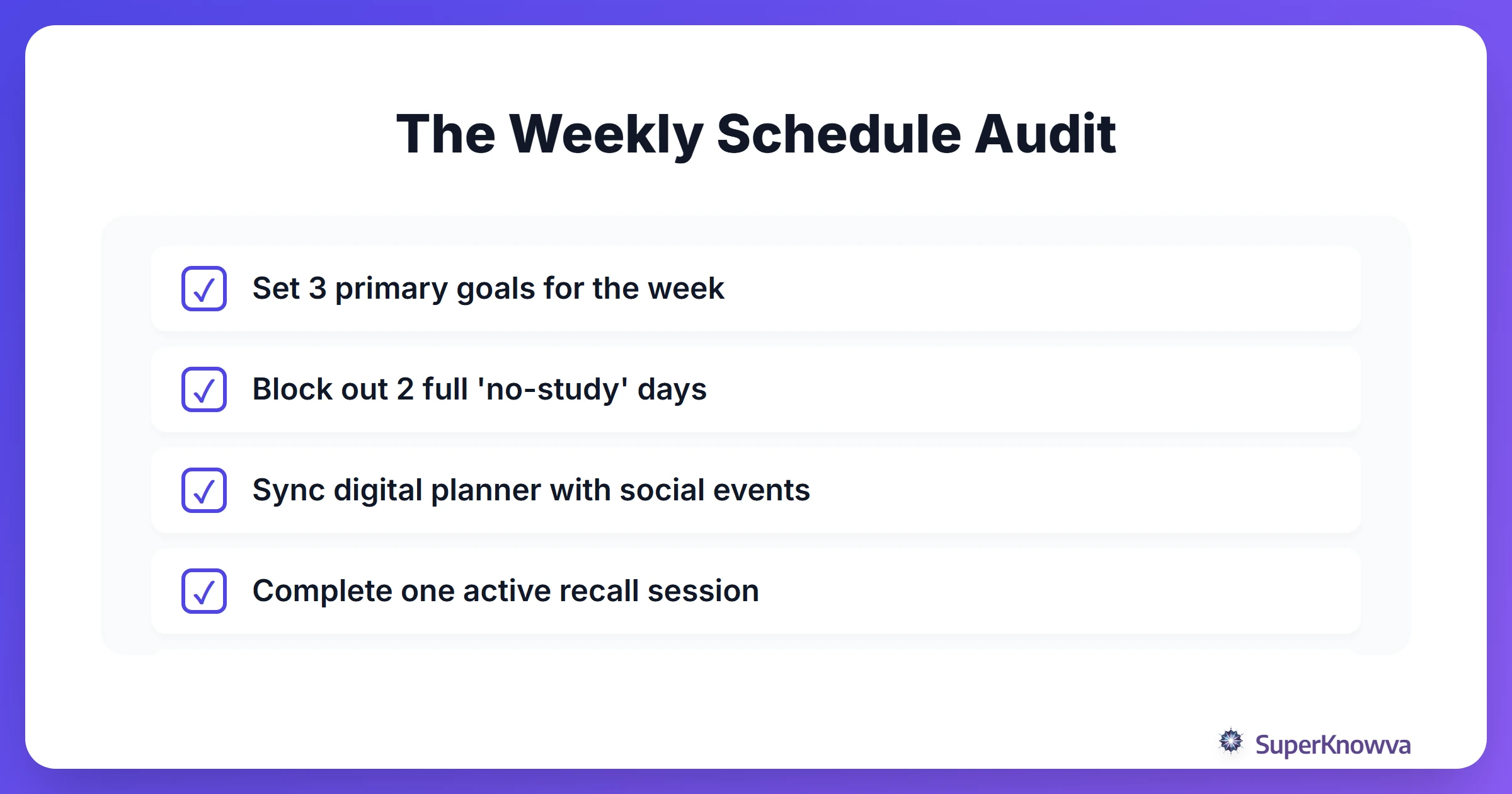
And if you fall behind? Don't spiral. Students in the Reddit Community SAT Summer Plans often point out that "resetting" is much more effective than trying to cram three days of missed work into one miserable afternoon. Use those buffer days, find your feet, and keep moving.
Conclusion
Building a summer study schedule doesn't mean you're signing away your summer. By getting clear on your goals, phasing your workload, and using tools like SuperKnowva to handle the planning, you can actually have your cake and eat it too. Start small, stay flexible, and remember: a little bit of consistency beats a week of frantic, last-minute cramming every single time. Happy studying!