The CFA Level 1 curriculum is extensive. With nearly 3,000 pages of material spanning ten different topic areas, it challenges even seasoned finance professionals. Success requires more than hard work. The key is starting early.
By kicking off your cfa level 1 preparation this July, you aren't just buying time; you’re buying peace of mind. You’re giving yourself the luxury of mastering complex financial concepts without the late-stage panic that leads to burnout.
In this guide, we’ll show you how to build a strategic July study plan that uses Artificial Intelligence to conquer the "300-hour rule" and get you closer to those three coveted letters after your name.
The 300-Hour Reality: Why July is the Perfect Starting Point
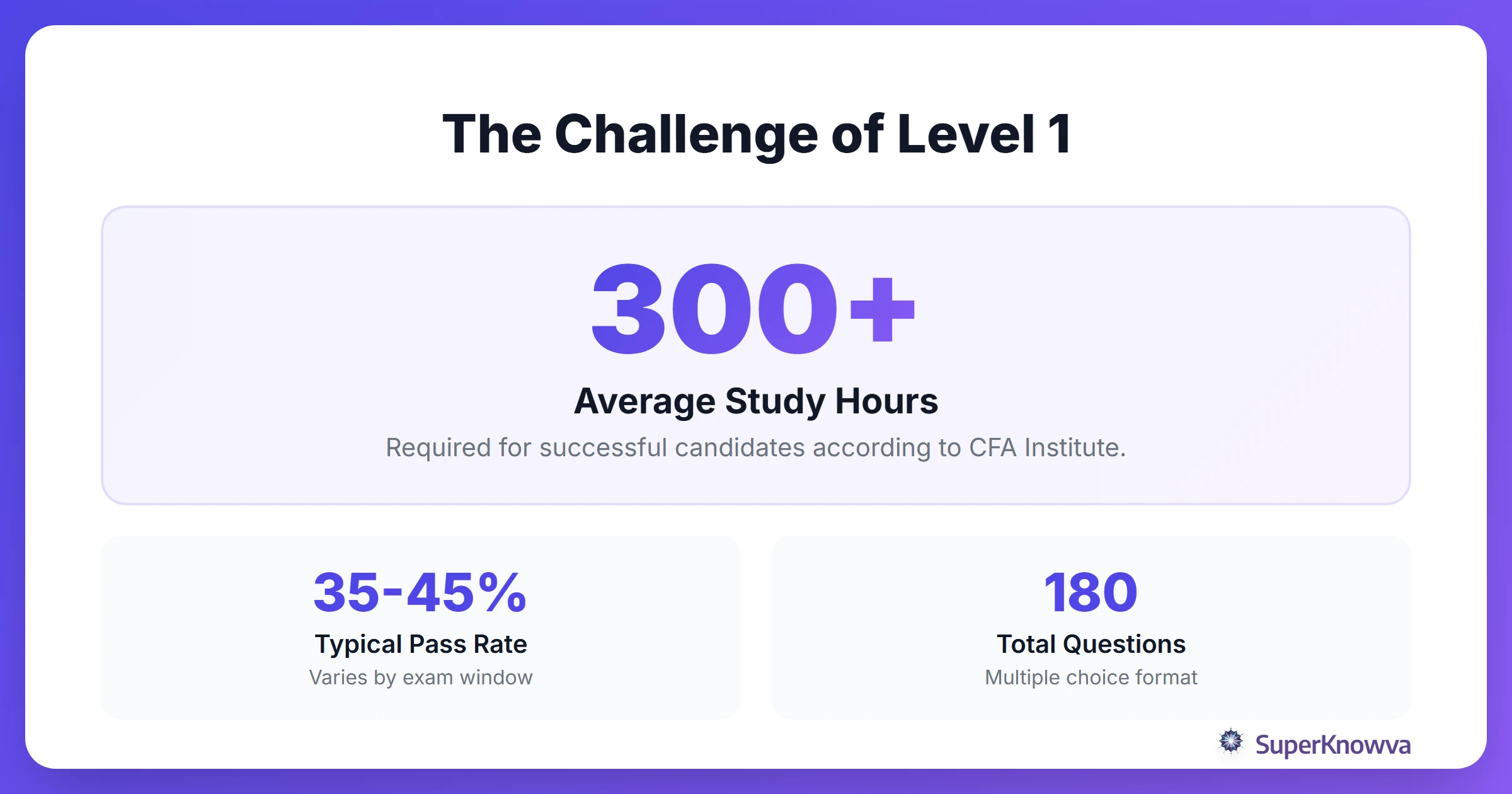
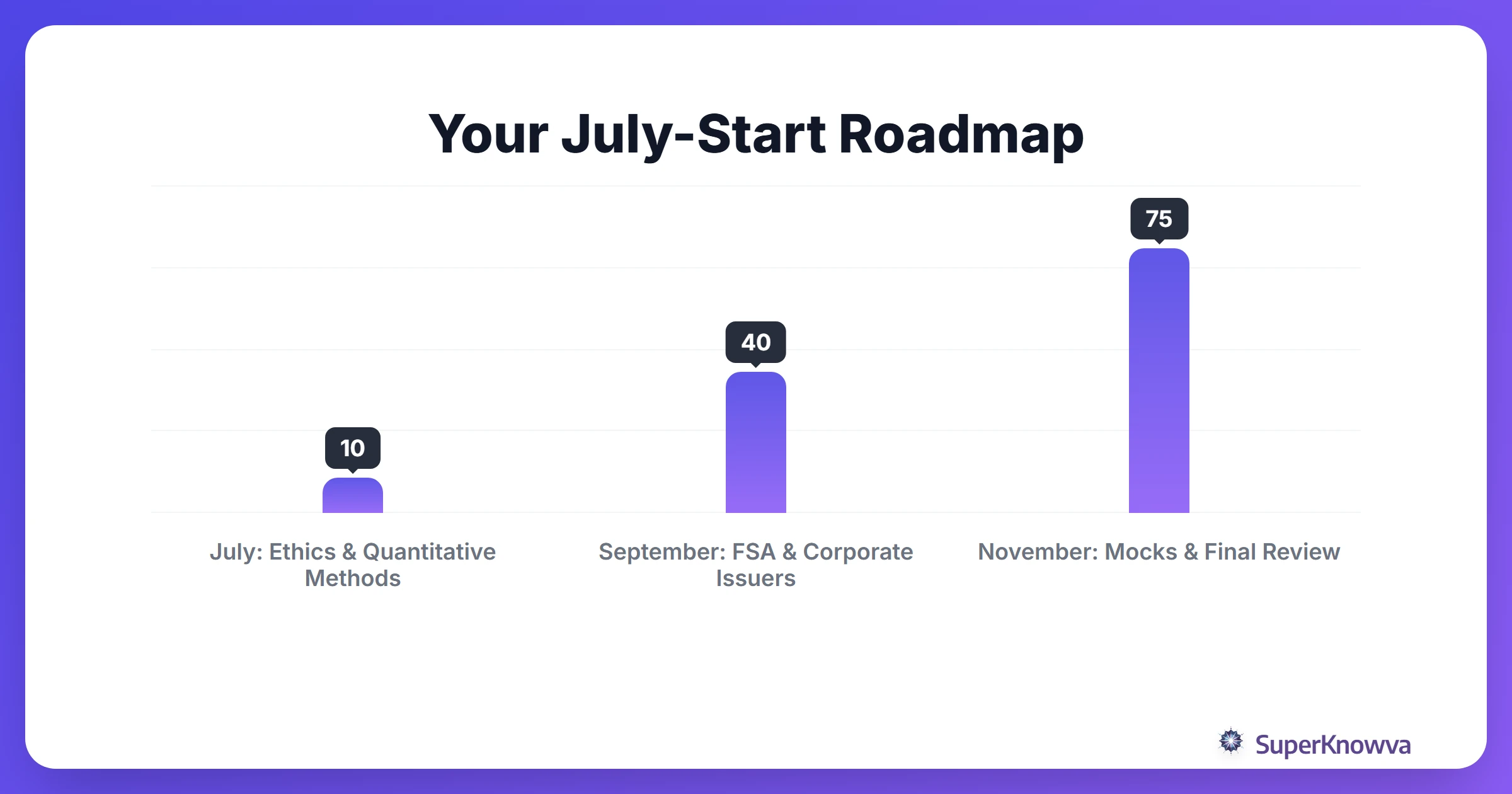
The CFA Institute famously suggests that candidates need at least 300 hours of study to pass. That number sounds daunting, but it’s all about the math. If you start in July, you have a massive runway for a November or February exam window.
Instead of a frantic 30-hour-a-week sprint, you can spread those 300 hours over several months. A pace of 10 to 15 hours a week allows for deep concept mastery rather than superficial memorization. Early starters pass more often because they have the time to let the material sink in.
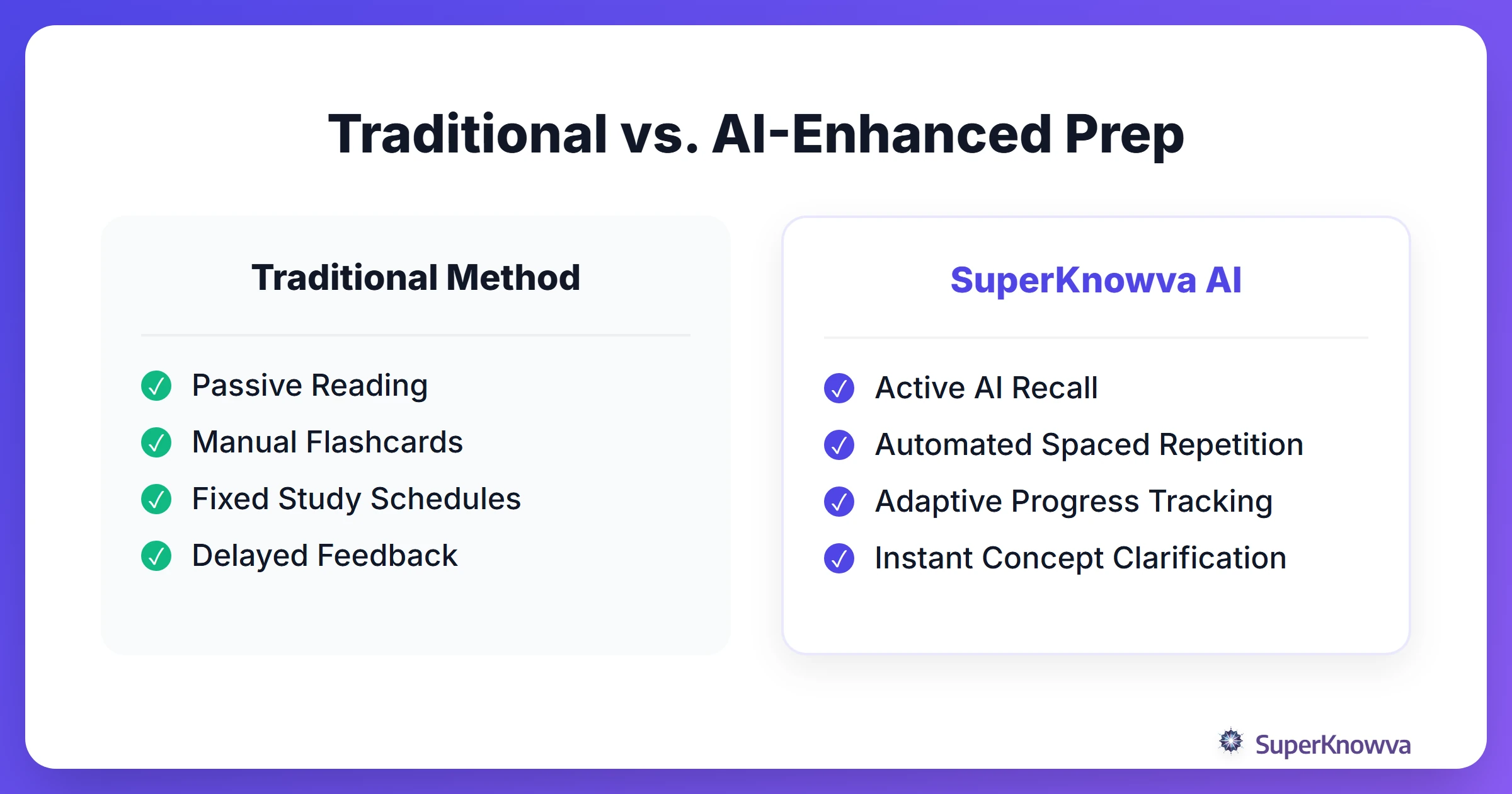
Think of it like medical students using an ultimate guide to AI-powered preparation for the USMLE. CFA candidates can now use similar technology. AI tools like SuperKnowva optimize your study time by spotting your knowledge gaps instantly, ensuring every minute you spend is high-impact.
Prioritizing High-Weight Topics: Ethics and Financial Reporting
Not all CFA topics are created equal. If you want a winning CFA Level 1 study schedule, you have to prioritize the "heavy hitters": Ethical and Professional Standards and Financial Statement Analysis (FSA). Together, these can account for nearly 30% of your total score.
Starting with FSA in July is a strategic decision. It is widely considered the most challenging section because of its technical depth and the differences between IFRS and GAAP standards. AI tools help by explaining complex accounting treatments, such as deferred tax assets or lease accounting, in clear terms.
Then there’s Ethics. Don't make the mistake of "cramming" this at the end. By starting in July, you can internalize the Code of Ethics over months. Since more than half of candidates fail, it’s vital to learn how to pass CFA Level 1 in first attempt. The key is getting personalized feedback for success so you aren't repeating the same mistakes in August that you made in July.
Mastering Quantitative Methods with AI Tutors
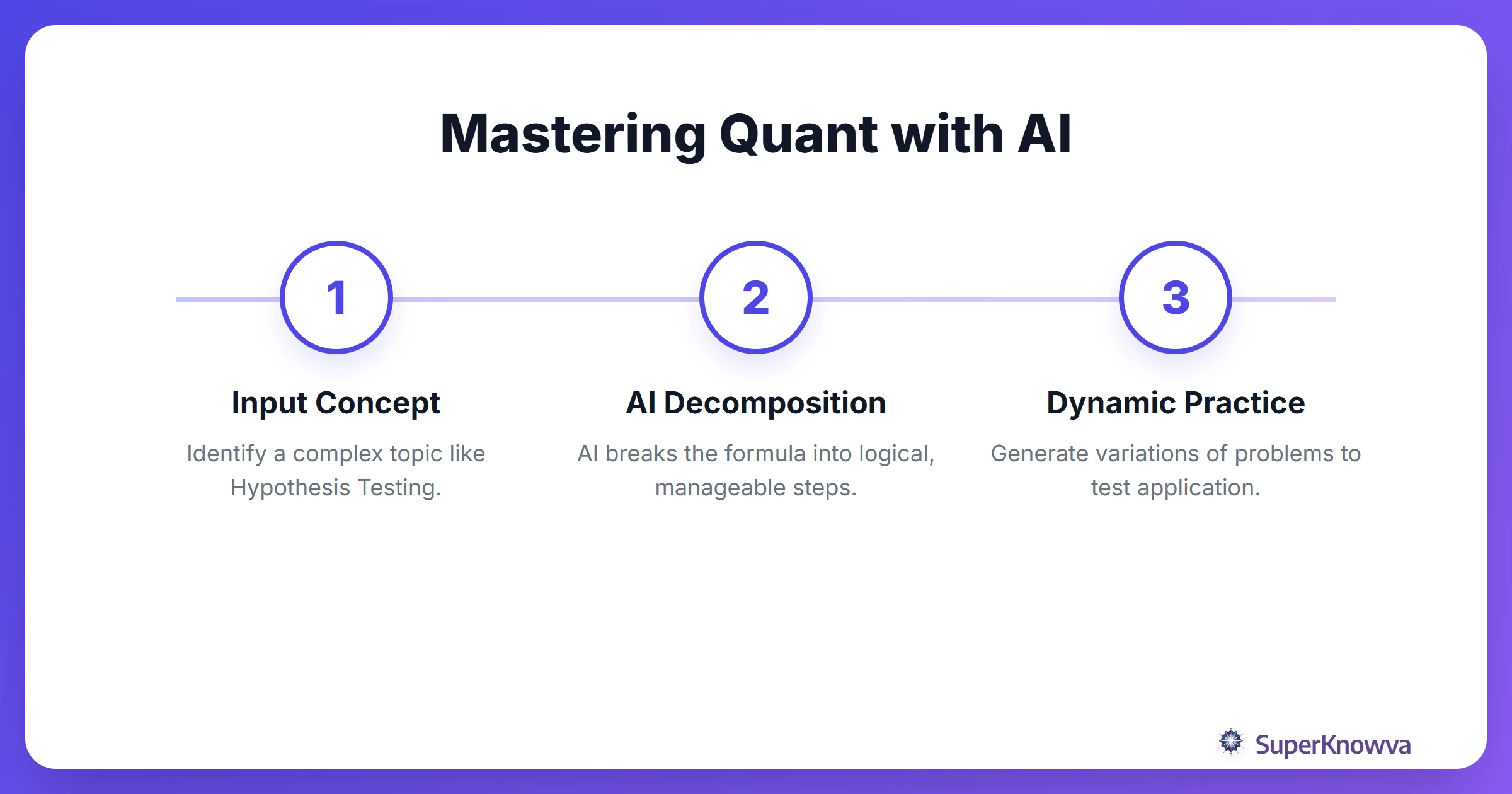
For many, CFA quantitative methods is a significant hurdle, especially for those without a math-heavy background. Concepts like the Time Value of Money (TVM) or hypothesis testing require active practice rather than just reading.
Traditional textbooks usually give you one or two examples and expect you to get it. That’s where AI for CFA prep changes the game. AI tutors can break a complex formula into logical, manageable steps tailored to how you learn. If you’re struggling with the math, an AI-powered guide to quantitative reasoning can help bridge the gap for your CFA Quant modules.
The best part? Immediate feedback. When you get a calculation wrong, an AI tutor can show you exactly where the logic broke down, stopping bad habits before they start.
Building an AI-Enhanced Spaced Repetition Schedule
The "Forgetting Curve" is the enemy. It’s a common trap: you spend weeks mastering Quants, move on to Corporate Finance, and by the time you hit Portfolio Management, the Quants knowledge has vanished.
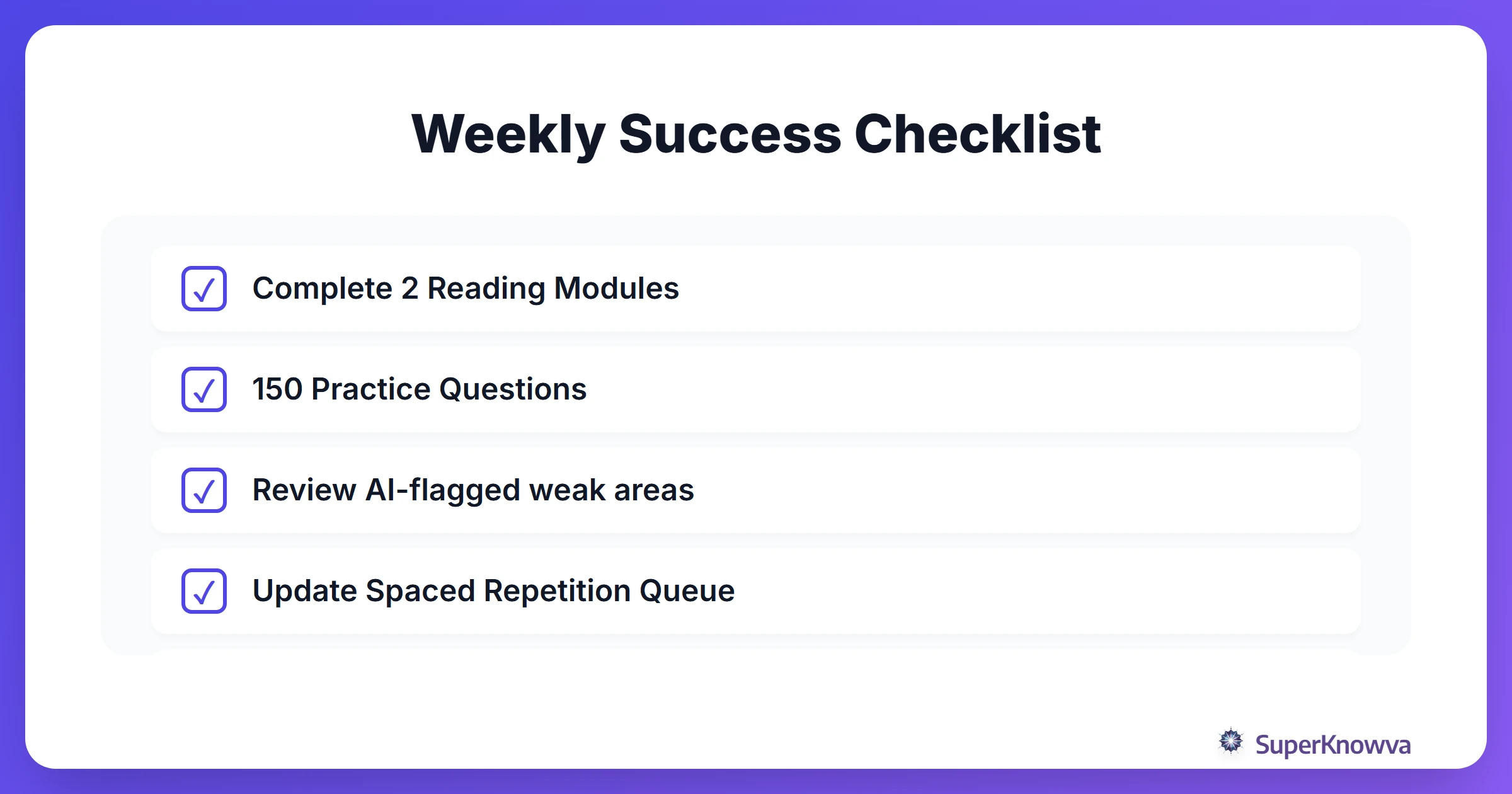
To beat this, your July plan needs spaced repetition. SuperKnowva’s AI automates this by tracking your performance and resurfacing the hard stuff just as you’re about to forget it.
- July & August Cadence: Aim for 15-20 hours of study per week.
- The 80/20 Rule: Spend 80% of your time on new material and 20% reviewing previous modules via AI.
- Micro-Learning: Use your commute or coffee breaks for quick AI-generated flashcards.
Don't forget to take care of your head, too. Consider AI-driven stress management techniques to stay sharp during the long 300 hours CFA study period.
Simulating the 180-Question Marathon
As you work through your July plan, keep the finish line in sight. The CFA Level 1 exam is two sessions of 135 minutes each, with 90 questions per session. That gives you exactly 90 seconds per question.
Building "exam stamina" is just as important as knowing the formulas. AI simulations let you practice in a realistic environment, helping you master that 90-second rhythm. These simulations find your weak spots early, so you can pivot your focus before it’s too late. For the official breakdown of the exam structure, check out the CFA Program Level I exam guide.
Overcoming the Mid-Study Slump with Data
It happens to everyone. Around late August or September, the "mid-study slump" hits. The initial July excitement wears off, and the mountain of material still looks huge.
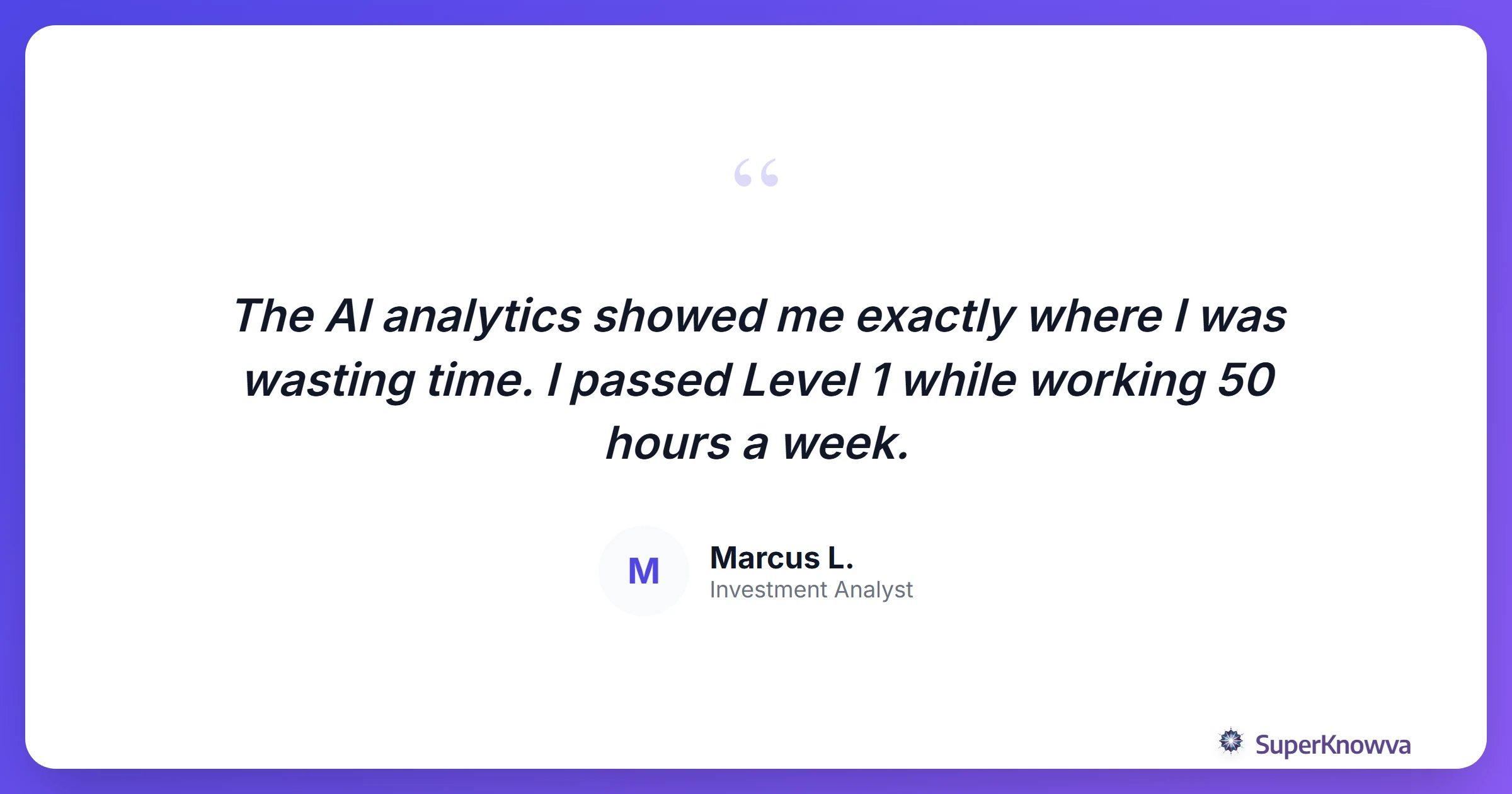
This is where data becomes your best friend. By using AI analytics to visualize your progress, you can see your mastery scores climbing in real-time. Seeing a graph of your improvement provides a psychological win that a static textbook just can't offer.
If you fall behind, don't panic. Use the data to pivot: focus on high-weight areas where your scores are lowest. The goal isn't perfection in every niche; it's "minimum viable mastery" across the board.
Conclusion
Starting your cfa level 1 preparation this July provides a strong advantage. By combining the 300-hour rule with SuperKnowva’s AI, you can study effectively to reach a passing score. Focus on the main topics, use spaced repetition, and let data guide your progress.