Remember when finals season meant nothing but endless nights in the library and highlighters running dry? The vibe hasn't changed, but the toolkit has. Today, you have a powerful AI co-pilot sitting right in your browser. It’s exciting, sure, but it’s also a bit of a minefield. With all that processing power comes a massive responsibility: ethical AI use for students.
Navigating the line between "smart studying" and "academic dishonesty" is probably the most important skill you’ll pick up this year. The goal isn't to find a shortcut to bypass the hard work. It’s about using AI to sharpen your thinking, clear the mental fog, and manage the chaos of finals week without risking your degree.
The Reality of Finals in the AI Era
AI is no longer just a futuristic concept; it’s the new normal in higher education. Whether it’s building a study schedule or asking a bot to explain quantum physics as if you’re five, these tools are changing the way we prep for exams. But as the tools get smarter, the definition of "studying" is shifting under our feet.
Here’s the thing: academic integrity and AI can actually live in harmony. Learning to use these tools ethically is a form of digital literacy that’s going to be huge for your career. Just remember the golden rule: AI should be used to augment your brain, not replace it. When you use AI to clarify a concept you’re stuck on, you’re learning. When you use it to write an essay you haven't even researched? You’re skipping the very cognitive "heavy lifting" that education is supposed to provide.
The Ethical Spectrum: Where Do You Stand?
Not all AI use is the same. To avoid risks, you must understand the different types of interaction, from the helpful "Green Zones" to the "Red Zones" that could lead to a disciplinary board.
- The Green Zone: This is the "Study Buddy" phase. Use AI to brainstorm themes, organize a messy study schedule, or get a simplified breakdown of a complex theory.
- The Yellow Zone: This is the "Co-Pilot" phase. Using AI to help structure an outline or suggest smoother transitions between your own ideas. Proceed with caution here, and always be transparent about it.
- The Red Zone: This is the "Danger Zone." Copying AI text directly, using it to solve exam questions in real-time, or failing to cite AI assistance when your professor explicitly asked for it.
Before you even open a chat window, check your syllabus. Seriously. Every professor has a different line in the sand. What’s a "helpful aid" in a coding lab might be "plagiarism" in a philosophy seminar. When in doubt, ask.
How to Make AI Your (Honest) Study Partner
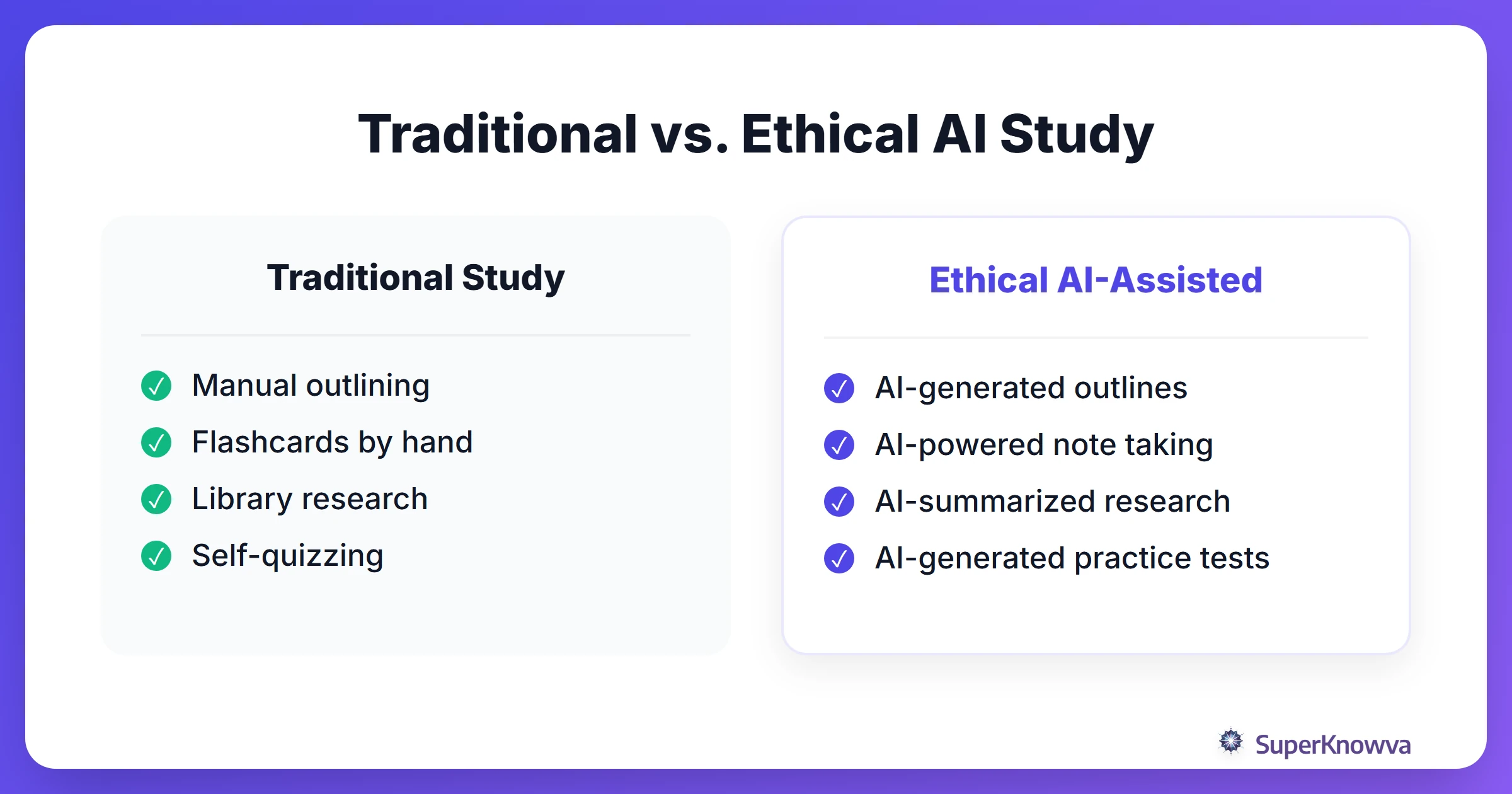
When you use it right, AI is the ultimate teammate. It can help you turn a semester’s worth of chaotic notes into a clear, manageable plan of attack.
A great starting point is AI-Powered Note Taking: A Comprehensive Guide. By feeding the AI your own notes, you can identify the gaps in your knowledge that you might have missed. Here are a few more ways to stay ethical while leveling up:
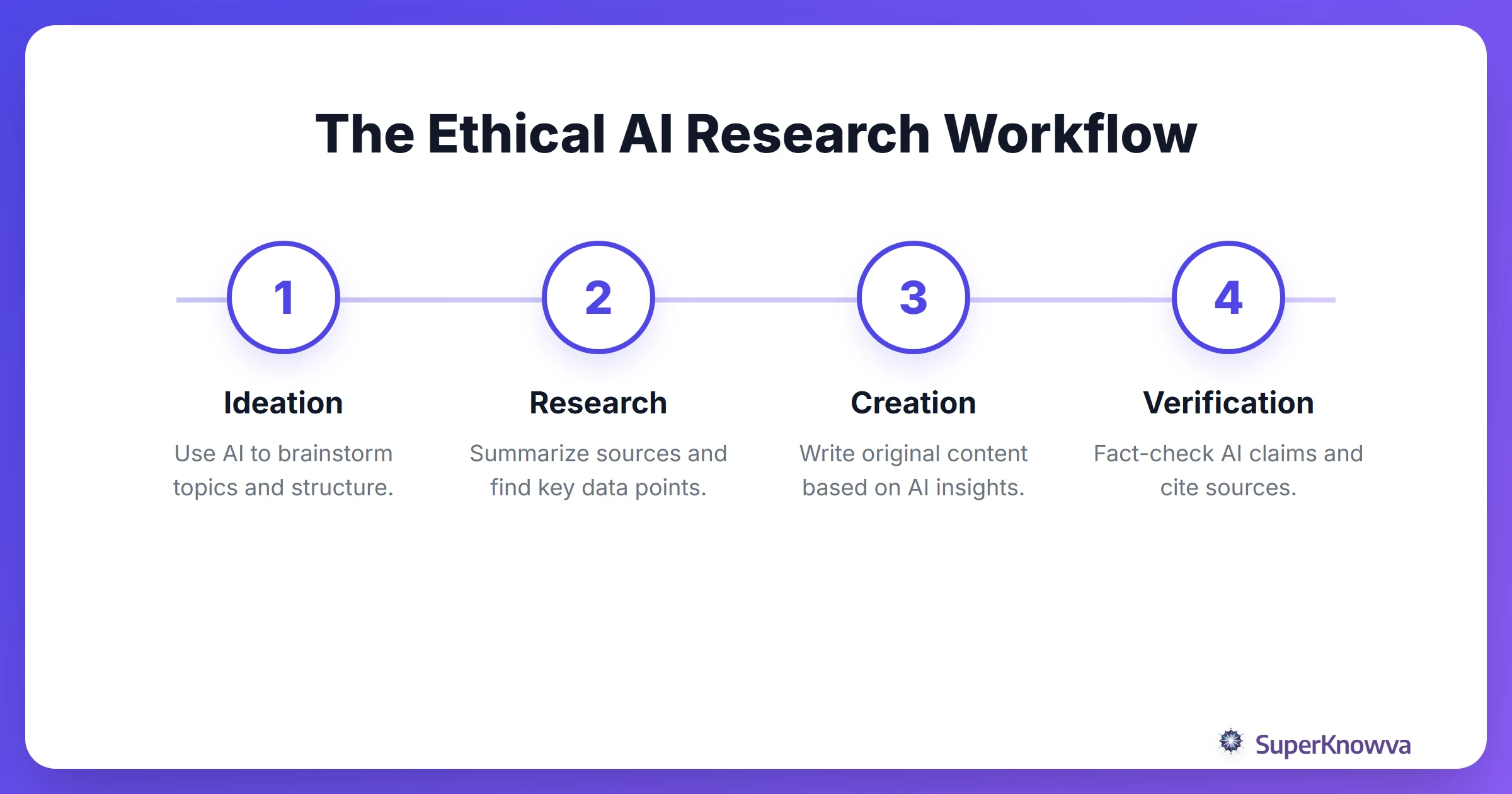
- Breaking the Blank Page: Stuck on how to start a 2,000-word take-home assignment? Use AI to brainstorm potential arguments or create a logical flow. Ensure the final words are your own.
- Decoding Dense Research: Use AI to summarize 40-page academic papers. This helps you find the core argument quickly, but do not skip the original text. You need to catch the nuances the AI might miss.
- The Mock Exam Trick: Ask the AI to quiz you based on your lecture notes. This is active recall, an effective learning method. It is not cheating; it is training.
- Creative Problem Solving: If you are struggling with a logic puzzle or a math hurdle, check out AI for Creative Problem Solving to see different ways to approach the problem.
The Plagiarism Trap: Don't Fall In
The biggest risk during finals is the temptation of the "easy way out." You have to know the difference between AI-assisted and AI-generated work.
AI plagiarism prevention depends on your own voice. If a chatbot wrote the sentence, it is not your work. University detection tools are effective at spotting patterns in generative AI. Copying a response is unethical and leads to a meeting with the Dean.
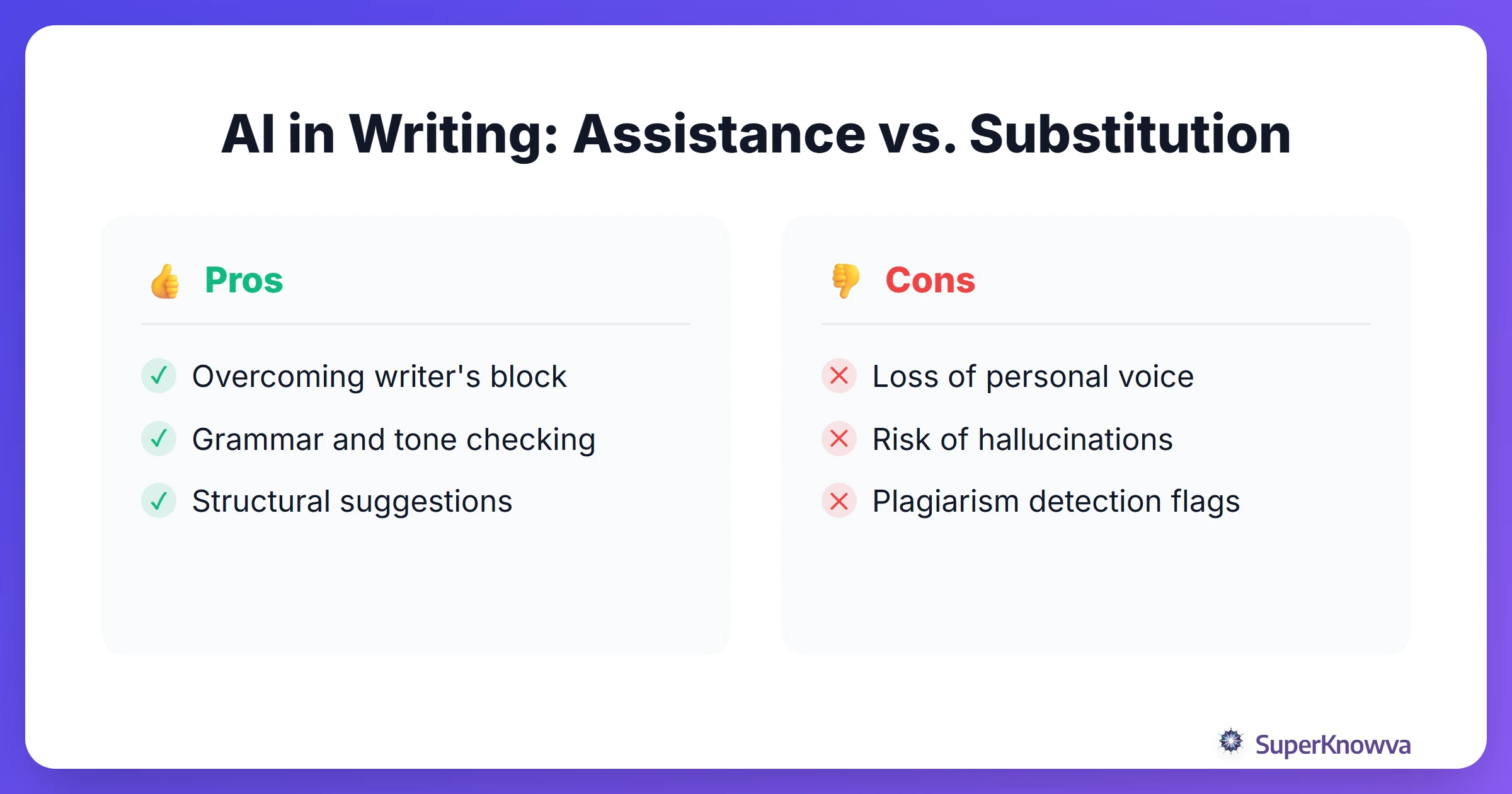
To stay on the right side of the rules, make sure every word you submit is your own. If you used AI to find a source or summarize a concept, take a look at the University of Kansas: Ethical Use of AI in Writing guidelines to learn how to keep your authorial voice intact.
Your Responsible AI Checklist
Before you hit "submit" on that final project, run through a quick verification. Keeping a "Human-in-the-loop" ensures you stay the master of your own work.
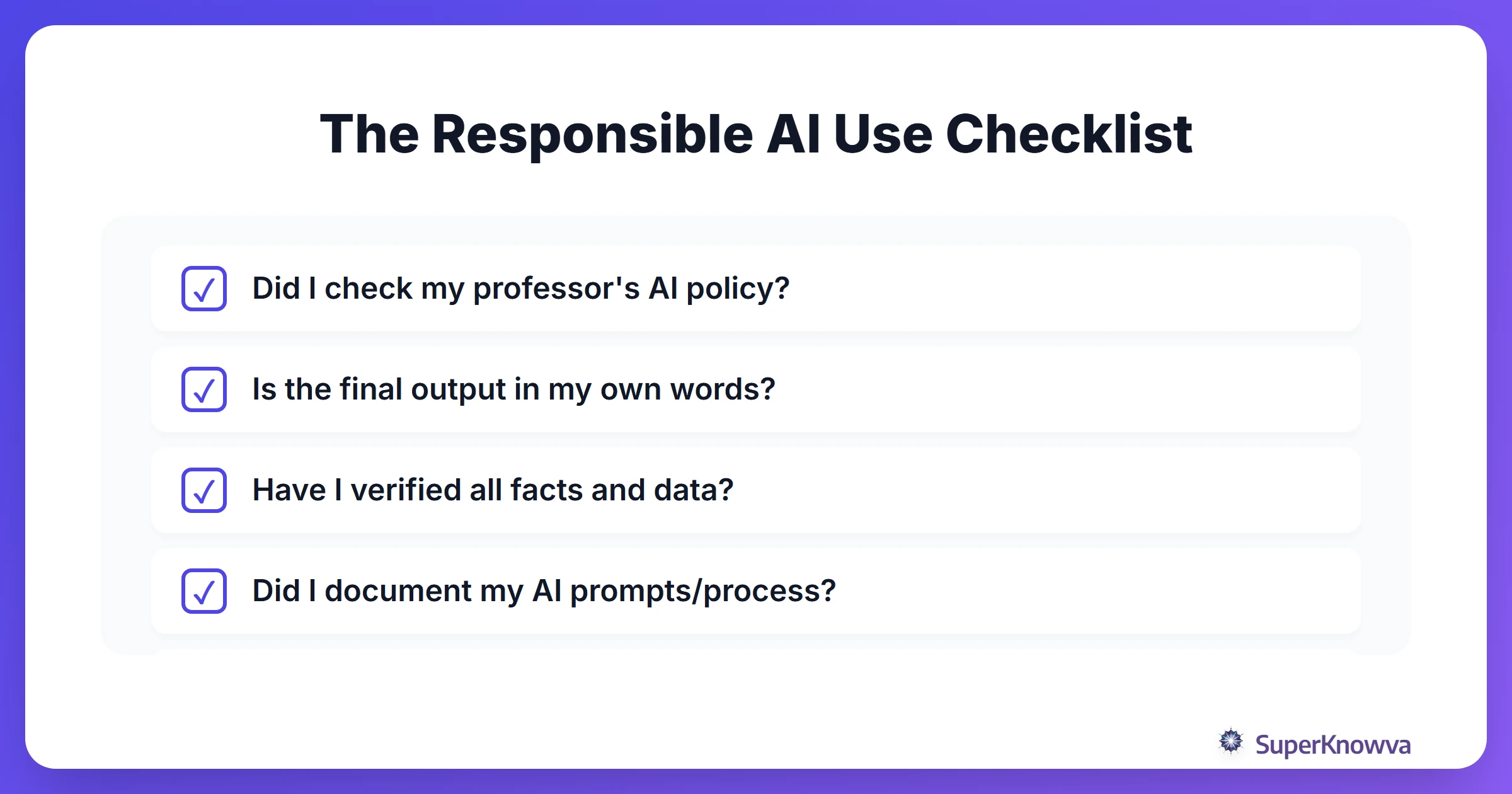
A pro tip? Document everything. If a professor ever questions your work, being able to show your original notes, your AI prompts, and your various drafts is your best defense. It proves you did the heavy lifting. For more on staying compliant, check out the Turnitin Responsible AI Use Checklist.
AI for Wellness: Stress Less, Study Better
Let’s talk about the human side of finals. We know that stress and burnout are what drive people to take unethical shortcuts. When you’re drowning, a "quick fix" looks a lot more tempting.
Ethical AI use can actually support your mental health so you don't reach that breaking point. Try using AI to:
- Balance your life: Input your exam dates and chores to create a study plan that actually includes time for sleep and food.
- Calm the nerves: Use tools like AI for Test Anxiety Reduction: Strategies and Tools to practice mindfulness or structured prep.
- Find Focus: Use AI to summarize the "big picture" when you feel like you’re losing the forest for the trees.
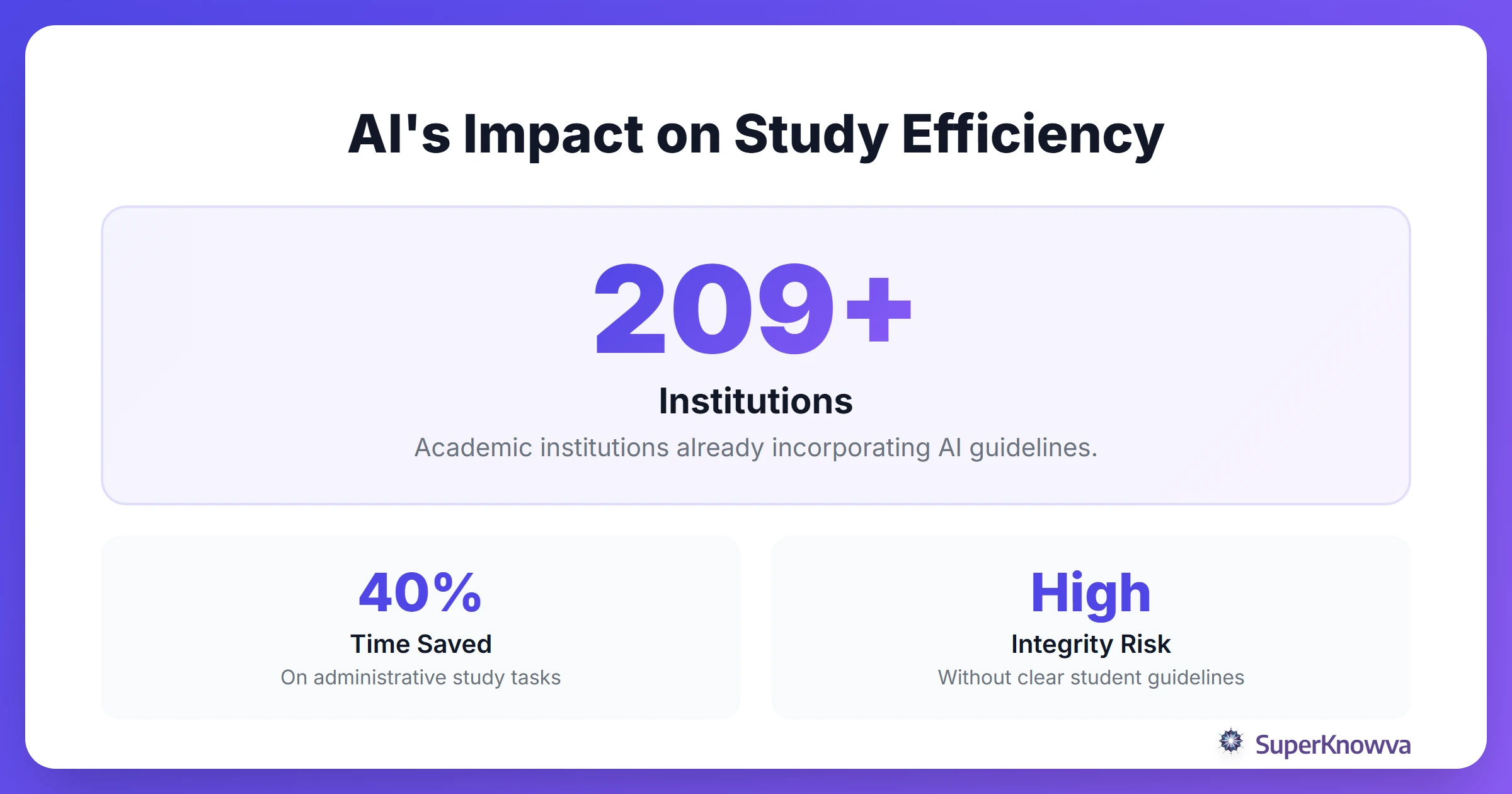
Generative AI ethics in education isn't about banning the tech. It’s about using it to become a sharper, more efficient, and more honest learner. Balance the high-tech tools with deep, focused human study, and you’ll ace your finals with your integrity (and your sanity) intact.
Good luck. Study smart and stay ethical!