You know the feeling. It’s 2 AM, your third cup of coffee is cold, and you’re staring at a syllabus that seems to have doubled in size since midterms. In the quiet hum of the library, almost everyone is looking for an edge. These days, that edge usually comes from the glow of an AI chat box.
Where do you draw the line? Is using AI to summarize a lecture "smart studying" or "academic shortcutting"? Understanding the ethics of ai in exams isn't just about avoiding a trip to the Dean’s office. It is about protecting the value of your degree.
In this guide, we’ll break down how to hit those academic integrity AI standards while using tools like SuperKnowva to actually learn the material, not just bypass it.
The Blurred Line: Where Helping Becomes Cheating
University policies are currently playing a frantic game of catch-up. Technology is moving at light speed, leaving traditional definitions of "cheating" in the dust. We’re currently in a gray area where AI can act as either a 24/7 personal tutor or a digital ghostwriter.
The ethical boundary usually boils down to two things: intent and output.
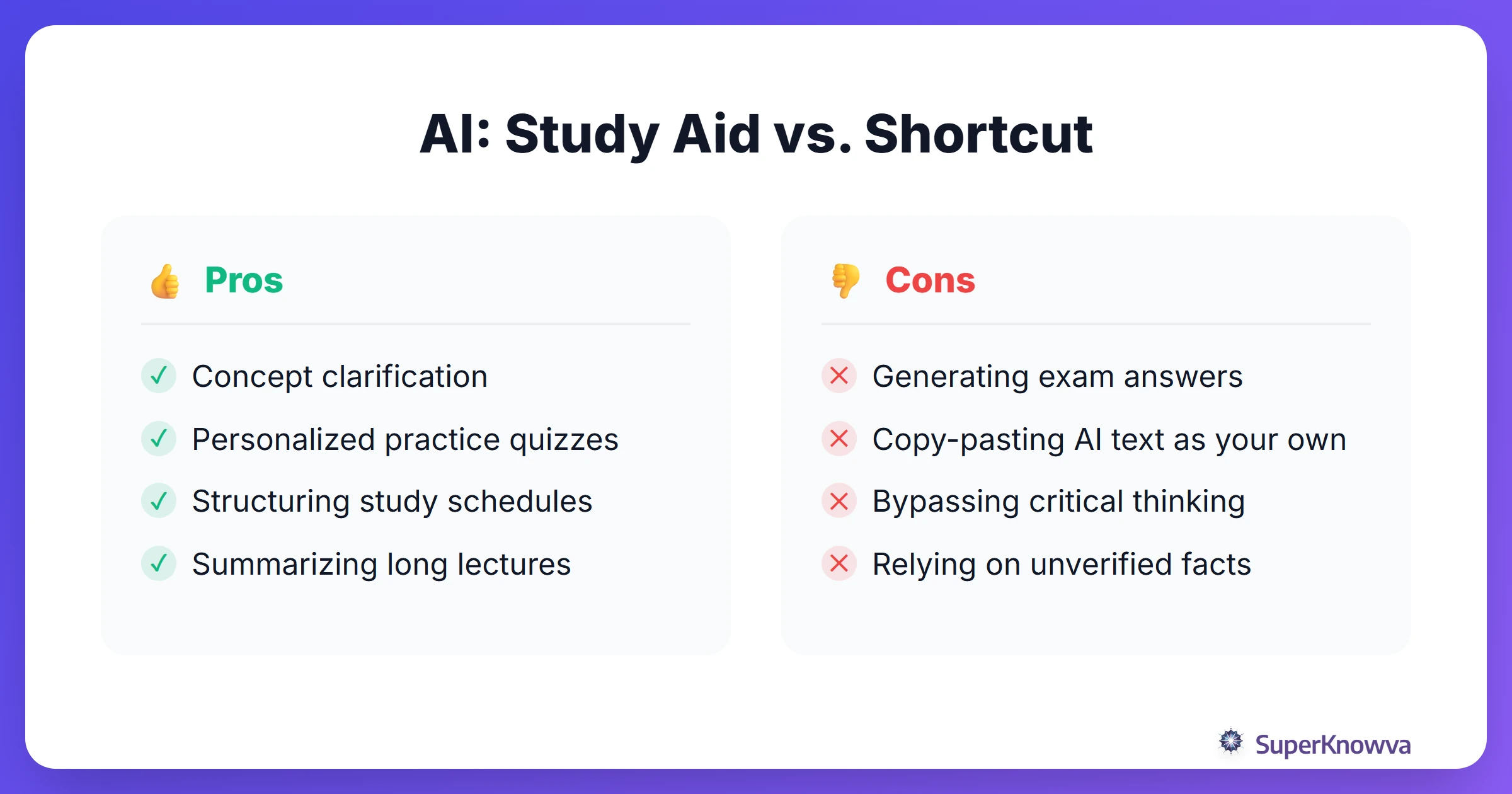
Using AI for concept clarification, such as asking it to "explain the Second Law of Thermodynamics using a sports metaphor," is an effective way to learn. It is active and engaging. Using AI for answer generation, such as asking it to "write my 1,500-word essay on French Revolution causes," results in academic misconduct.
Your Original Thought vs. AI Assistance
Why are you even in university? Hopefully, it's to learn how to think. If an AI does the heavy lifting for you, you’re essentially paying tuition to outsource your own brain.
When you're deciding how to prep, comparing AI tutors vs. human tutors can help you find a balance that provides support without taking over. An ethical student uses AI as a starting point to brainstorm an essay structure or summarize a dense, 50-page reading, rather than the final product.
Pro tip: If your school allows AI, be transparent. Many departments now suggest (or require) an AI disclosure. A simple note explaining which prompts you used and how the AI helped shape your work can save you a lot of headaches later.
Don't Guess: Talk to Your Professors
The "wait and see" approach is a dangerous game during finals. Don't wait for an AI detector to flag your paper before you start a conversation.
- Read the fine print: Check your syllabus for terms like "unauthorized assistance." If it's vague, ask.
- Be upfront: Tell your professor exactly how you’re using tech. Try saying: "I'm using SuperKnowva to turn my lecture notes into practice quizzes; is that okay with you?"
- Know the stakes: Using AI to ghostwrite an exam is high-risk, low-reward. Beyond the risk of expulsion, you're losing the "cognitive struggle" that actually helps you remember things for your career.
While researchers are Rethinking Exam Design in the Age of ChatGPT to make tests more "AI-proof," the burden of honesty is still on you for now.
Using SuperKnowva the Right Way
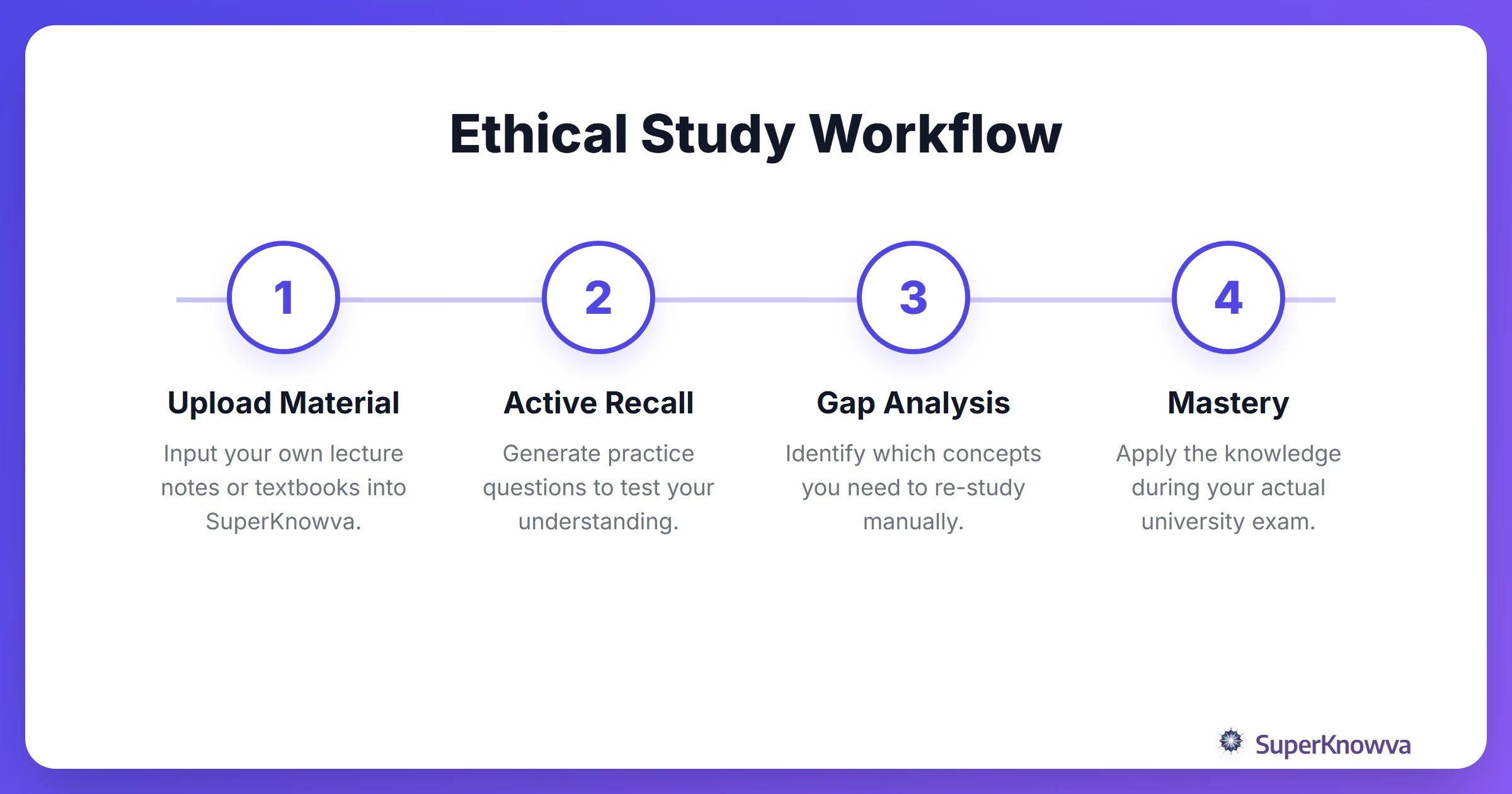
At SuperKnowva, we aren't interested in helping you cheat. We want to help you master your subjects. Our platform is built to be a study partner, not a shortcut. Here is how to stay ethical while using our features:
- AI-Powered Note Taking: This is an effective way to maintain academic integrity. By using AI-powered note taking to organize your thoughts and lecture materials, the primary reference remains the content provided by your professor instead of a random algorithm.
- Active Recall via Quizzes: Don't ask for the answers; ask for the questions. Use SuperKnowva to generate practice exams. This forces your brain to work, which is a key component of long-term retention.
- Synthesis, Not Shortcuts: Use AI to identify connections between concepts. Ask it to find links between Week 2 and Week 10 of your course to help you understand how the subject evolves.
Fact-Checking and the "Hallucination" Problem
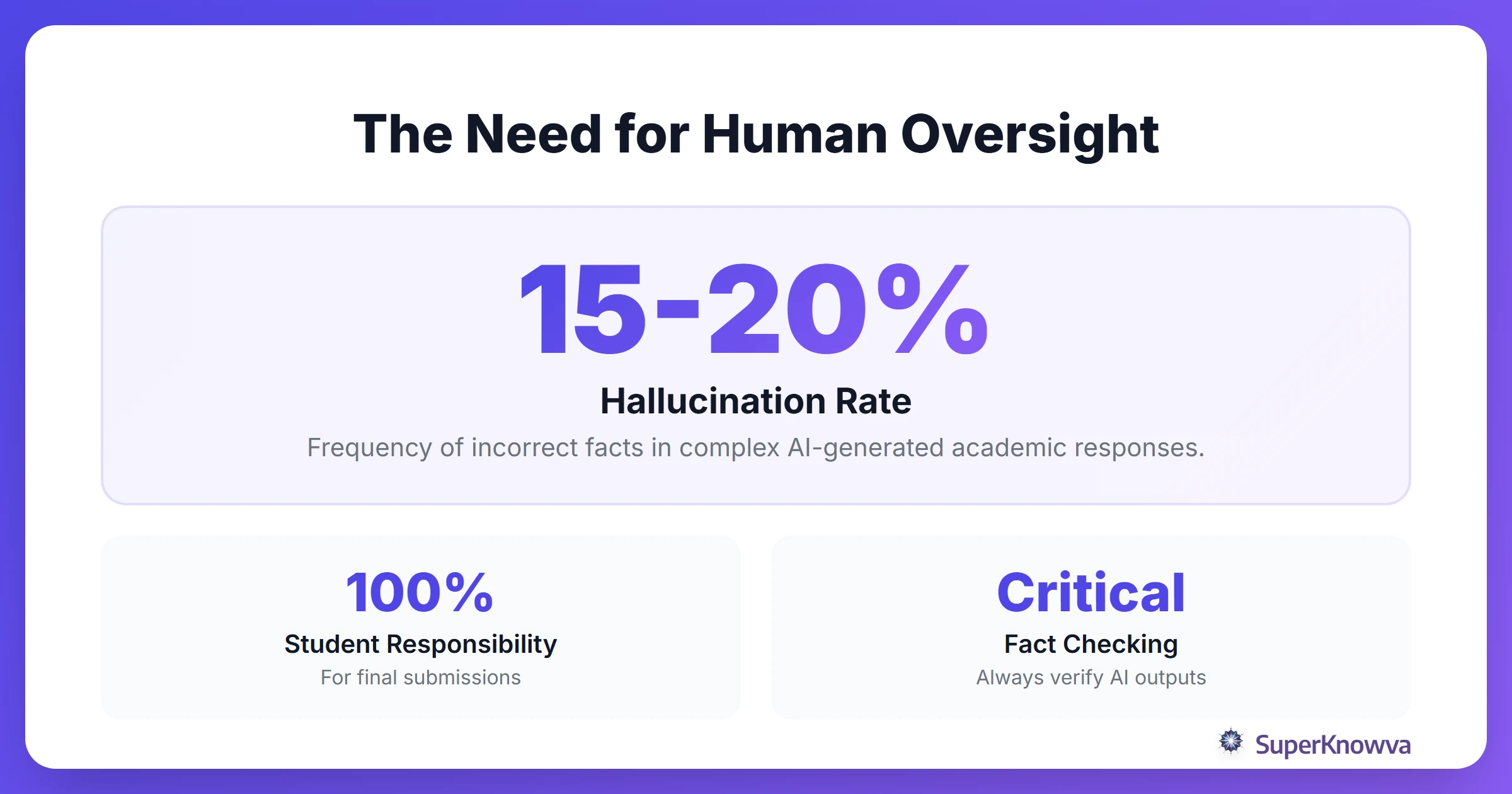
Let’s be real: AI can be a liar. It "hallucinates" facts, invents citations, and delivers wrong answers with total confidence. Relying on it blindly isn't just unethical; it's a fast track to a failing grade.
Part of university exam ethics is maintaining academic rigor. You have to verify everything. Furthermore, we have to consider the digital divide. Not everyone has the same access to high-end tools, which makes your own unique, human perspective even more valuable. Don't let your voice get lost in the machine.
If you're interested in the deeper philosophy of this, check out the research on The Ethics of AI-Mediated Peer Review.
What the Future of Exams Looks Like
The world of SuperKnowva ethical use is changing fast. You might notice your professors shifting away from take-home essays and toward:
- Oral Exams: You’ll have to explain your logic out loud.
- Proctored Environments: A return to the classic blue-book and pen.
- Project-Based Work: Assignments that require you to show your "work in progress" over several weeks.
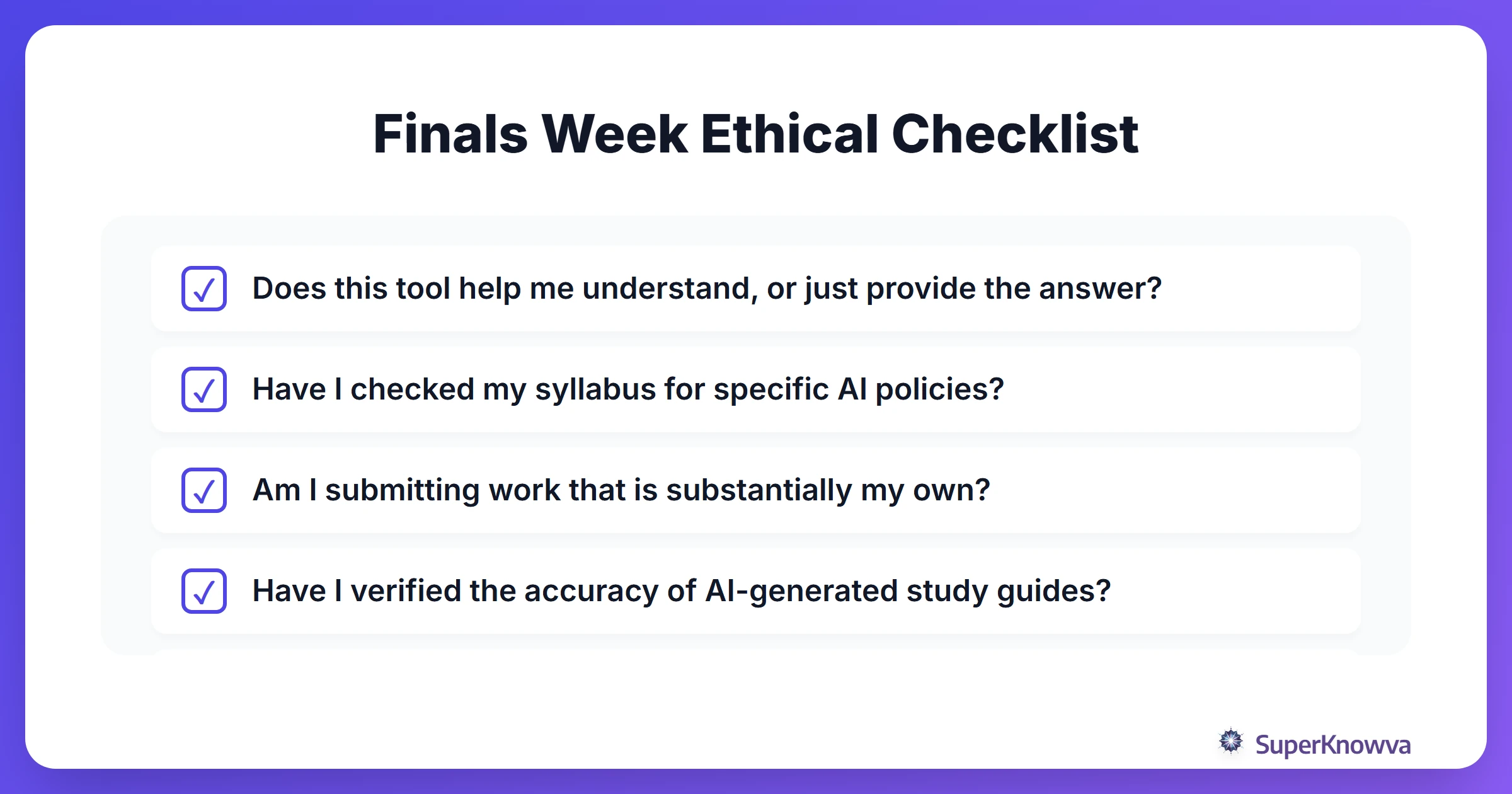
The Ethical AI Student Checklist
Before you submit that final project or sit for that exam, run through this 5-step framework.
Using reducing test anxiety with AI is a great way to stay calm and organized, but it only works if you’ve actually done the work. True confidence comes from knowing you know the material.
The Bottom Line
Finals week is a pressure cooker. The temptation to take a shortcut is massive when you're exhausted. But integrity is about more than just avoiding the Dean’s office. It’s about making sure that when you finally walk across that stage, you actually own the knowledge your degree represents.
Use AI to challenge yourself, to organize the chaos, and to fill in the gaps. Let it be the wind in your sails, not the engine doing all the work. You’ve got this. Good luck!