The "red pen" has long been a symbol of classroom authority and a source of anxiety for many students. After handing in a paper and waiting two weeks, you receive it back with a single letter circled at the top. This grade rarely captures everything you learned.
This static approach is finally being challenged. The future of grading with ai is shifting from a high-stakes "gotcha" moment to a continuous, supportive path toward mastery. At SuperKnowva, we believe assessment should help you grow, not just categorize you.
The Evolution of Assessment: From Static Grades to Dynamic Data
The traditional A-F grading system is a relic of the industrial era. It was designed to sort students into neat categories, but it often misses the nuances of how people actually learn. In a digital-first world, why are we still relying on a "snapshot" test taken on a Friday afternoon to measure intelligence?
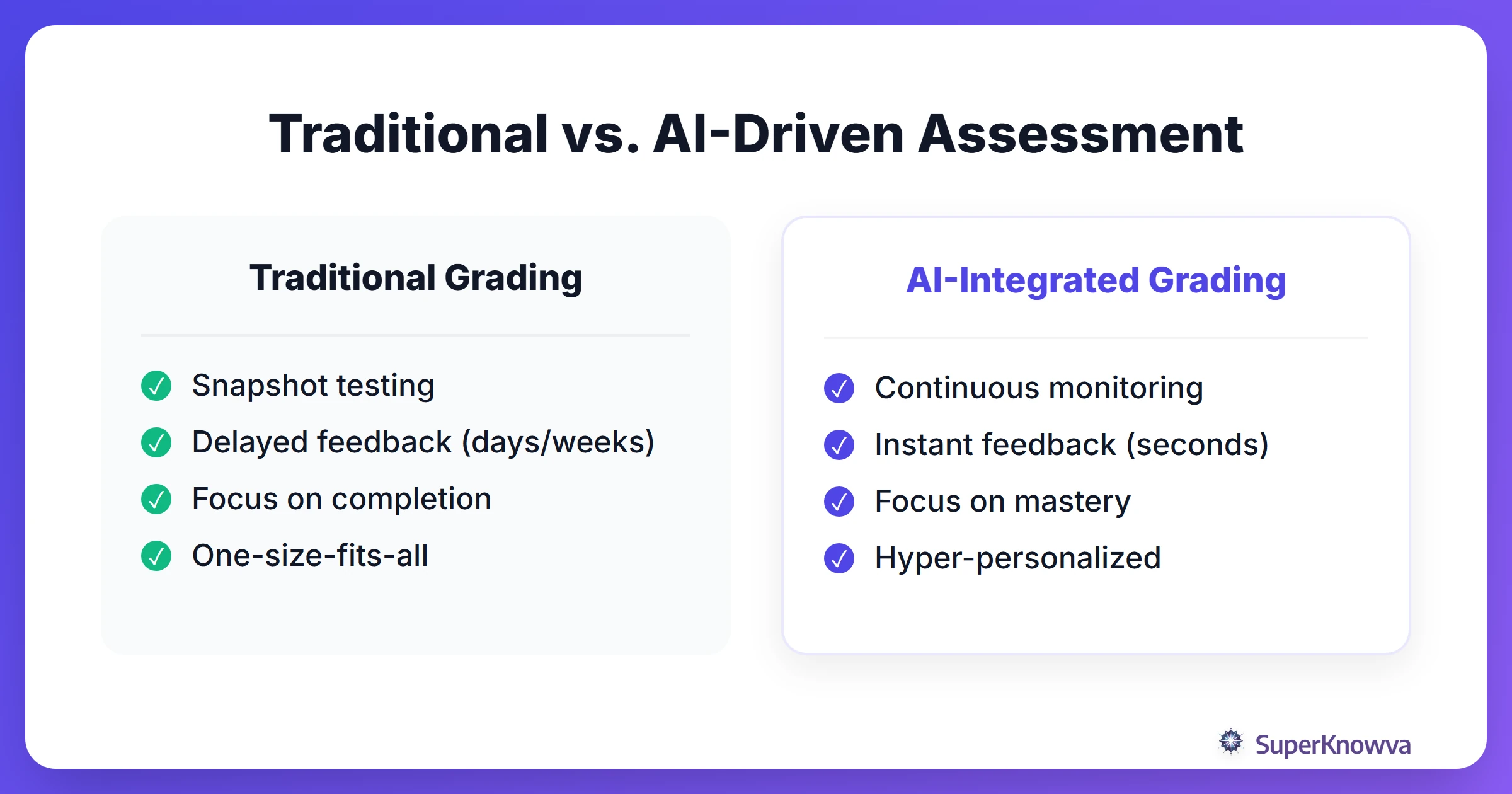
AI is facilitating a move toward what experts call "invisible assessment." Imagine a classroom where learning and grading happen at the exact same time. Instead of stopping everything to take a high-pressure test, AI tools monitor how you interact with material in real-time. This allows educators to see the "how" and "why" behind your answers, focusing on your thought process rather than just the final result.
Competency-Based Evaluations: Measuring Mastery, Not Time
Have you ever felt like the class moved on before you were ready? Or maybe you were bored because you already mastered the topic? That’s the flaw in calendar-based learning. In an AI-integrated classroom, the class moves forward only when you demonstrate mastery.
AI is the perfect engine for competency-based AI evaluations. Because algorithms can track micro-interactions, they can spot specific skill gaps that a multiple-choice test would skip right over. For example, an AI might notice you’ve nailed the concept of a "thesis statement" but are still struggling with "transition sentences."
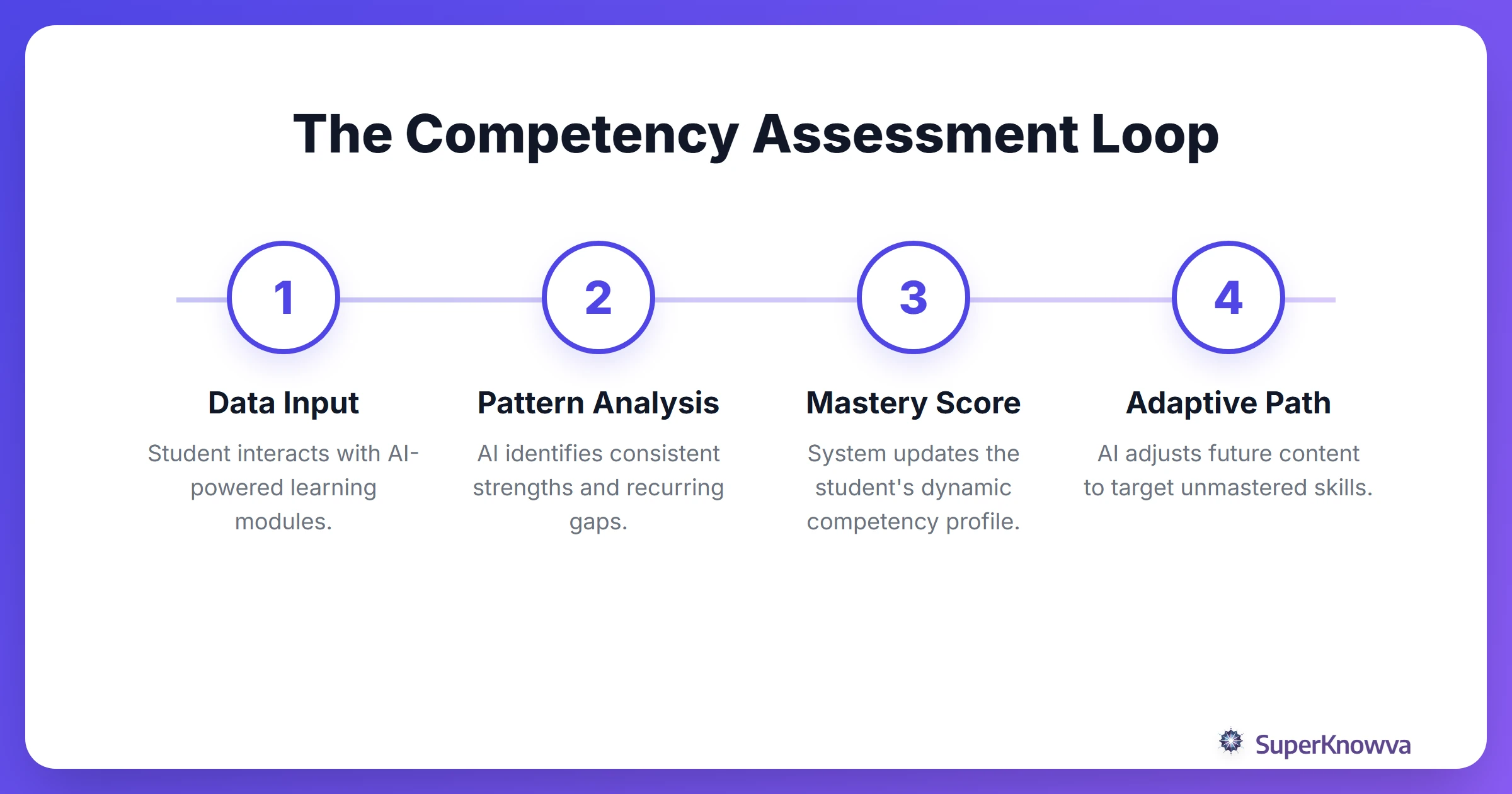
By using this data, AI creates personalized learning pathways. If you haven't mastered a specific skill, the system doesn't just give you a "D" and move on. It loops back, offering new resources and practice opportunities until the concept clicks.
The Instant Feedback Loop: Ending the Two-Week Wait
There is nothing more frustrating than receiving feedback on an essay two weeks after you’ve forgotten what you even wrote. The psychological impact of immediate feedback is massive. It turns a mistake into a learning moment rather than a permanent failure.
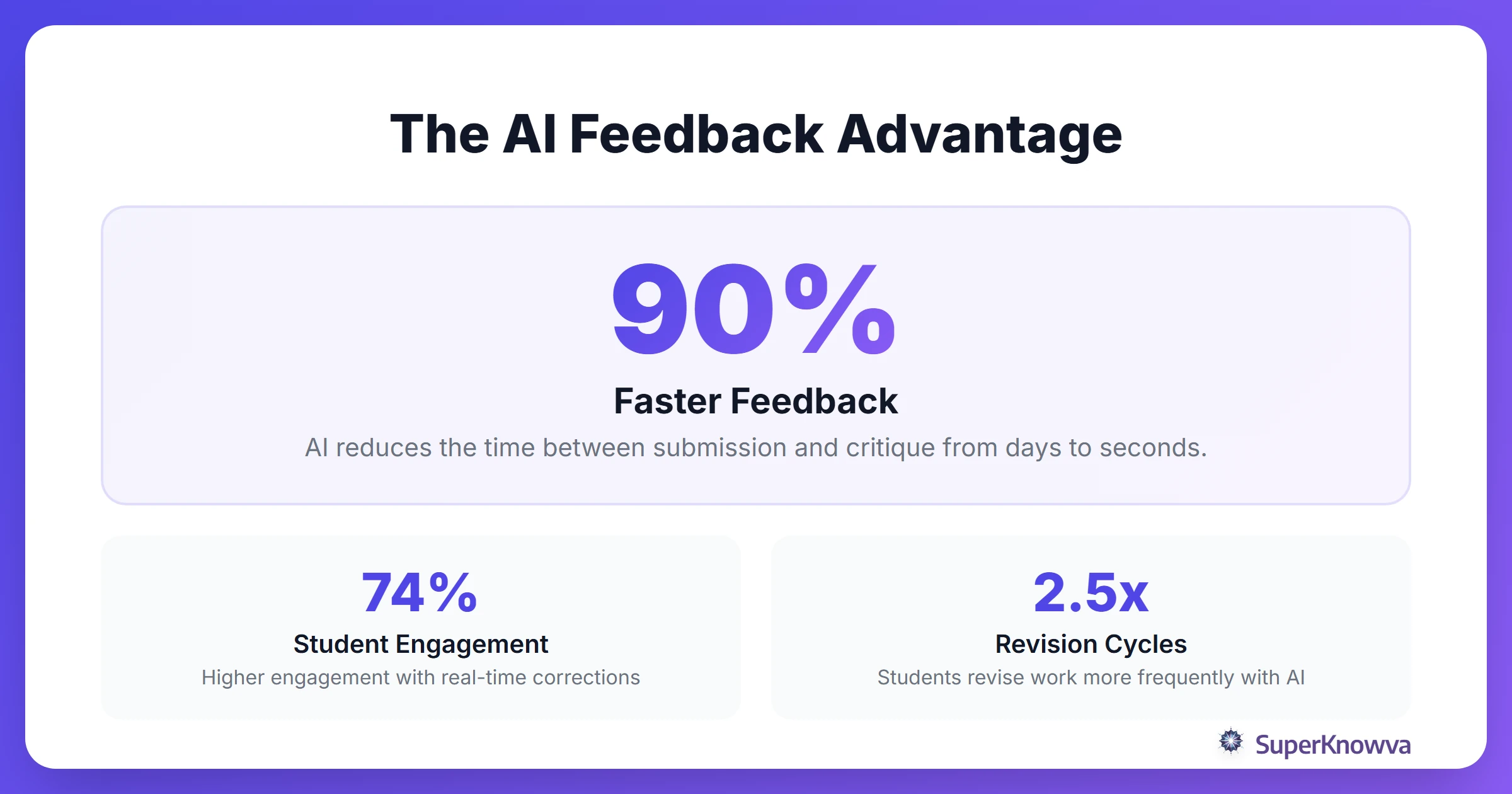
AI-powered tools are closing this gap by providing an AI feedback loop that operates in seconds. Whether it’s granular critiques on a coding assignment or structural advice on a history paper, you can iterate on your work instantly. This reduces the friction in learning, allowing you to correct a misunderstanding the moment it happens.
Addressing the Bias Challenge: Ensuring Fair AI Grading
We have to address the elephant in the room: automated grading bias. Critics are right to point out that AI models are only as fair as the data used to train them.
A notable FutureEd report on AI essay grading highlighted concerns that some algorithms might inadvertently penalize certain dialects or unique writing styles. To fix this, the industry is moving toward "human-in-the-loop" systems. In these models, AI handles the heavy lifting of data analysis, but a human teacher remains the final judge of fairness and equity.
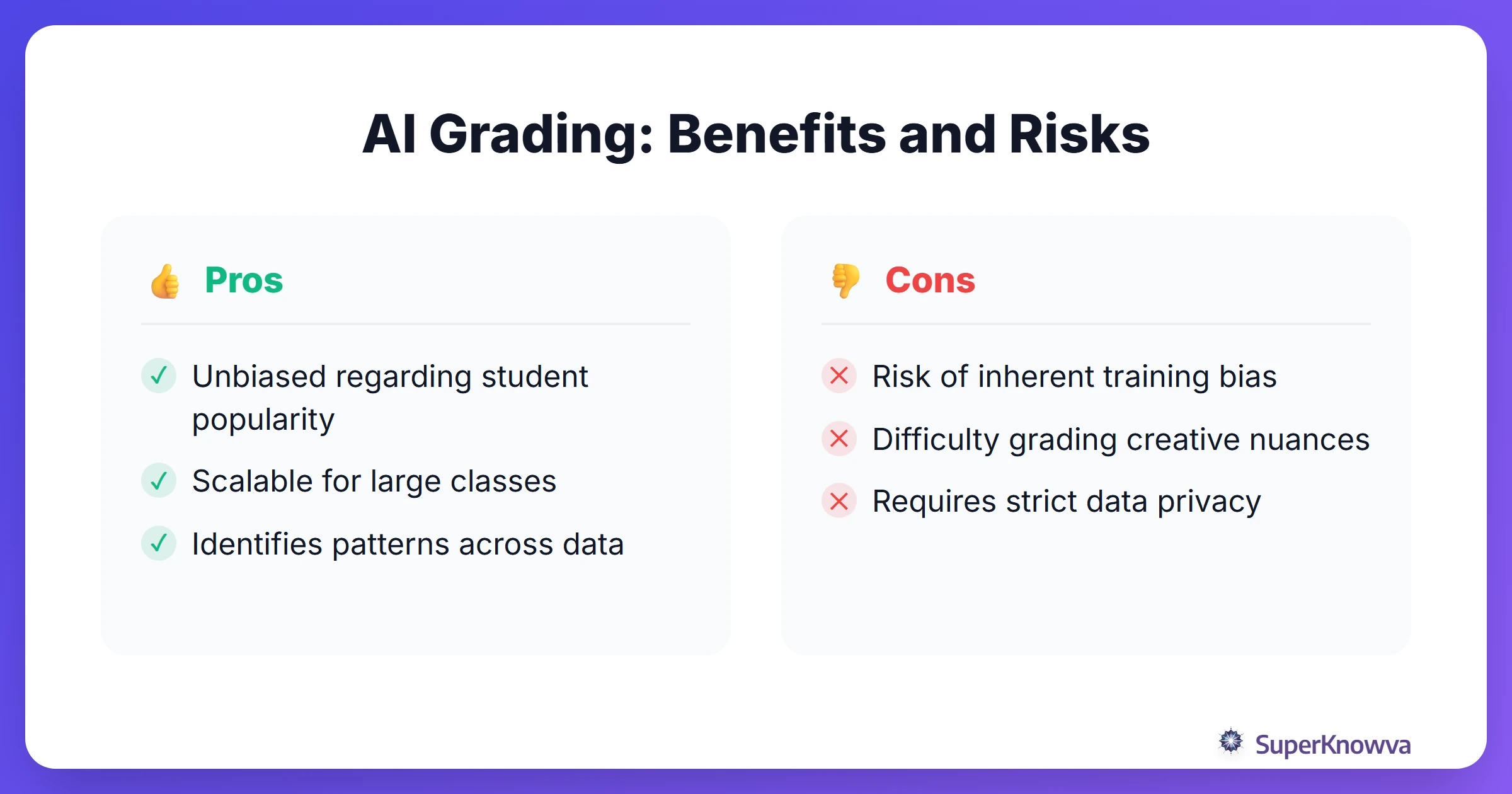
Maintaining transparency and sticking to standards like those found in the 2025 AI Safety Index is essential. We need to ensure AI is a tool for equity, not a new barrier to success.
The Teacher's New Role: From Chief Grader to Lead Mentor
A common fear is that AI will replace teachers. In reality, the future of grading with ai does the opposite: it liberates them. By offloading the administrative weight of grading hundreds of worksheets, educators can reclaim their time for emotional intelligence in the AI classroom.
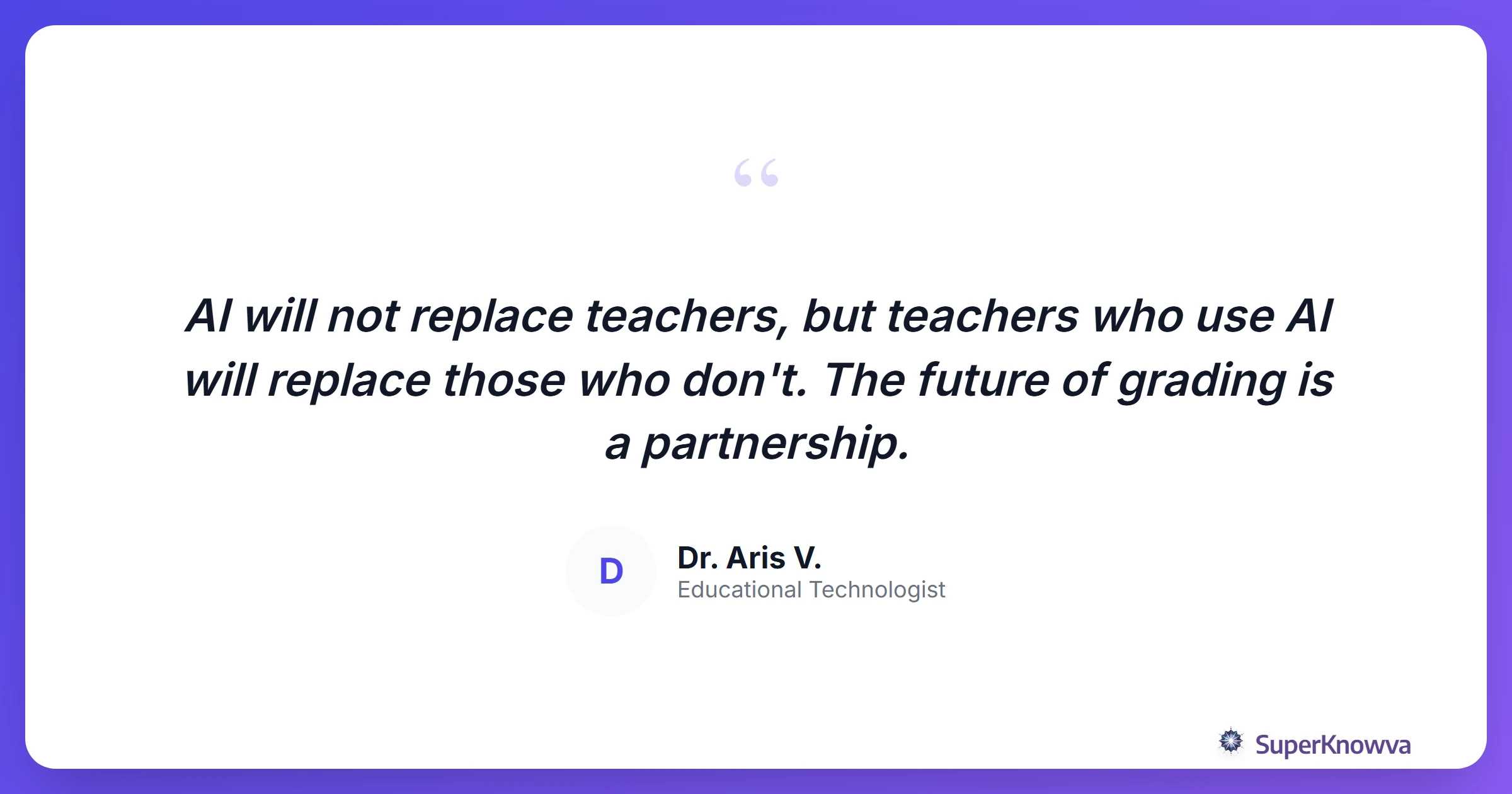
When a teacher has an AI-generated report showing exactly where a student is stuck, they can provide deep, one-on-one coaching. AI can grade a math problem, but it cannot inspire a student to pursue a career in engineering or offer empathy when someone is having a rough day. The teacher’s role is evolving from "Chief Grader" to "Lead Mentor."
Reducing Student Stress Through AI-Driven Assessments
Finally, AI is helping to dismantle the culture of high-stakes testing that leads to burnout. By implementing low-stakes, frequent evaluations, we can significantly contribute to reducing test anxiety through AI.
Assessment is becoming gamified, not in the sense of "playing games," but by adopting a "growth mindset" where you are encouraged to retry challenges until you win. When the fear of a permanent "F" is gone and replaced with the opportunity to "level up," you become more willing to take intellectual risks.
Conclusion
The future of grading with ai isn't about replacing the human element of education; it’s about making it more human. By moving beyond the letter grade and focusing on real-time, personalized growth, we are creating a world where every student has the chance to achieve mastery at their own pace.
At SuperKnowva, we build tools that help you study and understand the world. The era of the "red pen" is ending. The era of the personalized mentor has begun.