The old GMAT is gone. The GMAT Focus Edition isn’t just a shorter version of the test you’ve been dreading; it is a complete change in how business schools measure your potential. The brute-force era of memorizing grammar rules and geometry formulas is over. To score high now, you need gmat focus edition ai prep. Think of it as upgrading from a paper map to a GPS with real-time traffic updates. You aren't just studying; you're using artificial intelligence to master a data-heavy exam with accuracy.
The GMAT Has Changed. Your Study Habits Should Too.
The Focus Edition has trimmed the fat by cutting Geometry and Sentence Correction. Sounds like a relief, right? Not exactly. The exam has doubled down on what actually matters in a modern MBA: critical thinking and data literacy. With the new Data Insights (DI) section, you’re being tested on your ability to synthesize messy, complex information under a ticking clock.
Traditional prep books often fail here. Because the GMAT is a computer-adaptive test, a static textbook is a relic of the past. Your study routine needs to be as adaptive as the exam itself. This is where AI changes the game. Instead of just staring at a solution in an Official Guide, AI lets you interrogate the logic behind the question. It helps you understand the "why" before you ever worry about the "what."
Beating Data Insights: It’s About Patterns, Not Luck
Data Insights is usually where high-scoring candidates struggle. It is easy to fall for the "Randomness Illusion," the belief that every DI question is unpredictable. This is incorrect. Analysis of gmat data insights ai modeling shows that nearly 45% of the toughest DI questions are built on five core logic structures.
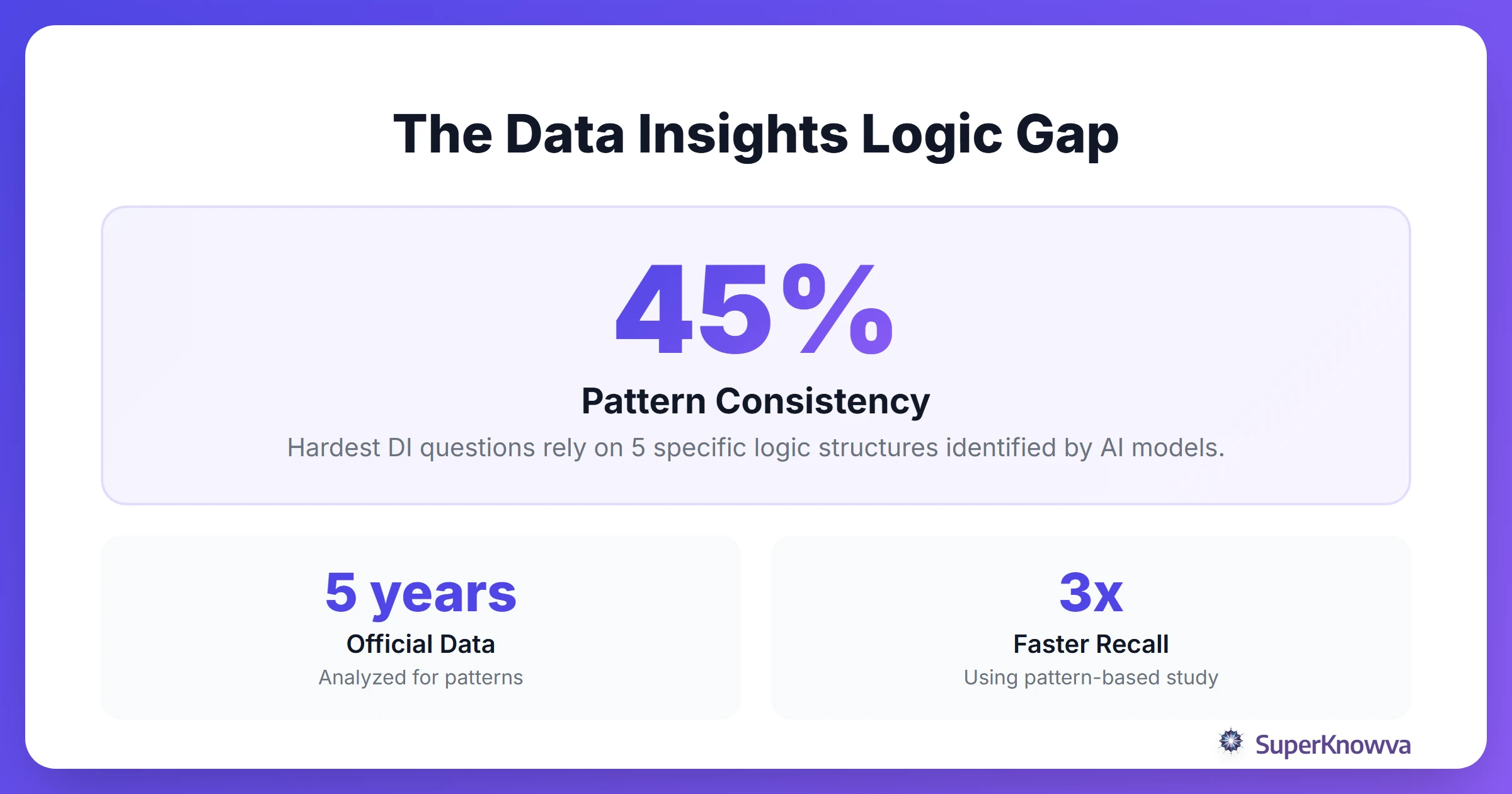
By using AI to categorize Multi-Source Reasoning and Table Analysis questions, you can start to see the "skeleton" beneath the prompt. You can even ask an AI model to generate ten variations of a single logic structure. This allows you to practice the same mathematical pattern across different scenarios, such as switching from a table about crop yields to a graph about stock market volatility. This kind of pattern recognition is something a traditional textbook just can’t teach.
Stop Guessing: Using AI to Decode "Official" Explanations
Missing a tough question and reading an official explanation that says, "Choice A is wrong because it is not supported by the passage," is frustrating. By using a specialized ai gmat tutor, like this Custom GMAT Focus GPT Teacher, you get a 24/7 tutor that provides clear, detailed explanations.
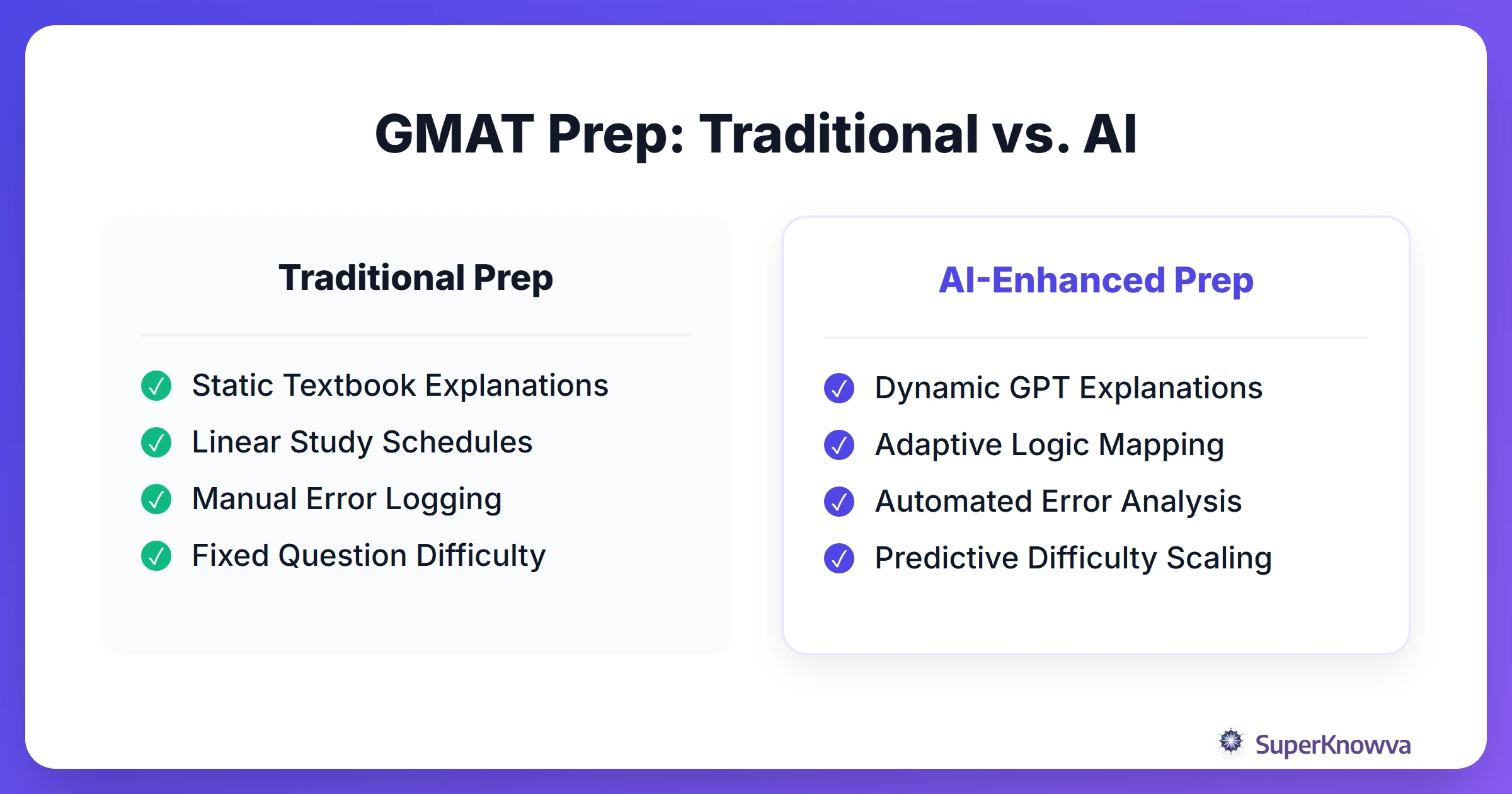
When you’re stuck on a Quantitative Reasoning problem, don't just move on. Ask the AI to:
- Break down the problem step-by-step using a specific strategy (like "Picking Numbers").
- Explain exactly why a "trap" answer looked so tempting.
- Generate a similar problem on the fly to prove you’ve actually mastered the concept.
This feedback loop is the secret sauce for the AI-Driven Strategies for Verbal Reasoning that top scorers are now using to dismantle Critical Reasoning questions.
Quality Over Quantity: The Death of the 1,000-Question Grind
Doing 1,000 practice questions isn't a badge of honor; it’s a recipe for burnout. Modern high-scorers use gmat predictive modeling to find their "logic gaps" before they waste hours on topics they already know.
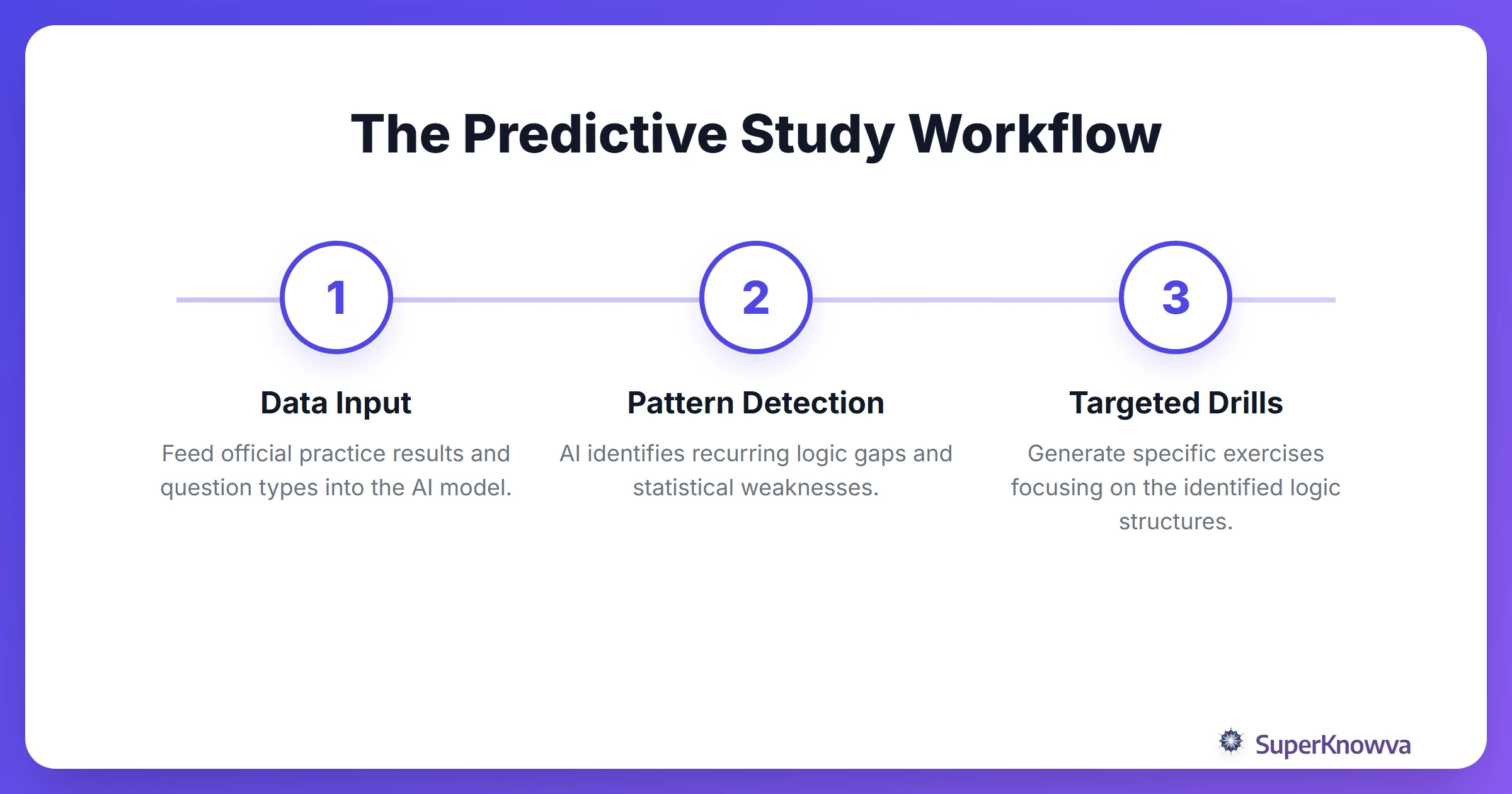
If you feed your practice test data into an AI, you’ll start to see trends you never noticed. Maybe you aren’t "bad at Quant." Maybe you specifically struggle with Weighted Averages only when they appear in a Data Sufficiency format. Instead of doing 100 random drills, AI lets you focus on 10 high-impact problems that actually move the needle on your score.
Mastering Quant Without the Mental Gymnastics
In the Focus Edition, gmat focus quantitative reasoning ai tools are your best friend for tackling Number Properties and Word Problems. Since the test is adaptive, you need to practice at the very "ceiling" of your ability to improve.
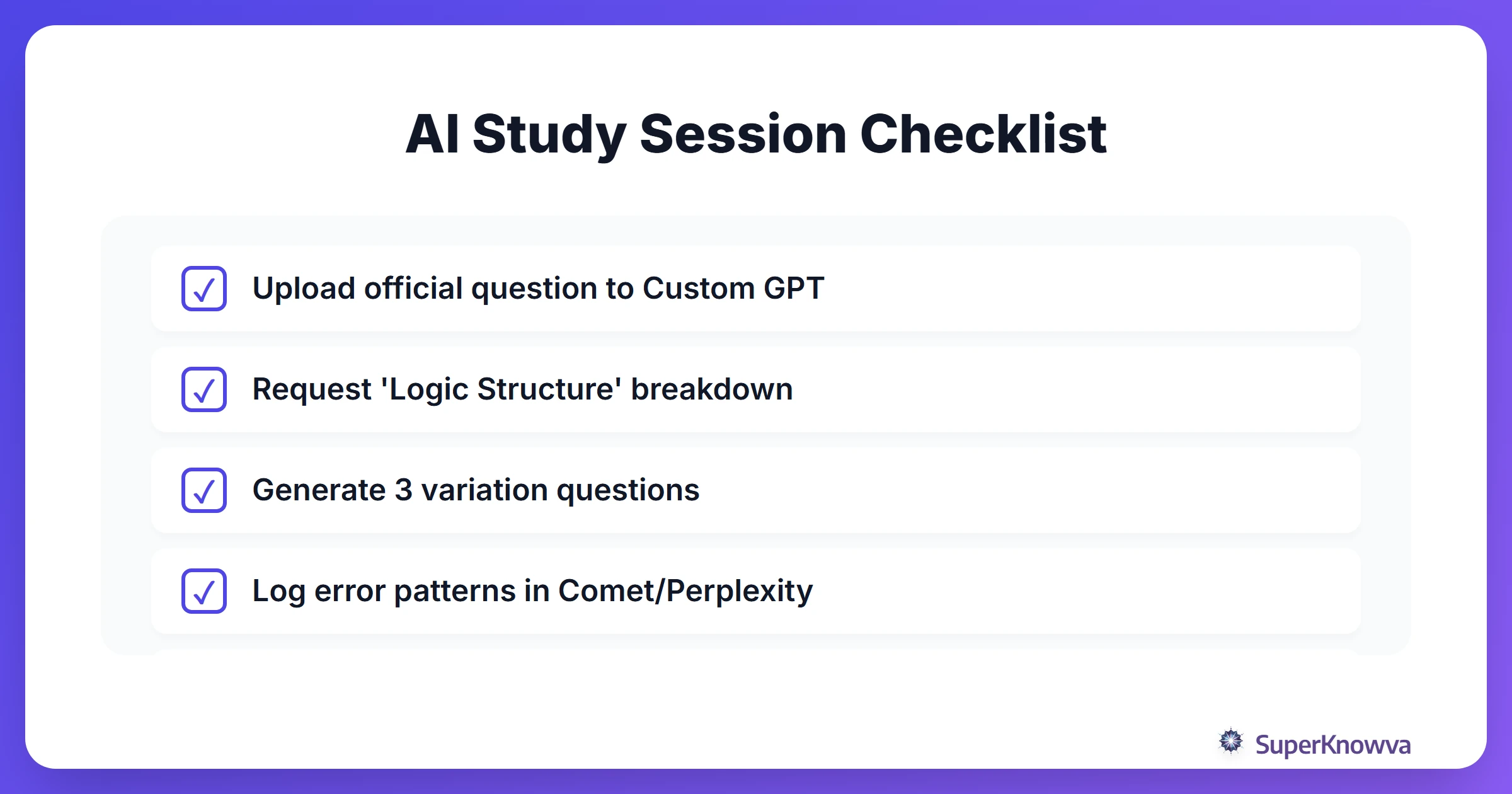
Use AI to simulate that adaptive pressure. If you get a question right, tell the AI: "Give me a similar question, but make it harder." This forces you to master the concept rather than just memorizing a formula. Plus, AI can show you the "fastest path." In the Focus Edition, time is your most valuable asset. If an AI can teach you a 30-second logic shortcut for a problem that usually takes you two minutes, that’s your ticket to a 700+ equivalent score. For a deeper dive, check out our AI-Powered Guide to Quantitative Reasoning.
Tools of the Trade: Perplexity, Comet, and the End of Manual Error Logs
Stop wasting time scrolling through endless GMAT Club forums. Tools like Perplexity PRO for GMAT Efficiency can do the heavy lifting for you. Ask it to "Summarize the three best strategies for Boldface questions," and you’ll get the consensus in seconds.
You can also automate the most boring part of prep: the Error Log. Use AI OCR (Optical Character Recognition) to snap a photo of a question you missed. The AI can automatically categorize it by topic and difficulty, helping you boost reading comprehension with AI by identifying whether you actually misunderstood the math or just misread the prompt.
Your 12-Week AI-Powered Roadmap
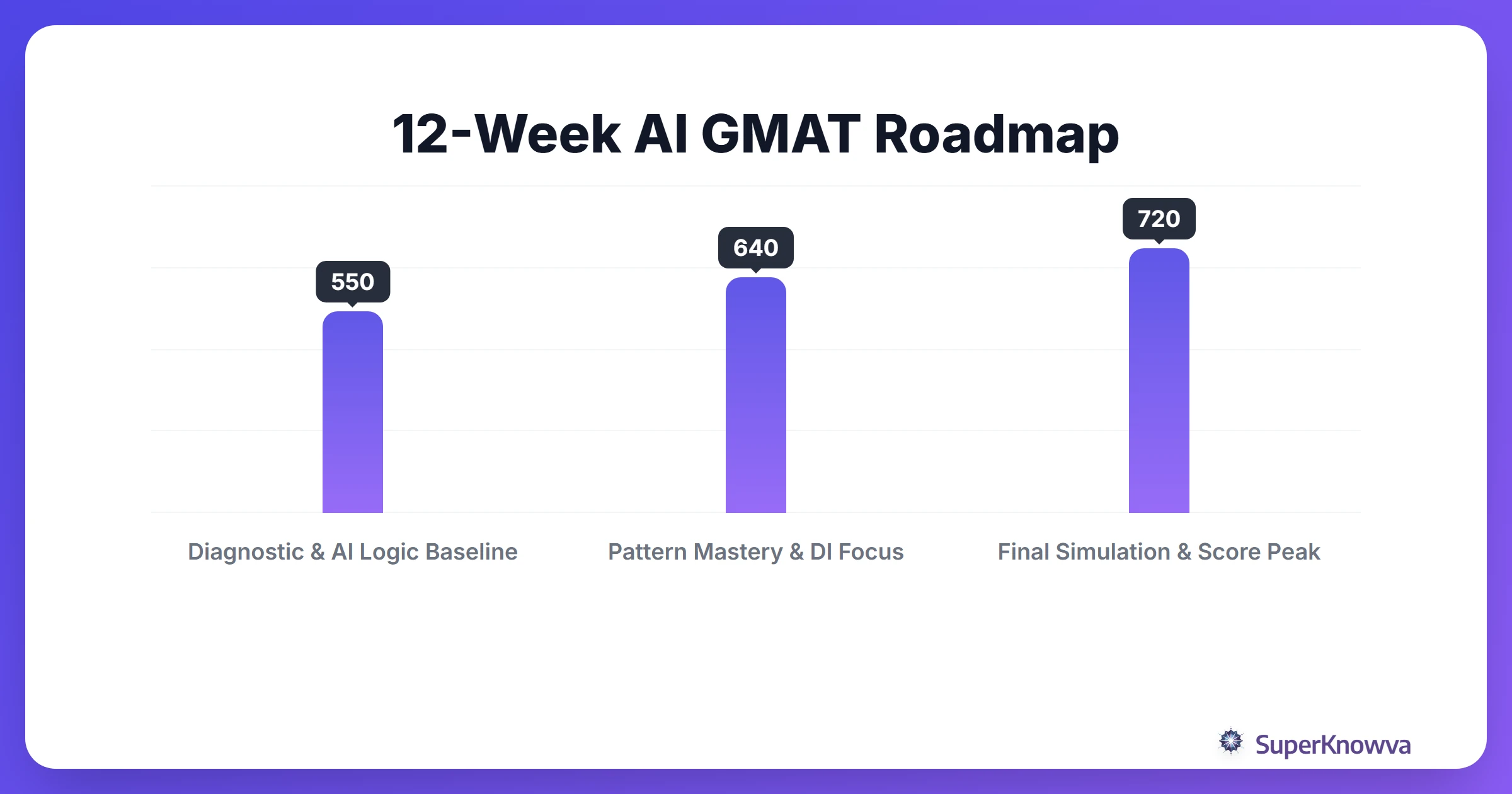
Ready to get started? You need a structured gmat focus study plan ai. Here’s how to break down your three-month sprint:
- Phase 1 (Weeks 1-4): The Diagnostic. Take an official practice test and use AI to map out your specific logic gaps.
- Phase 2 (Weeks 5-8): Logic Immersion. Focus on pattern recognition. Use Custom GPTs to drill Data Insights and Quant until the "skeletons" of the questions become obvious.
- Phase 3 (Weeks 9-12): Adaptive Simulation. Take full-length exams and use predictive modeling to squeeze every possible point out of your time management.
The GMAT Focus Edition is a digital exam. Don't try to beat it with outdated methods. By balancing official materials with advanced AI, you’ll study less, learn more, and walk into test day with a clear advantage.