Let’s be real: hunting for a summer internship is exhausting. You’ve tweaked your resume fifty times, survived the "black hole" of online applications, and finally, it happens. That notification pings. “We’d like to invite you to an interview.”
It’s a massive win. But once the initial excitement wears off, the nerves usually kick in. How do you actually stand out when you're competing against hundreds of other qualified students? Landing the role takes more than a clean shirt and a firm handshake; it requires a game plan.
In this guide, we cover the essential summer internship interview tips you need to know, including how to use AI to stand out.
The Research Phase: Become a Company Detective
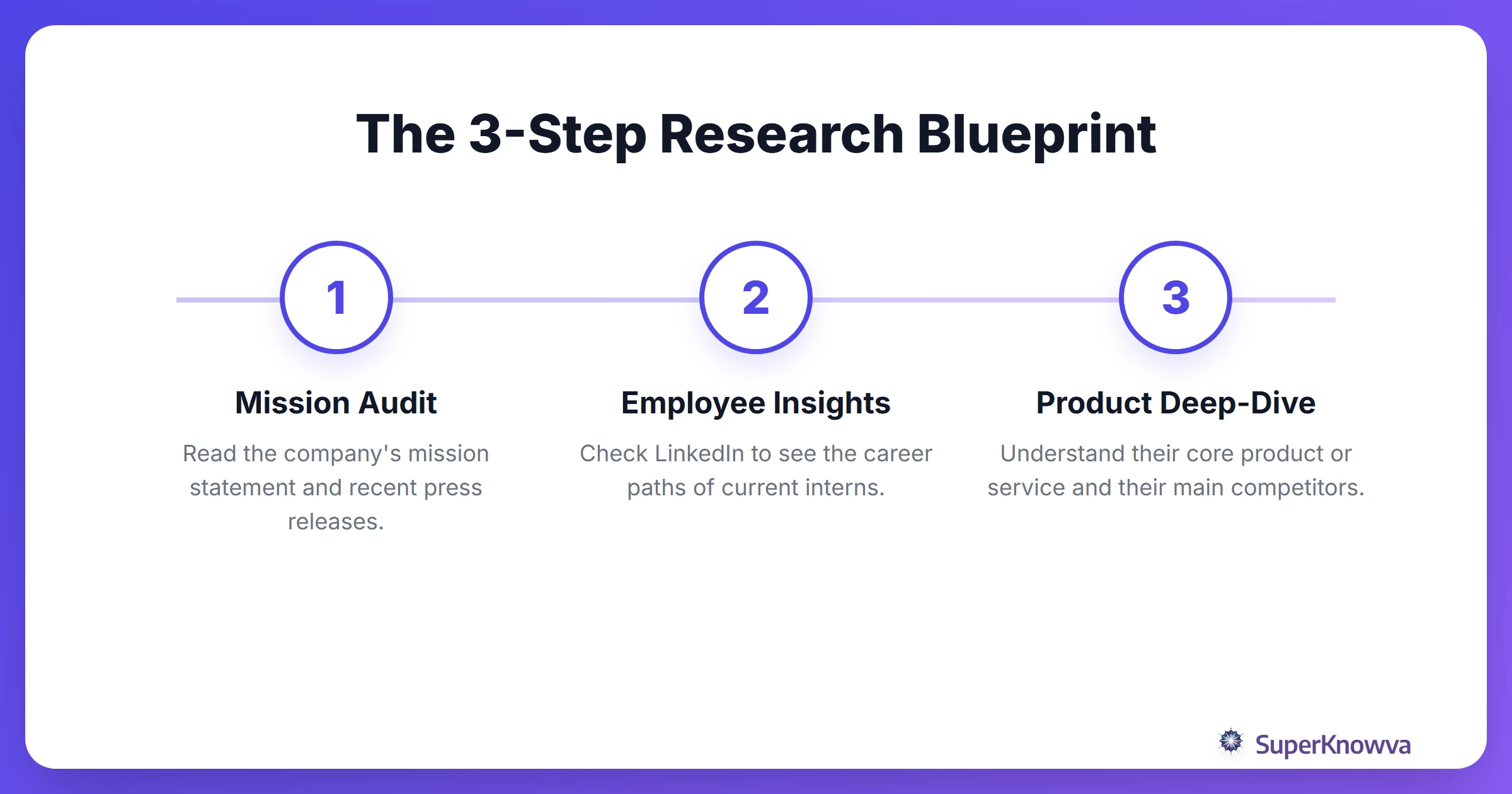
Before you even think about your outfit, you need to do some digging. Most candidates skim the "About Us" page and call it a day. Don't be most candidates. Recruiters aren't just looking for someone who can do the tasks; they want someone who actually gets their mission.
Start with a "Mission Audit." Look past the marketing fluff. Check out their latest press releases or annual reports to see what they’re actually celebrating. Head over to LinkedIn and look up former interns or alumni from your school who worked there. What was their path? What did they focus on?
When you align your goals with the company’s specific values, whether they prioritize innovation, community, or technical grit, you prove you aren't just looking for any paycheck. You’re looking for this role. For more help on positioning yourself, check out our strategies for competitive fields.
Cracking the Code: The Questions You Know are Coming
Most internship interviews follow a familiar rhythm. The trick is to stop giving generic "student" answers and start giving "professional" ones.
- "Tell me about yourself": This isn't the time for your life story. It’s a pitch. Keep it tight: your major, one "wow" project or club win, and exactly why you’re sitting in that chair.
- "Why this company?": This is where your detective work pays off. Mention that specific project or value you found during your audit.
- "What do you hope to learn?": Be selfish, but specific. Instead of saying you want "experience," try: "I want to see how a high-growth marketing team actually handles a product launch in real-time."
Your major usually dictates the flavor of the questions. Engineering students should expect "whiteboard" logic puzzles, while Marketing or Business majors will likely face internship behavioral questions about teamwork. As noted by The Forage, being able to explain your "why" is often more important than your technical "how" when you're an intern.
Using AI for Realistic Mock Interviews
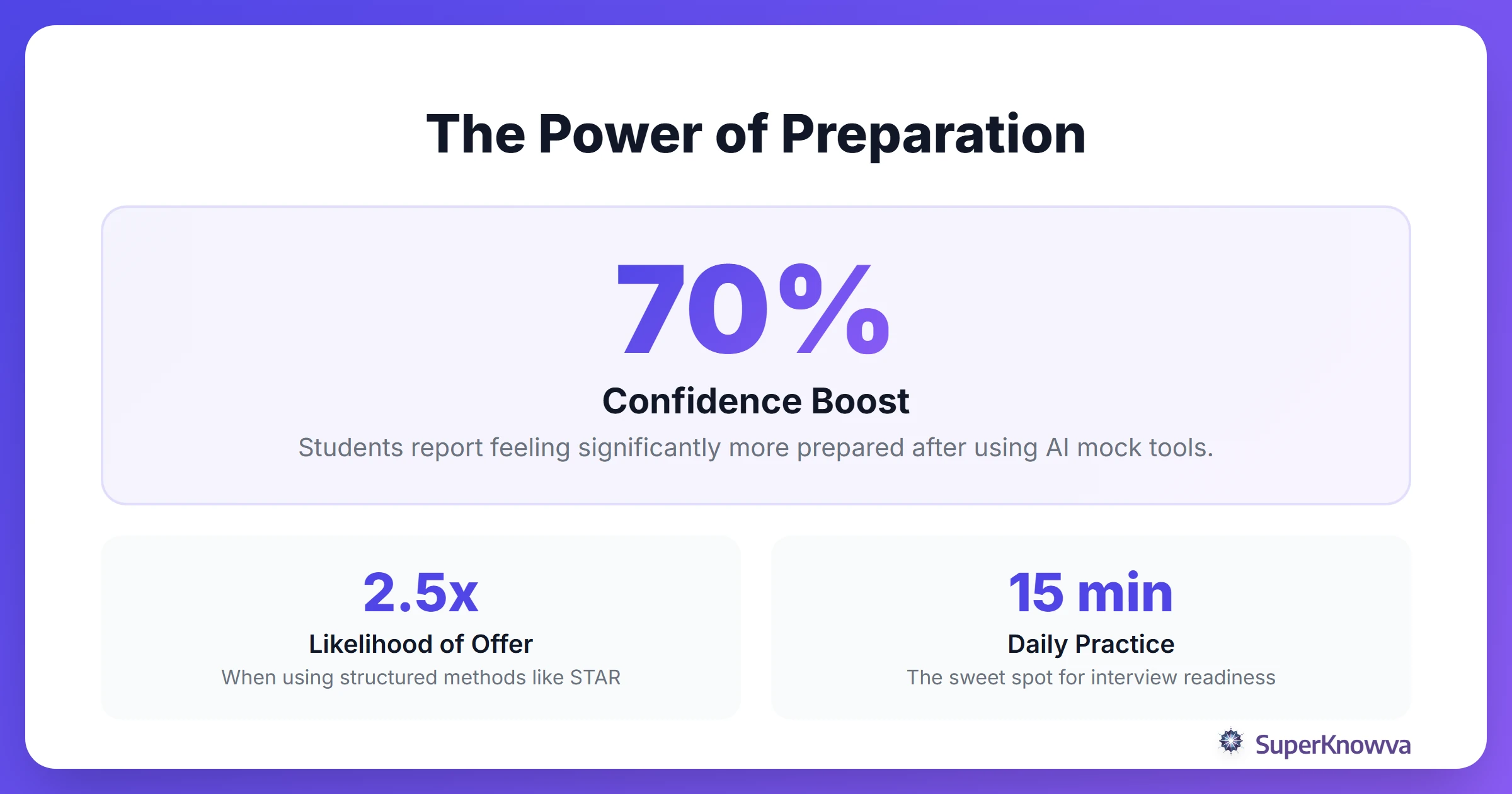
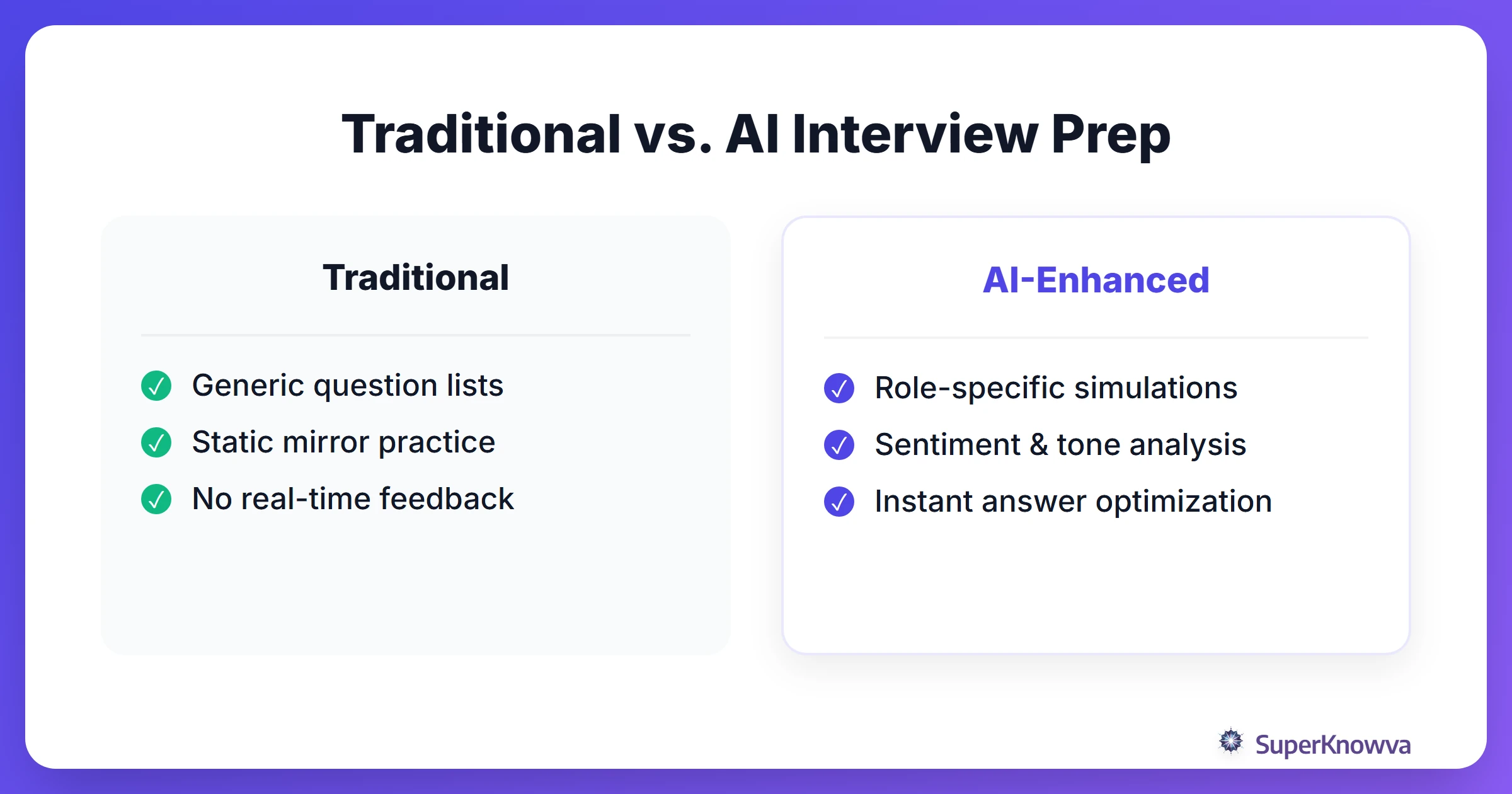
Remember when interview prep meant talking to your reflection in a bathroom mirror or begging a roommate to help? It was awkward and, honestly, not that helpful. Today, AI has changed the rules. Using mock interview tools allows you to simulate the actual pressure of a conversation without the stage fright.
You can use AI platforms to generate custom prompts based on the specific job description. Try telling an AI: "Act as a tough hiring manager for a Fintech startup. I’m applying for the Software Engineering internship. Ask me five hard questions."
The real secret? Analysis. Record your AI-driven sessions to check your tone. Are you saying "um" every three seconds? Is your energy flat? AI feedback can help you trim the filler and make your answers punchy. By Using AI Tools to Practice, you can iterate until you sound natural, not rehearsed.
Mastering the STAR Method (The Intern Version)
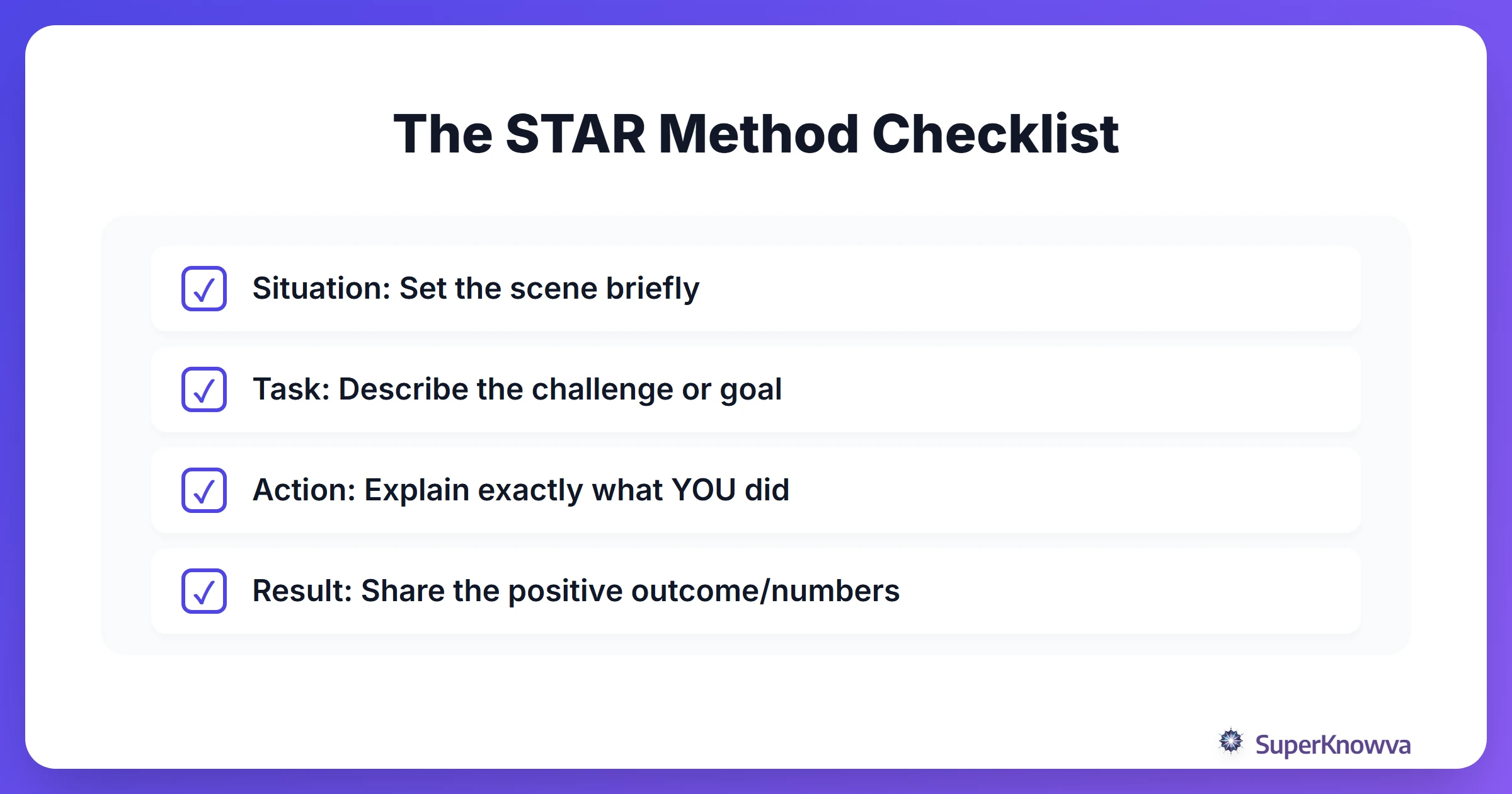
When an interviewer asks, "Tell me about a time you messed up," they aren't trying to trip you up. They’re checking if you’re self-aware. The best way to handle these is the STAR method for internships.
- Situation: Briefly set the scene. "In my sophomore marketing club..."
- Task: What was the problem? "We had zero budget for our main event."
- Action: What did YOU do? (Focus on "I," not "we"). "I reached out to local businesses for sponsorships."
- Result: What happened? Use numbers if you can. "We raised $500 and doubled our attendance."
Don't sweat it if you don't have corporate experience yet. Stories from class projects, volunteering, or even a retail job work perfectly. The key is showing that you can take a situation and find a solution.
Soft Skills: The "Vibe Check" in the AI Era
Technical skills might get you the interview, but soft skills get you the offer. In a world where AI can write code or draft emails, employers are looking for the things robots can't do: adaptability and "coachability."
Recruiters know you don't have twenty years of experience. They just want to know if you're easy to work with and quick to learn. This also applies to your virtual etiquette. If you’re on Zoom, check your lighting. Look at the camera lens, not the screen, to simulate eye contact. It feels weird, but it looks professional.
As we explore in our guide on Soft Skills in the AI Era, being a reliable, communicative human is your biggest competitive advantage. For more on navigating these professional expectations, check out this University of Cincinnati guide.
Flipping the Script: What to Ask Them
At the end, they’ll inevitably ask: "Do you have any questions for us?" Saying "No" is a missed opportunity to show you’re serious.
Think about mentorship and impact:
- "What does a 'rockstar' intern look like in this role by the end of the summer?"
- "How does the team handle feedback and learning moments for students?"
- "Can you tell me about a project a previous intern worked on that actually went live?"
Skip the questions about pay or vacation time for now. Save those for when the offer letter hits your inbox. For more on building these professional connections, see our Networking 101 guide.
Conclusion
Preparation is the bridge between being just another name on a list and being the person they want to hire. By doing your homework, mastering the STAR method, and leaning on AI interview preparation tools, you can walk into that interview with genuine confidence.
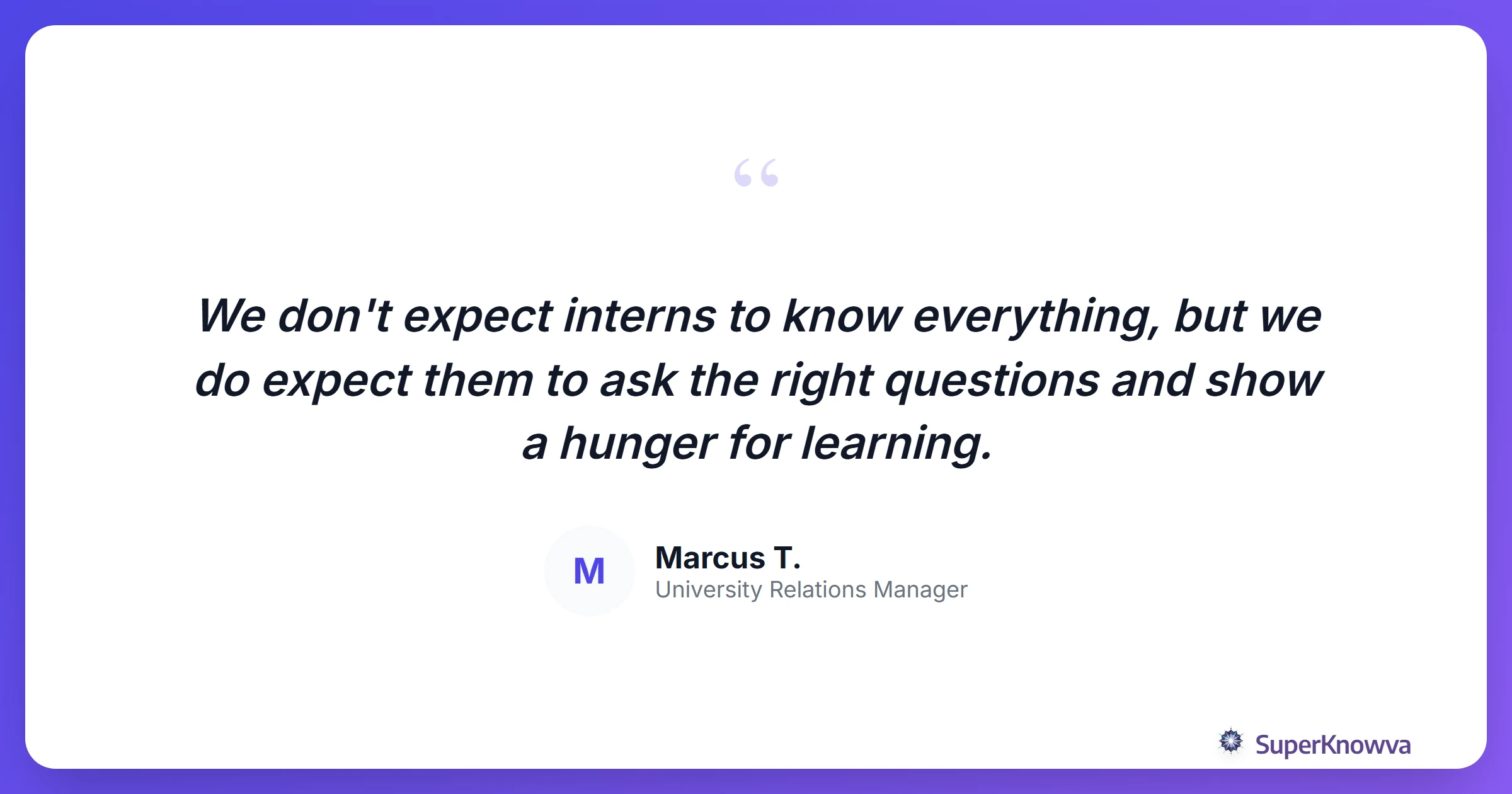
An internship is about growth. Show them you’re hungry to learn, and the rest will follow. You've got this!