Fifty tabs open. A cooling cup of coffee. That familiar, sinking feeling that you’ve read everything but somehow understand nothing. It’s a rite of passage for every student, whether you’re grinding through a final term paper or a massive thesis. The sheer volume of information can feel like trying to drink from a firehose.
But things are changing. The rise of LLMs for academic research is shifting the goalposts, turning the old "search and find" slog into a much more interesting process of "synthesis and discovery."
In this guide, we look at how Large Language Models (LLMs) act as research assistants to help organize notes and create polished drafts.
The End of the 8-Hour JSTOR Binge
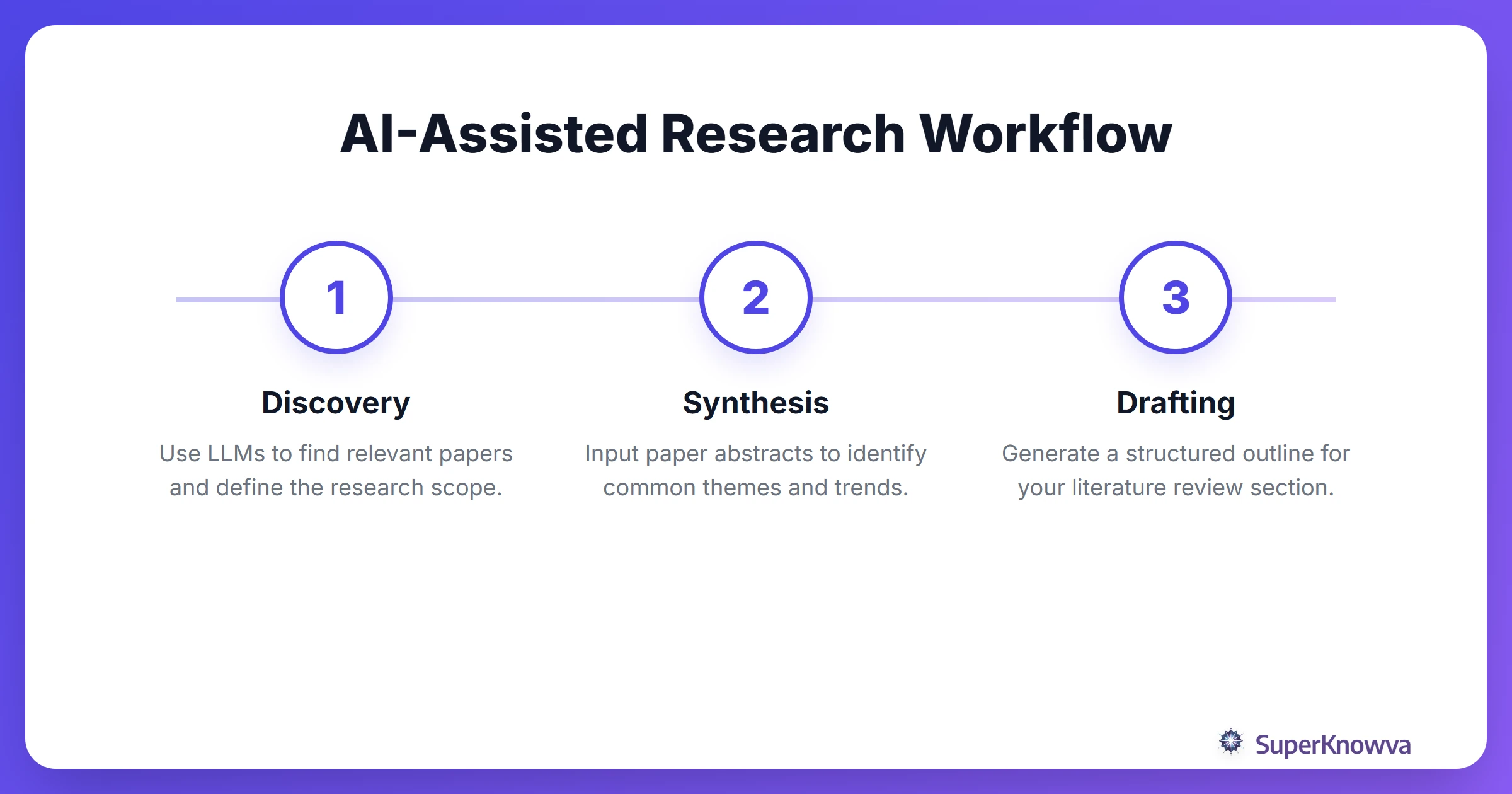
Remember when a literature review meant clicking through endless pages of search results until your eyes blurred? While manual database searching is still a skill you need, AI-assisted discovery lets you cast a much wider net in a fraction of the time.
LLMs can quickly map out the breadth of research on a topic, giving you a clear overview of the academic field. Treat it as a conversation. You can ask the model to identify conflicting viewpoints or spot the most common methodologies. It is less about finding a specific detail and more about understanding how the research is organized.
However, a word of caution: general-purpose LLMs aren't perfect. They often struggle with very niche or brand-new papers that haven't hit their training data yet. For those deep dives, you’ll still want to keep your library database tab open.
Making Sense of the Mess: Synthesizing Notes
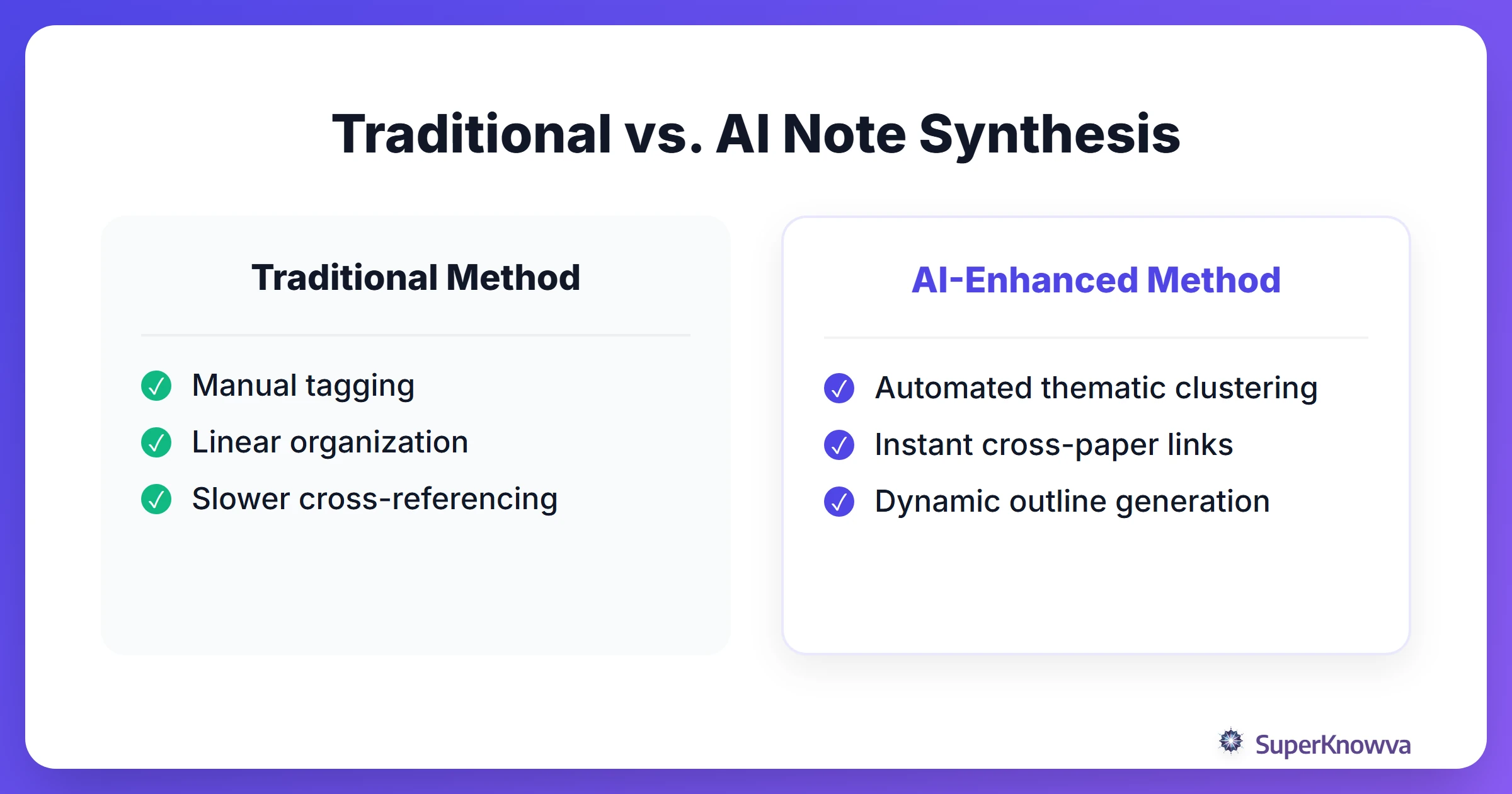
Once you’ve gathered your sources, you’re usually left with dozens of pages of disjointed notes. This is where an LLM becomes a powerhouse for thematic organization. Instead of manually tagging every paragraph, you can feed your notes into a model to identify recurring themes, categorize findings by date, or group authors by their school of thought.
This is a core pillar of AI-Powered Note Taking: A Comprehensive Guide. You aren't just filing information away; you’re actively processing it.
- Spot the Gaps: Try asking the AI, "Based on these notes, what perspective am I missing?" It might point out that you’ve obsessed over economic impacts but totally ignored the sociological side.
- Connect the Dots: LLMs are surprisingly good at interdisciplinary connections. They can help you see how a concept in biology might actually apply to your political science paper.
- Build the Skeleton: Use AI to turn a pile of disparate findings into a logical, flowing outline.
Specialized Tools: Moving Beyond ChatGPT
ChatGPT is the household name, but it isn't always the best tool for the job. The world of academic writing AI now includes specialized tools built specifically for the rigors of research. For example, Stanford STORM assists in sourcing and organizing Wiki-style research by simulating a collaborative writing process.
Unlike a generic chat window, these specialized models often offer:
- Smart PDF Parsing: They can actually "read" the complex charts and tables buried in academic papers.
- Massive Context Windows: You can upload entire books or stacks of papers without the model "forgetting" what happened in chapter one.
- Domain Expertise: Some tools are fine-tuned for specific fields, like the social sciences, ensuring the terminology stays accurate and professional.
Learning these tools is a new kind of literacy. It’s similar to how AI for Visual Learners uses technology to turn dense data into something digestible.
The "Hallucination" Problem: Accuracy and Citations
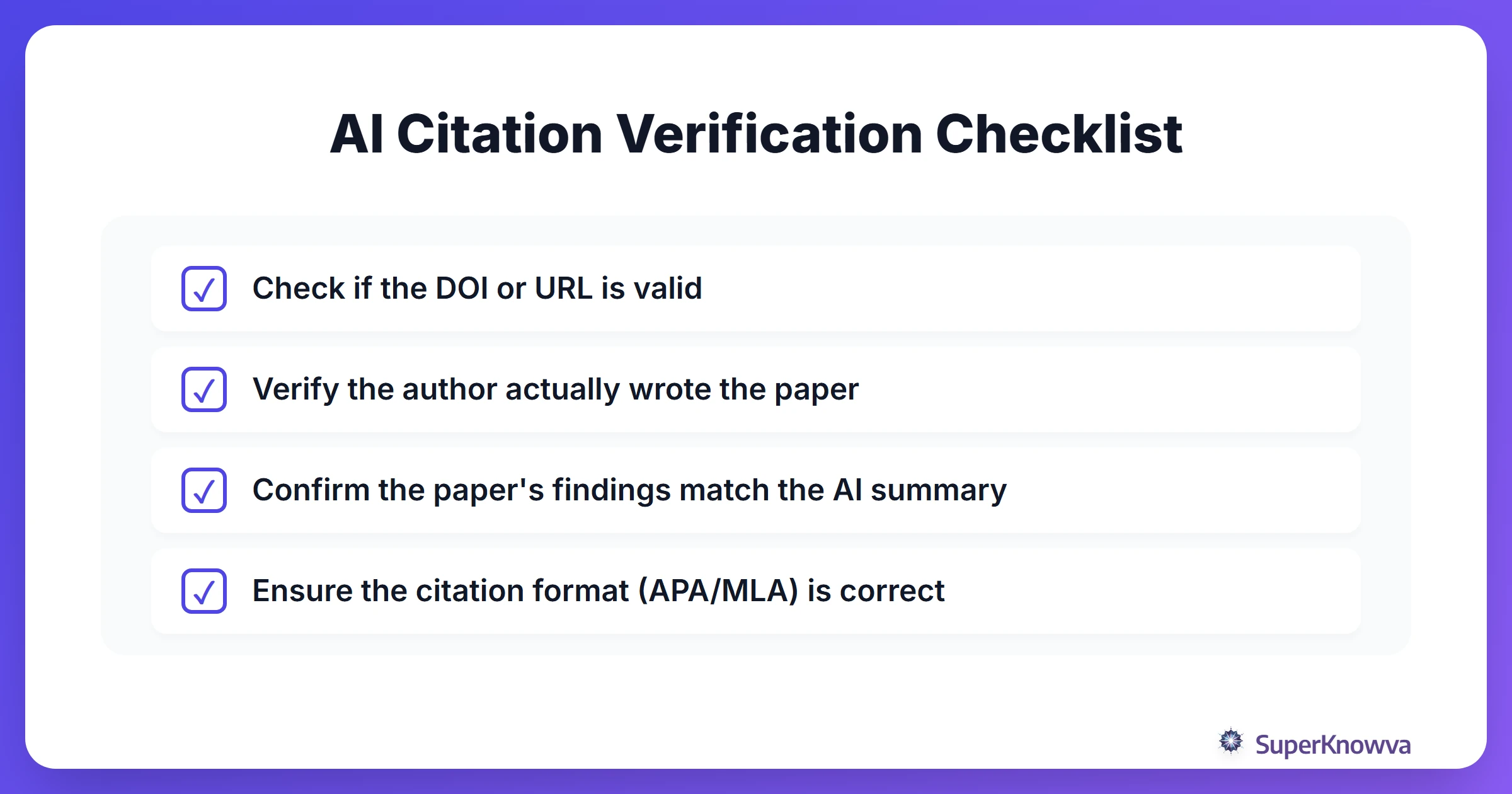
The primary risk is that AI can lie. General LLMs often invent citations that look real but do not exist. In academia, a fake citation leads to a failing grade or a plagiarism charge.
To maintain academic integrity AI usage must be paired with old-fashioned verification. Never take an AI-generated claim at face value. Always cross-reference it with the original source. Fortunately, newer tools are starting to integrate direct PDF citations, letting you click a link and see the exact highlight in the source text where the info came from.
Human-in-the-Loop: Keeping Your Voice
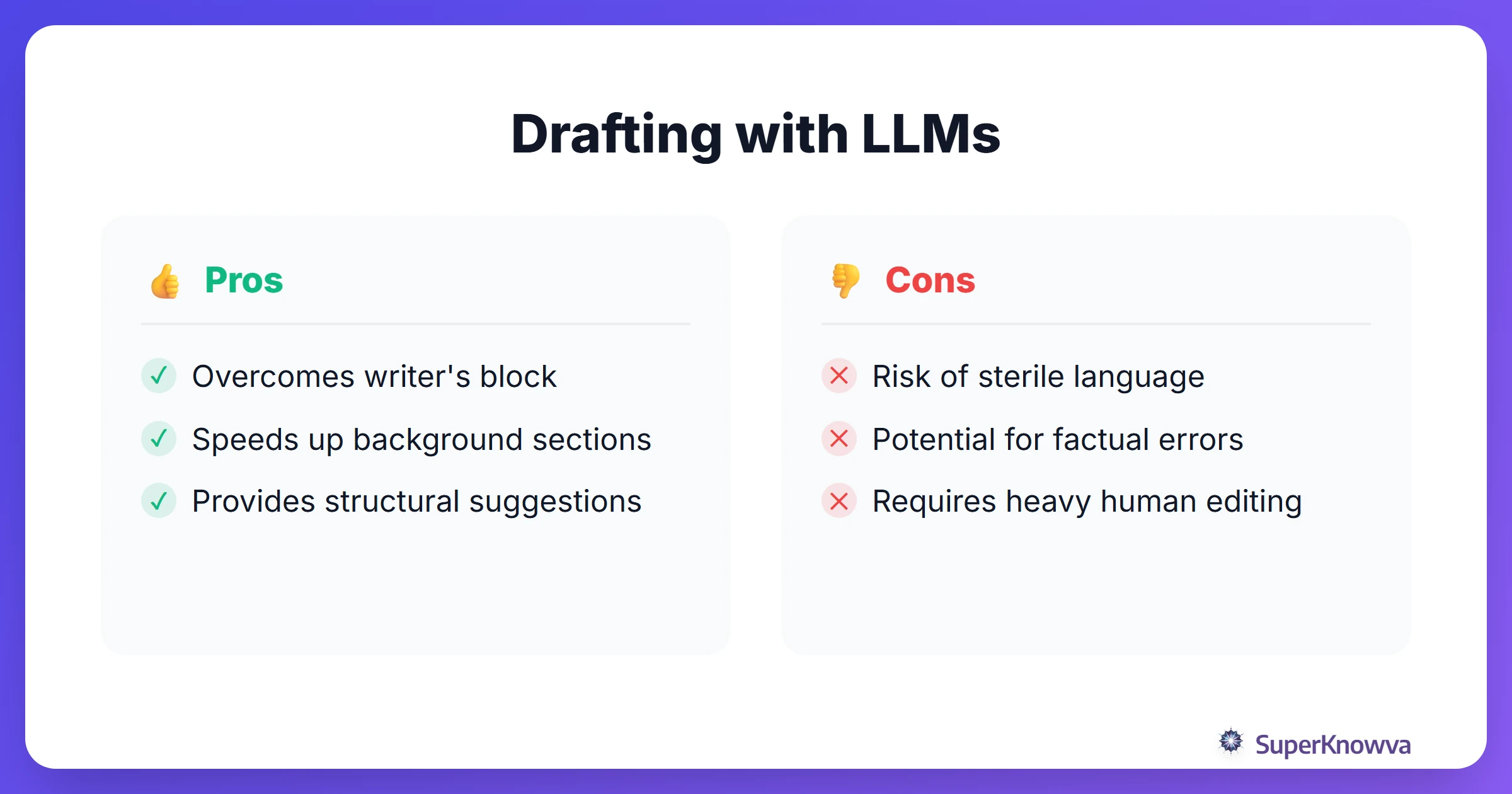
Even the smartest AI can sound a bit... sterile. In academic writing, your unique voice and critical analysis are the most important parts of the paper. Most educators agree: LLMs are great for drafting background sections or introductions, but the "heavy lifting" of the analysis has to be yours.
When you’re working with an AI-generated draft, try these steps to humanize it:
- Inject Your Voice: Rewrite sentences to match how you actually speak and write.
- Audit the Logic: Check for logical fallacies. AI often oversimplifies complex nuances.
- Highlight Original Data: If your paper includes original experiments or interviews, make sure those are the stars of the show, not the AI-generated filler.
While AI Tools for Creative Writing might allow for more "flair" and imagination, academic work requires a grounded, evidence-based approach that only a human researcher can provide.
Ethics and the Rules of the Game
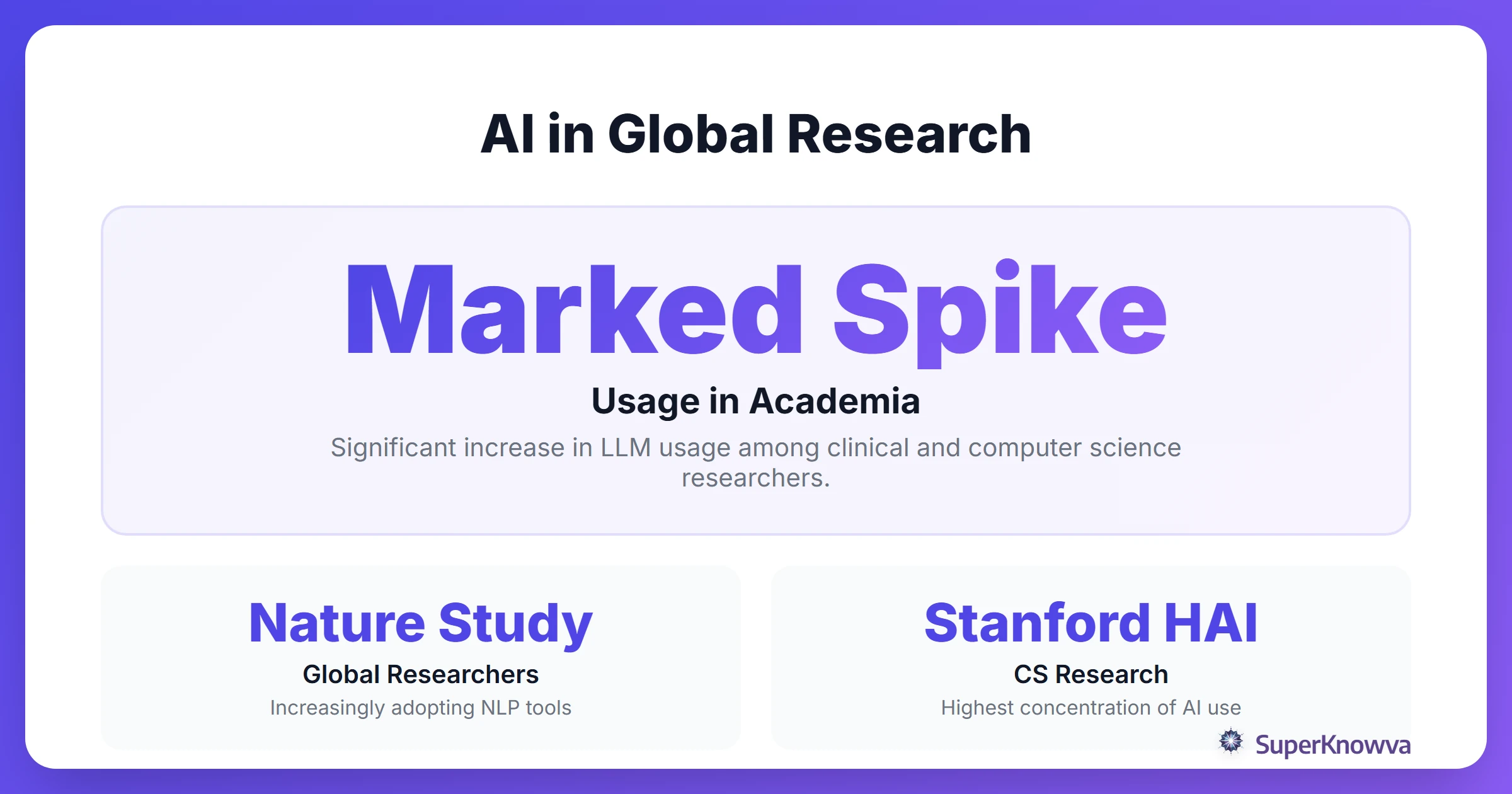
As AI becomes a standard tool, university policies are trying to keep up. A recent Nature Study on LLMs in Clinical Research showed a massive spike in LLM usage among researchers, especially in computer science.
According to research from Stanford HAI: Research Written by LLMs, AI-assisted writing is at an all-time high. This means transparency is your best friend.
- Read the Syllabus: Every professor has a different stance. Know the policy before you start.
- Be Transparent: If you used an LLM to help organize your notes or brainstorm an outline, disclose it in your methodology or acknowledgments.
- The Future of Peer Review: How AI impacts peer review and publishing is still a heated debate. Stay informed.
Whether you’re weighing AI Tutors vs. Human Tutors or using an LLM to synthesize a literature review, the goal hasn't changed: deep, meaningful learning.

By treating AI as a support system rather than a replacement, you can manage the complexities of research with more efficiency and less stress.