The pressure of finals week often turns months of hard work into a blur of panic. Managing test anxiety naturally is a skill you can master to demonstrate what you actually know.
At SuperKnowva, we believe your grades should reflect your hard work, not how fast your heart beats when a proctor says "begin." In this guide, we’re breaking down effective strategies to help you stay calm, focused, and ready for your next exam.
Why Your Brain Freezes Up
To beat the nerves, you have to know what you're up against. Test anxiety is essentially a version of performance anxiety. It's that "fight-or-flight" response kicking in at exactly the wrong time.
Not all stress is bad. A little bit of "arousal" can sharpen your focus and keep you alert. The problem starts when stress becomes overwhelming. Common test anxiety symptoms, such as a racing heart, sweaty palms, or a mental block, are signs that your body thinks it is in danger.
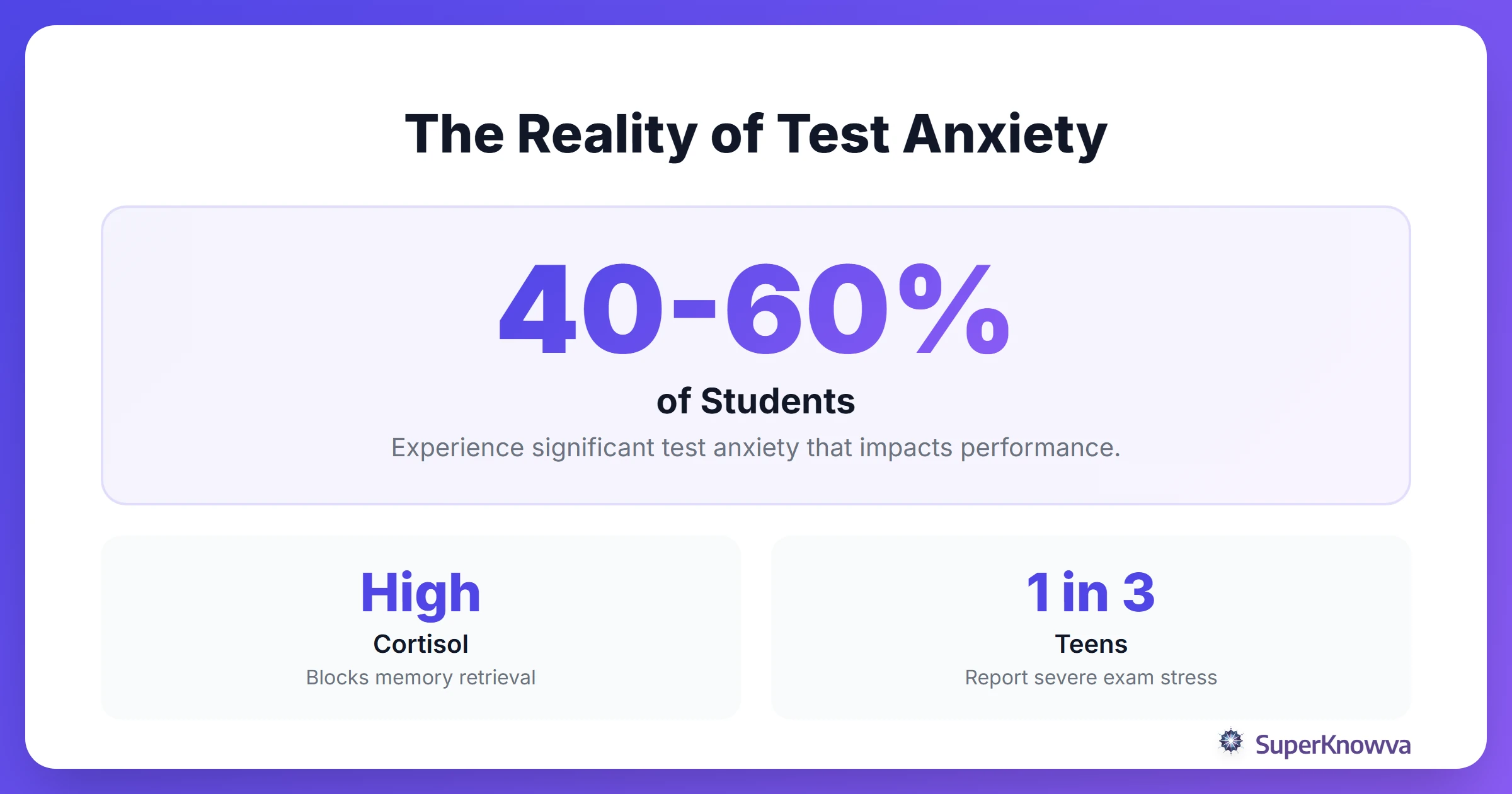
There is real science behind that brain fog. When you're flooded with cortisol (the stress hormone), your prefrontal cortex, the part of the brain that handles memory and rational thought, effectively goes offline. It’s a frustrating cycle that, if left unchecked, can lead straight toward recovering from student burnout.
Preparation: The Best Defense is a Good Offense
The most effective natural anxiety relief for students doesn't happen in the exam room; it happens weeks before. Panic usually feeds on a lack of control. When you’re prepared, you take that power back.
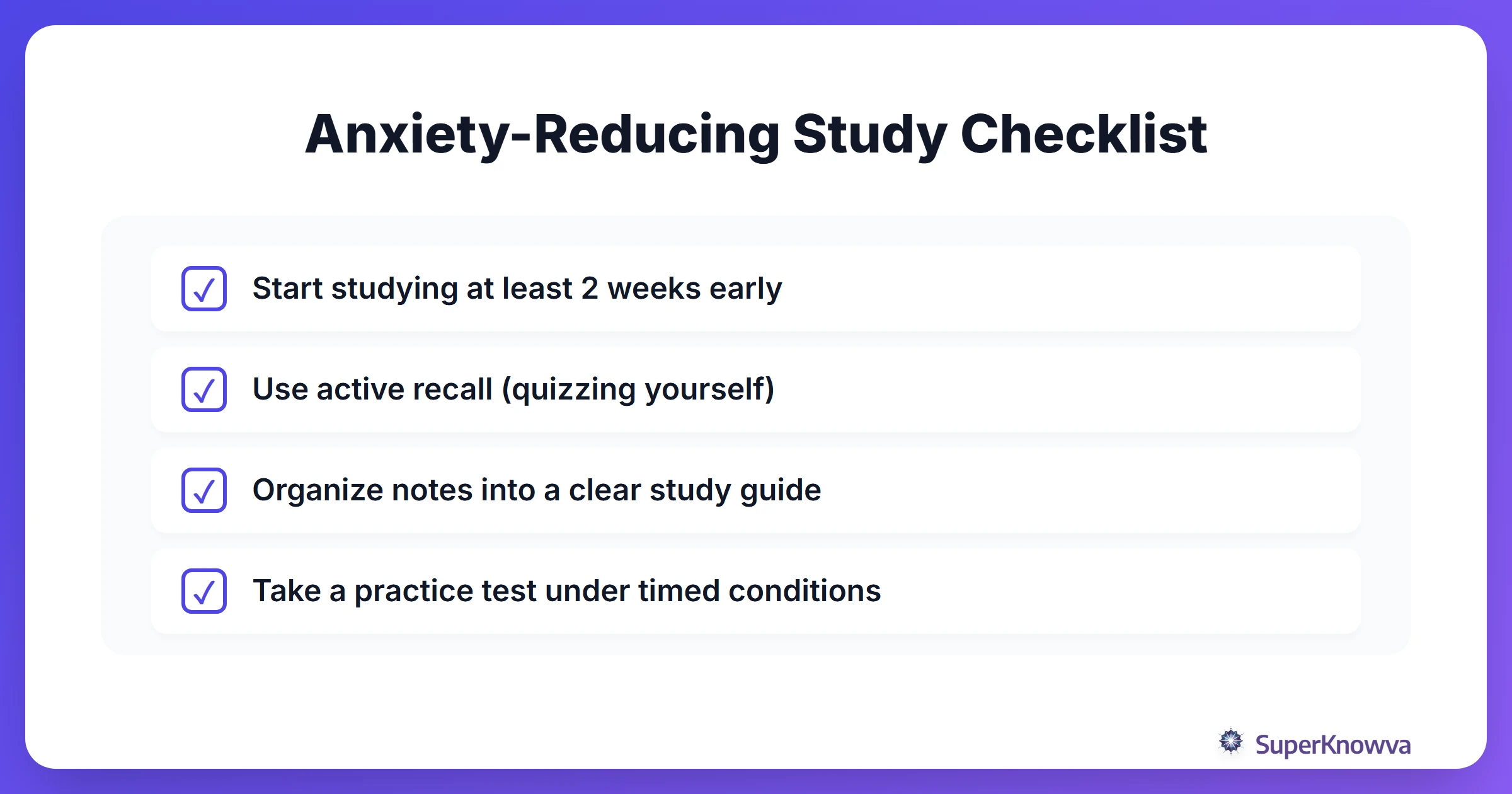
- Ditch the Highlighter: Passive reading is a trap. Switch to active recall. Quiz yourself, explain concepts out loud, and force your brain to dig for the information. It’s harder, but it’s what builds those mental muscles.
- Practice Like You Play: Want to desensitize your stress response? Take practice tests in a quiet, timed environment. If you’ve already "taken" the test five times at home, the real thing feels like just another day at the desk.
- Break it Down: Don't look at the whole syllabus at once. Slice it into small, manageable "micro-tasks" to stop the overwhelm before it starts.
Using tools like SuperKnowva to generate custom practice quizzes can help you build a foundation of evidence-based confidence. When you know you know the material, the panic has nowhere to hide.
60-Second Resets: Breathing and Grounding
What happens when panic hits in the middle of Question 14? You need tools that work right now. Breathing exercises for exams aren't just "woo-woo" advice. They are biological methods to lower your heart rate and calm your nervous system.
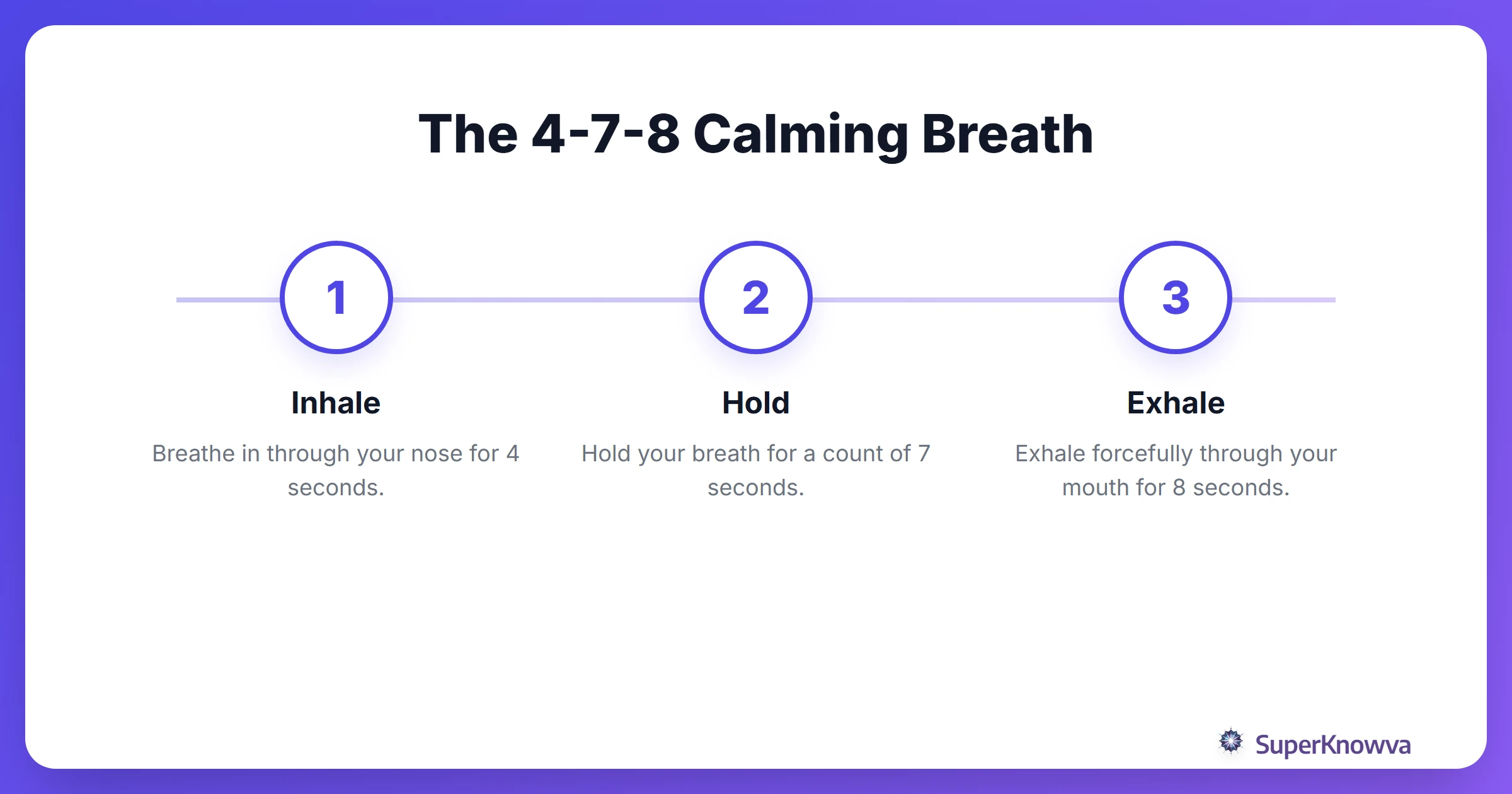
The 4-7-8 breathing technique is highly effective. It acts as a natural tranquilizer for the nervous system.
If your mind is still spiraling, try the 5-4-3-2-1 grounding method. Stop and identify 5 things you see, 4 things you can touch, 3 things you hear, 2 things you can smell, and 1 thing you can taste. It sounds simple, but it’s incredibly effective at pulling you out of a "what if" spiral and back into the present moment. For long-term calm, try weaving mindfulness techniques for students into your morning routine.
The Physical Pillars: Sleep, Fuel, and Movement
Your brain is a physical organ. If you treat your body like a dumpster, your mind will struggle to handle pressure. We’ve all been tempted to pull an all-nighter, but skipping sleep to "cram" is almost always a losing move. Sleep deprivation spikes cortisol, making you more prone to panic.
Watch your fuel. While energy drinks might feel necessary, too much caffeine mimics anxiety symptoms such as jitters, heart palpitations, and an energy crash. Instead, reach for the best brain foods for exams, like complex carbs for steady energy and omega-3s for focus.
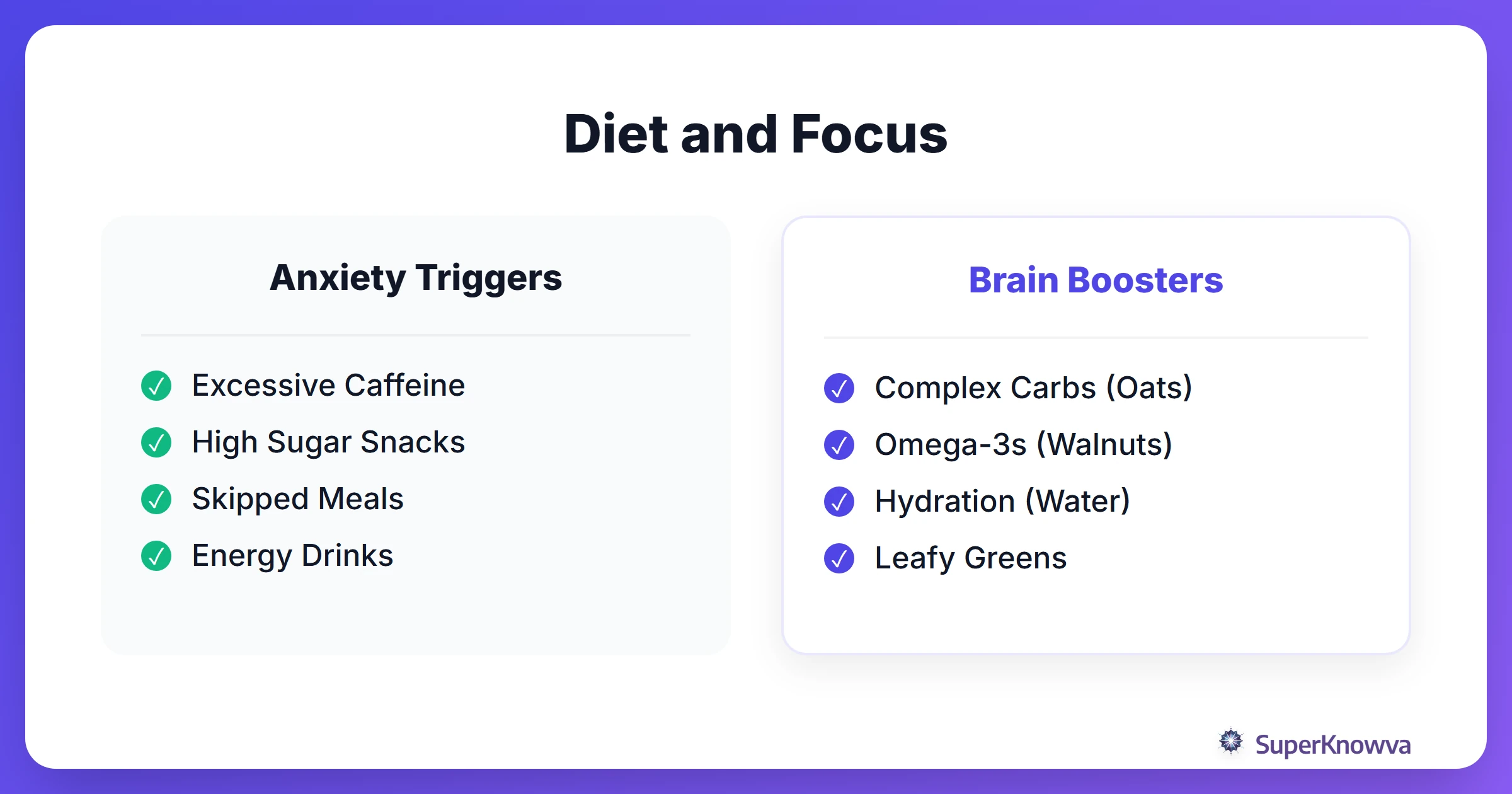
And don't underestimate a quick walk. Even 10 minutes of movement clears out metabolic "trash" from your brain and releases endorphins. Once you see how exercise boosts cognitive function, you’ll stop feeling guilty about taking a break.
Changing the Script: Cognitive Reframing
A huge part of how to stay calm during tests is managing that inner critic. Many of us fall into "all-or-nothing" thinking: “If I don’t ace this, I’ll never get a job.”
To stop the spiral, try cognitive reframing:
- Catch the thought: "I'm going to fail and ruin everything."
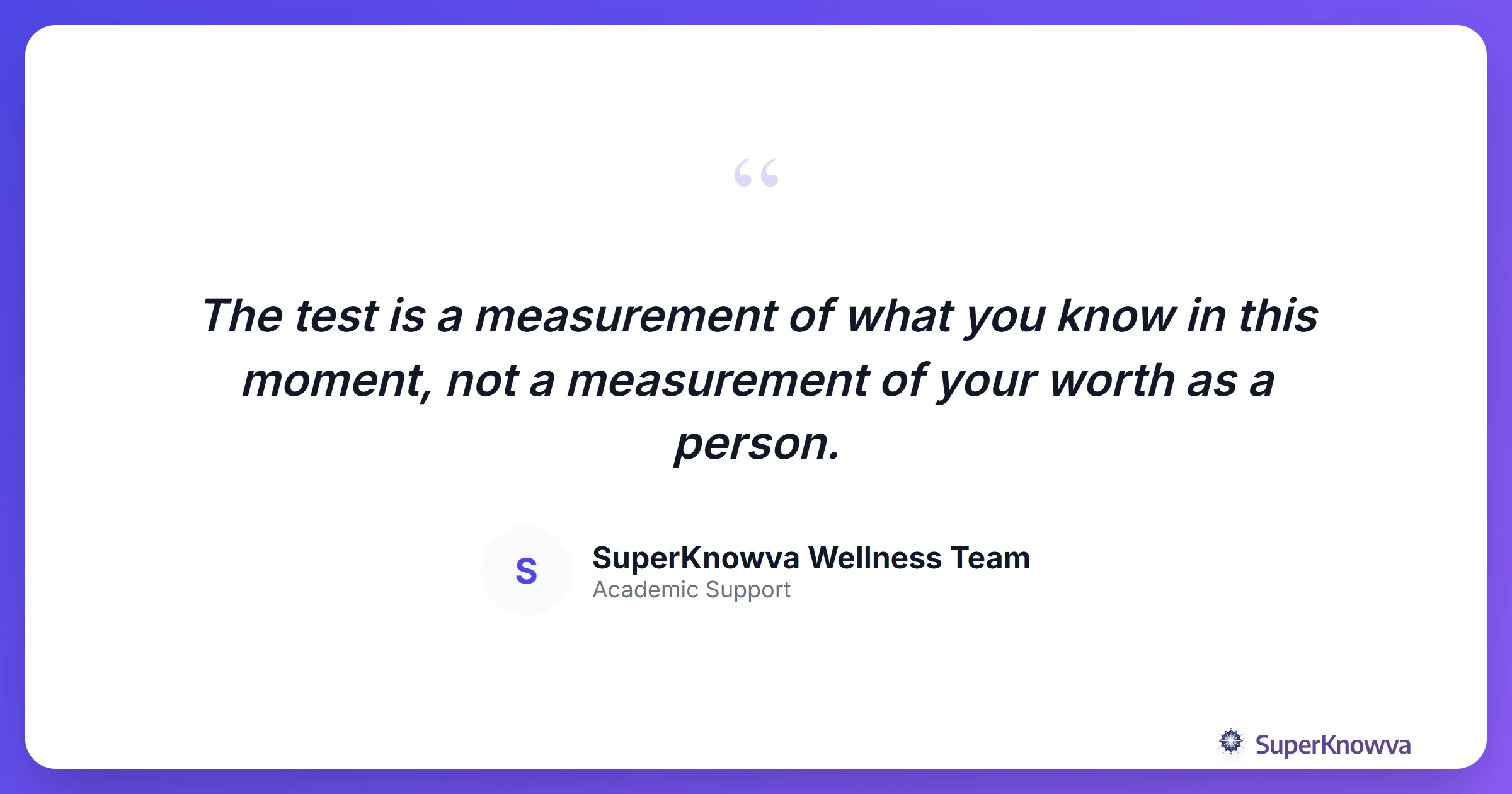
- Challenge it: "Is that actually true? I've studied hard, and one test doesn't define my entire life."
- Replace it: Use a realistic mantra. Instead of "I will be perfect," try "I am prepared, and I will do my best."
Visualizing success helps, too. Spend a few minutes picturing yourself sitting down, feeling calm, and recalling answers easily. It primes your brain for a win and helps quiet the "imposter syndrome" that tells you that you don't belong there.
Herbal Helpers (Handle with Care)
While lifestyle changes are your primary defense, some students find extra support in nature. Chamomile tea is a classic for a reason, and L-theanine (found in green tea) can help provide a "calm focus" without the coffee jitters.
However, be smart about it. According to the Mayo Clinic: Herbal treatments for anxiety, some supplements can have side effects or interact with other meds.
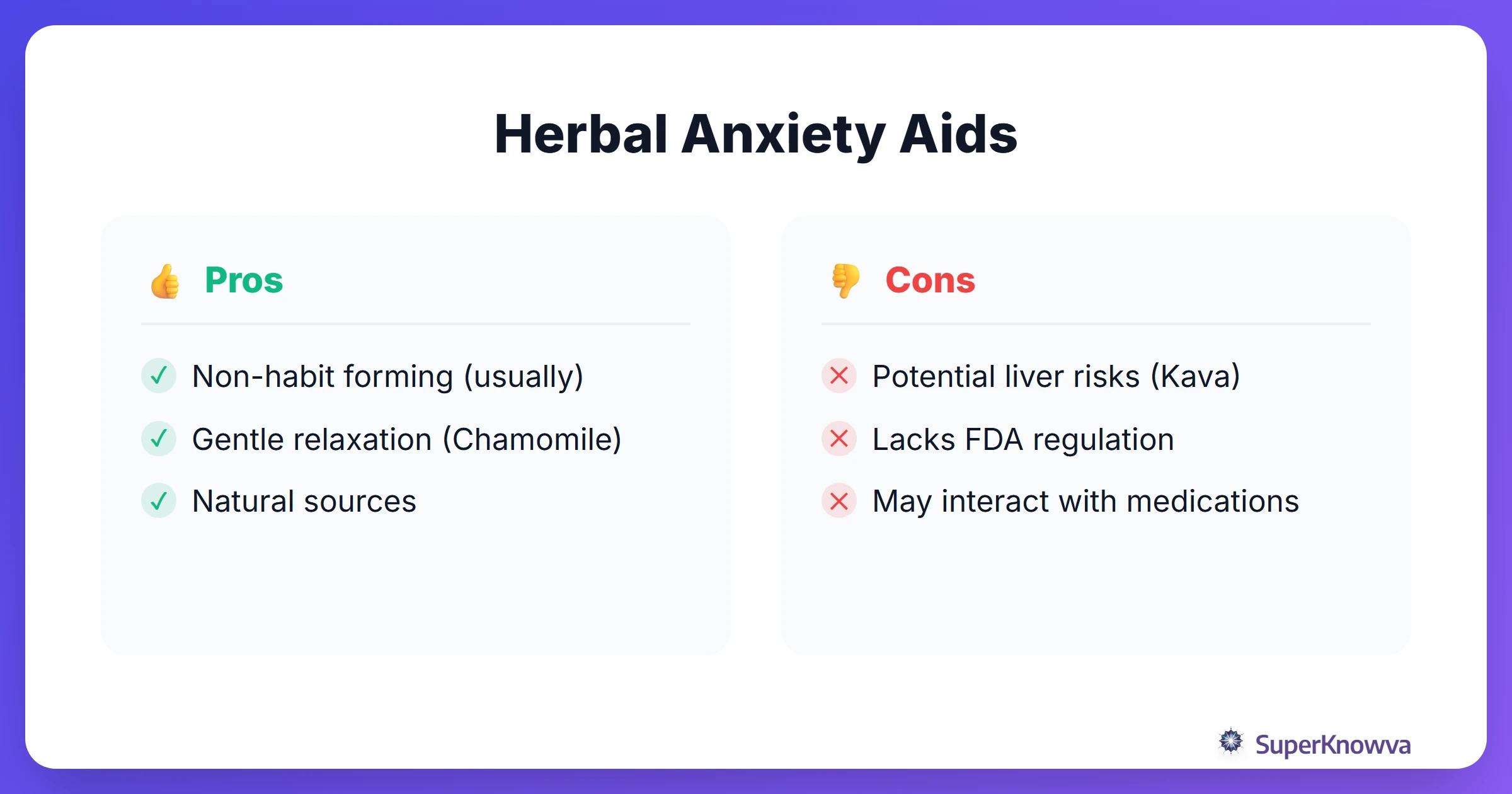
Always prioritize the "lifestyle first" approach of sleep, prep, and breathing before reaching for a bottle. Talk to a doctor before trying any new supplement to ensure it is safe for you.
You've Got This
Beating test anxiety isn't about being "fearless." It’s about having a toolkit ready when the nerves show up. By combining smart prep, physical self-care, and a few breathing tricks, you can change your relationship with exams forever. For more tips on staying sharp, check out LSU Health: Strategies to Reduce Test Anxiety.
Remember: you are so much more than a number on a Scantron. Take a breath, trust your prep, and go show them what you've got!