Ever spent an entire afternoon highlighting a textbook, only to realize you can’t remember a single thing you just read? It’s a frustrating, hollow feeling. You’ve put in the hours, but the information just won't stick.
Here’s the truth: the problem probably isn't your brain. It’s your strategy.
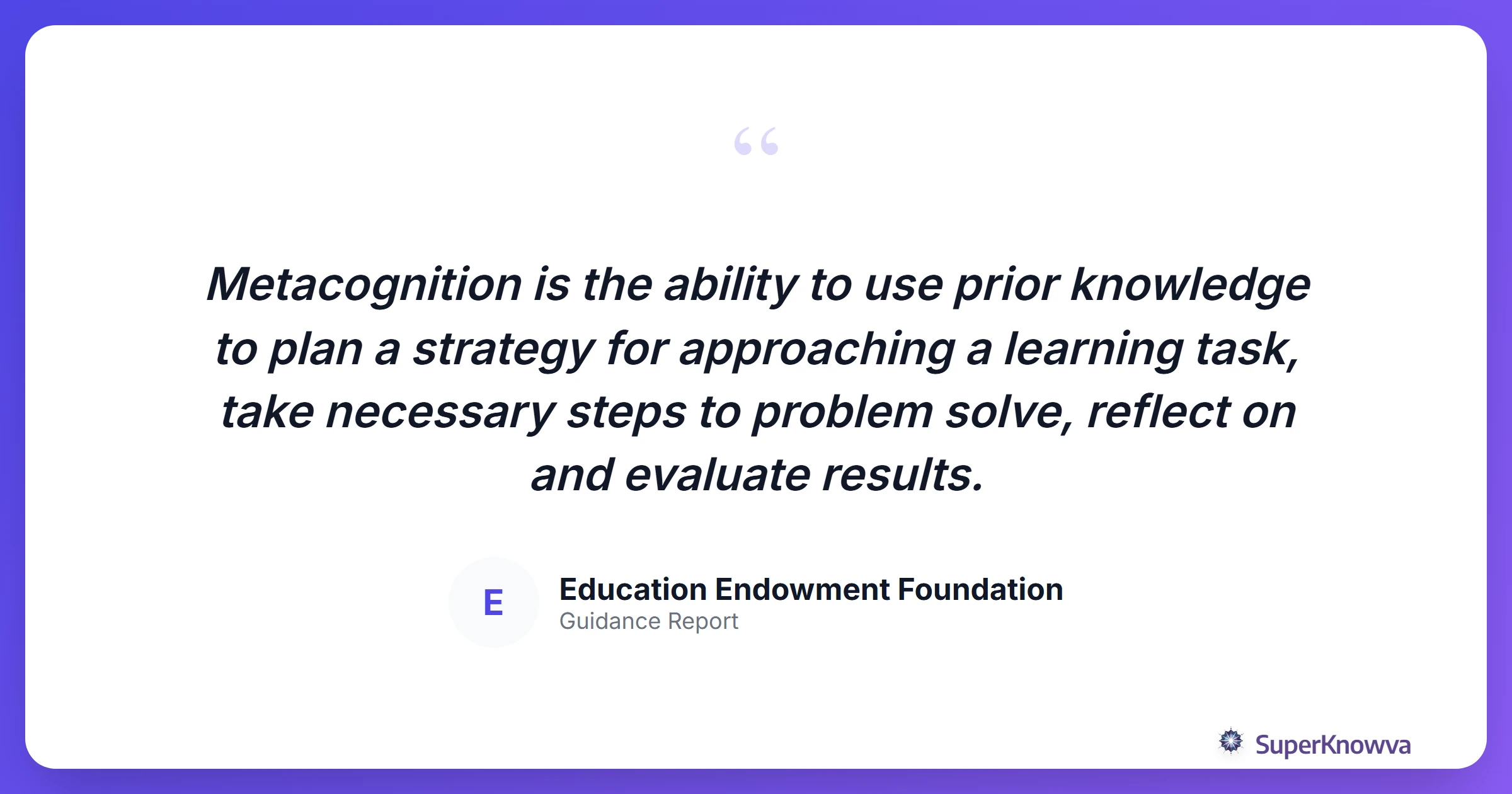
To move past that "stuck" feeling and master complex subjects, you need to take an active role in your education. You need to master metacognition and self-regulated learning. Think of it as the foundation for your learning. Once you improve these skills, everything else becomes easier.
Understanding Metacognition: Thinking About Thinking
Metacognition sounds like a heavy academic term, but it’s actually quite simple: it’s thinking about thinking.
Most of the time, we are just "doing." We solve the math problem, we read the chapter, and we write the essay. That is cognition. Metacognition is the layer on top. It is the voice in your head asking, "Do I actually understand why I am using this formula?" or "Wait, I have read this paragraph three times and I am still confused. What am I missing?"
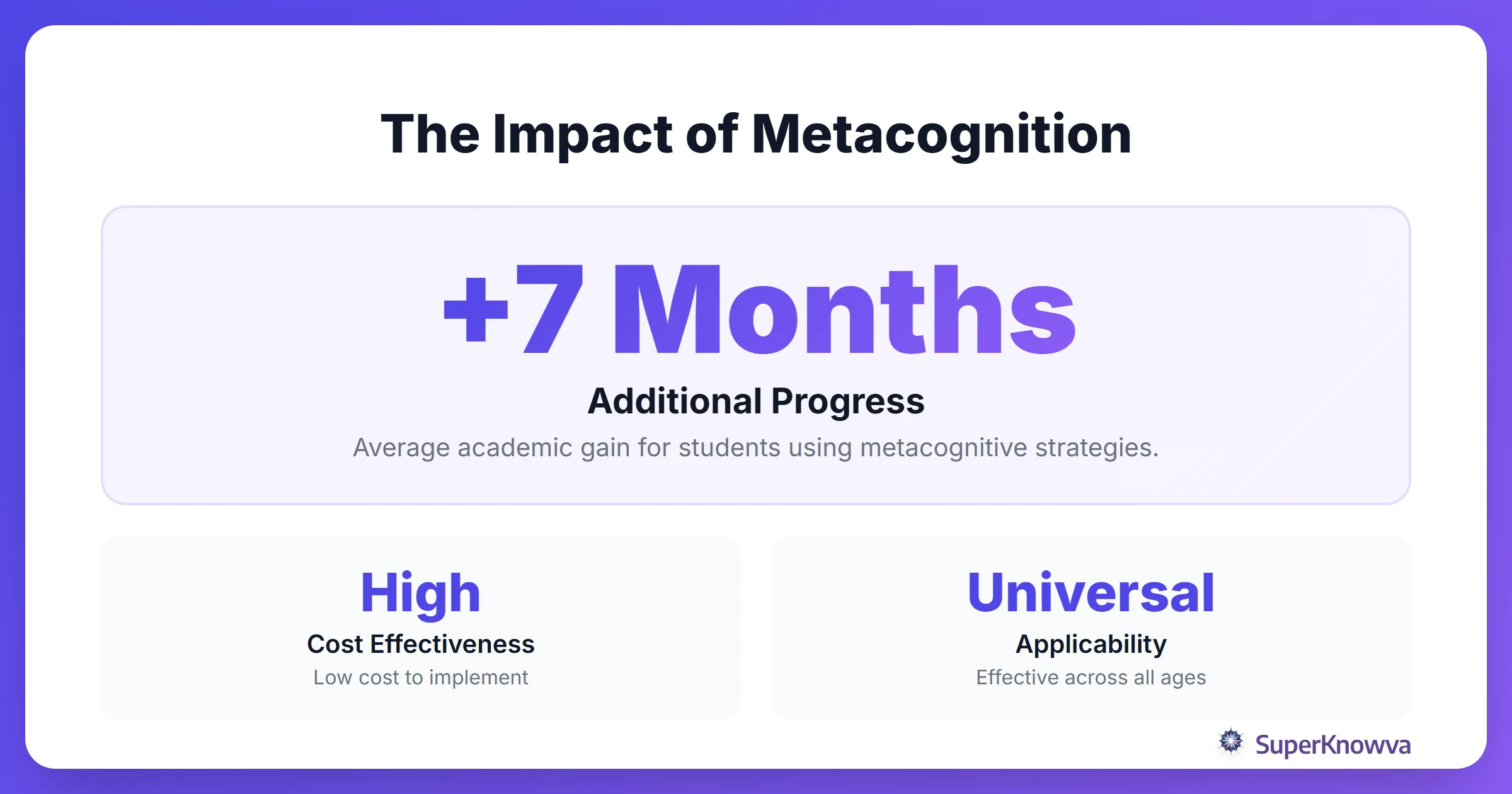
It’s the difference between being on autopilot and being the pilot. When you move away from just "going through the motions," you start to see where your actual strengths and weaknesses lie. According to the EEF Guidance Report, students who use these strategies can see academic gains equivalent to seven months of additional progress. That’s a massive ROI for just paying a little more attention to how you work.
The Metacognitive Cycle: Plan, Monitor, and Evaluate
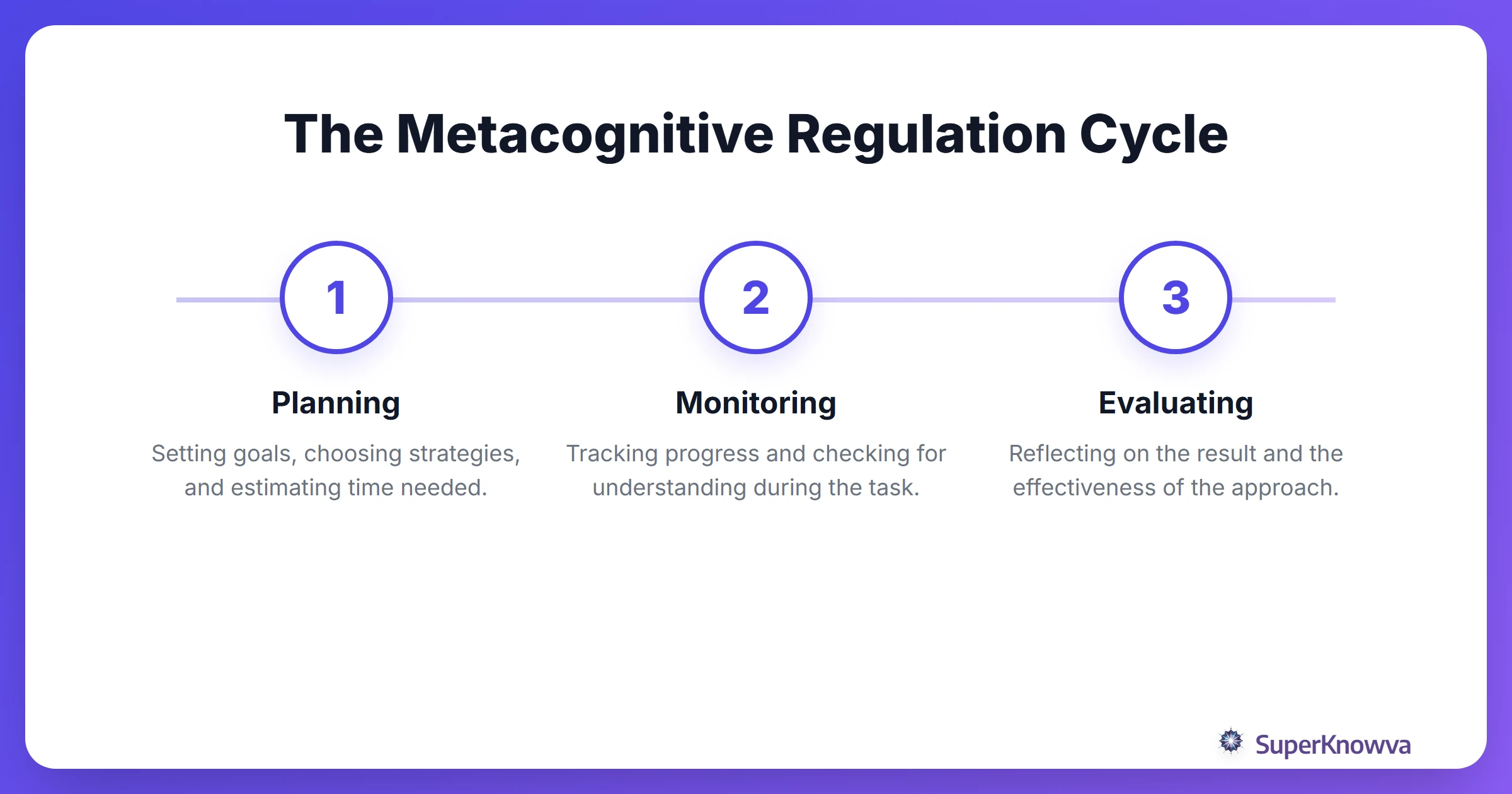
If you want to see real study habits improvement, you have to treat learning like a loop, not a straight line. This three-stage cycle helps you stay in control.
- Planning: Don't just crack open a book. Start with a goal. Ask yourself: "What is the one thing I need to walk away with today?" and "Which metacognitive strategies will actually work for this material?"
- Monitoring: This is the "check-in." While you’re in the middle of a session, pause. If your mind is wandering or the concept feels blurry, don't just push through. Recognize that your current approach isn't working and pivot.
- Evaluating: The session isn't over when you close the laptop. Take two minutes to look back. Did that strategy work? Did you hit your goal? What would you change for tomorrow?
Metacognition vs. Self-Regulated Learning (SRL)
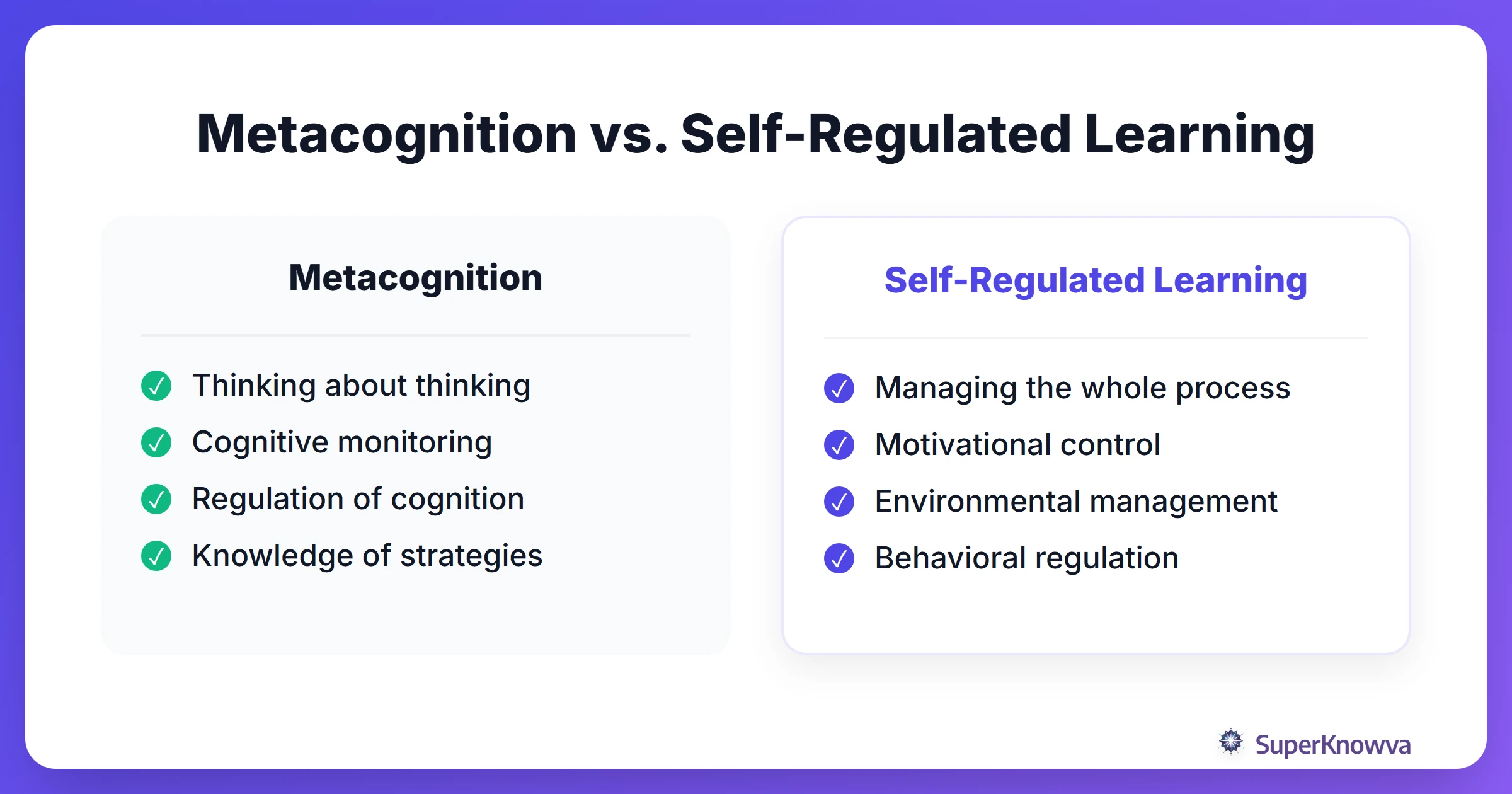
People often use these terms interchangeably, but there’s a subtle difference. Think of metacognition as the "awareness" and self-regulated learning (SRL) as the "action."
As the Cambridge Handbook of the Learning Sciences points out, SRL is a broader framework that includes cognition, metacognition, and motivation.
SRL is what gets you to actually sit in the chair and do the work. It’s about managing your environment and your emotions. For example, metacognition tells you that your phone is a distraction; self-regulation is the discipline to put it in another room and use Deep Work techniques to get things done.
Practical Metacognitive Strategies for Students
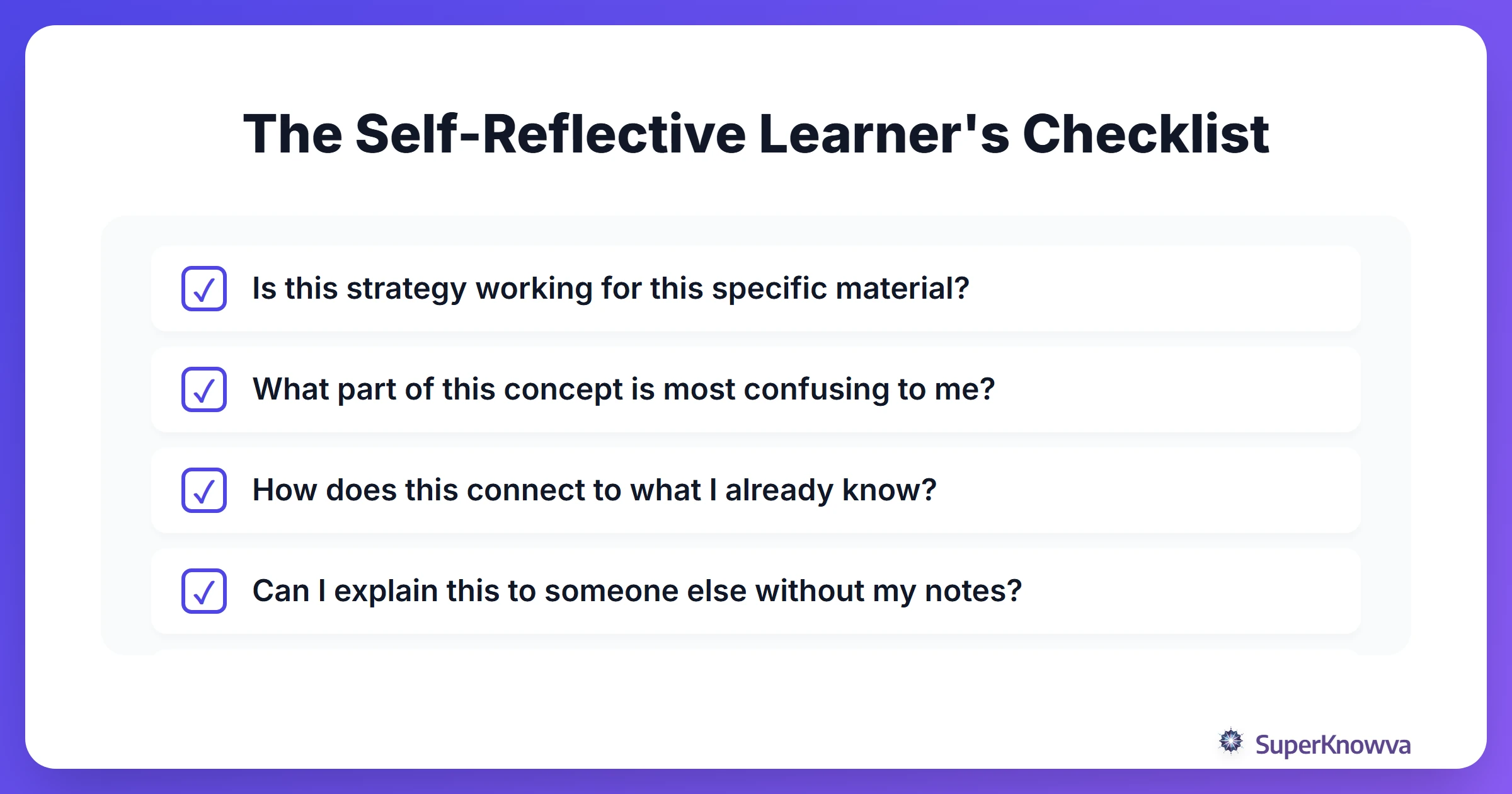
So, how do you actually do this? It starts with asking yourself better questions.
- The Feynman Technique: This is the ultimate metacognitive tool. Try to explain a concept to a five-year-old (or just out loud to yourself). The moment you stumble, your "metacognitive monitor" flags exactly where your understanding is weak. Check out our guide on the Feynman Technique to get started.
- Active Recall: Stop reading and start testing. If you can’t answer a practice question, it’s a clear signal from your brain that you haven't mastered the material yet.
- Adaptability: If a method isn't working, stop doing it. Working harder at an ineffective strategy is just a waste of energy. Intentional learning means being brave enough to change your tactics mid-stream.
Overcoming the Illusion of Competence
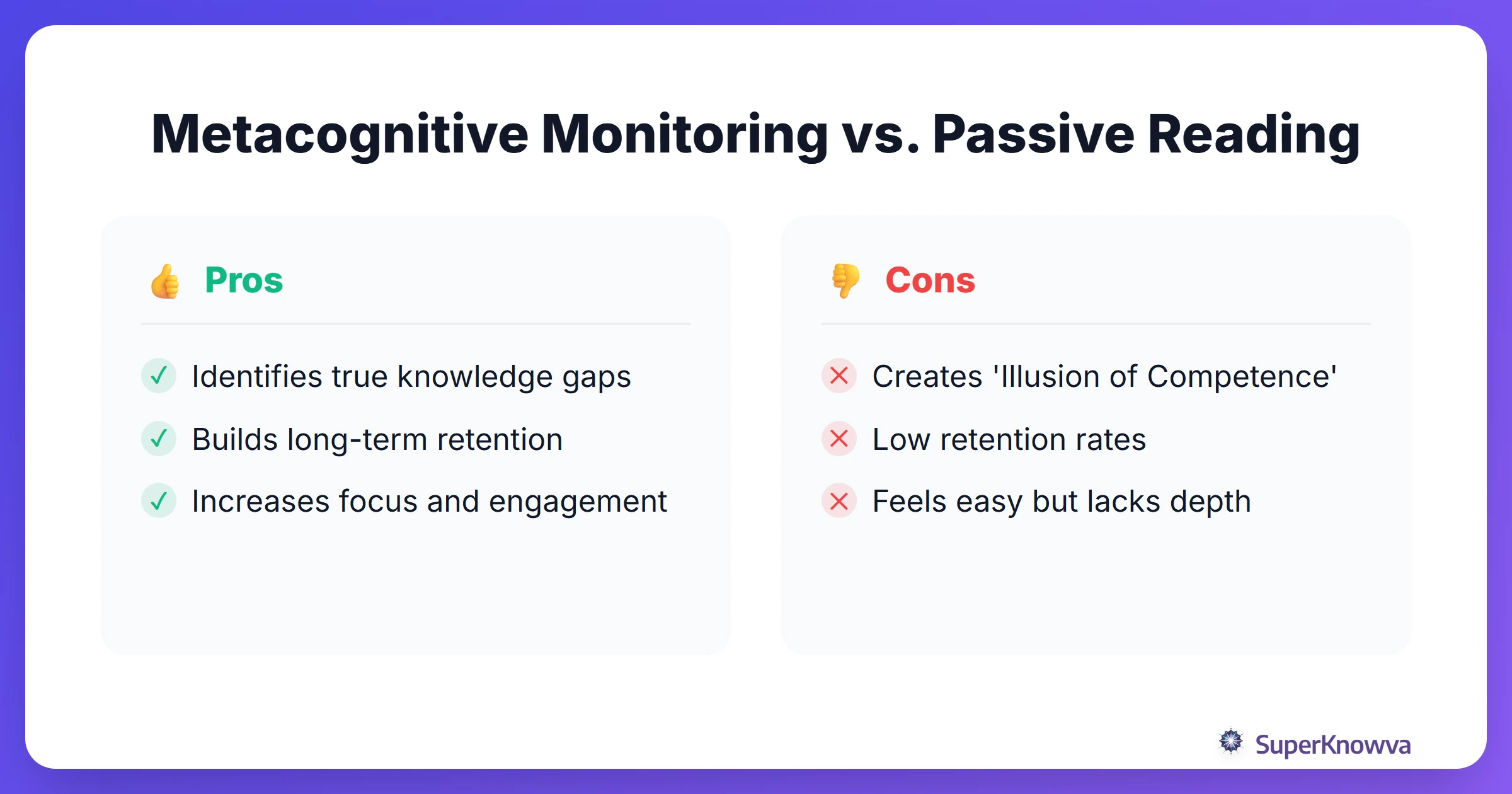
We’ve all fallen for the "Illusion of Competence." You read a chapter, it makes sense, and you think, "I've got this." But usually, you don't "know" it; you just "recognize" it. Familiarity is a trap.
Metacognitive monitoring helps you spot the difference. By using high-intensity methods like the Blurting Method, you force yourself to produce information from scratch. This shatters the illusion and shows you what’s actually in your head. Similarly, using Interleaving Practice forces your brain to jump between topics, which is harder but leads to much deeper, long-term mastery.
Building Metacognitive Habits with SuperKnowva
You don't have to do all this heavy lifting alone. Modern tools like SuperKnowva are built specifically to handle the "monitoring" and "evaluating" parts of the cycle for you.
Instead of guessing what you know, SuperKnowva uses AI to pinpoint your weak spots. It creates a feedback loop based on objective data, not just a "gut feeling" that you're ready for the exam. This turns the abstract idea of metacognition and self-regulated learning into a concrete, daily routine.
Mastering your own mind is the only "study hack" that actually works. By planning your path, checking your progress, and being honest about your results, you stop being a passive student and finally become the master of your own education.