Struggling to keep a massive list of dates, terms, or formulas in your head this July? You aren't the only one. Whether you’re grinding through a summer session or trying to get a head start on a brutal fall semester, the sheer volume of info can feel like trying to drink from a firehose.
This is where mnemonic devices for studying come in. Think of them as mental "hooks" that help you snag abstract data and pull it into your long-term memory.
In this guide, we’ll show you how to use AI study tools like SuperKnowva to stop the endless cycle of rote memorization and start actually mastering your material.
The Science of Mnemonics: Why They Work
Why is it easier to remember a song from ten years ago than a definition you read ten minutes ago? It's simple: our brains aren't built for abstract facts. We’re wired for stories, locations, and vivid patterns. Mnemonics work by "encoding" boring data into a format your brain actually enjoys processing.
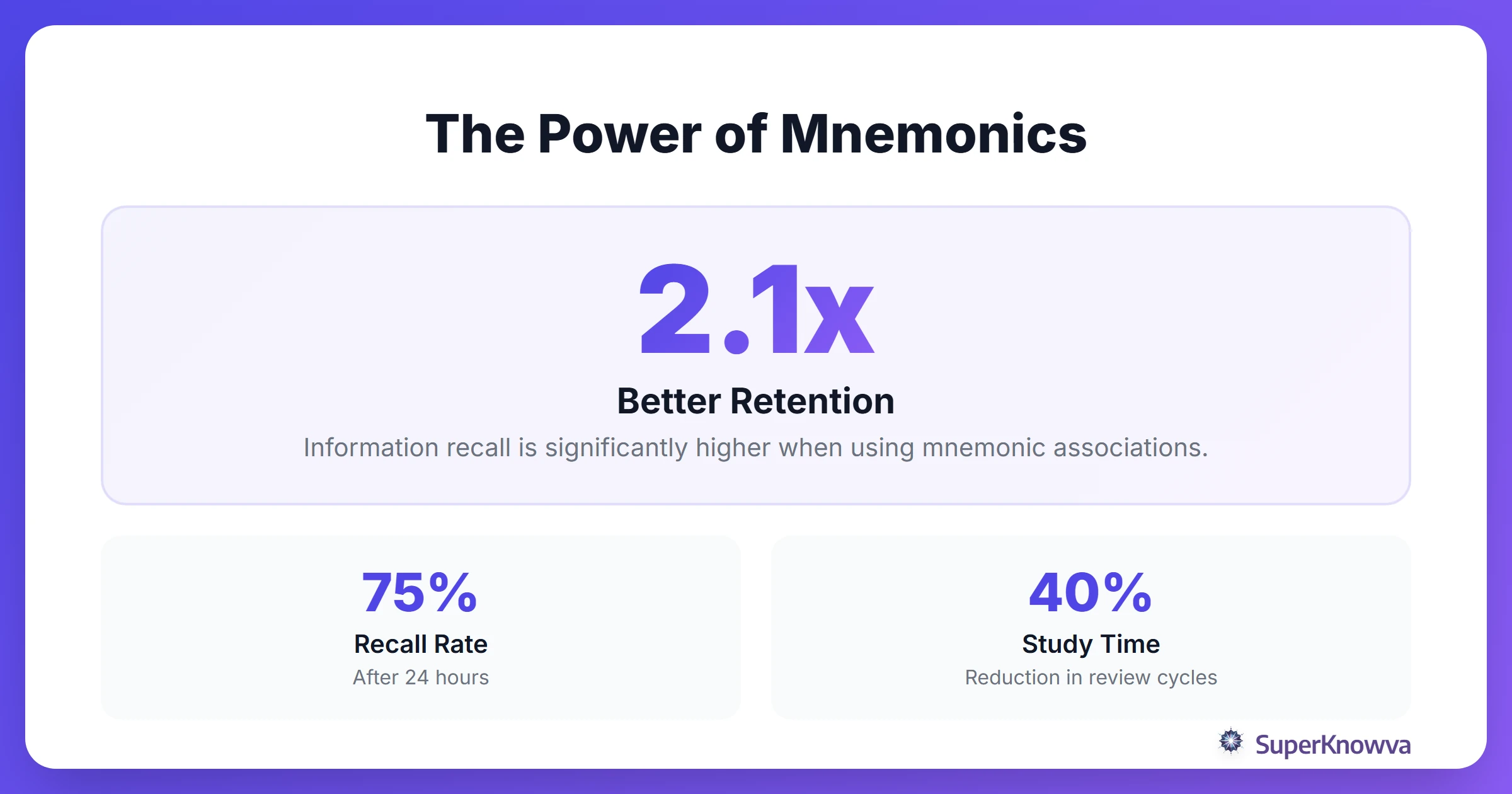
When you use a mnemonic, you create a shortcut. By linking a complex concept to a simple word or image, you make retrieval easier. This is a core part of the Neuroscience of Memory Consolidation, the process where your brain strengthens neural pathways while you rest. Mnemonics give your brain a clear framework to follow when storing information permanently.
Classic Mnemonic Types for Modern Students
Before we bring in the AI, you need to know which tools are in your kit. Most students rely on these four heavy hitters:
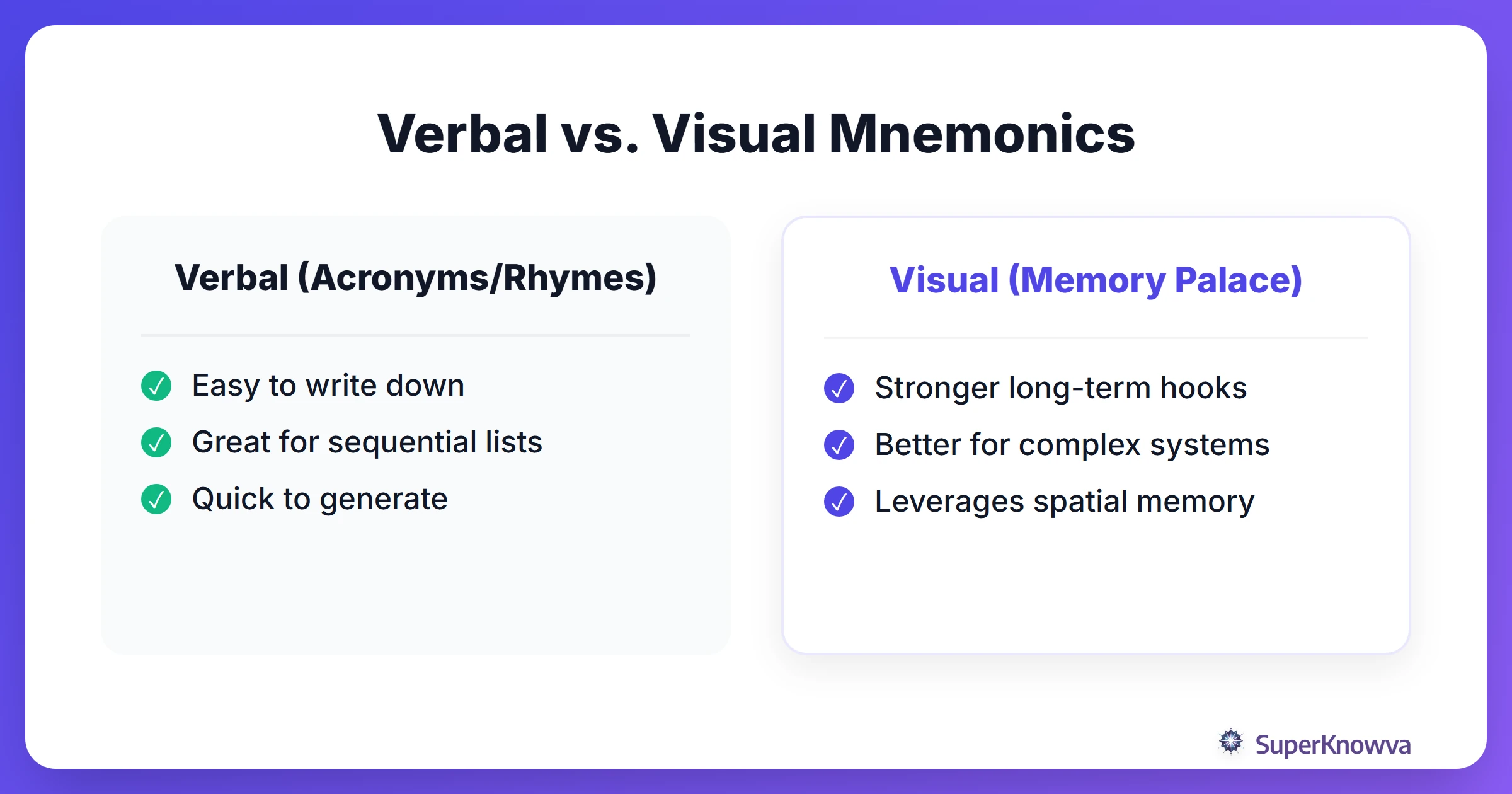
- Acronyms and Acrostics: These are effective acronyms for memorization. An acronym turns the first letters of a list into a new word (like NASA). An acrostic turns them into a sentence (like "My Very Educated Mother Just Served Us Noodles" for the planets).
- The Method of Loci: Also called the memory palace method, this is where you mentally "place" items in a room you know well. To remember them, you just take a walk through that room in your head.
- Rhyme and Song Mnemonics: Rhythm and melody create auditory patterns that help the brain retain information. This is why you still know your ABCs.
- Visual Mnemonics: These visual mnemonics use vivid, often bizarre imagery to anchor a concept. To remember that "augmentation" means increasing, picture a giant "Aug" (August) calendar physically swelling until it pops.
Why AI is the Perfect Partner for Memory Hacks
The biggest problem with mnemonics is the "Creativity Gap." Staring at a blank page for twenty minutes to find a word starting with "K" to finish an acrostic often leads to giving up and returning to mindless highlighting.
AI solves this instantly. It doesn't get writer's block. It can generate twenty different options in the time it takes you to blink, letting you pick the one that actually "clicks." Plus, you can personalize it. Love Star Wars? Ask an AI to build a memory palace method based on the floor plan of the Death Star.
It also helps you scale. Instead of spending an hour crafting one mnemonic for a single list, you can feed an entire chapter’s worth of terms into an AI and get a structured list of memory hacks in seconds.
Step-by-Step: Prompting AI for Better Mnemonics
To get the best results, don't just ask for "a mnemonic." You have to be the director.
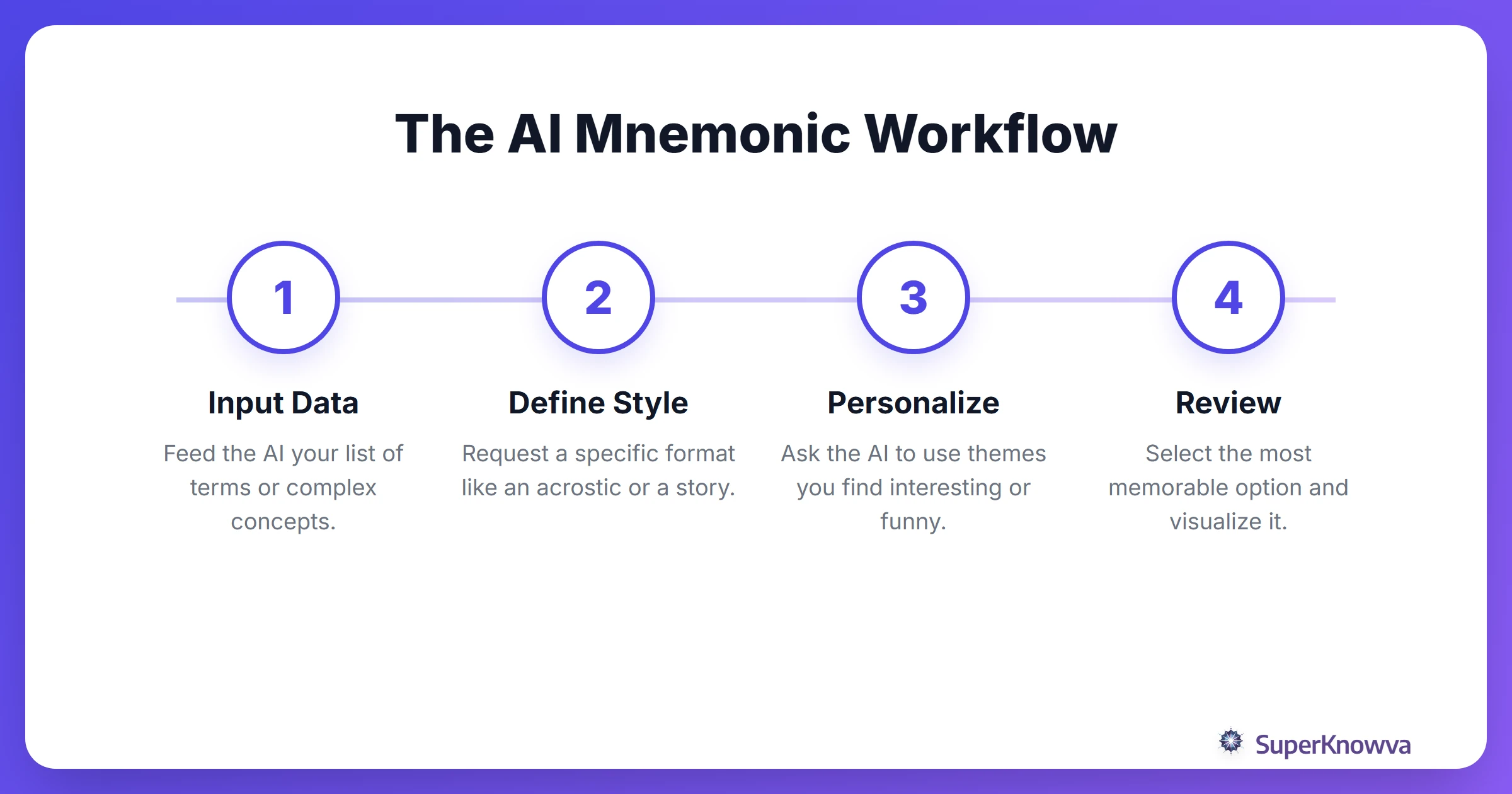
- Define the Input: Give it the exact list and the context.
- Set the Tone: Ask for "funny," "absurd," or "rhyming." The weirder the suggestion, the more likely it is to stick.
- Refine: If the first result is a dud, tell the AI to try again with a different theme (e.g., "make this about 90s pop culture").
Example Prompt Templates:
- Science: "Create an acrostic for the stages of mitosis (Prophase, Metaphase, Anaphase, Telophase) that is themed around a heist movie."
- History: "Create a short, rhyming poem to help me remember the order of the Tudor monarchs."
- Law: "I need a visual mnemonic for the elements of a contract (Offer, Acceptance, Consideration, Intent). Describe a vivid, bizarre scene I can visualize."
Visualizing Complexity: From AI Text to Mental Images
Once the AI hands you a phrase or a story, your job is to turn it into a mental movie. This is where active recall strategies come into play. Don't just read the words. Close your eyes and build the scene.
If the AI suggests a "giant neon cat" to remember a chemistry catalyst, don't just think the words "neon cat." Picture the glow of the fur, the hum of the neon, and the smell of the lab. This taps into the Von Restorff Effect, a psychological rule that says things that stand out like a "sore thumb" are the easiest to remember.
You can also pair these hooks with Mind Mapping 101. Place your mnemonic at the center of a branch to bridge the gap between a simple memory trigger and a deep understanding of the topic.
Integrating Mnemonics into Your Daily Study Routine
Mnemonics are a superpower, but they aren't a magic wand. They work best as part of a larger system. Once you’ve got your AI-generated hacks, test them using The Blurting Method. Try to dump everything you know onto a blank page, using your mnemonics to trigger the next item in the sequence.
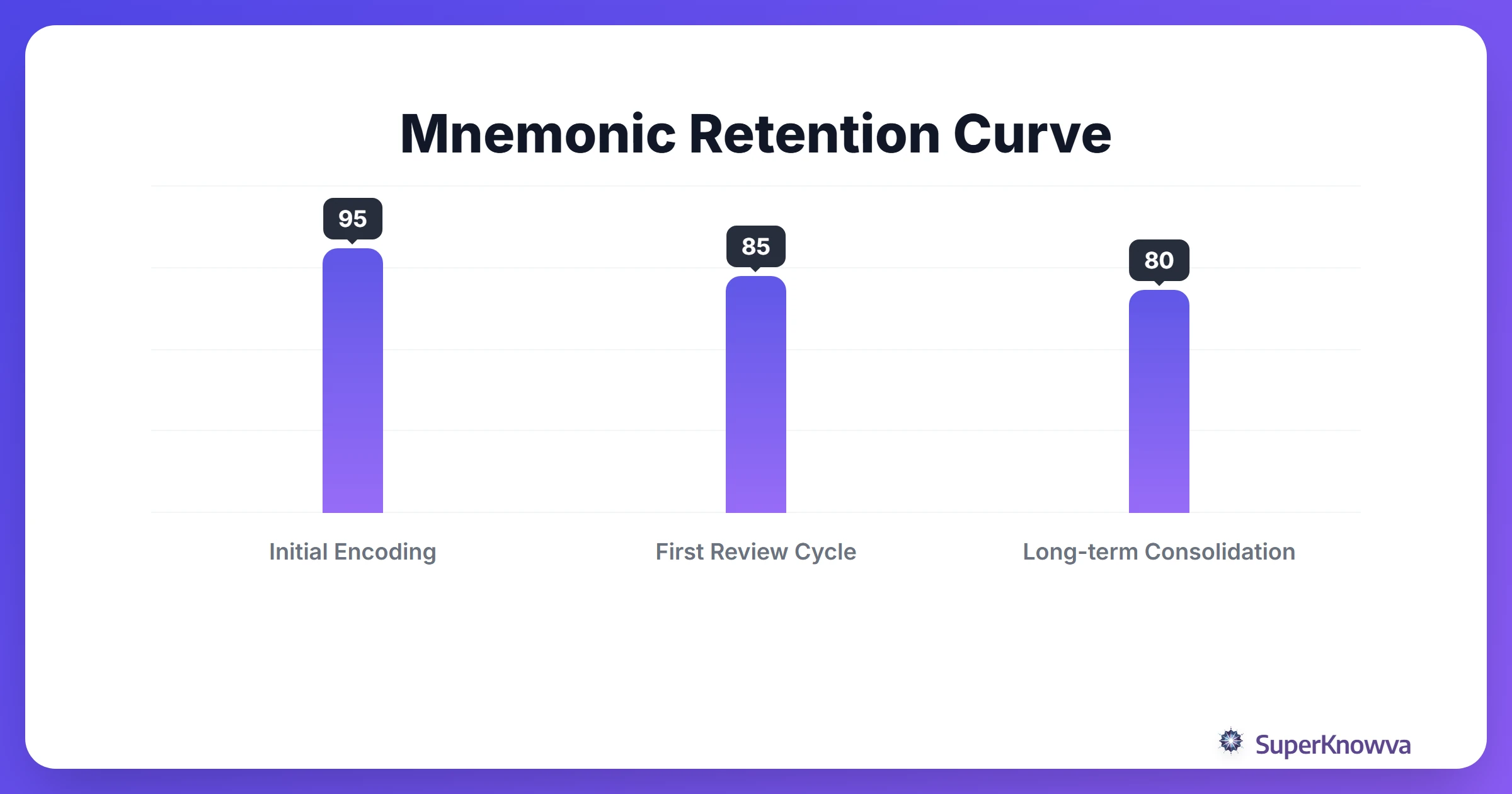
Don't forget to use spaced repetition to check these mnemonics over time. While they are great for lists, make sure you're still using The Feynman Technique for the heavy conceptual lifting. Use a mnemonic to remember the parts of a cell, but use the Feynman Technique to understand how it actually works.
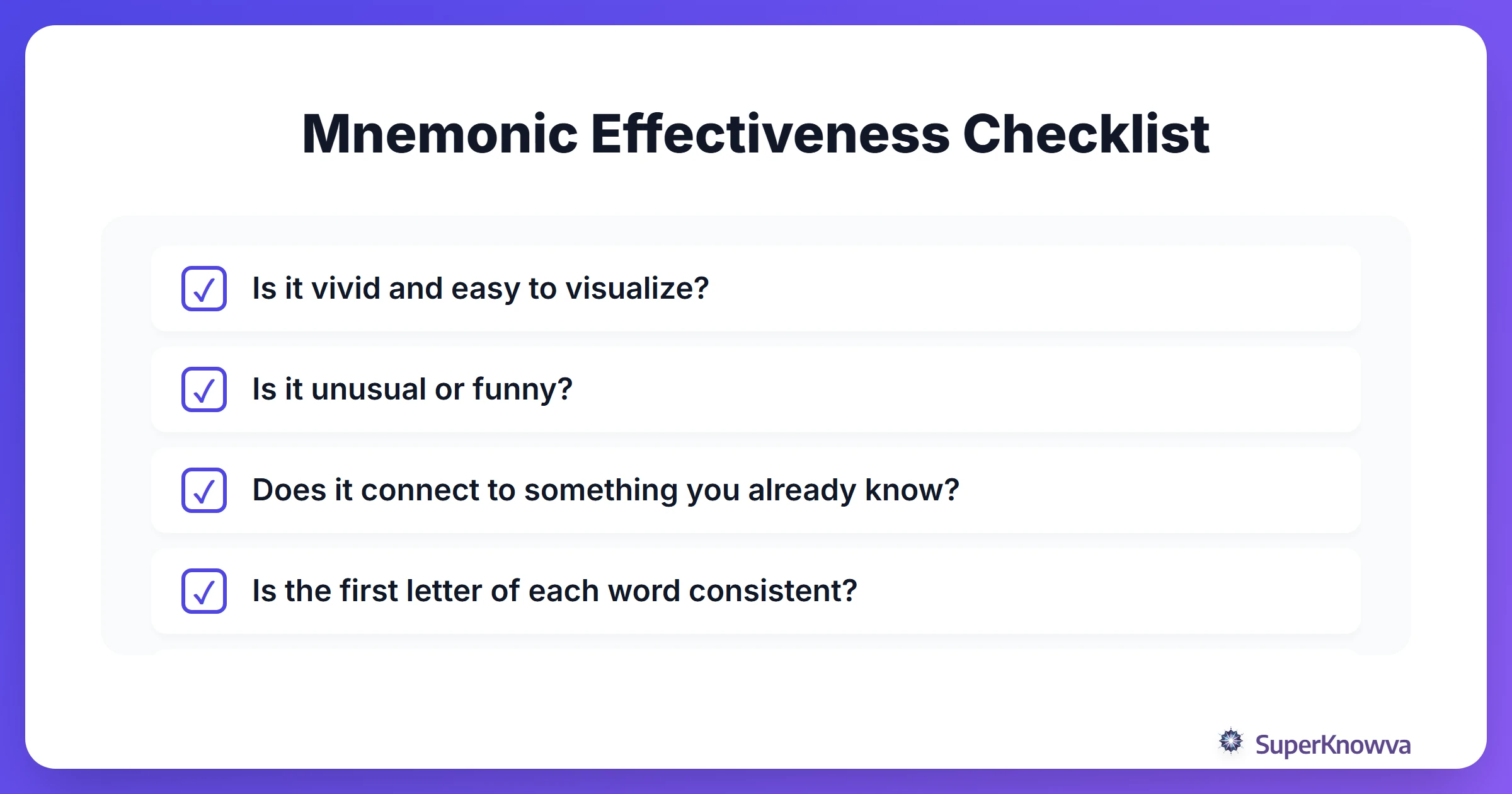
By pairing the creative speed of AI with proven psychology, you can turn your study sessions from a grind into a streamlined process. For a deeper look at different memory aids, check out this guide on Mnemonic Devices: Types, Examples, and Benefits or explore this Library Guide to Mnemonic Devices.
Ready to build your own memory hacks? Let SuperKnowva help you turn your notes into unforgettable mnemonics today.