You’ve survived the sleepless nights of nursing school, the grueling clinical rotations, and the endless mountain of care plans. Now, only one thing stands between you and those two letters after your name: the NCLEX-RN.
But this isn't the same exam your mentors took. The NCLEX has recently undergone its most significant transformation in decades. With the stakes higher than ever, many students are looking for an edge. That’s where NCLEX-RN AI prep strategies come in. It’s not just about passing anymore; it’s about mastering the "Next Gen" mindset before you ever step foot in the testing center.
In this guide, we’ll explain how AI-powered tools are changing the way nurses study, helping you master clinical judgment and handle the complexities of the Next Generation NCLEX (NGN).
The Evolution of NCLEX-RN: Moving Beyond Memorization
The nursing profession is changing, and the licensure exam had to keep up. The Next Generation NCLEX (NGN), launched by the NCSBN, officially killed the era of rote memorization. It’s no longer enough to just know facts; you have to know what to do with them. The exam now measures your ability to make safe, competent decisions in high-pressure clinical environments.
Cramming for anatomy exams is insufficient for current licensing requirements. Today’s exams demand the synthesis of information across different body systems and patient conditions. Nursing school AI tools help students master this complexity. These platforms apply textbook theory to clinical scenarios by analyzing NGN-specific question types, such as "bowtie" and "trend" items, that require a multi-dimensional understanding of patient care.
Mastering Clinical Judgment with AI-Powered Case Studies
The heart of the NGN is the Clinical Judgment Measurement Model (CJMM). It’s a six-step cognitive process that leads you to the right nursing action. It sounds clinical because it is, but it’s also the secret sauce to passing.
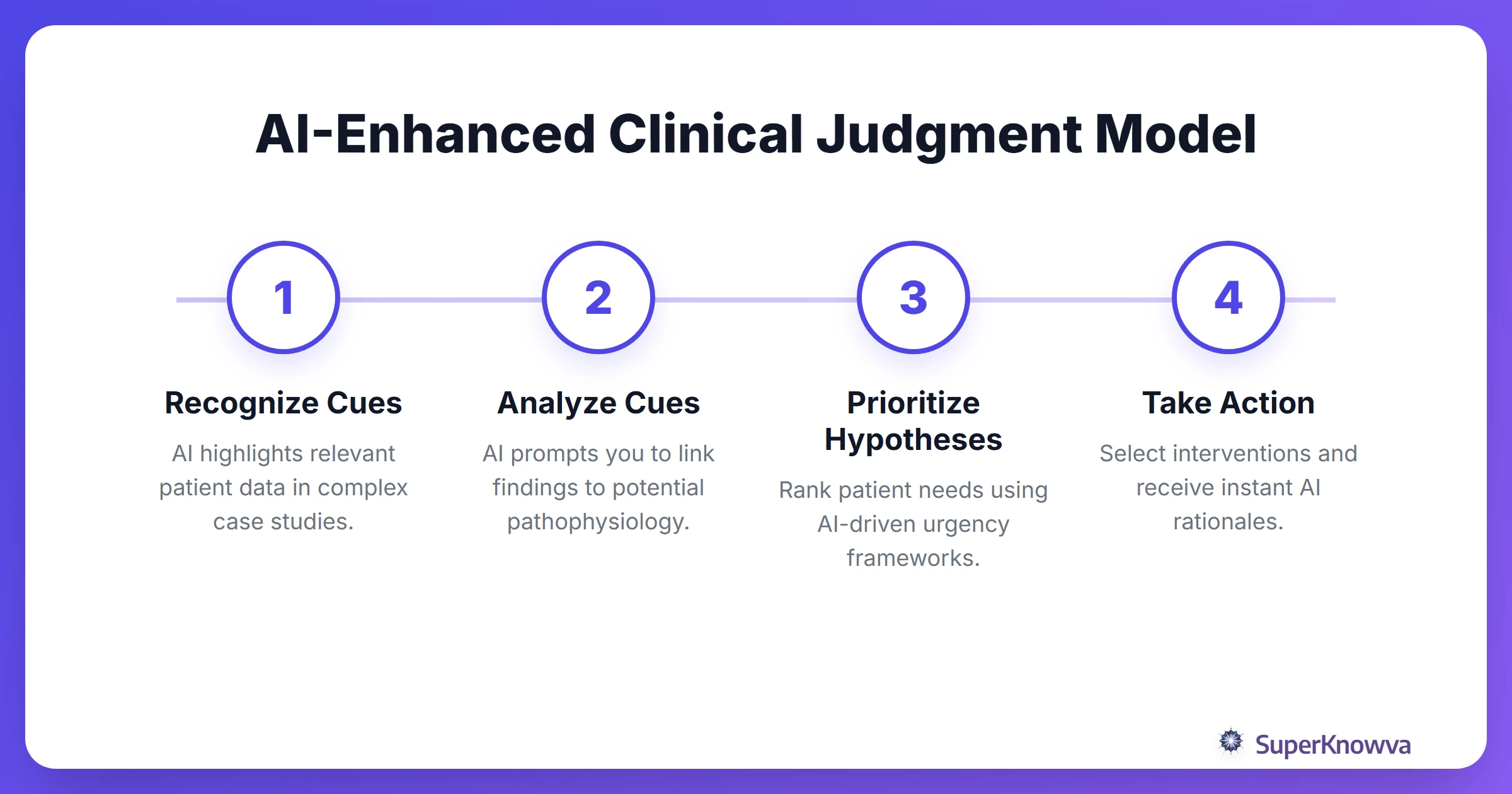
AI generates various clinical scenarios for practice. Unlike a static textbook that provides one scenario and one answer, AI tutors guide you through the "Recognizing Cues" and "Analyzing Cues" phases. They highlight subtle patient data, such as a slightly elevated heart rate or a minor change in lab values, that you might otherwise miss. This interactive approach is essential for improving reasoning skills with AI.
The best part? You get immediate feedback. If you make a mistake on a multi-step intervention, the AI corrects your thinking in real-time. This prevents you from reinforcing bad habits before they become "your way" of thinking.
Personalized Learning Paths: Targeting Your Nursing Weak Areas
The sheer volume of NCLEX content is overwhelming. How do you balance pharmacology, pediatrics, and med-surg without losing your mind?
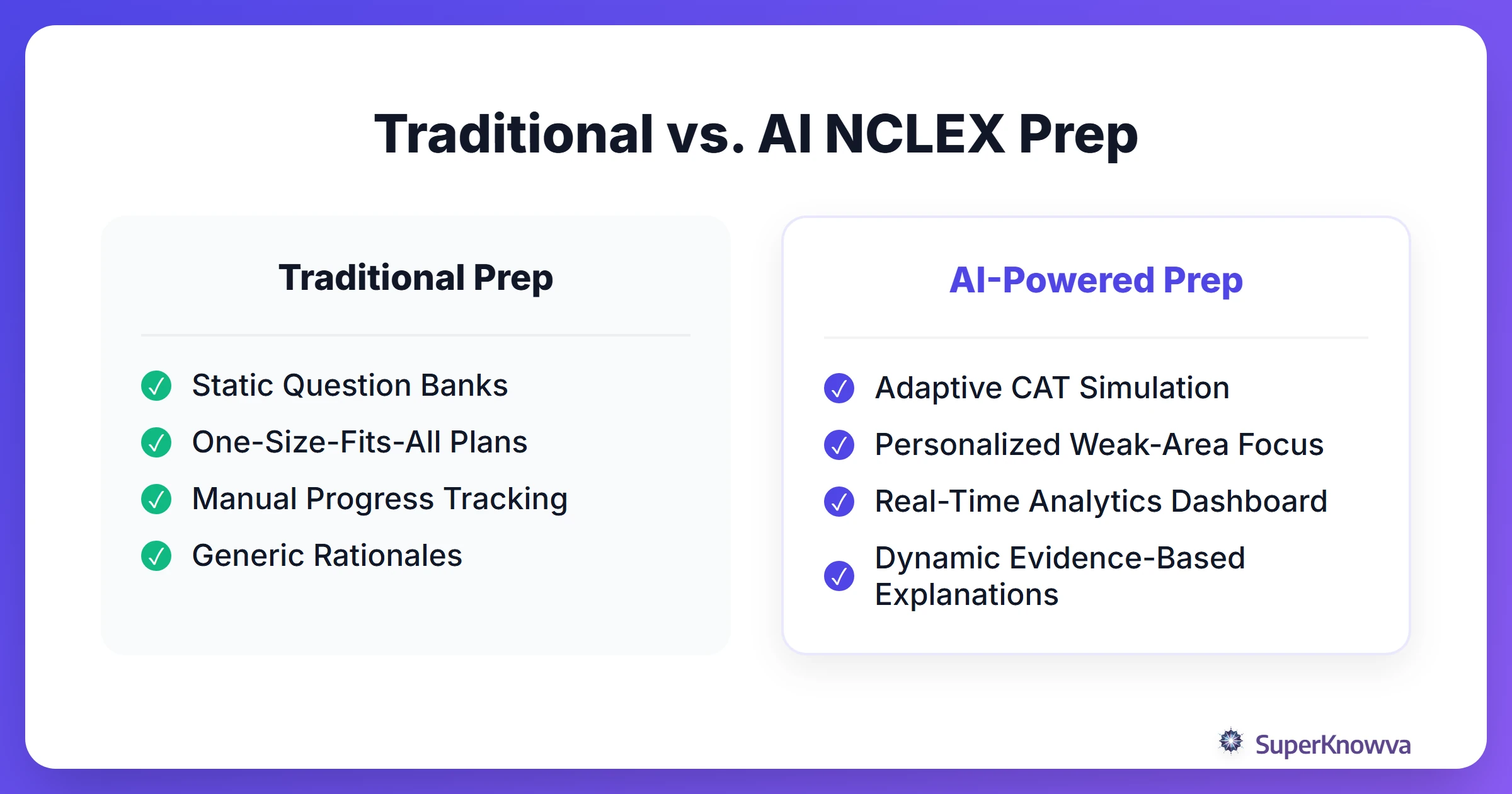
SuperKnowva identifies your knowledge gaps by analyzing your performance on practice questions. If you consistently miss questions on high-alert medications, the platform does more than flag the error. It uses spaced repetition to ensure those facts move from your short-term memory to your long-term memory.
By utilizing personalized feedback for exam success, you can stop wasting time on topics you already know and focus your energy where it actually counts.
Simulating the CAT: How AI Mimics the Real NCLEX Environment
The NCLEX-RN uses Computerized Adaptive Testing (CAT). In short, the exam "gets to know you." As you answer questions, the computer adjusts the difficulty based on your performance to determine if you meet the passing standard.
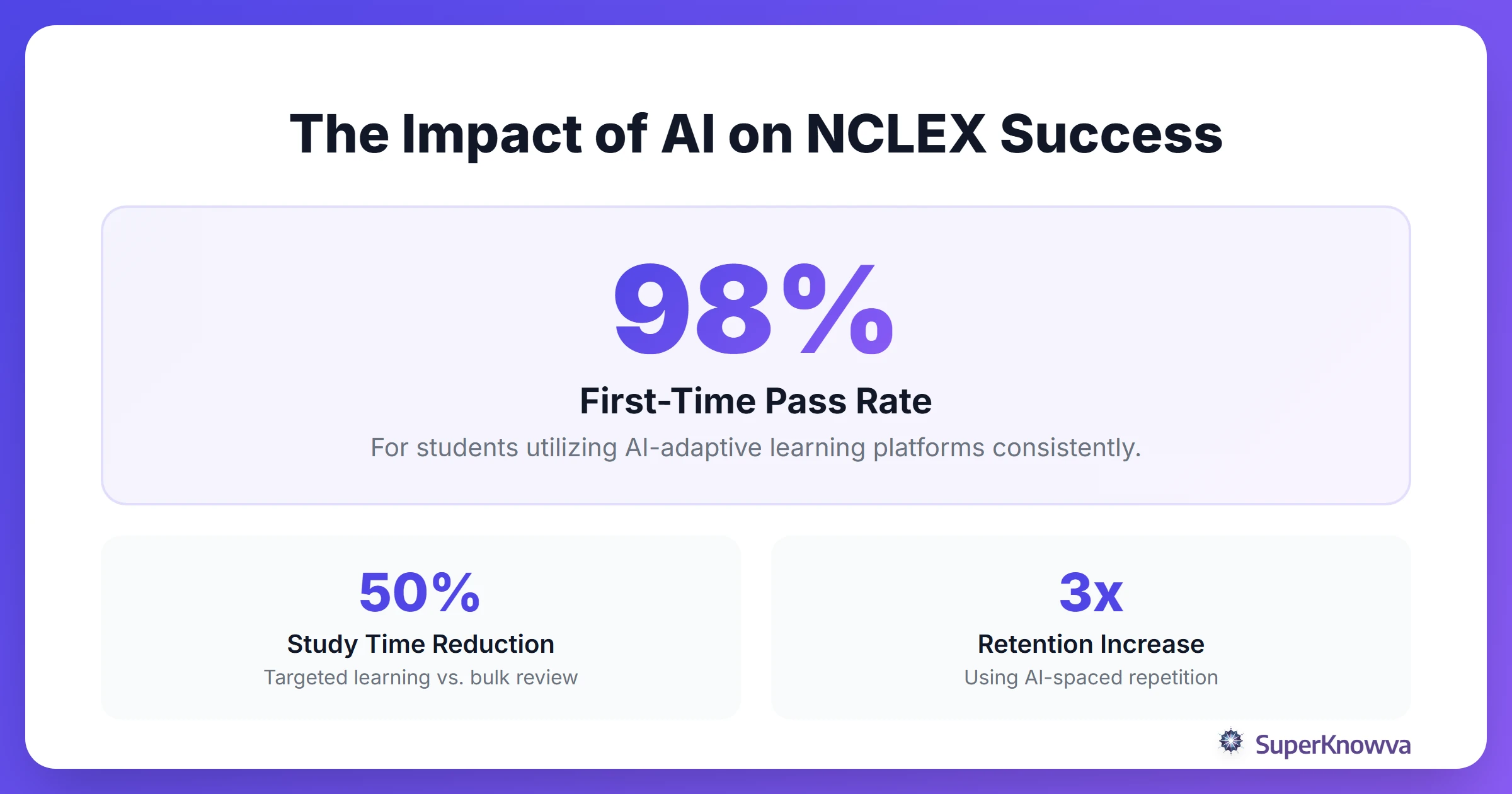
This is why static PDFs and old-school question banks fall short. AI-powered question banks simulate this environment. They provide a realistic "shut-off" experience, helping you build the mental stamina needed for the 85-150 question range. By adjusting difficulty levels, AI ensures you practice at the edge of your knowledge, which is where the real NCLEX lives.
AI-Powered Rationales: Understanding the 'Why' Behind the Answer
We’ve all been there: you get a question wrong, read the rationale, and still don't understand why "B" was better than "C." In the world of the NGN, understanding the "why" is everything.
AI can take a complex physiological process and explain it in a way that actually makes sense. If the renin-angiotensin-aldosterone system (RAAS) feels like a foreign language, an AI tutor can break it down step-by-step until it finally clicks. Plus, AI can cross-reference questions with the latest evidence-based practice guidelines, like those found in the Journal of Nursing Education, so you aren't stuck digging through a 1,200-page textbook for an explanation.
Integrating AI into a Busy Nursing Student Schedule
Let’s face it: nursing students don't have "free time." Between clinicals, capstone projects, and trying to maintain a personal life, finding hours to study is a challenge.
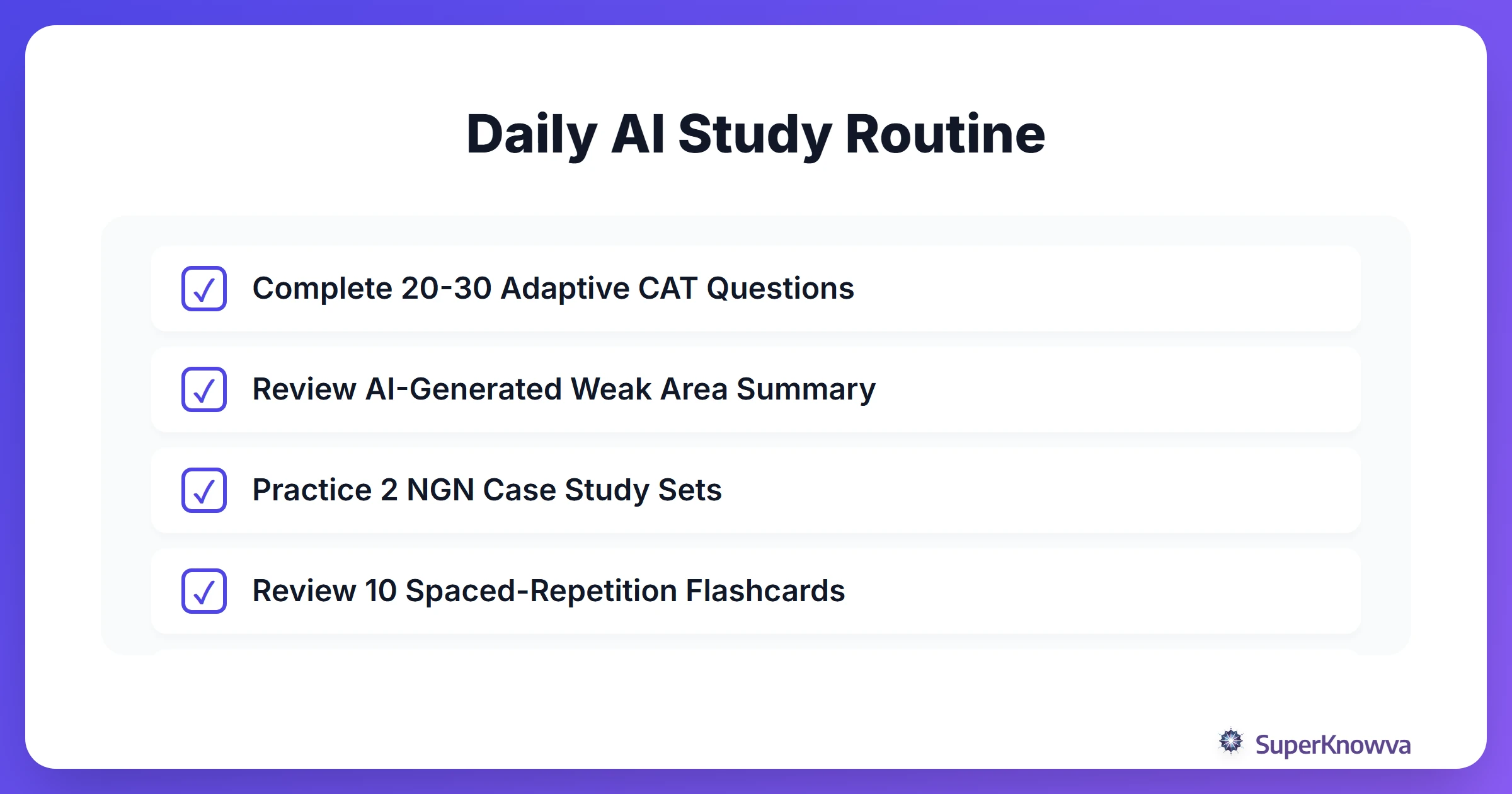
AI scheduling tools help you build a manageable 8-week plan that fits your life. You can use micro-learning by spending 5 or 10 minutes on AI-generated flashcards or adaptive questions during your clinical lunch break. This keeps your brain engaged without the burnout of 6-hour marathon study sessions.
Overcoming Test Anxiety with Data-Driven Confidence
Finally, let’s talk about the psychological side of the boards. Test anxiety usually comes from the "unknown."
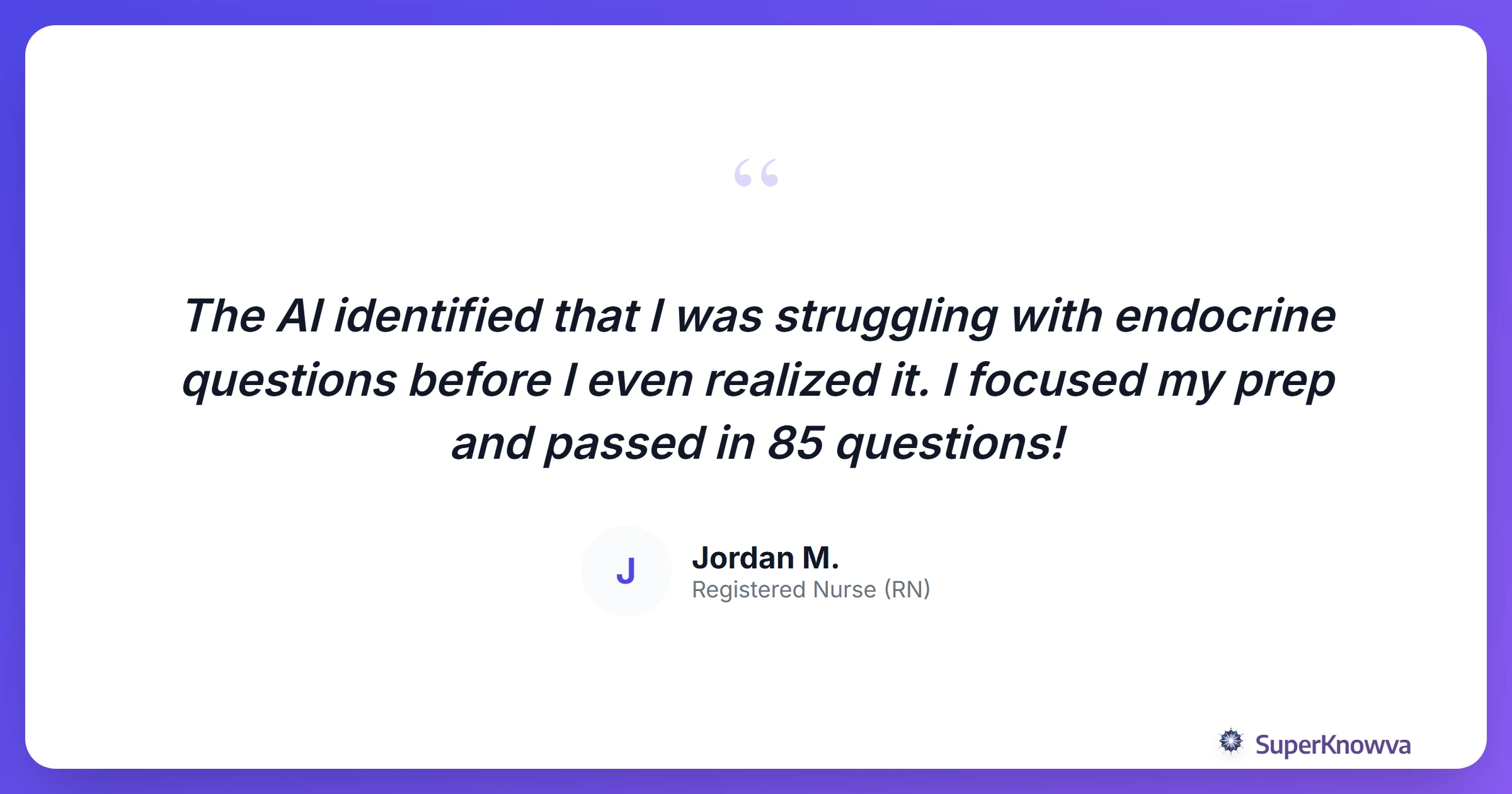
When you can see your progress on a dashboard, that uncertainty starts to fade. Predictive analytics can show you your probability of passing based on your current trajectory. Much like managing test-day anxiety with AI in other high-stakes fields like law or medicine, having the data to prove you're ready allows you to walk into that testing center with your head held high.
For more information on the official standards, you can always check out the Official NCSBN Next Generation NCLEX Resources.
Ready to dominate the NCLEX? Start using SuperKnowva today and turn those years of hard work into a nursing license.