Does the word "networking" make your stomach do a somersault?
Networking can feel like a loud, crowded room where everyone shouts over each other to be the most "charismatic" person there. For an introvert, that doesn't feel like a career opportunity. It feels like a chore you would do anything to skip. Networking for introverted students doesn't have to be a source of constant anxiety.
The truth is, your natural tendencies aren't hurdles. They're actually your greatest professional assets. With a smart strategy and a little help from AI, you can build a massive network without ever having to "fake" an extroverted personality.
In this guide, we’re moving away from the exhausting "performance" of networking. Instead, we’ll focus on a research-based approach that builds genuine, lasting connections. If you're looking for a broader foundation first, take a look at our comprehensive student networking guide to get the basics down.
The Introvert's Secret Weapon: Preparation Over Performance
There is a massive myth floating around that networking requires you to be the life of the party. It doesn't. In fact, the most effective networkers are often the ones who listen more than they talk.
As an introvert, you excel at deep active listening. You notice small details and process information before responding. These are not just "nice" traits. They are professional strengths.
Instead of viewing a networking event as a social gauntlet, try reframing it as a research project. When your goal is to learn rather than to "sell" yourself, the pressure usually evaporates.
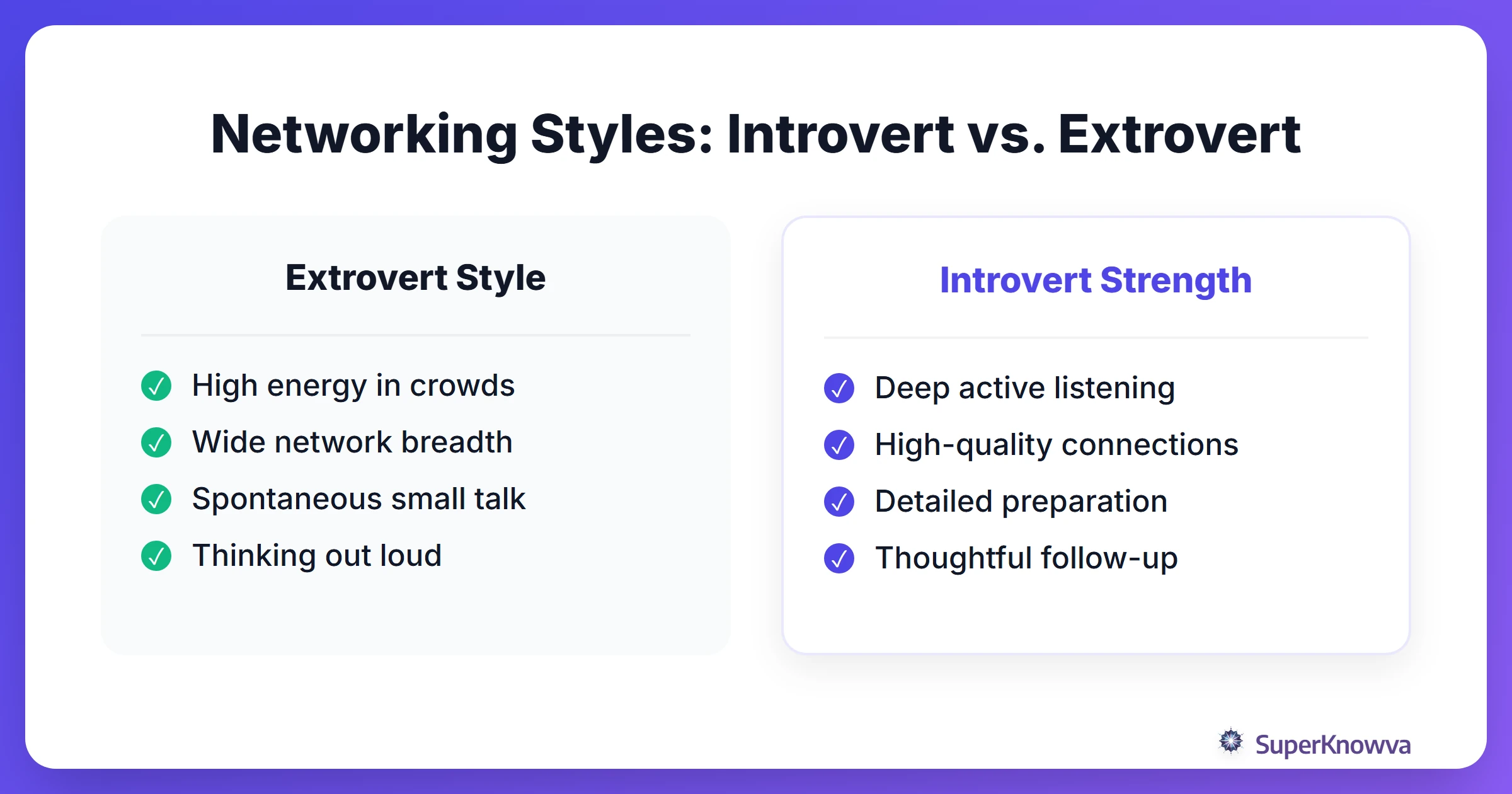
The golden rule? Quality over quantity. It is infinitely better to have two meaningful, 10-minute conversations that lead to a real follow-up than to walk away with twenty business cards from people who won't remember your face five minutes later.
Using AI for Low-Stakes Networking Research
Let's be real: the hardest part of professional networking for students is often just knowing how to start. Who do you talk to? What do you even say? This is where AI becomes your best friend. You can use these tools to lower the "activation energy" needed to get a conversation moving.
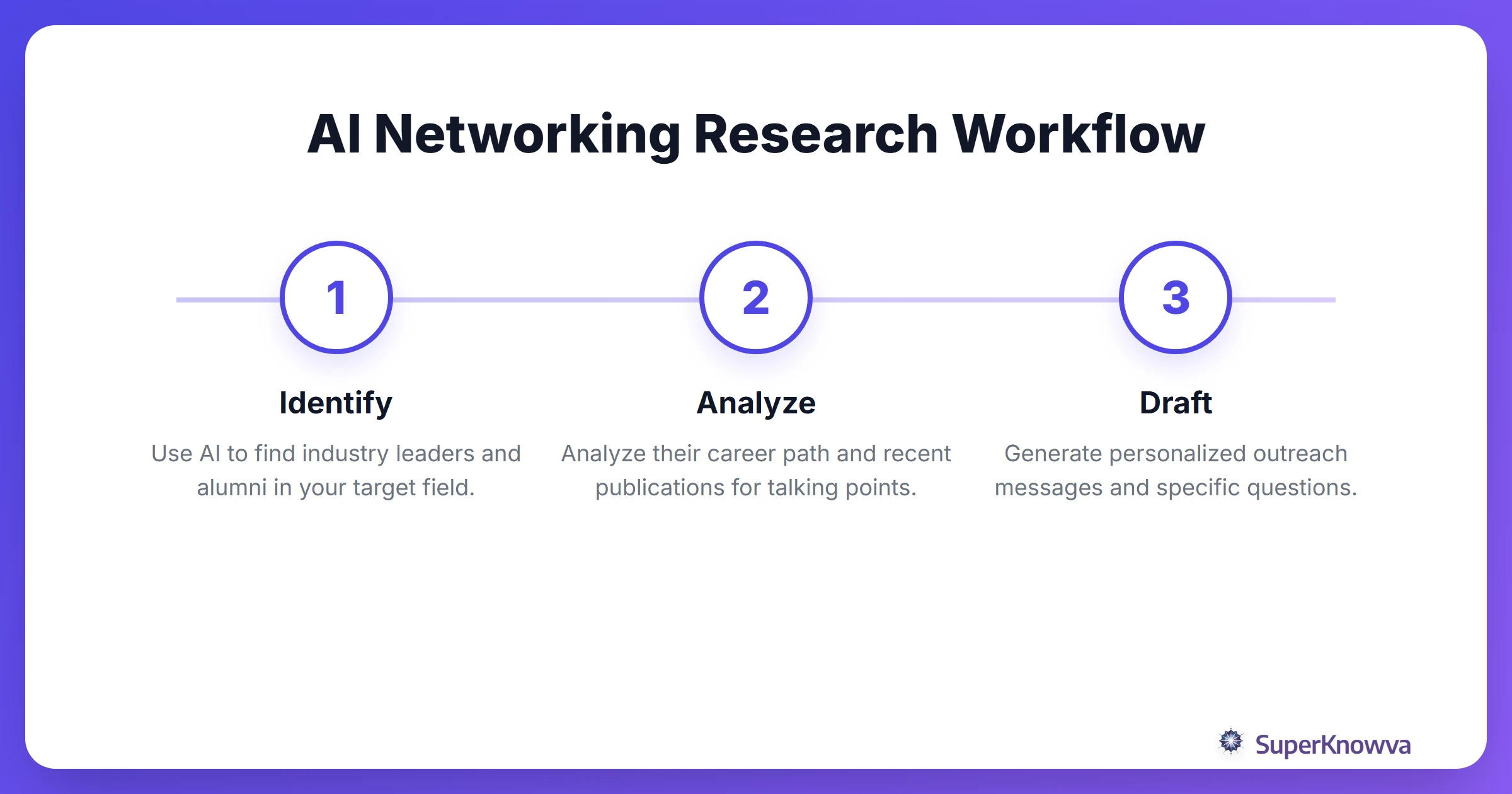
- Identify Your Target: Use AI to find companies that actually fit your vibe. Try asking a chat tool: "What are some mid-sized tech companies in Chicago known for a collaborative, quiet culture?"
- Skip the Small Talk: If the thought of "How about this weather?" makes you cringe, use AI to generate thoughtful, open-ended questions. Instead of the generic "What do you do?", try something like: "I noticed you transitioned from academia to UX design; what was the most surprising challenge in that shift?"
- Do Your Homework: Before reaching out for informational interviews for introverts, feed an AI tool the text of a professional’s public profile or a recent article they wrote. Ask it to summarize their key achievements so you can mention them specifically. It shows you’ve done the work.
Crafting Your Digital Presence Before the Handshake
For introverts, the internet is a gift. It allows you to build a reputation and "meet" people before you ever step foot in a physical room. By focusing on personal branding for students, you’re essentially creating a LinkedIn profile that does the talking for you while you sleep.
Don't stare at a blank "About" section for hours. Give an AI tool your resume and a target job description, then ask it to draft a bio that highlights your specific technical skills and unique perspective. Once your profile is polished, start engaging. Leave thoughtful, written comments on industry posts. It’s a low-stress way to get noticed by leaders without the pressure of a real-time, face-to-face conversation.
The AI-Powered Elevator Pitch for Introverts
Even the most prepared introvert eventually has to introduce themselves. To help with overcoming networking anxiety, you need a script that actually feels like you.
Use AI to refine your 30-second elevator pitch. Input your major, your favorite projects, and your career goals, then ask the AI to "make this sound professional yet conversational." Once you have a draft, practice it. Use a recording app on your phone or an AI voice tool to hear how it sounds. Hearing yourself say the words out loud builds the kind of muscle memory that keeps you from stumbling when the moment arrives.
Pro tip: create different "versions" of your story. You need one version for a recruiter at a career fair and a totally different, more casual version for a guest speaker after a lecture.
Survival Strategies for In-Person Events
When you do have to attend in-person events, don't just wing it. Go in with a plan to protect your energy.
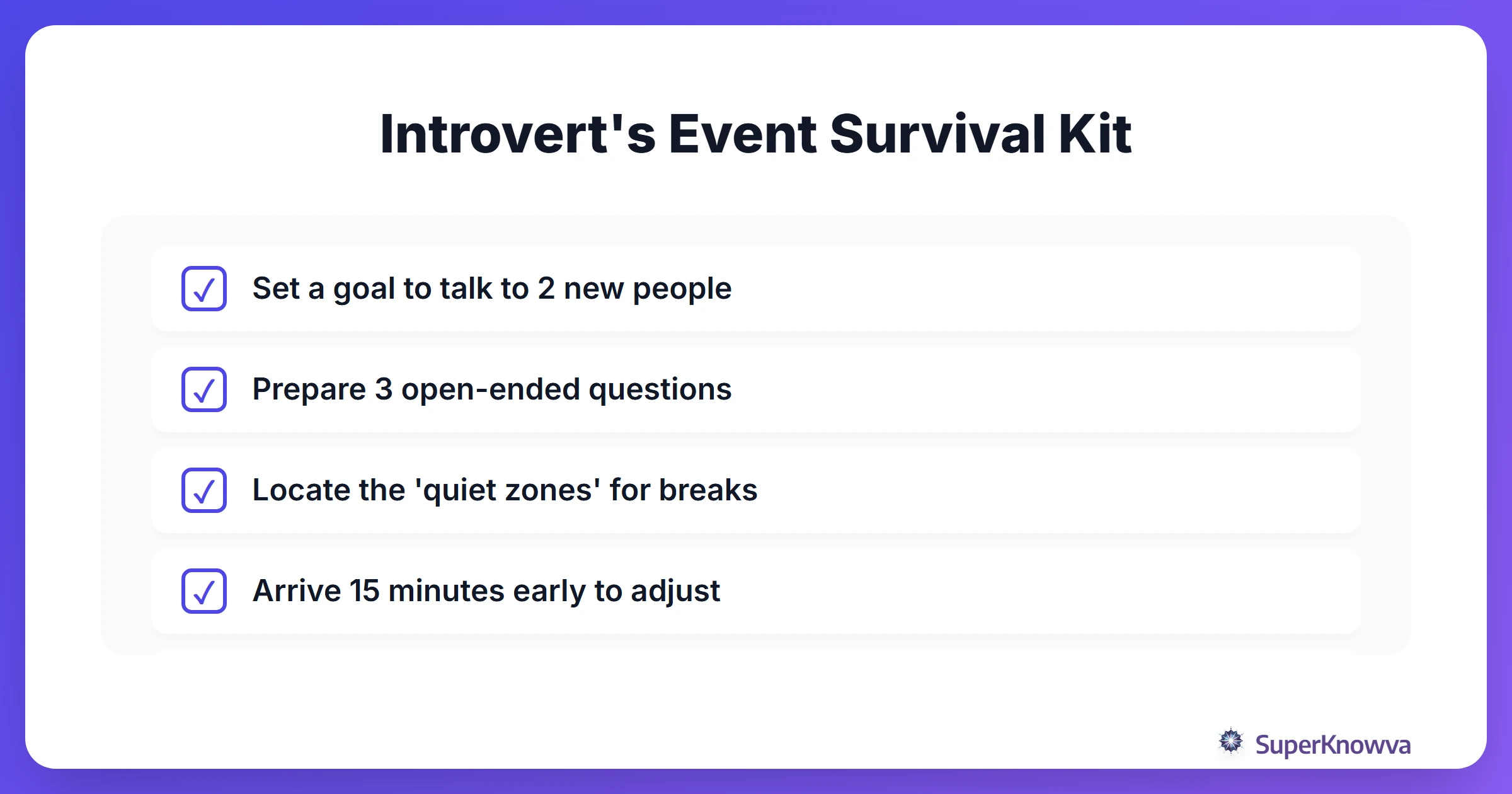
- Set Micro-Goals: Don't tell yourself you need to meet everyone. Set a goal to talk to just two people. Once you’ve hit that goal? You have "permission" to leave.
- The 'Arrive Early' Strategy: Walking into a room that is already full and loud is an introvert’s nightmare. Arrive 15 minutes early. It’s much easier to start a conversation with one other person in a quiet room than to try and break into an established group later.
- Find Networking Buddies: Bring a friend. They can help introduce you to others, acting as a social safety net when your "social battery" starts to run low.
As noted in this Forbes guide on networking powerfully, the key is to honor your own style. Don't try to mimic an extrovert; it’s exhausting and people can usually tell when it’s not authentic.
Mastering the Art of the Follow-Up
This is where introverts truly shine. Because you’re likely a strong writer and a keen observer, you can use the follow-up to turn a brief meeting into a real connection.
Always follow the 24-hour rule: send a thank-you note within one day. Use AI to help draft the structure, but make sure you include a "personal hook," a specific detail from your conversation that proves you were actually listening.
Example: "I really enjoyed our talk about the future of remote work; I actually looked up that book you mentioned!"
Mastering these introvert career tips will help you turn a one-time meeting into a long-term professional relationship. Remember, networking isn't just about landing a job; it's about building a community that supports you.
For more help on getting ready for the professional world, check out our guides on soft skills employers want and using AI for interview prep.
You might also find this Cell Mentor guide to conference networking helpful for your next big event. By leaning into your natural strengths and using the right tools, you can build a powerful network on your own terms.