It’s the end of the semester, and you’re technically "smarter" than you were four months ago. So why does looking at your desktop, a graveyard of unsorted PDFs and half-finished Google Docs, make you want to crawl under your covers?
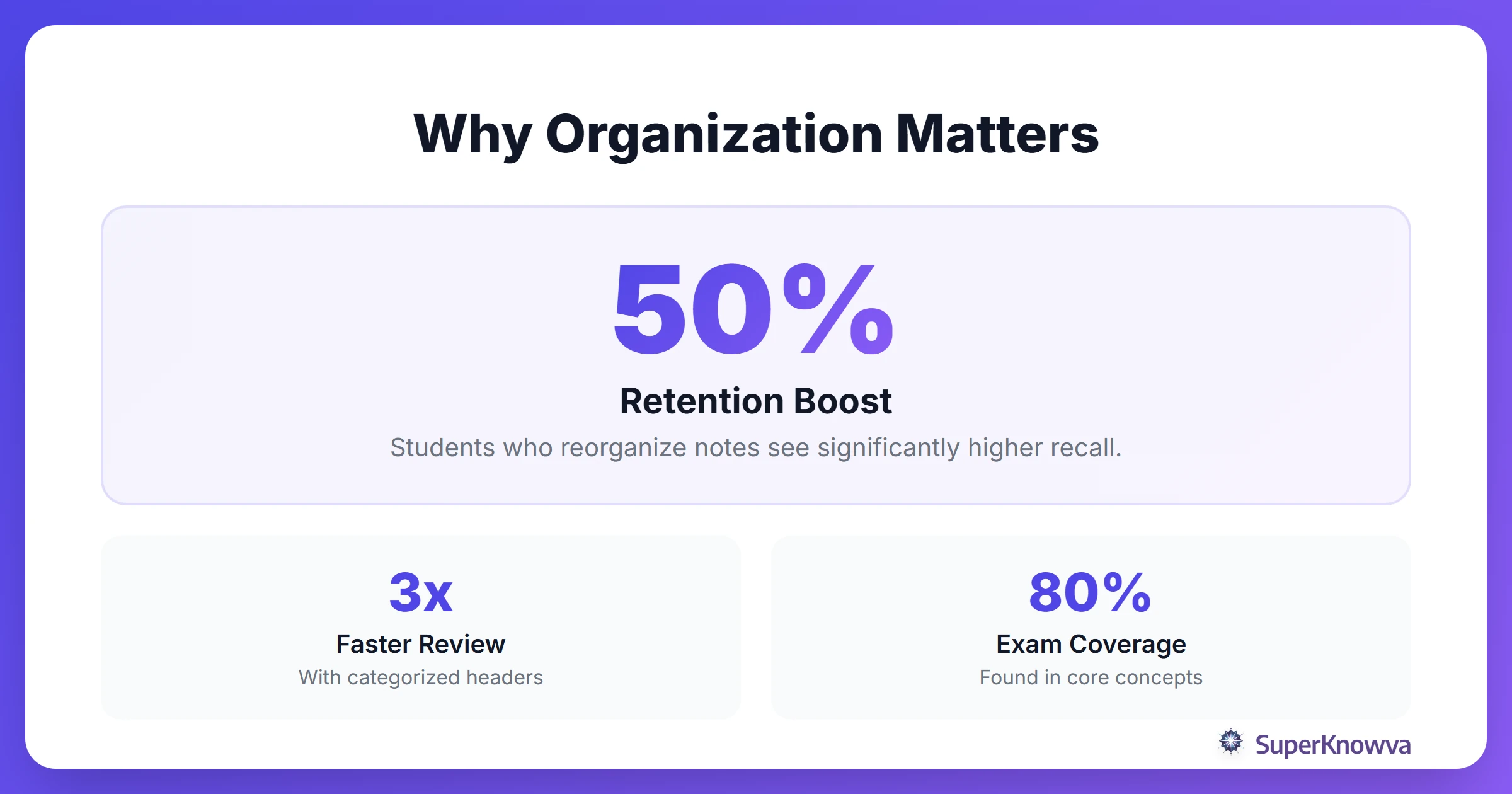
Staring at a notebook bursting with scribbles can trigger instant panic. But here’s the truth: acing your exams isn't about pulling more all-nighters or drinking more espresso. It’s about the strategy you use to organize lecture notes for finals.
At SuperKnowva, we believe the magic happens when you stop "reviewing" and start "reconstructing." This guide will help you turn that semester-long chaos into a streamlined, high-performance study roadmap.
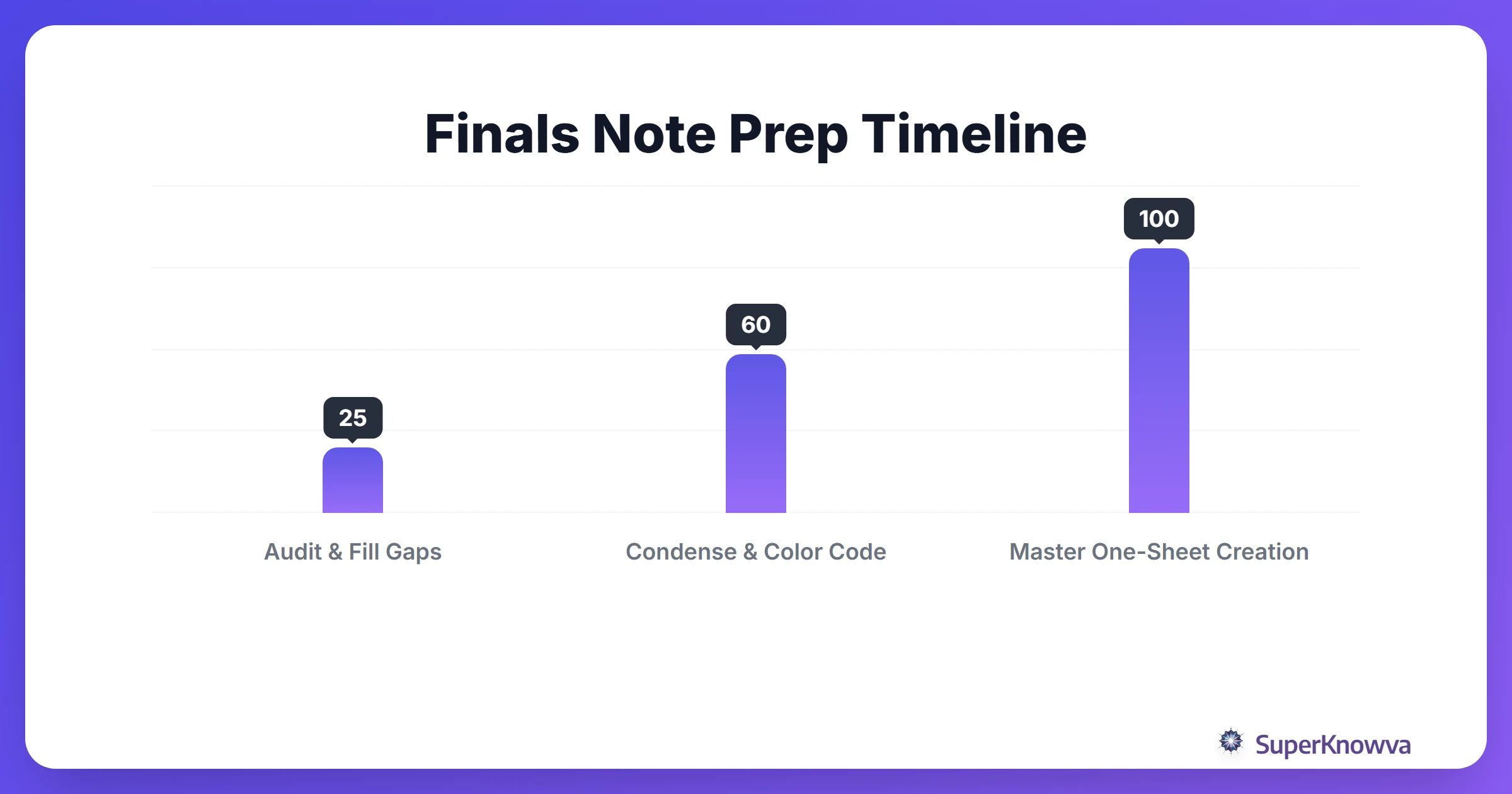
The Great Audit: Hunting Down Your Materials
Before reading a single sentence, you must know exactly what you are working with. A classic mistake in comprehensive exam preparation is starting Chapter 1 while forgetting that the Week 7 guest lecture, which you missed for a dentist appointment, is 15% of the grade.
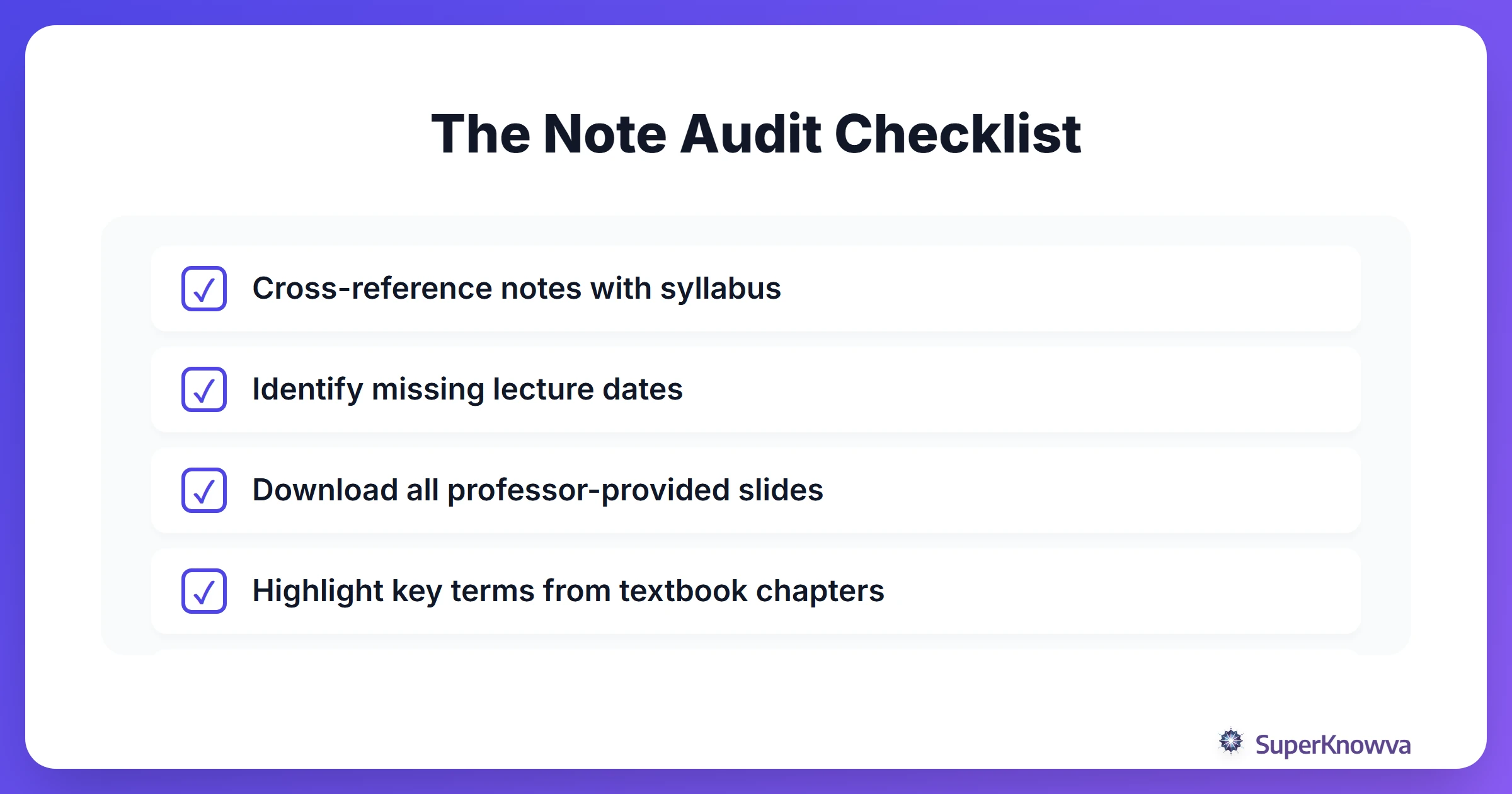
Start with a full inventory. Lay out your syllabus like a map and cross-reference it with your folders. Ask yourself:
- Are there gaps in my notes?
- Did I download all the slides from October?
- Is that one handout still at the bottom of my bag?
Now is the time to reach out to classmates or scour the student portal. Don't wait until the night before to realize you're missing a week of content.
Once you have everything, categorize it. Not all topics deserve equal time. Use your syllabus to flag "High Impact" topics: the ones that kept coming up in assignments or took three weeks to cover. Focus your energy where the points are.
Synthesis: Move From Transcript to Tool
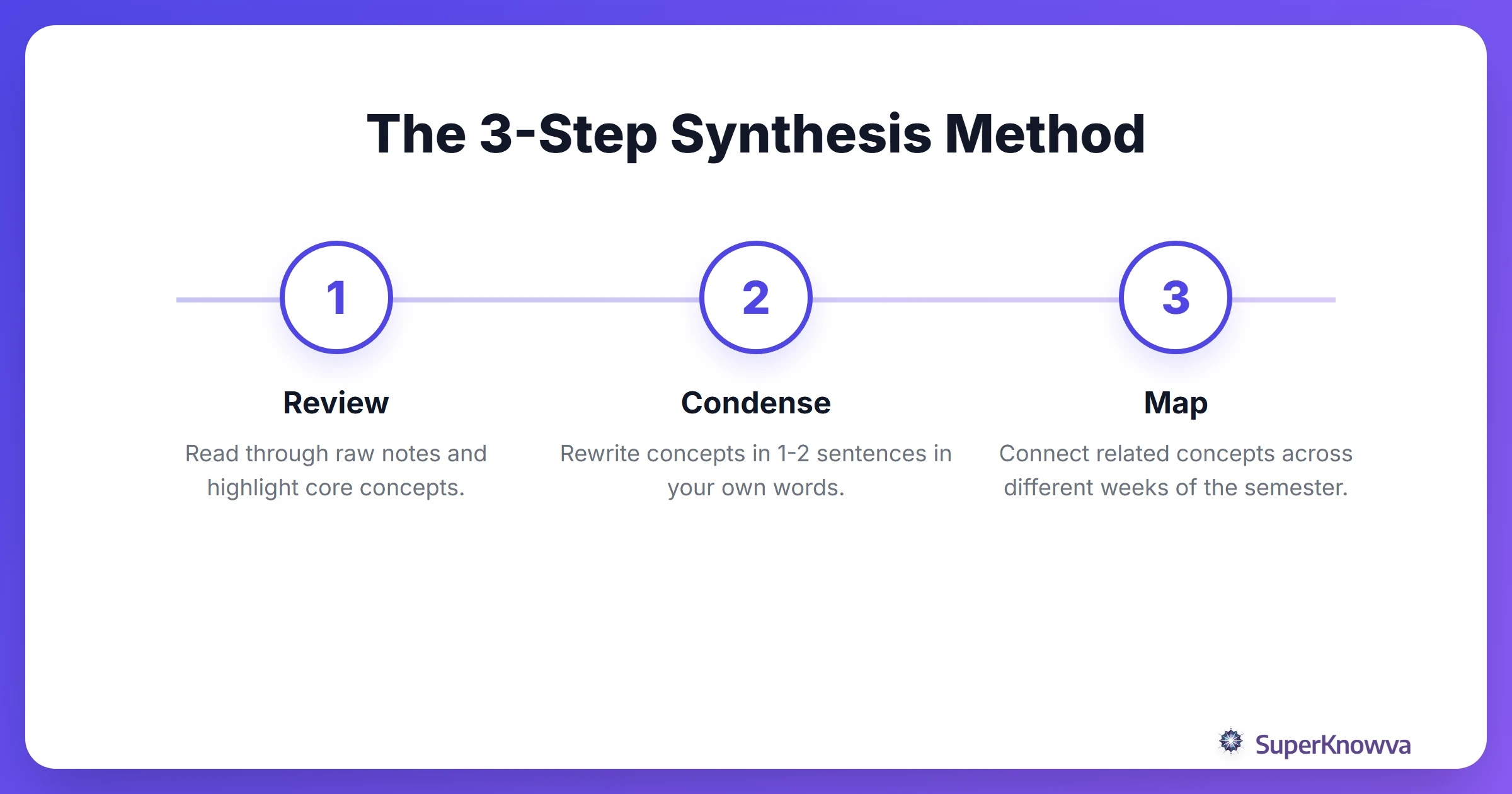
If you have 100 pages of notes, you don’t have a study guide. You have a transcript. To actually learn this stuff, you have to condense it. This is the heavy lifting of effective college study strategies.
Try the 80/20 rule: identify the 20% of the content that will likely make up 80% of the exam. Focus on the "Why" and the "How" rather than just memorizing the "What."
As you go, rewrite things in your own words. If you can’t explain a concept to a five-year-old (or a very confused roommate), you don’t understand it yet. This active processing is lightyears more effective than note-taking from a textbook verbatim.
Pro-tip: Use the Cornell Method during this phase. Use a narrow side column for "cues" or keywords and a bottom section for a "summary." It turns your notes into a self-testing machine.
Visual Cues: Making Your Notes Scannable
Your brain loves patterns. When you organize lecture notes for finals, visual cues act as mental anchors. If you use blue for definitions, red for formulas, and green for dates, your brain starts to categorize information before you even read the words. For some inspiration on how to set this up, check out this Guide to color-coding notes.
Layout matters, too. Linear outlines are fine for history, but if you’re studying complex sciences where everything is connected, try a mind map. The goal? Reduce the "cognitive load." You want to spend your brainpower processing the info, not hunting for it on a messy page.
Digital vs. Analog: What Actually Works?
iPad or paper? Both have their place in study note organization. Digital apps like Notion or OneNote are useful for searching massive slide decks. People still love pens because the tactile act of handwriting is proven to boost memory retention.
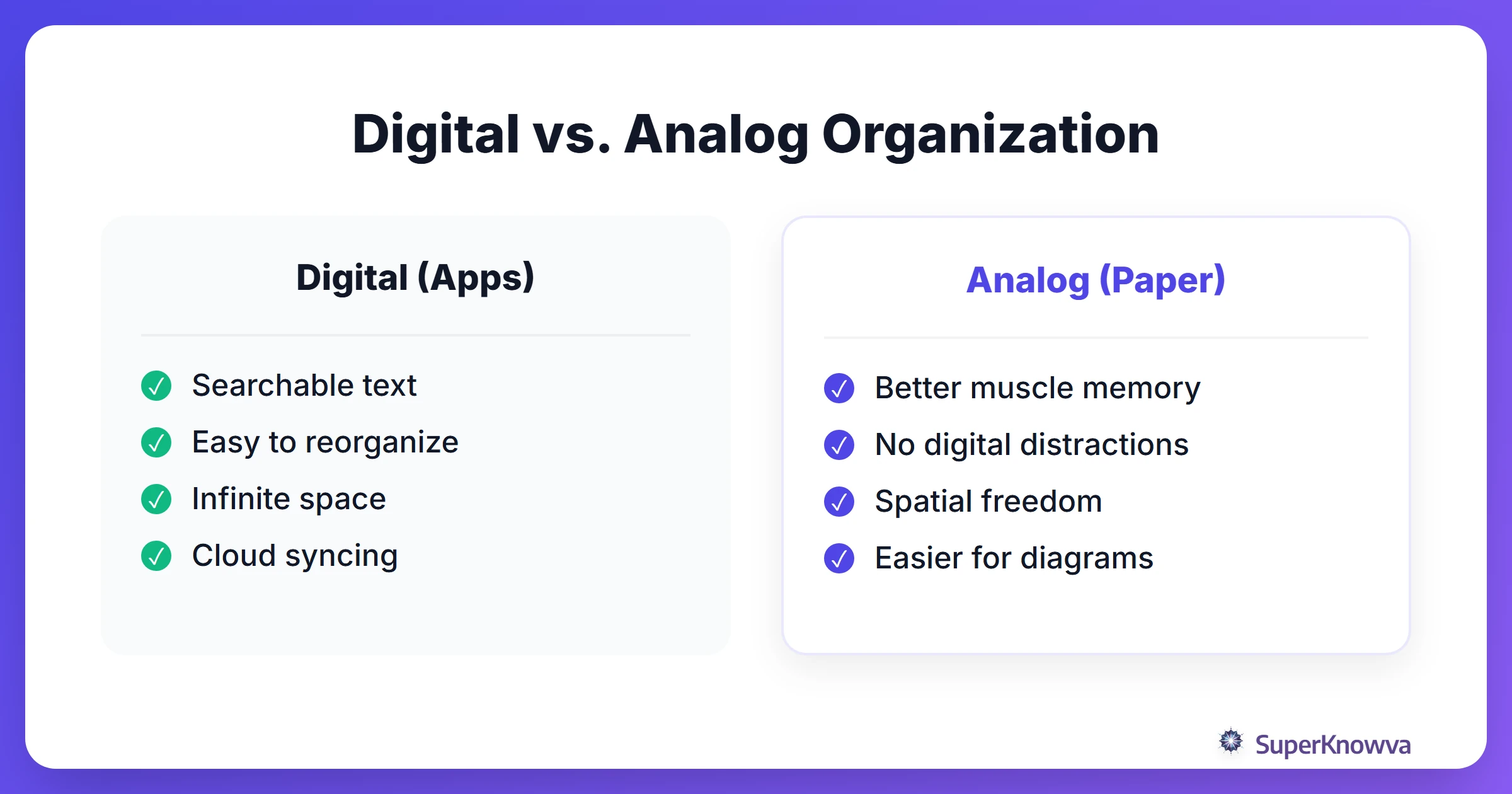
Many top students use a hybrid approach:
- Store the "big stuff" (raw notes and slide decks) in the best study apps.
- Hand-write "Cheat Sheets" for the hardest concepts to build muscle memory.
- Scan those handwritten sheets back into your digital system so you can study them on the bus.
Struggling to even start? Use the 5-minute rule. Just pick one method and commit to five minutes. Usually, that’s enough to break the paralysis.
Active Recall: Stop Reading, Start Remembering
The biggest trap? "Passive review." That’s when you read your notes over and over until they look familiar. But familiarity isn't mastery. To be ready for the exam, you need active recall notes.
Turn your headers into questions. Instead of a header that says "The Law of Supply and Demand," write "What happens to market equilibrium when supply increases?"
This forces your brain to "pull" the information out rather than just letting it sit there. This is the core of the active recall vs. re-reading debate. Recall wins every time.
The 'One-Sheet' Strategy
As you hit the final week of prep, it’s time for the ultimate challenge: condensing notes for finals onto a single A4 page.
Why? Because physical space forces you to prioritize. You stop seeing the course as a list of dates and start seeing it as a unified web of ideas. This "One-Sheet" becomes your final warm-up tool for the thirty minutes before the exam begins.
If you want to see how other students are crushing their one-sheets, check out these Reddit community tips on studying for finals.
Conclusion
Organizing your notes isn't a chore you do before studying; it is studying. By auditing your materials, synthesizing the big ideas, and building active recall tools, you turn stacks of paper into a clear path to an A.
Ready to level up? Let SuperKnowva help you turn those organized notes into instant practice quizzes and personalized study plans. You’ve got this!