Picture this: You’ve got the snacks ready, the group chat is buzzing, and everyone is hyped to crush the upcoming midterm. Fast forward two hours, and you’re deep in a TikTok rabbit hole, halfway through a bag of chips, and haven't even opened the textbook. We’ve all been there.
While peer-to-peer learning is technically one of the best ways to master a subject, it usually falls apart because of one thing: a total lack of structure. But that’s changing. Collaborative learning with ai is turning those disorganized meetups into high-octane academic engines.
Here’s how you can stop the scrolling and start actually learning by bringing AI into your next study session.
The Evolution of Study Groups: From Shared Notes to AI Partners
Remember when study groups were just "pooling resources"? You’d share notes, compare highlighter colors, and pray that at least one person in the room actually understood the lecture. It was passive, slow, and often felt like the blind leading the blind.
Today, we’re seeing a massive shift. AI is no longer just a solo "homework helper" you use in secret at 2 AM. It’s becoming a central pillar of group dynamics.
This is a significant change for collaborative AI for students. Instead of treating AI like a search engine, smart groups treat it as a "digital peer." It doesn't just hand out answers; it facilitates the conversation. By moving away from passive note-sharing toward AI-facilitated discussions, you ensure that everyone is actually contributing instead of just nodding along while they daydream about dinner.
AI as a Neutral Moderator: Keeping the Vibes (and the Focus) Right
One of the hardest parts of any group setting is staying on track. It is incredibly easy for a conversation about organic chemistry to morph into a 30-minute debate about the best local coffee shop. That’s where an AI discussion moderator comes in clutch.
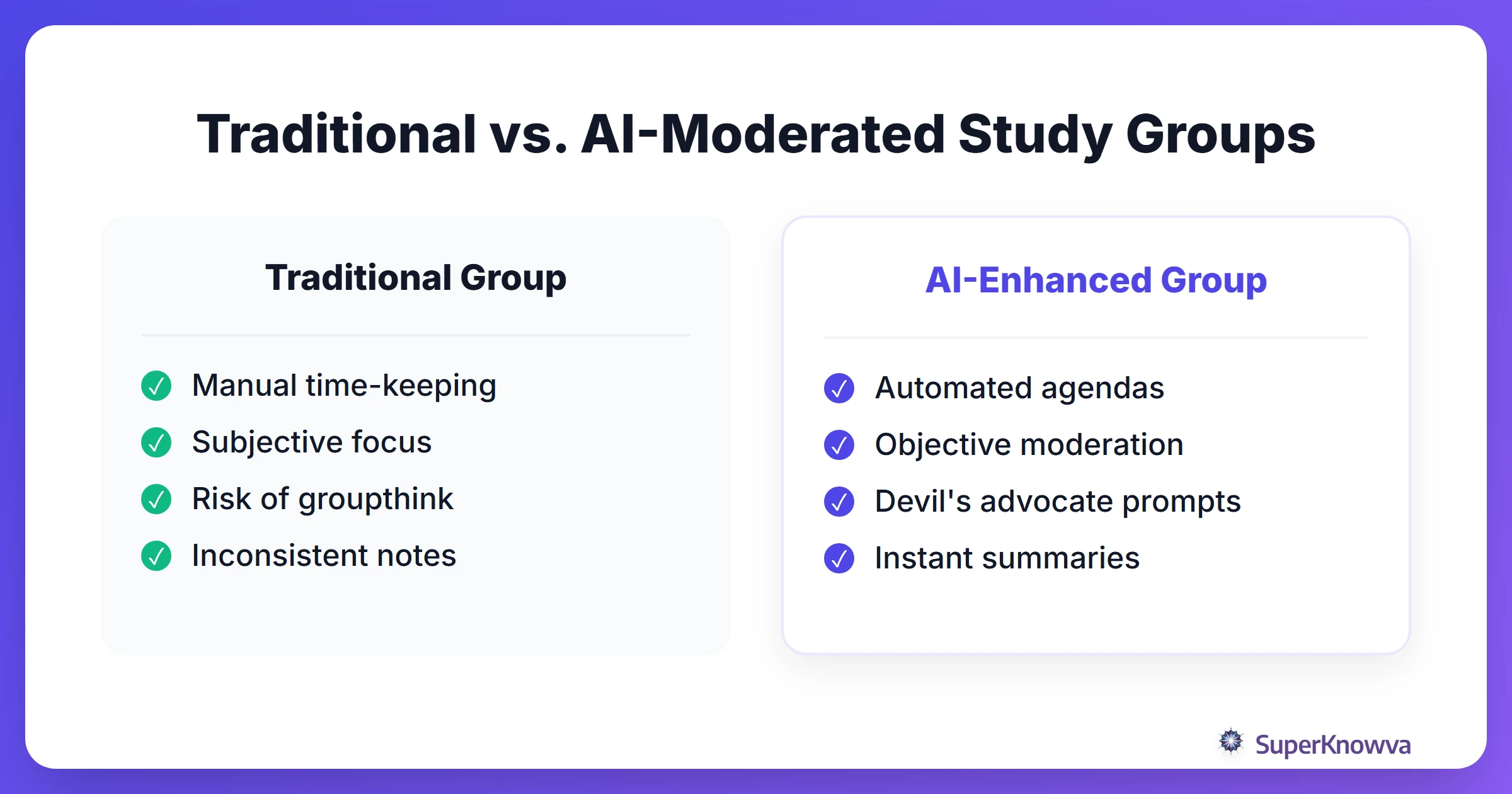
By using specific group study AI prompts, you can put the AI in charge of the "boring" logistics:
- Setting Agendas: Ask the AI to draft a 60-minute breakdown of the chapters you need to hit.
- Time-Keeping: Have the AI ping the group when it’s time to stop "Reviewing" and start "Practice Problems."
- Summarizing Conflict: If two people disagree on a concept, feed both explanations to the AI and ask it to find the middle ground or the nuance they’re missing.
- Inclusion: Ask the AI for "three questions that make sure everyone understands the core concept." It’s a great way to pull the quieter members of the group into the fold.
Generating Group Challenges and Gamified Quizzes
Let’s be honest: static flashcards are boring. They don't test how much you actually know; they just test how much you remember. To really get ready for an exam, you need to lean into active recall vs. re-reading.
AI manages this transition by turning your collective notes into competitive, team-based challenges.
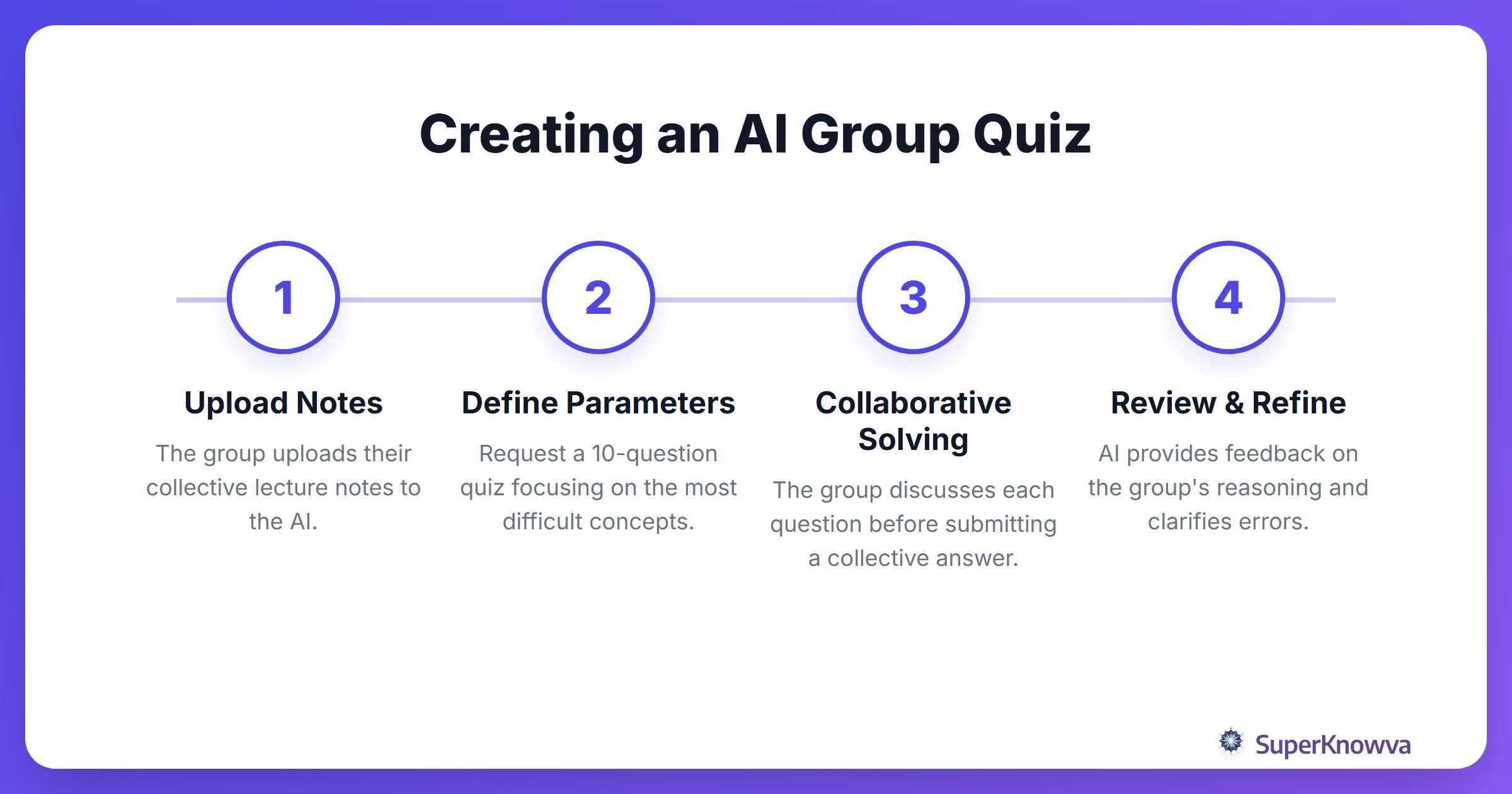
Try feeding your group’s lecture notes into a platform like SuperKnowva to generate "Devil’s Advocate" scenarios. You might ask: "Based on these notes, create a scenario where the primary theory fails, and ask us to explain why."
This forces the group to think critically on their feet. These kinds of collaborative problem-solving tasks require input from everyone to solve, creating a high-stakes (but fun) environment that makes the info actually stick.
Real-Time Concept Clarification for the Whole Group
Confusion is contagious. If one person in the group is lost, usually three others are too. AI acts as a "bridge," providing real-time clarification that works for everyone, regardless of their learning style.
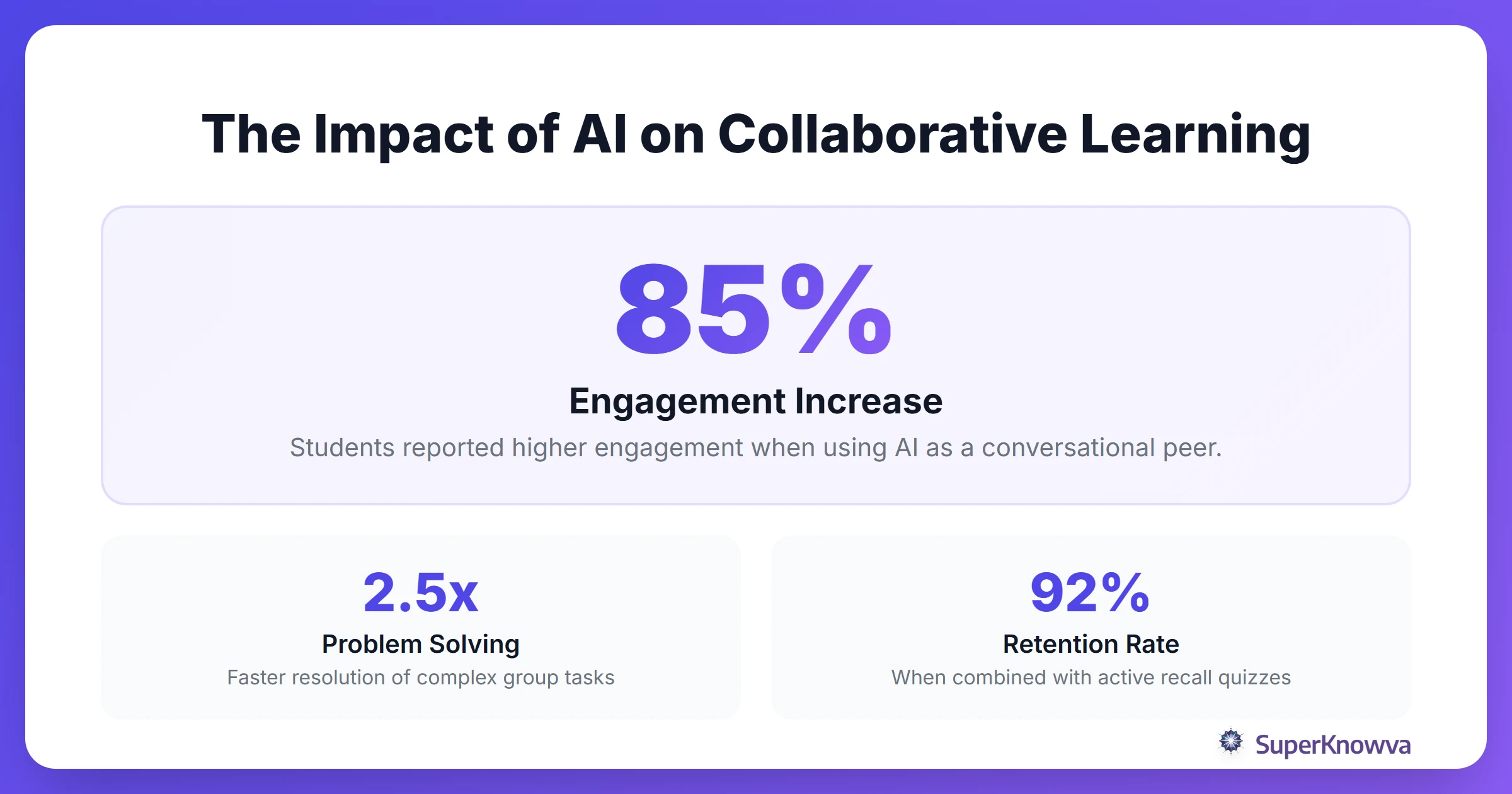
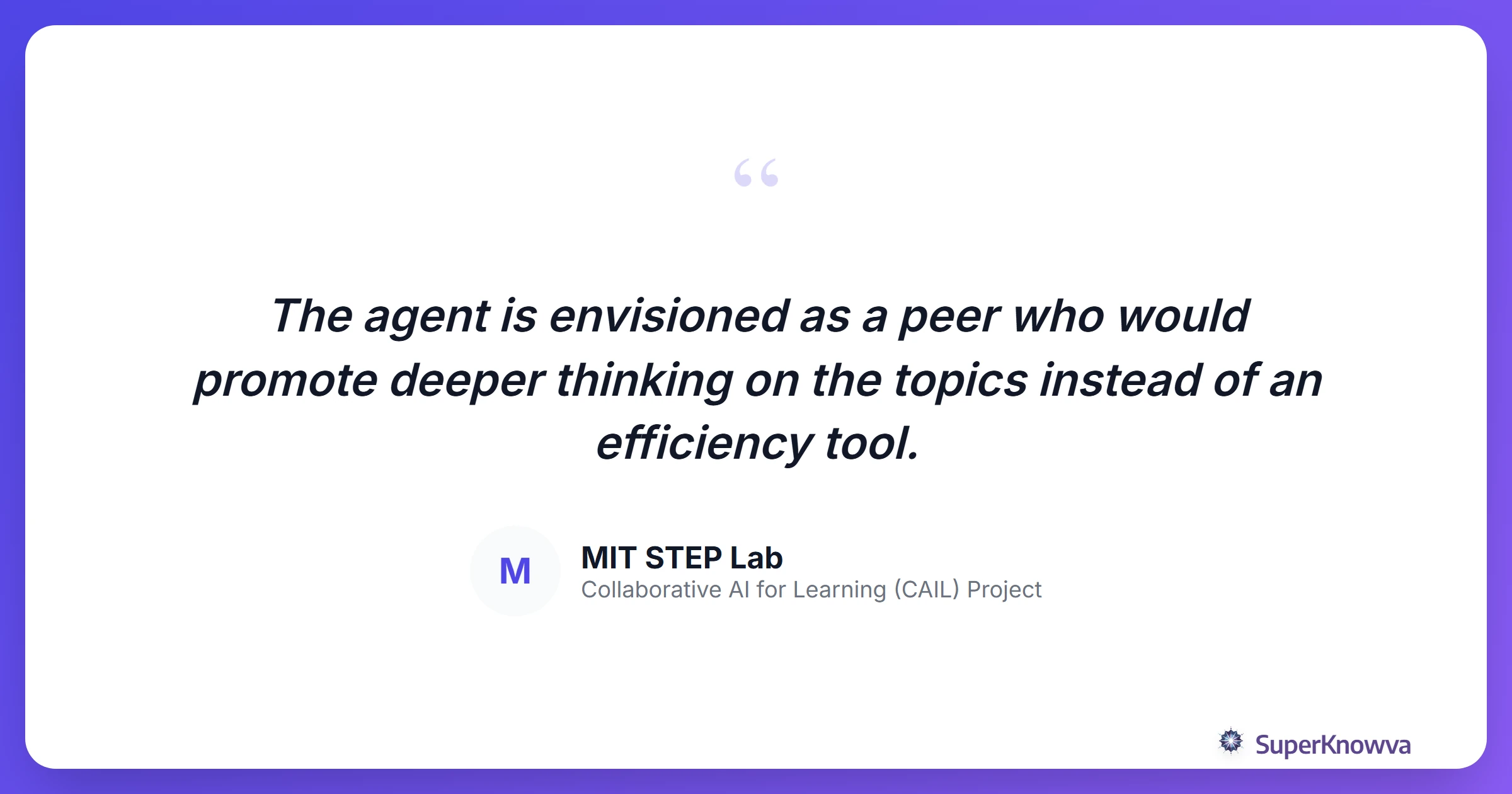
Research by the MIT Collaborative AI for Learning (CAIL) and studies on the Impacts of AI on Collective Intelligence show that AI agents are most effective when they push students to think deeper, rather than just giving them the "easy" answer. When your group hits a wall, use AI to explain the topic through different lenses: an analogy for the visual learner, a logic breakdown for the analytical thinker, and a real-world example for the practical one.
Just remember: always keep a "Human-in-the-Loop." Use the AI’s output as a jumping-off point, then verify it against your textbooks. This process of Collaborative Learning with AI Speakers is what builds the critical thinking skills you’ll need when the exam clock is ticking.
Tracking Progress: No More Guesswork
How do you actually know if your group is getting better? Usually, you don't find out until the grades come back. AI changes that by providing a "group knowledge map," tracking which topics you keep tripping over during your quiz sessions.
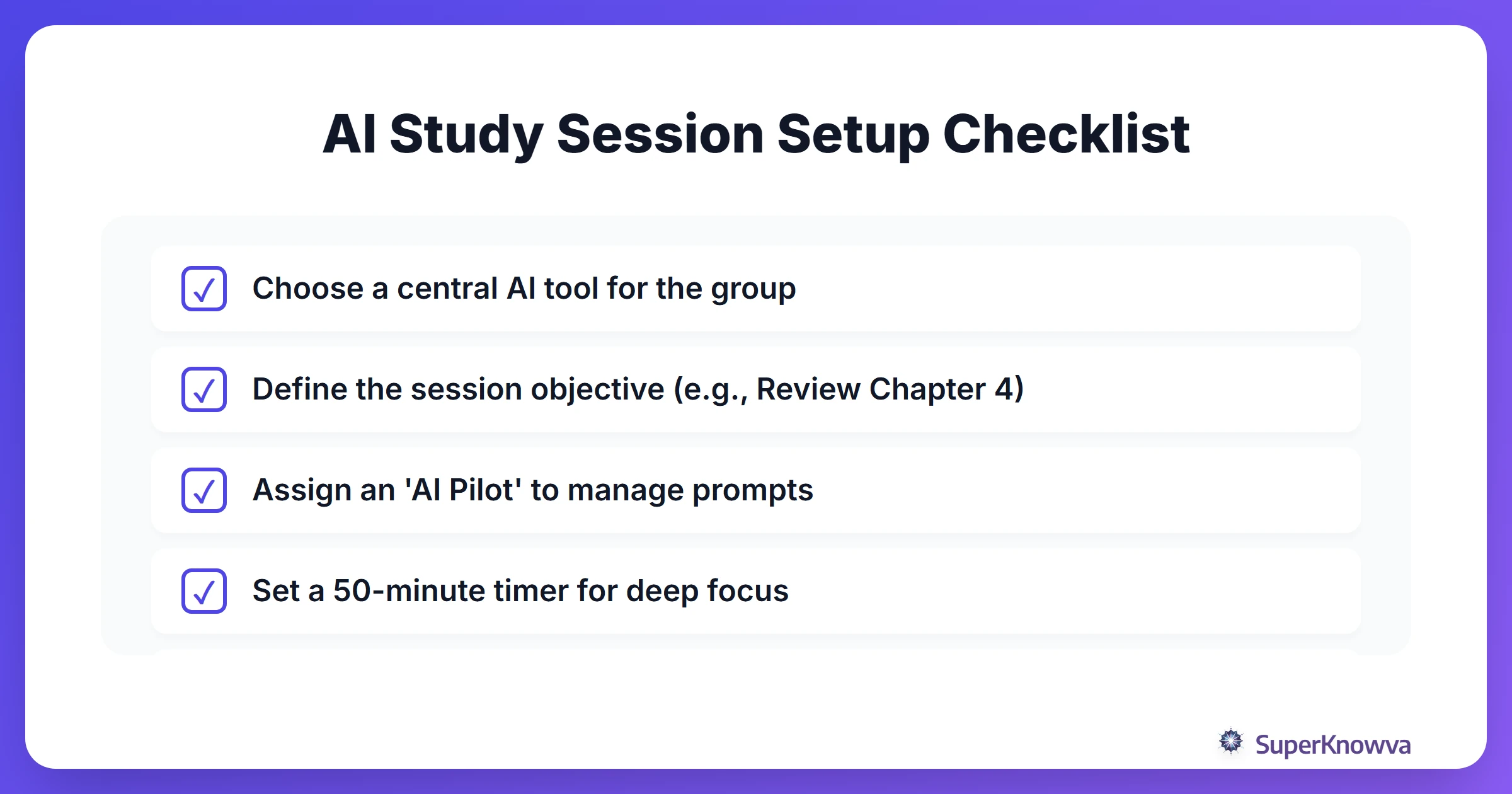
By using peer-to-peer learning tools, you can:
- Identify the "weak spots" the whole group shares.
- Build a shared spaced repetition schedule so everyone reviews the hardest material at the perfect time.
- Visualize your progress, which is a massive motivator to keep showing up.
When you use data to drive your sessions, you aren’t just guessing what to study. You are following a clear plan. This level of organization is why AI-integrated groups are popular among the best study apps for students.
Best Practices: Keeping it Human
AI is a powerful tool, but it shouldn't replace the social bond that makes study groups worth doing in the first place. If you rely too much on the tech, you risk losing original thought and falling into "algorithmic bias."
To keep your sessions effective, try these ground rules:
- Set Ethical Boundaries: Agree as a group on how you’ll use AI. It should supplement your effort, not replace it.
- Balance Tech and Socializing: Use the 5-minute rule to stop procrastinating at the start, but leave 15 minutes at the end just to hang out.
- Test Independence: Use AI to build your confidence, but run "AI-free" mock exams once a week to make sure you can do it on your own.
Learning how to balance a high GPA with a social life is about efficiency. By using AI in peer sessions, you do more than study; you build shared knowledge that saves time.
Ready to level up your next group session? Start by uploading your notes to SuperKnowva and let the AI help you lead the way.