The sun is out, the school year is wrapping up, and the last thing on your mind is a test booklet. You are likely thinking about the beach, sleeping in, or catching up on your watchlist. If you want a top score on the SAT or ACT, the secret is not studying harder in August. It is starting smarter in May.
This sat act summer study guide is your plan for the next few months. We’re not talking about spending eight hours a day at a desk. We’re talking about building a strong foundation now so that when fall rolls around, you aren't just "taking" the test; you’re prepared.
Why May is the Strategic Window for Summer Prep
Most students wait until July to crack open a prep book. By then, they’ve already spent weeks in "vacation mode," making the restart feel like pulling teeth.
Starting in May gives you a significant psychological advantage. You’re still in an academic mindset, so the transition to specialized test prep is smooth. Plus, you’ll avoid the "summer slide." It’s a real thing: the well-documented academic regression where students lose ground over the break. As noted by Keep the Learning Going This Summer - Frisco ISD, maintaining a light but consistent routine prevents that "brain fog" from setting in.
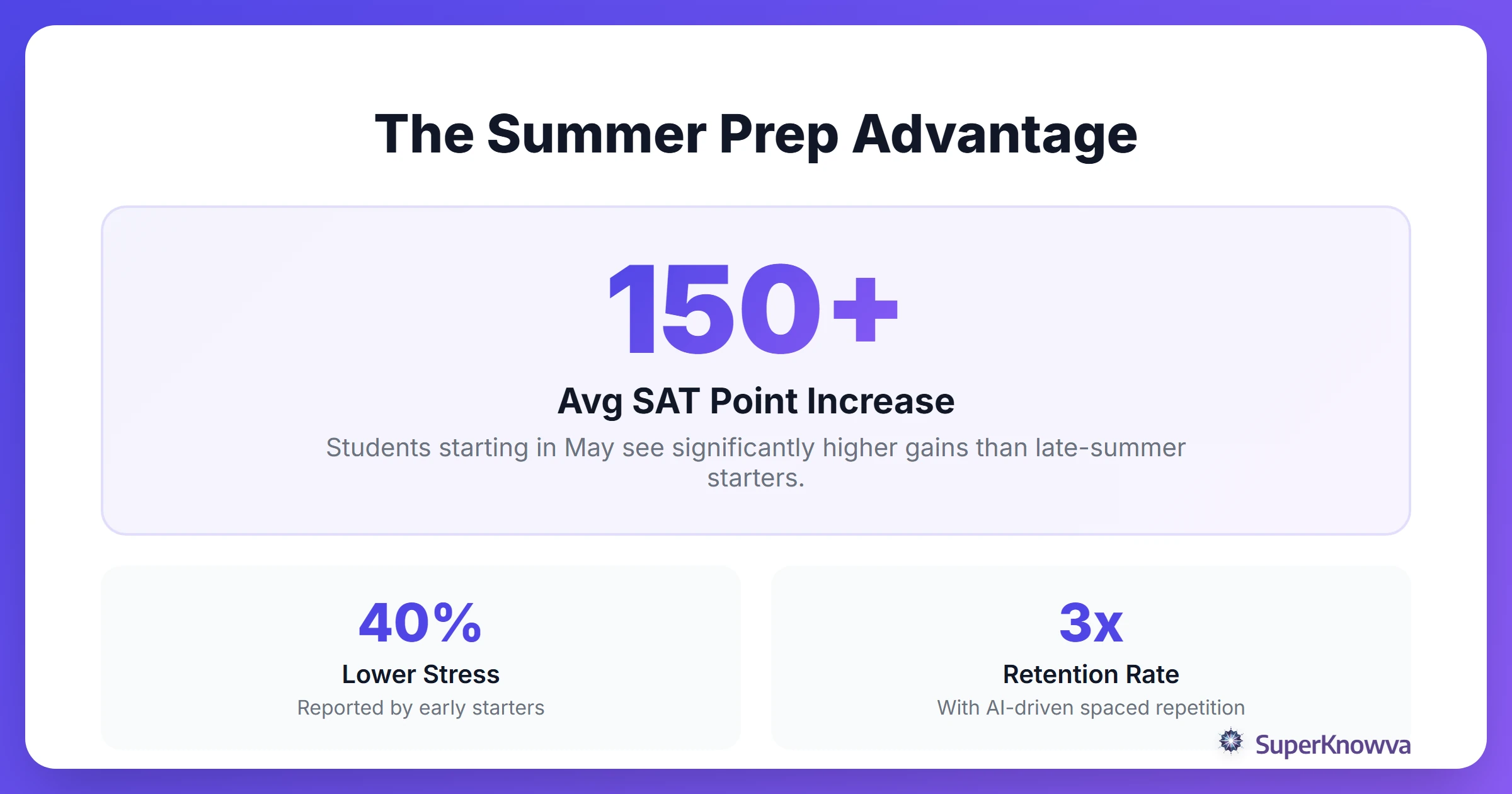
Your first move? Set a baseline. Take a full-length, timed diagnostic test this weekend. Once you have that score, look at the 2024-2025 calendar. Whether you’re aiming for the SAT August prep cycle or the ACT September prep window, a May baseline gives you exactly three months to bridge the gap between where you are and where you want to be.
Building Your 12-Week Summer Roadmap
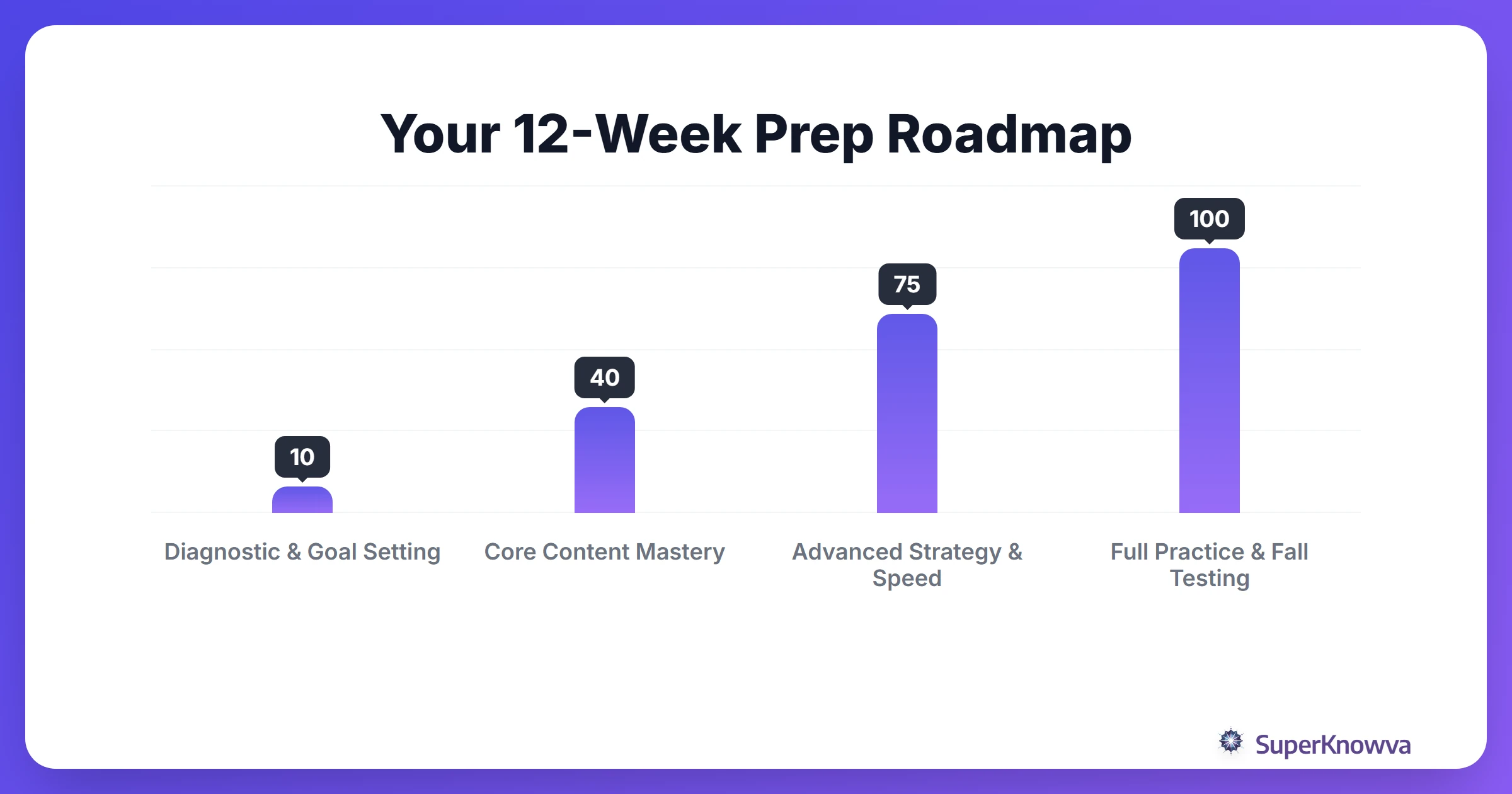
A high score isn't the result of a caffeine-fueled "cram-session" the night before. It’s the result of a structured summer study schedule. To get the best results without burning out, try this three-phase approach:
- Phase 1: Foundation and Content (June): This is the "what" phase. Relearn the grammar rules, brush up on math formulas, and polish those scientific reasoning skills. Use AI diagnostics to pinpoint exactly which concepts are shaky so you don't waste time on the stuff you already know.
- Phase 2: Strategy and Speed (July): This is the "how" phase. Now that you know the material, learn the shortcuts. Master the process of elimination, figure out your time management, and start recognizing the "traps" the test-makers set for you.
- Phase 3: Endurance and Full-Length Practice (August): This is the "stamina" phase. Take one full-length practice test every Saturday morning. You want to simulate the actual environment so that on test day, it feels like just another Saturday.
AI-Enhanced Reading Comprehension Strategies
Let’s be honest: the Reading sections can feel incredibly subjective. Sometimes it feels like there are two "right" answers, and you’re just guessing which one the test prefers.
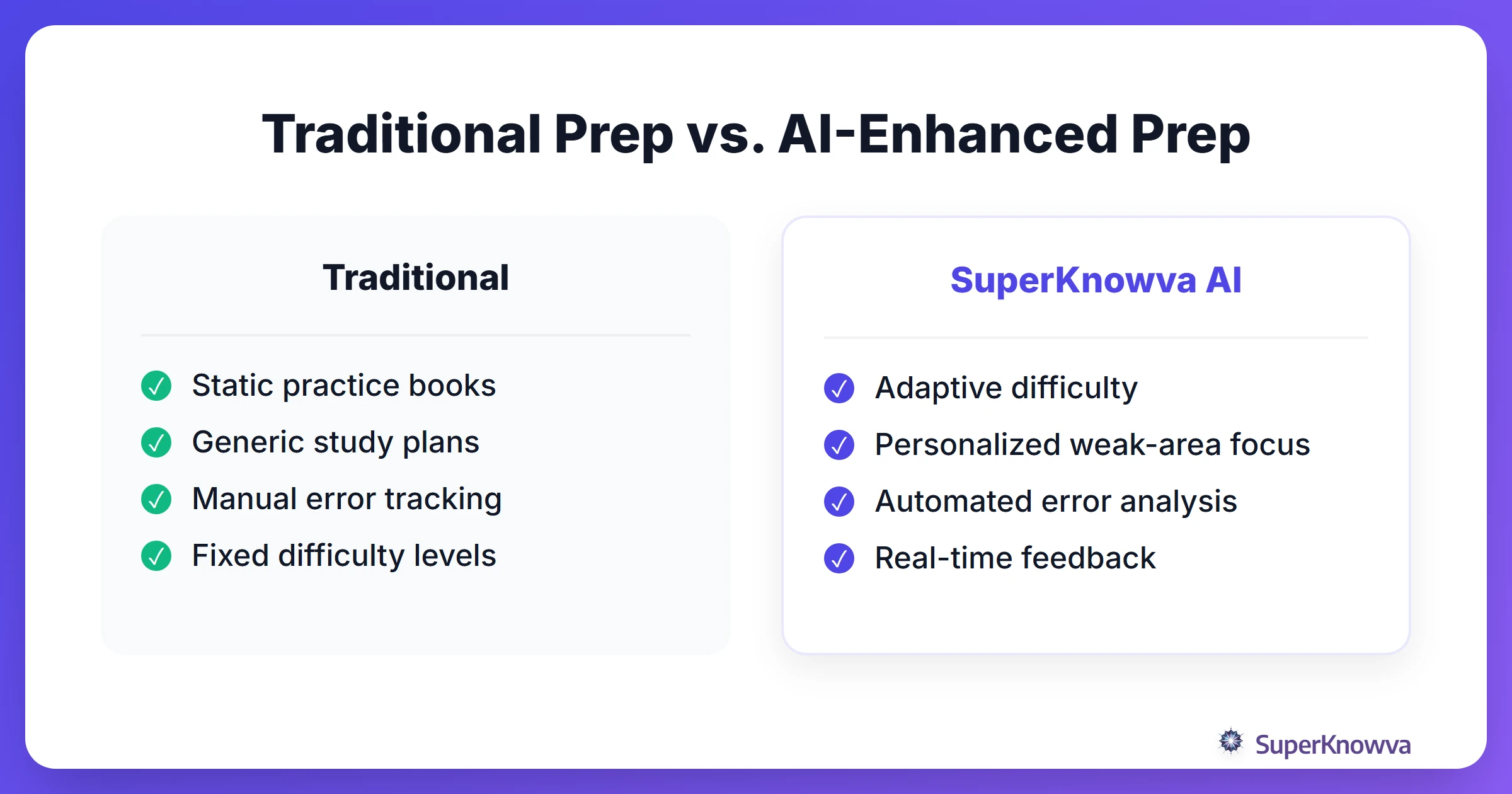
AI-driven platforms like SuperKnowva are changing that. By using AI to deconstruct complex passages, you can see the actual logic behind how questions are built. If dense literature or dry science passages make your eyes glaze over, you can Boost Your Reading Comprehension with AI for the SAT/ACT to spot patterns that traditional books often miss. You can even use AI to build a custom vocabulary list based on the themes that show up most often in recent tests. Want to go deeper? Learn how to ace verbal reasoning with AI-driven strategies to ensure tricky phrasing never catches you off guard.
Mastering the Math and Science Sections
Math and Science are essentially games of pattern recognition. The SAT loves Algebra and Data Interpretation; the ACT Science section is really just a "technical reading" test in disguise.
Struggling with a specific concept? Use an AI tutor to explain it in real-time. Instead of just seeing a "wrong" mark on a page, an AI tutor can walk you through the logic step-by-step. Even though it’s technically for the GRE, the logical foundations in our guide to quantitative reasoning are gold for mastering high-level SAT math and geometry.
Focus your drills on these heavy hitters:
- Algebra: Linear equations and systems (The bread and butter of the SAT).
- Geometry: Properties of triangles and circles (Especially important for the ACT).
- Data Interpretation: Learning to read charts and graphs at a glance.
The Weekly Practice Cycle: Consistency Over Intensity
The biggest mistake? The "marathon study session." A five-hour slog on a Sunday is exhausting and, honestly, not very effective. You’ll retain much more if you do 30 to 45 minutes of focused work every day.
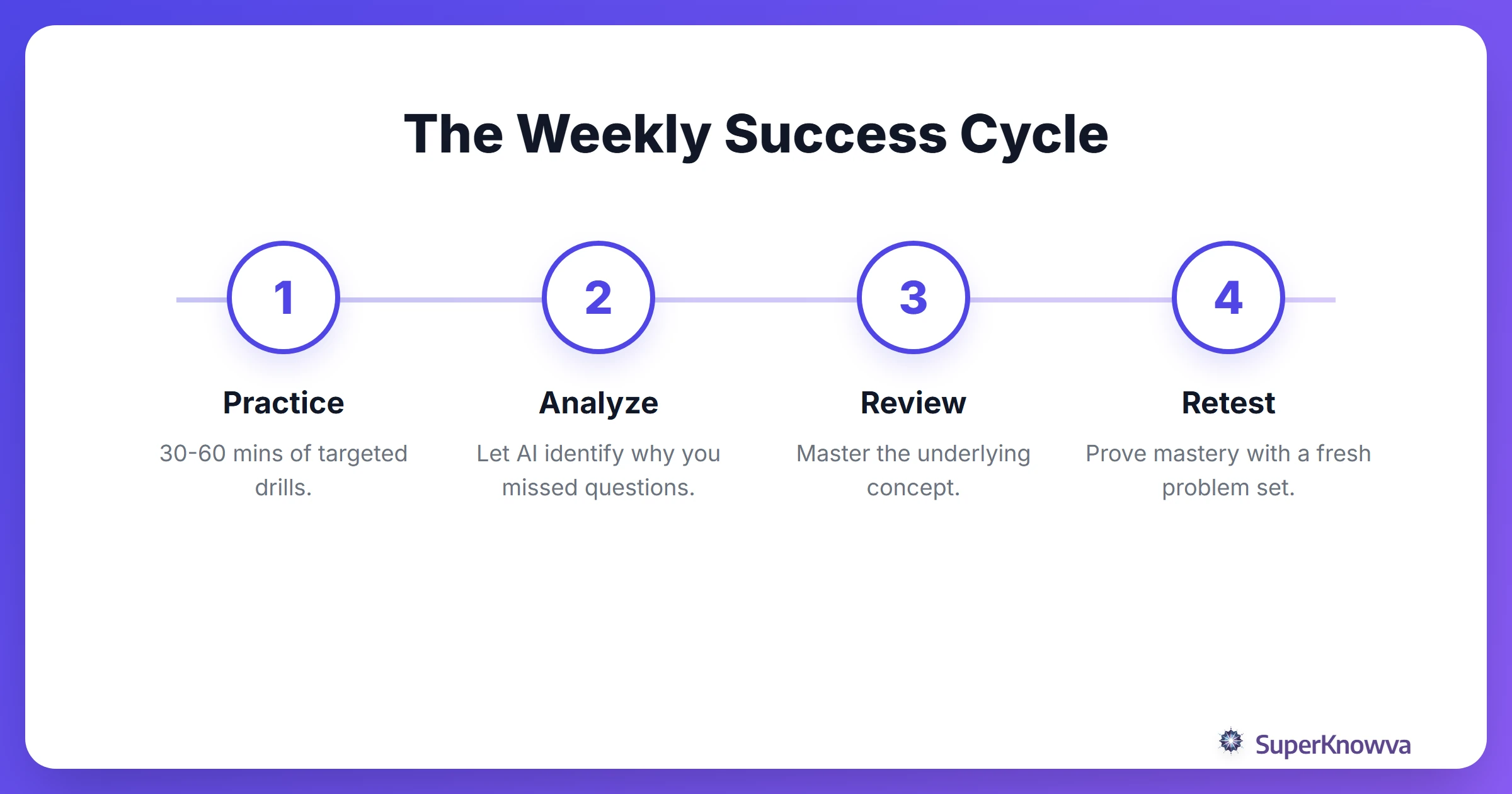
A winning weekly cycle looks like this:
- Practice: 30-60 minutes of targeted drills.
- Analyze: Keep an "Error Log." Don’t just look at the right answer. Write down why you fell for the trap.
- AI Review: Feed your missed questions into an AI platform to generate similar problems for extra practice.
- Balance: Get your prep done in the morning. That way, you can enjoy your summer afternoons guilt-free.
Resources and Tools for the Summer Kick-off
You don't need a stack of textbooks five feet high. You just need the right tools. Start with the official practice tests from the College Board and ACT.org. These provide the most accurate practice.
While some students prefer a classroom setting, like the SAT/ACT Summer Prep Course offered - Penn High School, you can get even better results with a personalized summer test prep plan powered by AI.
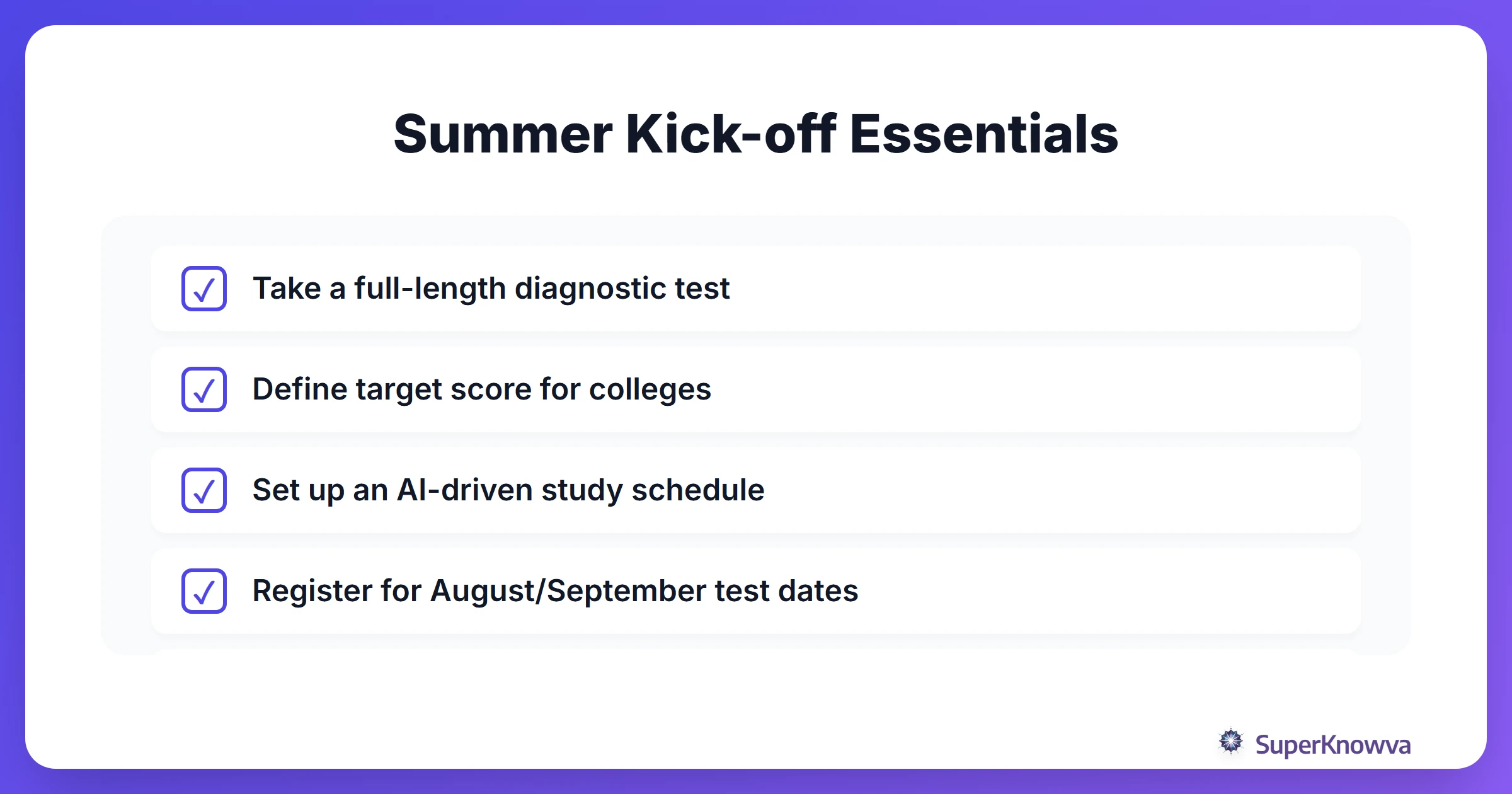
By following this sat act summer study guide, you are doing more than preparing for a test. You are building strong study habits. Take a diagnostic test this week, set your target, and use AI to reach your goals this summer.