Remember those massive, 500-page prep books that used to double as doorstops? Or the stress of filling in tiny Scantron bubbles, praying you didn’t skip a row? Those days are over. The College Board has gone fully digital, and your study habits should adapt. To master this new format, SAT digital prep with AI is no longer optional; it is a vital tool for success.
In this guide, we’re going to look at how AI-driven feedback, real-time analytics, and adaptive learning can help you stop guessing and start scoring.
The Evolution of the SAT: Why Digital Prep is a Must
The move to the Digital SAT isn't just a change of scenery. It’s a total architectural overhaul. The test is now "adaptive," meaning the better you do on the first module, the harder (and higher-scoring) the second module becomes. Plus, it’s shorter, the reading passages are punchier, and you have a built-in graphing calculator (Desmos) at your fingertips for the entire Math section.
Since the test is now "smart," your prep needs to be even smarter. If you’re still practicing on paper, you’re training for a race on a treadmill. Without a digital environment that mimics the Bluebook app, you’ll be caught off guard by the interface, the timer, and the adaptive pressure on test day.
What Does "AI Feedback" Actually Mean?
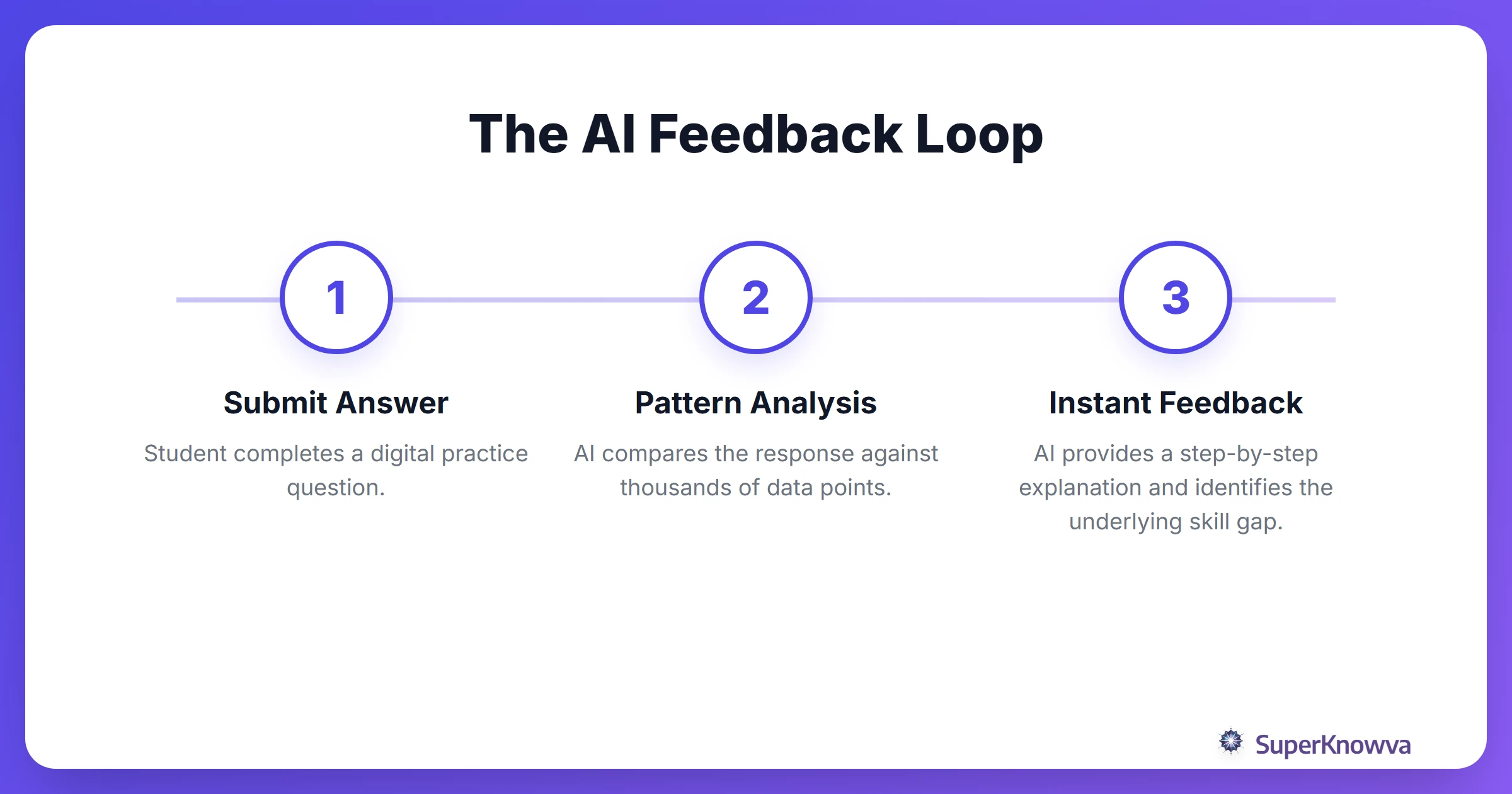
When people talk about AI in test prep, they usually think of a computer grading a quiz. But true AI-driven feedback is much more sophisticated than a simple "correct" or "incorrect" label.
Modern platforms use neural networks to look at how you think. For example, if you keep missing "Command of Evidence" questions, a basic app might just give you more of them. A true AI tutor for SAT analyzes the root cause. Is it a vocabulary gap? Are you falling for "distractor" answers?
By using Large Language Models (LLMs), these tools offer conversational explanations. Instead of reading a dry paragraph in the back of a book, you can literally ask the AI, "Wait, why is B better than C?" and get a response that actually makes sense to you.
Real-Time Analytics: No More "Studying in the Dark"
Spending hours practicing Algebra feels productive even when you already understand the material. This is a waste of time. AI identifies your actual blind spots.
These platforms create heatmaps of your performance. You can improve your reading comprehension with AI by seeing exactly which passage types, such as scientific, literary, or historical, are dragging your score down.
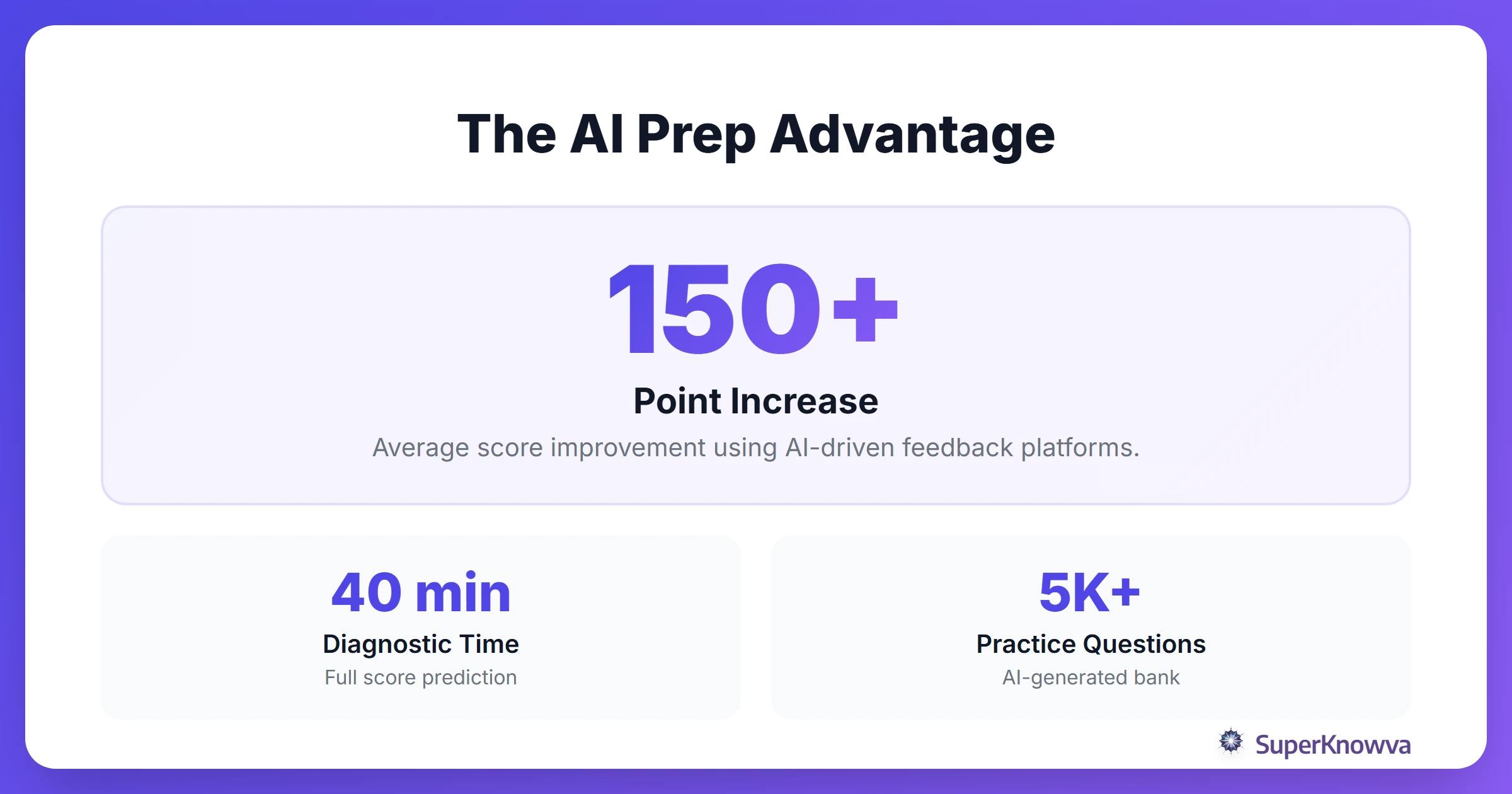
Then there’s the "timing" factor. AI tracks which questions are "time sinks," helping you spot the moments where you’re likely to panic and rush. By taking a few diagnostics, you can use SAT score improvement AI to predict your final score with scary accuracy before you even step into the testing center.
Adaptive Learning: A Study Plan That Evolves With You
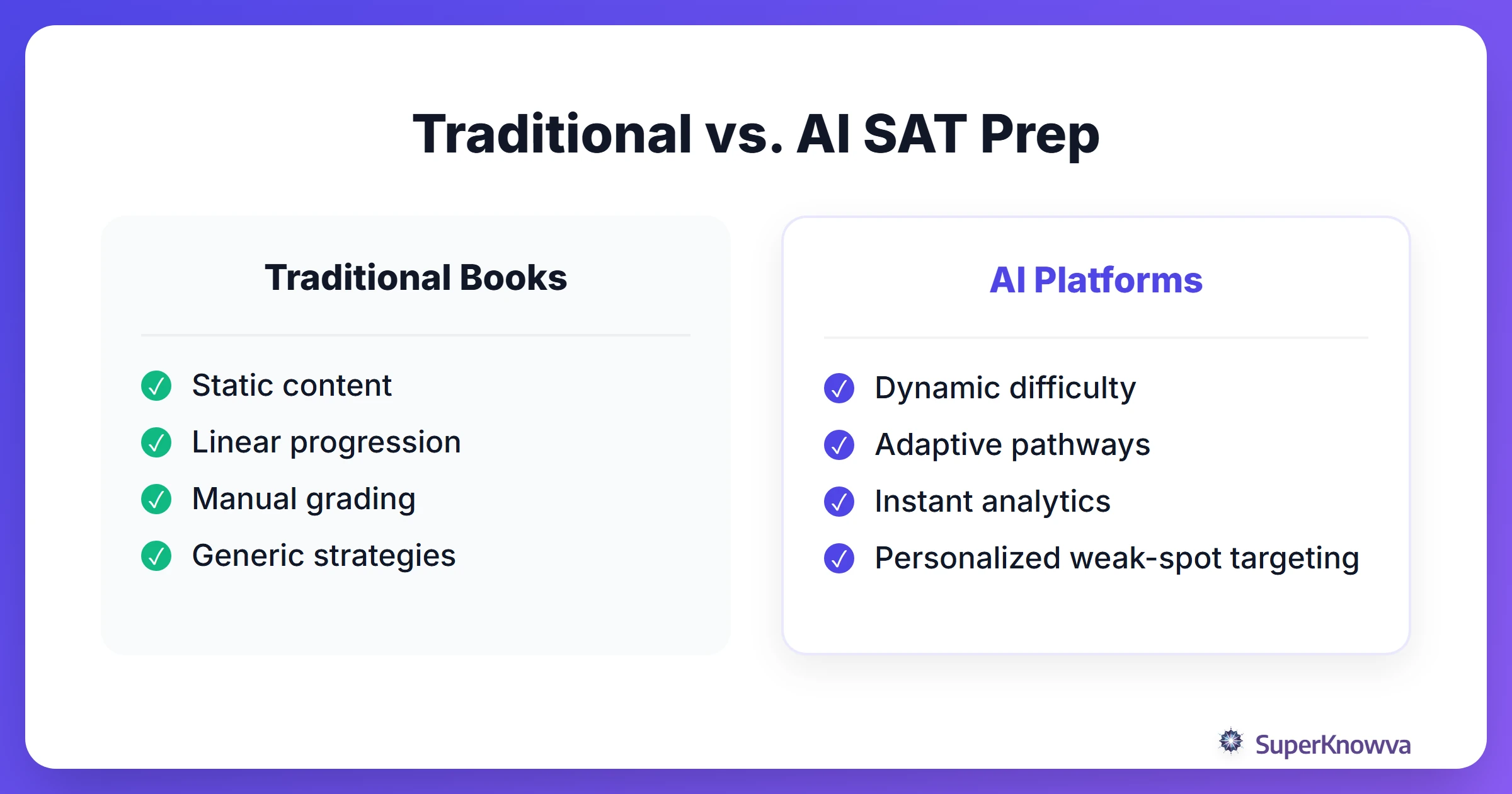
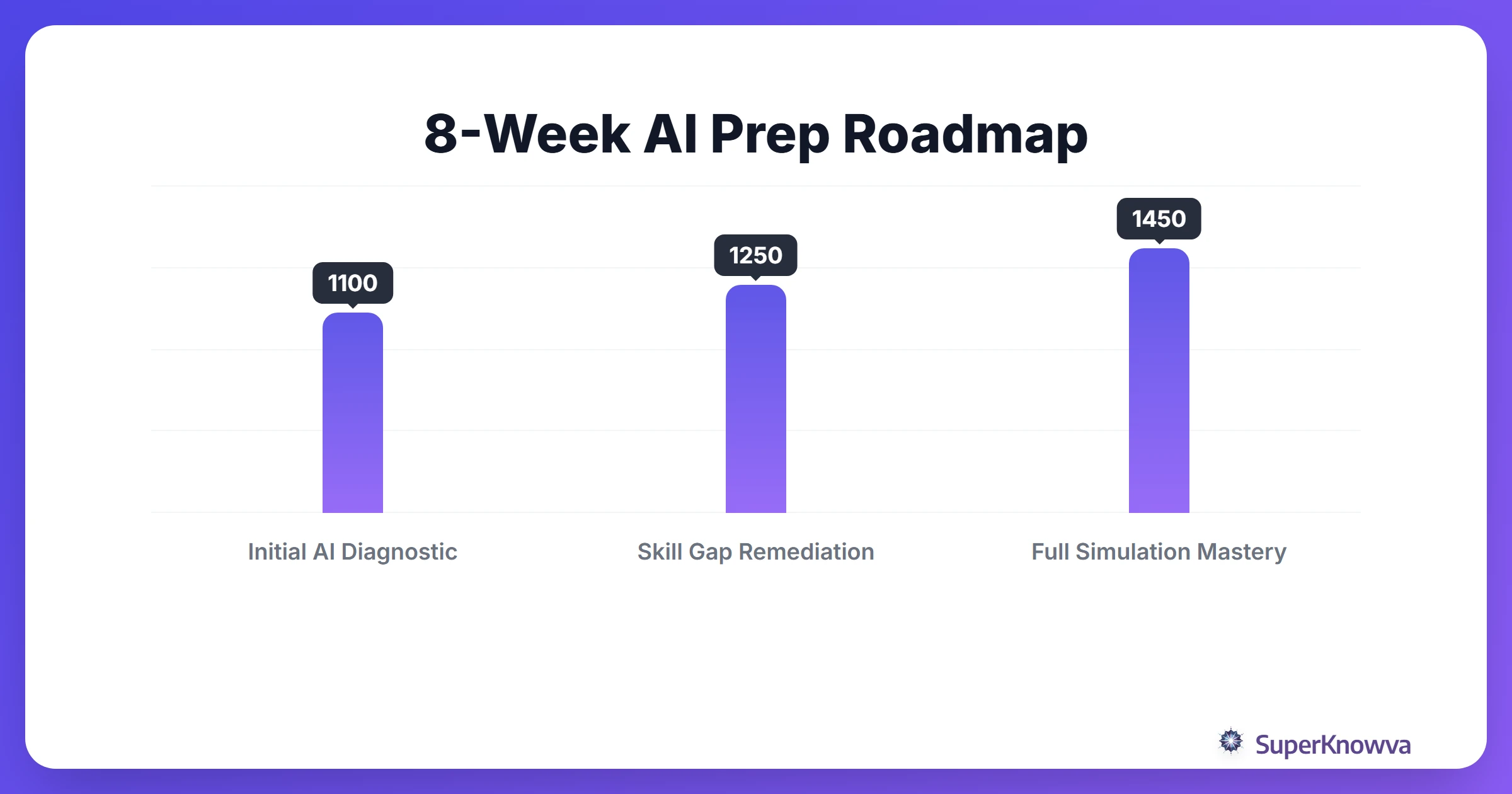
Most study guides are linear. They treat a student shooting for a 1550 the same as a student aiming for a 1200. SAT adaptive learning flips the script by building a personalized roadmap just for you.
The AI keeps you in the "sweet spot": material that is challenging enough to make you better, but not so hard that you want to throw your laptop out the window.
- Zero Waste: Skip the concepts you’ve already mastered.
- The 80/20 Rule: Focus your energy on the 20% of topics that will give you the biggest score jump.
- Memory Hooks: AI uses spaced repetition to make sure you don't forget the basics while you're busy learning the advanced stuff.
Mastering the Digital Interface and "Screen Stamina"
The Digital SAT requires a specific kind of mental endurance. You aren't just solving math problems; you’re navigating a software interface. Practicing with AI tools lets you build "screen stamina" while mastering the built-in tools.
To ace the exam, you need to be a power user of:
- Desmos: Learning the shortcuts to graph equations in seconds.
- Strikethrough: Rapidly narrowing down your options to stay focused.
- Highlighting: Quickly finding evidence in those shorter, denser reading passages.
AI simulators mimic the pressure of the "hard" second module. This ensures that when the questions get tougher in the second half of the test, you’re ready for it.
Strategy: Reading, Writing, and the "SAT Way"
AI isn't just a progress tracker; it’s a coach that helps you decode the test’s logic.
In the Reading and Writing section, passages are now shorter but packed with complexity. AI helps you break down context clues and high-level vocabulary, similar to how students use AI-driven strategies for verbal reasoning for graduate-level exams.
In Math, AI can show you the "SAT way" to solve a problem. Often, the way you learned in your high school classroom is too slow for a timed test. By looking at AI-powered quantitative reasoning guides, you can see how algorithmic thinking helps you find the fastest path to the right answer, whether you're taking the SAT, ACT, or even the GRE later in life.
Choosing the Right AI Tool
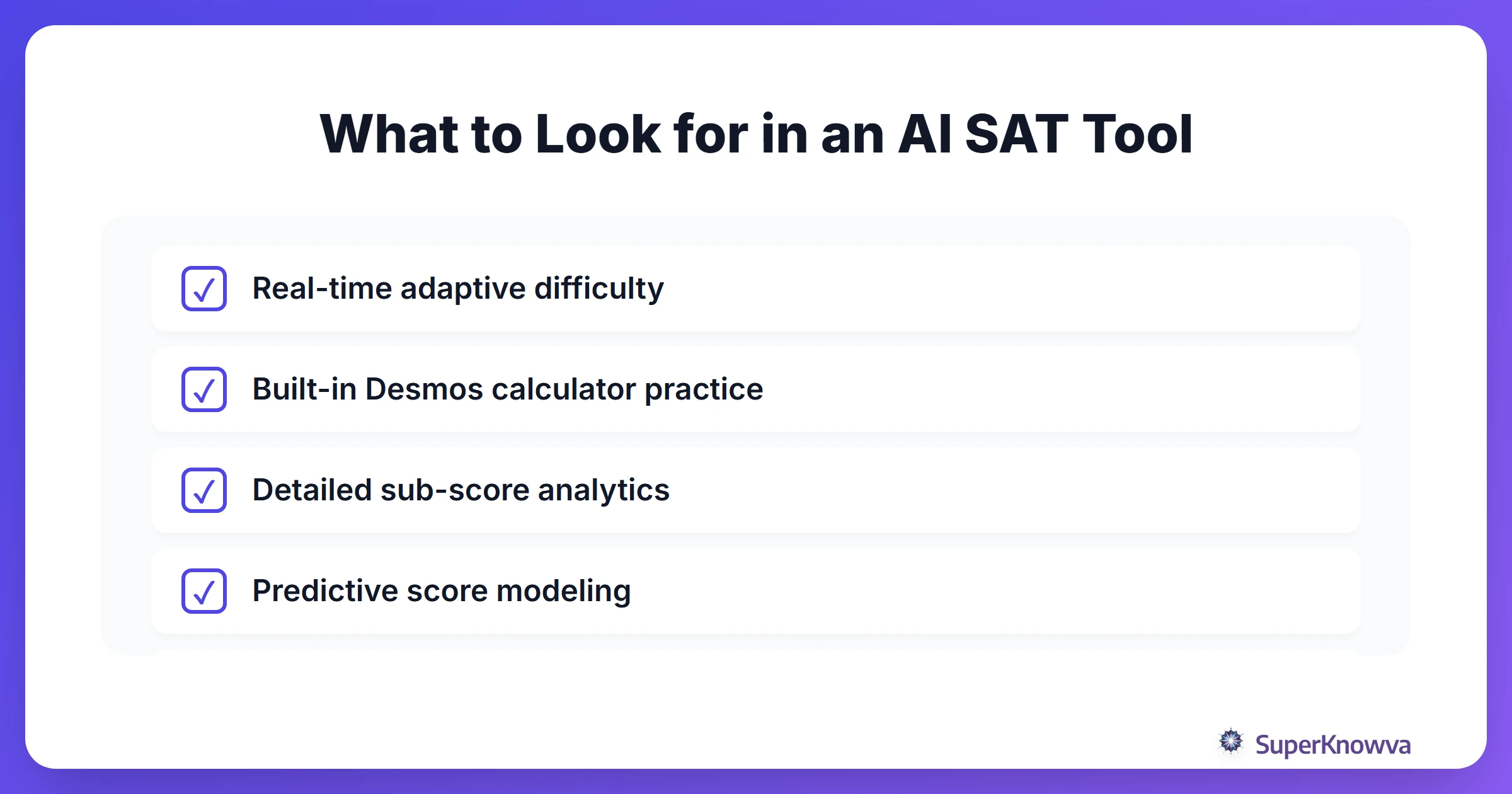
Not all "AI" tools are created equal. Some are just glorified question banks, while others are full-blown digital tutors. When you're looking for a digital SAT practice platform, you need to find one that fits your specific goals.
Here are a few heavy hitters in the space:
- LearnQ.ai Digital SAT Suite: Famous for "Mia," their AI tutor that walks you through mistakes.
- R.test AI-Powered Practice: Great for quick, high-accuracy score predictions.
- Multintel Education Digital SAT Resources: A deep dive into the technical side of the new format.
Think of a premium AI subscription as an investment. If it saves you 40 hours of frustrated, inefficient studying, it’s usually worth every penny.
Final Thoughts
The Digital SAT is a high-tech exam. Trying to beat it with low-tech methods is like bringing a knife to a gunfight. By leaning into SAT digital prep with AI, you’re moving away from passive memorization and toward data-driven mastery.
Stop studying harder. Let the AI find your gaps and build your stamina so that on test day, there are no surprises, just a score you’re proud of.
The future of testing is here. Are you ready for it?