May finals are often stressful for students, but this does not have to be the case. Most people tackle revision based on a "gut feeling." They spend hours polishing topics they already understand because it feels productive, while difficult, high-stakes concepts are often neglected.
The most successful students are ditching the guesswork. The secret? They’ve learned how to track learning objectives with AI, turning a mountain of notes into a data-driven roadmap for success.
In this guide, we’ll show you how SuperKnowva Analytics takes the "maybe" out of your study sessions.
The End of Study Guesswork: Why Objective Tracking Matters
The biggest hurdle during finals isn't usually a lack of effort; it is the "illusion of competence." When you re-read a chapter and the text looks familiar, you assume you know the material. Then the exam starts, and you realize you cannot recall the information from scratch.
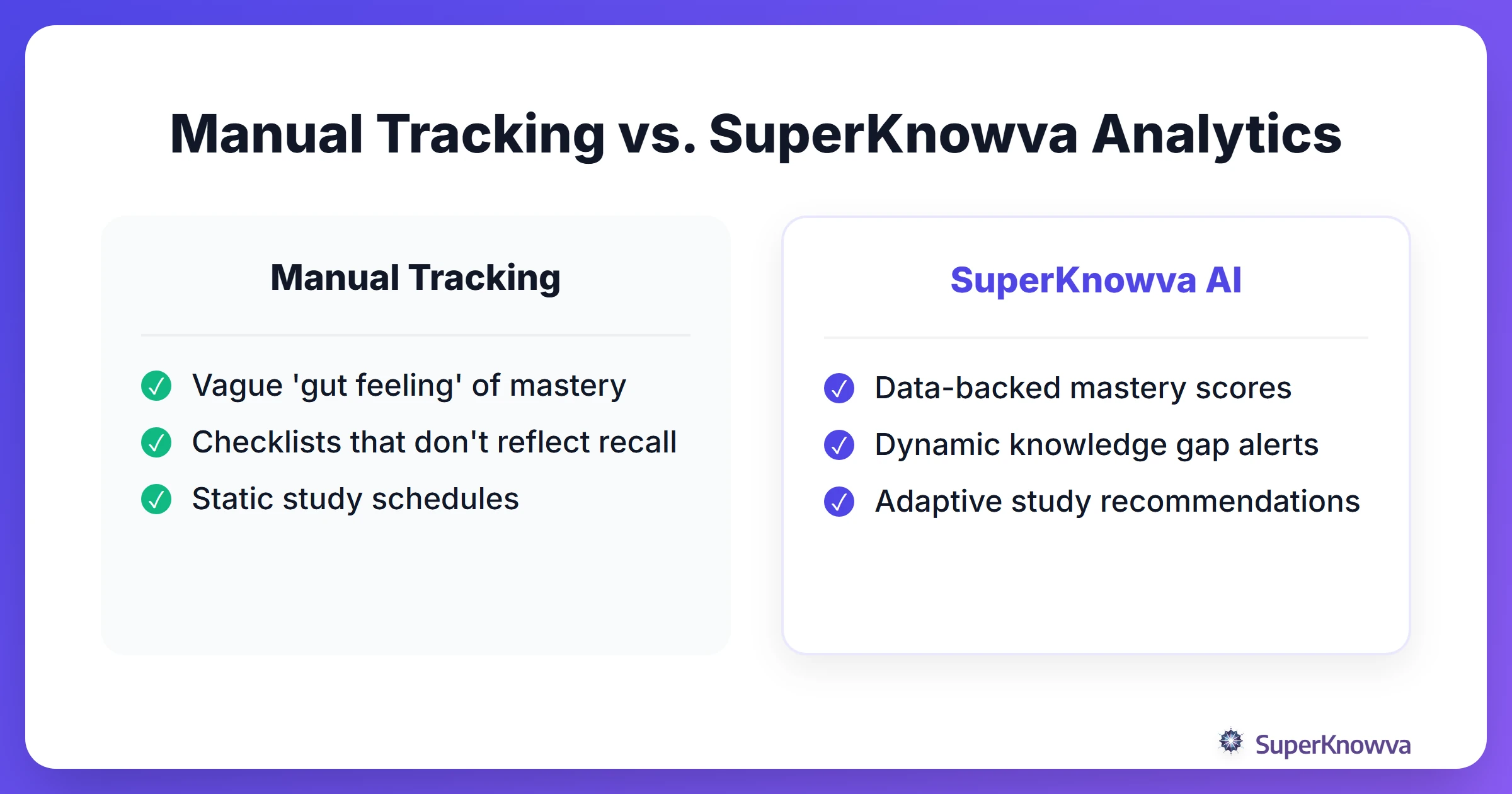
Manual tracking, like checking off syllabus points or highlighting a paper checklist, is a start. But it’s static. It doesn't tell you how well you actually know the material.
By using AI study analytics, you replace that vague "perceived mastery" with cold, hard data. AI identifies exactly which concepts are locked in and which ones are likely to trip you up when the clock is ticking. To see the full range of tools designed to help you make this switch, check out our SuperKnowva Features: A Deep Dive into the AI Study Platform.
From Upload to Insight: How SuperKnowva Maps Your Curriculum
SuperKnowva does more than just host your files; it actually understands them. When you upload your lecture slides, PDFs, or audio recordings, our AI gets to work breaking them down.
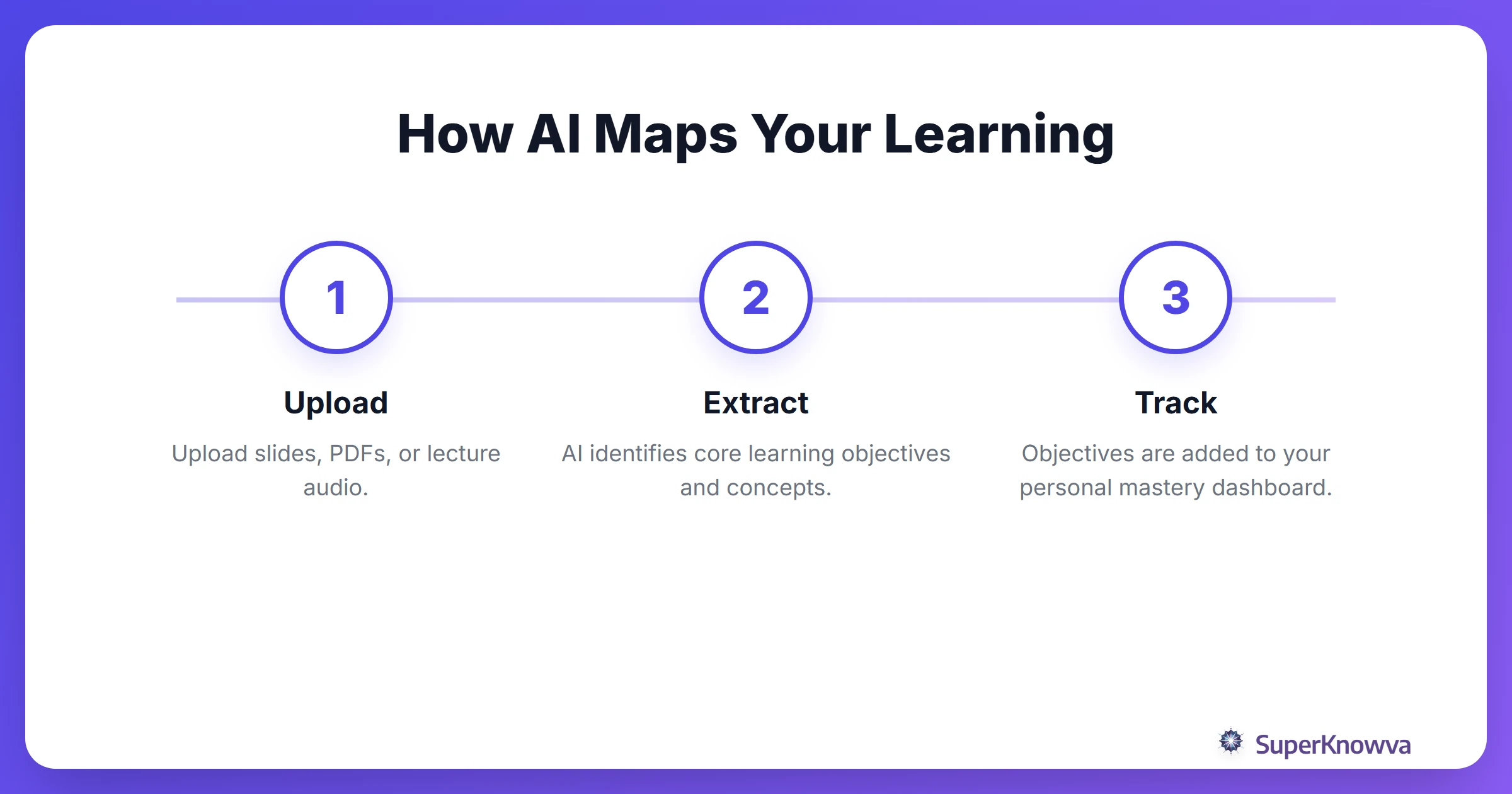
The platform pulls out core learning objectives and separates "must-know" foundational concepts from "supporting" details. This shifts your workflow. You are not just reading; you are hitting specific, trackable milestones. As noted in AI in Medical Education Research, AI methodologies provide effective ways to analyze complex data for better decision-making, and your education should be no exception.
Navigating Your SuperKnowva Analytics Dashboard
Once your curriculum is mapped, your learning mastery dashboard becomes your command center. Instead of waking up and wondering, "What should I even study today?", you just look at the data.
Here’s how to read your progress:
- The Mastery Heat Map: This is a visual bird's-eye view of your course. Green zones mean you're ready to go. Red zones? Those are your high-priority targets.
- Accuracy Rates & Time Metrics: It’s not just about getting the answer right; it’s about how fast you got there. A slow correct answer usually means you haven't quite reached fluency yet.
- Daily Prioritization: Use these metrics to build a schedule that attacks your "at-risk" objectives first thing in the morning when your brain is fresh.
For a detailed walkthrough on setting up your first dashboard, visit our How to Use SuperKnowva: A Step-by-Step Tutorial.
Identifying and Closing Knowledge Gaps
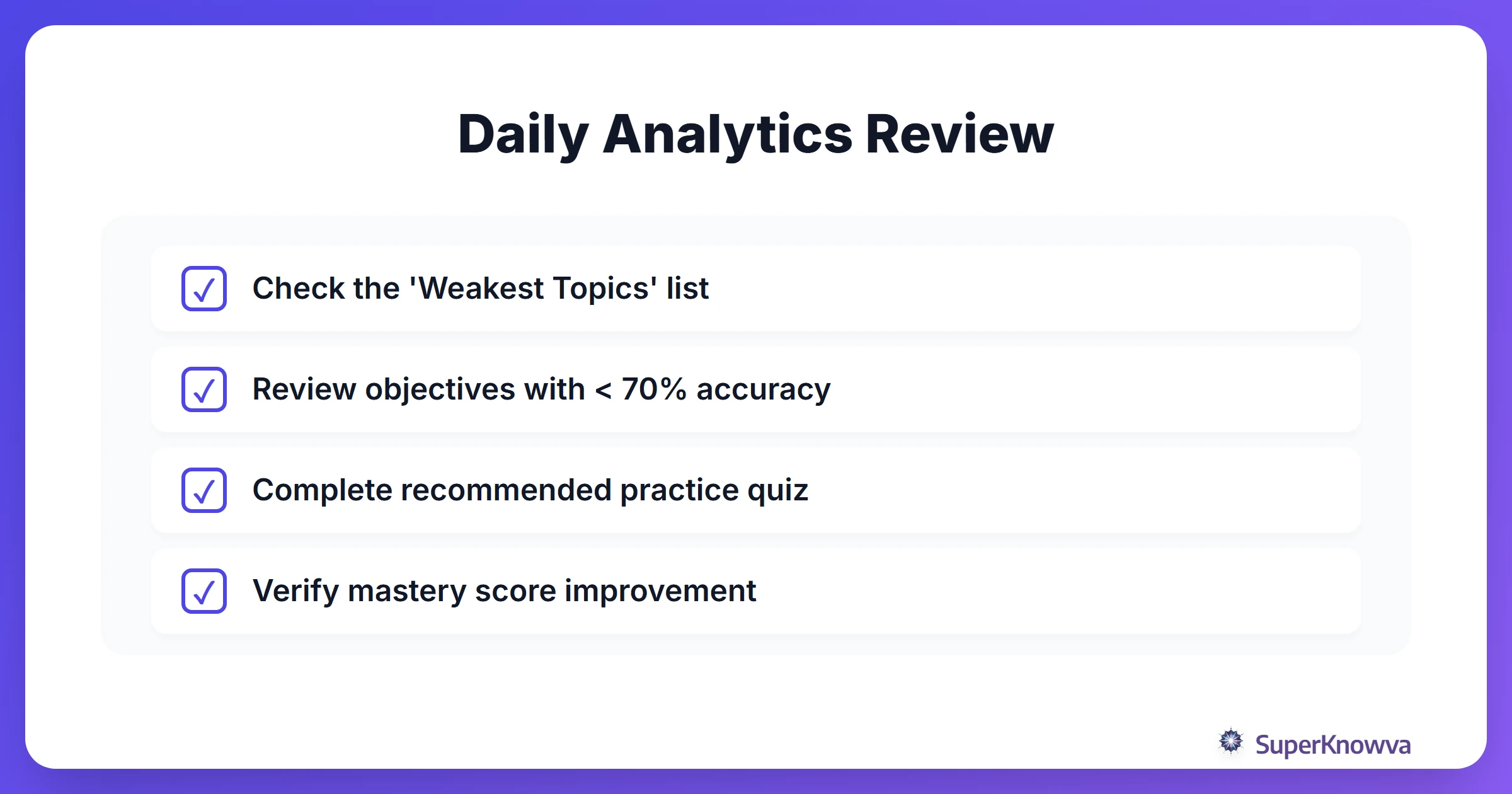
The real power of tracking learning objectives with AI is knowledge gap identification. SuperKnowva goes deeper than broad subjects to find the exact sub-topics where you’re struggling.
Think of our "Personalized Recommendations" feature as a digital tutor that never sleeps. If the AI sees you’re acing "Cardiovascular Systems" but consistently missing questions on "Renal Physiology," it will automatically pivot your practice toward the latter. This ensures you’re always closing gaps rather than just repeating what you already know. You can significantly Improve Your Study Habits with AI by letting the data dictate your focus.
The Science of Spaced Repetition and Analytics
Effective exam preparation data isn't just about your current score; it’s about predicting when you’re going to forget.
SuperKnowva integrates your analytics with a Spaced Repetition System (SRS). By tracking how you interact with specific objectives over time, the system predicts your forgetting curve. It identifies when a concept starts to fade and prompts you to review it at the optimal time. Industry experts at the Federal News Network emphasize that tracking outcomes and goals is the only way to ensure AI provides a return on investment. In your case, that ROI is your GPA.
A 4-Week Strategy for May Finals Using Data
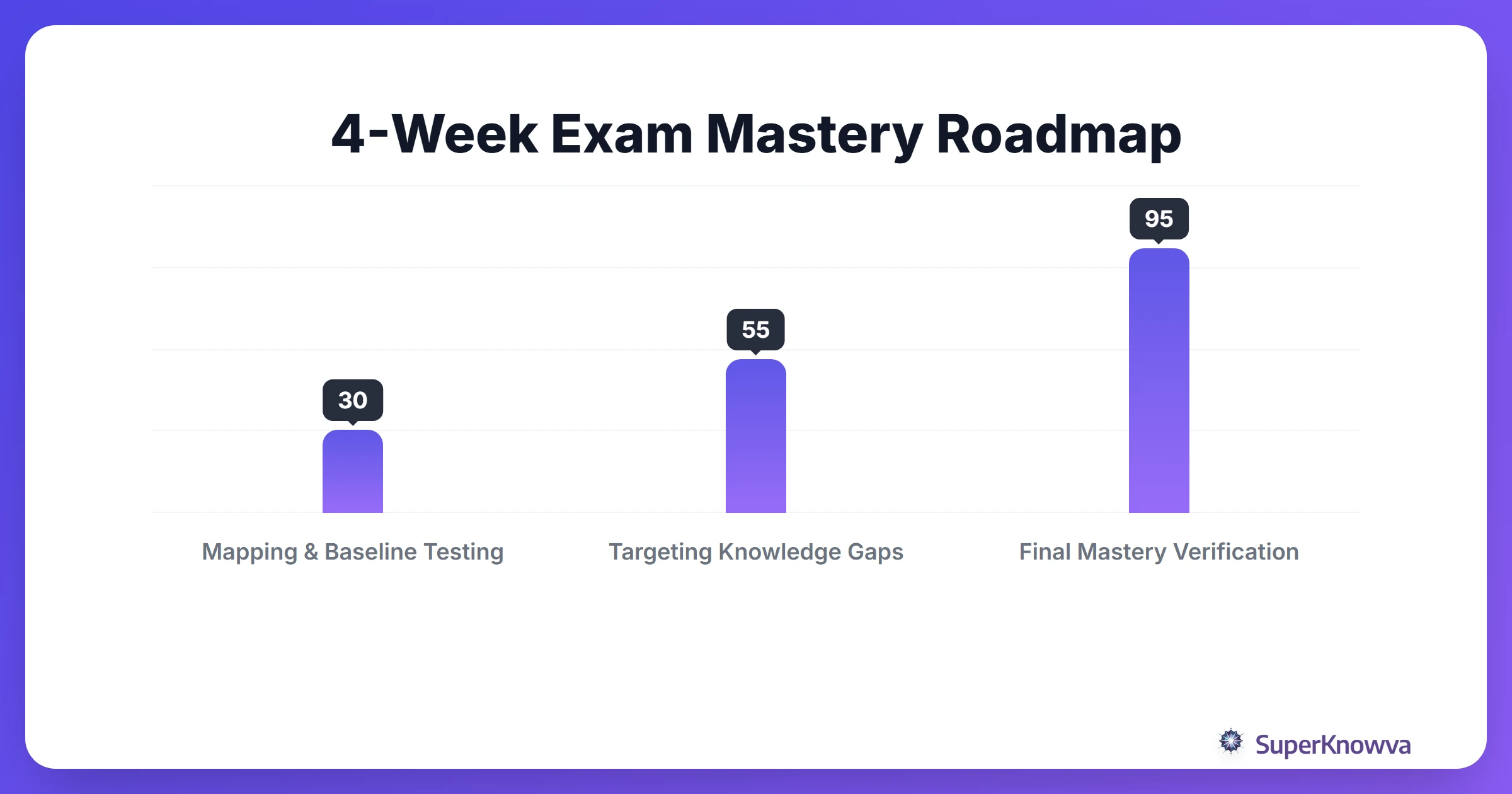
Ready to put this into practice? Here is a simple, data-driven roadmap for the month leading up to your exams:
- Week 1: Baseline Assessment. Upload your materials and take the initial AI-generated quizzes. This creates your "mastery map" and shows you exactly where you stand.
- Week 2-3: Targeted Practice. Follow your personalized study recommendations. Spend 80% of your time attacking "red zones" where your accuracy is below 70%.
- Week 4: Final Mastery Verification. Perform high-intensity reviews of "at-risk" objectives. Use the dashboard to make sure every major concept has turned "green" before you step into the exam hall.
Stop guessing and start mastering. See How Students Are Aceing Exams with Data and join the community of high-achievers using SuperKnowva today.