Ever spent three hours highlighting a textbook, only to realize you can’t remember a single core concept five minutes after closing it? This is a classic student trap: working hard without actually getting anywhere. The secret to breaking this cycle isn't more caffeine or longer library sessions. It is about learning how to track study progress with ai to get an honest, objective look at what you have actually mastered.
In this guide, we’ll show you how to use SuperKnowva’s analytics to visualize your growth and actually hit those study goals this June.
The Power of Visualizing Your Learning Progress
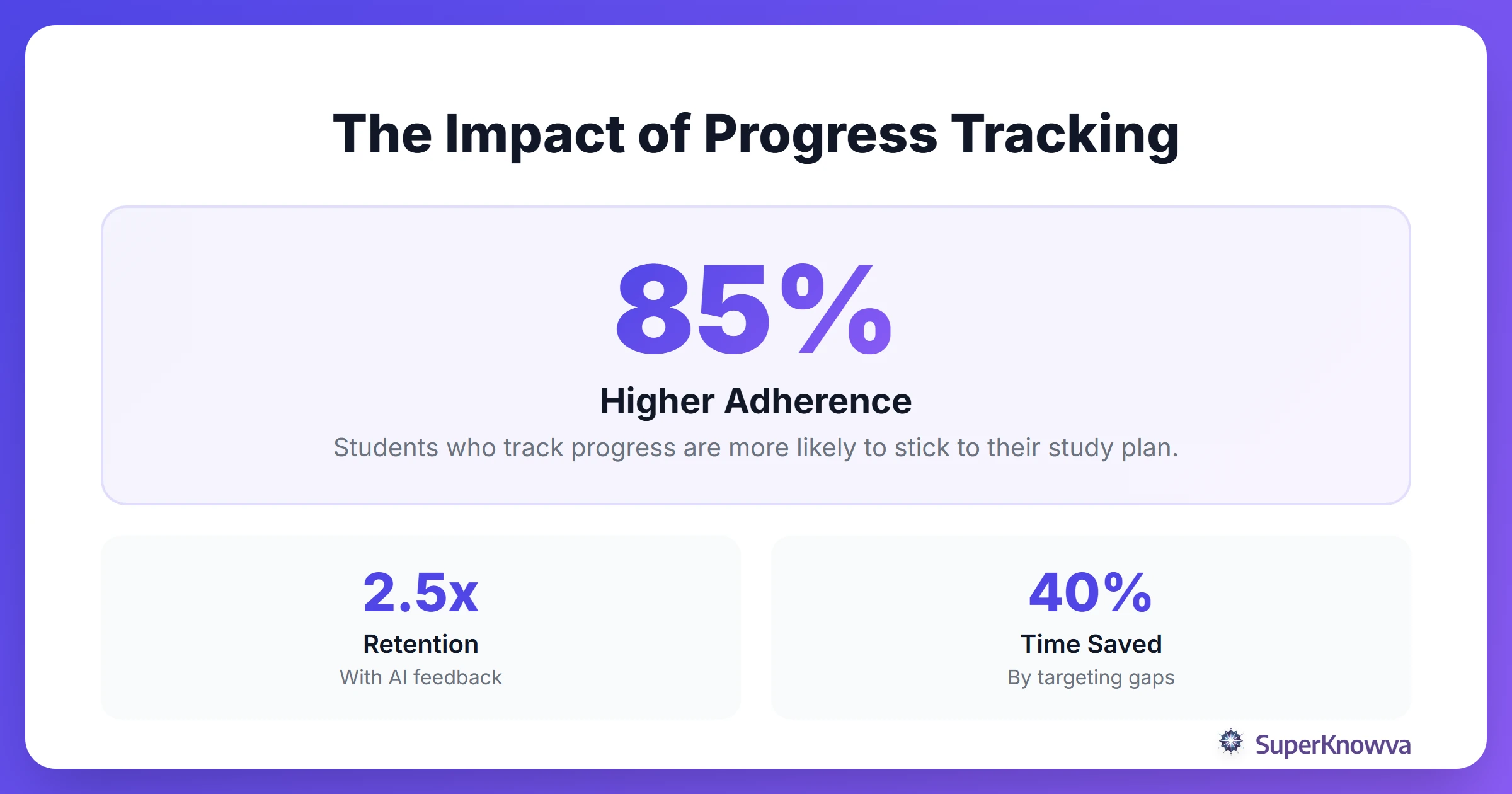
For years, we’ve relied on manual logs or simple checklists to track our work. But let’s be real: manual tracking is flawed. It’s inconsistent, tedious, and it’s way too easy to lie to ourselves about how well we understand a topic. We "check the box" because we finished the chapter, not because we learned it.
There’s a massive psychological shift that happens when you can actually see your progress. When you visualize your trajectory, your brain gets a hit of dopamine that keeps you moving. Unlike traditional methods, AI doesn't guess. It provides real-time data on what you know versus what you’ve just read. While flipping through a slide deck feels like progress, AI-driven analytics measure your ability to recall and apply that information when it counts.
A study on AI tracking accuracy published in the Journal of Medical Internet Research shows that AI is incredibly accurate at tracking adherence to evidence-based activities. The same principle applies to your education. By using an ai study tracker, you ensure your study habits are backed by hard data, not just "vibes."
AI vs. Manual Tracking: Why Data Wins
Traditional study logs focus on time. You might write down, "Studied Organic Chemistry for 3 hours." But time spent doesn't automatically equal knowledge gained. SuperKnowva flips the script, moving from time-based tracking to mastery-based analytics.
The knowledge gap analysis identifies "blind spots," the areas where you think you're fine but are actually shaky. Because SuperKnowva tracks specific concepts pulled directly from your uploaded PDFs and slides, it can tell you exactly which paragraph or diagram is tripping you up.
If you want a deep dive into SuperKnowva's AI features, you’ll see how the platform turns static documents into live data points. AI-driven feedback is effective, but it works best when you use it to guide your own judgment, letting you decide which high-priority gaps to tackle first.
Navigating the SuperKnowva Analytics Dashboard
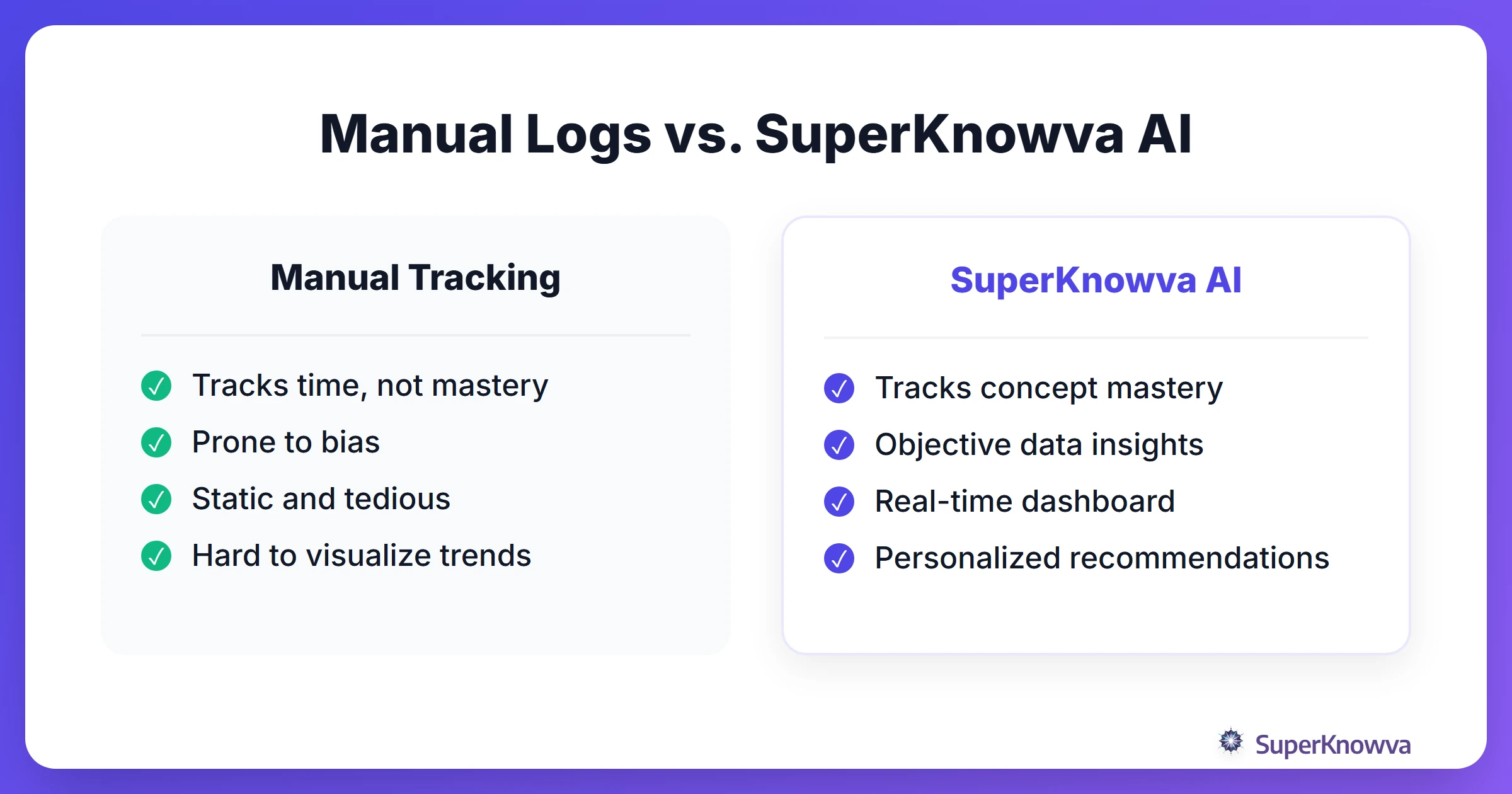
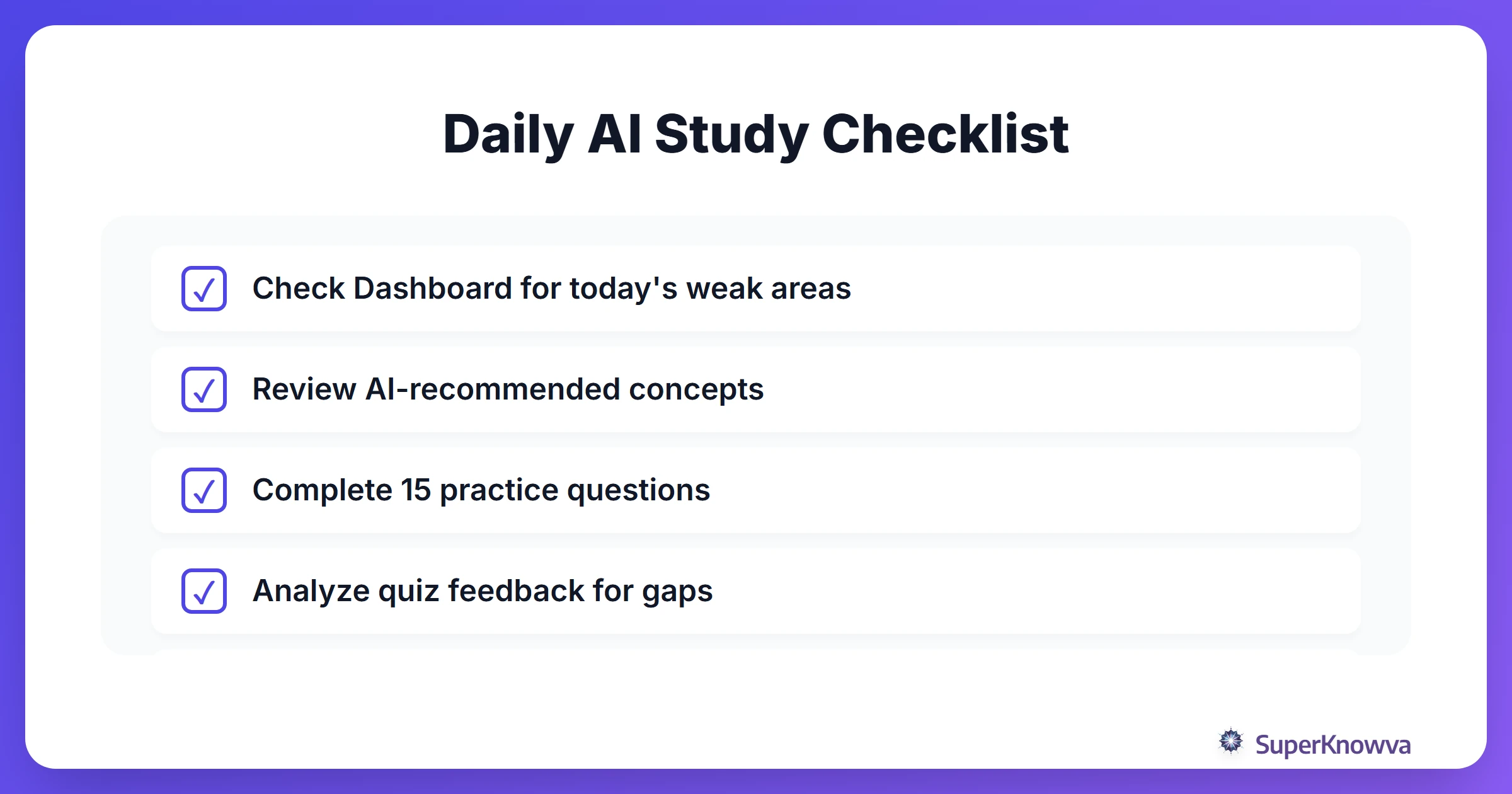
Ready to see your hard work turned into a roadmap? Finding the learning analytics dashboard is easy. Once you log in, just head to the sidebar and hit the "Track Progress" tab.
Inside, you’ll find three metrics that actually matter:
- Accuracy Rates: What percentage of questions are you nailing on the first try?
- Time Spent: A real breakdown of where your hours are actually going.
- Mastery Levels: A smart score that combines accuracy and frequency to show when a concept is officially "locked in."
Filter your progress by subjects like Medicine, Engineering, or Law. The June progress view provides a 30-day snapshot of your growth. This helps you visualize learning progress before finals or professional certifications. If you are starting out, our step-by-step SuperKnowva tutorial explains the setup.
Identifying and Closing Knowledge Gaps
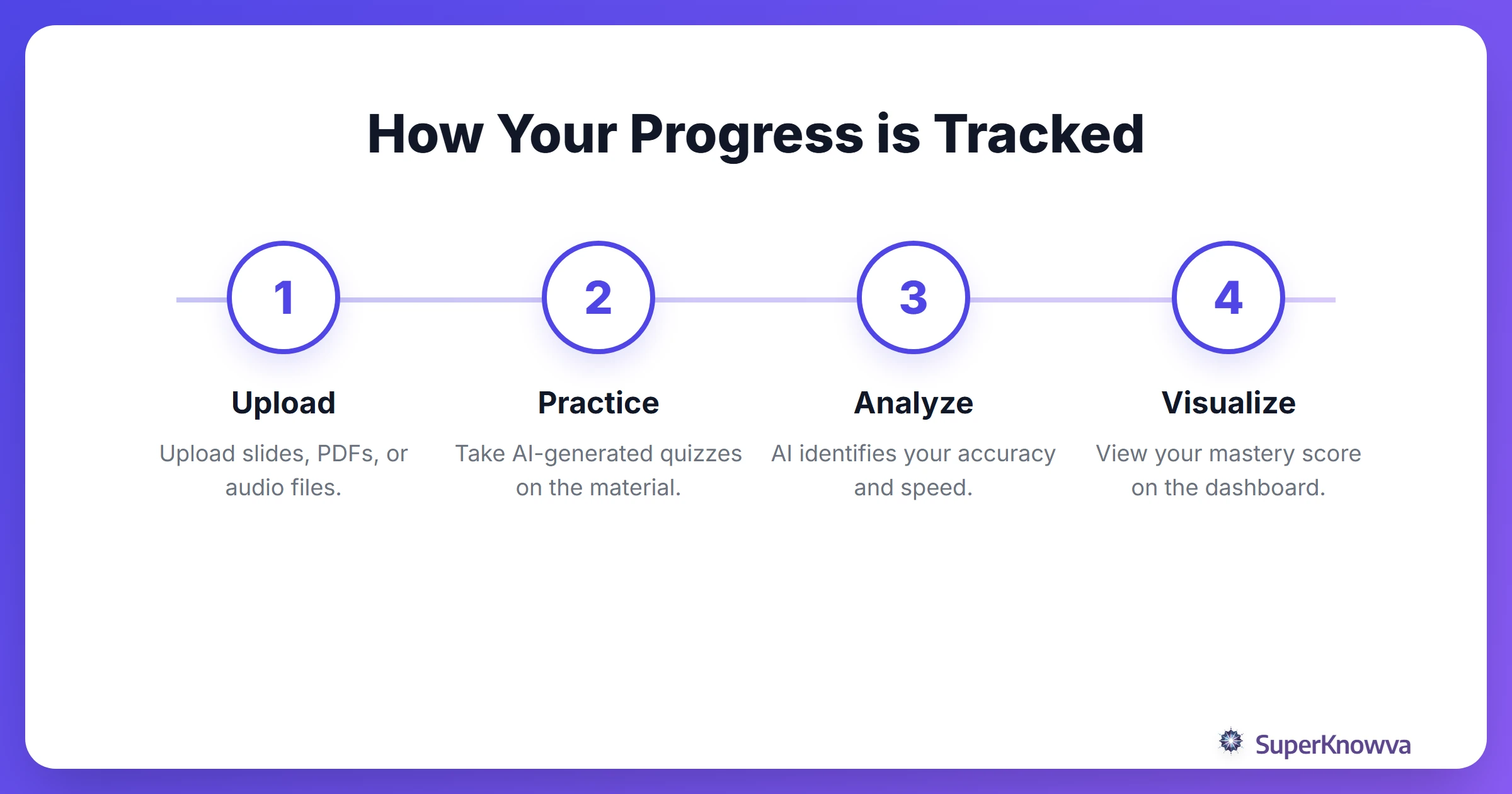
Nothing is more frustrating than knowing you have a "weak spot" but having no idea how to fix it. SuperKnowva stops the guesswork by identifying those gaps based on your quiz performance.
Our personalized study recommendations feature doesn't just tell you that you're struggling; it points you to the solution. If you keep missing questions on "Renal Physiology," the AI suggests the exact slides you need to revisit. By using AI-generated questions to target your weaknesses, you stop wasting time on material you already know and focus on what will actually move the needle.
To make sure that info sticks for good, SuperKnowva uses spaced repetition. This ensures the concepts you’ve tracked pop back up right as you’re about to forget them. It’s the most effective way of improving your study habits for the long term.
Setting Data-Driven Study Milestones
"I want to pass the MCAT" is a great dream, but it’s a terrible goal. It’s too big. To actually get there, you need small, data-driven milestones.
If your dashboard shows 60% mastery in "Evidence Law," your next goal should be hitting 75% by Tuesday. This granular approach is a lifesaver for students prepping for high-stakes exams like the MCAT, LSAT, or NCLEX. Understanding how AI helps track outcomes is quickly becoming the standard in modern education, as it allows for real-time feedback that manual studying just can't match.
The dashboard also helps you see the difference between active engagement (quizzes and AI prompts) and passive reading (scrolling through slides). Once you start adjusting your schedule based on these insights, you’ll finally start studying smarter, not harder.
Case Study: How Students Use Analytics to Crush Exams
The results speak for themselves. We’ve seen some incredible student success stories from users around the world.
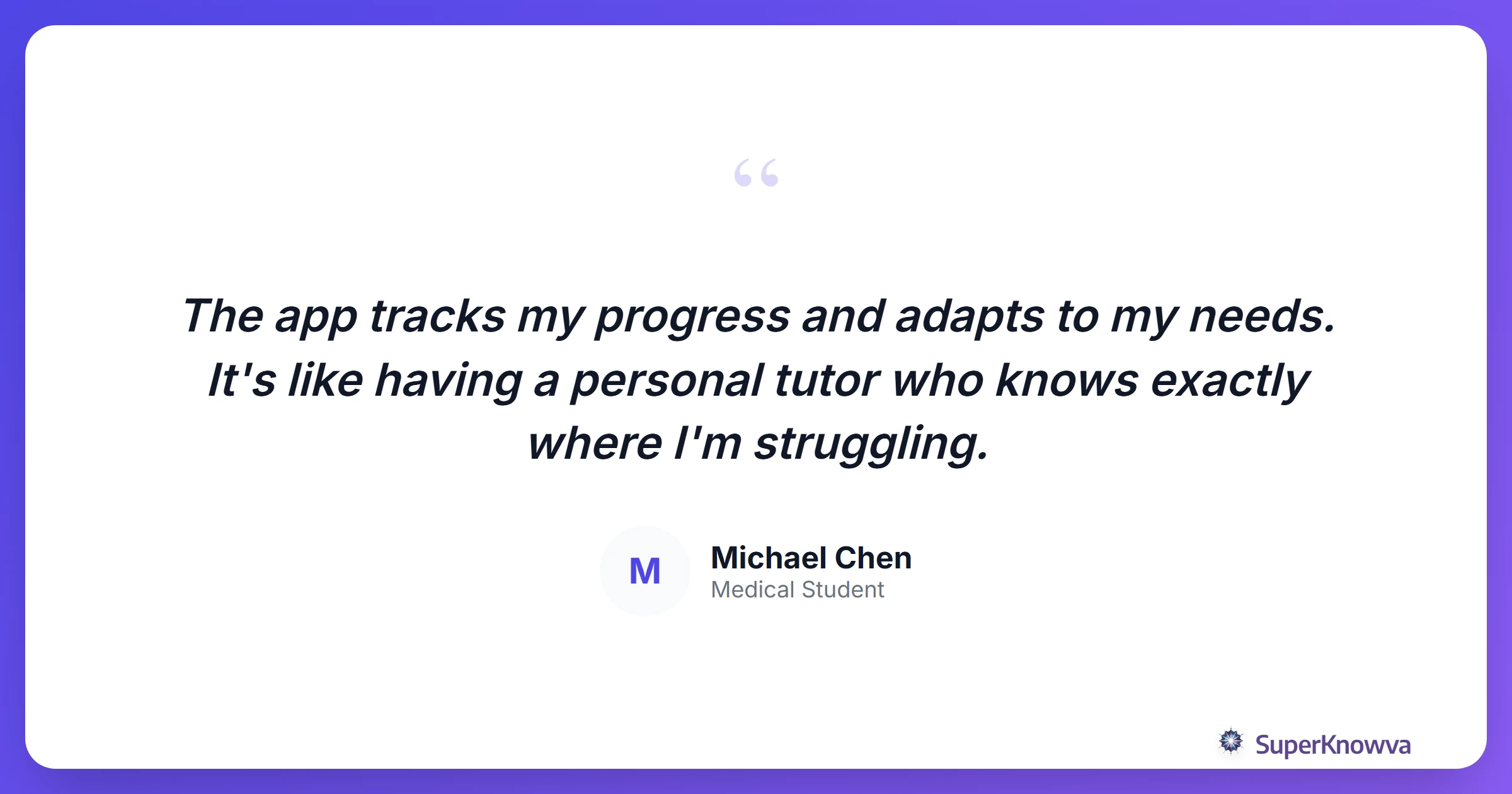
Take Michael Chen, a med student drowning in anatomy notes. By using the SuperKnowva dashboard, he realized his "knowledge gaps" were almost entirely in neuroanatomy. By focusing his energy there for just two weeks, he boosted his practice exam scores by 22%.
Then there’s Emma Thompson, a law student who used the June progress view to track her mastery of Torts and Contracts. She noticed her accuracy plummeted after 9:00 PM. Based on that data, she moved her hardest subjects to the morning and saw an immediate improvement.
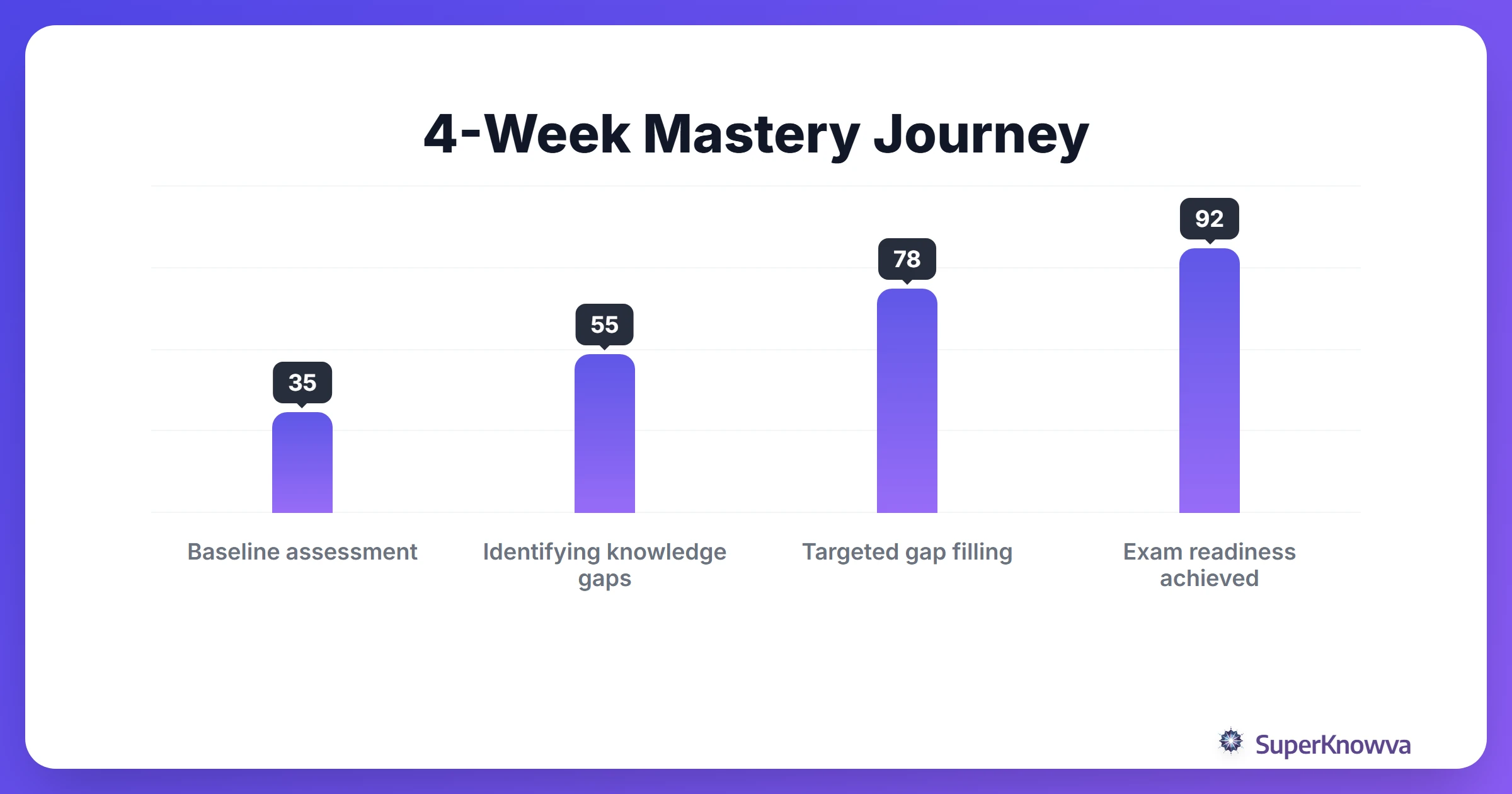
Most students see a major jump in their scores within just 2-4 weeks of consistent tracking. When you remove the guesswork, you walk into the exam room with total confidence.
Stop leaving your grades to chance. Start using SuperKnowva today and turn your study data into your biggest competitive advantage.