
Ever had one of those moments where the rest of the world just... disappears? The clock on the wall fades into the background, your pen moves as fast as your thoughts, and those "impossible" physics problems suddenly feel like a puzzle you were born to solve.
This isn't just a lucky streak. It’s the psychology of flow. For most students, an exam room feels like a pressure cooker. But if you can tap into this state, you can transform that high-stakes environment into a theater of peak performance.
Let’s look at the science behind "the zone" and how you can actually trigger it when the timer starts.
The Science of the 'Zone': What is Flow State?
Flow state, a term coined by psychologist Mihaly Csikszentmihalyi, is essentially a state of total "fluidity" between body and mind. When you’re in it, you aren’t just working; you are the work.
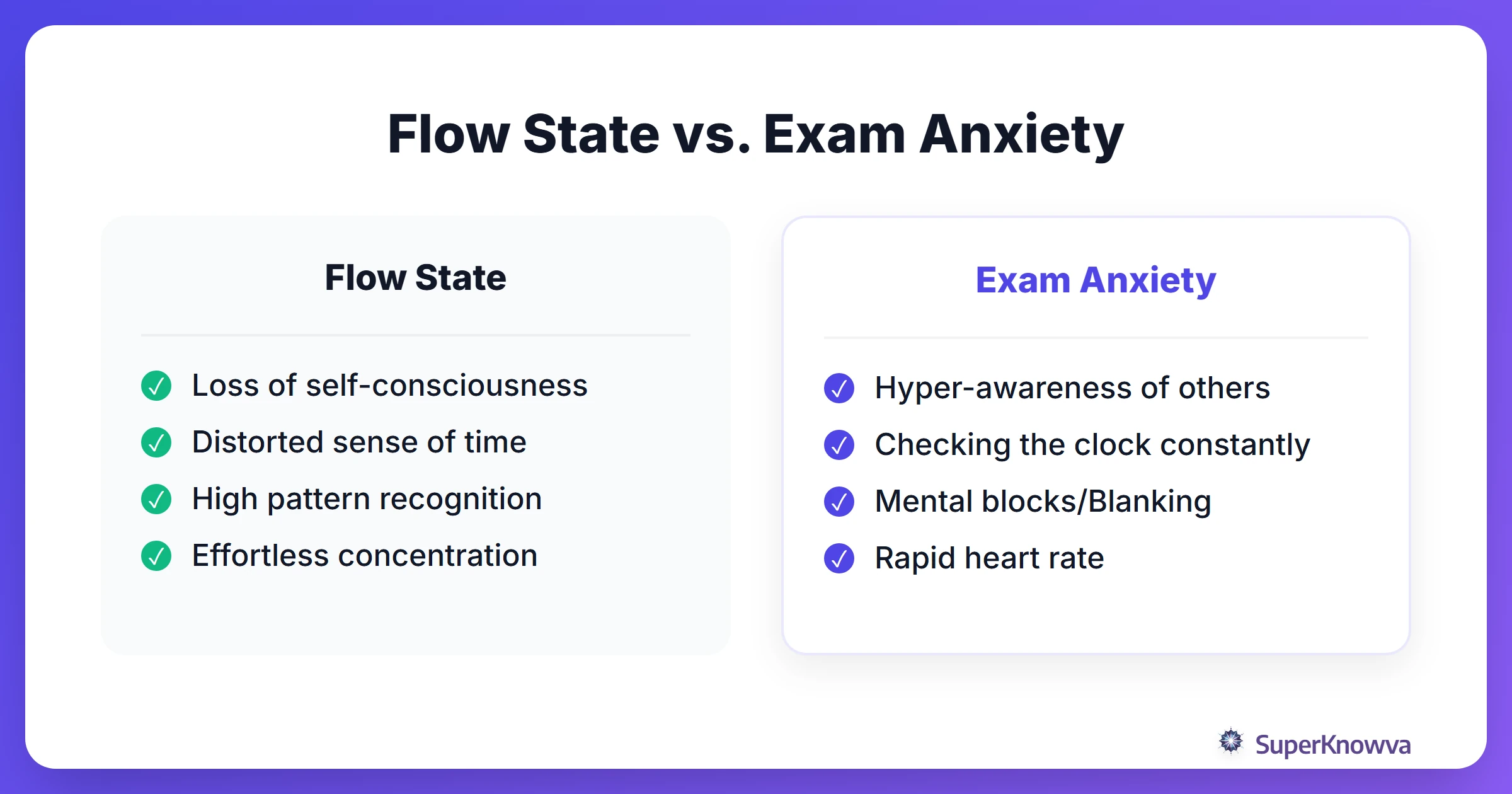
Neuroscientists call this transient hypofrontality. In plain English, your prefrontal cortex (the part of your brain responsible for self-doubt, overthinking, and "What if I fail?") temporarily takes a backseat. By silencing your inner critic, your brain redirects every ounce of energy toward the task at hand.
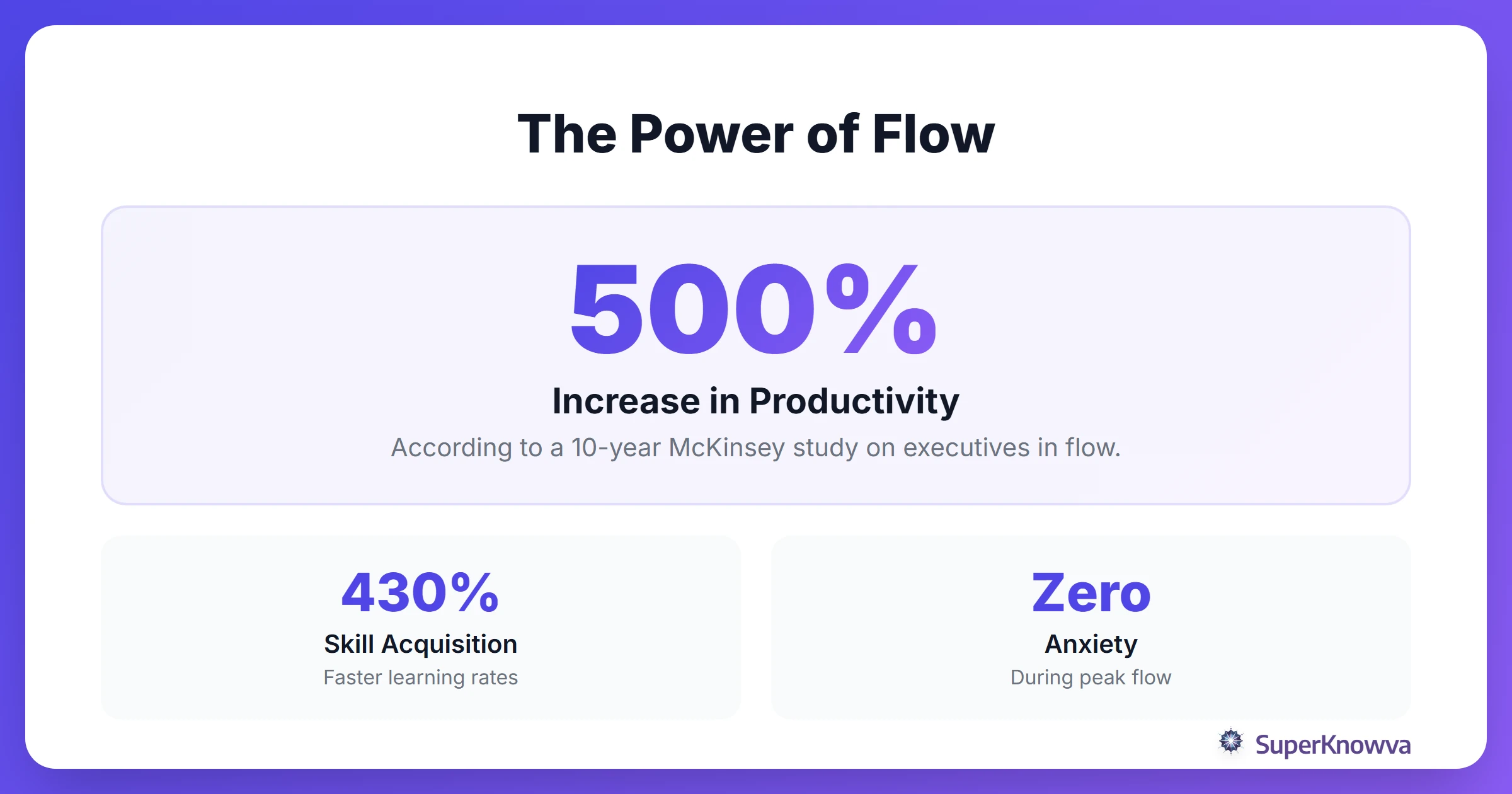
It’s the ultimate antidote to reducing exam anxiety. While "busy" work often feels like frantic multitasking, flow is about deep and singular absorption. As noted in this look at the Headspace: Benefits of Flow State, this level of immersion doesn't just help your grades; it makes the entire experience feel more rewarding and less draining.
The Challenge-Skill Balance: Finding the Sweet Spot
Flow lives in a very specific neighborhood. If an exam feels way too hard, you’ll spiral into anxiety. If it’s too easy, you’ll catch yourself staring at the ceiling in total boredom. You need to find the "sweet spot" right in the middle.
How do you do that in the middle of a test?
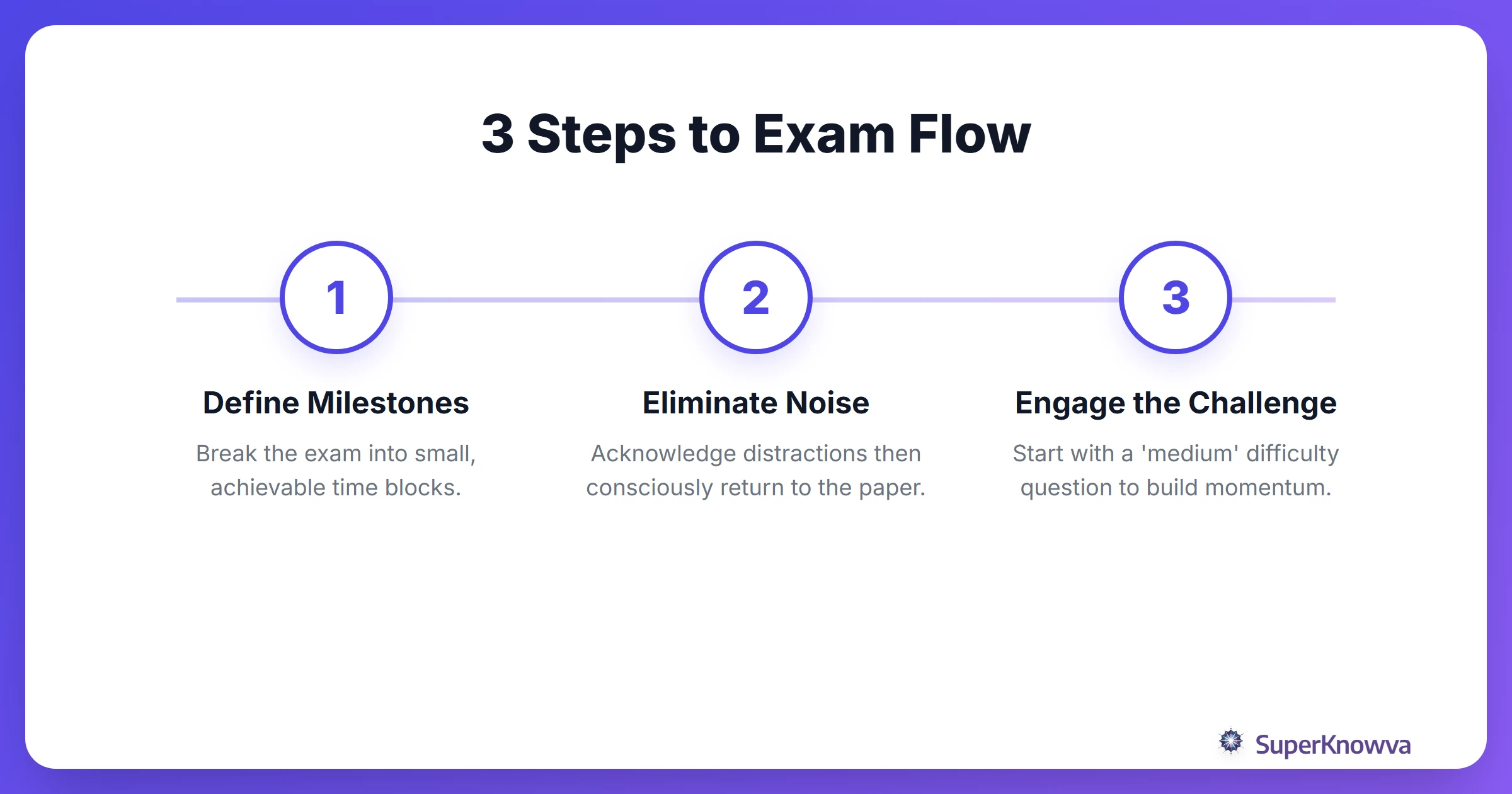
- The 5-Minute Calibration: Don’t just dive into Question 1. Spend the first few minutes scanning the entire paper. It helps your brain map out the "terrain" of the challenge ahead.
- Flip the Script: If a question looks daunting, don't view it as a threat. Tell yourself, "This is a logic puzzle designed to be solved."
- Hunt for Micro-Wins: Start with a few medium-difficulty questions. These quick victories build the momentum and dopamine needed to tackle the "boss level" problems later.
By mastering deep work, you learn how to tilt the scales of any challenge until you're back in the zone.
3 Critical Triggers to Enter Flow on Command
You don’t have to sit around and wait for flow to happen by accident. You can invite it in using specific flow state triggers.
- Clear, Bite-Sized Goals: A three-hour exam is a marathon. Don't look at the finish line. Break it into 15-minute sprints. Focus only on the subsection in front of you.
- The Feedback Loop: Create a "mental check" system. After finishing a problem, take two seconds to verify your logic. This internal "ping" keeps your brain engaged and prevents you from zoning out.
- Total Concentration: Embrace a single-tasking mindset. Even if the exam has five different sections, act as if the current question is the only thing that exists in the universe.
Pre-Exam Rituals to Prime Your Brain
Flow starts long before the proctor says "begin." To reach peak performance study levels, you have to prep your body as much as your mind.
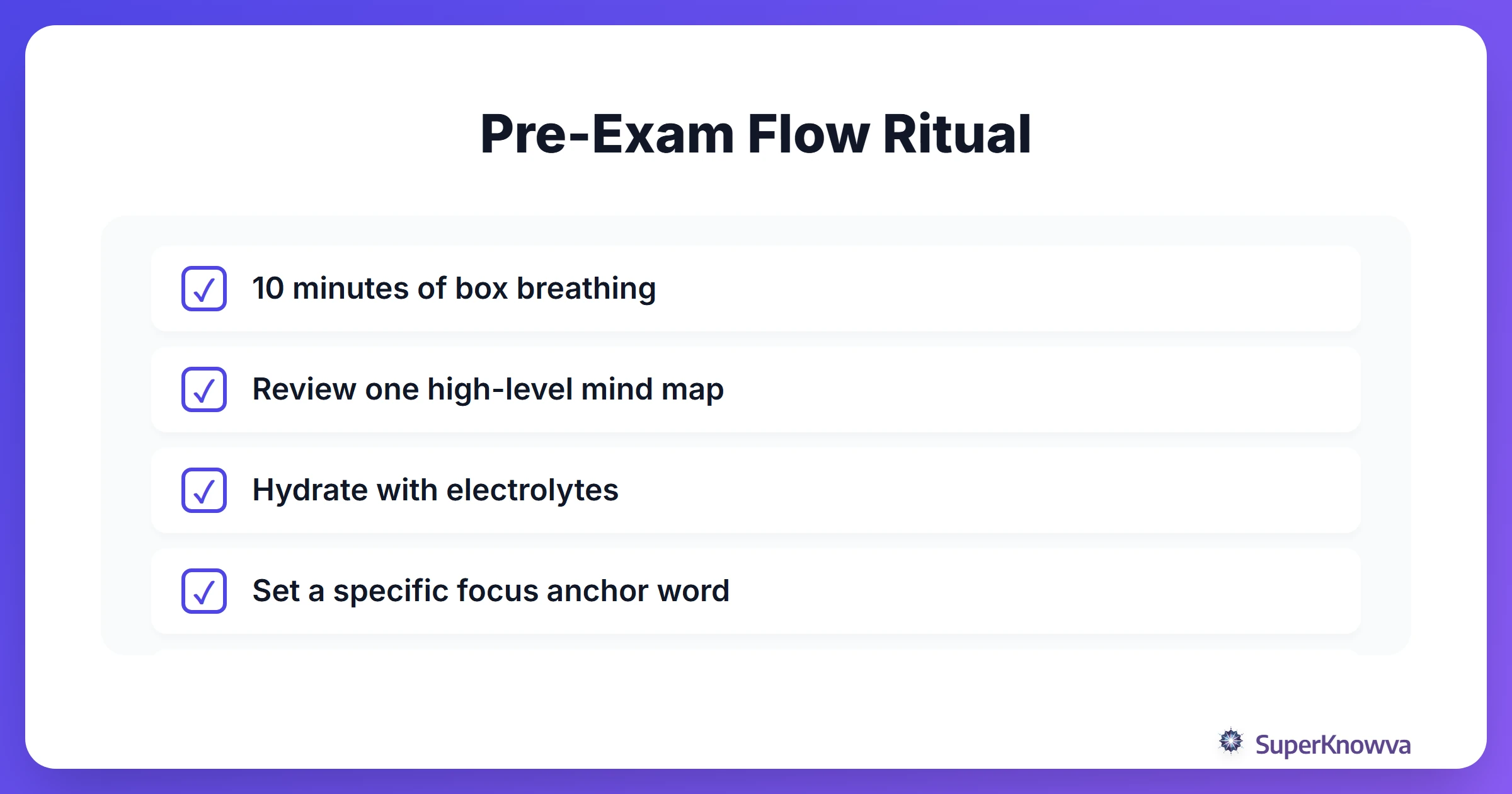
- Physical Priming: A dehydrated brain is a foggy brain. Sip water with electrolytes and try a brisk walk before the exam to get oxygen-rich blood moving to your head.
- Box Breathing: Use the "4-4-4-4" technique (inhale for 4, hold for 4, exhale for 4, hold for 4). It’s a biological "hack" to lower cortisol and steady your heart rate.
- The Focus Anchor: Pick a physical trigger (clicking your pen three times or adjusting your sleeves) to signal to your brain: It’s go time.
- The Foundation: You can’t "flow" if you’re running on fumes. Never ignore sleep's role in memory. A rested brain accesses information faster, making the "skill" side of the equation much easier to manage.
Maintaining Flow: Don't Let the Hall Distract You
Exam halls are noisy places. Tapping pens, shuffling papers, and the person next to you sighing; it is a minefield of distractions. The trick isn't to fight the noise, but to incorporate it.
If you hit a wall and feel yourself "snapping out" of the zone, don't panic. Circle the question, take one deep breath, and move on. Keeping your momentum is more important than solving things in order.
Treat the test like a game. When you view it as a series of levels to beat rather than a high-stakes judgment of your worth, you kill the self-consciousness that causes "blanking." Many students in the Real-world Flow Experiences (Reddit) community agree: treating the exam like a puzzle is the fastest way to stay submerged.
Flowtime vs. Pomodoro: Which Wins?
You’ve probably used the Pomodoro Technique (25 minutes on, 5 minutes off) while studying. But in a long exam, a rigid timer can actually be your worst enemy.
The Flowtime Method is usually the better bet for testing. Instead of stopping because a clock told you to, you work as long as your focus is sharp. You only take a "natural break" (like a 30-second stretch) when you finish a major section or feel your concentration dip. This avoids the "switching costs" of breaking a complex thought mid-sentence.
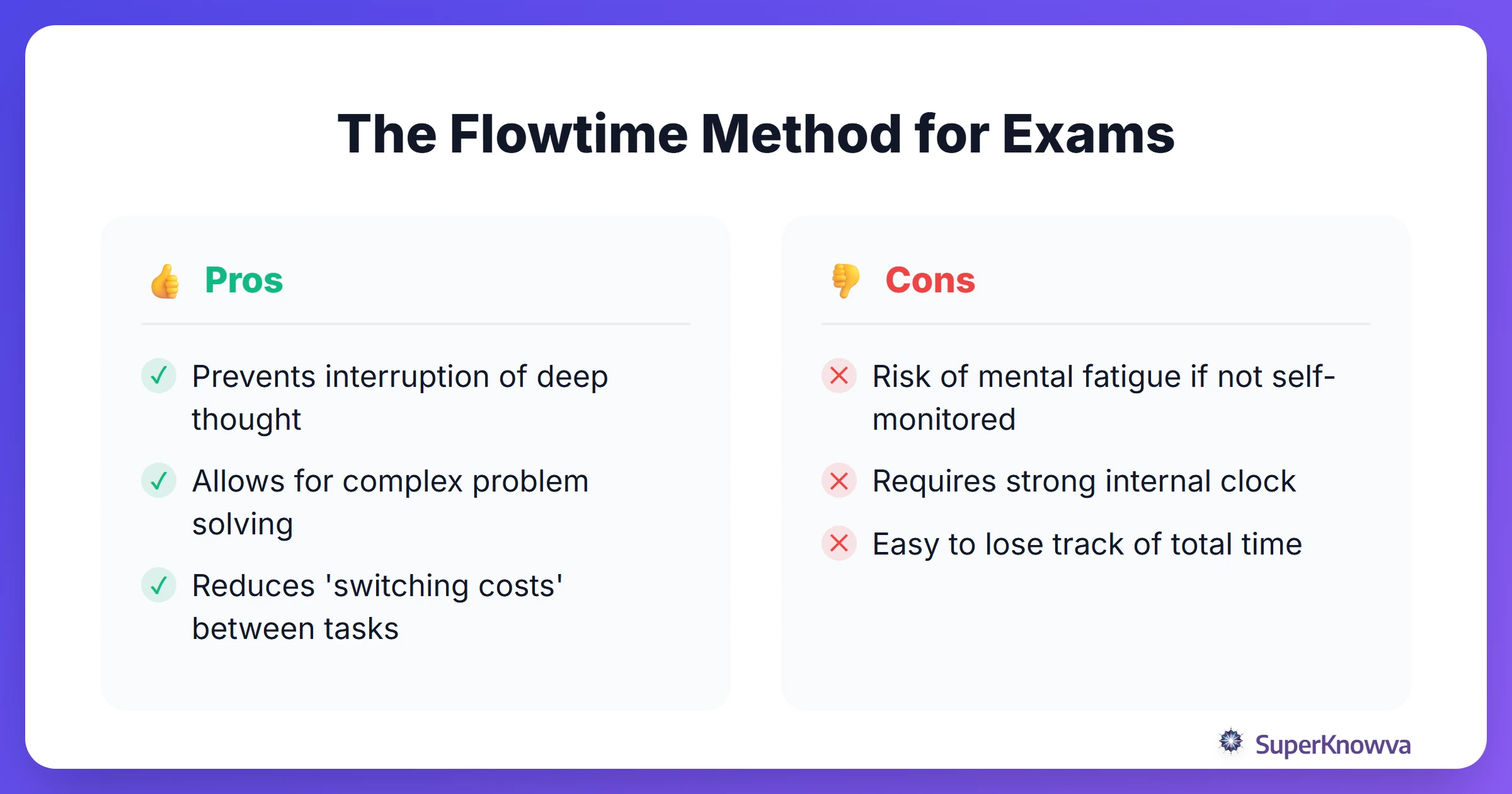
Understanding the nuances of Flowtime vs. Pomodoro helps you pace yourself during a grueling 3-hour final. By reclaiming your attention from the clock and putting it back on the paper, you ensure every minute is spent in peak performance.
The Bottom Line
Flow isn't about working harder; it’s about working with your brain’s natural chemistry. By balancing the challenge, setting clear milestones, and priming your body, you can turn your next exam from a source of dread into a rewarding experience of deep focus.