Walk into any campus library during finals week and the vibe is the same: caffeine-fueled panic. You’ll see rows of students hunched over textbooks, neon highlighters in hand, re-reading the same three paragraphs for the tenth time. Here’s the cold, hard truth: most of them are wasting their time.
If you want to stop the cycle of "glance and forget" and actually master your course material, you need to ditch the highlighter and switch to active recall for final exams.
Whether you’re grinding through organic chemistry or trying to make sense of macroeconomics, the way you study matters infinitely more than how many hours you clock at your desk. In this guide, we’ll break down why active recall is the undisputed heavyweight champion of study strategies for university and how you can start using it today to actually see results.
What is Active Recall and Why Does It Work?
At its core, active recall (also known as retrieval practice) is the simple act of pulling information out of your head without looking at your notes.
Think about it this way: traditional studying is about trying to "put information in." Active recall is about "pulling information out."
The science behind this is pretty cool. Every time you struggle to remember a fact or a concept, you’re physically strengthening the neural pathways in your brain. It’s like a workout. Just as lifting weights builds muscle through resistance, retrieving information builds memory through what psychologists call "desirable difficulty."
Most students stick to passive reading because it feels easy. It’s comfortable. But there is a massive difference between recognition (seeing a term and thinking, "Oh yeah, I’ve seen that before") and actual recall (being able to explain that term on a blank exam paper). Active recall forces you to bridge that gap long before the stakes are high. As noted in this guide on what is active recall? The best study method explained, it is widely considered the most effective way to learn.
Active Recall vs. Passive Review: The Efficiency Gap
Passive review, including rereading, highlighting, and re-watching lectures, creates a trap called the "Illusion of Competence." Because the information is right in front of you, your brain leads you to believe you have mastered it.
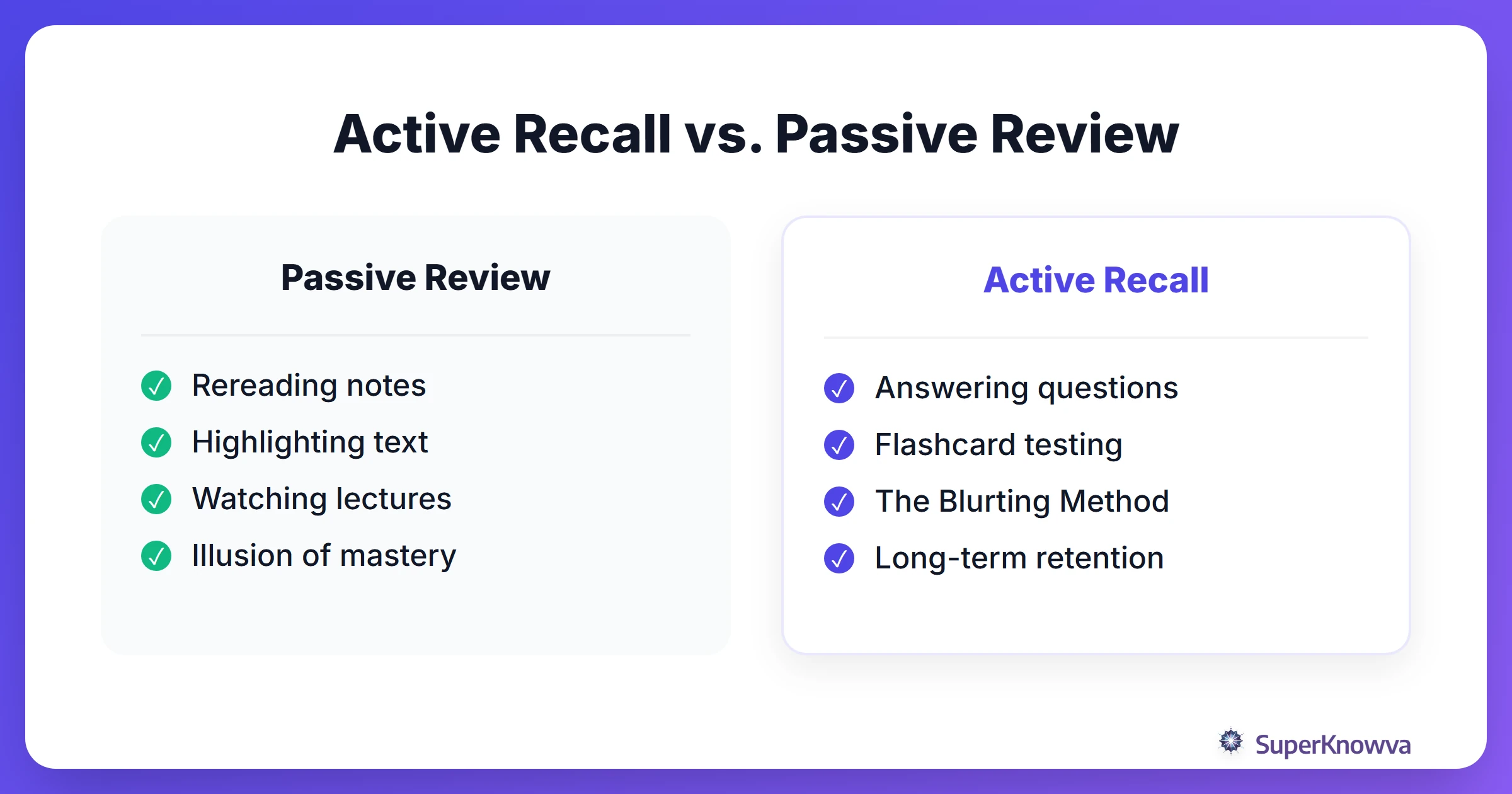
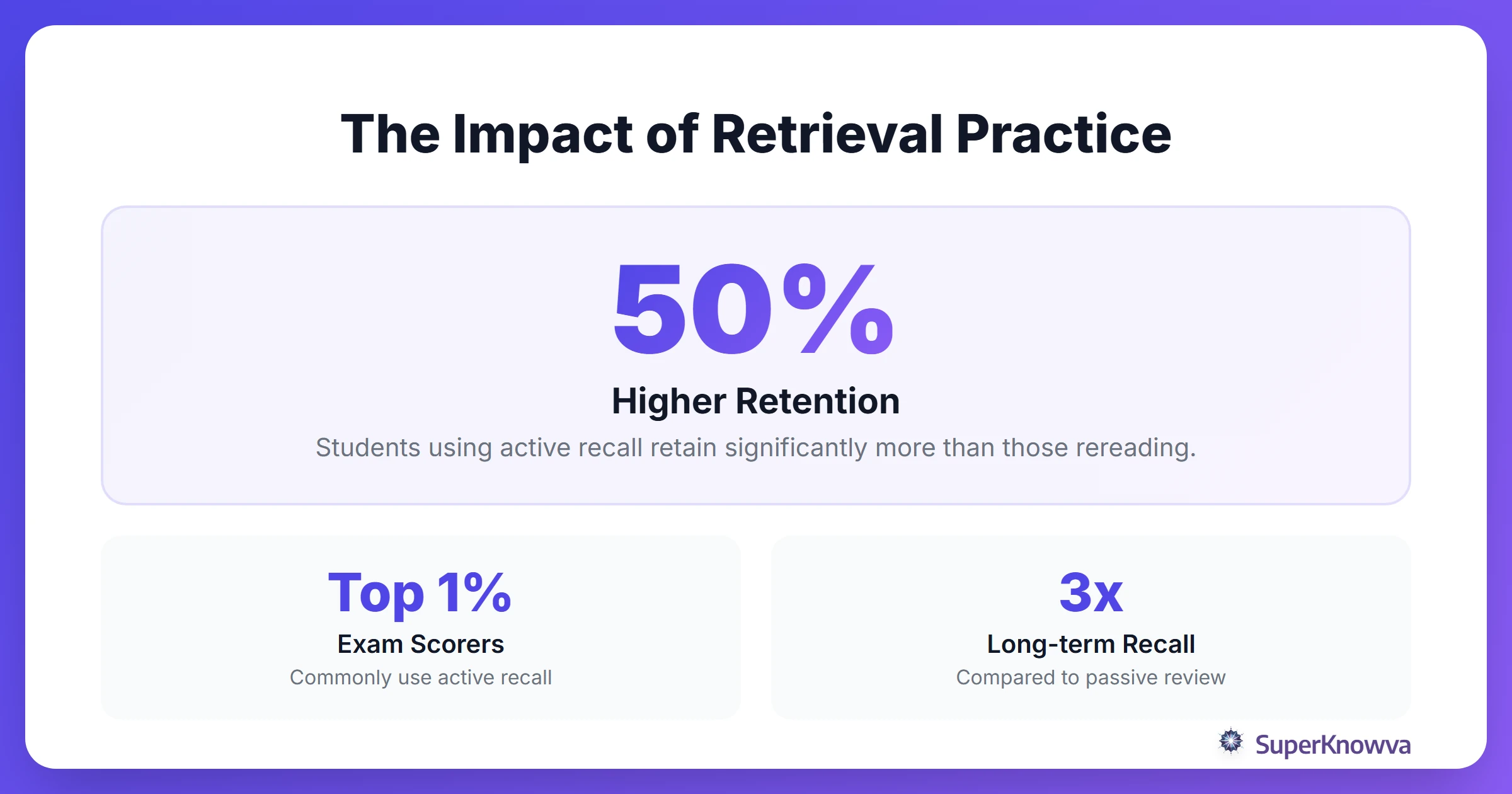
The efficiency gap here is massive. Research shows that students who use retrieval practice retain significantly more information after a week compared to those who just reread the material. When you’re learning how to study for finals, every minute counts. You don’t have time to waste on methods that result in a 50% drop in retention after only 24 hours.
By moving from "looking at" the material to "wrestling with" it, you naturally transition into interleaving practice, where you mix different topics to further challenge your brain and cement long-term memory.
Top Active Recall Techniques for Final Exams
Ready to get started? Here are the most effective active learning techniques to build into your schedule:
- Flashcards (Physical or Digital): Tools like SuperKnowva or Anki let you turn your notes into a game of "test yourself." The secret? You have to actually say the answer out loud or write it down before you flip the card. No cheating.
- The Blurting Method: This is a high-speed strategy perfect for subjects with a lot of content.
- The Feynman Technique: Named after physicist Richard Feynman, this involves explaining a concept in simple terms as if you were teaching a child. If you get stuck or start using jargon to hide a lack of understanding, you’ve found a gap in your knowledge. Check out our guide on The Feynman Technique: Learn Anything Faster to see how it works for complex theories.
- Self-Generated Questions: As you read your textbook, stop taking traditional notes. Instead, write down questions for yourself. When it’s time to review, answer those questions instead of rereading the chapters.
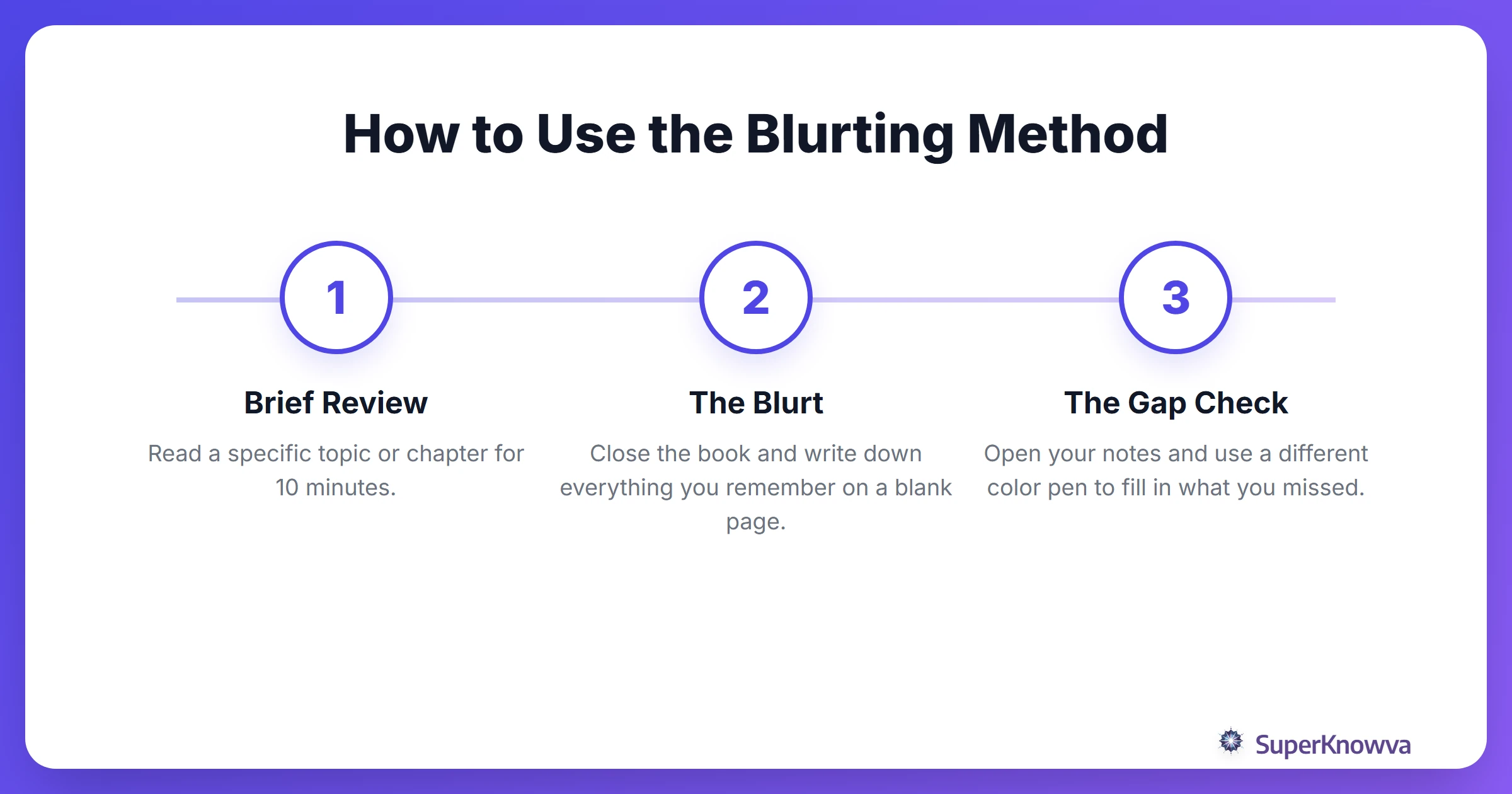
For a deeper dive into specific workflows, check out our guide on The Blurting Method: A Simple Active Recall Strategy.
The Power of Spaced Repetition and Active Recall
Active recall is effective, but it is only part of the process. To succeed in your finals, you must overcome the Ebbinghaus Forgetting Curve, a mathematical formula that shows how quickly we lose information.
This is where spaced repetition comes in. Instead of cramming your recall sessions into one panicked all-nighter, you space them out over days and weeks. By reviewing the material right as you’re about to forget it, you "reset" the curve and push that knowledge deeper into your long-term memory.
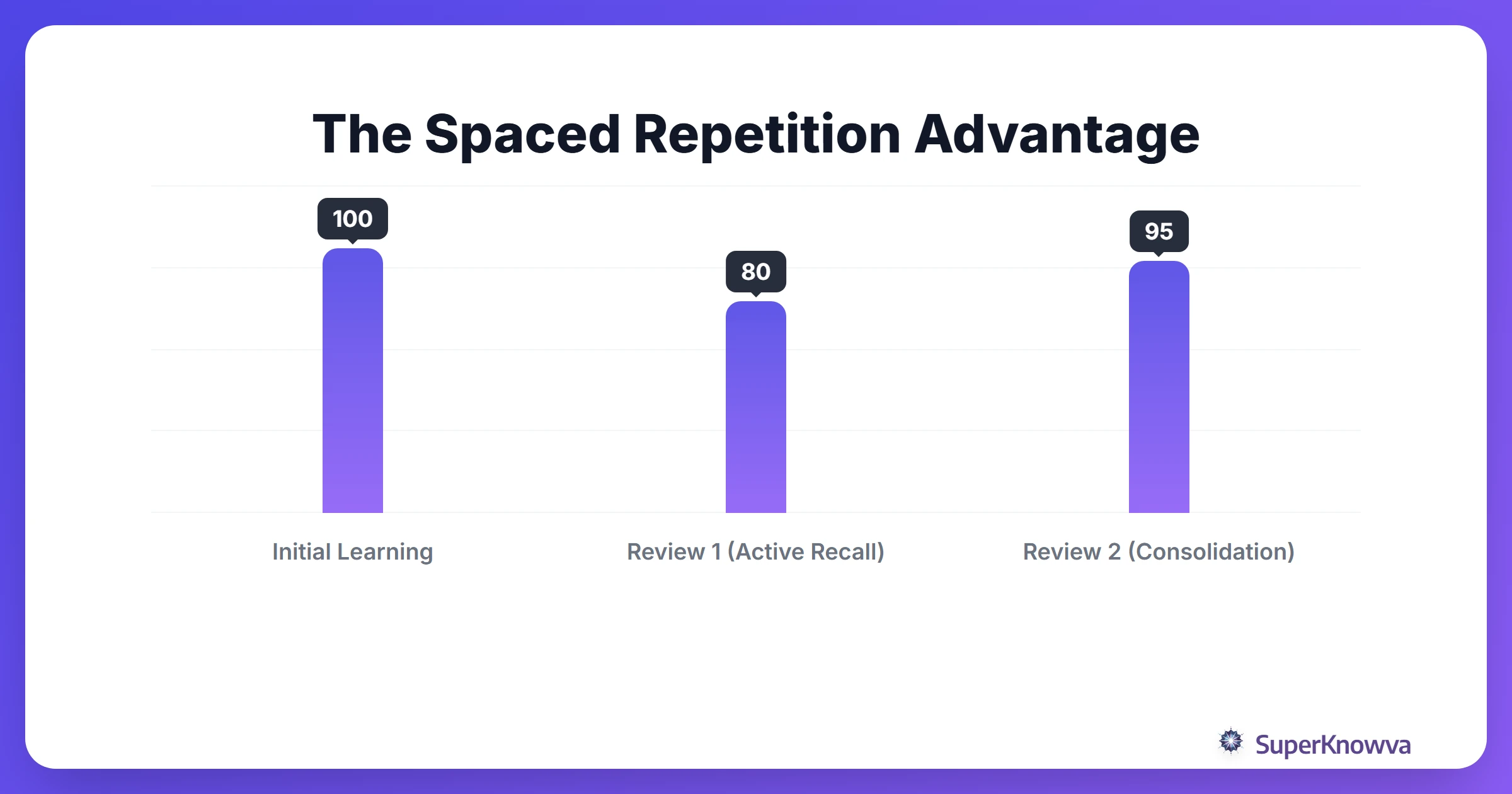
To get the most out of this, make sure you’re prioritizing sleep and memory consolidation. Your brain needs that downtime to process the "retrieval effort" you put in during the day.
Overcoming the Mental Barrier: Why Active Recall is Frustrating
Let’s be real: active recall is hard. It can be incredibly frustrating to sit down with a blank piece of paper and realize you can’t remember half of what you studied yesterday.
Most students quit and go back to highlighting because highlighting feels like "progress." But you have to shift your mindset. Forgetting is not a failure; it’s the moment where the most learning happens. That "brain itch" you feel when you’re trying to remember a fact? That’s the feeling of your memory getting stronger.
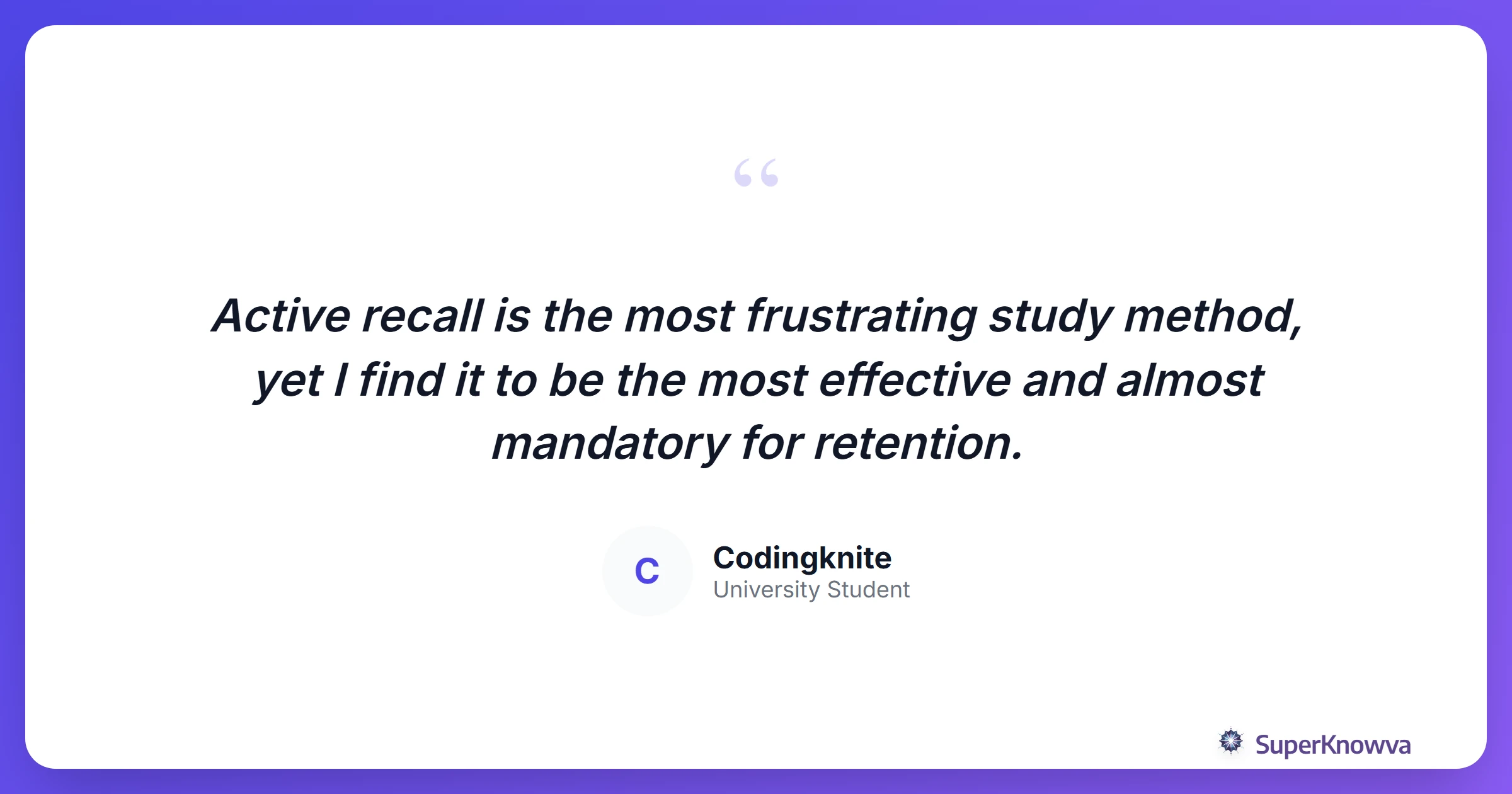
As one student shared in their story of how active recall led to the CPA Honour Roll, the frustration is just a sign that your brain is actually working. Remind yourself: 30 minutes of active recall is worth three hours of passive reading.
A 7-Day Active Recall Plan for Your Finals
If your exam is a week away, here is a high-impact schedule to maximize your score using active recall for final exams:
- Day 1-2: Concept Mapping and Initial Retrieval. Map out your syllabus. Try to write out the main themes of each chapter from memory. Identify your "black holes," the topics you realize you actually know nothing about.
- Day 3-5: Focused Practice. Use flashcards and the Feynman technique to address those weak areas. Start every session with a quick "blurt" of what you learned the day before.
- Day 6: Full-Scale Mock Exams. Sit in a quiet room and do a past paper under timed conditions. No notes, no music, no distractions. This is a rigorous retrieval test.
- Day 7: Final High-Level Review and Rest. Do a light review of your toughest flashcards and then stop. Rest is the final step for success on exam day.
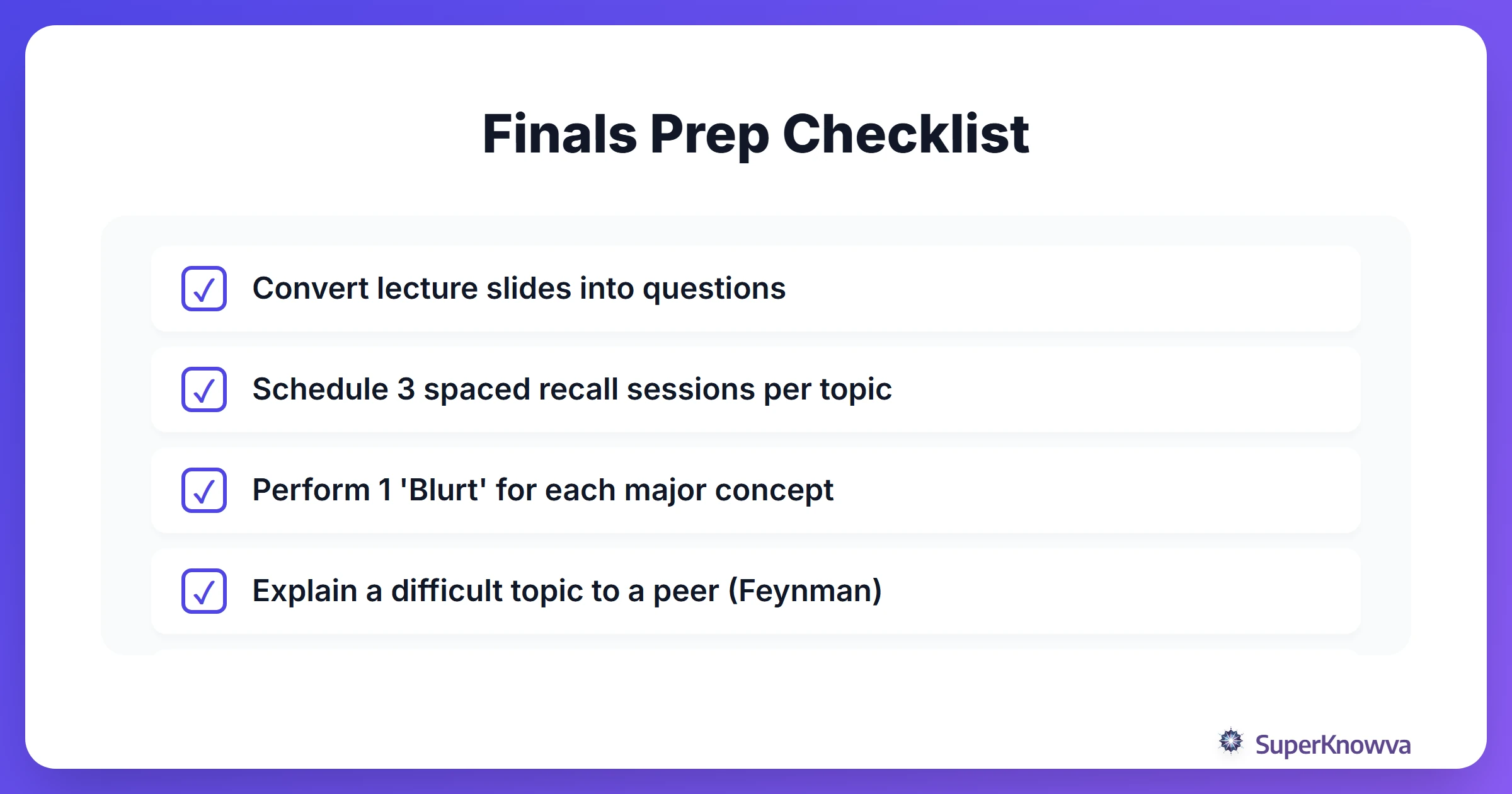
Stop rereading. Start retrieving. By using active recall, you are not just studying for a grade; you are mastering the process of learning.