Ever hit that wall during finals week? You know the one. You’ve been staring at your notes for four hours, but you have no idea if the information is actually sticking or if you’re just memorizing the font. You aren't alone. Most students are stuck in a cycle of passive reading, hoping for the best. But there's a better way to break through: ai feedback loops in education.
In this guide, we’re going to look at how AI-driven feedback loops are changing the game for exam prep. It’s about moving away from "just reading" and into an accelerated learning loop that actually guarantees you know your stuff before you sit down for the test.
The Evolution of Feedback in Higher Education
In the world of learning, a "feedback loop" is pretty simple: you do a task, you find out how you did, and you use that info to do better next time. The problem? Historically, this loop has been painfully slow.
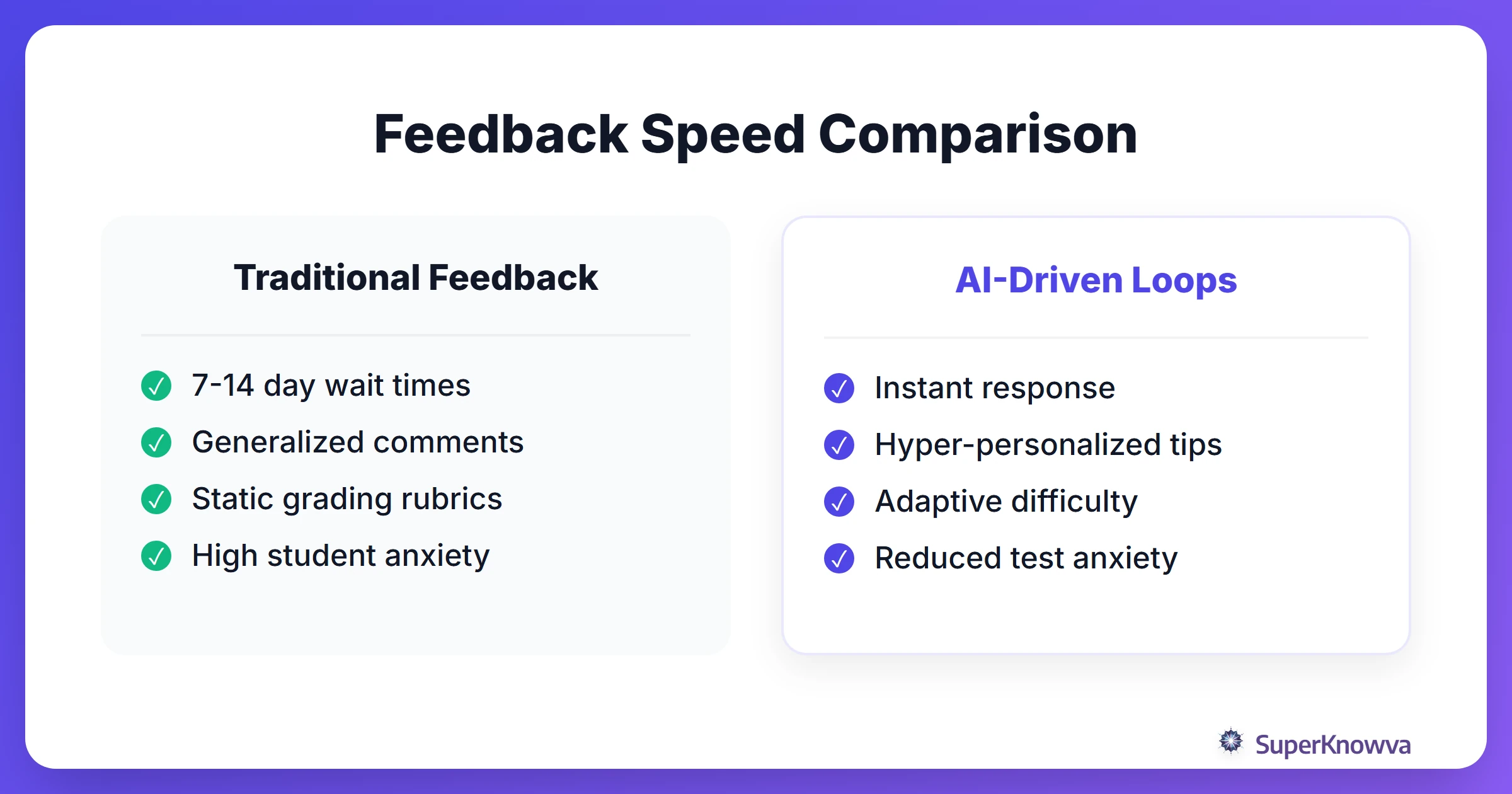
For decades, college followed a predictable, linear path. You’d attend a lecture, take a midterm, and wait two weeks for a red-penned paper to land back on your desk. By the time you saw your mistakes, the professor was already three chapters ahead. The moment for learning had passed.
We are moving away from delayed manual grading toward instantaneous, real-time student feedback. Tools like SuperKnowva help you move from "I think I get this" to "I actually master this" by giving you insights the second you finish a practice problem. It catches you in the moment of curiosity, not weeks after the fact.
Closing the 'Feedback Gap' During Finals Week
The "feedback gap" is that agonizing window of time between making a mistake and realizing you made it. During finals week, this gap is your worst enemy. Waiting days for a grade kills your momentum and often leads to "hard-coding" incorrect logic into your brain.
AI-driven systems fix this. They identify specific knowledge gaps the moment you hit submit. Instead of a generic "C-" on a paper, the AI tells you exactly which concept in Chapter 4 you tripped over.
But it’s not just about the grades; it’s about your sanity. Getting immediate correction helps reduce test-related anxiety during finals because it replaces the "fear of the unknown" with a concrete roadmap. When you know exactly what to fix, that mountain of study material starts to look a lot more like a manageable hill.
How AI-Driven Feedback Loops Actually Work
So, what’s actually happening under the hood? It’s a bit more sophisticated than a digital answer key. It’s a structured cycle designed to act like a 24/7 one-on-one tutor.
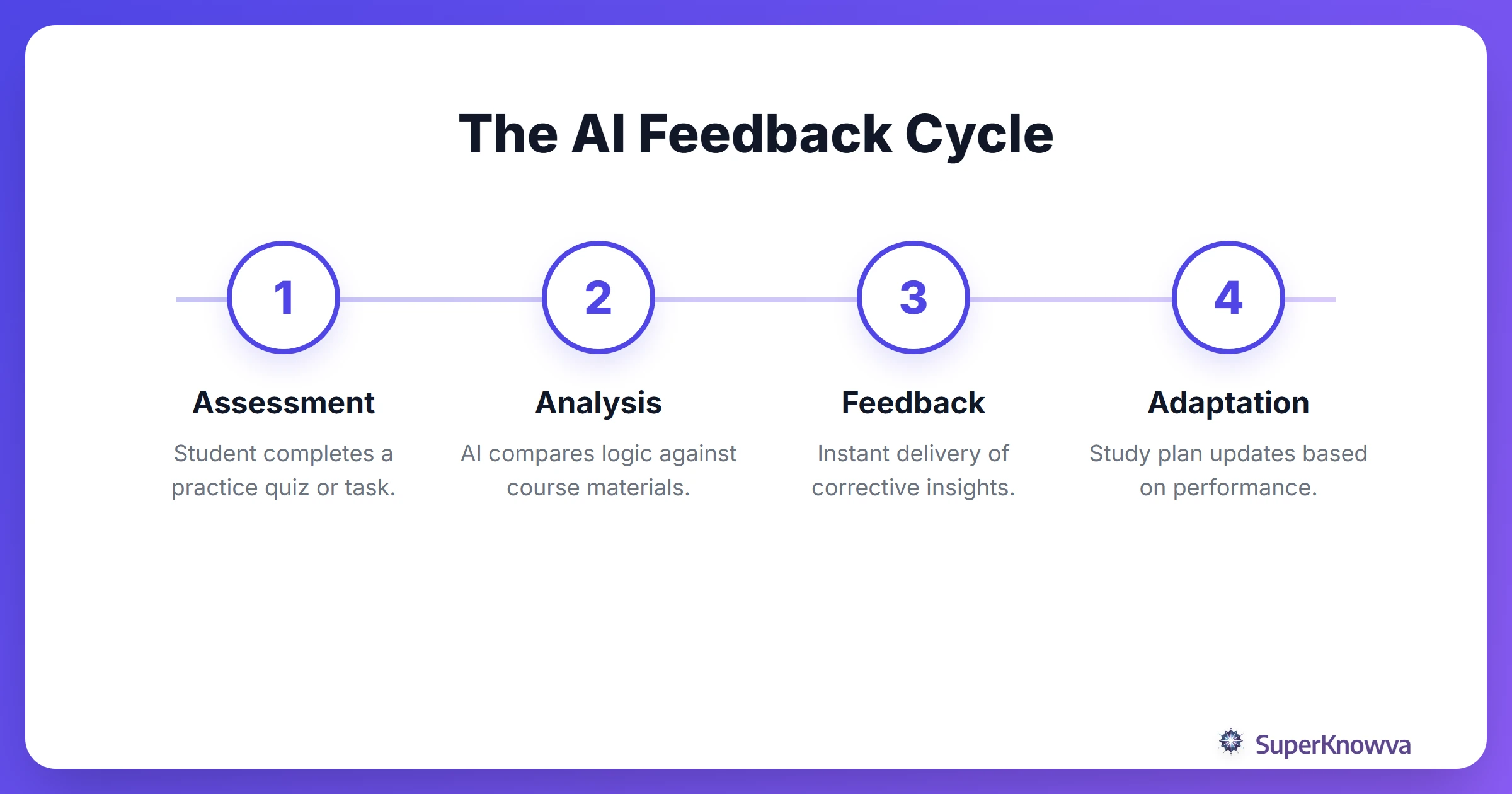
- Data Collection: The AI looks at your specific responses. It is not just looking for "Right" or "Wrong"; it tracks how long you took and the patterns in your mistakes.
- Analysis: Using Large Language Models (LLMs), the system compares your logic against course rubrics. It doesn't just see a wrong answer; it realizes you "misapplied the Rule against Perpetuities."
- Remediation: The AI provides tailored resources, such as a 2-minute video clip, a snippet of your own uploaded notes, or a strategic hint, based on the exact error you made.
Research on how classroom tech creates faster feedback loops shows that this cycle allows students to "fail safely." You learn faster because the stakes are low, but the feedback is high.
Personalizing the Learning Path with Real-Time Data
We are finally moving past the era of "Correct/Incorrect." AI in higher education now allows for nuanced, conceptual feedback. For example, in a complex STEM subject, the AI might recognize that your math is perfect, but your initial formula selection was flawed.
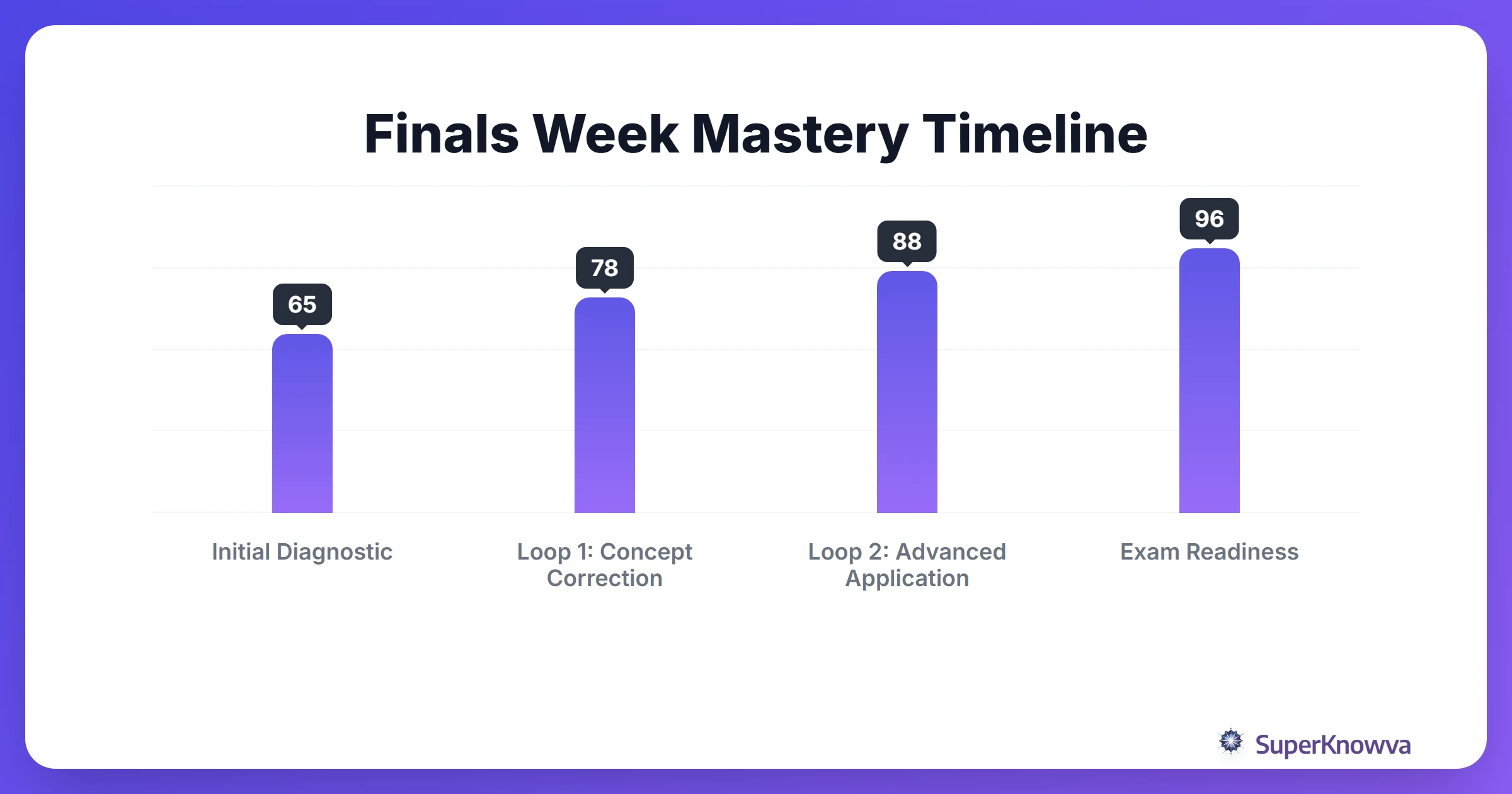
These feedback loops create personalized learning paths that adapt as you go. If you master "Cell Mitosis" in ten minutes, the AI isn't going to bore you with more of it. It’ll automatically shift your focus to "Meiosis," making sure you aren't wasting time on things you already know.
This level of precision is a lifesaver in high-stakes fields like Law or Medicine. In these tracks, AI tutors provide specialized feedback that mirrors the complexity of actual licensing exams.
The Educator's Perspective: Streamlining the Grind
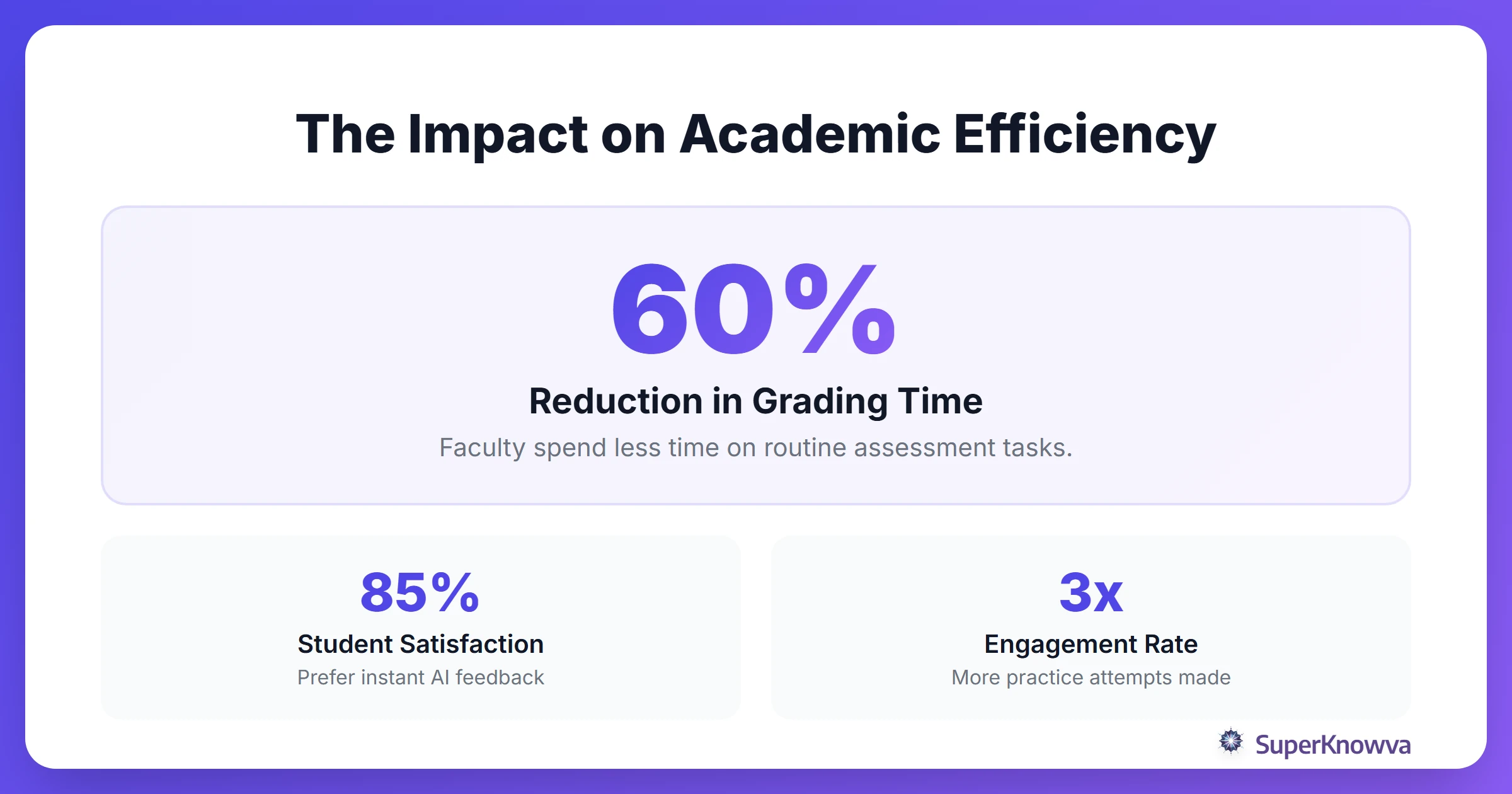
It’s not just students who are winning here; faculty members are getting their lives back, too. By implementing automated grading feedback, professors and TAs can cut down on the soul-crushing administrative workload.
But the real magic happens when educators see class-wide trends. If an AI dashboard shows that 70% of the class failed a practice question on "Quantum Entanglement," the professor doesn't have to wait for the midterm to find out. They can walk into the lecture the next morning and address that specific gap immediately.
Evidence from the Oxford University: AI-driven Feedback Loops for Student Evaluation highlights how these systems actually improve the "Knowledge Exchange" between teacher and student. Even the U.S. Department of Education has noted that AI is becoming an essential tool for the future of teaching, allowing for more human interaction by automating the routine stuff.
Addressing the Risks: Keeping the Data Honest
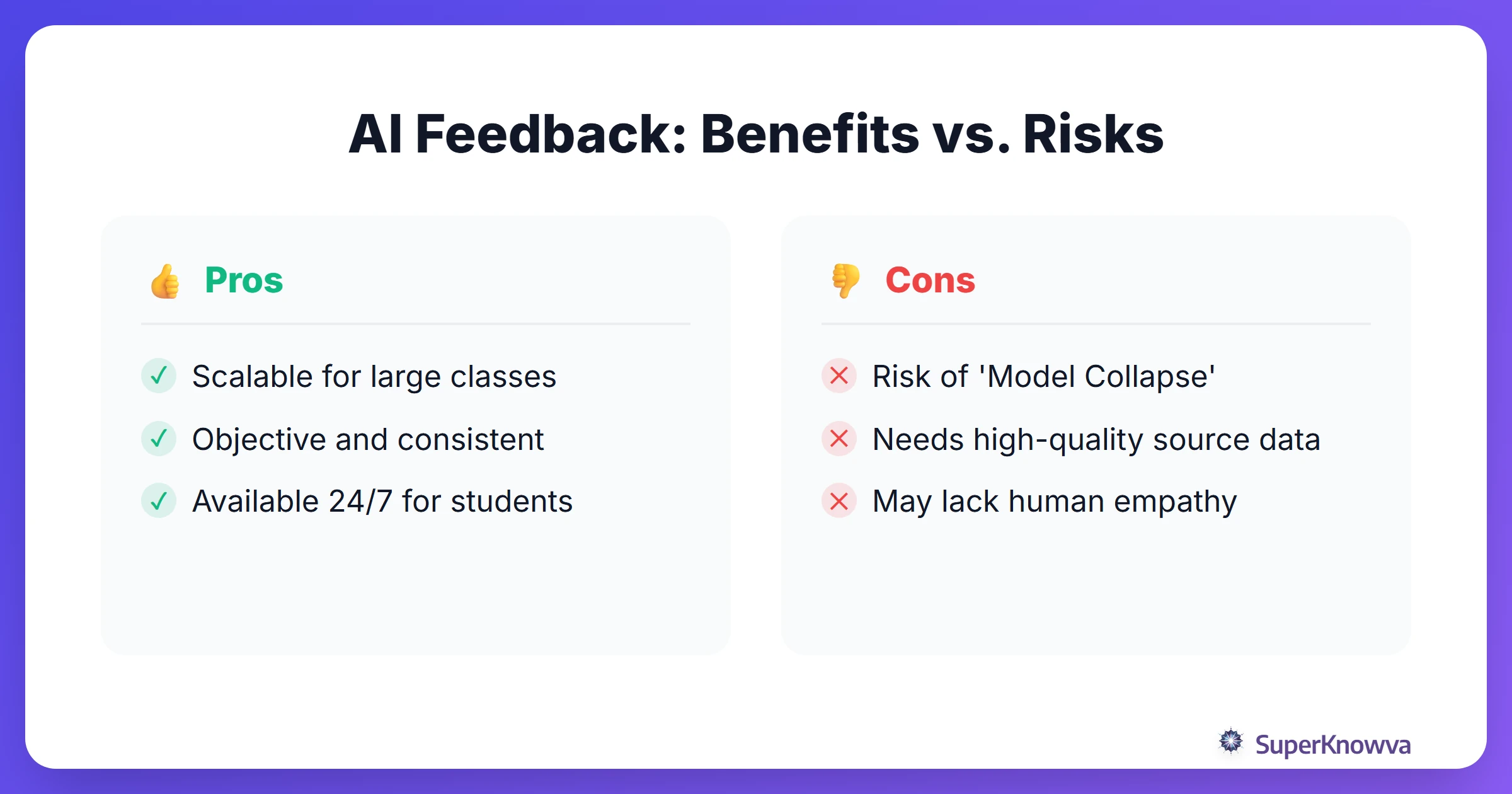
We have to talk about the "Reddit concern": what happens if the AI starts learning from other AI-generated junk? This is known as model collapse, and it can lead to a serious drop in quality.
To avoid this, AI feedback loops must be based on human-vetted academic content. At SuperKnowva, we believe that AI-powered note taking for better data input is the basis of a reliable system. By using your actual textbooks and your professor’s specific lectures as the primary sources, the AI ensures the feedback stays accurate and correct.
How to Build AI Loops into Your Study Routine
Ready to stop spinning your wheels? Here is a simple way to integrate AI-driven feedback into your routine:
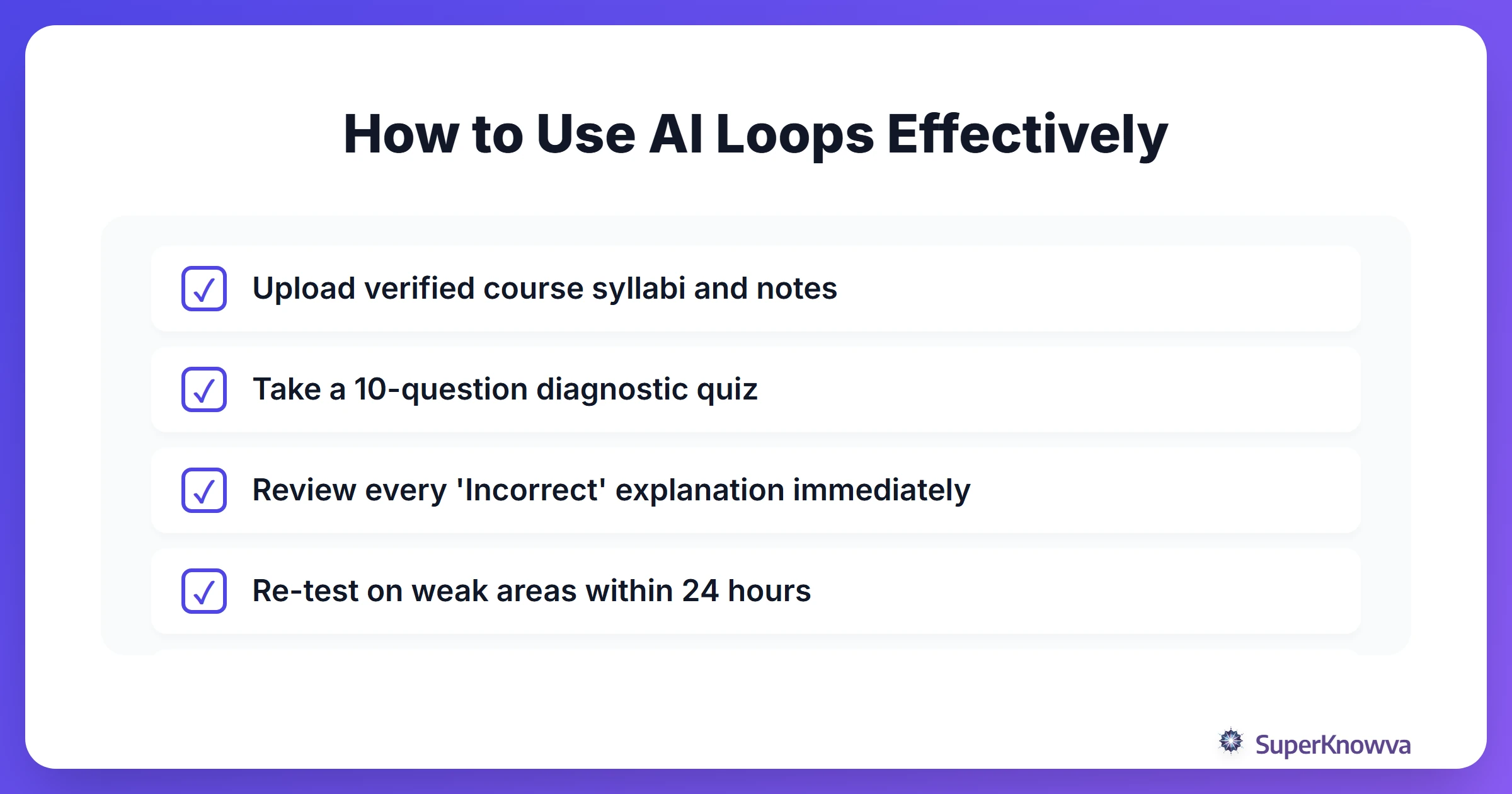
- Upload Your Truth: Start by uploading your actual course syllabi, notes, and readings to your AI platform.
- The Diagnostic Phase: Take a short practice quiz right away to see where you actually stand.
- The "Why" Review: Don't just look at the score. Read every AI-generated critique while the logic is still fresh in your mind.
- The 24-Hour Re-Test: Have the AI generate a new quiz that targets only the areas you missed. Do this within 24 hours.
- Hybrid Review: Combine your AI insights with peer study groups or office hours. This is great for boosting creative problem solving and getting a well-rounded view of the subject.
Conclusion
The days of waiting for a final grade to see where you stand are over. By using ai feedback loops in education, you can turn practice sessions into clear opportunities for improvement. Study smarter instead of just studying harder.
Ready to close your feedback gap? Start using SuperKnowva today and see how instant, personalized insights can change the way you learn.