You are stuck in traffic, finishing a set at the gym, or scrubbing a burnt pan in the sink. Usually, this is "dead time," or minutes lost to a daily routine. What if you used these moments to prepare for your exams?
The voice activated ai study assistant is turning that "what if" into a reality. For most students, a 24-hour day just isn't long enough to balance classes, work, and a social life. That’s why hands-free learning has shifted from a futuristic luxury to a survival tool for the modern academic.
Let’s look at how voice-controlled education tools are moving beyond simple commands to become genuine partners in your learning.
The Evolution of Virtual Assistants in Education
Remember when the peak of voice tech was asking Siri for the weather or telling Alexa to set a pasta timer? It was helpful, sure, but it wasn't exactly "smart." According to Wikipedia, a virtual assistant is simply a software agent that performs tasks based on verbal commands.
But that definition is getting a massive upgrade.
We’ve moved past general task managers. Today’s virtual study assistants are specialized. They don't just "search" for a term; they understand context. Instead of reading a dry Wikipedia snippet, you can actually have a dialogue. You can ask your AI to break down the nuances of quantum physics or summarize a dense legal brief while you’re on the move, and it will respond like a tutor, not a search engine.
Why Hands-Free Learning is a Game Changer
Why bother with voice when you have a perfectly good laptop? Because your eyes are tired.
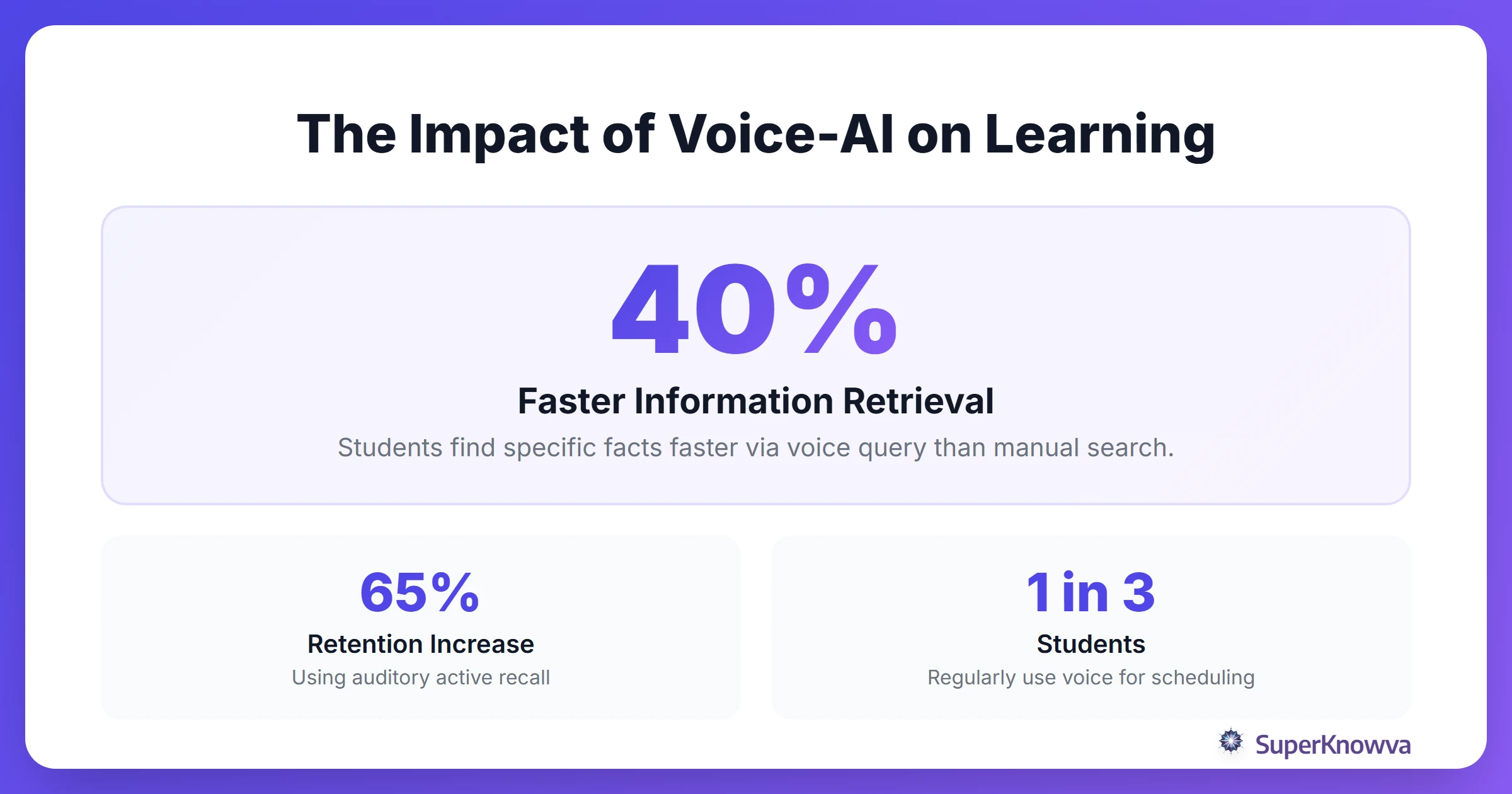
The shift toward auditory interaction solves a few major problems at once. First, there’s retention. For many of us, hearing a concept explained out loud makes it "stick" in a way that staring at a screen never does. It makes abstract ideas feel concrete.
Then, there’s the multitasking factor. By using AI voice commands for students, you can reclaim those lost hours spent commuting or cooking. Perhaps most importantly, it fights screen fatigue. Your brain might be ready for another hour of study, but if your eyes are stinging from blue light, you’re done. Voice AI gives you a way to keep going without the strain.
Core Features of Modern Voice-AI Study Tools
Platforms like SuperKnowva aren't just one-trick ponies. They offer a full suite of features designed to make a student's life easier:
- Voice-to-Text Note-Taking: Ever had a "eureka" moment while walking? You can capture it instantly. By combining voice commands with AI-powered note-taking techniques, you can log insights without ever touching a keyboard.
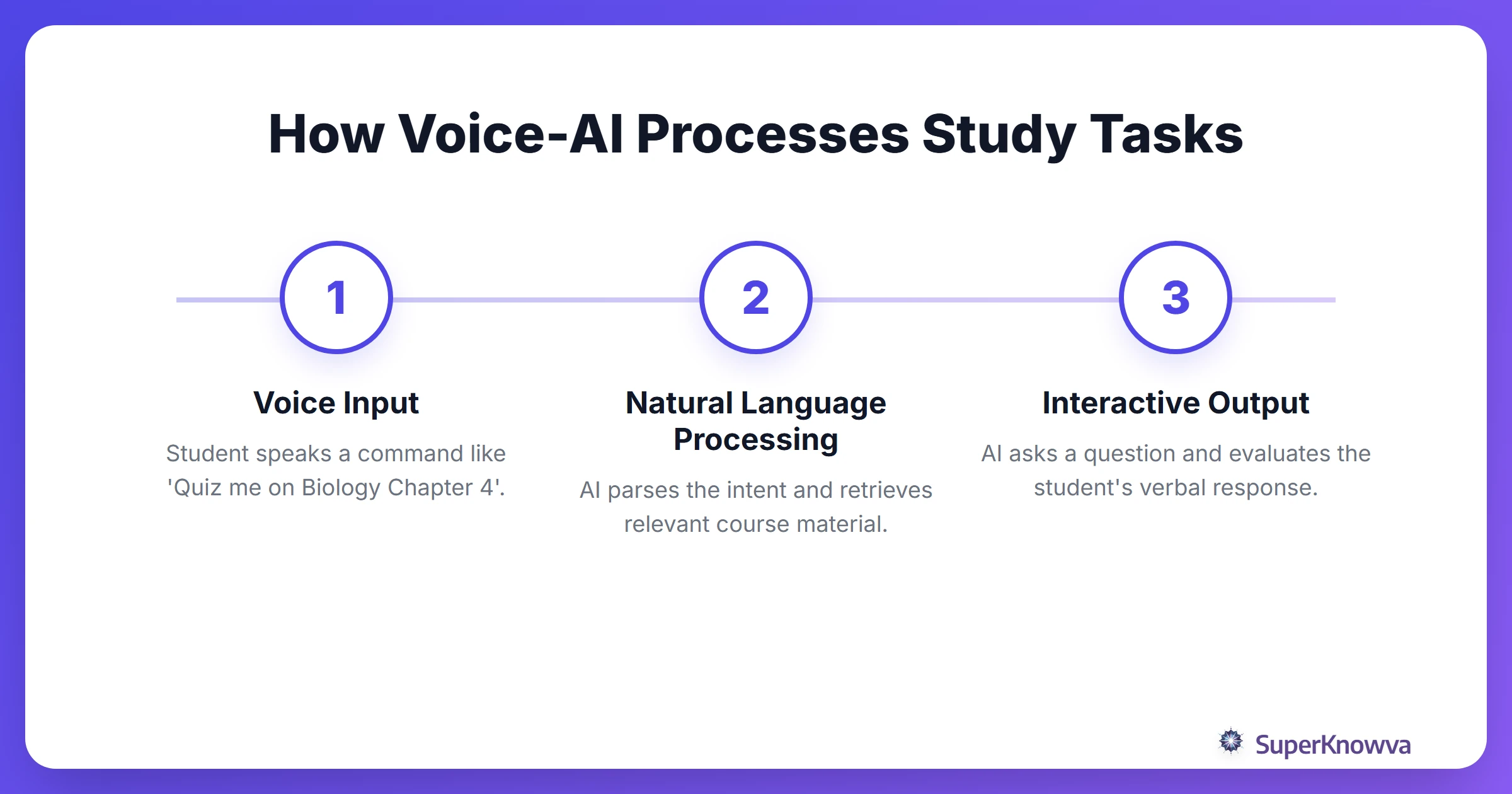
- Interactive Quizzing: Think of it as a 24/7 flashcard partner. You can tell the AI to quiz you on Chapter 4, and it will listen to your spoken answers, evaluating them in real-time.
- Smart Scheduling: Stop scrolling through your calendar. Just say, "Hey SuperKnowva, set a study block for Organic Chemistry at 4 PM and remind me the lab report is due Friday."
- Database Integration: These tools can sync with your digital textbooks. You can literally "ask" your book for a specific citation or fact while your hands are busy elsewhere.
Accessibility and Inclusivity in Voice Learning
Voice-activated AI provides more than efficiency; it improves accessibility. It is a key part of inclusive learning for students with disabilities. For those with visual impairments or motor disabilities, a voice interface is not just a "cool feature." It is their primary gateway to information.
It’s also a massive win for students with dyslexia or ADHD. By removing the friction of reading long blocks of text or the manual struggle of typing, voice AI lets the brain focus entirely on the concept.
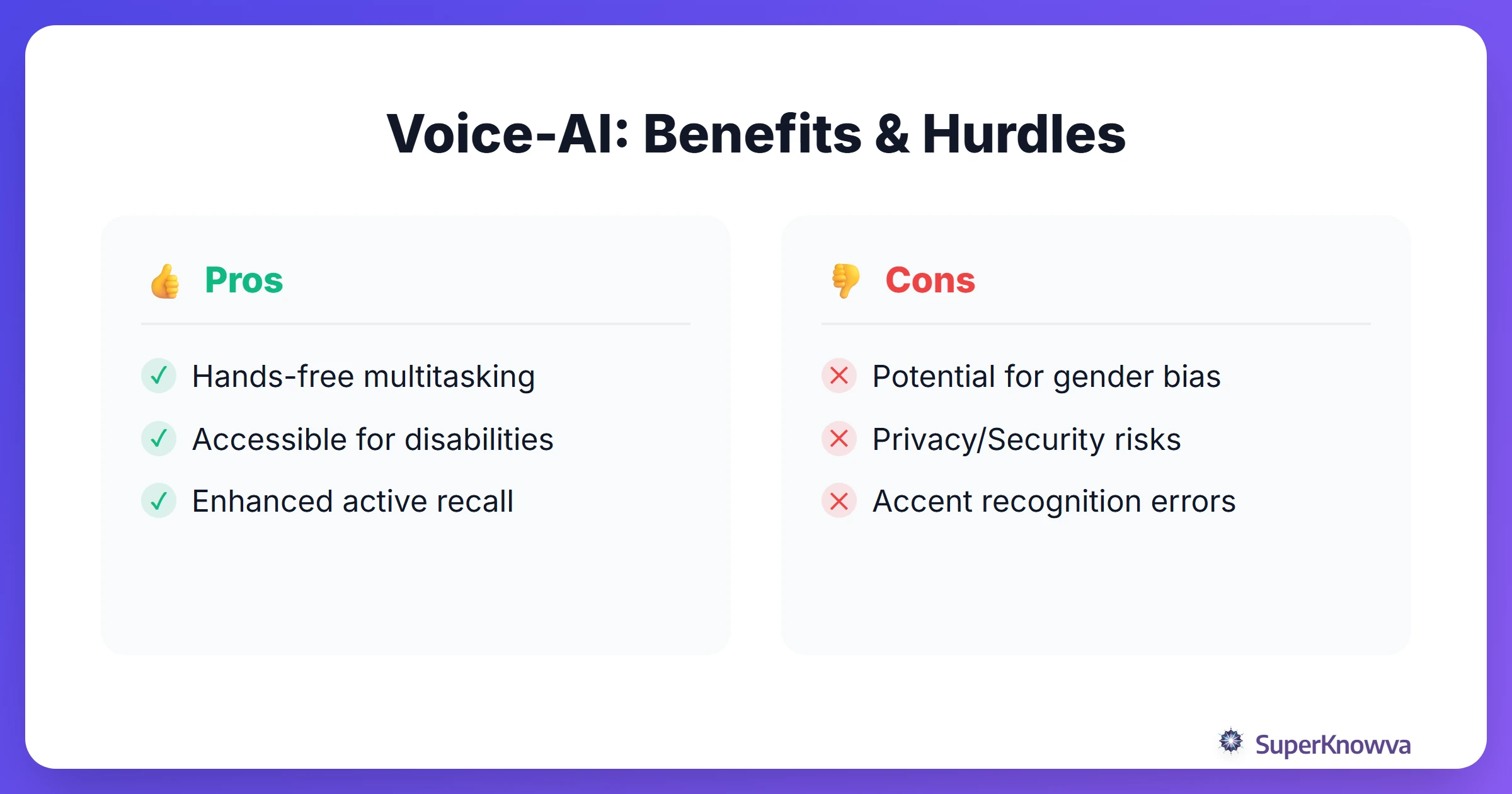
It’s not perfect yet, though. Research published in Frontiers in Communication points out that while voice AI is great for language learners, it still struggles with diverse accents. We’re getting there, but the tech still has some listening to do.
Overcoming Challenges: Bias and Technical Limitations
Let’s be real: the tech has flaws. One of the biggest "elephants in the room" is bias. It’s important to look at how AI bots and voice assistants reinforce gender bias. Most assistants default to female-coded voices and personas, which can reinforce some pretty outdated stereotypes if developers aren't careful.
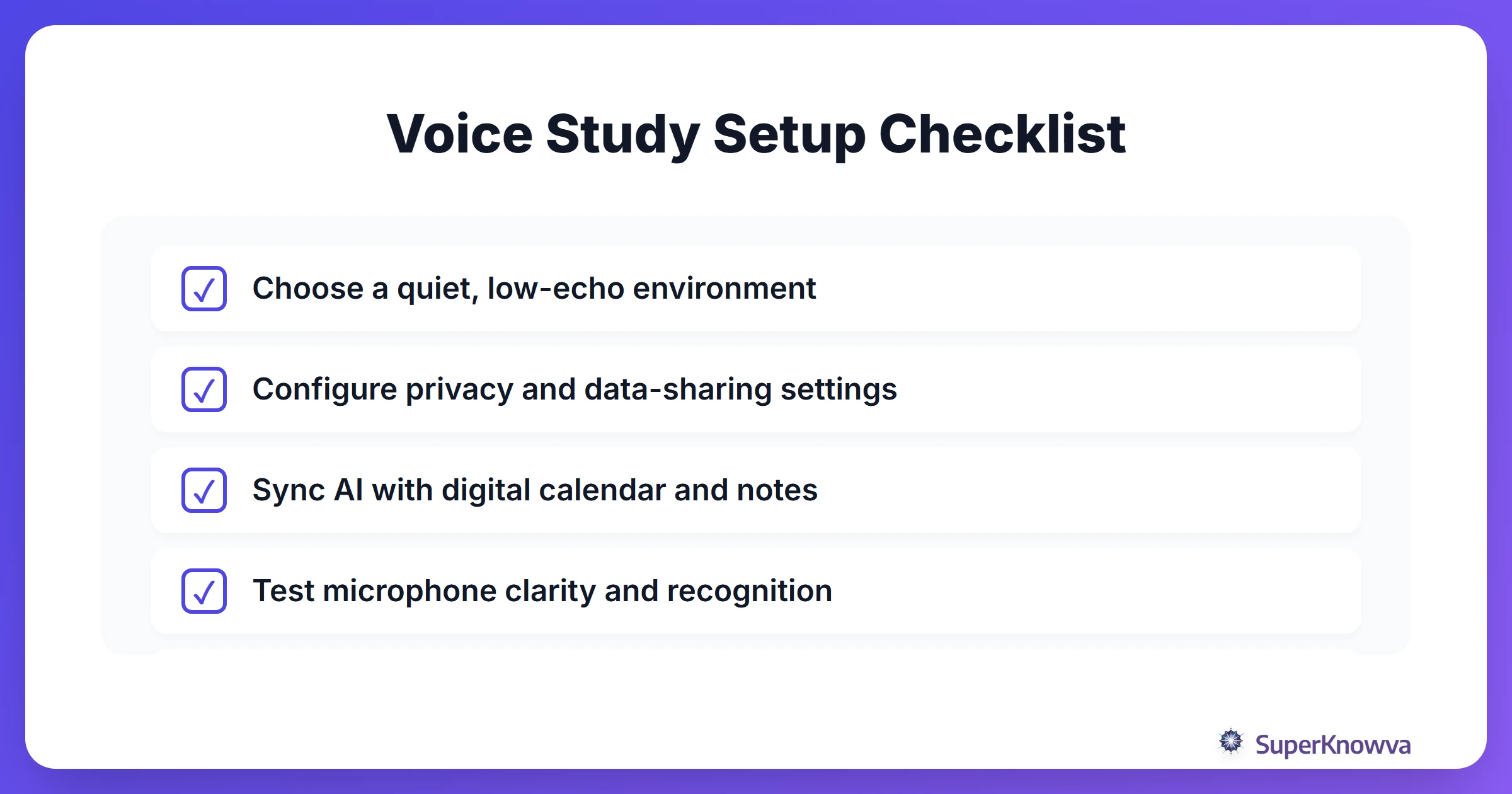
Then there are the technical hiccups. A busy coffee shop can make it impossible for the AI to hear you, and privacy is a valid concern. Nobody wants an "always-listening" device recording their private life. Companies have to be 100% transparent about data encryption and when that microphone is actually live.
Voice AI vs. Traditional Study Methods
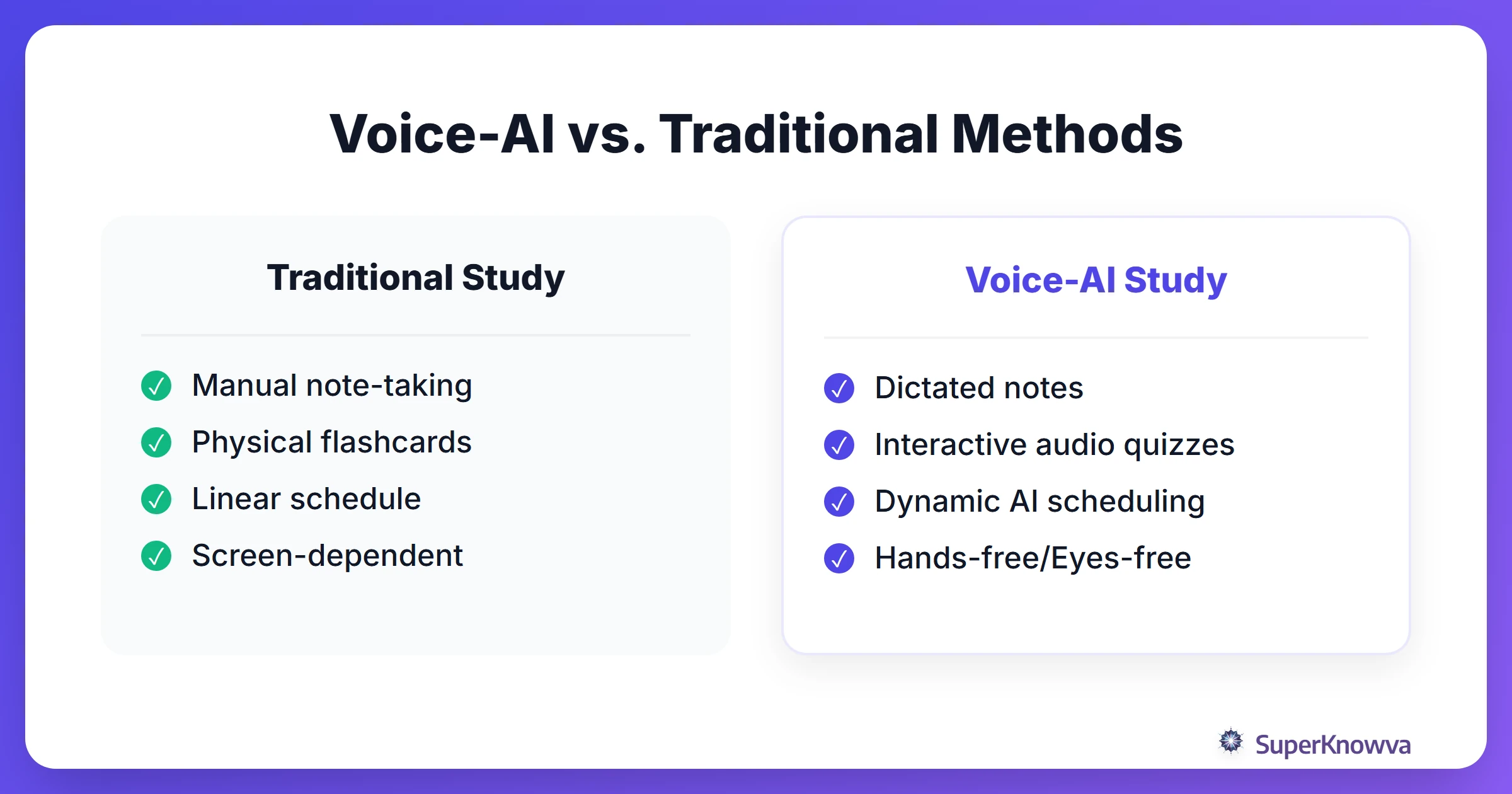
If you compare voice-activated study to the old-school method of highlighting a textbook until it’s neon yellow, the difference in efficiency is clear.
Active recall (pulling info out of your brain) is much more effective when you say it out loud. Practicing with a conversational assistant is also a great way of reducing test anxiety through AI-driven mock exams. It mimics the pressure of an oral exam or being called on in class, but in a safe, low-stakes environment.
Is it faster? Usually. It’s much quicker to "ask" for a fact than to Ctrl+F through a 500-page PDF. But we still need a balance. While an AI is available 24/7, the AI tutors versus human tutors debate reminds us that AI can't provide the emotional support or deep mentorship a human professor can.
The Future: From Commands to Cognitive Partners
The next step for the voice activated ai study assistant is moving from "reactive" to "proactive."
Imagine an AI that knows your schedule and your habits. It might suggest a light review session when it knows you’re alert, or gently suggest a break when it detects frustration in your voice. We’re also moving toward AR (Augmented Reality) integration. You could be wearing AR glasses that show your notes while a voice assistant walks you through a 3D model of a biological cell.
We are moving from giving commands to working with a cognitive partner, a digital assistant that grows with you.
Ready to change the way you hit the books? By using voice-activated AI, you aren't just playing with new gadgets. You’re building a more flexible, accessible, and human way to reach your goals.