The countdown is on. Your bags are half-packed, your visa is tucked safely in your passport, and in just a few weeks, you’ll be stepping off a plane into a completely different world. It’s exciting, right? But then it hits you: the language barrier. If your plan is to rely on those half-remembered high school Spanish classes, you’re probably feeling a justified surge of panic.
You do not need years of preparation to succeed. Modern ai language learning study abroad strategies make it possible to build functional fluency quickly.
Here is how you can use AI to go from a nervous tourist to a confident local in just one month.
The Pre-Departure Wall: Why AI is the Ultimate Travel Partner
We’ve all been there: the "classroom gap." You can conjugate an irregular verb on a written test, but when a barista in Rome asks how you want your milk, your brain short-circuits. Traditional apps and textbooks often fail because they prioritize translation over actual, messy, spontaneous interaction.
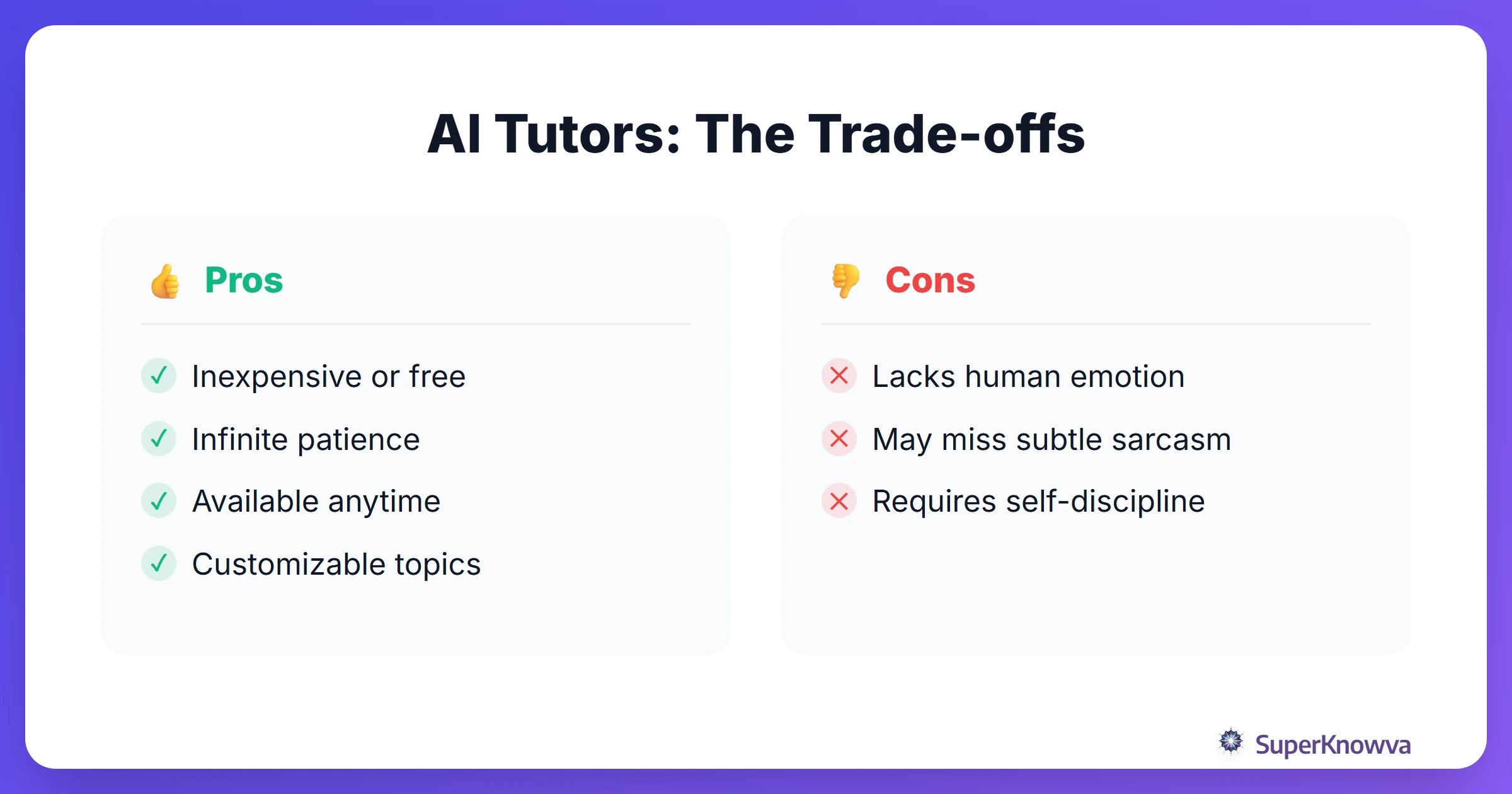
AI bridges this gap by offering something a textbook can't: judgment-free, 24/7 practice. A human tutor is great, but they aren't available at 11 PM when you suddenly realize you don't know how to ask for a pharmacy. AI allows for conceptual understanding rather than rote memorization. Instead of translating "where is the bathroom" word-for-word, you’re training your brain to internalize the language until the thoughts come out naturally.
AI vs. Traditional Methods: Why Speed Matters Now
Why ditch the heavy grammar books for a digital tutor? Because static textbooks don't care if you’ve already mastered the basics or if you’re drowning in past-tense conjugations. They treat every student the same. In contrast, AI adapts to you in real-time.
Think of Large Language Models (LLMs) as an instant feedback loop. If you mess up your syntax during a chat, the AI doesn't just slap a red "X" on your screen. It explains why a different word choice would sound more natural to a native speaker. Plus, these platforms use spaced repetition (personalized forgetting curves) to quiz you on words exactly when they’re about to slip your mind.
If you’re trying to figure out how to spend your limited prep time, it’s worth comparing AI Tutors vs. Human Tutors: Which is Best for Your Learning Style? to find your perfect balance.
The 4-Week AI Language Sprint
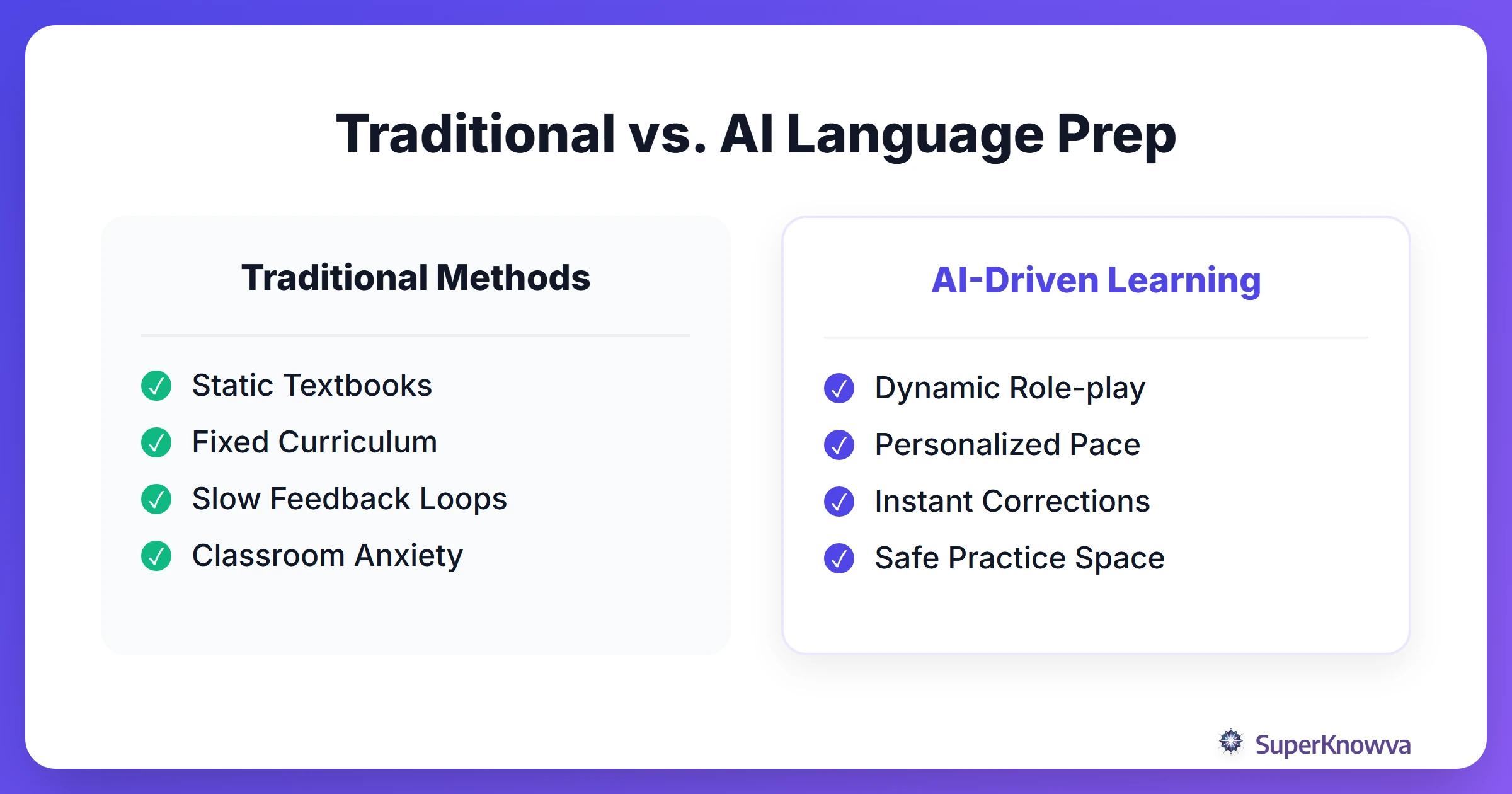
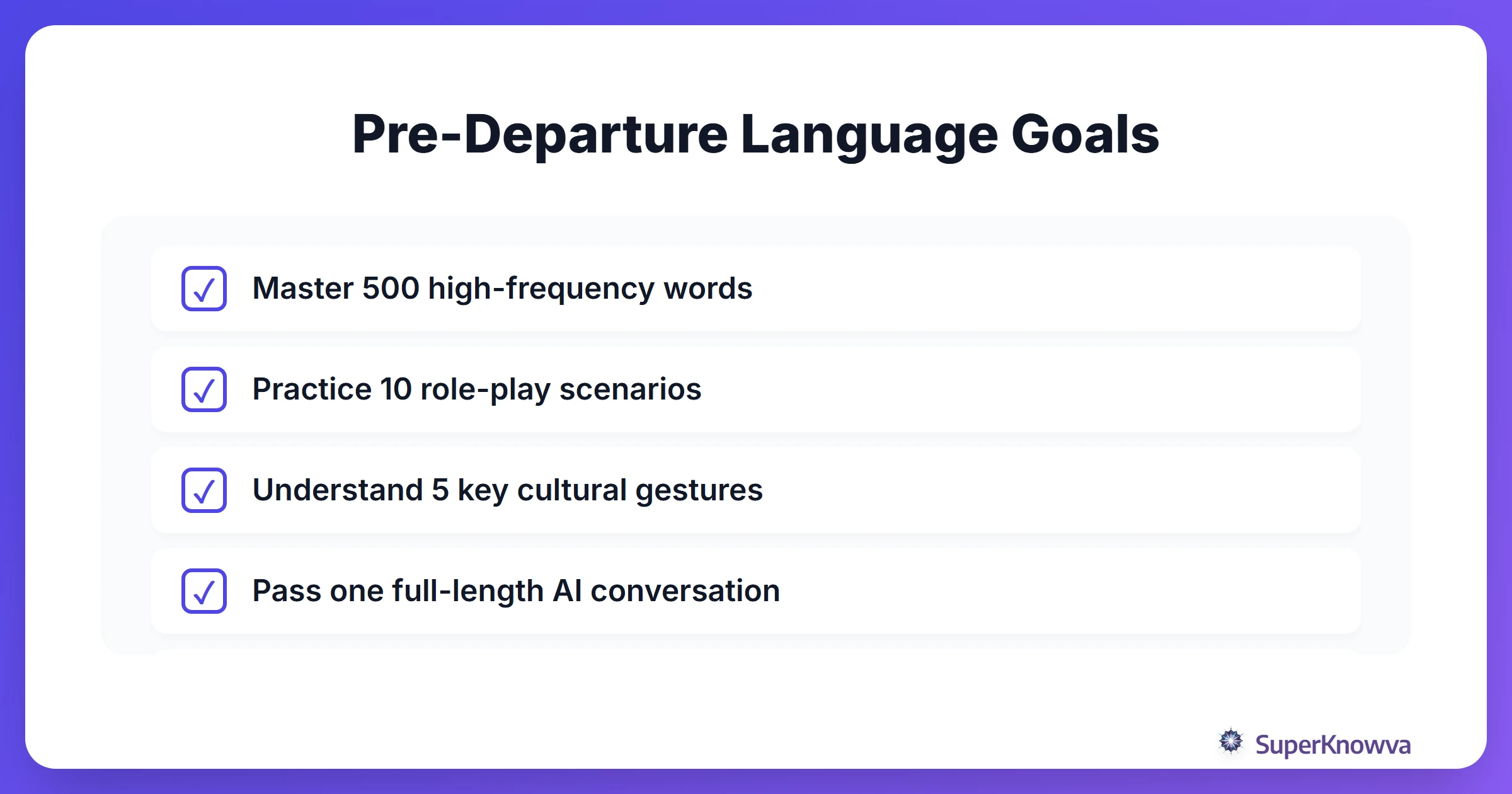
You have four weeks. Let’s make them count. Here is a breakdown of how to structure your study abroad preparation using AI:
- Week 1: The Survival Kit. Focus on the 500 words that make up 80% of daily life. Use AI-Powered Note Taking for Vocabulary to turn these terms into digital flashcards that sync directly with your AI tutor.
- Week 2: Real-World Roleplay. Use conversational AI to simulate specific scenarios. Tell the AI: "Act as a grumpy bus driver in Berlin, and I have to figure out why my ticket isn't working."
- Week 3: Finding the "Glue." Now that you have the vocabulary, you need the grammar to stick it together. Use AI-guided corrections to practice complex sentences and apply past and future tenses.
- Week 4: Full Immersion. Switch to "Voice Mode." Spend 30 minutes a day chatting out loud. Focus on slang, local idioms, and getting your ears used to the speed of native speech.
Practicing Without the "Fear of Looking Stupid"
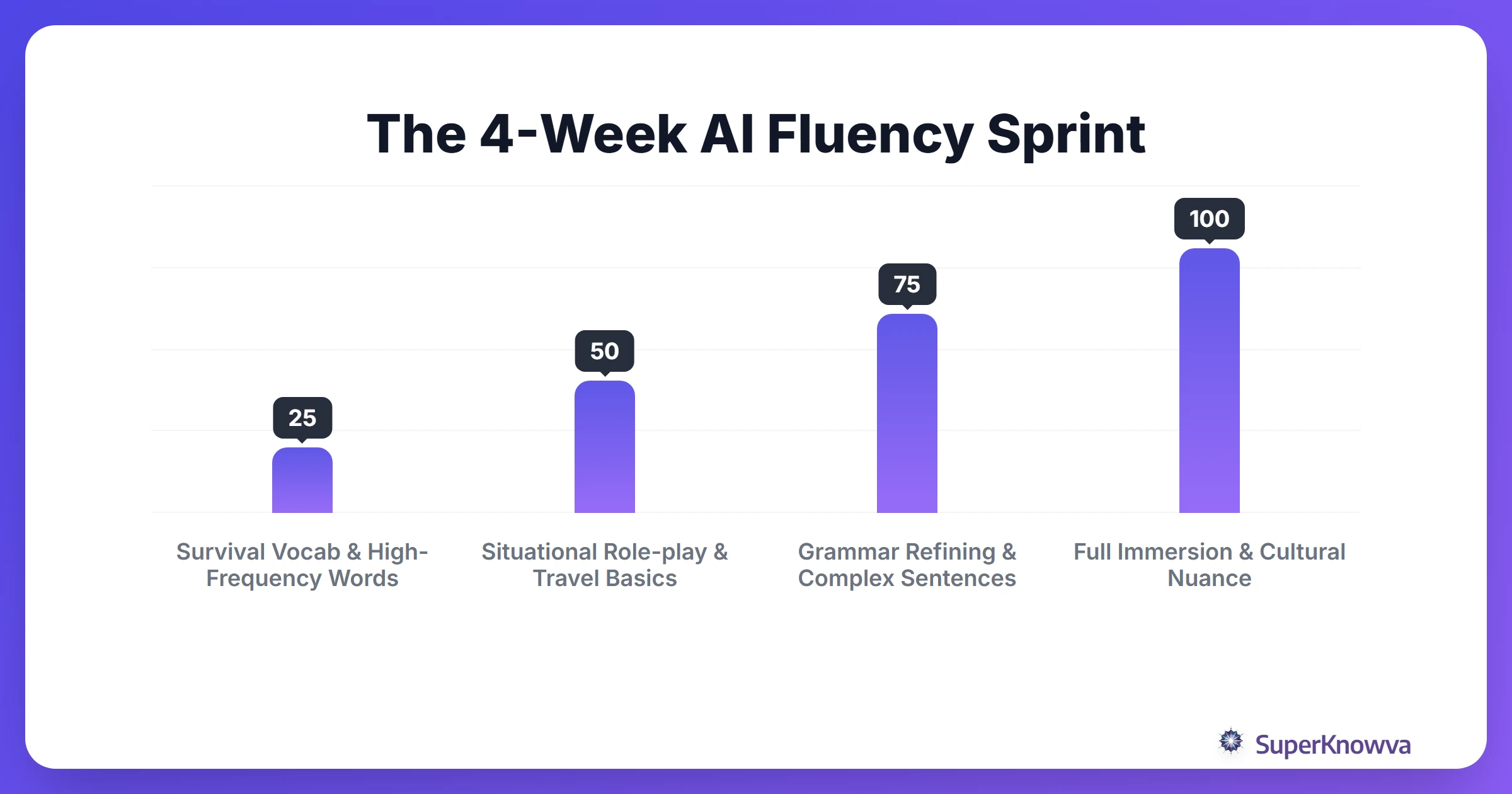
One of the biggest roadblocks to fluency isn't grammar: it's anxiety. Most students fear making mistakes in front of native speakers. AI provides a private setting to practice. You can repeat the same sentence fifty times to nail the pronunciation, and the system never loses patience.
This "low-stakes" environment builds the muscle memory you need for the real world. Some advanced tools even let you simulate regional accents, which is a lifesaver if you're heading to a city with a thick local dialect. For those feeling the pre-trip jitters, Using AI to Reduce Speaking Anxiety has some excellent strategies for building vocal confidence.
More Than Words: Cracking the Cultural Code
Language is a reflection of the people who speak it. A literal translation can sometimes land you in a socially awkward spot. Luckily, AI is surprisingly good at explaining social etiquette and cultural nuances.
Ask your AI: "What are the unspoken rules of tipping in Tokyo?" or "Is it rude to use the informal 'you' with my professor in Madrid?" This cultural awareness shows respect and helps you adapt. As Natalie Berkman points out in Why Bother Learning a Language in the Age of AI?, the goal isn't just to translate; it's to connect.
The Toolkit: Best AI Apps for Your Trip
To make this 4-week sprint work, you need the right tools. While AI in Gamified Learning: Engaging Students keeps things light, you’ll also want some heavy-duty apps for rapid progress:
- Heylama: This platform is built specifically for conversational mastery. Check it out here: Heylama AI Language Learning.
- Duolingo Max: The "Roleplay" and "Explain My Answer" features in this tier make the green bird much more effective for travelers.
- ChatGPT/Claude: These are your versatile ai tutors. Prompt them to "Interview me for a part-time internship in French" or "Review this email I wrote to my host family for politeness."
- SuperKnowva: Use our platform to upload local travel guides or history docs. It can generate custom vocabulary quizzes and study guides based on the specific city where you’ll be living.
Final Thoughts
Studying abroad is a once-in-a-lifetime ride. Don’t spend your first month staring at a translation app on your phone while the world passes you by. By committing to a 4-week AI-driven sprint, you can build the vocabulary building habits and the conversational "guts" to actually engage with your new home.
Start today. By the time your plane touches down, you won't just be a visitor; you'll be part of the conversation.