Ever spent three hours staring at a pile of "essential" vocabulary cards, only to realize you can’t remember a single word? We’ve all been there. Whether you’re chasing a top score on the TOEFL, IELTS, or just trying to survive your university finals, the pressure is heavy. The problem is that traditional study methods often leave you feeling "textbook smart" but "conversationally stuck."
The good news? The way we learn is shifting. By using ai for language exam preparation, you can stop the passive memorization loop and start practicing in a way that actually mirrors the real world.
In this guide, we’ll look at how AI-powered tools turn the grind of exam prep into something that actually feels like a conversation.
The Shift from Textbooks to AI Immersion
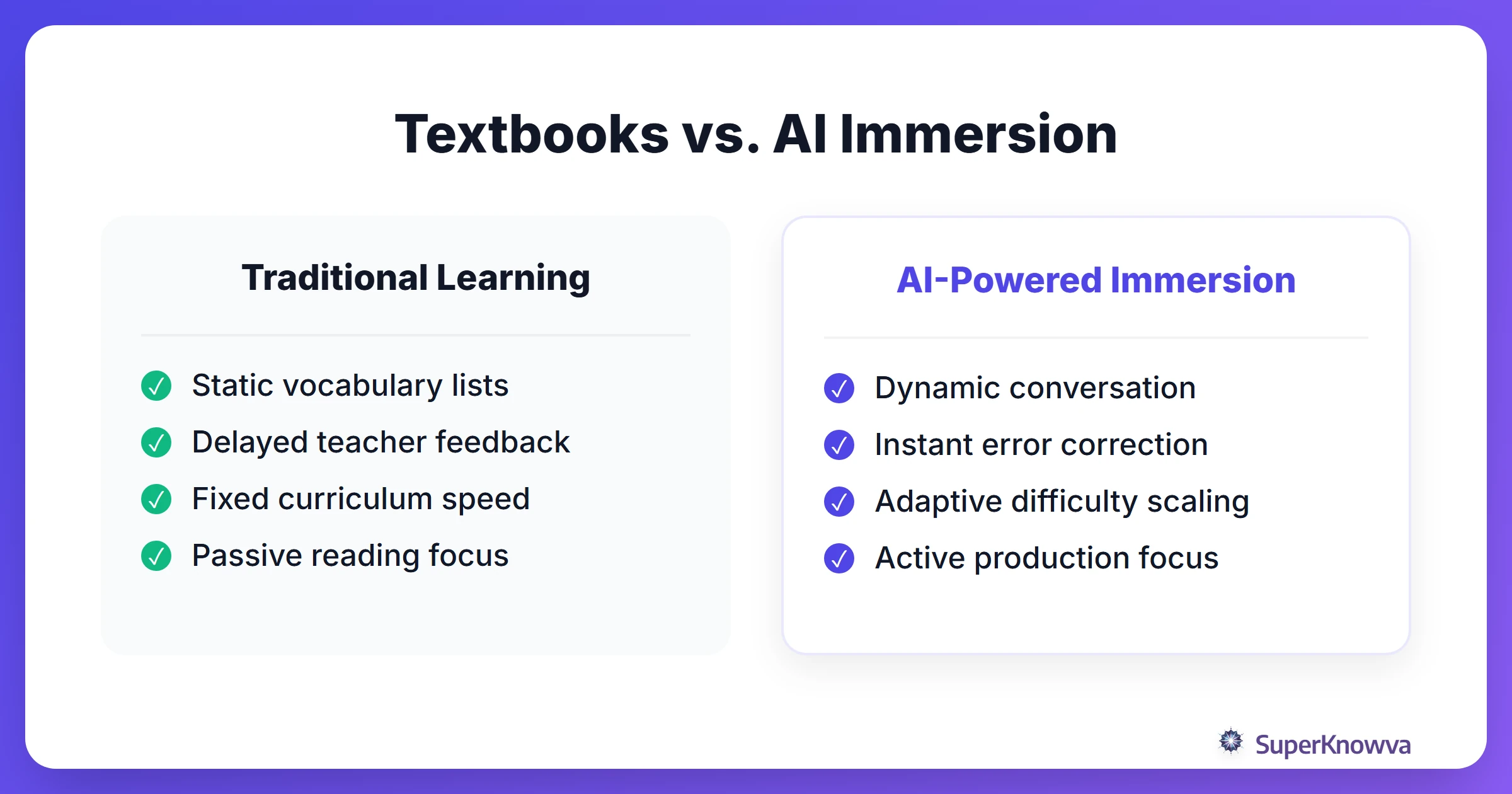
For decades, language learning was basically a memory test. You drilled words, memorized verb charts, and hoped for the best. While that builds a foundation, it usually falls apart during modern exams that care more about how you communicate than how many rules you’ve memorized. This is where ai language immersion changes things.
Think of it this way: a textbook is static, but AI is a living, breathing environment. It lets you surround yourself with your target language whenever you want. Instead of just reading about a language, you’re forced to use it. By simulating real-world interactions, AI bridges that frustrating gap between understanding a sentence and actually being able to say it.
Real-Time Conversation Coaching for Speaking Tests
The speaking portion of any exam is often the most stressful part. Most students struggle because they are nervous, not because they lack knowledge. Using ai conversation coaching gives you a safe, zero-judgment space to mess up, get corrected, and try again.
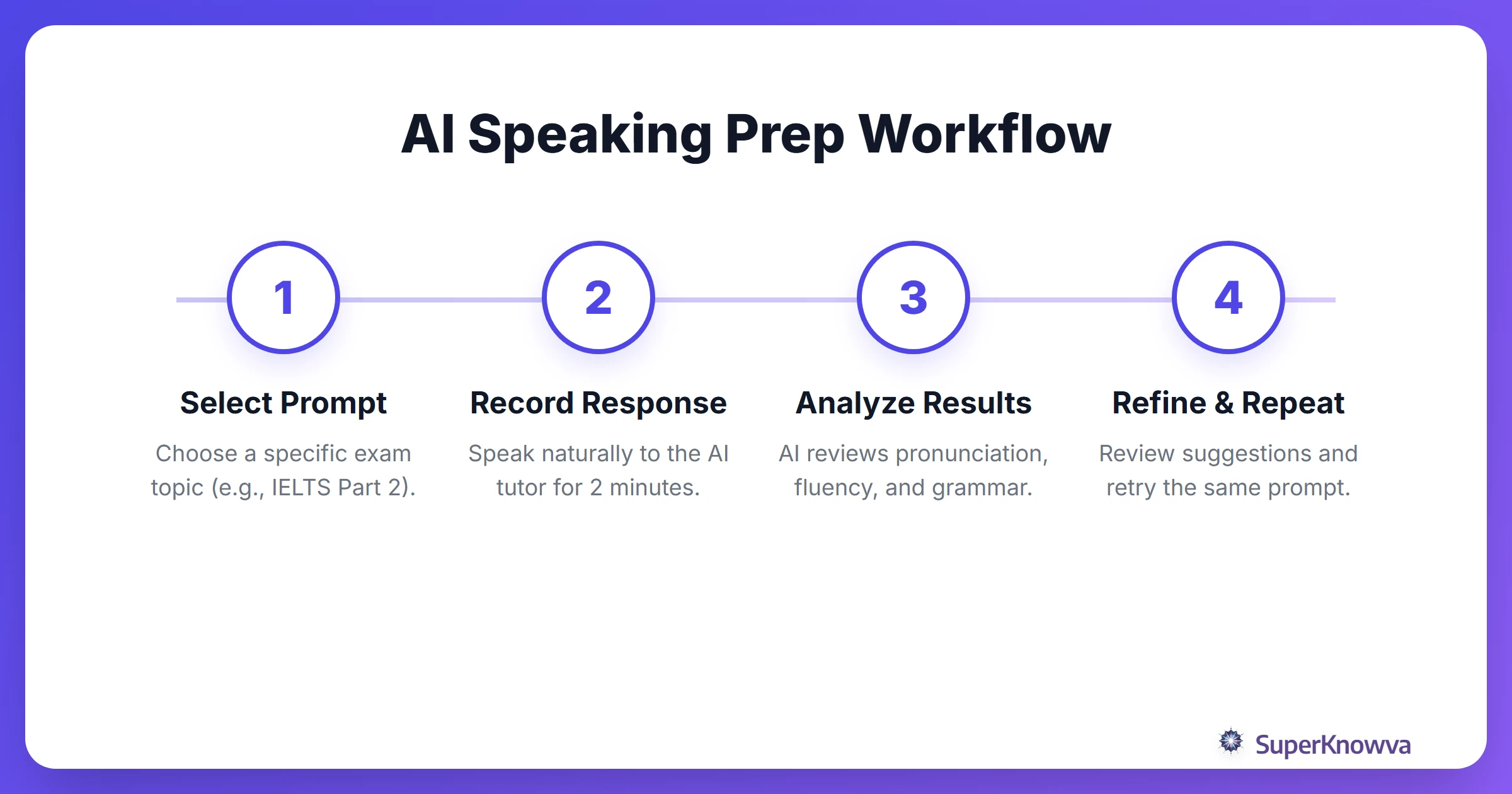
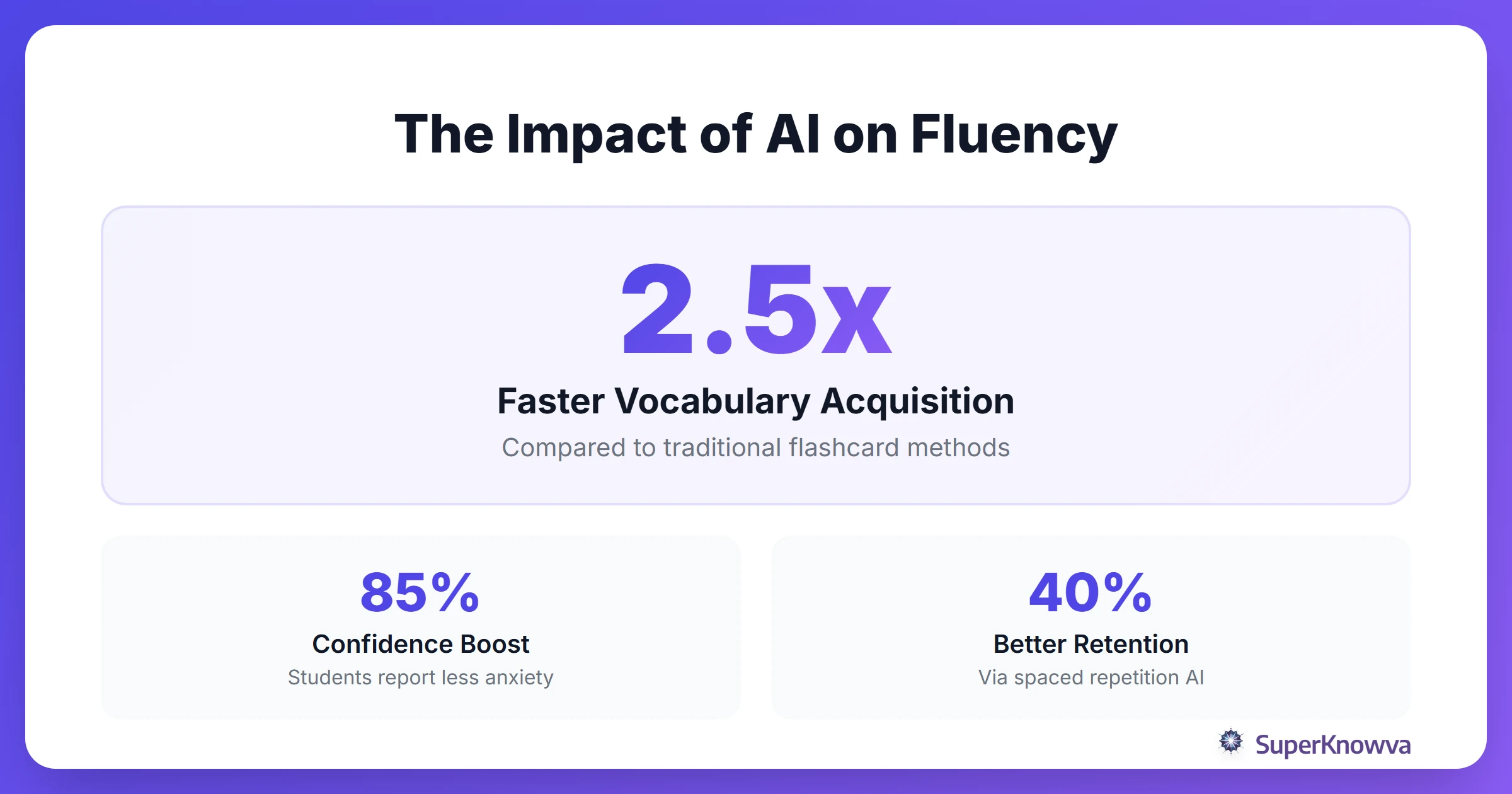
Modern AI chatbots can simulate the exact prompts you’ll see in IELTS Part 2 or TOEFL speaking tasks. They use voice-to-text to analyze your pronunciation, your pace, and even that "um" and "uh" count. The best part? The AI doesn't get bored. You can repeat the same prompt fifty times until you feel like a pro. This kind of repetition is the secret to reducing test anxiety before you ever have to sit across from a human examiner.
Personalized Grammar and Vocabulary Scaffolding
One of the hardest parts of studying is knowing what you don’t know. It’s easy to keep practicing the things you’re already good at. AI acts as a diagnostic tool, spotting the specific patterns in your mistakes. If you keep tripping over the subjunctive mood or mixing up phrasal verbs, automated language feedback will call it out instantly.
Beyond error detection, Language exam study tools use adaptive flashcards and spaced repetition to optimize study sessions. They prioritize the high-stakes exam vocabulary you haven't mastered yet. This moves you past basic answers toward a deep understanding of nuance, which earns you extra points in the writing section.
Simulating the Exam Environment with AI
Practice only works if it feels like the real thing. AI can now generate mock exam papers based on official standards, like the ETS Global Assessment Standards. By mimicking the tone and difficulty of the actual test, you remove the "shock factor" of exam day.
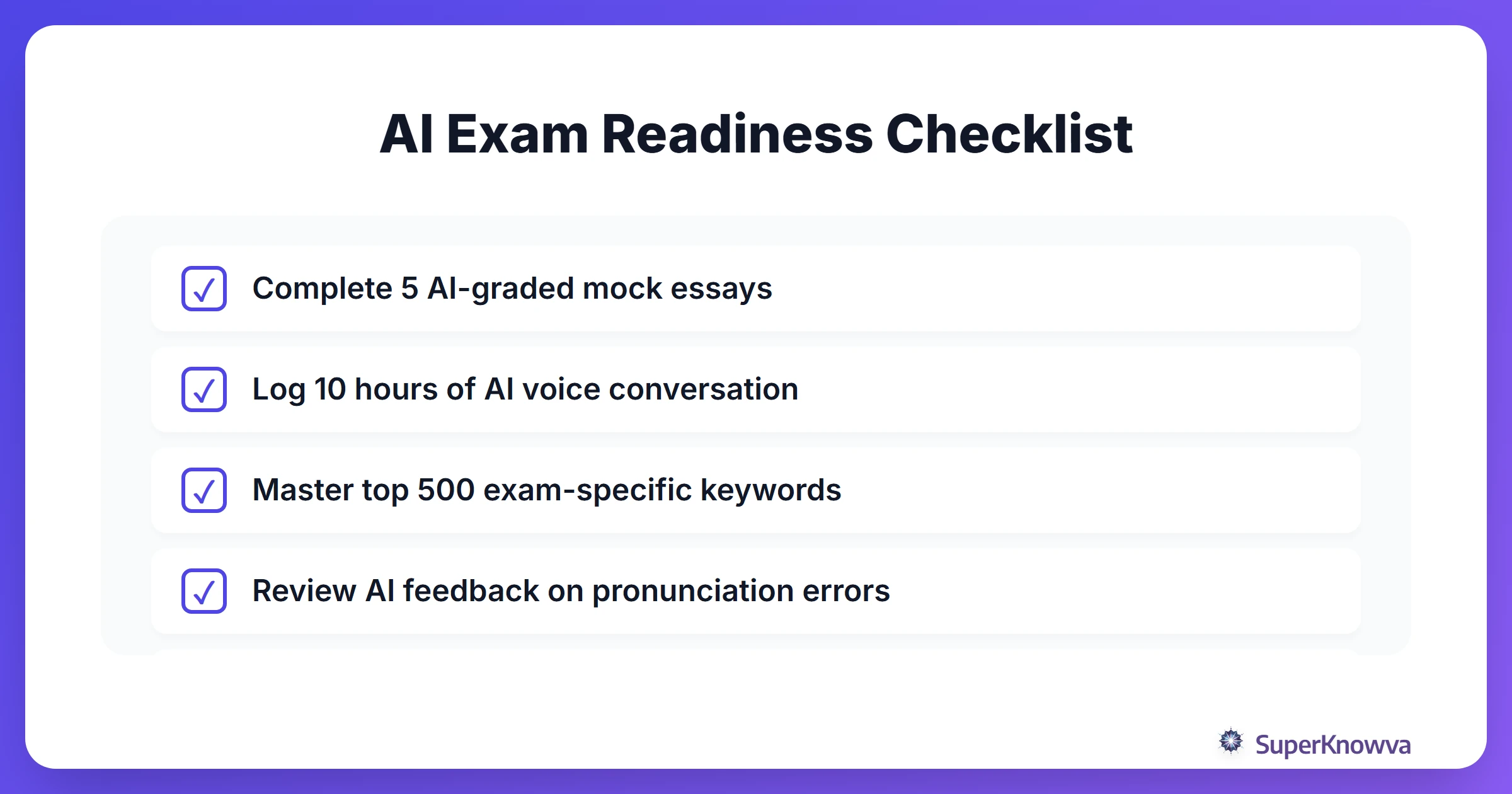
You can have AI grade your practice essays against official rubrics. This feedback helps you adjust your strategy. Adaptive difficulty ensures that as you improve, the practice gets tougher. It keeps you in the "Goldilocks zone": challenged enough to grow, but not so overwhelmed that you want to quit.
Overcoming the 'Plateau' in Language Learning
Most learners eventually reach the "intermediate plateau." You have moved past the basics, but progress feels slow. AI supports ai for fluency by curating content specifically for you. Instead of generic exercises, it finds news articles, podcasts, and stories at your exact level, specifically "i+1" input, which is material just one step above what you already know.
To keep things from getting boring, many platforms use gamified language learning features. Streaks, points, and challenges turn the study grind into something you actually look forward to.
Integrating AI into Your Daily Study Routine
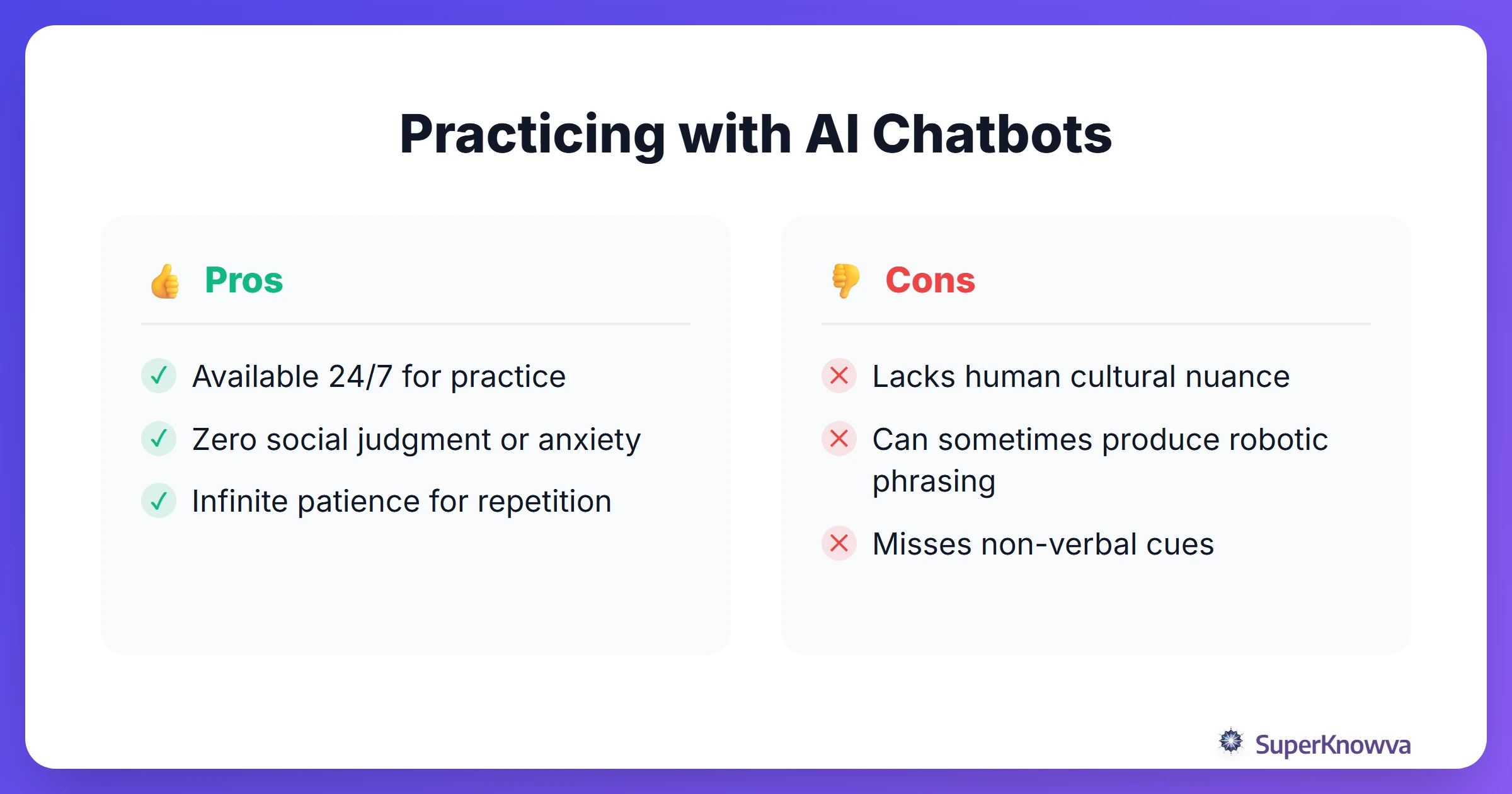
You don’t need to clear your schedule for this to work. You can fit 15-minute immersion sessions into your commute or your lunch break. While AI is incredibly powerful, the most successful students often use a hybrid approach. They compare AI Tutors vs. Human Tutors, using the AI for high-volume practice and humans for cultural context and complex questions.
To stay on top of it all, try AI-powered note-taking strategies to organize the feedback you get from your sessions. Seeing your progress visualized makes the path to fluency feel a lot more real. If you're curious about the tech making this possible, checking out Microsoft AI Learning Paths can show you how these algorithms are built to support your education.
Conclusion
Acing a language exam isn't about memorizing the entire dictionary; it’s about having the confidence to speak up when the clock is ticking. By bringing AI into your routine, you’re getting a 24/7 tutor, a non-judgmental partner, and a data analyst all in one. Stop just studying the language and start living it. Your future self (and your exam score) will thank you.