Summer courses move fast. Completing a full semester of Organic Chemistry in six weeks or managing a heavy literature load creates significant pressure. With a long syllabus and limited time, students often look for efficient ways to keep up. This makes the ethical use of ai in school a central topic on campus.
Using AI to study is essentially a superpower. But like any power, it’s all about how you wield it. While platforms like SuperKnowva are designed to help you master complex subjects in record time, there is a fine line between a helpful study aid and academic dishonesty. Navigating that line is the difference between earning a degree and just collecting a piece of paper.
The AI Continuum: From Inspiration to Replacement
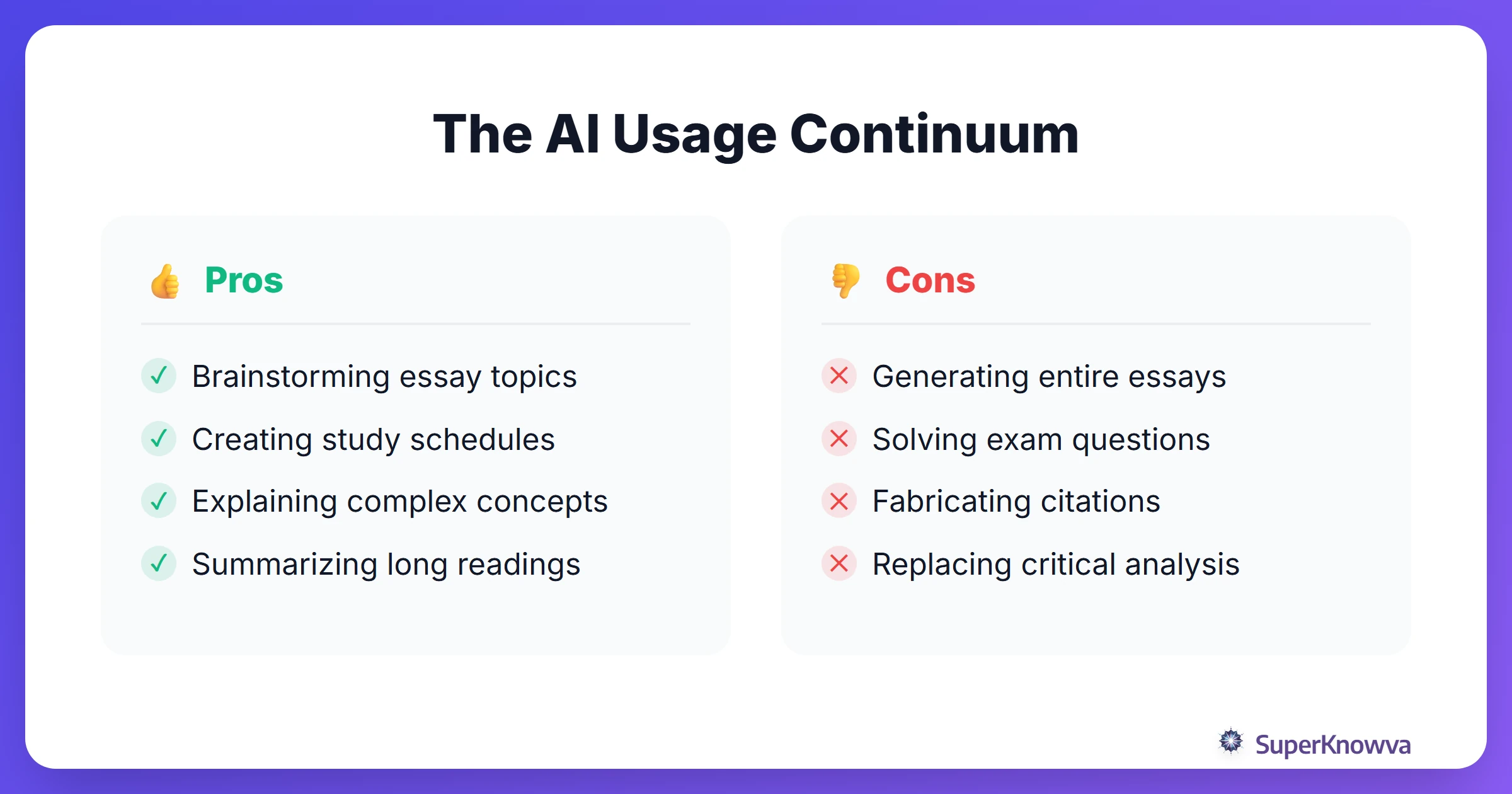
Think of your AI usage as a spectrum. On one end, you have AI as a spark for inspiration; on the other, it’s a total replacement for your own brain. Where do you fall?
There is a concept called the "intellectual struggle." It is the frustrating, often exhausting process of wrestling with a difficult concept until it finally clicks. That struggle is not an obstacle; it is the point. This is where actual learning happens. If you use AI to bypass this by generating entire assignments, you do more than risk your grades. You lose the cognitive development you pay tuition for.
Instead, let AI handle the "blank page" syndrome. Use it for ideation and structuring. Ask an AI to help you brainstorm themes for an essay or to suggest a logical flow for a research project. This keeps you in the driver’s seat while using technology to clear the road. For a deeper look at how to balance these tools, the University of Kansas provides an excellent framework for understanding the AI continuum in writing assignments.
Transparency and Attribution: How to Cite Your AI Tools
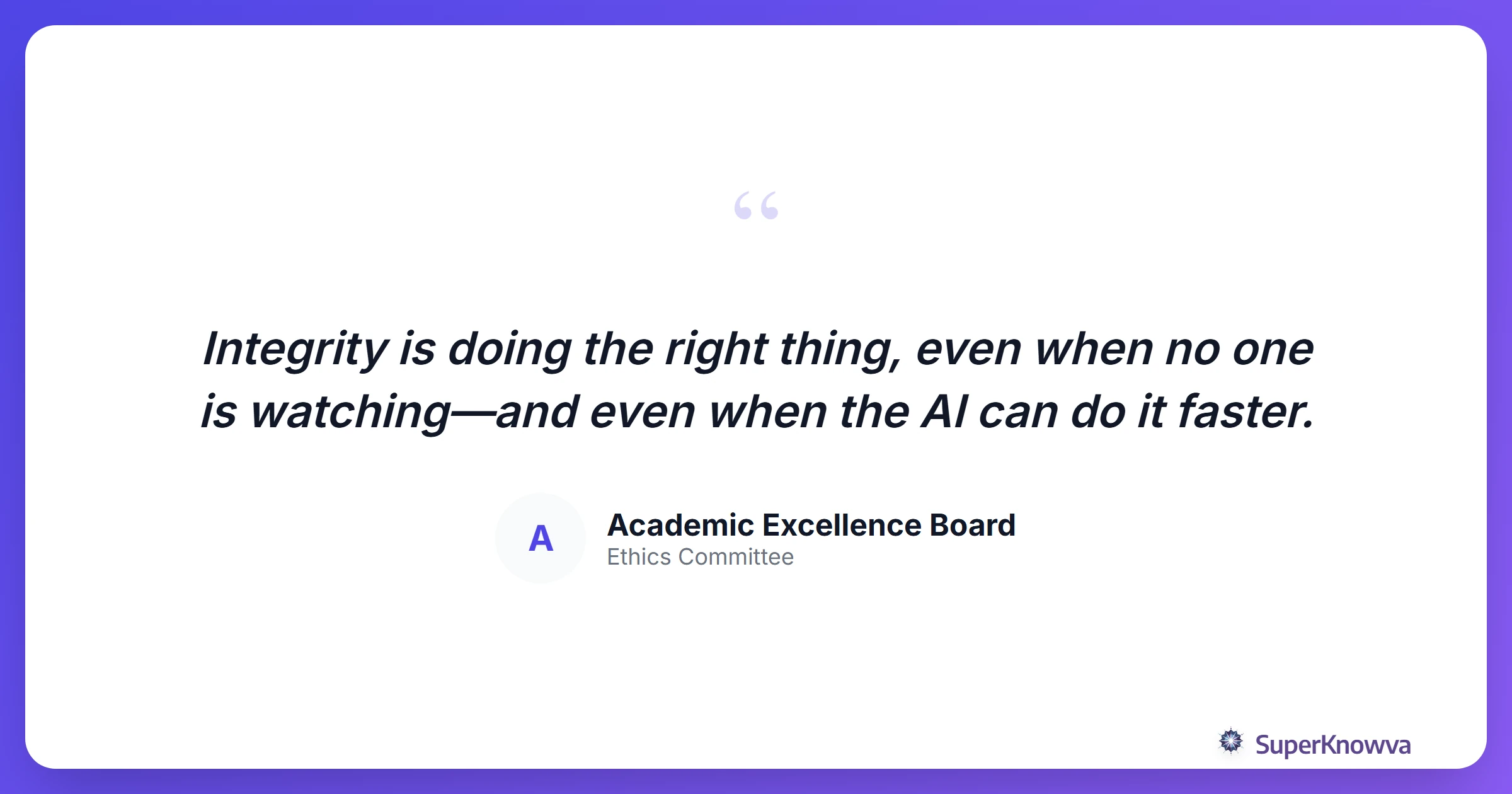
Maintaining academic integrity and ai usage comes down to one thing: honesty. If an AI tool helped you organize a messy outline or smoothed out your grammar, just say so. Being transparent about your process actually builds your credibility as a scholar.
A lot of students are terrified that admitting to AI use will land them in the Dean’s office. In reality, the opposite is often true. Most instructors value honesty over "perfect" work that feels suspiciously robotic. Before you hit submit, check your syllabus. Some professors are fine with AI for research but draw the line at drafting; others have specific rules for citing ai in writing.
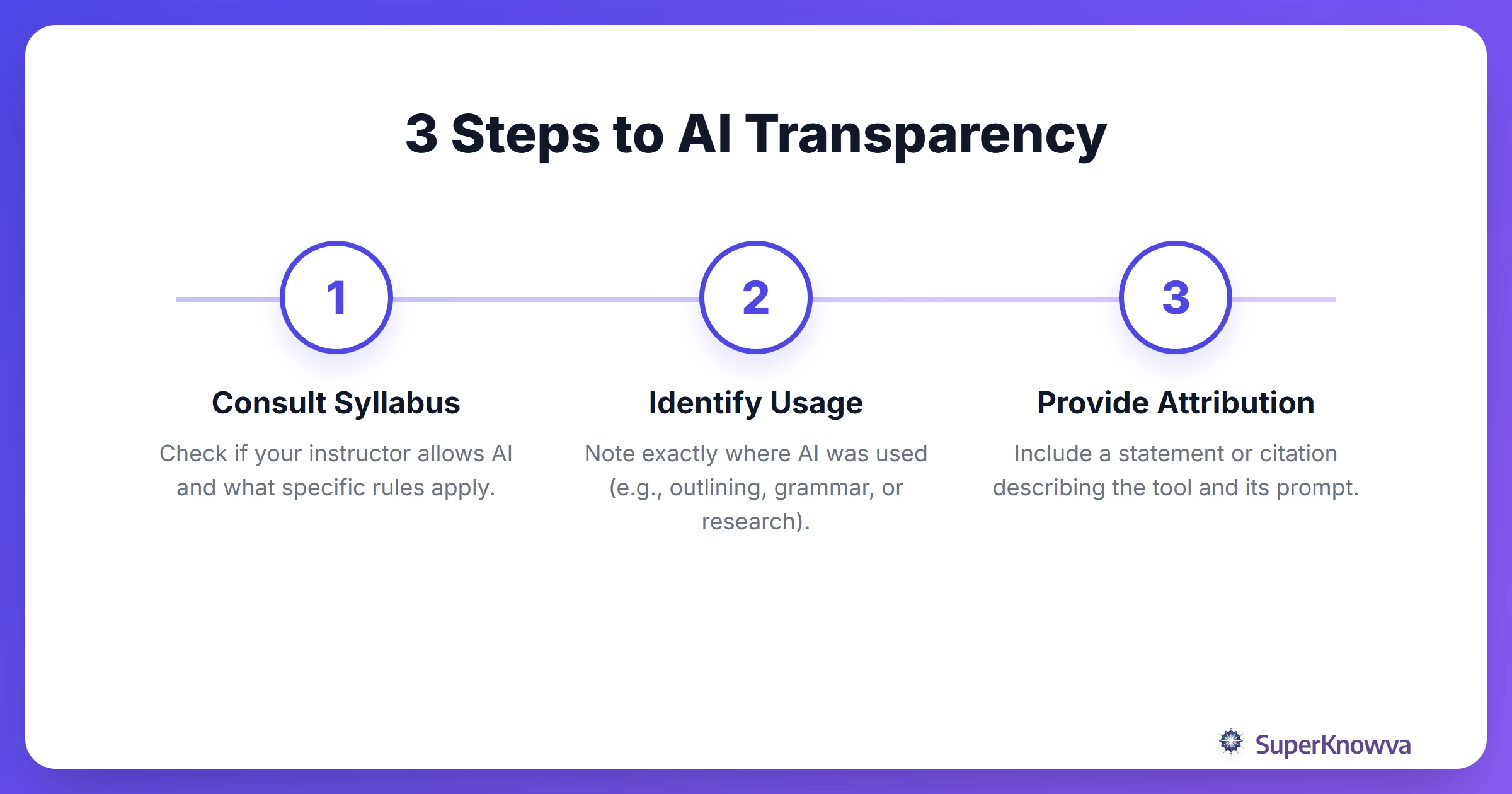
If your school hasn’t caught up with a formal policy yet, take the lead. Include a brief "AI Disclosure" at the bottom of your assignment. List the tool you used and exactly how it helped. For a masterclass in how to do this right, the JMU AI Ethics Guide offers comprehensive advice on citation and attribution.
AI as a Tutor vs. AI as a Ghostwriter
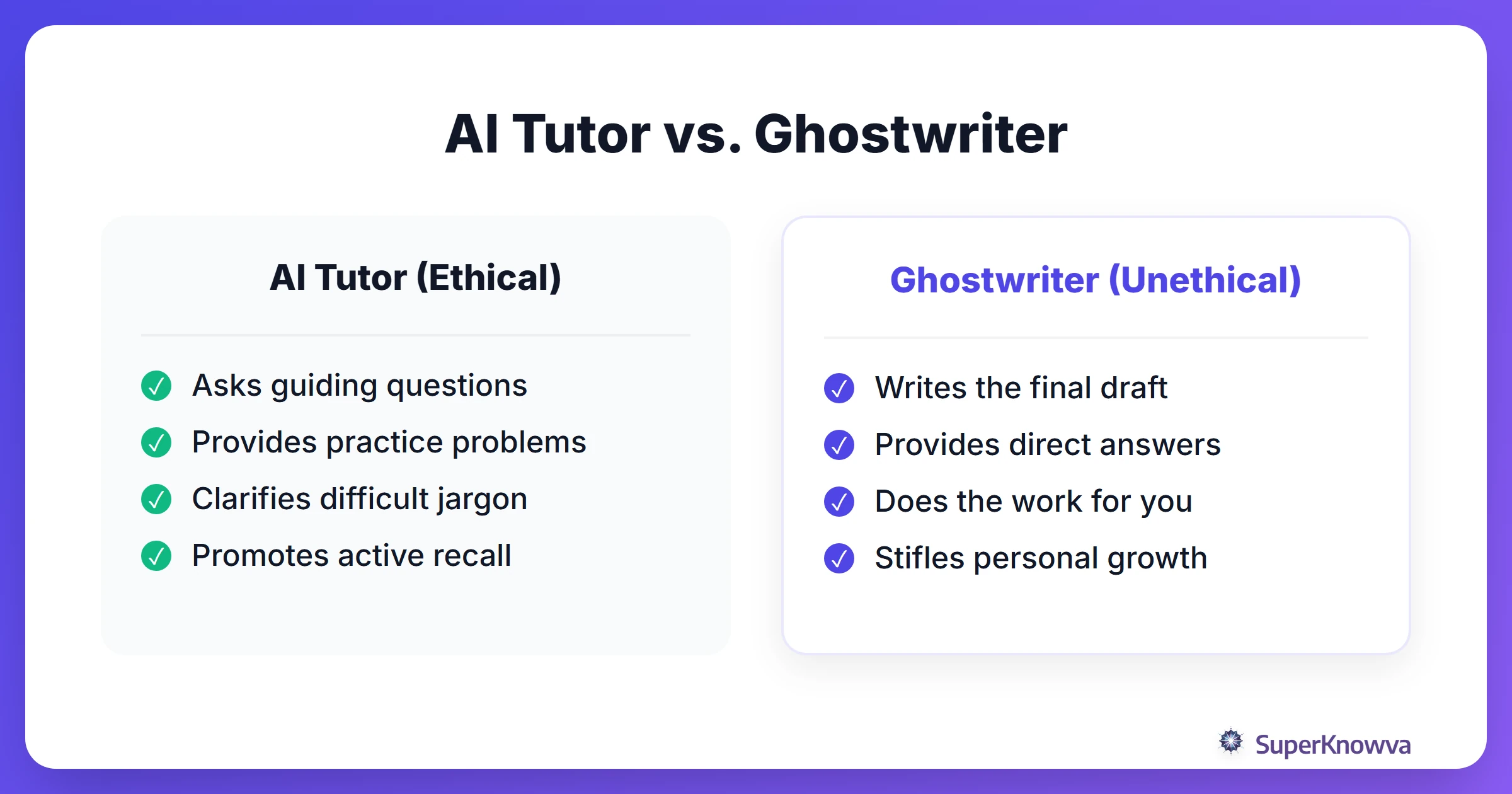
What’s the difference between assistance and cheating? It all comes down to intent. Are you using the tool to understand the material better, or are you just trying to get the task off your plate?
AI tutor ethics are built on the Socratic method. An ethical interaction looks like asking the tool to "explain this concept like I'm five" or "give me a hint on this math problem without showing the full solution." This is worlds apart from the "ghostwriter" approach, where you copy-paste a prompt and pass off the output as your own voice.
Using an AI-powered note-taking guide can help you organize your thoughts without losing your perspective. By focusing on active recall rather than passive generation, you ensure the knowledge actually sticks. Understanding the AI Tutors vs. Human Tutors dynamic is the secret to finding the best learning style for those grueling summer sessions.
Privacy and Data Ethics: Protecting Your Academic Work
Ethics isn't just about how you treat your professors. It is about how you treat your own data. When you interact with Large Language Models (LLMs), you provide data to a system. Your prompts, drafts, and ideas are often used to train future versions of the AI.
Uploading sensitive research or proprietary course materials carries a risk. You have to ask: Who owns the work we "collaborated" on? Usually, you do, but the privacy of that data might be gone the moment you hit enter.
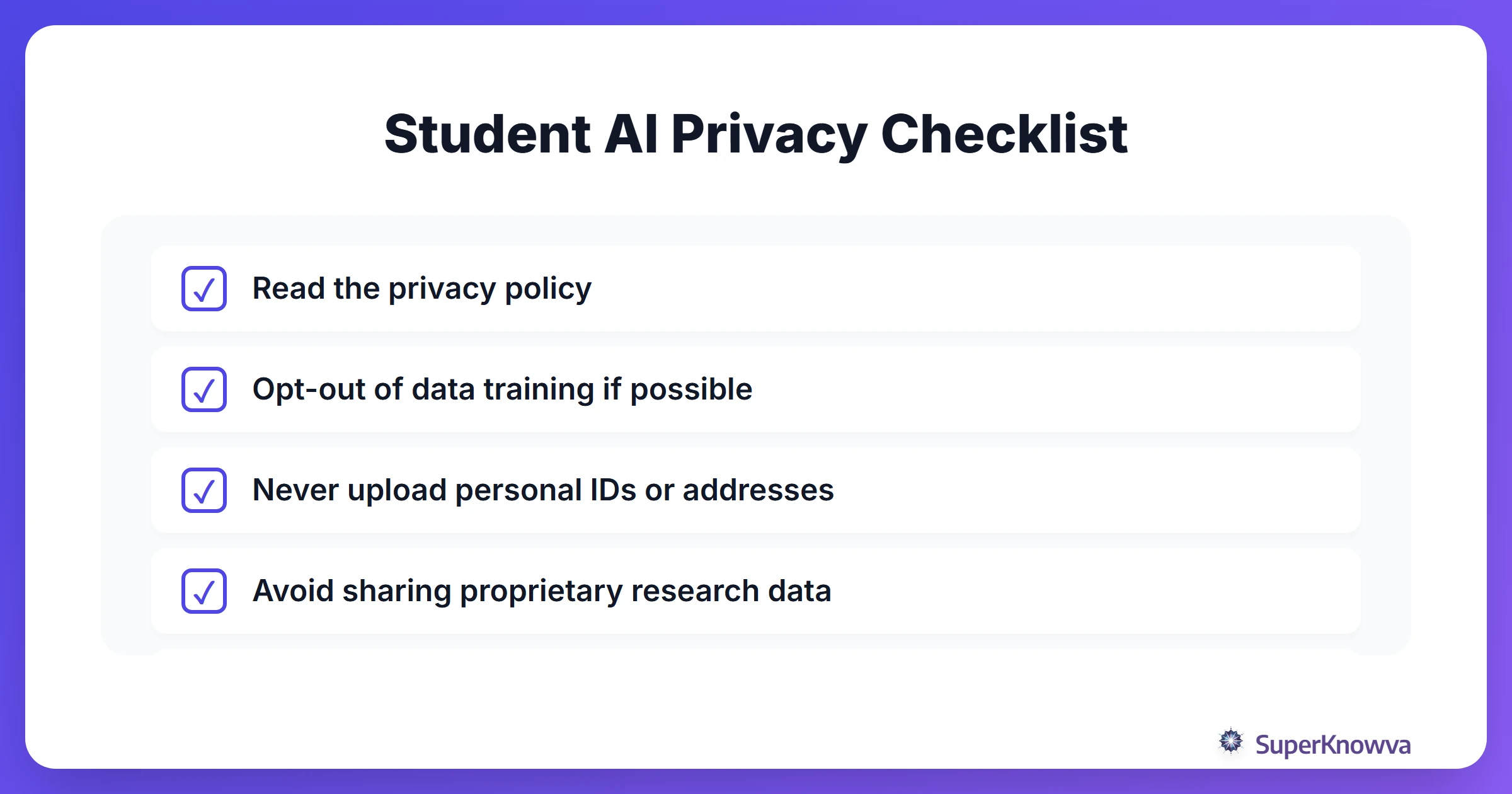
Stay smart. Avoid sharing personal identifiers and stick to school-sanctioned tools when you can. Being digitally literate in 2024 means knowing exactly where your data is going.
Accessibility, Equity, and the Digital Divide
There is a powerful ethical argument for AI: it’s a massive win for inclusion. AI has the potential to make education more accessible, helping students with disabilities learn at their own pace. Whether it’s real-time transcription for students with hearing impairments or breaking down complex jargon for those with dyslexia, AI can level a playing field that has been uneven for far too long.
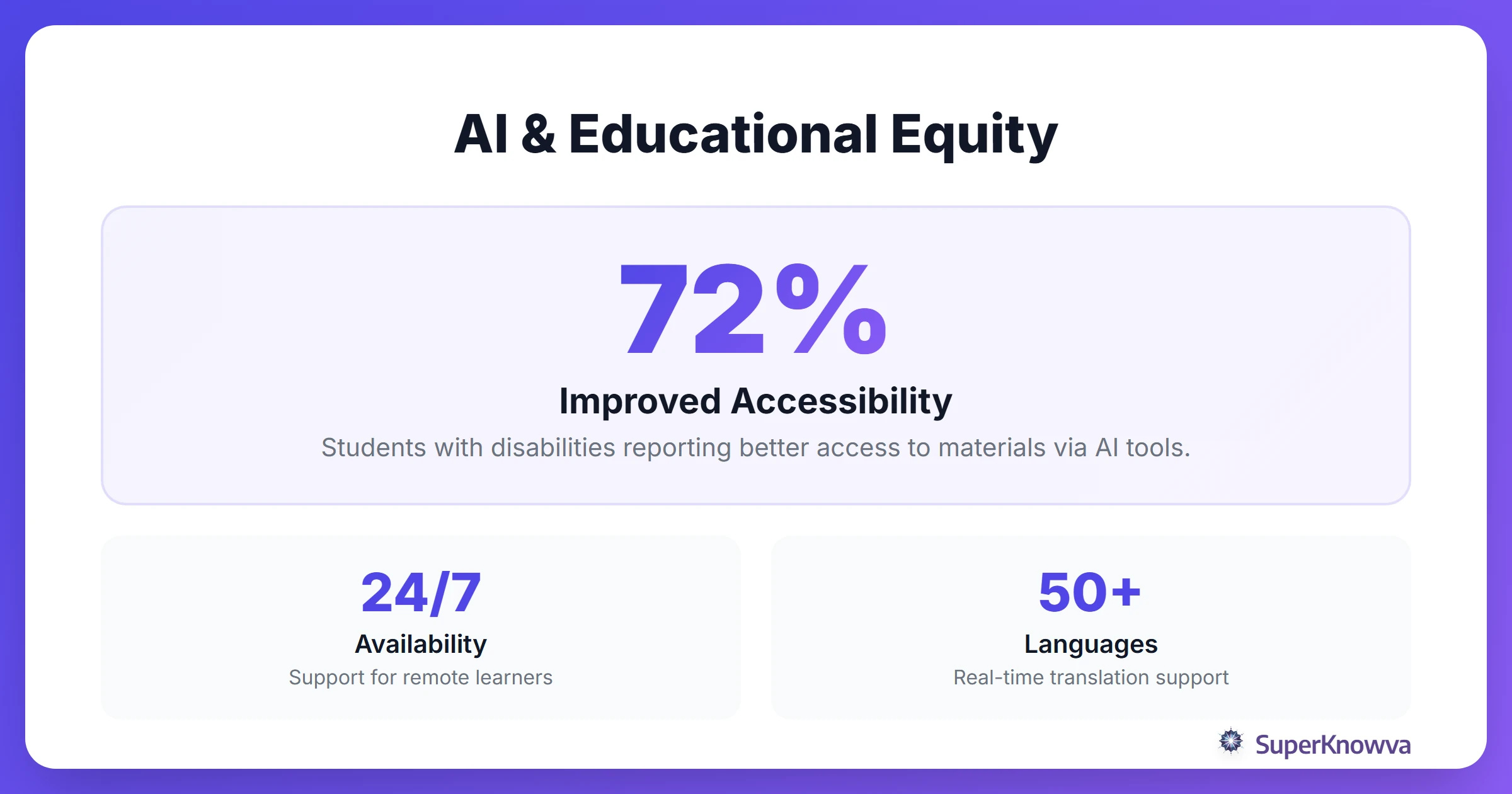
However, we have to talk about the "digital divide." If only students who can afford $20/month "Pro" subscriptions get the best tools, we’re just creating new gaps in equity. As students, advocating for tools that remain accessible to everyone is part of building a fairer academic future.
Developing Your Personal AI Ethics Framework
Before the mid-term crunch hits, set your own boundaries. Responsible ai for students starts with a personal code of conduct.
If you're ever in a "gray area," check out Harvard's Graidients Tool. It’s a great resource for students and teachers to decide together which AI uses are appropriate for specific tasks.
And remember, ethical use of AI can also include strategies for test anxiety reduction. Focus on preparation, not shortcuts. When in doubt, talk to your professor. Opening that dialogue shows you care more about your education than just the grade at the end of it.
Conclusion
AI is an incredible asset for surviving the summer course gauntlet, but it’s not a replacement for you. Your perspective, your voice, and your hard work are what actually matter. By prioritizing transparency and using AI as a tutor rather than a crutch, you can use this technology to become a better, more ethical student.
Ready to study with integrity? Let SuperKnowva help you master your course material the right way.