When Earth Day rolls around, we usually think about the basics: planting a few saplings, ditching plastic straws, or cleaning up a local park. These things matter, of course. But there’s a new player on the field that’s changing the game entirely. Today, ai for environmental science is acting as a massive force multiplier, giving researchers and students the kind of speed and precision that used to be the stuff of science fiction.
Artificial intelligence is changing how students learn. For students, this means the field is shifting. It is no longer just about observing nature from a distance. It is about developing strong data skills.
The Intersection of Earth Day and Artificial Intelligence
In 2024, Earth Day feels different. It’s not just a day for awareness; it’s a call to innovate. Artificial Intelligence is completely transforming how we protect the planet by spotting patterns that the human eye simply can't catch. Whether it’s pinpointing deforestation as it happens or balancing a city's energy grid, AI is the engine driving modern sustainability.
If you’re a student entering this field, heads up: understanding AI isn't just a "nice-to-have" skill anymore. It’s becoming the bedrock of the discipline. By mastering these tools, the next generation of scientists can stop just documenting problems and start actually engineering the solutions.
Data at Unprecedented Scale: AI in Field Research
Remember the old-school image of a scientist manually checking a single rain gauge and scribbling in a notebook? Those days are fading fast. Modern environmental data analysis is a different beast entirely, involving massive streams of info from satellites, microscopic imaging, and remote sensors hidden deep in the woods.
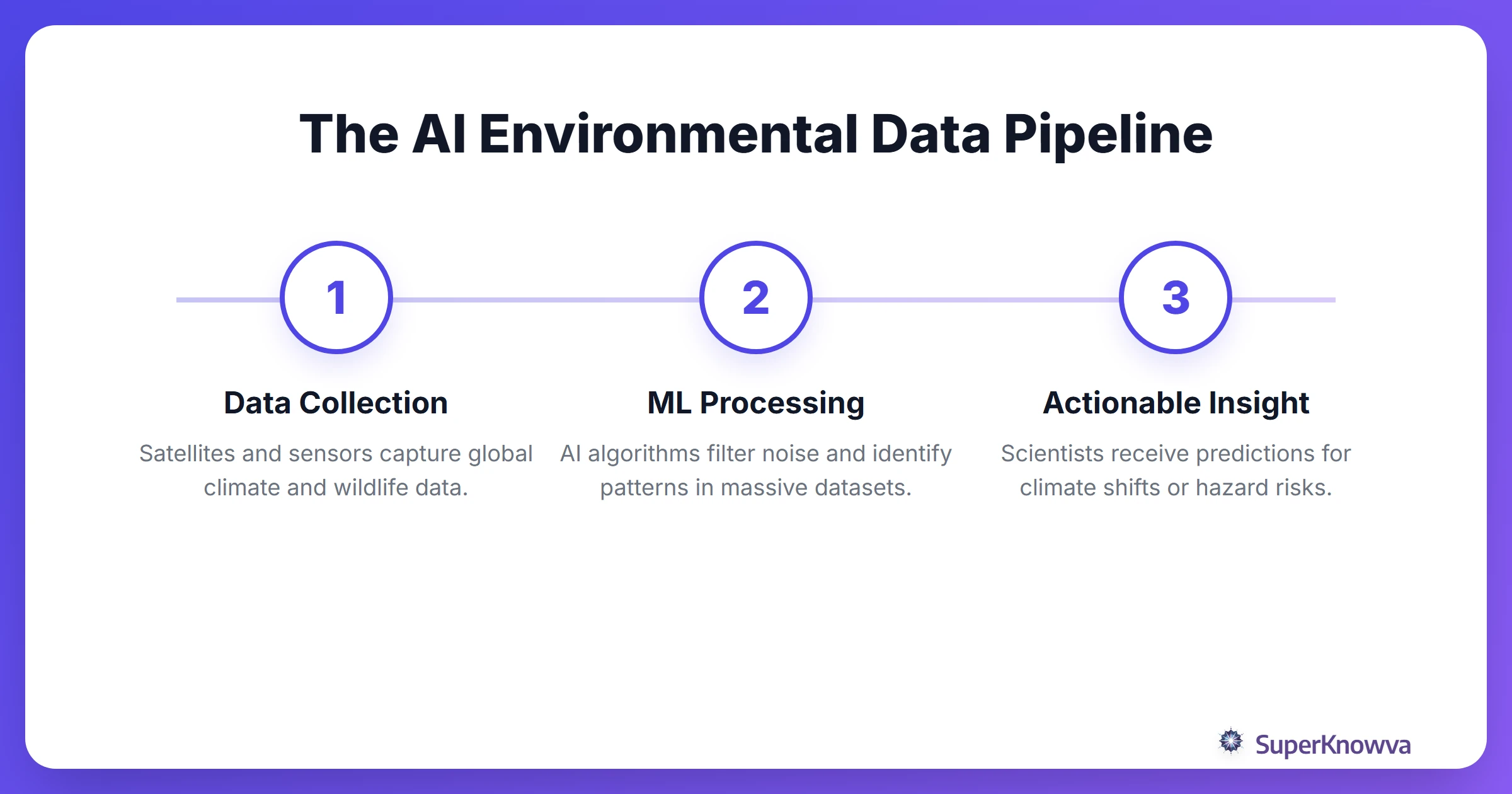
Machine learning algorithms can now scan thousands of satellite images in the time it takes you to grab a coffee, detecting illegal mining or checking the pulse of a coral reef. This shift from manual entry to automated analysis gives us "early warning systems" for natural hazards and wildlife populations. It’s real-time protection for a planet that’s moving faster than ever.
Merging AI with Traditional Climate Modeling
Climate science has always relied on massive, physics-heavy models. The problem? They are incredibly slow and expensive to run. Researchers, like Dr. Shuolin Li at Columbia University, are fixing this by blending traditional physics with machine learning.
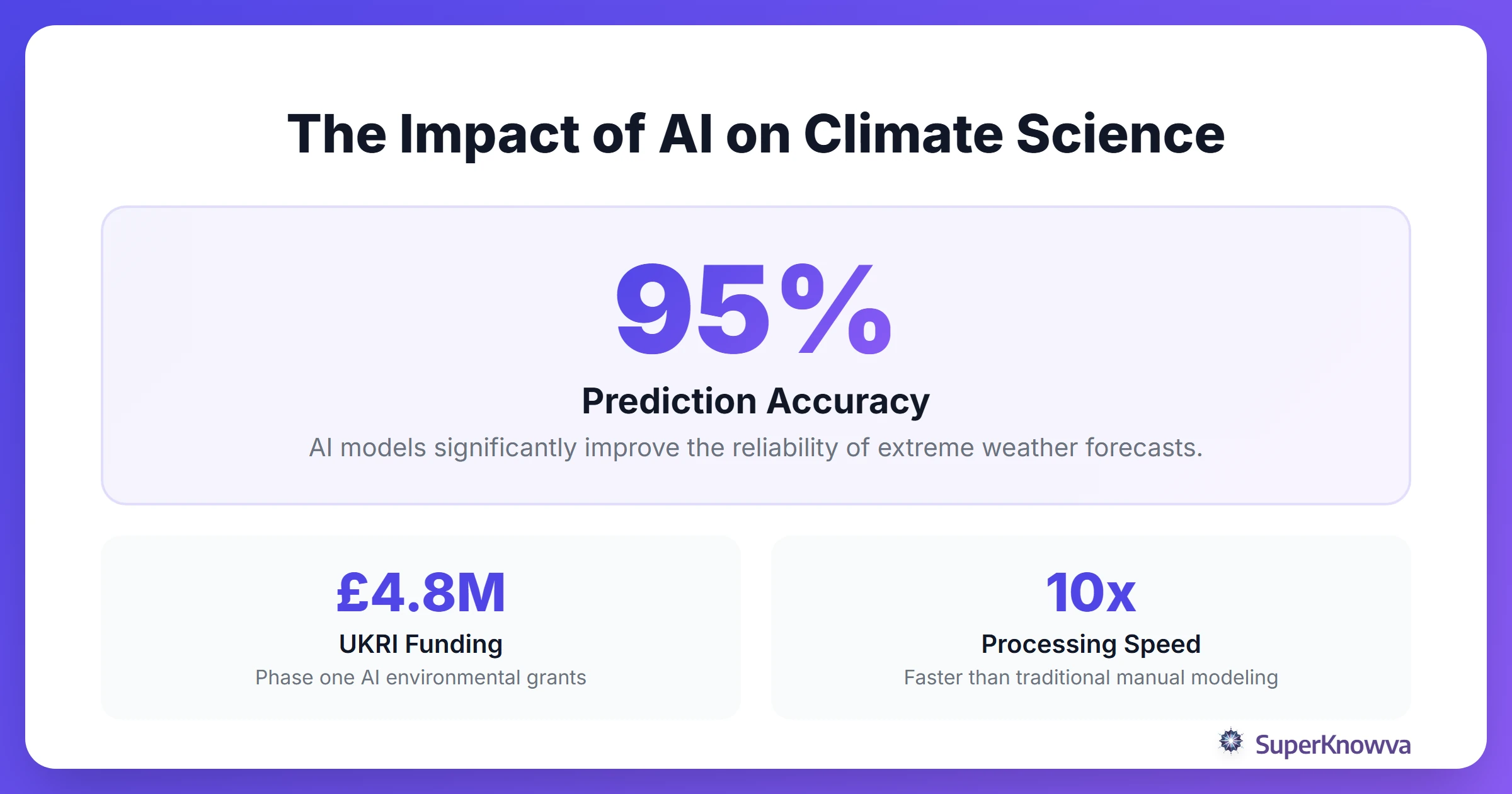
By using climate modeling AI, scientists can sharpen their predictions for extreme weather and shifting environments. This "hybrid" approach allows us to "downscale" global models to a local level. Why does that matter? It helps cities build better flood defenses and heat-wave protocols before the crisis hits, not after.
AI Applications in Conservation and Biodiversity
Conservation has moved beyond fences and rangers to algorithms. AI in conservation develops nature-based solutions for carbon sequestration by identifying which forest layouts absorb the most CO2.
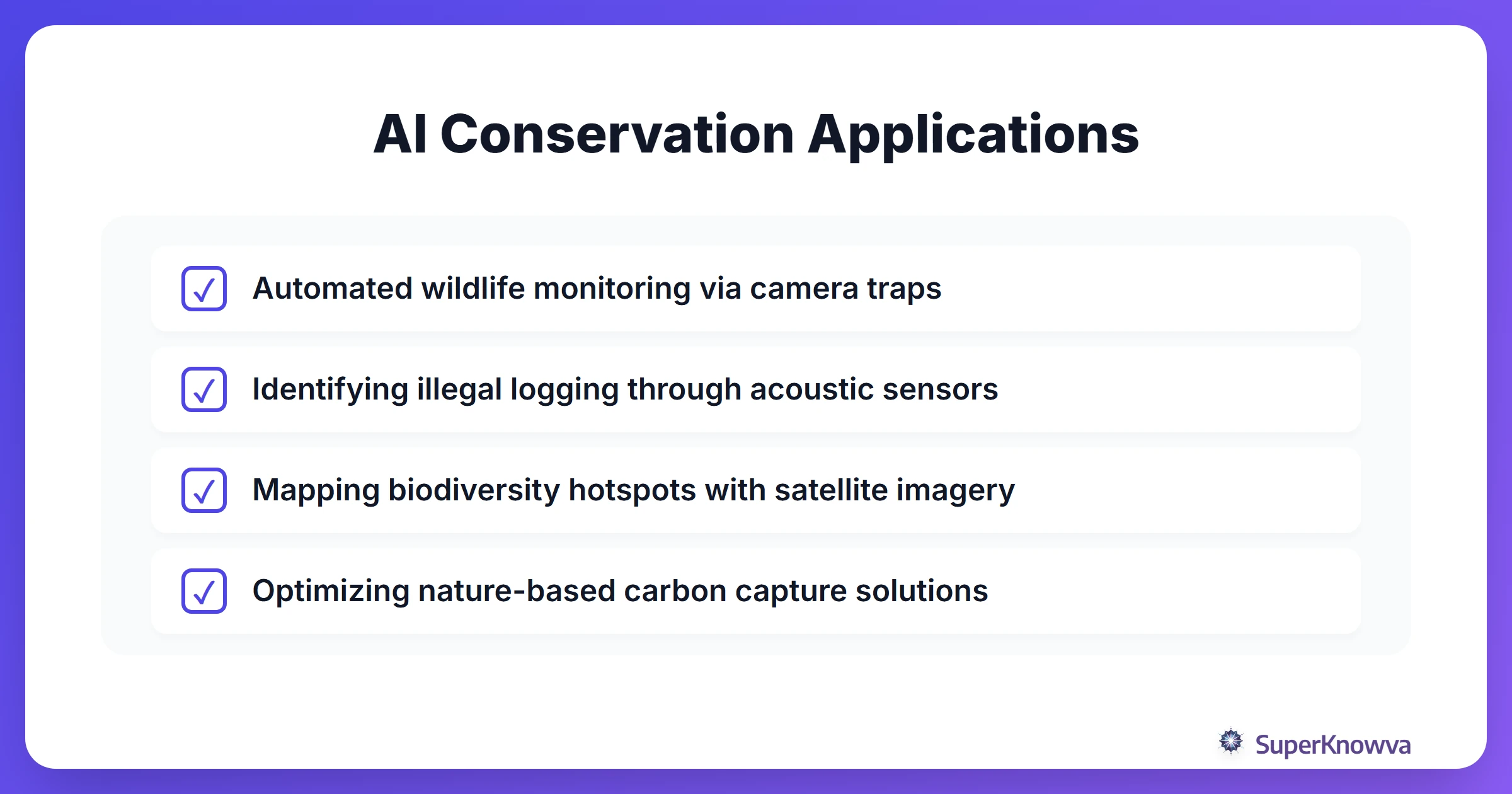
Machine learning in ecology has changed how we protect endangered species. Image recognition software can now identify individual animals, such as a specific giraffe or snow leopard, from grainy camera trap footage. This allows for population tracking without ever disturbing the animals. AI is also helping find "climate refugia," identifying the specific areas that will stay cool as the rest of the world warms up.
How Students Can Use AI to Excel in Environmental Science
If you’re a student, you might be wondering: How does this help me pass my finals? The truth is, AI can be your most powerful academic ally. You can use AI for science simulations to visualize how pollutants move through a river or how an invasive species might take over a local park.
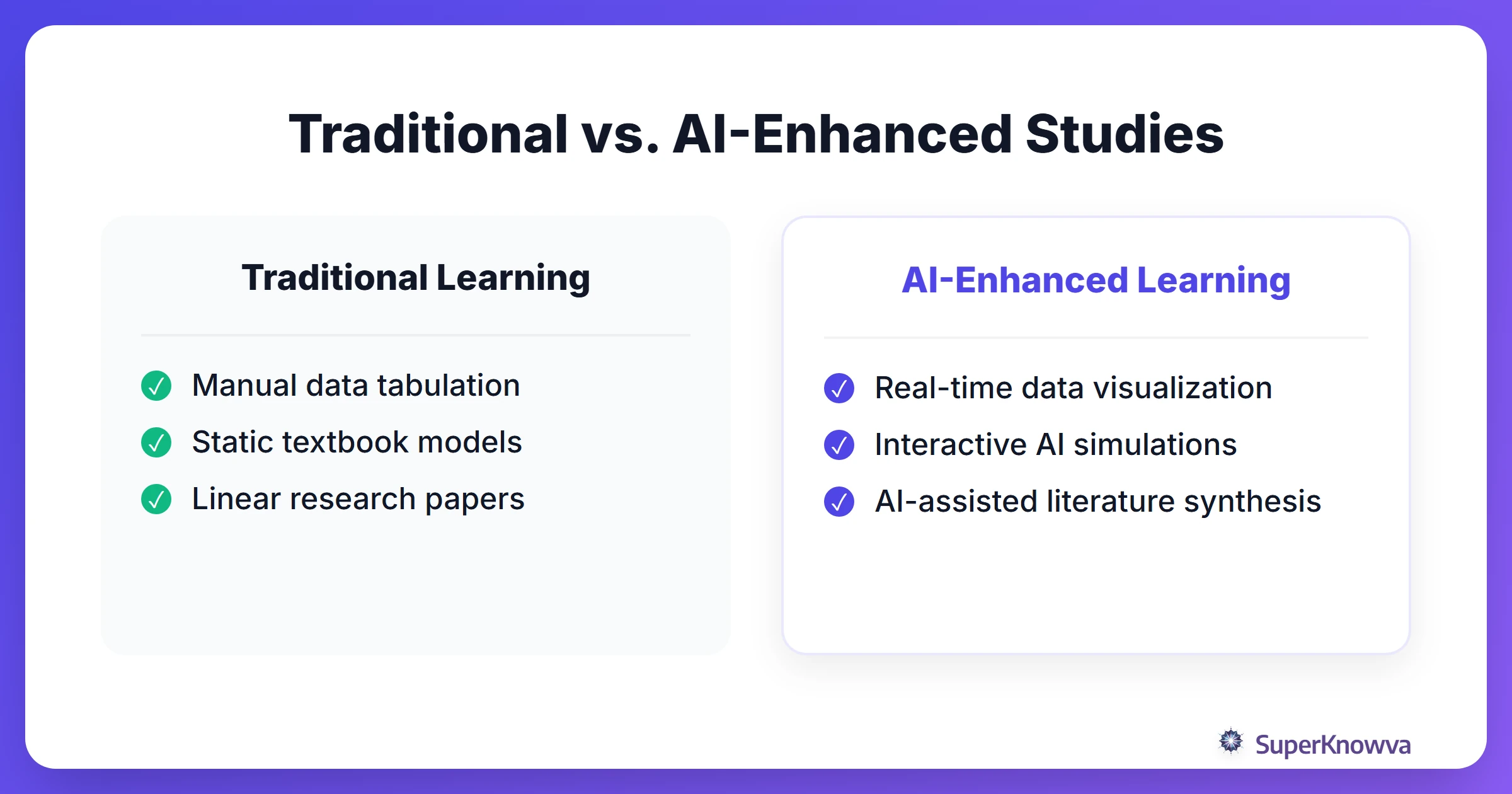
Staying current with scientific papers is a challenge. Using AI-powered note-taking tools helps you synthesize complex papers on thermodynamics or organic chemistry into readable summaries. This technology handles the busywork so you can focus on AI for creative problem solving, the high-level thinking required for your career.
The History and Future of AI in Environmental Sciences
It might feel like AI appeared out of nowhere, but it actually has deep roots in meteorology. Early "expert systems" were helping us predict the weather decades ago. However, the explosion in computing power we're seeing right now has changed the game.
Major organizations are noticing. UKRI is currently investing millions into transforming environmental science with AI, offering massive grants for research that merges machine learning with earth sciences.
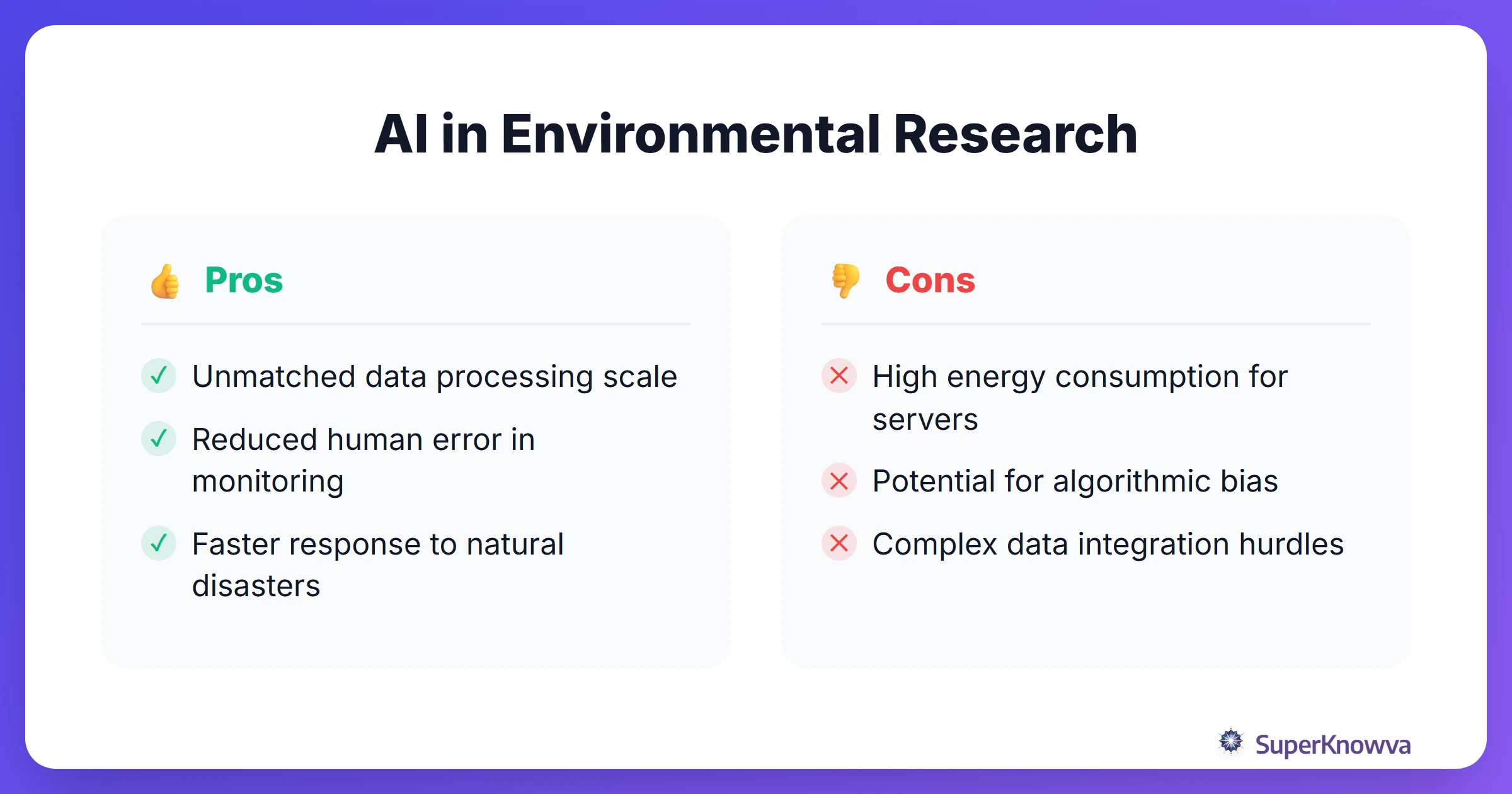
For AI for science students, career paths are expanding. Demand is rising for "Environmental Data Scientists" and "Climate Tech Analysts." Integrating AI is necessary for managing the complex systems of our planet. By mastering these tools now, you are doing more than studying for an exam. You are preparing to tackle significant global challenges.