Do you put in massive effort while studying, yet stay in the same spot? Traditional education often treats students like a factory assembly line. Everyone gets the same parts at the same speed, regardless of how they actually learn.
But things are changing. The rise of AI personalized learning paths is finally killing the "one-size-fits-all" model, allowing you to ditch the busywork and focus on what actually sticks.
At SuperKnowva, we believe technology shouldn't just dump content onto your screen; it should listen to you. By using AI to tailor study materials to your specific pace, you can stop "just getting through" your notes and start building long-term retention.
The Science of Learning (That Actually Fits You)
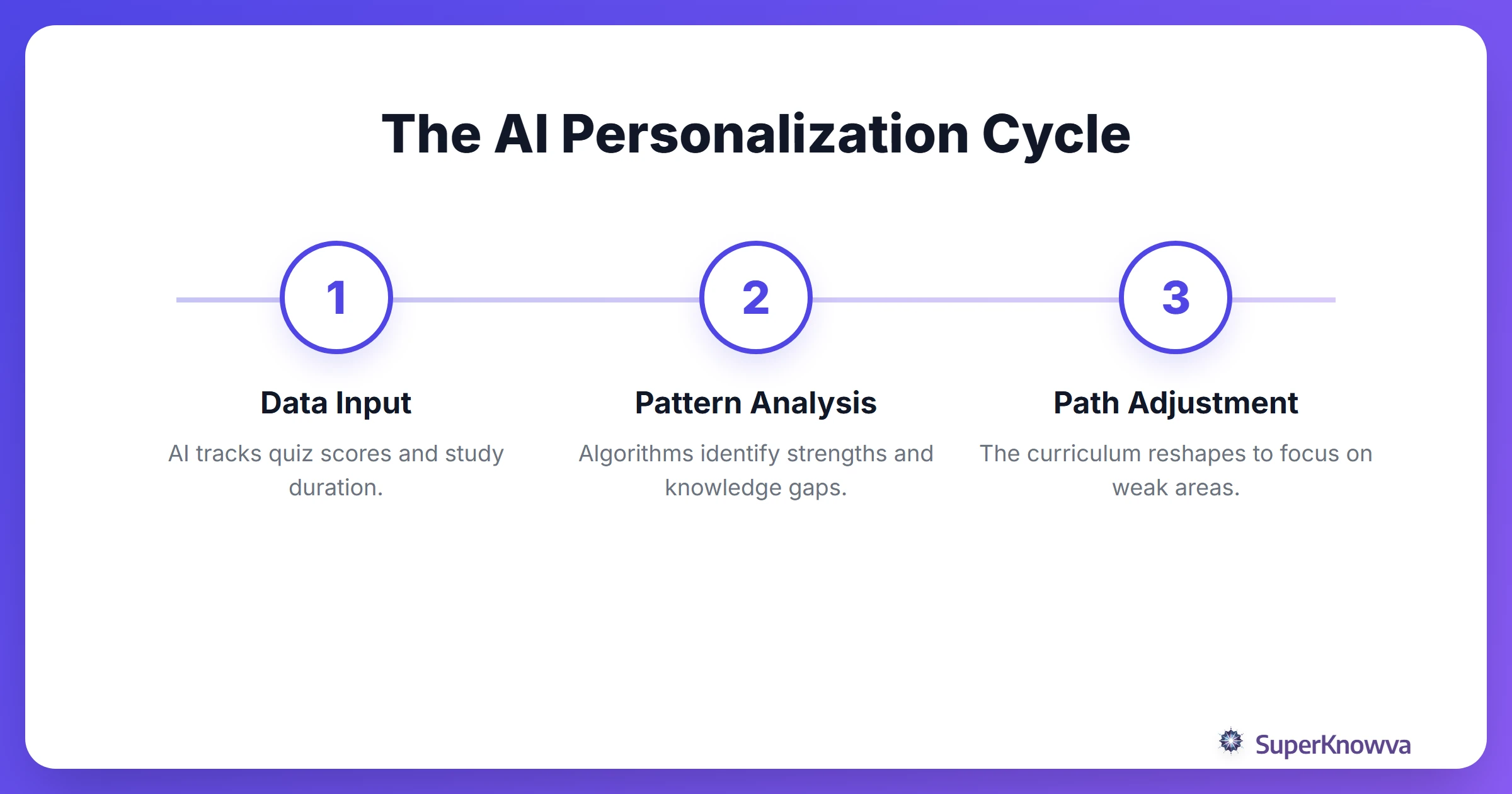
Think of an AI personalized learning path as a GPS for your brain. Instead of a rigid, pre-set map, the curriculum evolves based on how you perform. We’re moving away from static textbooks and toward learner-centric systems that actually pay attention.
AI analyzes your behavior in real-time. It notices if you’re lingering on a specific paragraph or if certain quiz questions keep tripping you up. This isn't just a tech gimmick; it’s rooted in cognitive science. If a task is too easy, your brain switches off. If it’s too hard, you get frustrated and quit. AI finds that "Goldilocks zone" of optimal challenge, keeping you mentally "leaning in" without the burnout.
How AI Outsmarts Your Forgetting Curve
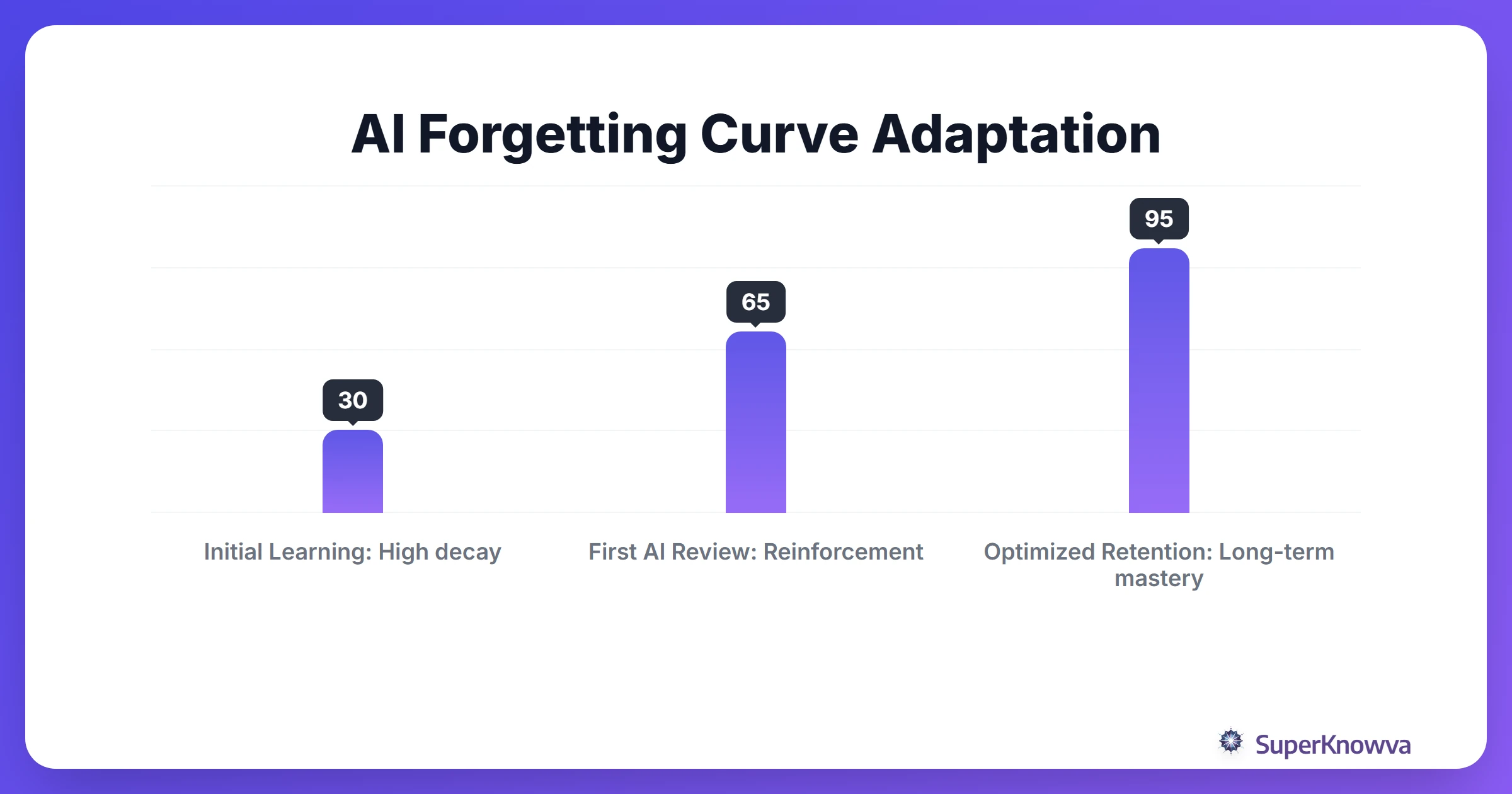
The primary challenge in learning is not a difficult exam. It is the Ebbinghaus Forgetting Curve. This principle shows that without reinforcement, people lose about 70% of new information within 24 hours. Cramming might help you pass a test tomorrow, but it does not build the knowledge needed for a career.
AI-driven platforms fight back by tracking your unique memory decay. Through spaced repetition, the AI calculates the exact moment you’re about to forget a concept and brings it back to the surface. It’s about timing. By reviewing at the perfect interval, you move knowledge from your "inbox" (short-term memory) to the "hard drive" (long-term retention).
Breaking the Linear Model
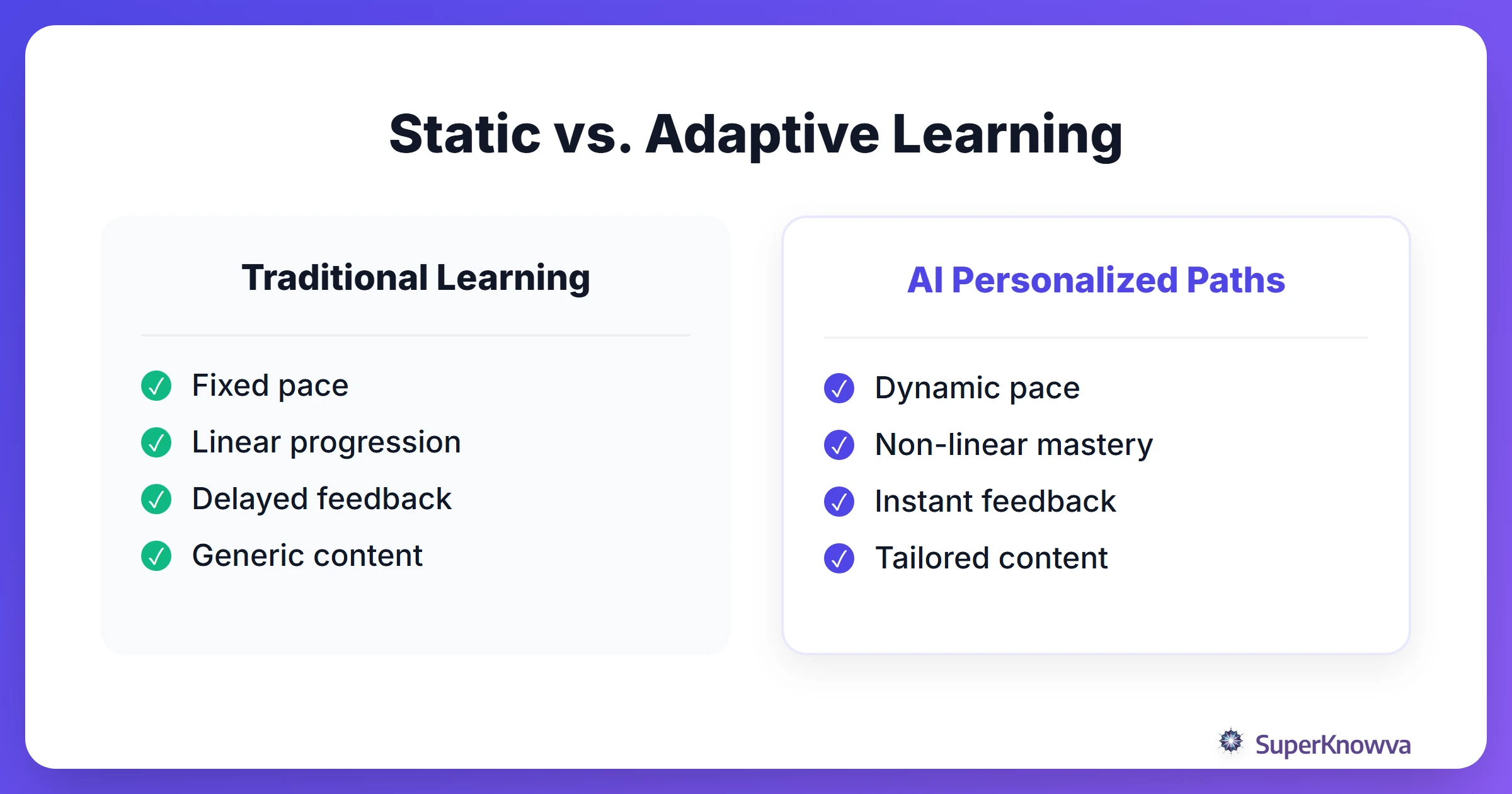
Traditional curriculums are stubbornly linear: Chapter 1 leads to Chapter 2, no matter what. If you miss the first part, the class moves on anyway. AI changes this by offering flexible paths. If you struggle with a concept, the system provides more practice. If you master it, you move ahead.
This adaptive learning approach stops frustration before it starts. Instant feedback is essential. When you understand why you missed a question the second it happens, your confidence grows. You start focusing on mastery rather than just checking a box. If you're wondering how this stacks up against traditional methods, checking out AI tutors vs human tutors can show you why 24/7 adaptive support is so effective.
AI Isn't Guessing: It’s Using Your Data
"Personalization" sounds like a buzzword, but it's actually driven by hard data. AI doesn't guess what you need; it builds a profile based on your actual habits:
- Pacing: How long does it actually take you to digest a module?
- Knowledge Gaps: Where are the consistent cracks in your foundation?
- Learning Style: Do you fly through video summaries but struggle with text-heavy walls?
Machine learning models use these patterns to predict when you might struggle and intervene before you fall behind. For example, if the data shows you are a visual learner, the system might suggest AI tools for visual learners to help a concept click. Platforms like SuperKnowva treat your data with total privacy, using analytics strictly to improve your results. Since AI-driven personalized learning is essential for modern training, this data-first approach is the current standard.
A Win for Every Type of Brain
One of the best things about AI personalized learning is how inclusive it is. For neurodivergent learners or anyone who has ever felt "behind" in a standard classroom, being able to control the format and speed of information is life-changing.
- No More Waiting: Fast learners can move ahead without waiting for the group.
- Filling the Holes: AI finds foundational gaps, such as a math rule missed years ago, and addresses them before they become a problem.
- Lowering the Stakes: By creating a private, safe environment, AI helps in reducing test anxiety with AI.
When you pair these paths with an AI-powered note taking guide, you create a system that supports how your brain actually works, not how a textbook thinks it should work.
Better Results, Less Wasted Time
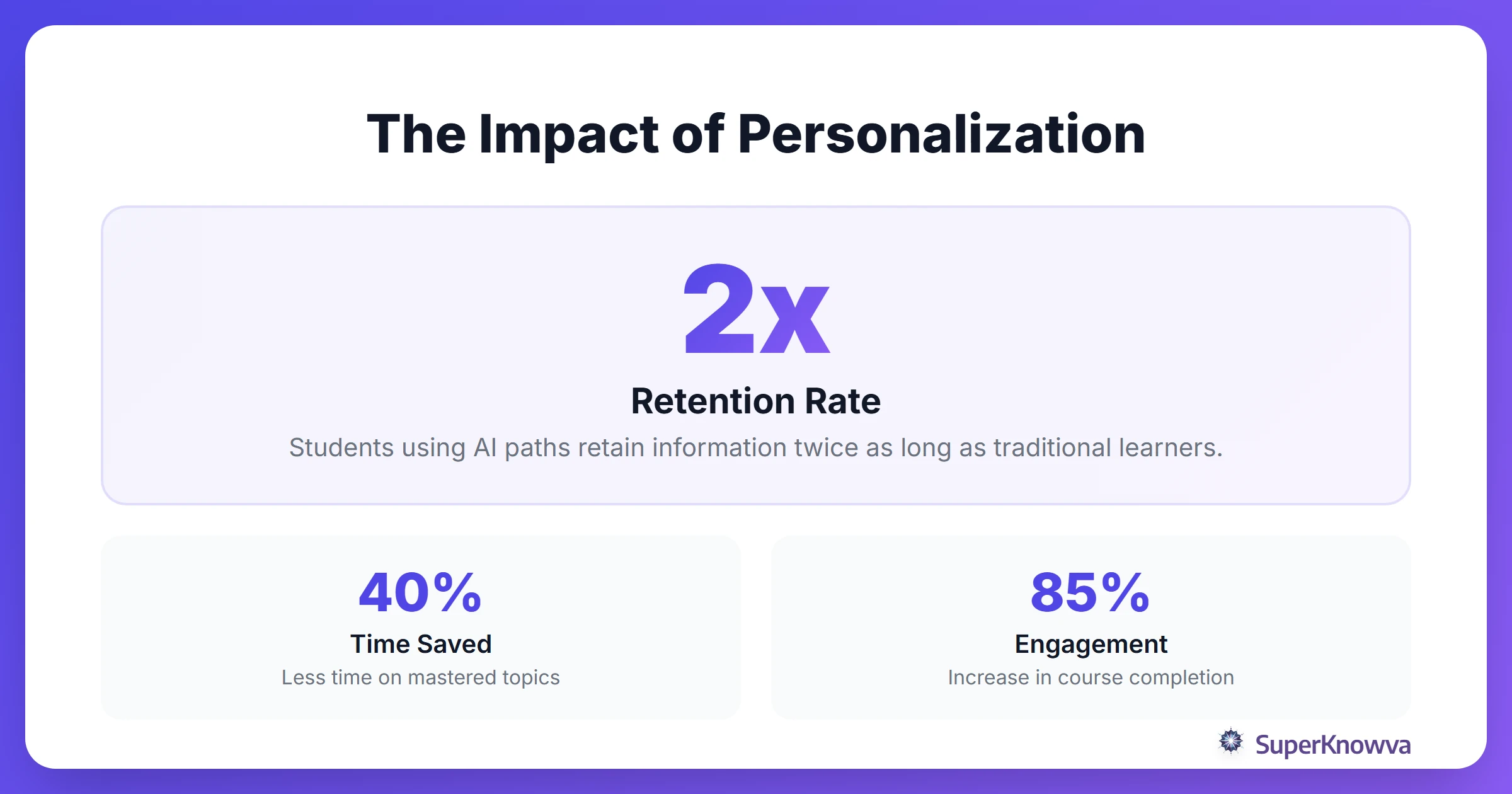
The benefits of AI aren't just for students; they're for anyone looking to master a new skill. In the professional world, AI-driven training saves massive amounts of time by cutting out the stuff you already know. This leads to better job performance and higher certification rates.
As research highlights, personalized paths are the key to staying relevant in a job market that moves faster every day. By learning how to learn through an adaptive system, you’re preparing yourself for whatever comes next.
The future of education isn't about working more hours; it's about making those hours count. By embracing AI personalized learning paths, you can turn the daily grind of studying into a streamlined, high-retention experience that actually lasts.