We’ve all been there. It’s late, you’re several coffees deep, and that 500-page Campbell Biology textbook is staring you down like a final boss. From the confusing steps of oxidative phosphorylation to the tangled branches of phylogenetic trees, the sheer volume of AP Bio can feel like trying to drink from a firehose.
But here’s the good news: you don't need to memorize the whole book to get a 4 or a 5. You just need a better game plan. By combining a "high-yield" strategy with the latest AI tools, you can cut through the noise, focus on what actually moves the needle, and walk into that testing center feeling like you actually own the material.
The AP Bio Battlefield: What You’re Actually Up Against
Before you start highlighting every sentence about photosynthesis, let’s look at the scoreboard. The AP Biology exam is a three-hour endurance test split into two halves: 60 Multiple Choice Questions (MCQs) and 6 Free Response Questions (FRQs). They both weigh 50%, so you can’t afford to neglect either.
Here’s the secret: the College Board doesn't weight every unit equally.
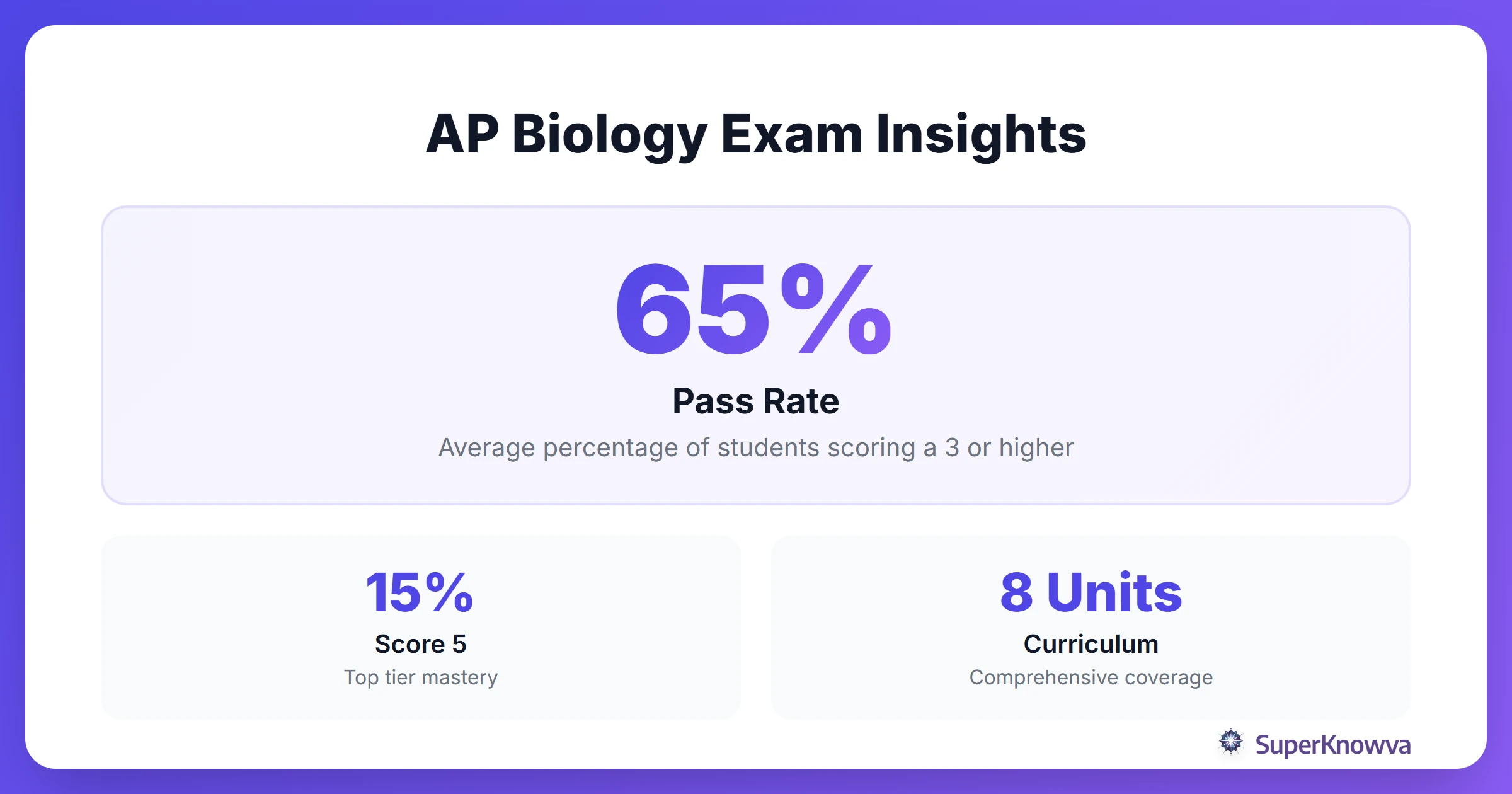
Units 7 (Natural Selection) and 8 (Ecology) are the primary focus, while Unit 1 (Chemistry of Life) provides the foundation for larger concepts. The exam has shifted away from pure memorization toward scientific practices. Can you interpret a graph? Can you explain a Chi-Square test? Can you predict what happens to a food web if a top predator disappears?
The AI Advantage: Don’t guess where you’re weak. Feed your practice test scores into an AI tool and ask it to "analyze my performance across the 8 AP Bio units and identify my top three growth areas." It’ll give you a personalized roadmap so you aren't wasting time on stuff you already know.
High-Yield Topics: Where to Spend Your Last-Minute Energy
When you’re down to the wire, you have to play the odds. Focus on these "Big Ideas" that show up year after year:
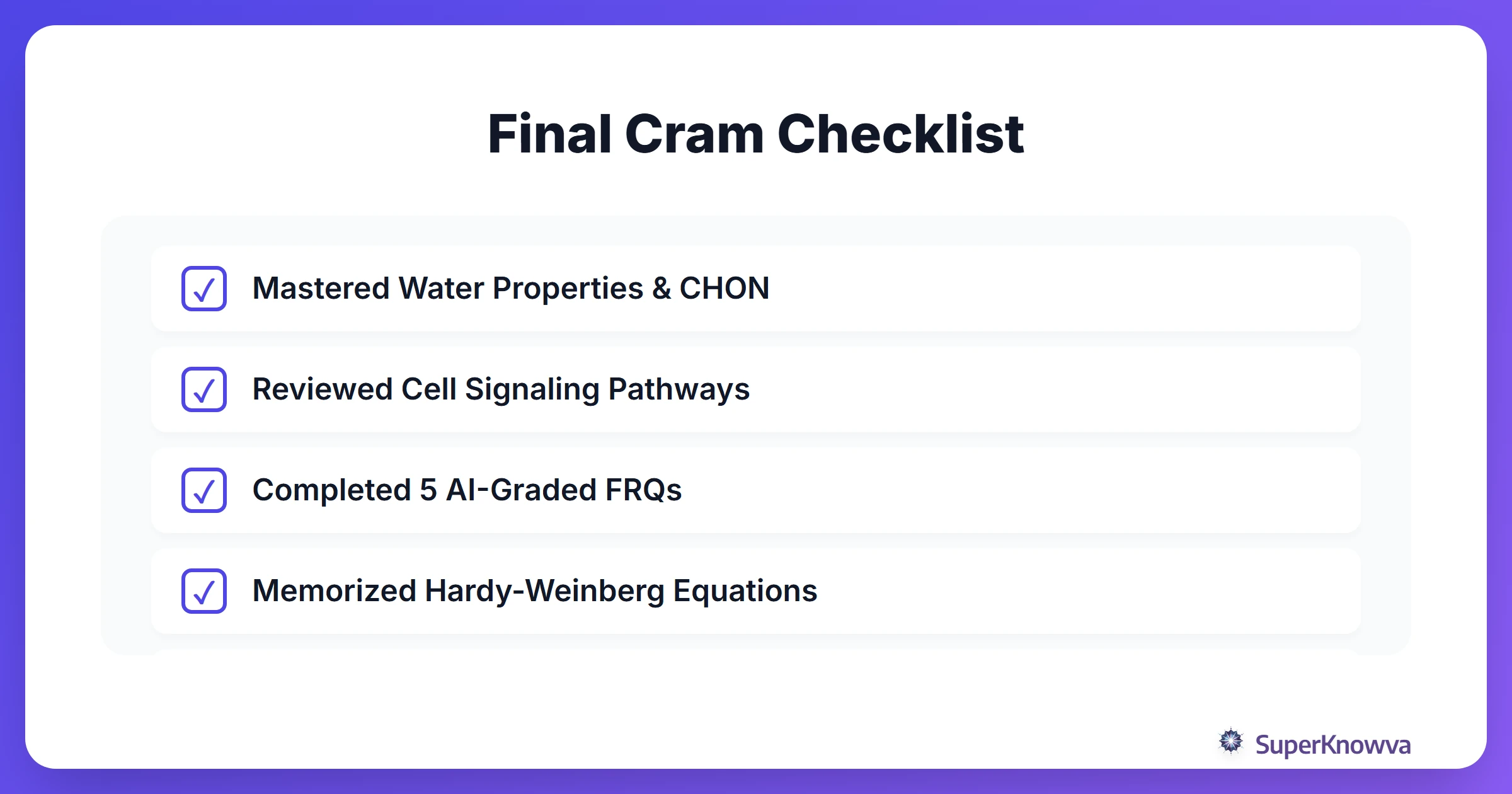
- Unit 1: The Building Blocks. Don’t get bogged down in every chemical bond. Master the properties of water (hydrogen bonding is the star of the show) and know your CHON (Carbon, Hydrogen, Oxygen, Nitrogen). If you know how phosphorus fits into nucleic acids, you’re ahead of the curve.
- Units 3 & 7: The Powerhouses. These are the "meat" of the exam. You need to understand enzyme catalysis, the basic inputs/outputs of respiration and photosynthesis, and how environmental pressures drive evolution.
- Unit 6: The "Scary" Stuff. Gene expression and regulation often trip students up. Focus on the basics of operons (lac and trp), the "Central Dogma" (DNA -> RNA -> Protein), and how biotech like PCR and gel electrophoresis actually works in a lab setting.
Feeling shaky on one of these? Ask an AI: "Give me a 5-question gut-check quiz on AP Bio Unit 6 biotechnology." It’s the fastest way to see if you actually get it or if you’re just nodding along to your notes.
Hack the System: Using AI for Rapid Mastery
Re-reading your notes is a trap. It’s passive, it’s boring, and it doesn't stick. To pass this exam, you need to be an active participant in your learning.
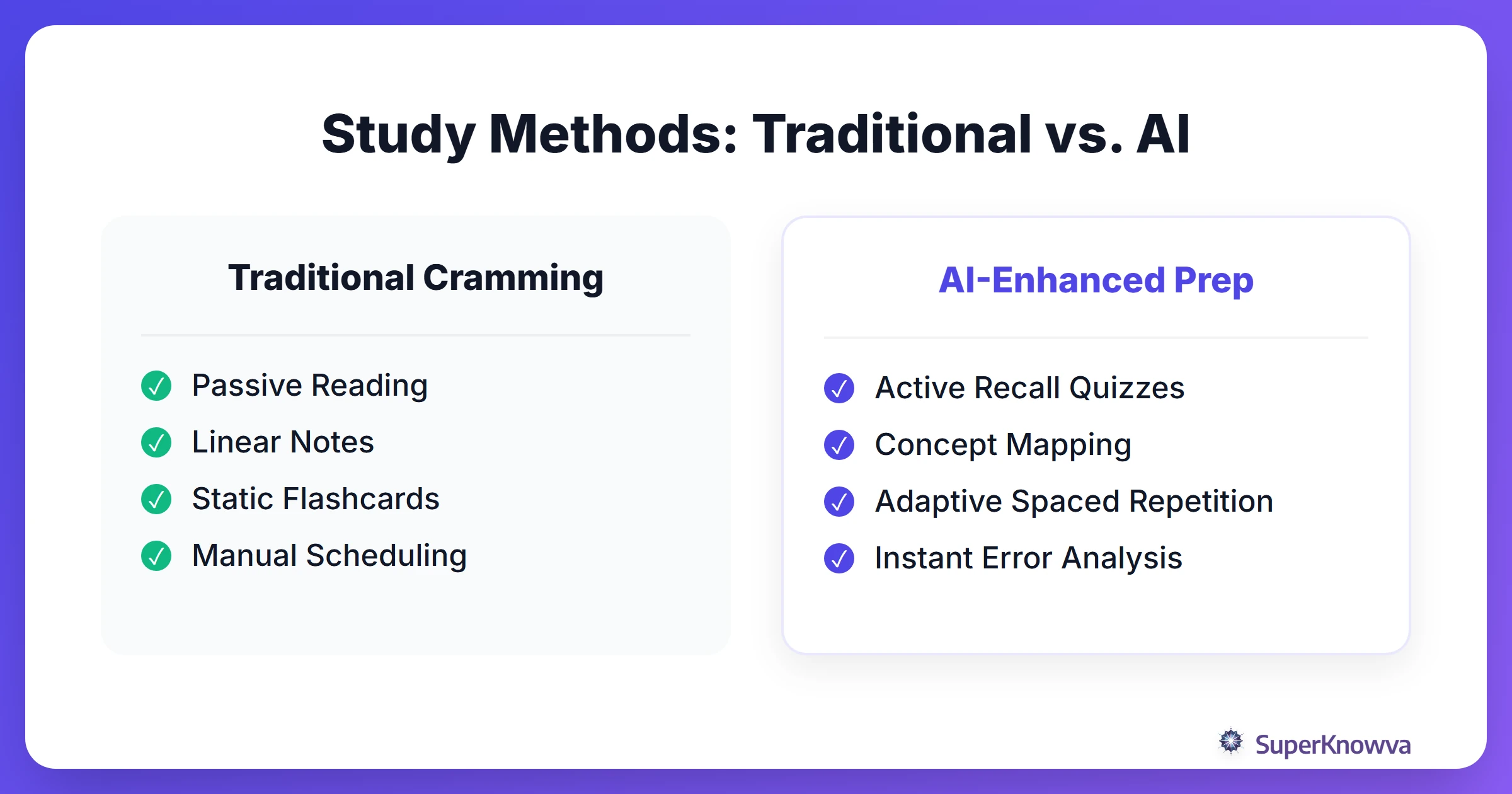
Try these AI-powered shortcuts to speed things up:
- Simplify the Complex: Struggling with the Kreb’s Cycle? Tell the AI: "Explain the citric acid cycle to me like I’m a high schooler, but keep it focused only on the inputs and outputs I need for the AP exam."
- Custom Mnemonics: If you can't remember the stages of mitosis or taxonomy levels, ask AI to build a mnemonic based on your favorite TV show or hobby. It'll stick much better than the ones in the book.
- Visual Analogies: Can't wrap your head around cell signaling? Ask for a "real-world analogy for G-protein coupled receptors." (Spoiler: they’re basically like a doorbell system).
This kind of active engagement doesn't just help with Bio; it will also boost your reading comprehension for those long, data-heavy prompts in the MCQ section.
Practice Smarter: AI-Generated AP Bio Questions
You can only do so many official practice tests before you start memorizing the answers. This is where AP Bio practice questions AI becomes your best friend.
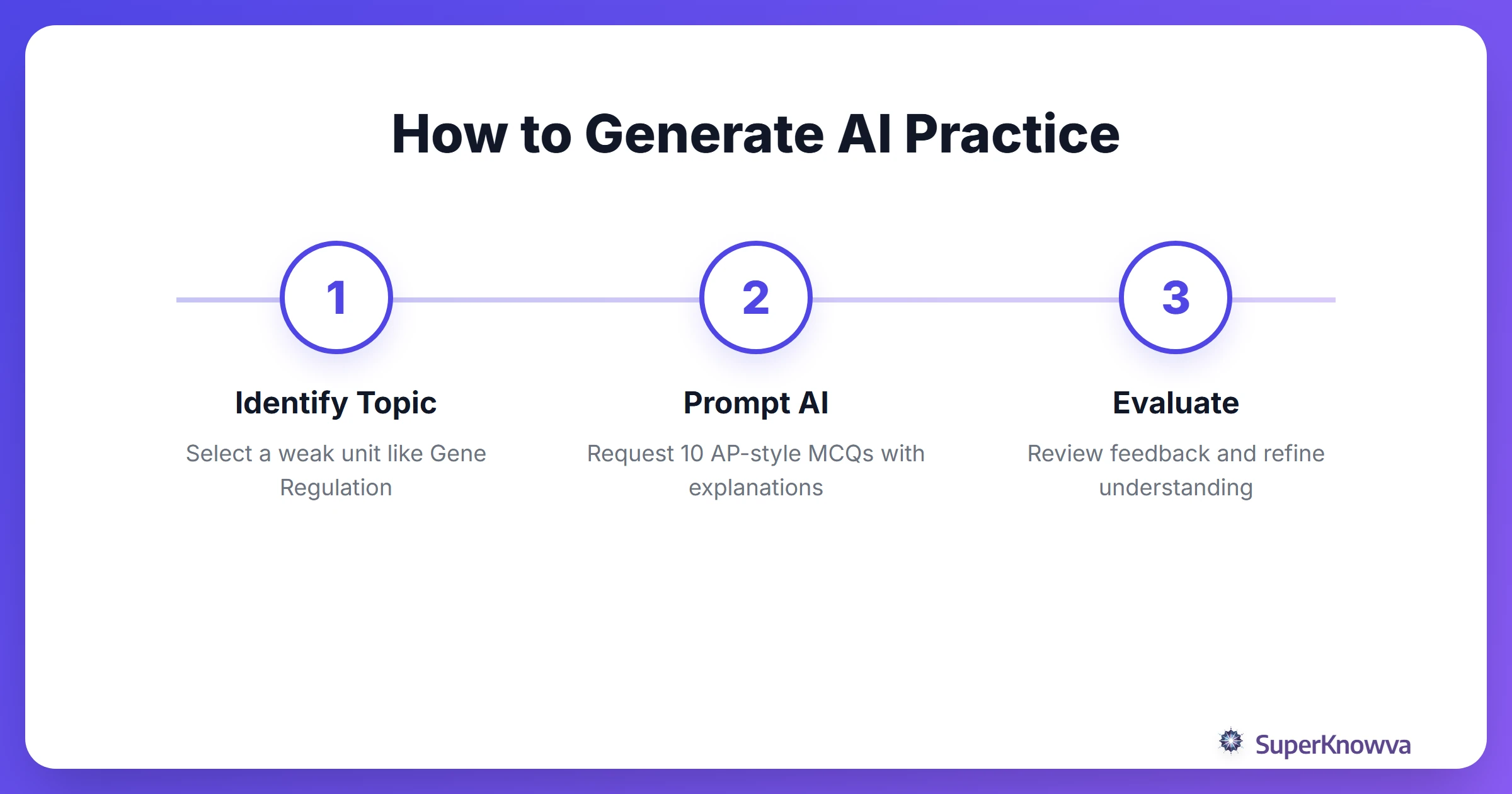
You can prompt an AI to create brand-new scenarios that mimic the exam’s style. Even better? Use it to grade your FRQs. Paste a scoring rubric and your draft answer into the AI and ask: "Where would I lose points on this 'Describe' or 'Justify' prompt?"
Getting instant feedback on whether you actually "explained" or just "identified" a concept is the difference between a 3 and a 5. This diagnostic approach is crucial, similar to how students master quantitative reasoning by analyzing their error patterns in real-time.
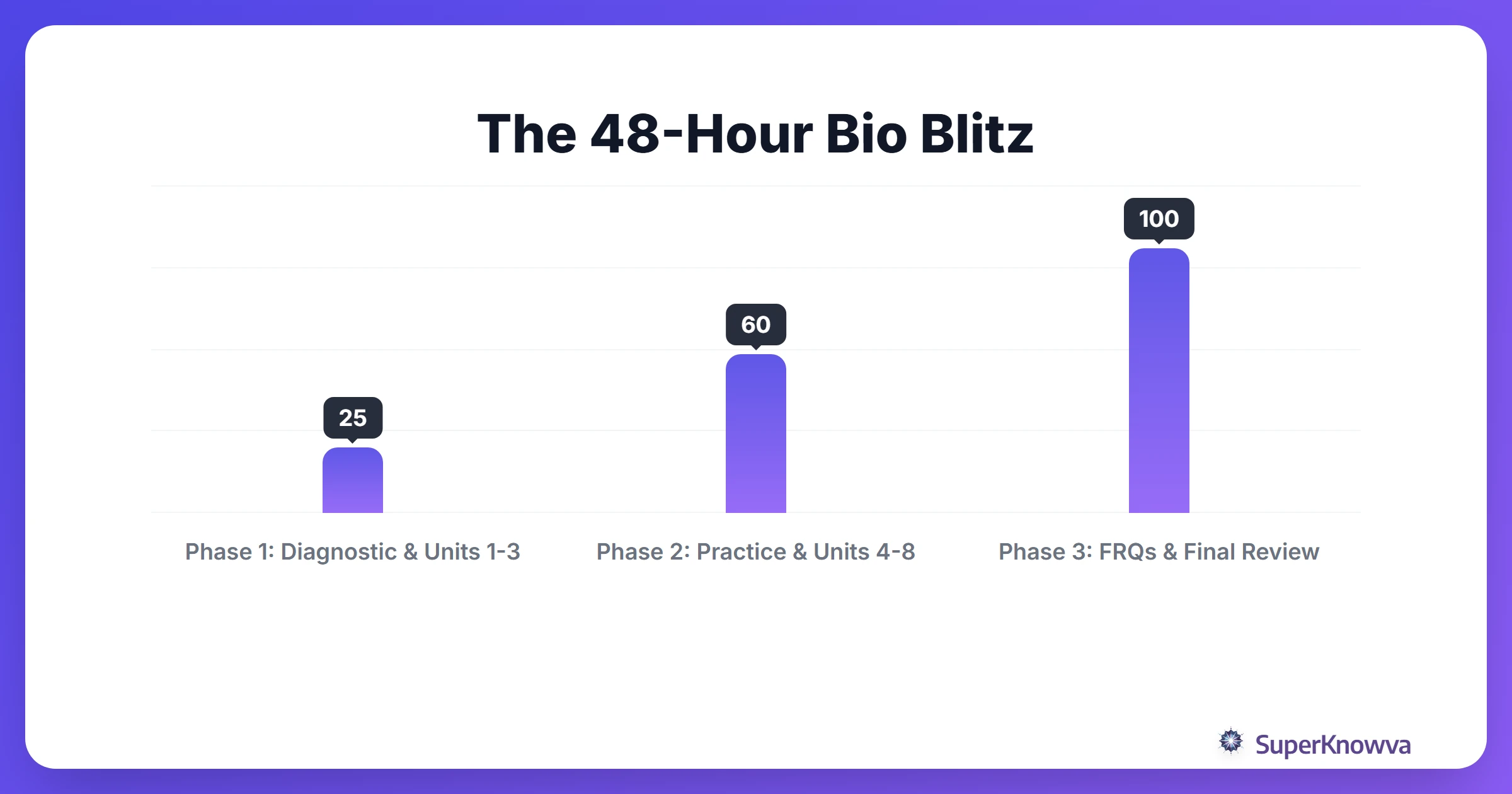
The 48-Hour AI Battle Plan
If your exam is in two days, stop panicking and start following this schedule:
- The First 12 Hours: The Diagnostic. Take a practice MCQ set. Use AI to find your bottom three units. Spend your evening reviewing only those high-yield summaries.
- The Middle 12 Hours: The Deep Dive. Use AI to generate 10 practice questions for each weak area. Don't just look at the right answer. Make sure you understand why the wrong ones are wrong.
- The Final 24 Hours: The FRQ Fire-Drill. Practice six FRQs. Use AI to score them and rewrite them until they’re perfect. Briefly review your "must-know" formulas like Hardy-Weinberg and Water Potential.
And look, if the "Bio-panic" starts to set in, take a breath. You can even use AI to generate a quick mindfulness routine to manage test-day stress.
Don't Fall for the "Fluency Trap"
The biggest mistake? Passive learning. If you’re just reading highlighted text, you’re developing a "false sense of fluency." You recognize the words, but you can't use them in a sentence.
AI forces you into active recall. Instead of reading about the cell membrane, tell the AI: "Ask me three hard questions about phospholipid bilayers and signal transduction." If you can't answer them without looking, you don't know it yet. Keep going until you do.
Pro-Tips for the Big Day:
- Bring your calculator: You’re allowed a graphing or scientific one. Use it.
- Pace yourself: 90 minutes for 60 questions means about 1.5 minutes per question. If one is a total mystery, mark it and move on.
- No blank spaces: There’s no penalty for guessing. If you’re stuck, pick a letter and keep rolling.
For some extra help, peek at this Comprehensive AP Bio Review Document or the Official AP Biology Study Guide PDF.
You’ve got the brains, and now you’ve got the tech. Go out there and crush it!