Struggling to keep the Song Dynasty separate from the Global Silver Trade? You are not alone. AP World History: Modern covers more than 800 years of history, and the volume of dates, empires, and revolutions can feel overwhelming.
But here’s the secret: scoring a 5 isn’t about memorizing the exact Tuesday a random emperor was born. It’s about mastering ap world history ai timelines.
By using SuperKnowva AI, you can turn that chaotic pile of dates into an interactive, visual map. This isn't just about knowing when things happened; it’s about understanding why. In this guide, we’ll break down how to use AI-driven history study hacks to dominate your exam prep and finally wrap your head around periodization.
Why Timelines are the Backbone of AP World History
In AP World, the College Board doesn’t just want you to know the Mongols were powerful. They want you to understand periodization. This means knowing why the world looked one way from 1200–1450 and why it shifted so dramatically between 1450–1750.
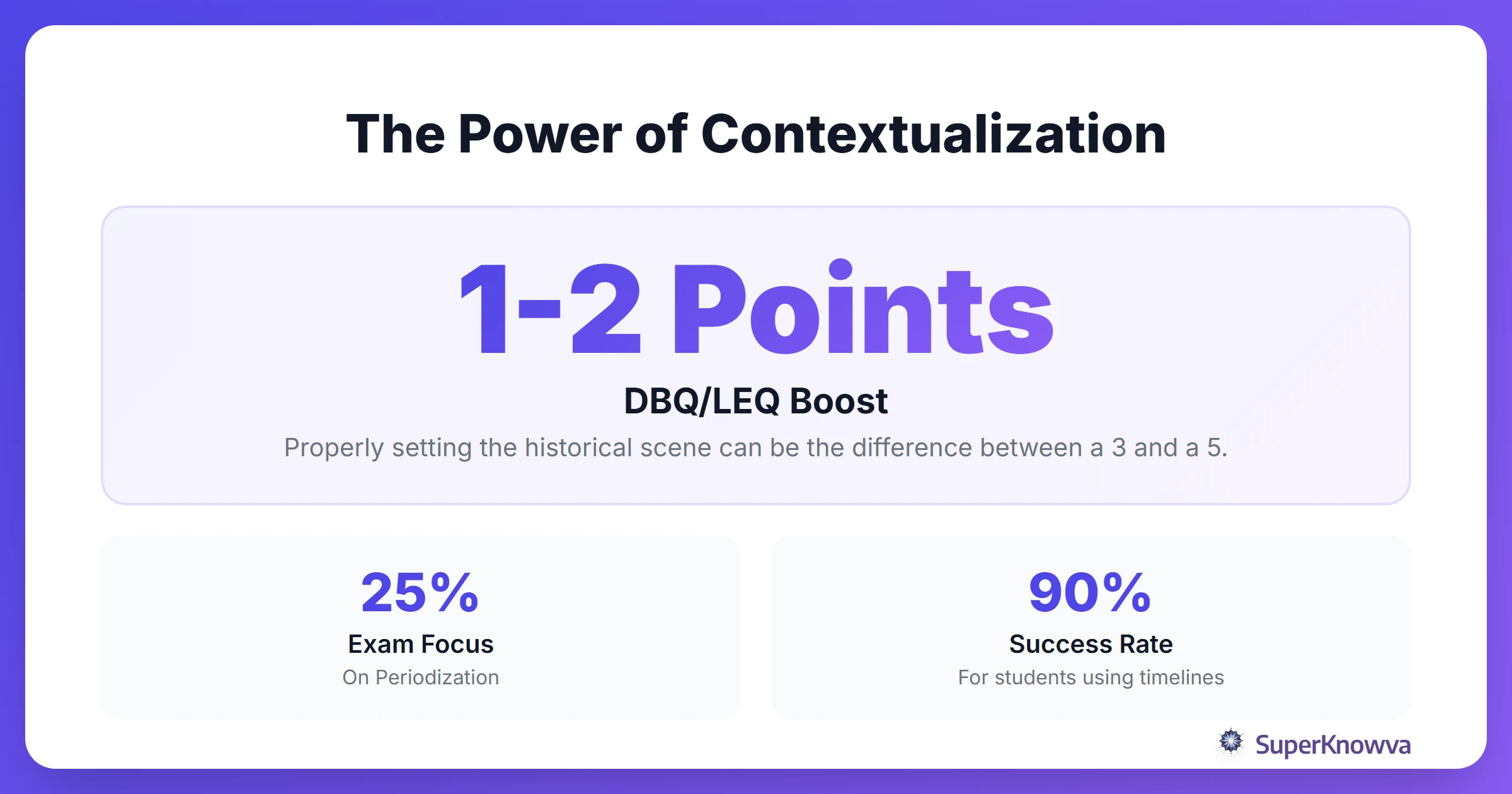
If you want the "Contextualization" point on your Document-Based Questions (DBQs) and Long Essay Questions (LEQs), timelines are your best friend. To earn that point, you have to describe the broader historical events happening around your topic. If you can’t place your essay prompt within a mental timeline, you’re essentially leaving points on the table.
Modern history education has moved away from rote memorization. Today, it’s all about themes and transitions. The College Board prioritizes connections across time and geography. AP World History exam prep becomes a lot less scary when you see history as a series of connected "eras" rather than a random string of facts.
The Problem with Traditional Memorization
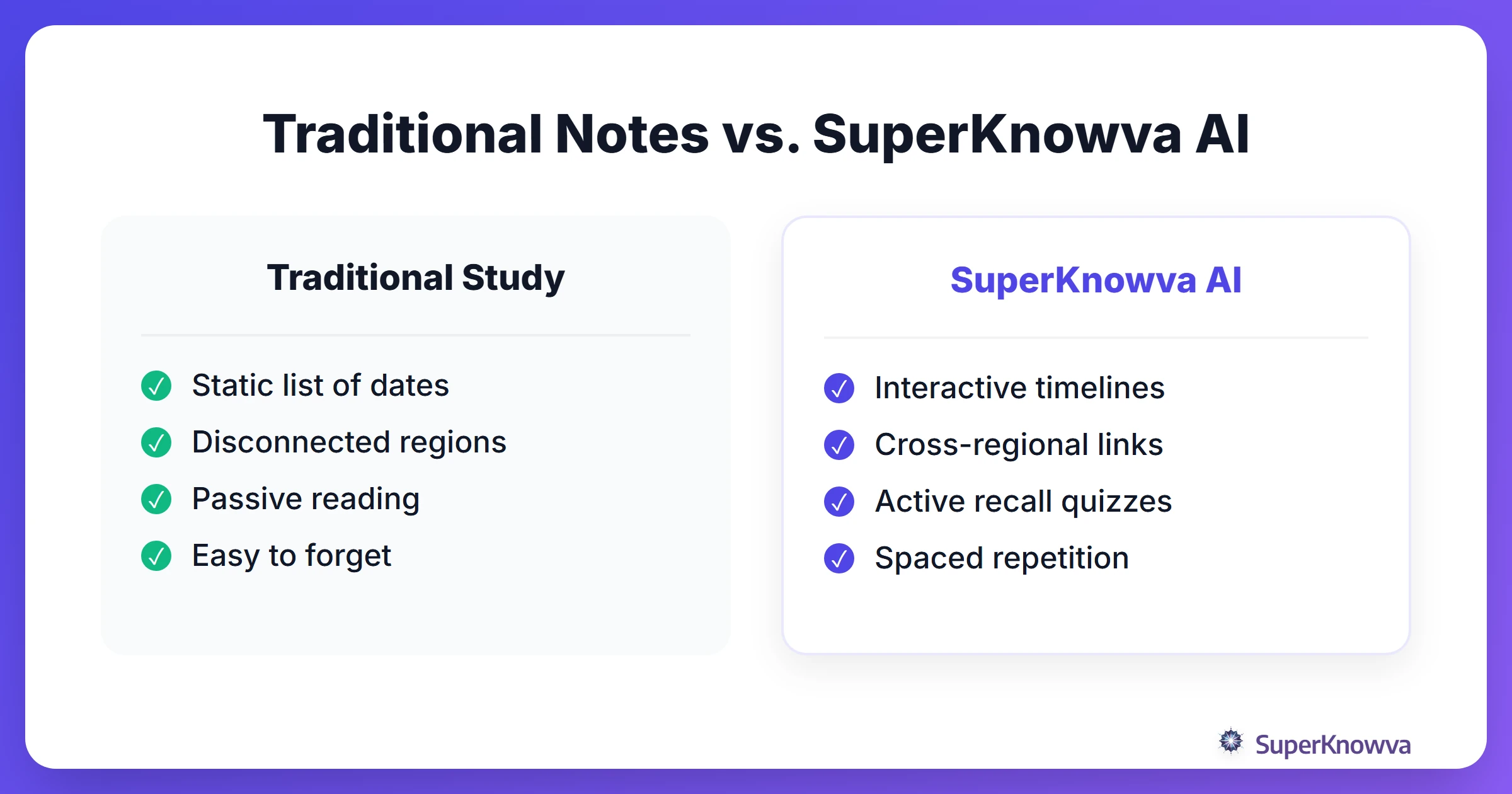
Why do the "old school" study methods usually fail? Static paper timelines and basic flashcards have limits. They’re linear and one-dimensional, but history is a web of simultaneous events.
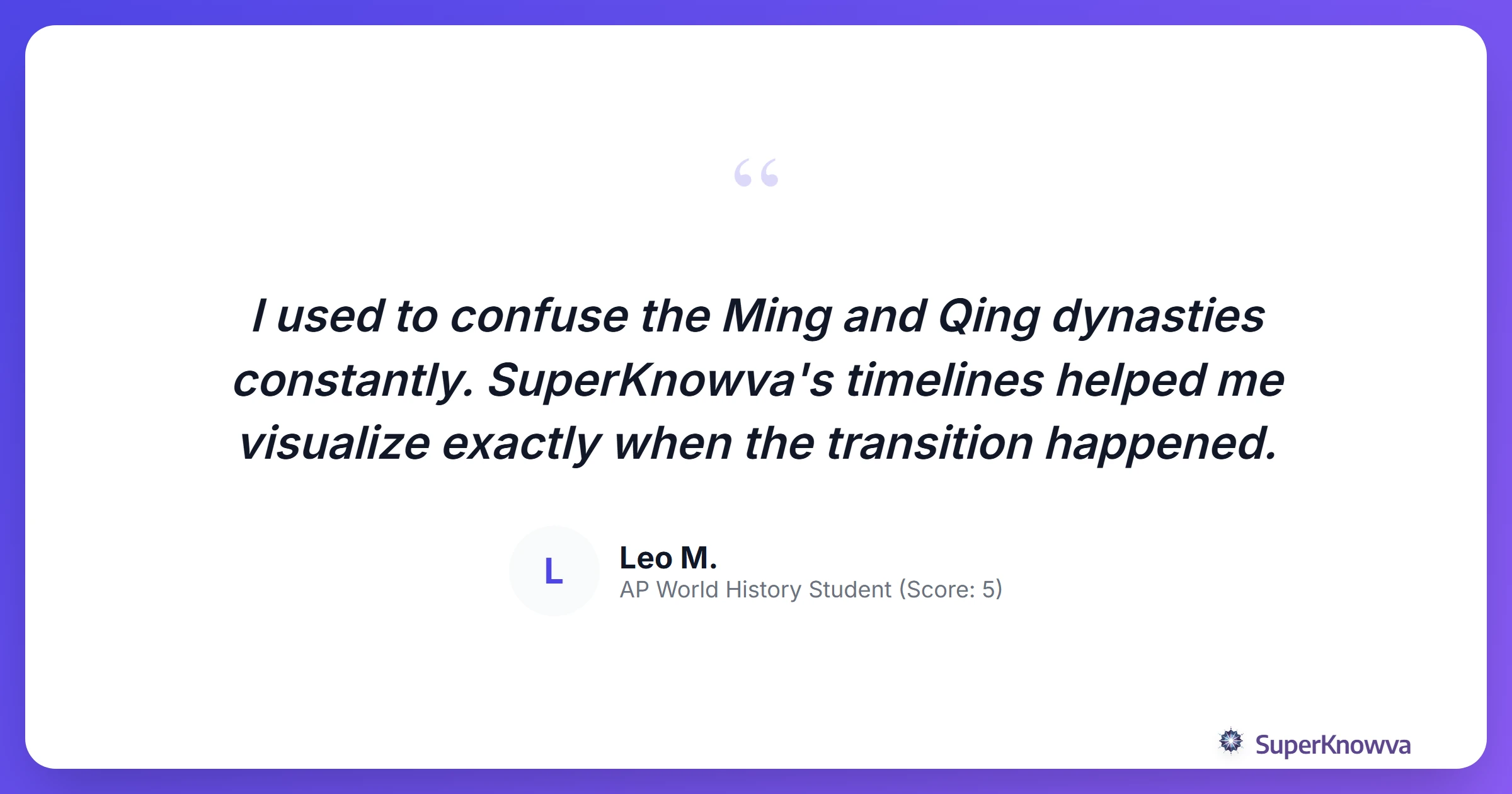
Think about it: many students struggle to visualize things happening at the same time in different regions. While the Ming Dynasty was flourishing in China, the Renaissance was just getting started in Europe. On a standard sheet of notebook paper, these feel like two different chapters. In reality, they are two sides of the same global coin.
This leads to cognitive load. You try to cram so many disconnected dates into your brain that they vanish the second your Friday quiz ends. Linear notes fail to show historical causation: the "butterfly effect" where a spice trade in Asia leads directly to a revolution in the Americas. You need AI-driven study strategies to understand the broader context.
How AI Generates Interactive Timelines
This is where SuperKnowva AI steps in. Instead of spending hours with a ruler and colored pencils, you can use AI to transform dense textbook chapters into visual, interactive maps.
It’s all about "relational learning." You can see exactly how the Silk Roads connect to the spread of the Black Death, or how the Enlightenment fueled the Atlantic Revolutions. With SuperKnowva, you can filter your timelines by theme:
- Trade: Watch the evolution from the Silk Road to Maritime Empires.
- Religion: Trace the spread of Islam or the impact of the Protestant Reformation.
- Technology: Map the development from the Printing Press to the Steam Engine.
Interactive features let you zoom into specific centuries or filter by region. This helps boost your reading comprehension of complex texts because you’re seeing the narrative laid out visually.
Anchor Dates: The AI-Enhanced Strategy
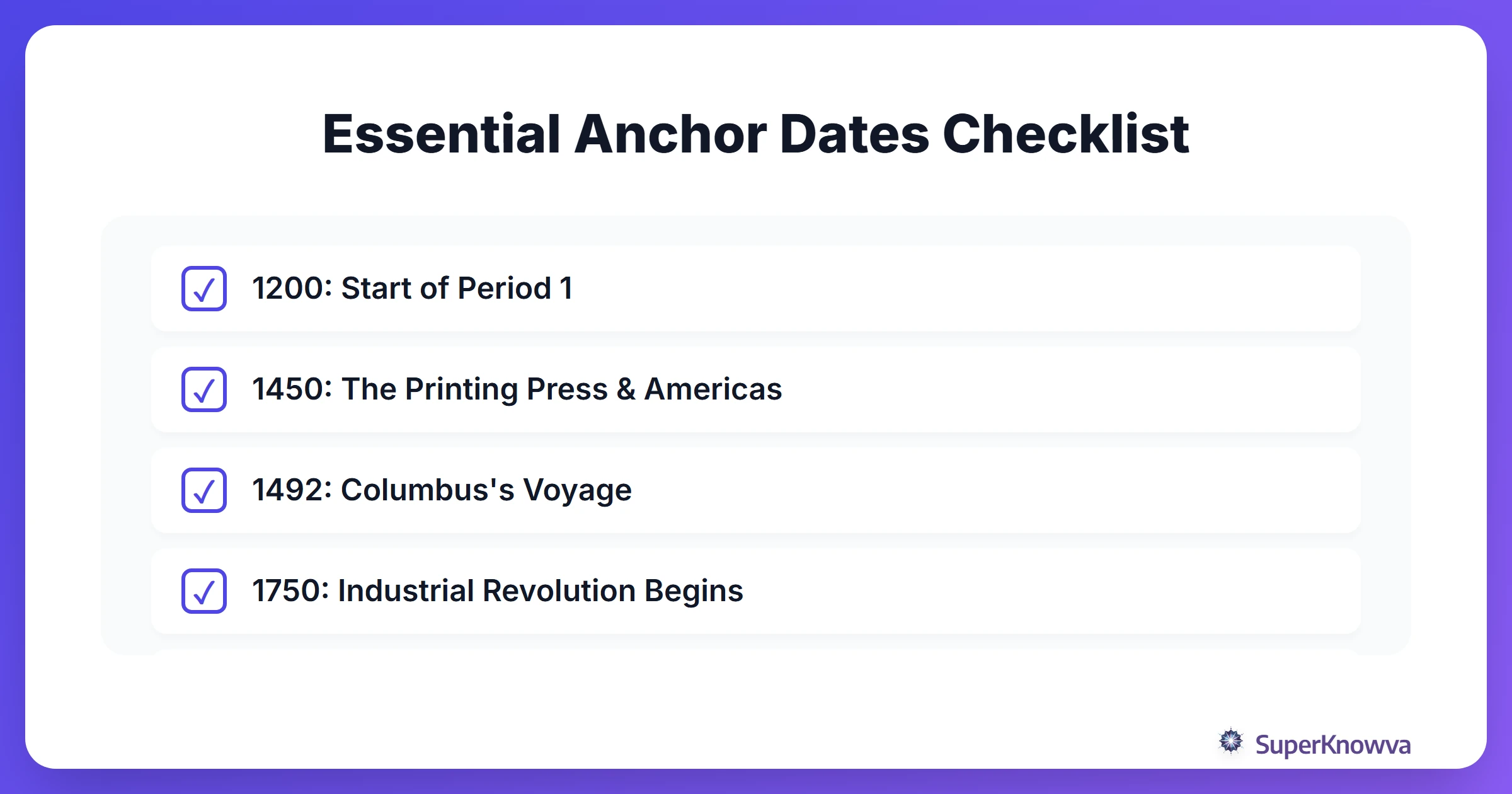
You don’t need to know 1,000 dates. You need to know the Anchor Dates. These are the 10–15 pivotal years that act as "hooks" for the entire course. Once you know an anchor date, you can "anchor" every other event around it.
SuperKnowva’s AI identifies the most frequently tested events from past AP exams to help you prioritize. For example, 1450 is a massive turning point (the Fall of Constantinople and the rise of the Printing Press). Once you have 1450 locked in, you know that anything involving the Americas or global maritime trade must come after that.
AI can also create "Before and After" comparisons for major revolutions. You’ll see exactly how the world changed after 1750 (Industrialization) or 1914 (WWI). According to the Official AP Course and Exam Changes, understanding these shifts is the difference between a 3 and a 5.
Connecting the Dots: Trade, Empires, and Revolutions
ap world history ai timelines visualize the rise and fall of empires like the Mongols, Ottomans, and Qing side-by-side. Overlapping lifespans reveal patterns of conquest and decline often missed in a textbook.
AI helps you track the spread of ideas, like Marxism or Social Darwinism, across continents in real-time. This visual data is gold for practicing the "Comparison" and "Causation" skills required for the exam. For more tips on handling the pressure of these high-stakes connections, check out our guide on managing test anxiety with AI.
Cramming vs. Long-term Retention
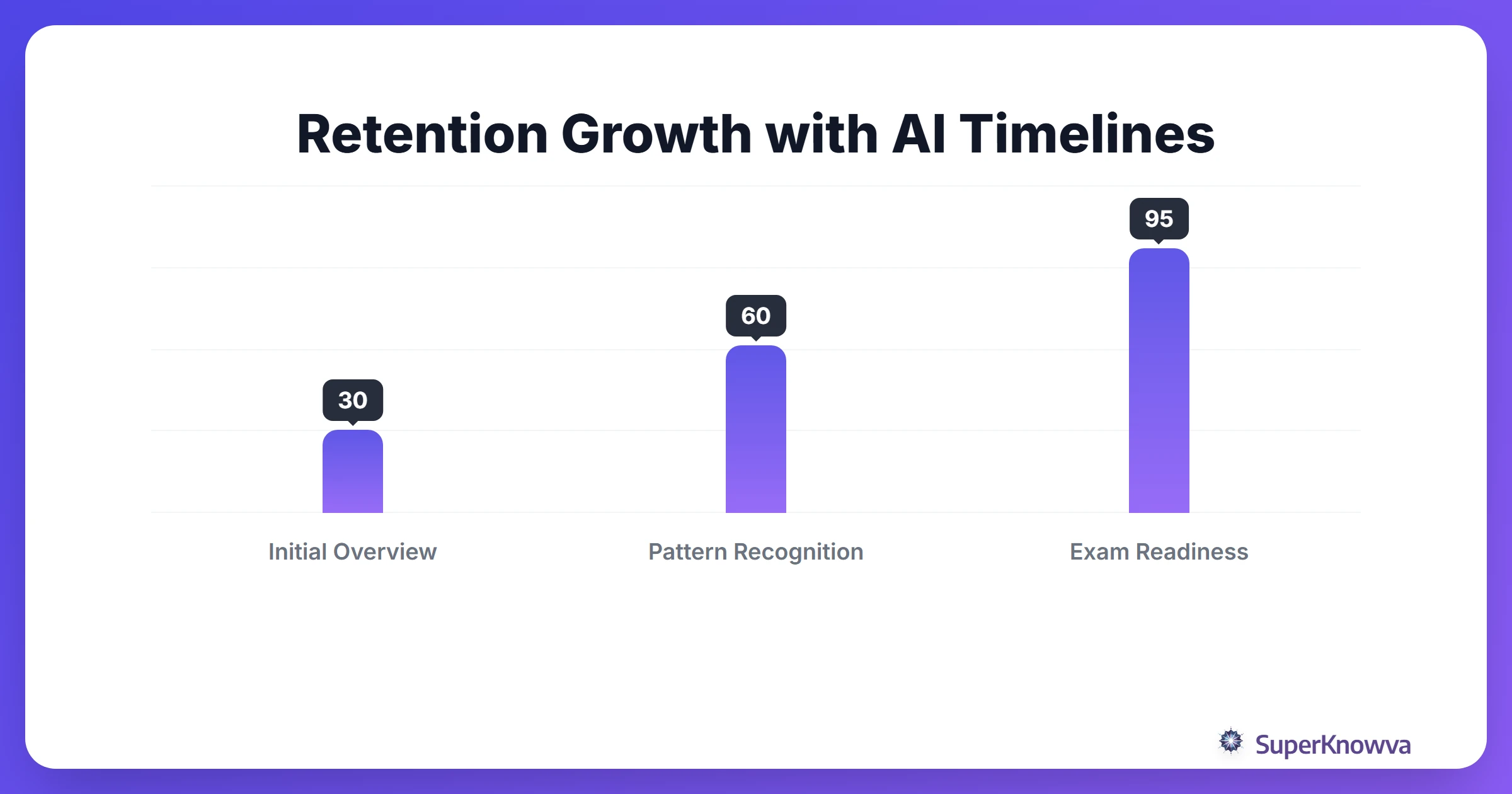
We’ve all tried the "all-nighter" before a big test. It might get you through a unit quiz, but it won’t get you through the exam in May. The science of spaced repetition is the only real way to move info from short-term to long-term memory.
SuperKnowva’s AI schedules your reviews based on your personal "forgetting curve." If you keep tripping up on the dates of the Meiji Restoration, the AI will show you that part of the timeline more often. Visual memory (timelines) lasts way longer than textual memory (reading a paragraph). For more on this, check out this guide on How to Memorize AP World Timelines Quickly.
Step-by-Step Guide to Using SuperKnowva for AP World
Ready to build your own master timeline? Here is how to get started:
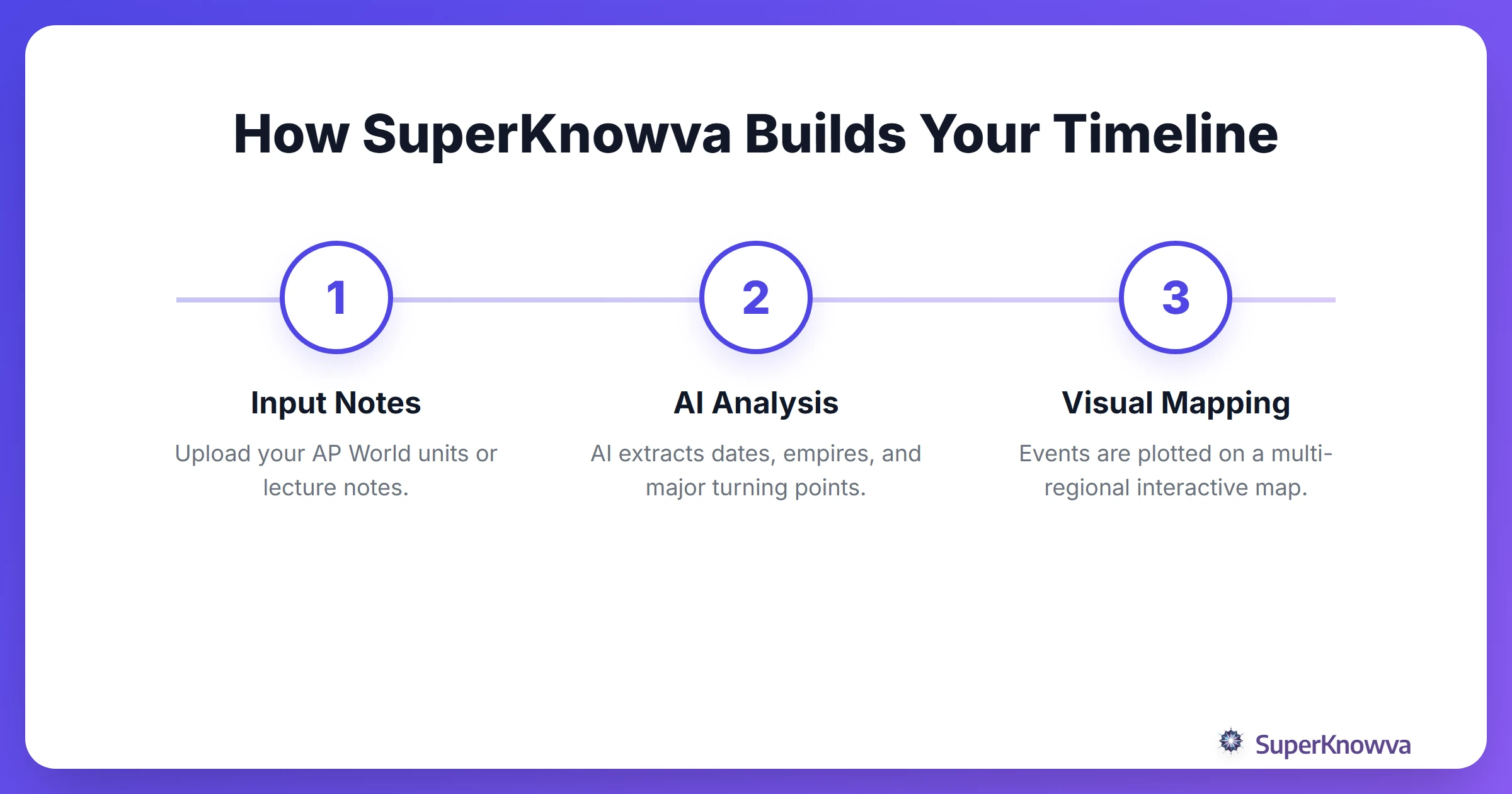
- Step 1: Upload Your Materials. Toss in your class notes, a PDF of a textbook chapter, or just select a specific AP World unit (like Unit 3: Land-Based Empires).
- Step 2: Generate Your Timeline. Let the AI extract the dates, key figures, and turning points to create your custom map.
- Step 3: Highlight Anchor Dates. Use the "Anchor" feature to pin the most important years and link them to vocab terms like Mercantilism or Bolivar.
- Step 4: Practice Active Recall. Use the AI-generated quiz questions to see if you actually understand the "why" behind the dates.
Conclusion
AP World History doesn’t have to be a blur of names and numbers. By leveraging ap world history ai timelines, you can organize the chaos of the past into a framework that actually makes sense. Stop memorizing and start connecting. Head over to SuperKnowva today and build the timeline that will carry you to that 5!