Graduation is a weird time. One minute you’re celebrating your final exams, and the next, you’re staring at a "Junior Role" job description that requires three years of experience. It’s a classic Catch-22: how do you prove you’re ready for the real world when you’ve spent the last four years in a lecture hall?
A standard, one-page resume is a start, but in today’s market, it’s rarely enough. To really grab a recruiter's attention, you need to build a professional graduation portfolio. This isn't just a folder of old assignments; it documents your transition from student to specialist.
Let’s look at how to curate your best work, pick the right platform, and build a digital presence that actually gets you the "we'd like to schedule an interview" email.
The Difference Between a Resume and a Professional Portfolio
Many students treat these as the same thing. They aren't. A resume is a static summary of your history; it tells an employer what you’ve done. A professional portfolio, however, is a dynamic showcase that proves what you can do.
Think of your resume as the "table of contents" and your portfolio as the "chapters" of your professional story. While you're trying to balance a high GPA with a social life, keep in mind that your portfolio is what gives that GPA context. It transforms a grade on a transcript into tangible proof of your skills.
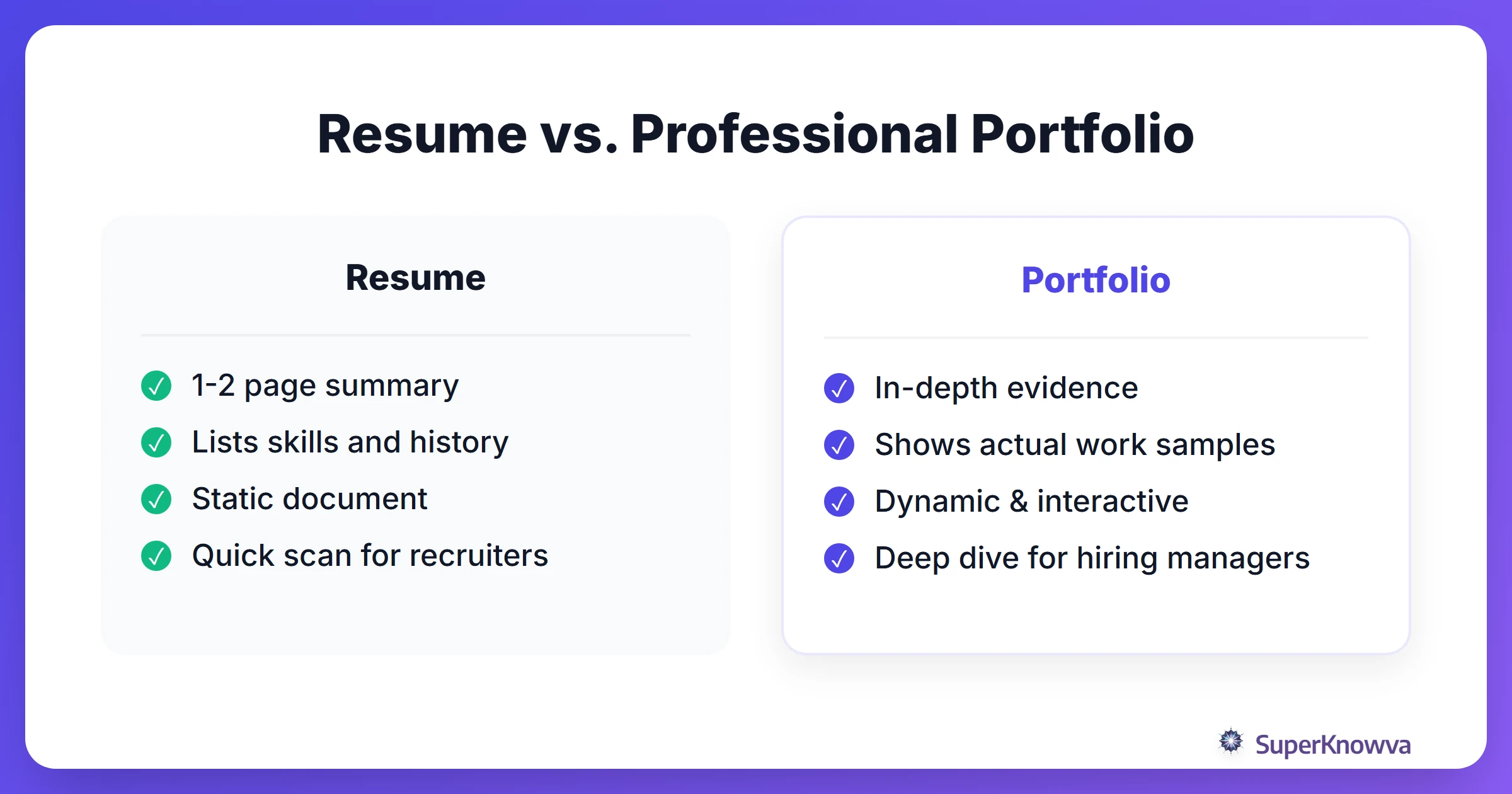
By shifting from "telling" to "showing," you provide evidence of your growth. It’s the difference between claiming you know how to code and providing a live link to a functional application you built from scratch.
Why You Need a Portfolio Before You Graduate
In a sea of entry-level applicants, a digital portfolio is your secret weapon. It changes the vibe of an interview. Instead of just reciting bullet points, you can walk a recruiter through your actual thought process.
But it’s not just about the job hunt. A portfolio acts as a centralized hub for your academic progress. It’s a way to attract mentors, connect with peers, and catch the eye of employers who find your work online. According to ASU, maintaining a digital portfolio is essential for reflecting on your scholarly growth.
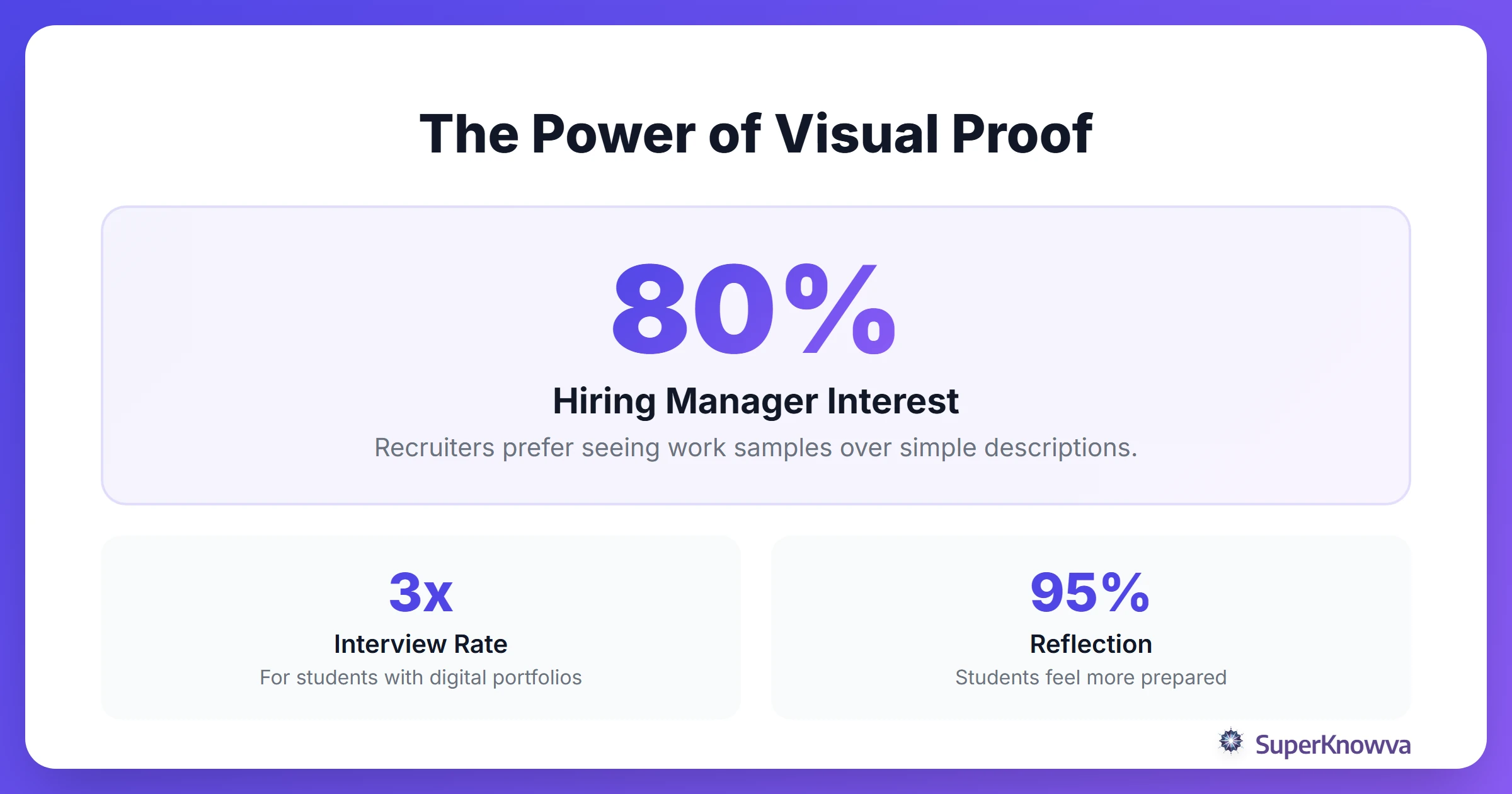
The data is clear: recruiters are significantly more interested in candidates who provide visual or documented proof of their expertise.
What to Include: Essential Portfolio Components
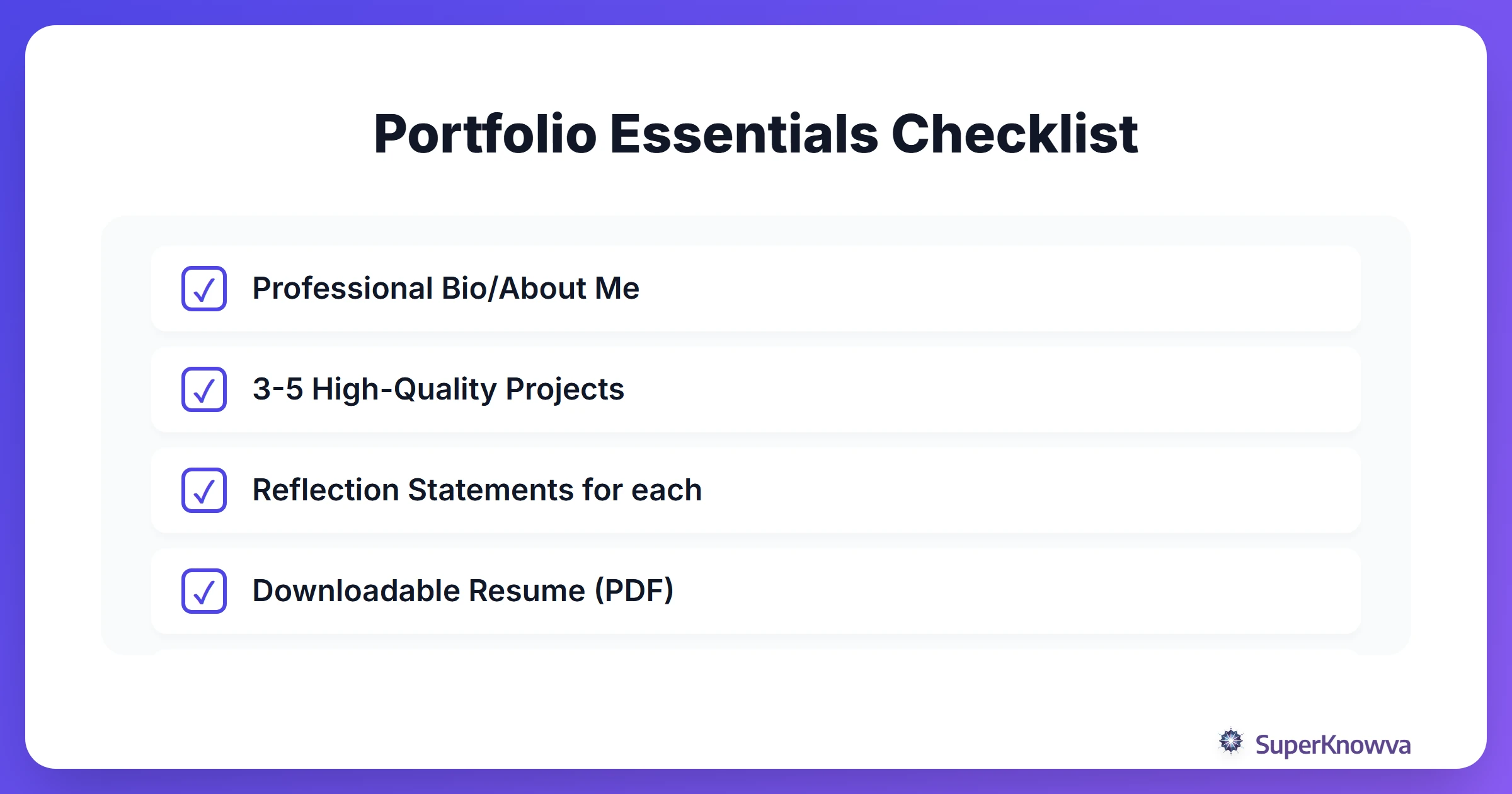
Building a portfolio doesn't mean uploading every single essay or quiz you’ve ever finished. This is about curation. Select 3-5 high-impact projects or case studies that align with the specific career path you’re targeting.
If you're feeling overwhelmed, use the stop procrastinating 5-minute rule to start gathering your materials today. Focus on these core components:
- High-Quality Projects: Think case studies, research papers, or design files that you're genuinely proud of.
- Reflection Statements: This is the most important part. For each piece, write a short paragraph explaining the "why." What problem were you solving? What tools did you use? What was the final result?
- Certifications and Awards: Don't be shy. Include digital badges or certificates that validate your specialized skills.
- Professional "About Me": Keep it brief, human, and focused on your career goals.
- Contact Information: Make it incredibly easy for people to reach you.
Choosing the Right Platform for Your Work
Where you host your work matters. You need a platform that looks professional, works on mobile, and is easy to use. You don't want a recruiter struggling to open a broken link.
- General Purpose: If you’re in marketing, business, or communications, builders like Wix, Squarespace, and WordPress offer clean, professional templates.
- Developers: Stick to the industry standard. GitHub is where you showcase your code and version control skills.
- Designers & Creatives: Use Behance or Adobe Portfolio for high-resolution, visual-heavy work.
Concordia University emphasizes that professional readiness starts long before graduation. Whether you choose a self-hosted site for full control or a third-party platform for ease, ensure the design stays out of the way of the content.
Step-by-Step Guide to Building Your Portfolio
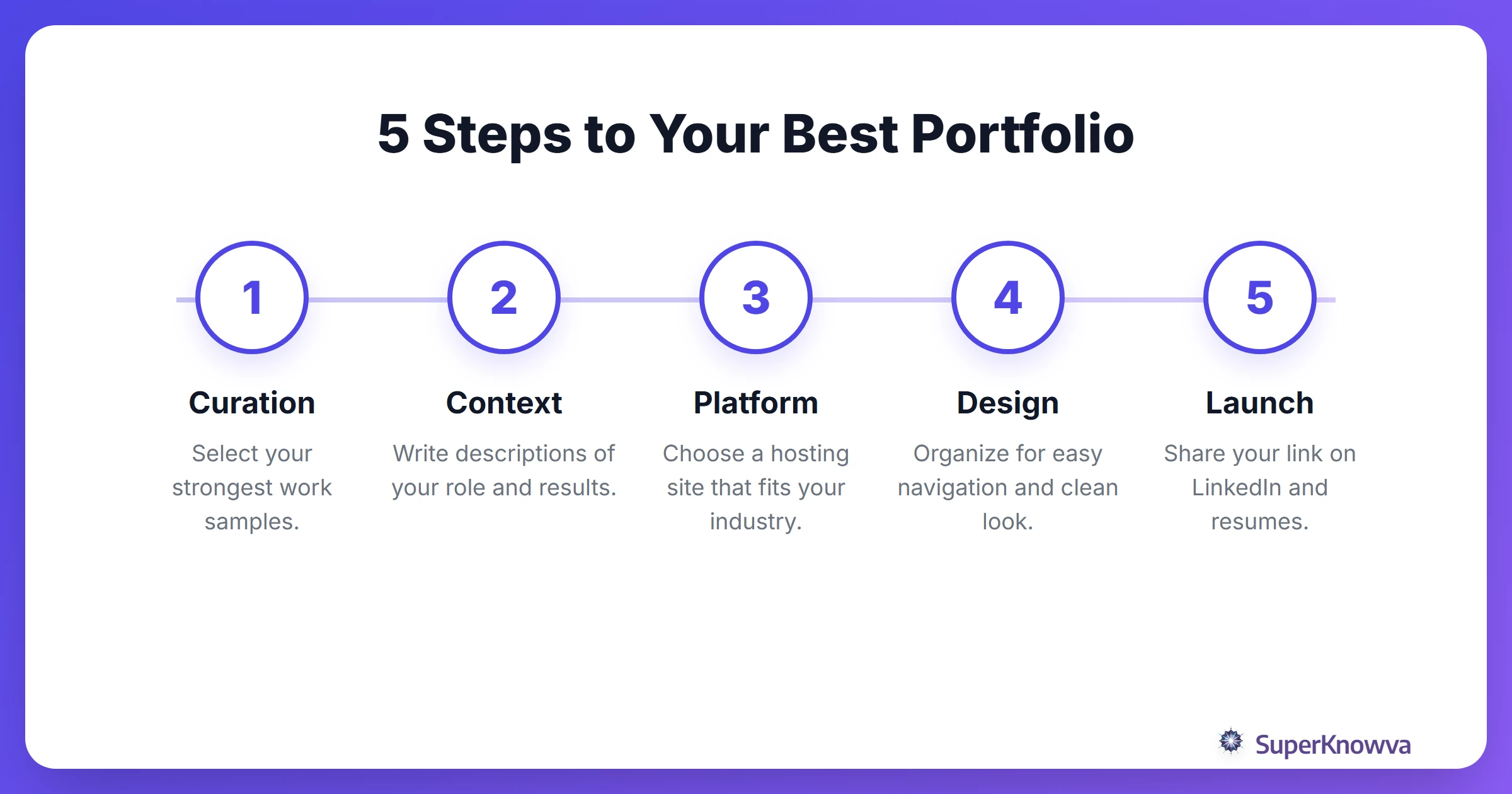
Ready to get started? Follow these five steps to turn that folder of documents into a professional showcase.
- Audit Your Work: Go back through your projects from freshman to senior year. Use effective note-taking strategies to summarize the key lessons you learned during those courses so you can explain them clearly to an employer.
- Define Your Audience: Who are you trying to impress? A hiring manager at a fast-paced tech startup looks for different qualities than a principal at a primary school.
- Organize Content: Use logical categories like "Data Analysis," "Technical Writing," or "Creative Design." Don't make people hunt for your best work.
- Design for Readability: Use clean fonts and plenty of white space. If it’s hard to read, they won't read it.
- Peer Review: Have a friend or a career counselor click through every page. Check your links. Then check them again.
Common Portfolio Mistakes to Avoid
Even the best students make simple mistakes when building their first portfolio. Avoid these pitfalls to keep your credibility intact:
- Over-cluttering: Quality beats quantity every time. Leave out the "filler" projects that don't represent your current skill level.
- Lack of Context: A link to a random PDF tells a recruiter nothing. Always include the story behind the work.
- Broken Links: Nothing kills a first impression faster than a "404 Not Found" error.
- Stagnation: Your portfolio is a living document. Update it as you gain new skills or finish internships.
Building a professional graduation portfolio is one of the smartest moves you can make in your final year. It bridges the gap between your degree and your career, giving you the confidence to say, "I don't just have a diploma; I have the skills to do the job." Start curating your work today.