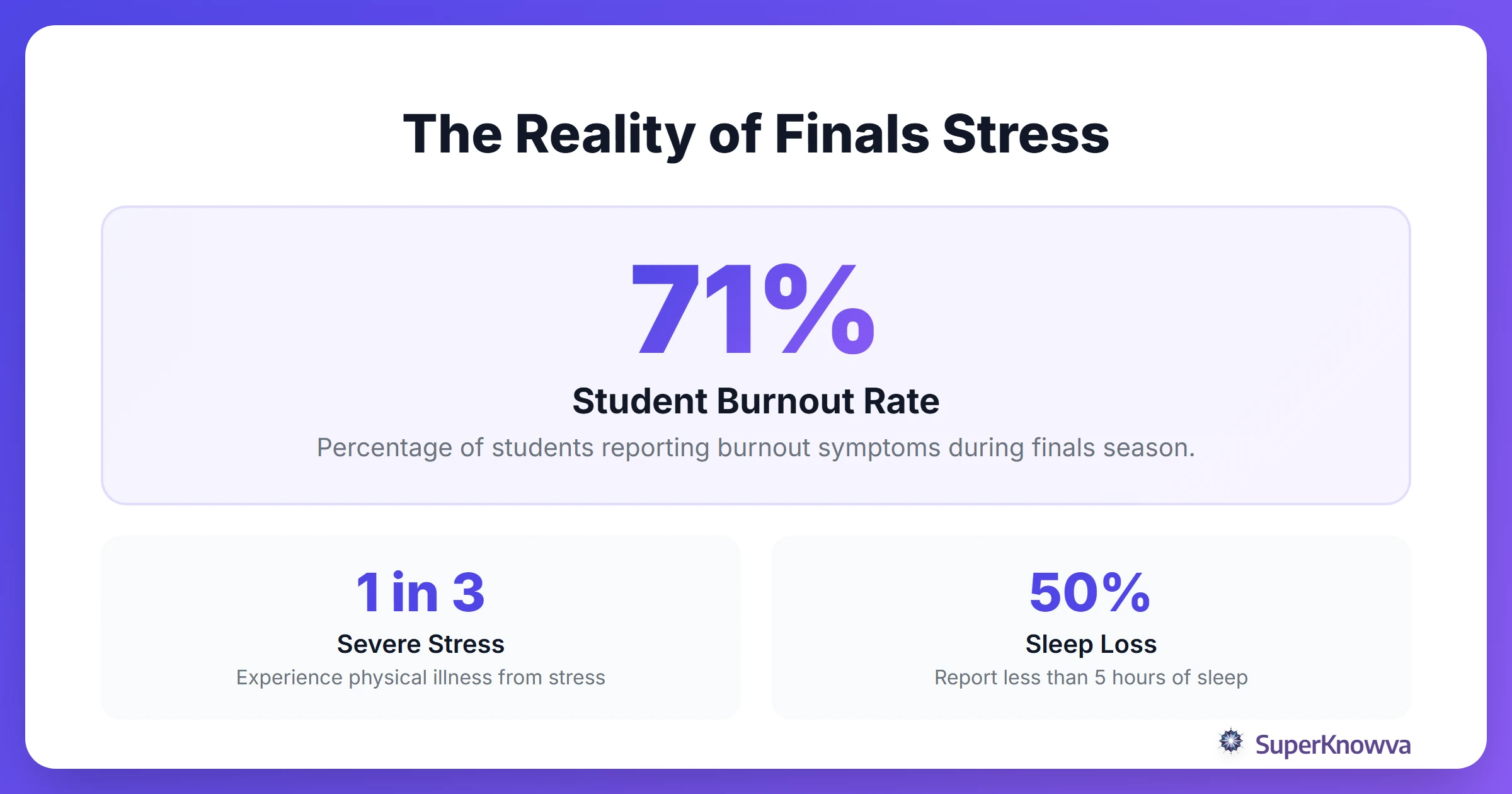
The final weeks of the semester usually feel like a marathon where the finish line keeps moving further away. Between cumulative exams, high-stakes projects, and the constant pressure to protect your GPA, the mental weight can become paralyzing. Have you ever spent three hours staring at the same page of a textbook without absorbing a single word? You are not just tired; you might be handling academic burnout during finals.
Burnout is more than just "finals week stress." It’s a state of total emotional, physical, and mental exhaustion. At SuperKnowva, we know that your well-being is the actual foundation of your academic success. You can't pour from an empty cup, and understanding how to manage this overwhelm is the first step toward finishing the semester in one piece.
Understanding the 'Intellectual Overwhelm' of Finals
Think of academic burnout as your nervous system hitting the "emergency stop" button. To visualize it, try the "coffee cup" analogy: your brain is a cup with a finite capacity. Throughout the semester, you’ve been filling it steadily with lectures, readings, and assignments. During finals, the demands pour in faster than you can process them, and eventually, the cup overflows.
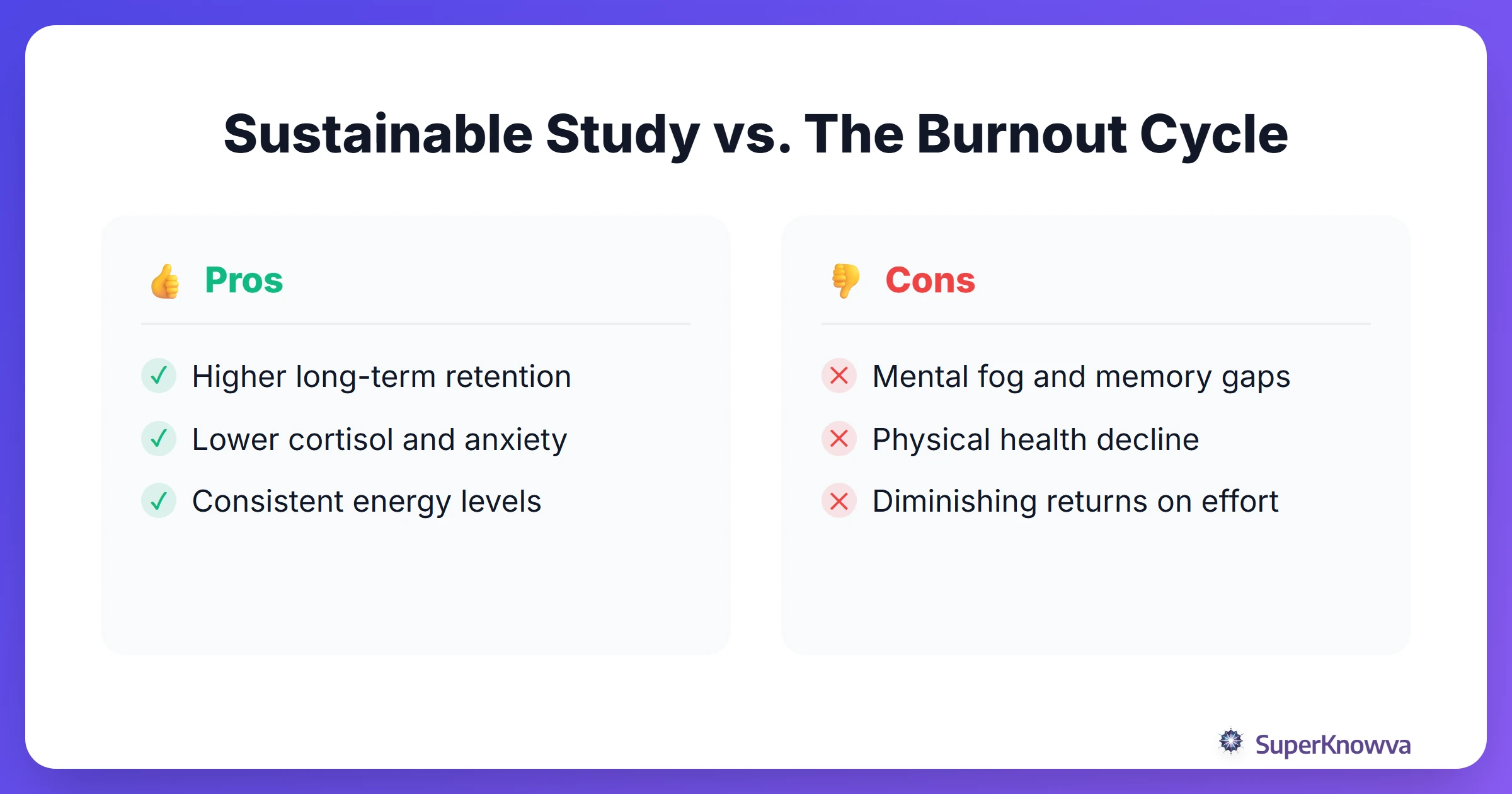
Psychology experts at The Daily Utah Chronicle describe burnout as a natural response to overfilling your "intellectual cup." It is important to recognize the difference between normal exam nerves, which can help you focus, and clinical-level burnout. Burnout leads to diminishing returns. Once you reach that limit, your cognitive function drops so sharply that you could spend ten hours in the library and retain less than you would in one hour of rested study.
Red Flags: How to Spot Burnout Before the Breaking Point
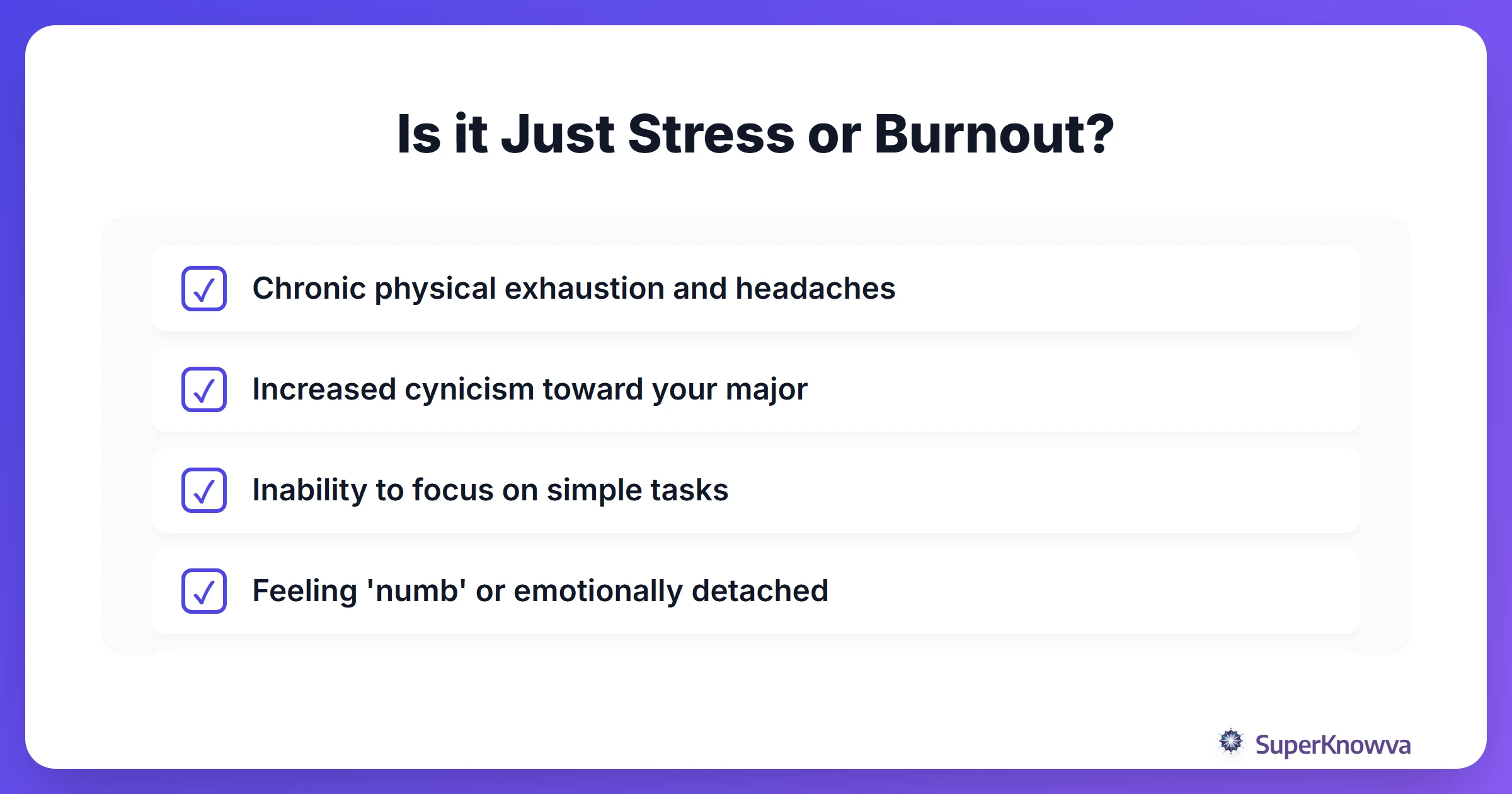
Burnout doesn't usually happen overnight. It creeps up through a series of red flags that affect almost every part of your life. Are you experiencing any of these?
- Physical Symptoms: Chronic fatigue that a long nap doesn't fix, tension headaches, or a sleep schedule that has completely fallen apart.
- Emotional Signs: Feeling unusually irritable, cynical about your major, or just having a general sense of "what's the point?"
- Cognitive Indicators: This is the classic "brain fog." You might struggle to follow simple instructions or find that your memory feels like a leaky sieve.
- Behavioral Changes: You might find yourself withdrawing from friends or using "procrastination-cleaning" as a way to avoid the mental pain of your to-do list.
Immediate Strategies to Recharge Your Mental Battery
When you’re in the thick of it, you don't need abstract advice. You need a plan. First, stop negotiating with your basic needs. Sleep and nutrition are non-negotiable. Skipping meals or pulling all-nighters might feel like a "grind," but it's actually sabotaging your brain's ability to store the very information you're trying to learn.
If you’re trying to figure out how to structure your day without hitting a wall, check out our guide on how to study for 10 hours a day without burning out.
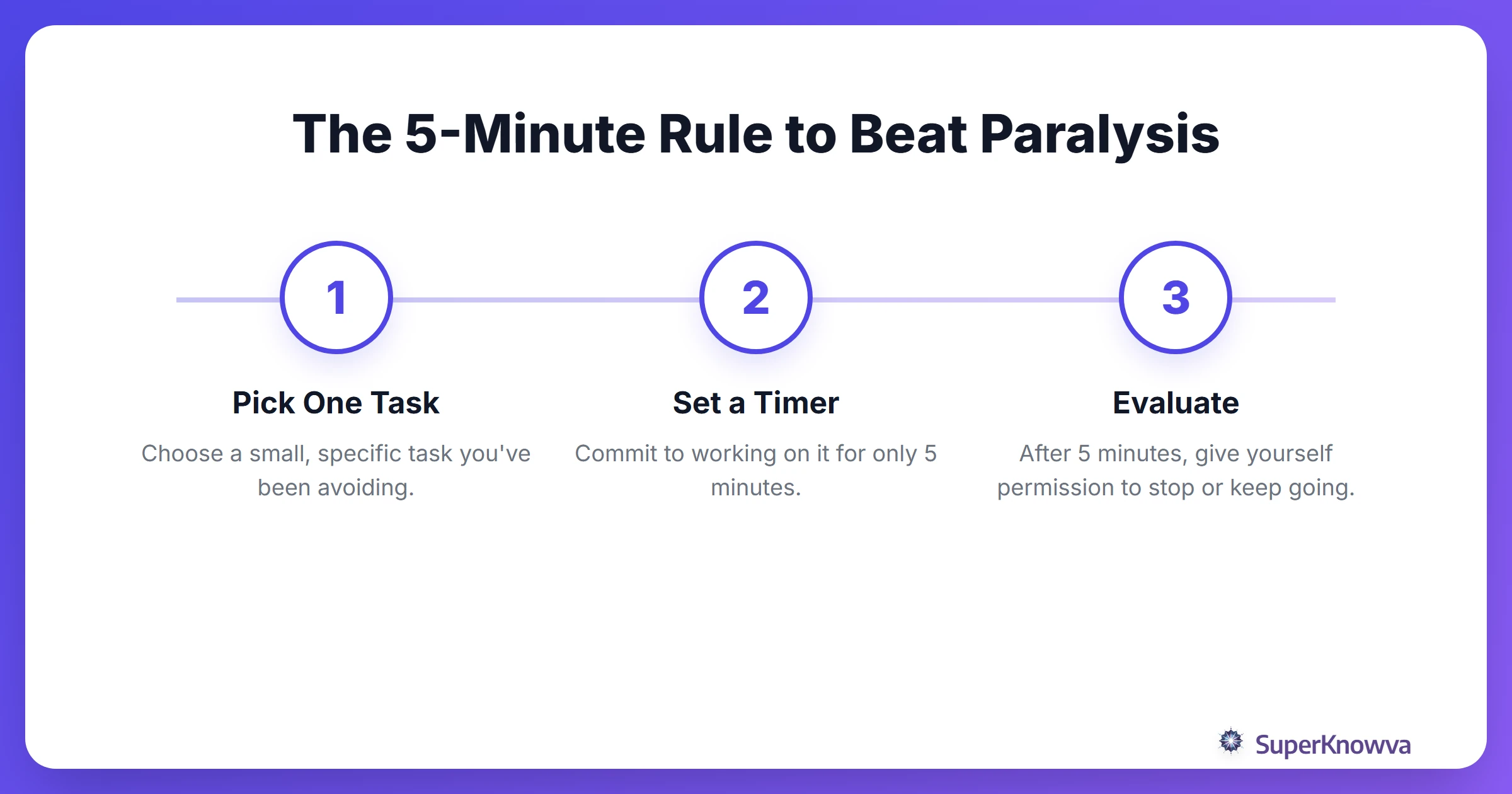
One of the best ways to break the "paralysis" of a massive project is the 5-minute rule. When a task feels too big to even start, tell yourself you’ll only do it for five minutes. That’s it. Often, the hardest part is just breaking the seal. If you're feeling stuck, use the 5-minute rule for students to build a little momentum.
Also, stop rereading your notes. It's passive and exhausting. Switch to active recall. Using AI-powered tools like SuperKnowva to quiz yourself saves mental energy by highlighting exactly what you don't know, so you aren't wasting time on what you've already mastered. And when you take a break? Make it count. A quick walk outside does wonders; scrolling TikTok just adds more noise to an already crowded brain.
Reframing Your Mindset: Self-Compassion Over Self-Criticism
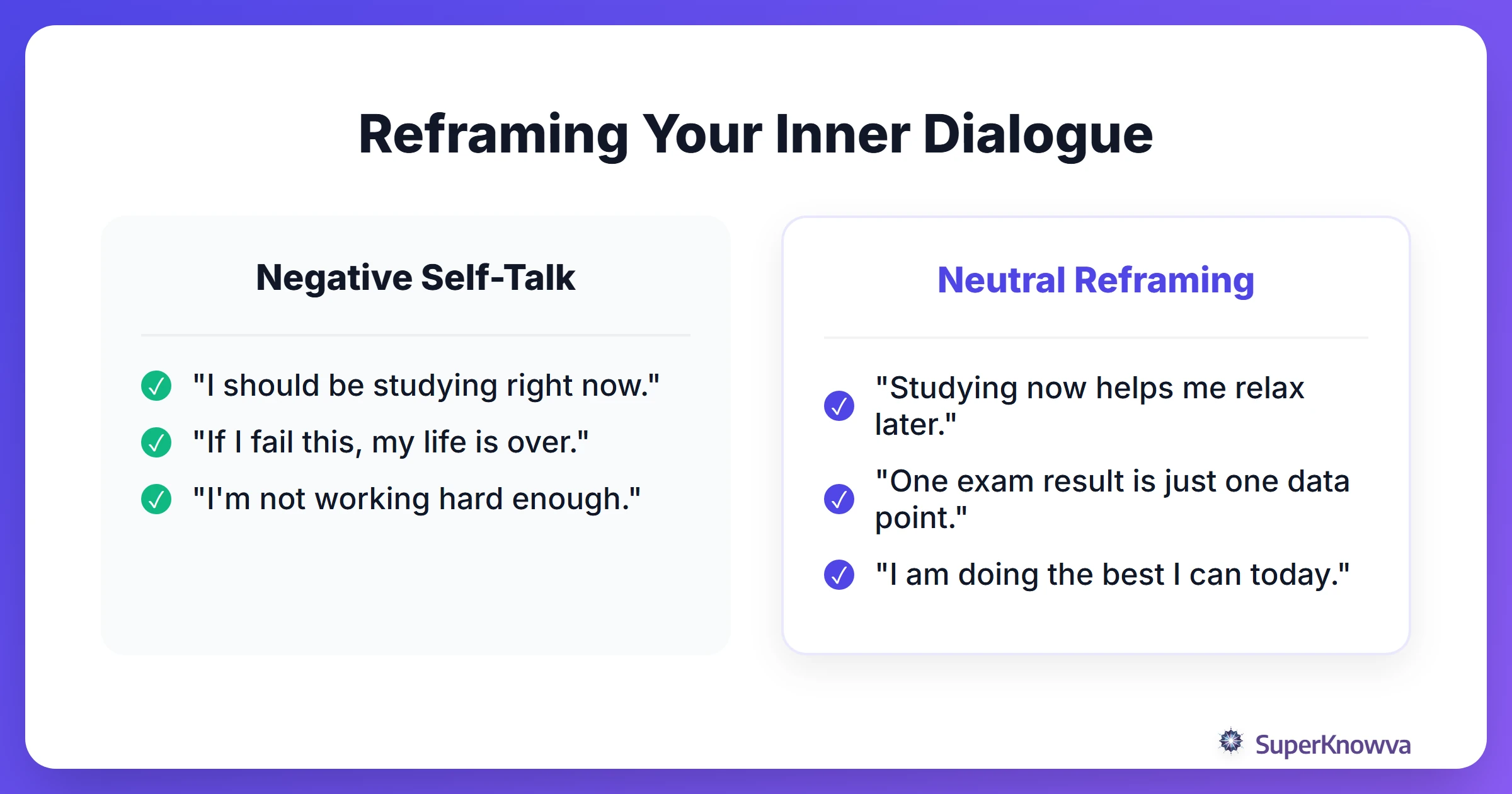
How do you talk to yourself when you're stressed? If your inner monologue is a constant stream of "I should be doing more," you're likely spiking your own cortisol levels. This "shame spiral" only makes burnout worse. According to CU Boulder Health & Well-Being, reframing negative self-talk into neutral observations can keep your motivation from bottoming out.
Instead of thinking, "I'm failing because I can't focus," try a neutral thought: "I'm struggling to focus right now because I'm tired. I'll take a 20-minute break and try one more practice problem." Practicing self-compassion helps pull your nervous system out of "fight or flight" mode. Remember, one exam doesn't define your entire future. If a bad grade is what's fueling your stress, take a breath and learn how to recovering from a failed exam so you can bounce back.
Leveraging Campus Resources and Support Systems
You aren't supposed to carry the weight of the entire semester alone. Your university has systems in place specifically for this high-pressure window:
- Counseling Centers: They expect an influx of students during finals. Reach out if you feel hopeless or panicky.
- Writing & Tutoring Centers: Let them help you structure an essay or untangle a math problem.
- De-stress Events: Keep an eye out for "Paws for Finals" (therapy dogs) or guided meditation sessions. These resources are available to help you manage the pressure.
If you've hit a point where your health is genuinely at risk, talk to your professors. Most would much rather give you a two-day extension than see you end up in the ER from exhaustion.
Long-Term Prevention: Balancing GPA and Wellbeing
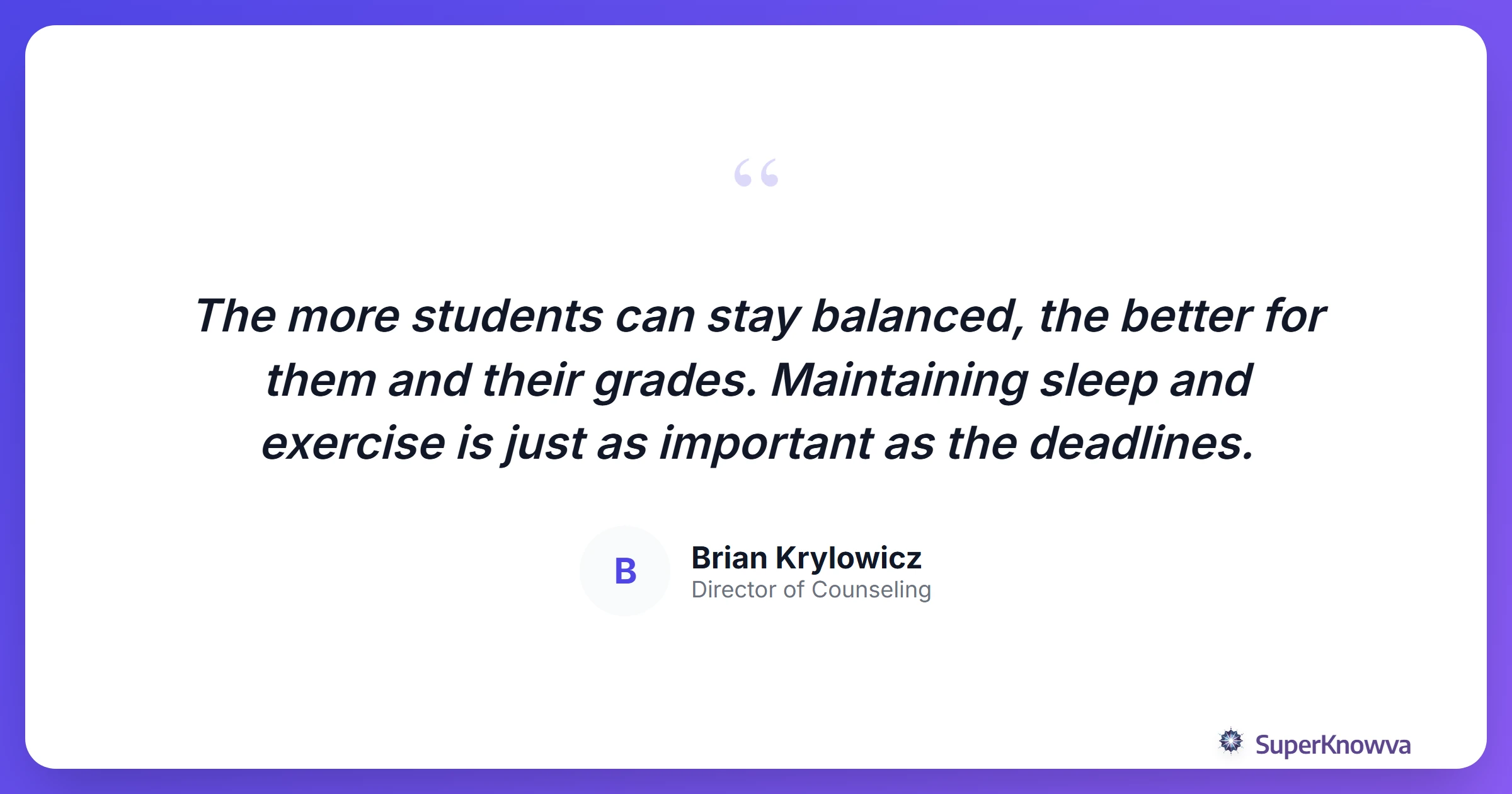
Handling burnout during finals is about survival, but the goal is to build a life where you don't hit this wall every December. This means setting "hard stops," times of day where studying is strictly banned so your brain can actually recover.
A rested brain is a high-performing brain. Success involves learning how to balance a high GPA with a social life, even when things get busy. By setting boundaries early and using the right tools, you can finish the year with your grades and your sanity intact.