The cap is tossed, the degree is framed, and the "Open to Work" banner is on your LinkedIn profile. Congratulations, Class of 2026! You have crossed the stage and started an exciting and slightly daunting phase: the entry level job search.
While that degree is a massive achievement, it’s often not enough to land the job on its own. The real bridge between your graduation ceremony and your first paycheck? It’s built out of people.
Mastering networking tips for college graduates isn't just a "nice to have" skill; it’s the fastest way to get your foot in the door. Most of the best opportunities never even see the light of a job board. In this guide, we’re going to show you how to turn your graduation momentum into a professional network that actually works for you.
The Networking Mindset: It’s Not a Favor, It’s a Conversation
Does the word "networking" make your skin crawl? You aren't alone. Many recent grads dread it because they feel like they’re "asking for a favor" or being a nuisance. To win at this, you have to flip the script. Stop thinking about job hunting and start thinking about professional relationship building.
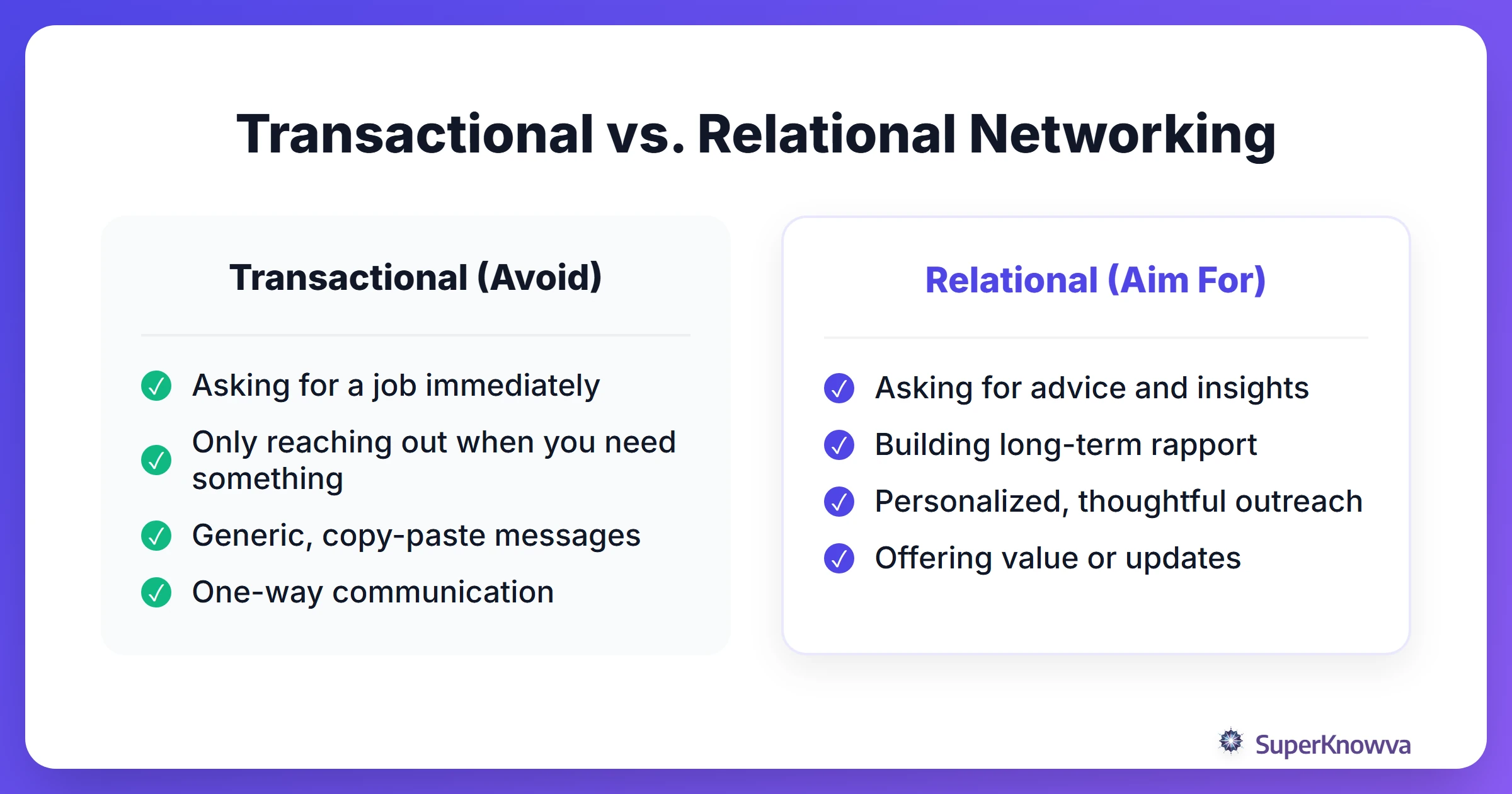
Networking isn't a transaction. It’s about curiosity.
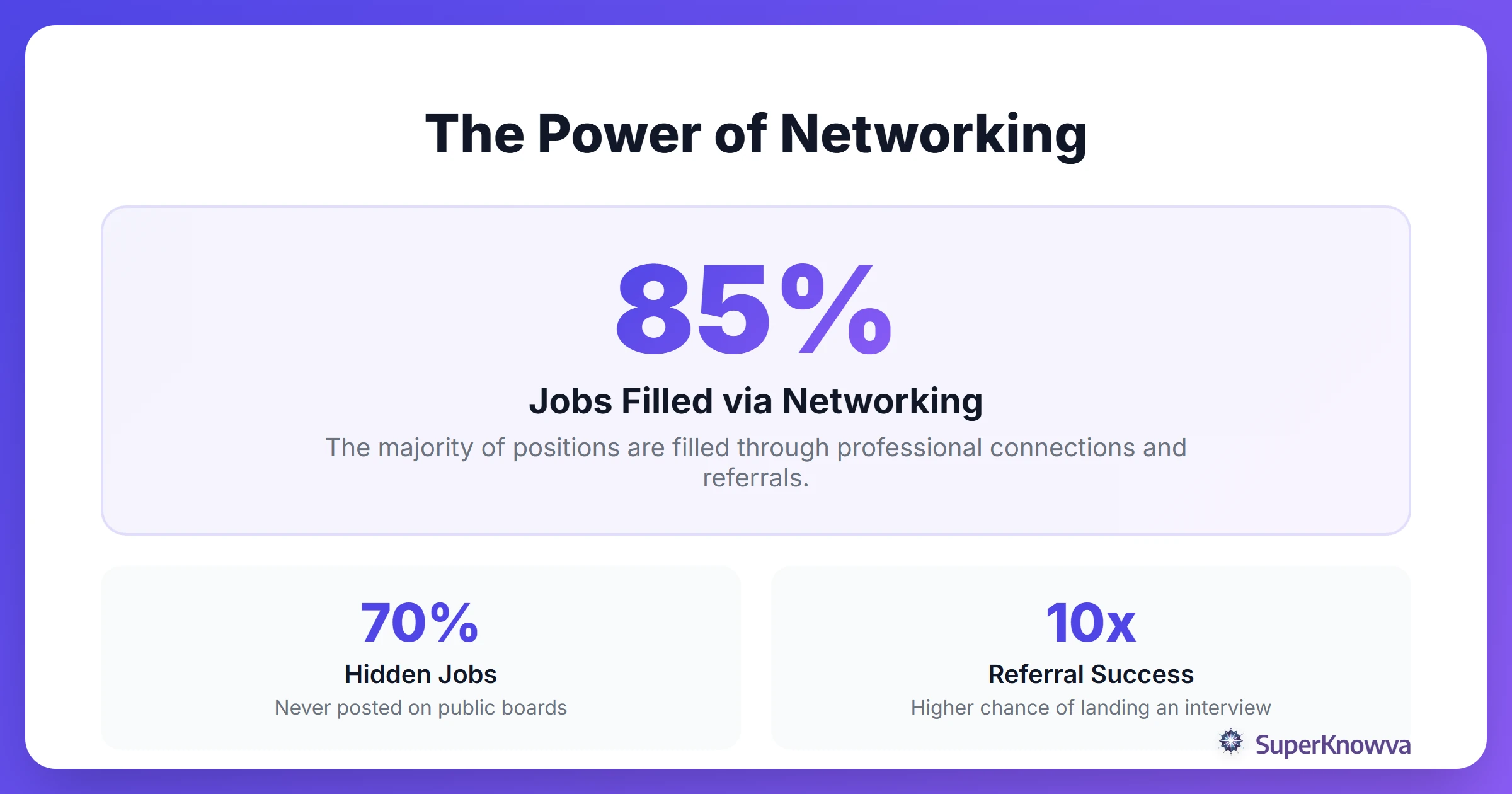
The "hidden job market" is a very real thing. Statistics show that the vast majority of roles are filled through internal referrals or "knowing a guy" before the HR department even hits "post" on Indeed.
When you reach out to a professional, don’t lead with "Are you hiring?" That’s a conversation killer. Instead, lead with genuine interest. Ask about their path, the mess-ups they had early on, and the advice they’d give their younger selves. It takes the pressure off both of you. And if you’re feeling a bit of "imposter syndrome," remember: most people actually love talking about themselves and helping out a "newbie." You aren't a bother; you’re a future peer.
Leveraging Your Alumni Network: The Built-In Cheat Code
Your school isn't just where you spent four years studying; it’s your most powerful resource. Alumni networking works because you already have a "warm" connection. Whether you were a Tiger, a Bear, or a Wildcat, older grads generally want to see their own succeed.
- The LinkedIn Alumni Tool: This is a powerful resource. Go to your university’s LinkedIn page and click the "Alumni" tab. You can filter by city, company, or major. It’s an effective way to find people who have been in your position.
- Show Up in Person: Attend local alumni mixers or "welcome to the city" events. These are low-pressure environments designed for building professional connections.
- The Outreach Script: Keep it short and direct.
- The "Quick Ask": "Hi, I’m a recent graduate from the Class of '26. I saw your professional background and would love to hear how you transitioned from campus to the office. Do you have 15 minutes for a brief virtual coffee?"
Need to brush up on the basics first? Check out our comprehensive student networking guide.
Making Your Digital First Impression Count
Before you start sliding into DMs or sending emails, your digital house needs to be in order. In 2026, your LinkedIn profile is your 24/7 digital resume. LinkedIn for graduates needs to be more than a list of classes; it needs to show your personality and your potential.
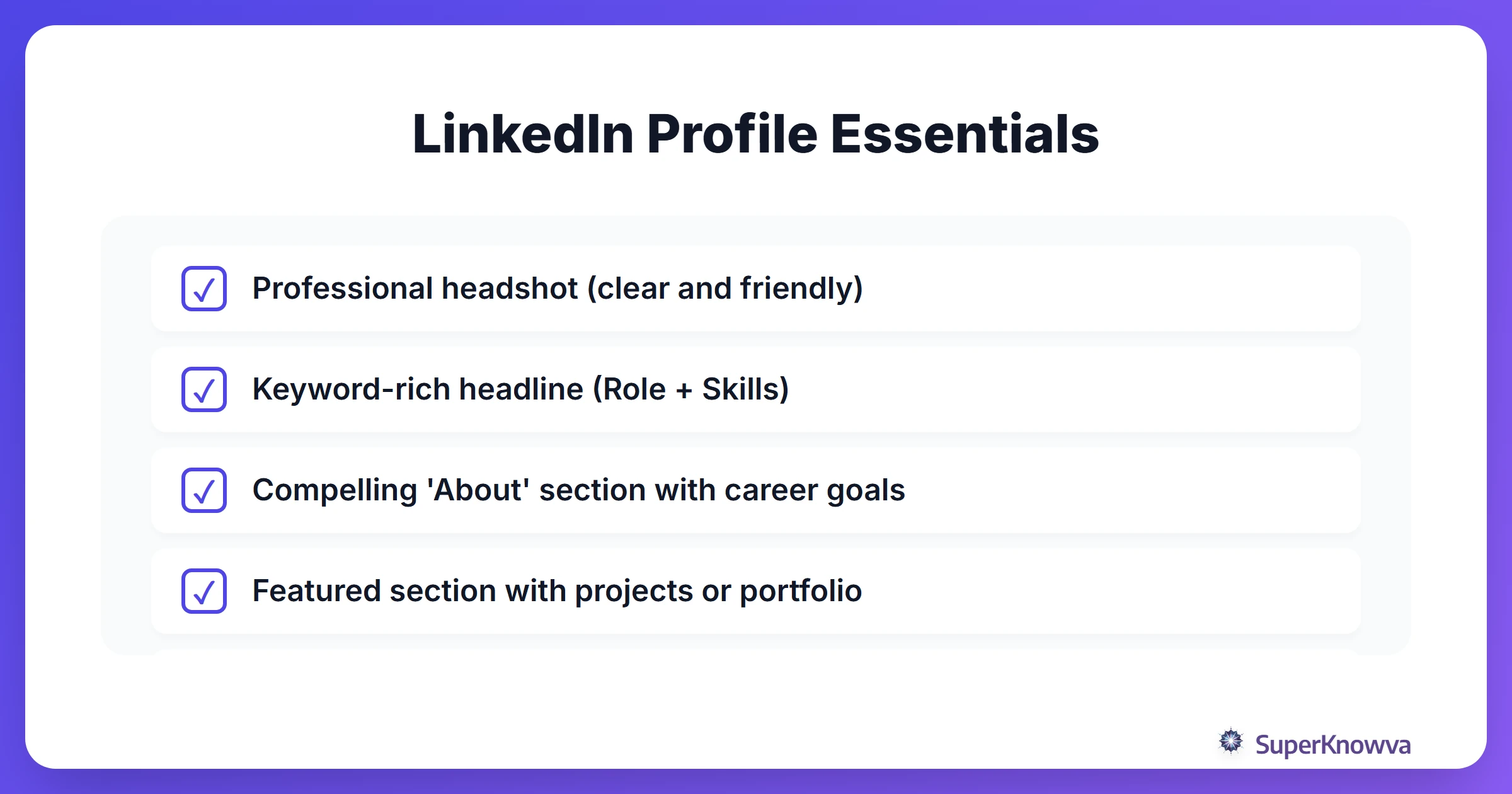
Stop using "Recent Graduate" as your headline. It’s boring and tells recruiters nothing. Try a formula like: [Aspiring Role] | [Key Skill 1] | [Key Skill 2].
Example: "Aspiring Marketing Analyst | Data Visualization & SEO Specialist | Honors Graduate."
Stay active. You don't need to post every day, but you should engage. Comment on industry news, share an interesting article, or post a project from your senior year in your "Featured" section. This makes you a "known entity" before you even apply. For more on this, read our guide on building your online personal brand.
Mastering the Informational Interview
The informational interview is your secret weapon. It’s a 20-minute meeting where you’re the one asking the questions. It’s low-stakes, high-reward, and the best way to get "insider info."
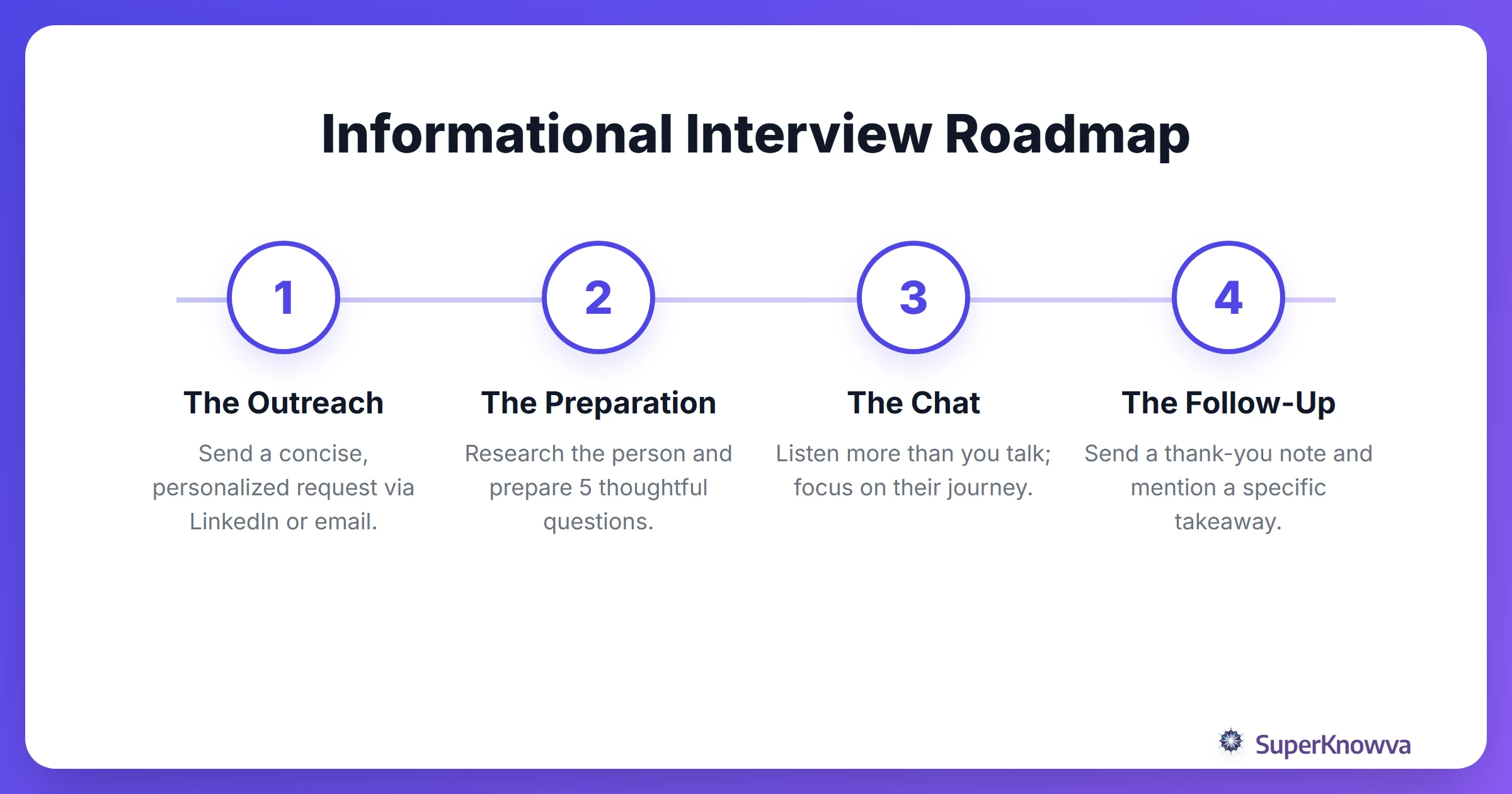
To make it worth their time (and yours), come with a plan. Don't just wing it. Ask things like:
- "What does your actual day-to-day look like?"
- "What’s the one skill your team is missing right now?"
- "What’s something you wish you knew before your first week on the job?"
- "How do you stay ahead of the curve in this industry?"
- "Is there anyone else you think I should chat with?"
Respect the clock. If you asked for 20 minutes, start wrapping up at the 18-minute mark. If they want to keep talking, they’ll tell you. As you finish, you can pivot: "I’ve learned so much today. If you hear of any entry-level roles that might be a fit for someone with my background, I’d love to stay in touch."
The Art of the Follow-Up (Don't Ghost Your Network)
The connection doesn't end when the Zoom call hangs up. The fortune is in the follow-up. A personalized thank-you note within 24 hours puts you ahead of 90% of other candidates. Mention something specific they said to show you were listening.
But don't stop there. To stay on their radar without being annoying, send "value-add" updates. If you see an article that reminds you of your chat, send it over: "Hey [Name], I saw this piece on AI in marketing and thought of our conversation last week. Hope you’re doing well!"
Keep a simple spreadsheet to track who you’ve talked to and when you last checked in. It’s the only way to make sure no opportunities slip through the cracks during your transitioning from campus to corporate life.
Networking for Introverts: You Don't Have to Be the Loudest
If the idea of a crowded networking mixer makes you want to hide in the bathroom, don’t worry. You don't have to be an extreme extrovert to be good at this. In fact, introverts often have the edge in the deep, one-on-one conversations that actually lead to jobs.
- Set Micro-Goals: If you go to an event, tell yourself you only have to meet two people. Once you’ve had two good chats, you’re allowed to leave.
- Nail Your Pitch: Have a 30-second "elevator pitch" ready. When someone asks "So, what do you do?" you won't stumble. Focus on what you studied and where you’re headed.
- Stick to One-on-Ones: If mixers aren't your thing, focus 100% of your energy on coffee chats. They are quieter, more personal, and usually more effective anyway.
Conclusion
Networking isn't a sprint you finish in a week; it’s a marathon that lasts your entire career. By starting now, you’re building a foundation that will support you for decades.
Make sure your "paper" self is as strong as your "networking" self by checking out our modern resume building guide.
For more expert perspectives, you can explore CNBC’s networking tips or this 8-step guide for recent grads. If you want the complete guide to networking in college and beyond, there are plenty of ways to keep learning.
Your career launchpad is ready. Now, go out there and start making some connections!