This July 4th, while the world is busy with fireworks and national sovereignty, why not declare a different kind of freedom? Specifically, your independence from that rigid, soul-crushing study calendar you’ve been chained to.
For too long, students have been held hostage by static schedules that simply don't care about the chaos of real life. You know the drill: you plan your week perfectly, life happens, and suddenly you're "behind" before Monday is even over. It’s time to stop fighting your schedule and start building a routine that actually bends without breaking. By using self-directed learning tools and AI, you can finally ditch the "one-size-fits-all" approach and claim your academic autonomy.
In this guide, we’re going to look at how you can stop being a passive recipient of a syllabus and start acting like an independent scholar.
The Tyranny of the Rigid Study Schedule
We’ve all been there. It’s Sunday night, and you’ve just spent three hours crafting the most beautiful, color-coded study plan the world has ever seen. It’s a masterpiece. But then Tuesday hits. A surprise errand pops up, you hit a wall of fatigue, or you just plain don't want to. Suddenly, you’re off-track, and the guilt starts to sink in.
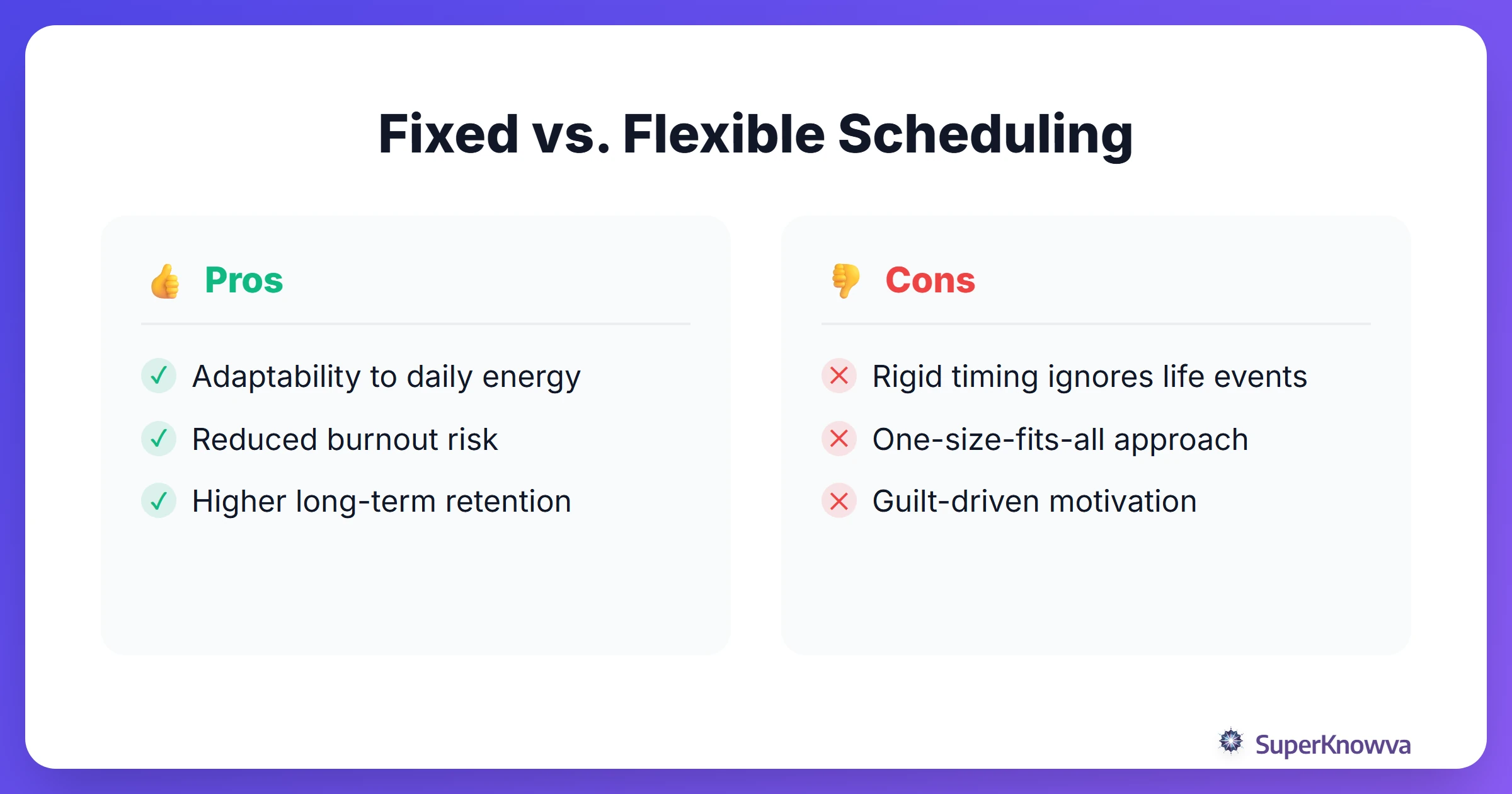
This is the "tyranny of the fixed calendar." Traditional schedules treat us like machines that perform at 100% capacity from 8:00 AM to 10:00 PM. They don't account for the human element, including the psychological toll of falling behind or the "death spiral" of procrastination that follows one missed deadline.
True Academic Independence requires flexibility rather than just working harder. It means having a system that understands that forcing yourself to tackle organic chemistry when your brain is fried is miserable and a waste of time.
Defining Your Independence: What is Self-Directed Learning?
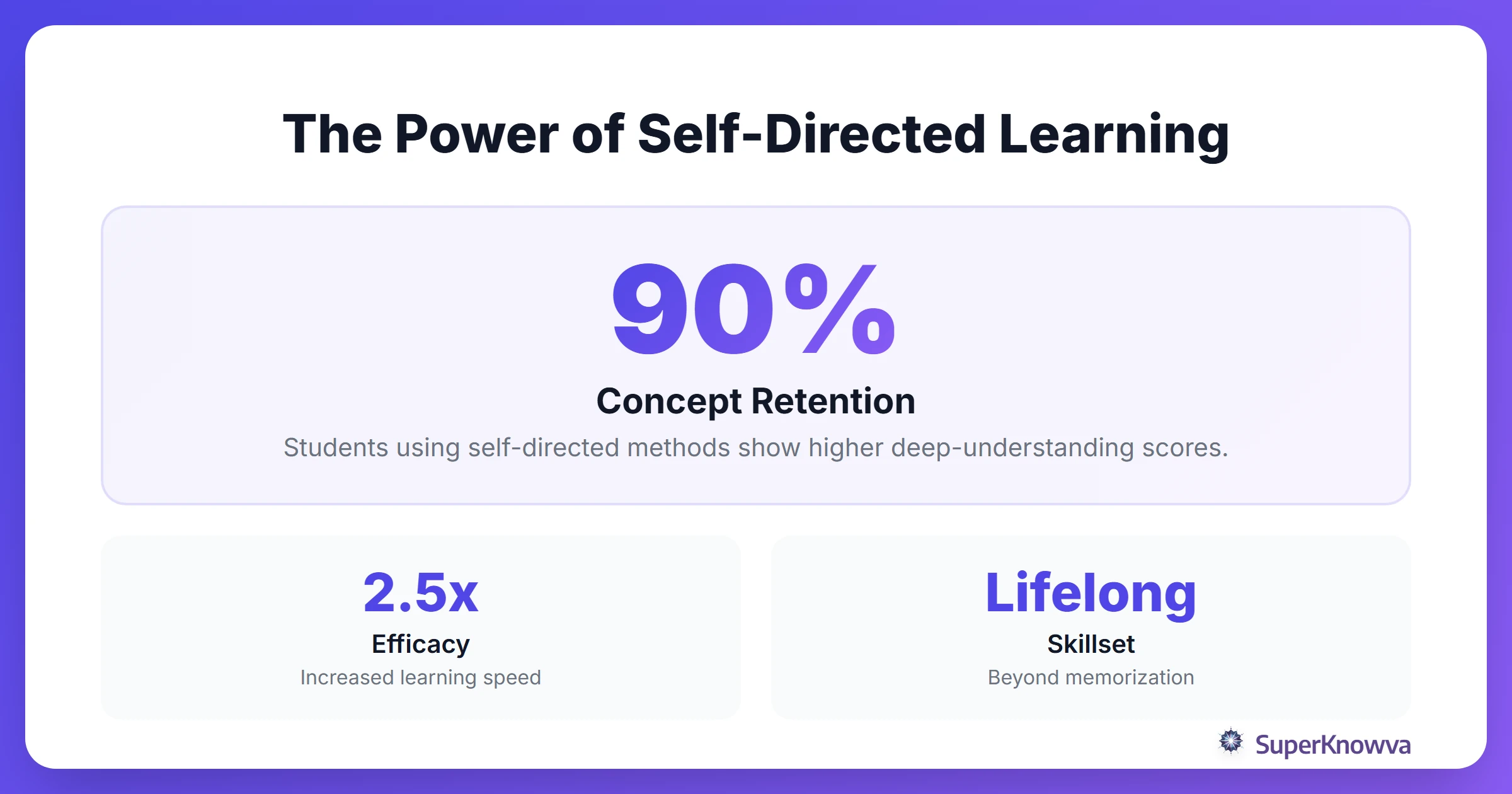
So, what does it actually mean to be "independent" in your studies? It’s a philosophy called self-directed learning. This isn't some new-age trend; it’s a concept with roots going back to Aristotle. As Self-Directed Learning in the Classroom suggests, it’s the most natural pathway to actually understanding a subject rather than just memorizing it.
Self-directed learning does not mean you are working alone. It means you are directing the process. You are moving from a passive role to taking charge of your education. When you choose how and when to engage with a topic, you create a personal connection to the material. This is why self-directed learners retain information longer. They are not just following a list; they are active participants in building their own knowledge.
The Digital Arsenal: Top Self-Directed Learning Tools
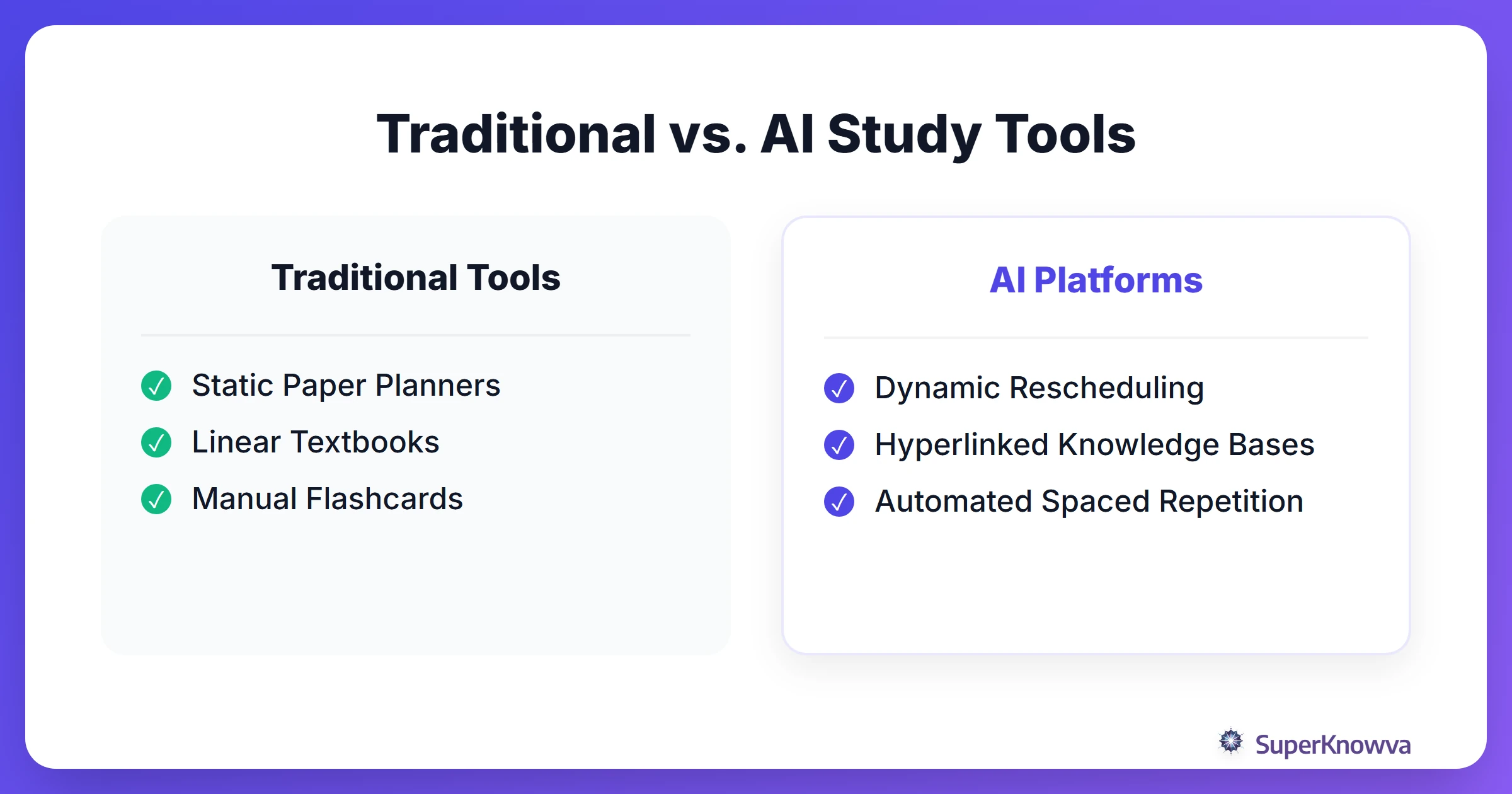
In the past, going rogue with your education required a massive library and an iron will. Today? You have a digital arsenal at your fingertips. We've moved past linear textbooks and into an era of hyperlinked, multi-modal resource hubs.
When selecting tools, look for the best study apps for 2026 that offer cross-platform sync. These tools are only as good as your ability to use them. Research in the Australasian Journal of Educational Technology shows that "computer self-efficacy," or how comfortable you are with your tech, is a huge predictor of success.
Try categorizing your "stack" like this:
- Research: AI-powered search engines and digital archives.
- Organization: Dynamic databases and kanban boards that move with you.
- Retention: Adaptive flashcards and AI-generated quizzes that test what you actually don't know.
How AI Acts as Your Academic Chief of Staff
Manage your studies like a CEO. AI is your Chief of Staff, not your replacement. This approach moves away from manual planning where you decide to "study Chapter 4 on Thursday" regardless of how you feel.
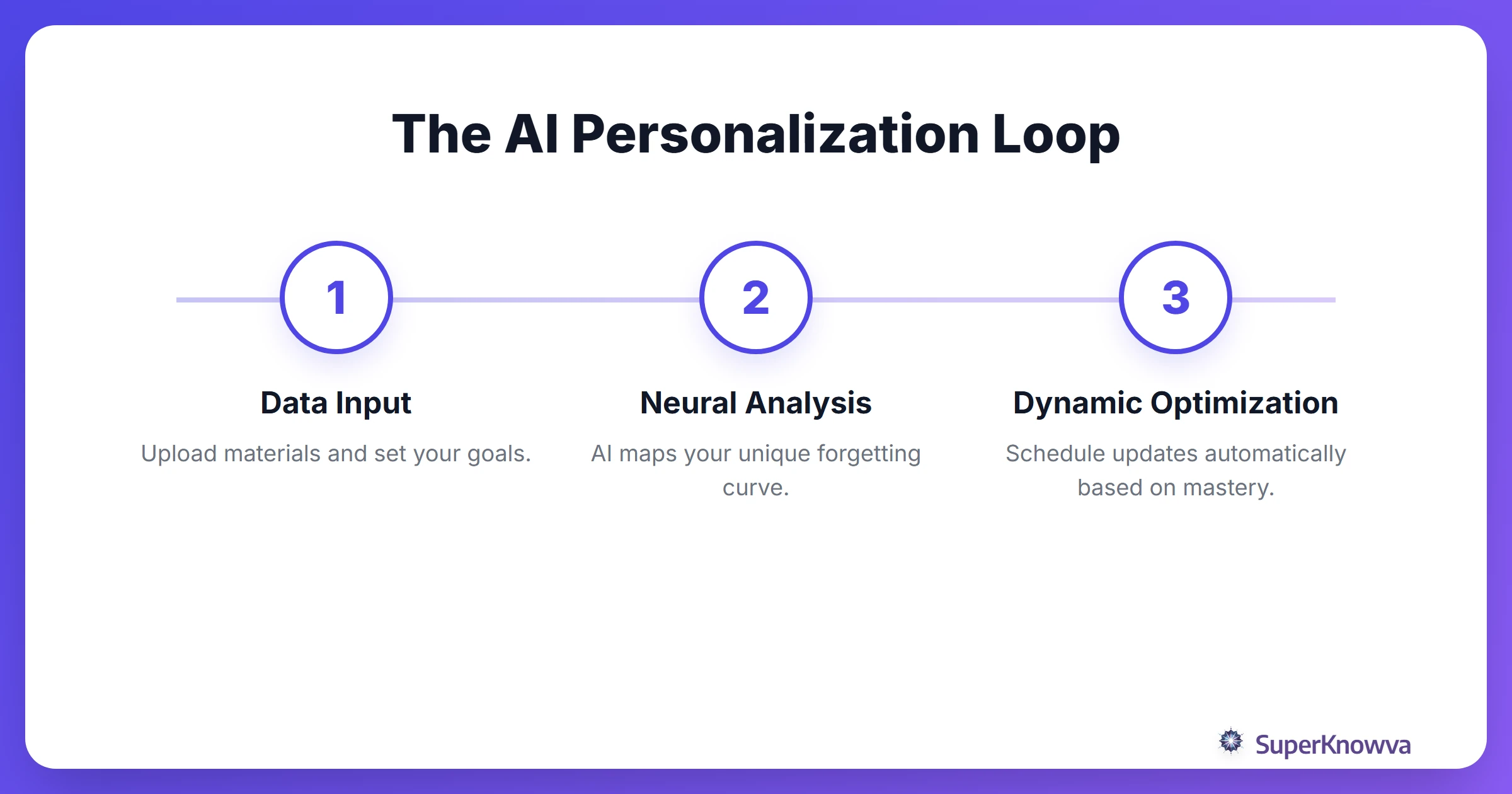
The real shift happens with dynamic rescheduling. Platforms like SuperKnowva don’t just sit there holding your notes; they analyze how you’re doing in real-time. Did you breeze through a concept? The AI pushes it further out. Struggling with a specific formula? It brings it back sooner. This is the "forgetting curve" in action, handled automatically.
A flexible schedule lets you find the best time to study based on your own internal clock, while the AI ensures your "Flex Time" is actually productive.
Drafting Your Declaration: 5 Steps to Study Freedom
Ready to sign your own Declaration of Academic Independence? Here is how you transition to a more autonomous, AI-enhanced life.
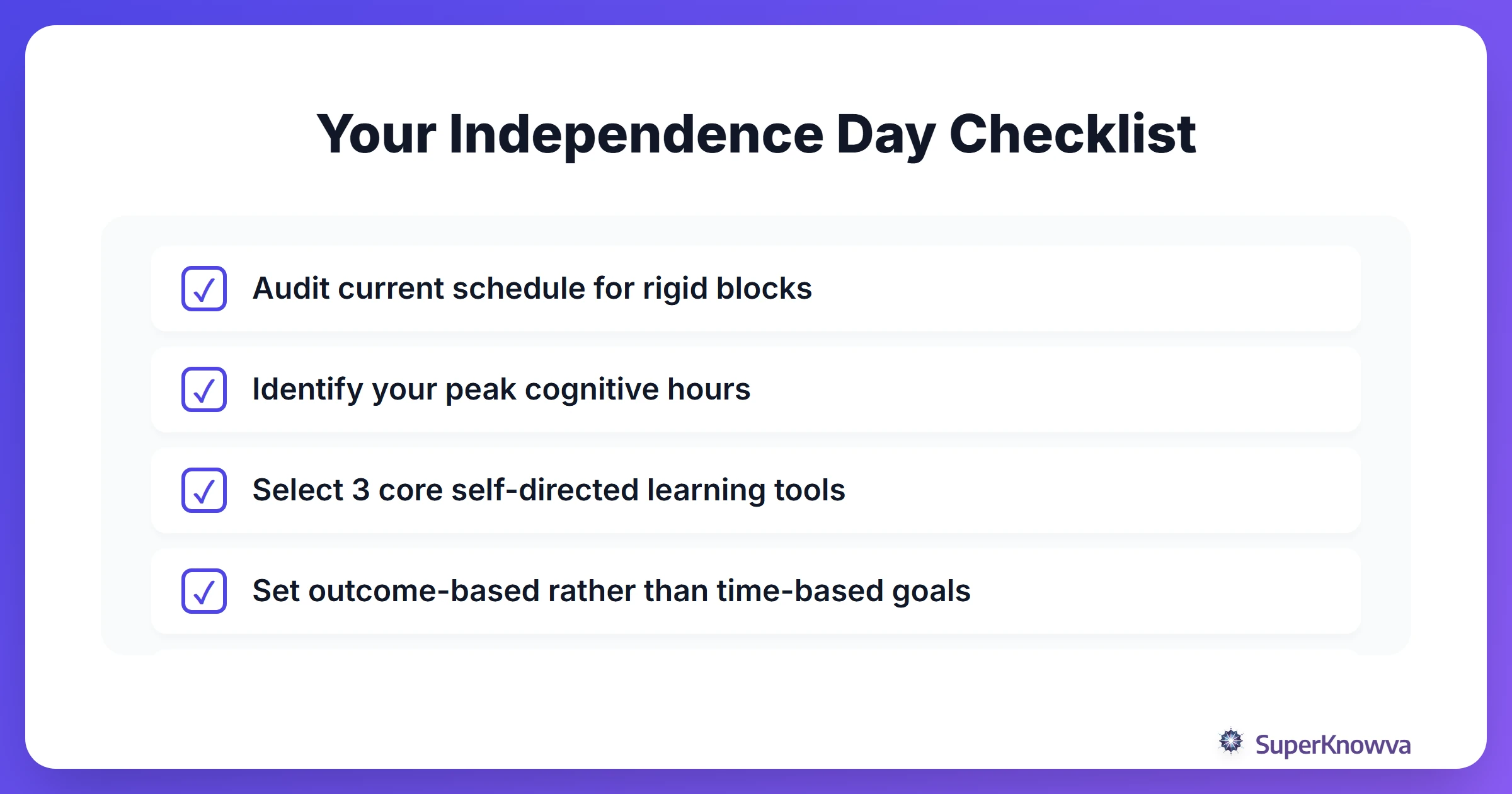
- Audit the stress points: Which parts of your current schedule make you want to scream? Identify those rigid blocks.
- Define your 'Why': Stop aiming for "four hours of study." Aim for specific learning objectives.
- Curate your tech: Don't download every app. Choose 2-3 AI tools that actually fit your workflow.
- Stop re-reading: Use active recall. It’s harder, but it’s the only way to make the information stick.
- Schedule 'Flex Time': Leave gaps. Use them for deep dives into things you actually find interesting.
If the idea of total freedom feels a bit scary, try the 5-minute rule to get your first self-directed session moving.
Overcoming the Fear of the 'Unstructured' Day
A lot of students worry that without a rigid schedule, they’ll just end up scrolling on their phones all day. It’s a valid fear. But there’s a massive difference between an "unstructured" day and a "flexible" one.
An unstructured day is a vacuum. A flexible day is an organized system that adapts to you. By building a routine that works with your life, not against it, you reduce the burnout that leads to mindless scrolling. You aren't losing structure; you are moving to a framework that supports you.
Embrace the role of the independent scholar. With the right tools and a bit of autonomy, you can get more done in less time. And that leaves you with the best prize of all: the freedom to actually enjoy your life once the books are closed.