July always feels like a bit of a blur. One minute you’re celebrating the start of summer, and the next, you’re noticing the days getting shorter and the "back-to-school" ads creeping into your feed. If you’re a student, this is usually where the panic sets in. Maybe that ambitious summer study plan hasn't quite happened, or perhaps you’ve been working so hard you’re already feeling the burn.
How do you keep the momentum going without crashing before the first leaf falls? The secret isn't more coffee or longer library sessions; it’s academic reflection. Taking a moment to pause and look at your habits can turn these final weeks of break into a massive head start for the fall.
The Mid-Summer Pivot: Why Now?
July is a bridge month. It sits between the freedom of June and the busy environment of September. A mid-summer check-in is more than a task for your to-do list; it is a mental reset.
Pausing to acknowledge what you’ve actually accomplished gives you a genuine dopamine hit. It reminds you that you aren't just drifting; you’re making progress. More importantly, reflecting now is the best way to avoid the "Late-August Burnout." By adjusting your pace today, you ensure you show up to your first lecture feeling sharp and ready, rather than completely drained.
Academic Reflection vs. Private Journaling: What’s the Difference?
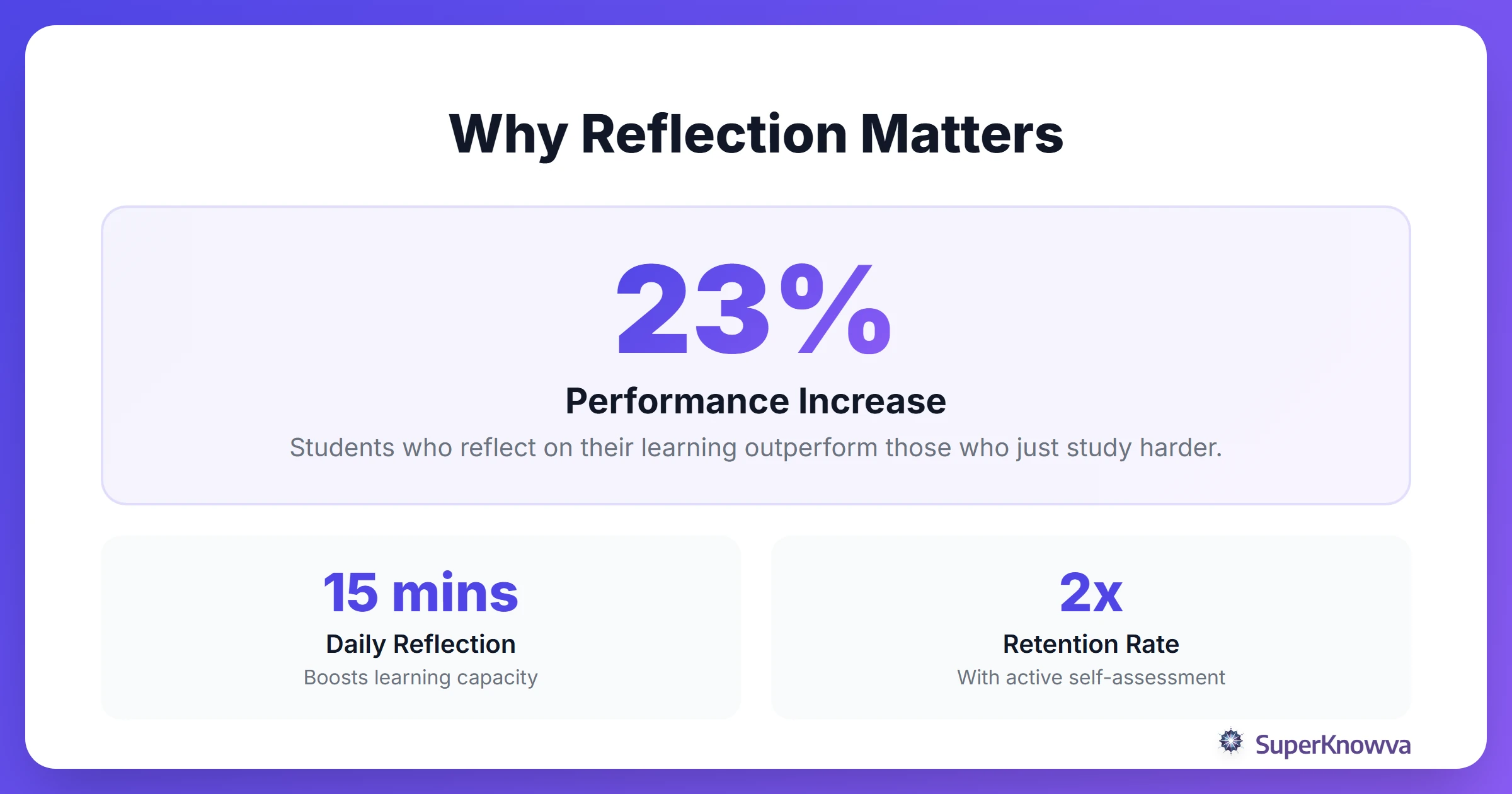
Let’s be clear: this isn't a "Dear Diary" moment. While private journaling is great for venting about your day or processing feelings, academic reflection is a more disciplined, professional practice. According to the Reflection Toolkit from the University of Edinburgh, it’s about moving past "how I feel" and into critical analysis.
In a student context, you should be asking yourself: "How do I actually learn?" This breaks down into two main areas:
- Experiential Reflection: Looking at your study sessions. Were you focused, or just "busy"? How was your time management?
- Reading Reflection: Thinking critically about your summer courses or research. Did you actually digest the material, or just skim it?
Take the Win (Even the Small Ones)
Before you start nitpicking your flaws, look at your "micro-wins." Did you actually stick to your reading schedule for a few days? Did you finally wrap your head around a concept that used to make no sense?
Even if you don't have grades to show for it yet, consistency is a victory. Reflecting on your July allows you to see if you’ve successfully managed to balance a high GPA with a social life, or if you need to tweak the scales for next month. Celebrating these small wins reinforces your identity as a dedicated student. It makes the hard work feel worth it.
Be Honest: Are Your Study Habits Actually Working?
Let’s be real: not all study hours are equal. You could spend five hours re-reading a textbook and walk away with nothing, or 45 minutes doing high-intensity work and master a topic. Use this wrap-up to perform an academic self-assessment.
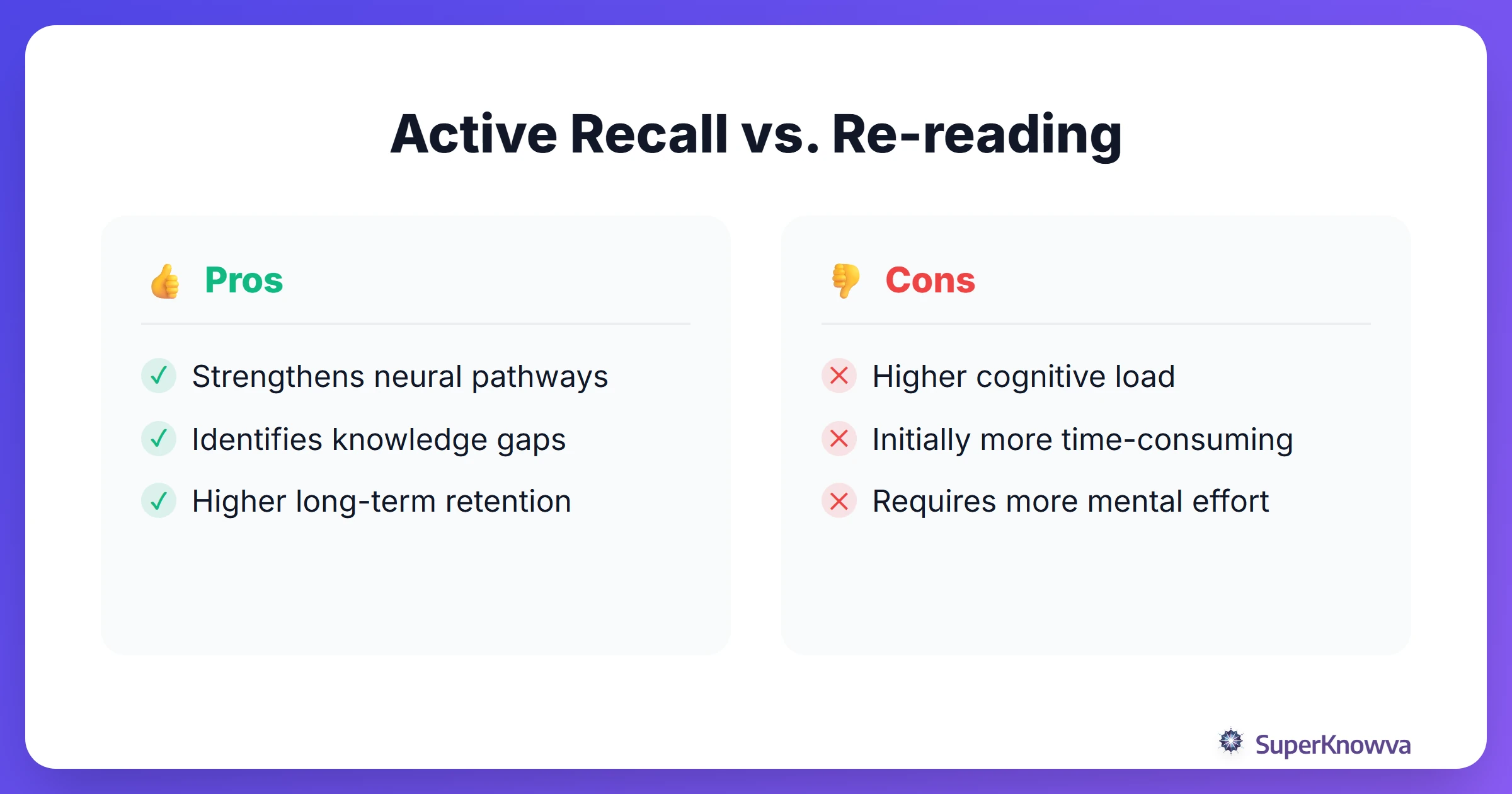
When you look back at July, ask yourself if your methods were actually effective. For example, comparing Active Recall vs. Re-reading can significantly improve your retention.
Ask yourself:
- The Environment: Where was I most productive? The library, a cafe, or my desk?
- The Focus: Did I hit a "flow state," or was I checking my phone every ten minutes?
- The Reality: Was my schedule actually sustainable, or was I being way too ambitious?
How to Reflect on Dense Research and Articles
It’s one thing to reflect on your habits; it’s another to reflect on a 30-page scientific paper. Many students struggle with reflective writing when the subject is objective data. However, Trent University's Guide to Reflection points out that professors use these assignments to see how new info challenges your perspective.
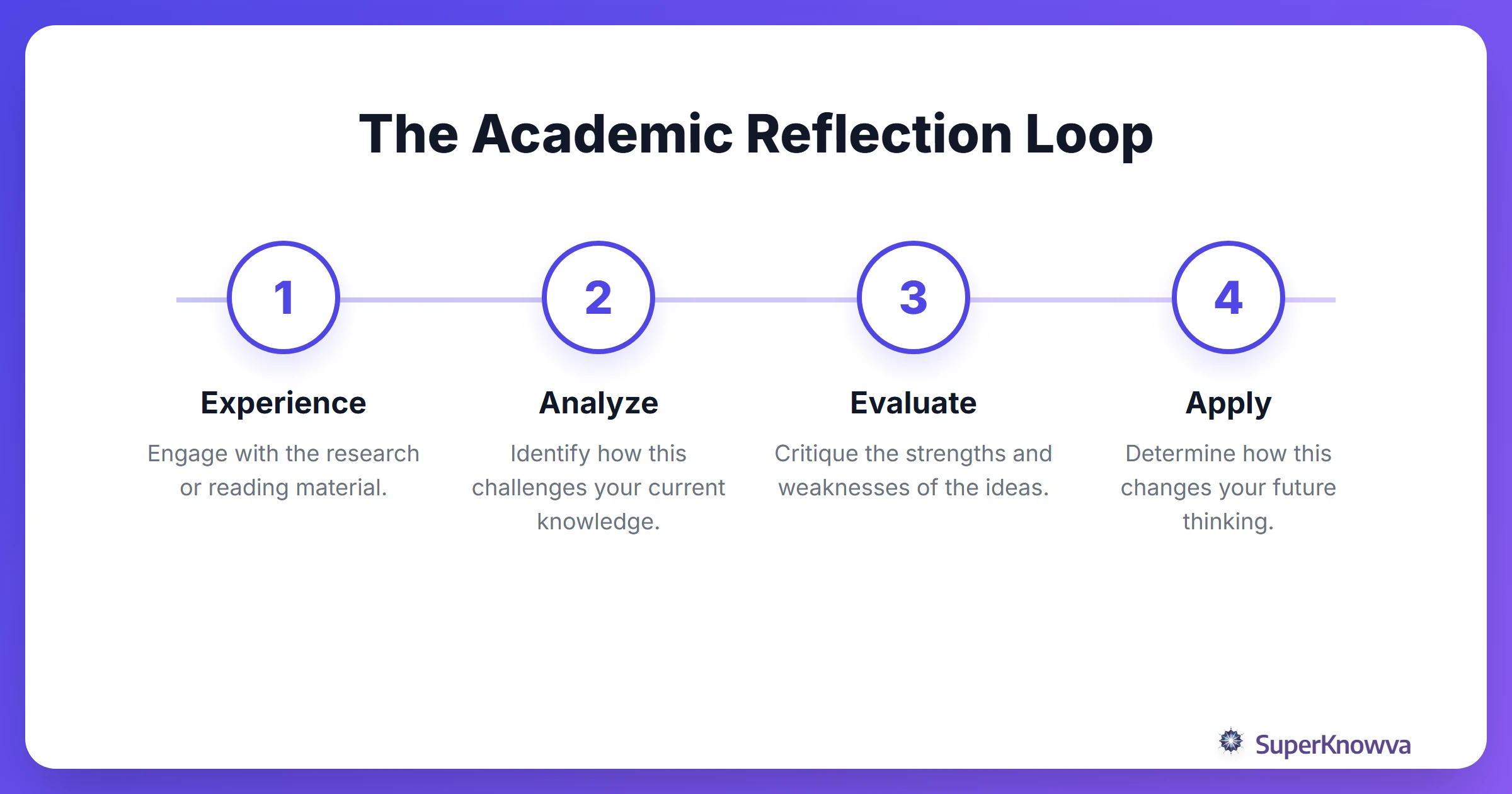
Try this 4-step framework for your summer readings:
- Experience: What was the core message of the research?
- Analyze: Does this support what I already knew, or does it flip it on its head?
- Evaluate: What were the strengths and weaknesses of the author's argument?
- Apply: How will this change how I approach this subject in class this fall?
August is for Course Correction
Reflection is useless if it doesn't lead to change. Spotting patterns in your procrastination is the first step toward fixing them. If you realized that you spent most of July "getting ready to study" rather than actually studying, try the 5-Minute Rule in August to break the cycle.
Use the next few days to pivot. If you ignored a specific subject in July, make it your priority for the first week of August. The goal is simple: close the gaps now so you don't have to scramble when the semester starts.
Stick the Landing: Prepping for Fall
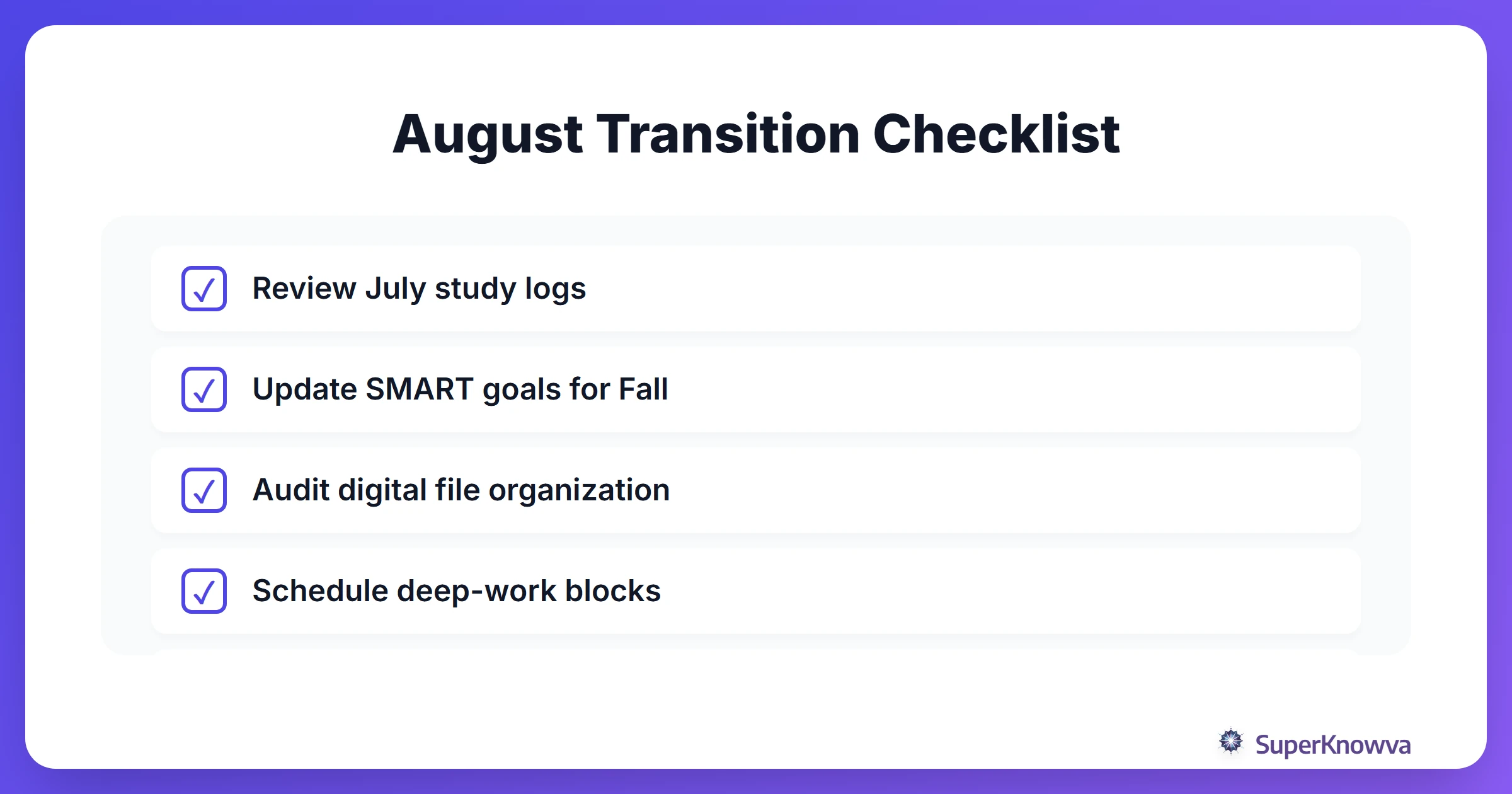
The final part of your July wrap-up is setting SMART (Specific, Measurable, Achievable, Relevant, Time-bound) goals. Your student progress review should end with a concrete plan of attack.
- Physical Prep: Clean your workspace. Get rid of the old papers and clutter.
- Digital Prep: Audit your files. This is a great time to explore the best study apps to streamline your workflow for the new year.
- Scheduling: Actually block out "Deep Work" sessions in your calendar for the first few weeks of the semester.
By committing to this academic reflection today, you aren't just looking back at July. You are preparing for the semester ahead. Enter August with a clear, effective plan.