The job market is changing. If you are a student or a young professional, you likely realize that traditional career advice is becoming outdated. By 2026, the corporate ladder will be taller and built differently. The question is not whether AI will change your job. It is whether you will lead that change within emerging career paths in AI.
At SuperKnowva, we don’t believe in just "surviving" the shift; we’re here for the mastery. This guide breaks down the new roles being forged in the heat of the AI revolution and how you can plant your flag at the forefront of the future of work 2026.
The AI-Driven Shift: Why 2026 is the Year of the AI Specialist
By 2026, artificial intelligence will have graduated from a "cool party trick" to the actual nervous system of the workplace. We’re done with the era of experimentation. We’ve entered the era of integration.
Forget the doom-scrolling about being replaced. The market is splitting into two camps: "AI-augmented" roles and manual labor. An AI-augmented career is where you let the machine handle 80% of the mind-numbing, repetitive tasks so you can spend your energy on high-level strategy and creative problem-solving.
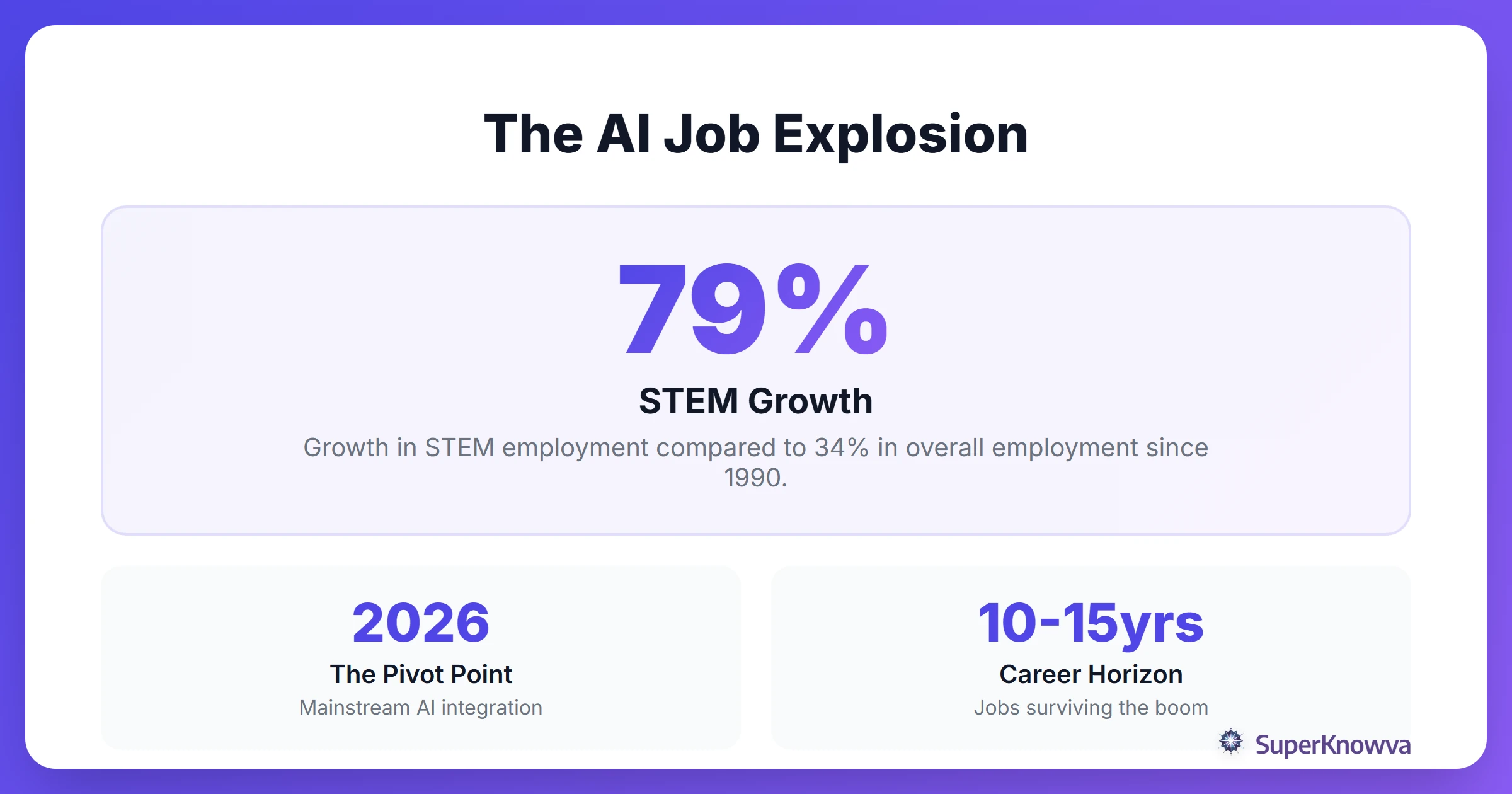
The numbers don't lie. STEM growth is currently lapping general employment. Since 1990, STEM jobs have grown by 79%, and as we hit the 2026 pivot point, AI-specific roles are the ones holding the steering wheel.
New Job Titles: Beyond the Data Scientist
Remember when "Data Scientist" was the only tech job anyone talked about? That field has matured, and it’s getting specialized. We’re seeing a massive surge in AI job market trends that didn't even have names five years ago:
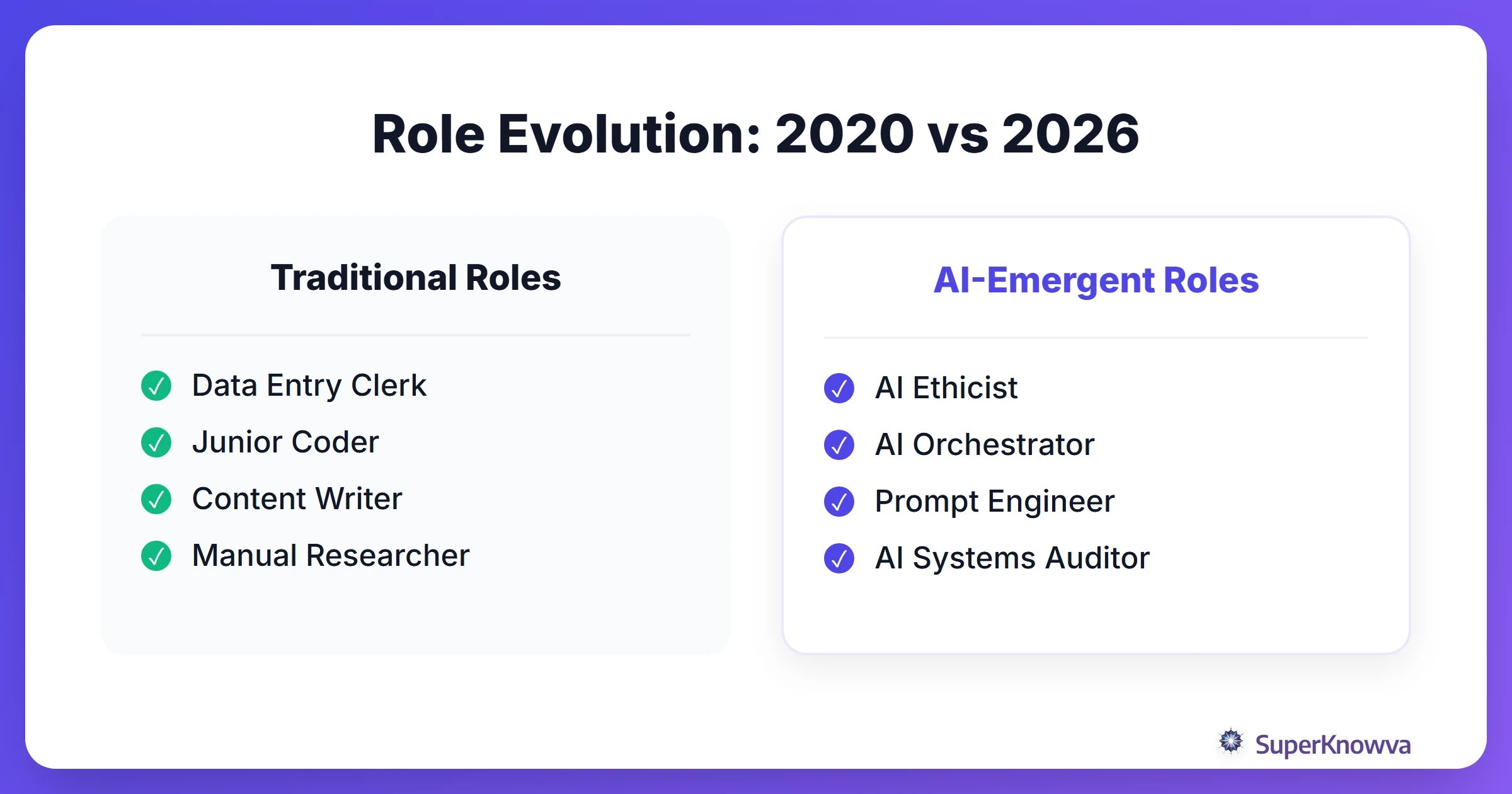
- AI Ethicists: The "moral compass" of the tech world. They ensure algorithms aren't biased, creepy, or breaking global laws.
- AI Orchestrators: Think of them as digital conductors. They manage complex "stacks" of different AI agents to make sure a business workflow actually makes sense.
- Workflow Automation Specialists: The efficiency hunters. They look at a messy business process and figure out exactly where AI can save ten hours a week.
- AI Systems Auditors: Like financial auditors, but for code. They check models for safety, accuracy, and "hallucination" risks.
Even prompt engineering careers have grown up. It’s no longer just about "talking to a chatbot." It’s a high-level communication role that requires a deep grip on linguistics, logic, and business needs. If you want a deeper look at these roles, check out 10 Emerging Career Paths in an AI-Influenced Sector.
AI-Augmented Roles in Non-Tech Industries
Here’s the good news: You don’t need to be a coder to win. Some of the biggest shifts are happening in PR, marketing, and journalism. These fields are morphing into "strategic AI management" roles.
Think about it. Instead of grinding for eight hours on a single press release, a PR pro in 2026 will use AI to whip up ten variations for different audiences, then spend their time on content curation and brand strategy. In hospitals and law firms, AI is becoming a "diagnostic co-pilot," helping doctors spot patterns in scans or helping lawyers hunt through thousands of pages of case law in seconds.
Worried about your specific major? You should be thinking about future-proofing your degree against automation by leaning into these high-level oversight skills.
The Developer Evolution: Junior Devs in the Gen Z AI Era
If you're a junior developer, the game has changed. The days of spending your first year writing basic "boilerplate" code are dead. AI can do that faster, and it doesn't need coffee breaks.
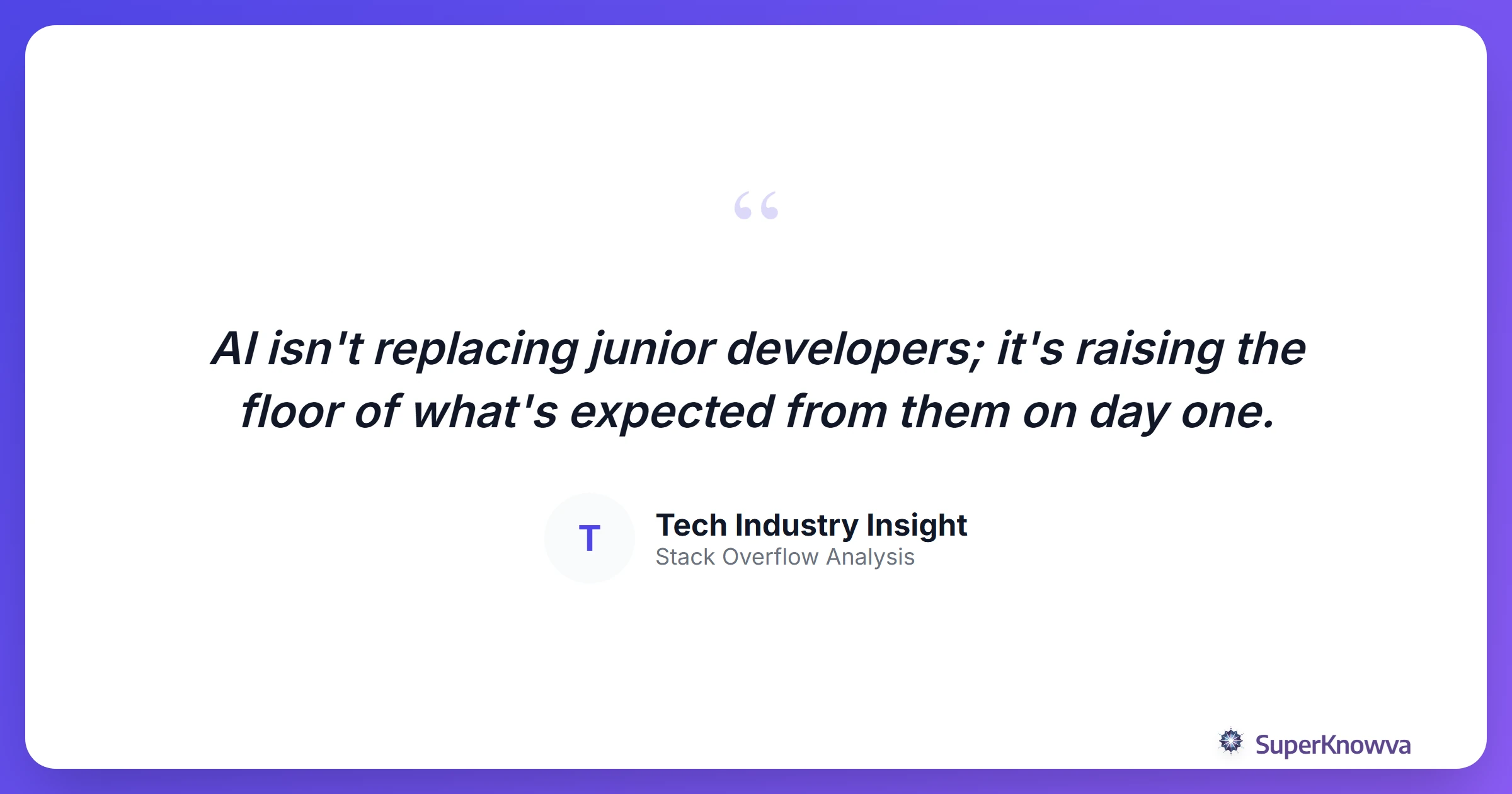
Junior developers in 2026 are expected to focus on system architecture and debugging. Your job isn't "hand-writing code"; it is "verifying and boosting AI performance." As Stack Overflow points out, technical knowledge is more important now. You need to know enough to recognize when the AI has introduced a logical error that could break the system.
Essential Skills for the 2026 AI Job Market
As tech literacy becomes the bare minimum, "soft skills" are suddenly the most valuable thing on your resume. To stay competitive, you have to balance the tools with the human touch.
- Ethical Judgment: AI can give you data, but it can’t give you a conscience.
- Technical Literacy: You don't need to be a Python wizard, but you must understand how these models work to get the best out of them.
- Critical Thinking: This is the big one. The ability to look at an AI’s output and ask, "Is this actually true?" is the most valuable skill you can have.
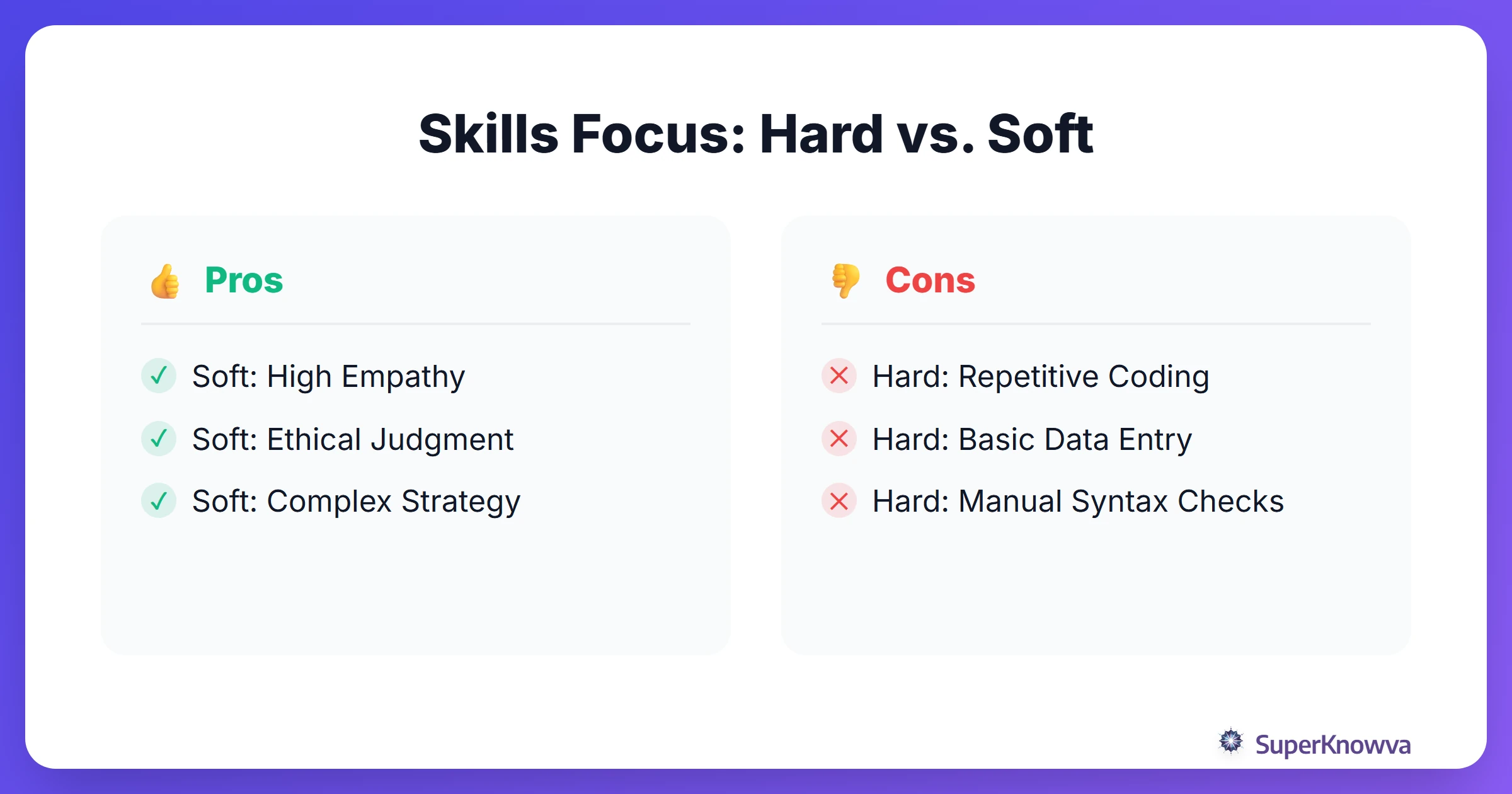
Doubling down on essential soft skills employers want in the AI era ensures you stay indispensable, no matter how smart the software gets.
How to Pivot: Building Your AI-Ready Portfolio
Graduating in 2026? Your resume can’t look like it’s from 2020. You need to prove you’re "AI-native."
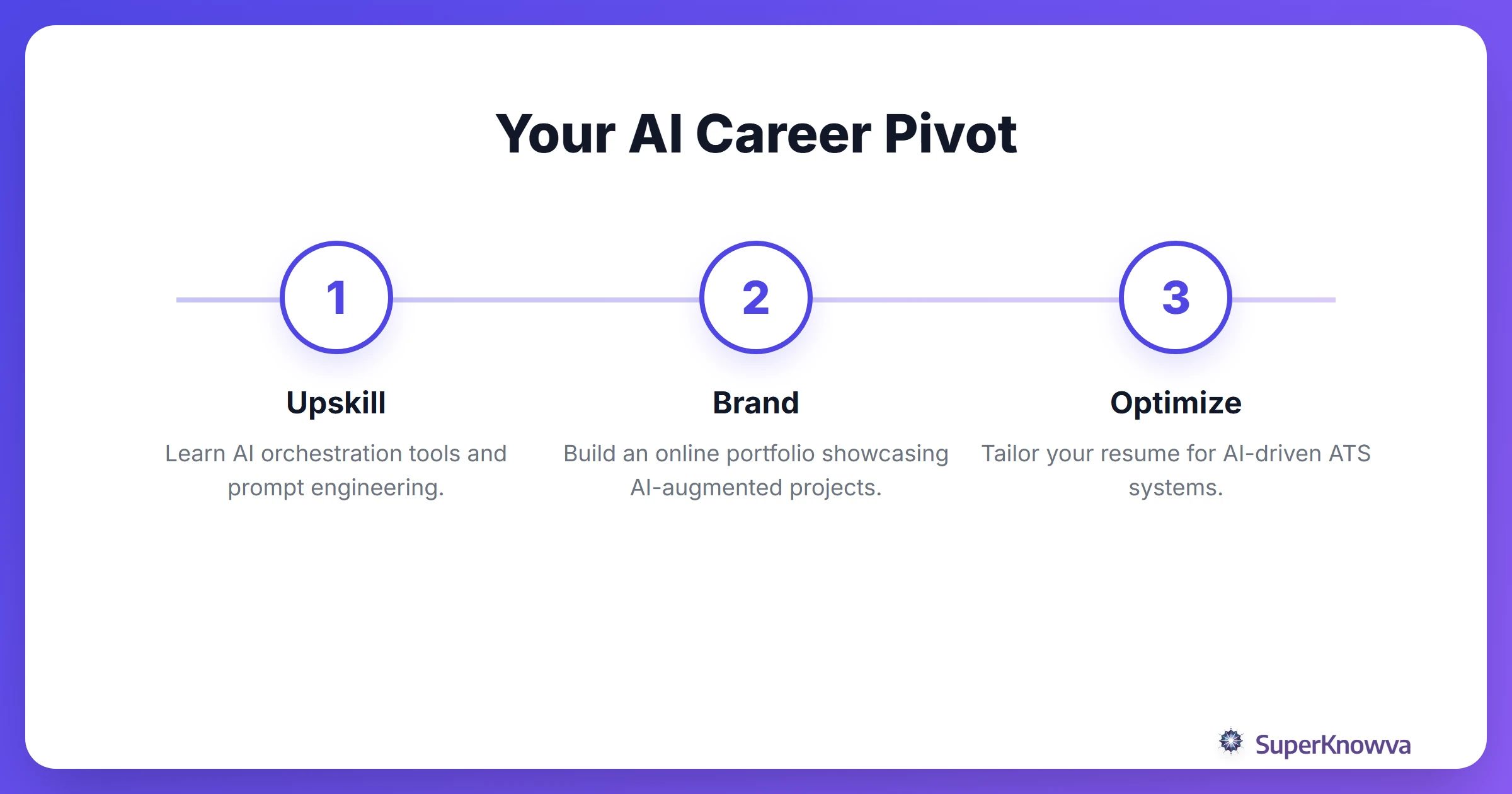
Start by building a personal brand before graduation that screams "AI-augmented." Don't just list skills; show how you used AI to solve a real, complex problem. And make sure you're using a modern resume building guide for 2026 graduates so your application doesn't get tossed by the very AI-driven tracking systems (ATS) you're trying to work with.
Future-Proofing Your Career: Long-Term Strategies
AI integration is an ongoing process rather than a single event. It requires consistent adaptation. Success depends on continuous learning. Focus on industries that require human involvement, such as therapy, high-stakes negotiation, and emergency management.
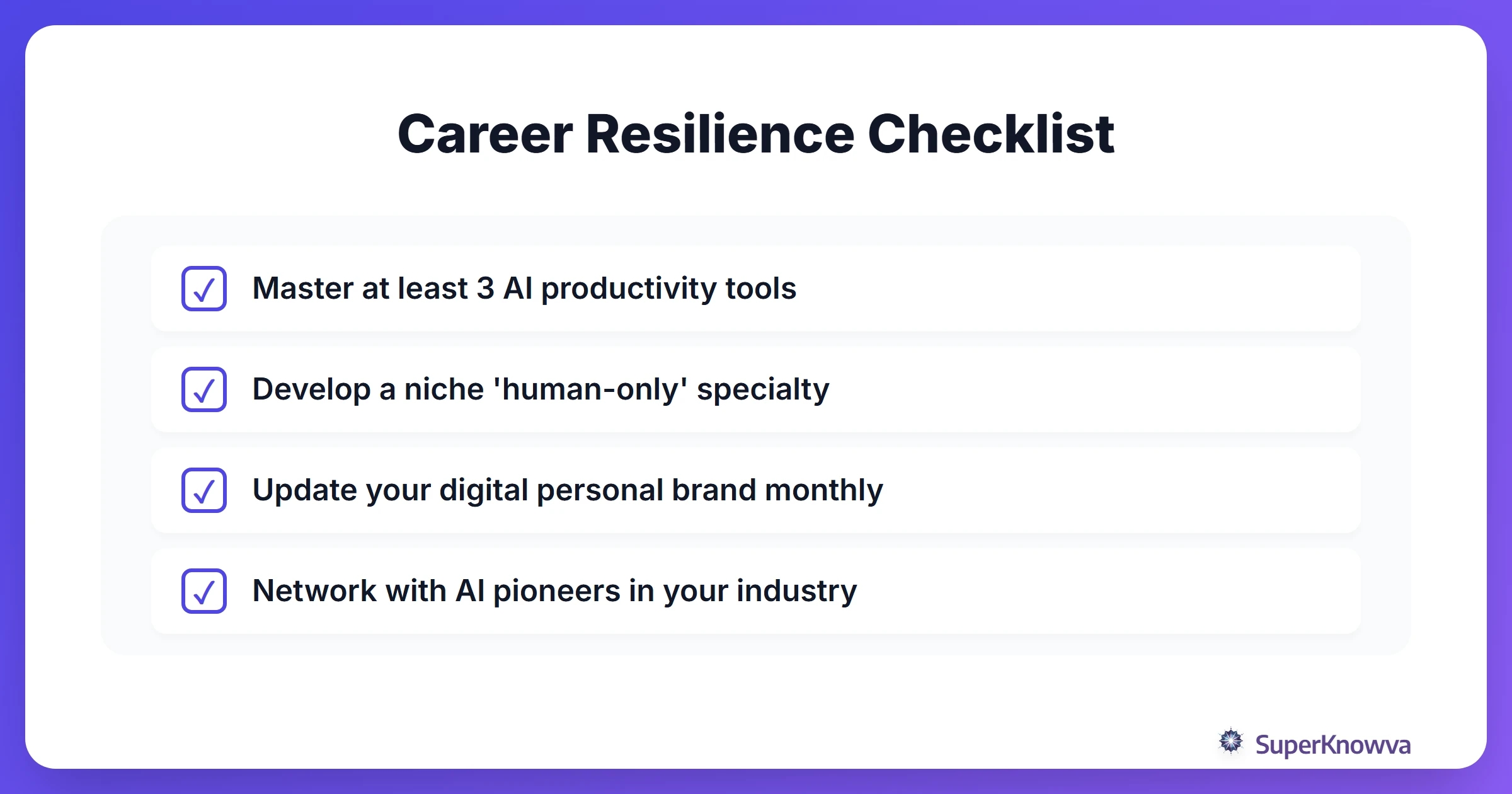
Your Career Resilience Checklist:
- Master 3+ AI productivity tools specific to your niche.
- Find your "human-only" specialty. Focus on tasks that require deep empathy or physical presence.
- Refresh your digital brand monthly to keep up with your new projects.
- Network with leaders. Find those doing innovative work with AI in your field and talk to them.
The future of work in 2026 isn't a battle of man vs. machine. It’s about the people who know how to use the machine to do more than they ever thought possible. Start building that career today.