That awkward silence during a Zoom interview is the worst. You’re staring at a tiny green light, your palms are sweaty, and your brain has suddenly decided to forget every project you’ve ever worked on. We’ve all been there. The "hot seat" is a high-pressure environment where even the best candidates can stumble.
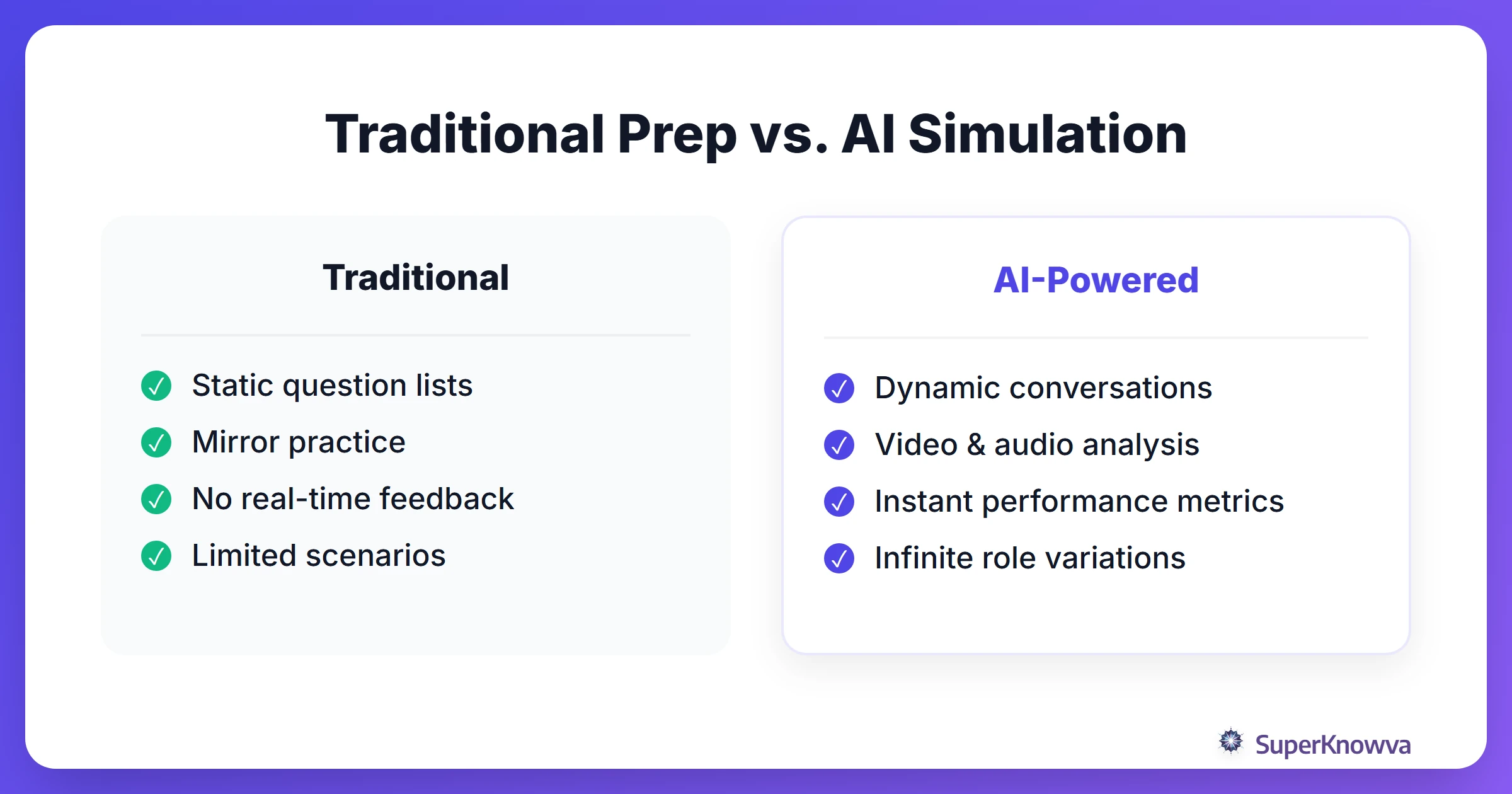
Traditionally, getting ready meant scrolling through generic "Top 10" lists and practicing your elevator pitch in front of a bathroom mirror. But let’s be honest: the mirror doesn't talk back, and it definitely doesn't give you feedback.
AI interview preparation is a powerful tool. By using interview simulation software, you can move past rote memorization and master your communication skills. At SuperKnowva, we believe technology should do more than just automate tasks. It should turn your interview anxiety into confidence.
The Evolution of Interview Prep: Why AI is Your Secret Weapon
The era of static, one-size-fits-all preparation is over. In the past, you were basically guessing what an interviewer might ask based on a vague job description. It was a shot in the dark.
Now? AI makes it personal.
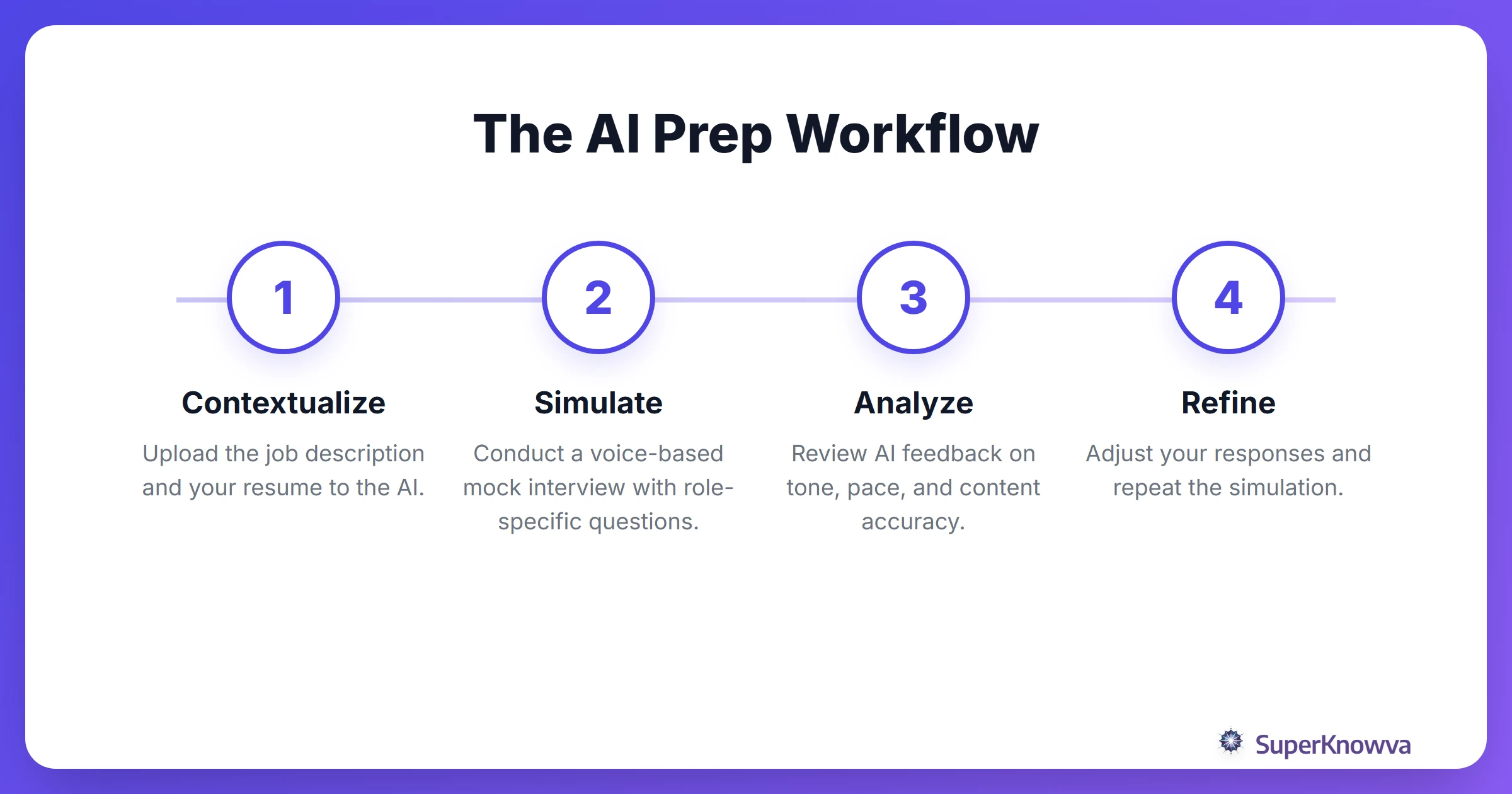
These tools provide context. By analyzing a specific job description against your skills, AI predicts the challenges you are likely to face. It turns passive reading into active practice. You can refine your responses and learn from mistakes before the interview. This is a core part of effective preparation and ensures you are not just applying for jobs, but winning them.
Simulating the Hot Seat: Running Realistic Mock Interviews
The most nerve-wracking part of an interview is the unpredictable flow of the conversation rather than the technical questions. Mock interview ai tools provide voice-to-voice capabilities that facilitate practice.
Want to get the most out of a session? Try setting up custom "interviewer personas."
- The Skeptic: Someone who will grill you on your technical gaps.
- The Friendly: Someone who might lead you into being a bit too casual.
Programming the AI to adopt these personalities helps you learn how to adapt your communication style on the fly. Pro tip: feed the AI your actual resume. This allows the software to generate role-specific behavioral questions tailored to your unique history. When you are using AI tools to practice, you aren't just practicing an interview; you are practicing your interview.
The Feedback Loop: Tone, Body Language, and Content
The real magic of ai interview preparation is the data. Let’s face it: we are usually terrible judges of our own performance. We don't notice our own "ums," "ahs," or the fact that we've been staring at our own reflection instead of the camera.
Modern interview simulation software tracks cues you might otherwise miss:
- Eye Contact and Posture: Are you looking at the camera? Does your posture project confidence or nervousness?
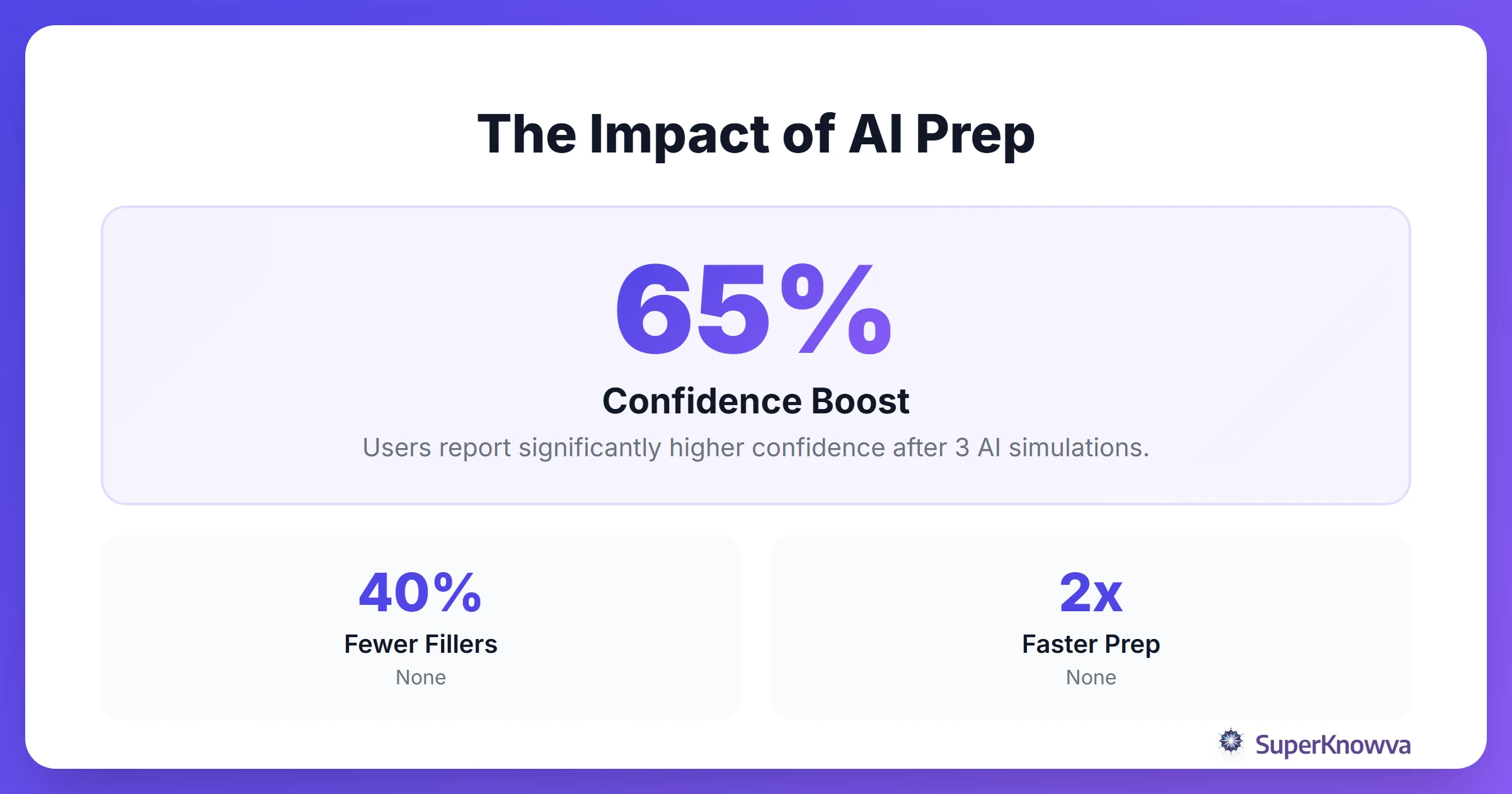
- Filler Words: Automated transcripts highlight every "like" and "um," helping you polish your speech patterns.
- Sentiment Analysis: AI analyzes the tone of your answers. It helps you strike the right balance, sounding confident in your wins while remaining humble and coachable.
Receiving this ai interview feedback in real-time allows you to make the tiny adjustments that lead to massive improvements in how recruiters see you.
Avoiding the 'Robot' Trap: How to Stay Authentic
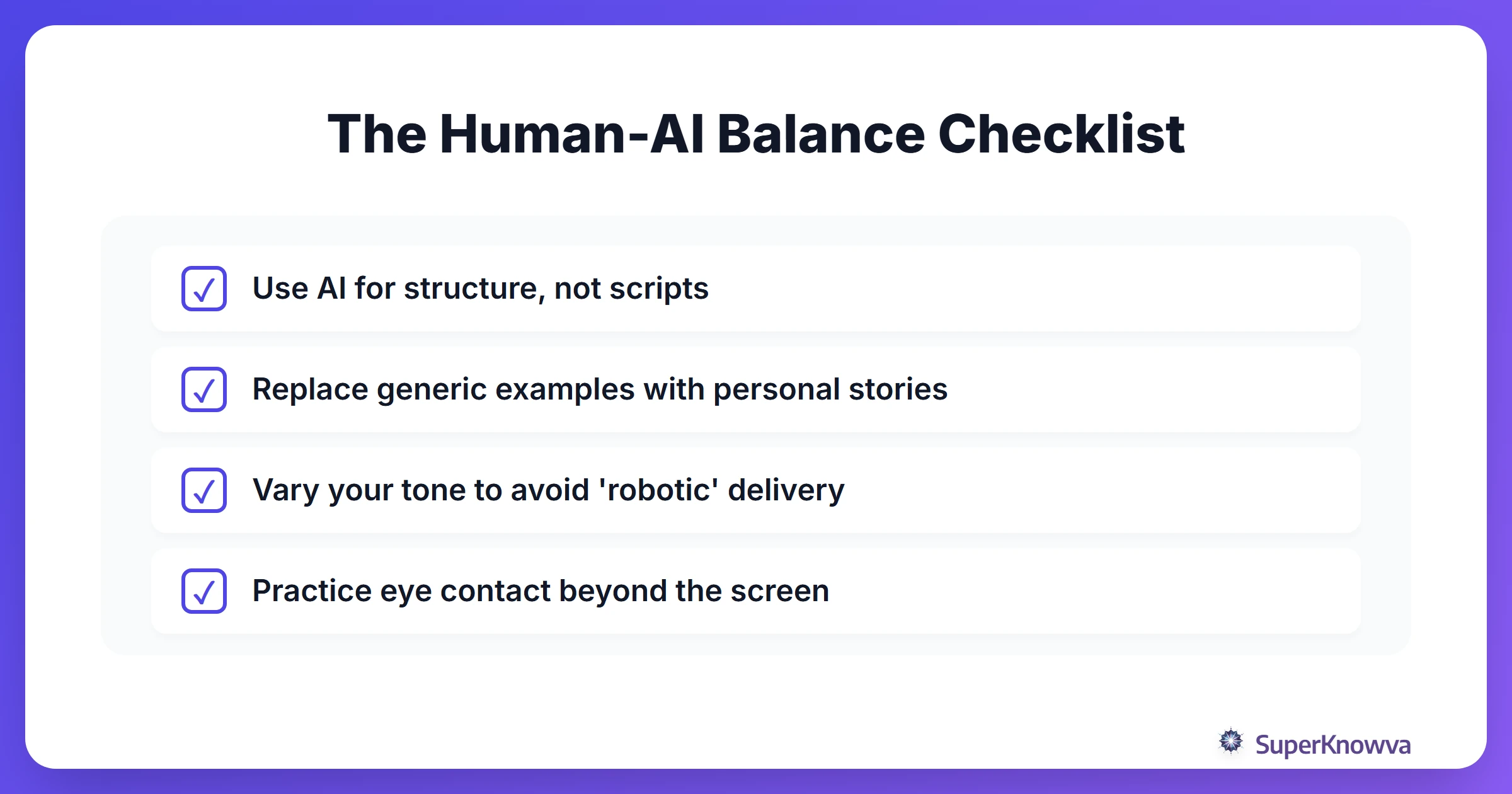
If you head over to any career subreddit, you’ll see the same warning: don't fall into the "Robot Trap." If you use AI to write a script and then memorize it word-for-word, you’re going to sound stiff. Recruiters can spot canned answers from a mile away, and sounding like a chatbot is a major red flag for ai for job seekers.
The secret? Use AI to structure your thoughts, not to dictate your words.
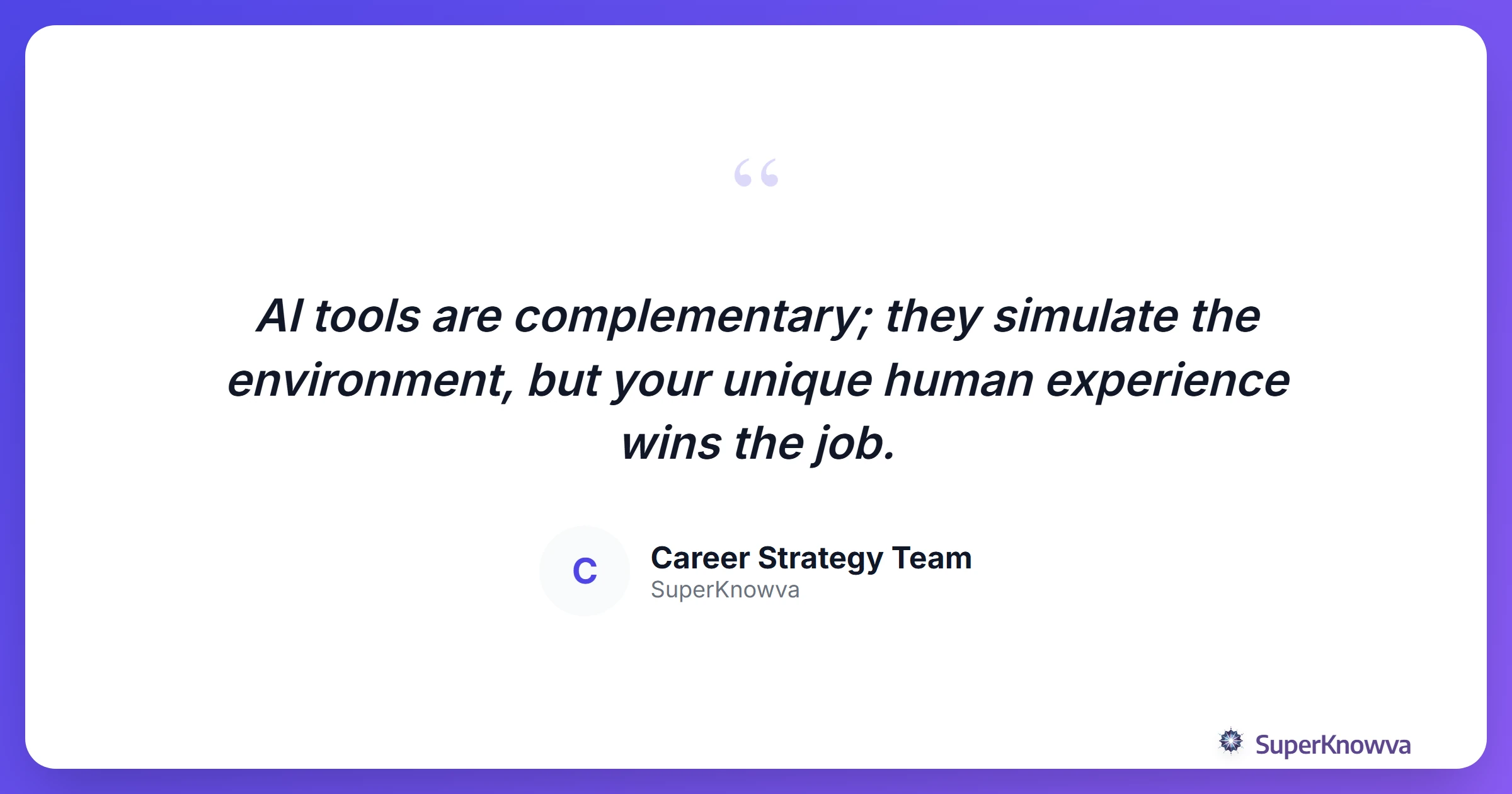
Use it to build a framework, then fill that framework with personal anecdotes that only you can tell. AI can suggest that you mention a time you solved a conflict, but it can’t replicate the specific emotions or the lessons you learned during that 2:00 AM group project. Focus on the soft skills employers are looking for to ensure your humanity shines through.
Specialized Scenarios: Tech, Case, and Behavioral Prep
Not all interviews feel the same. Depending on your field, you might need a different flavor of AI prep:
- SDE Technical Screens: For Software Engineers, AI can act as a pair programmer, helping you talk through your logic while solving LeetCode problems.
- Case Interviews: If you're heading into consulting, tools can simulate logic-based case studies, forcing you to structure your business thinking under pressure.
- The STAR Method: AI is incredible at trimming the fluff from your Situation, Task, Action, Result (STAR) stories. It helps ensure your "Action" and "Result" are the actual stars of the show.
For more insights, check out how tech professionals are refining your interview approach with AI.
Integrating AI Prep into Your Career Strategy
Interviewing is just one piece of the puzzle. To really win, your AI prep should be part of a bigger plan. It starts with a consistent personal brand; you should first optimize your CV for ATS so the experience you’re talking about in your mock interviews matches what’s on the page.
Use AI to brainstorm questions for the end of the interview. Asking about a company’s specific challenges or a five-year roadmap demonstrates thorough research. While AI handles the simulation, building professional connections is the most effective way to secure a role.
As noted in these insights from tech professionals on AI interviews, the most successful candidates use technology as a coach, not a crutch.
Conclusion
Moving from student life to a professional career is a significant transition. By using ai interview preparation, you aren't "gaming the system." You are using the best tools available to become the most articulate, confident version of yourself.
Ready to turn those practice sessions into a real offer? Start simulating today, refine your story, and walk into your next interview knowing you’ve already aced it a dozen times before.