Picture the classic researcher: hunched over a desk at 2:00 AM, surrounded by a fortress of library books and a browser struggling to keep 50 JSTOR tabs alive. It’s a rite of passage, sure, but is it actually efficient? While the core of academic rigor hasn't changed, the way we dig through the digital trenches is undergoing a massive shift.
Generative AI for academic research isn't some far-off "sci-fi" concept anymore. It’s here, and it’s helping scholars move from data-overload paralysis to actual, meaningful insights faster than we ever thought possible.
But how do you use these tools without taking shortcuts on quality? Let’s look at how to modernize your workflow while keeping your academic integrity fully intact.
The Evolution of Research: Beyond the Search Bar
For decades, research was a linear grind. It was a game of brute-force searching, skimming abstracts, and frantic note-taking. Today, AI is flipping the script. It’s acting less like a static filing cabinet and more like a highly sophisticated research assistant.
According to the Cornell University Framework for AI in Research, AI can now plug into almost every stage of the scholarly lifecycle. The real magic? Semantic discovery. Unlike old-school search engines that only look for exact keywords, AI understands what you’re actually looking for. It finds the papers that share your themes, even if they don’t use your specific terminology.
You save hours of digging and get a much clearer view of the project.
Accelerating Literature Reviews with Semantic Search
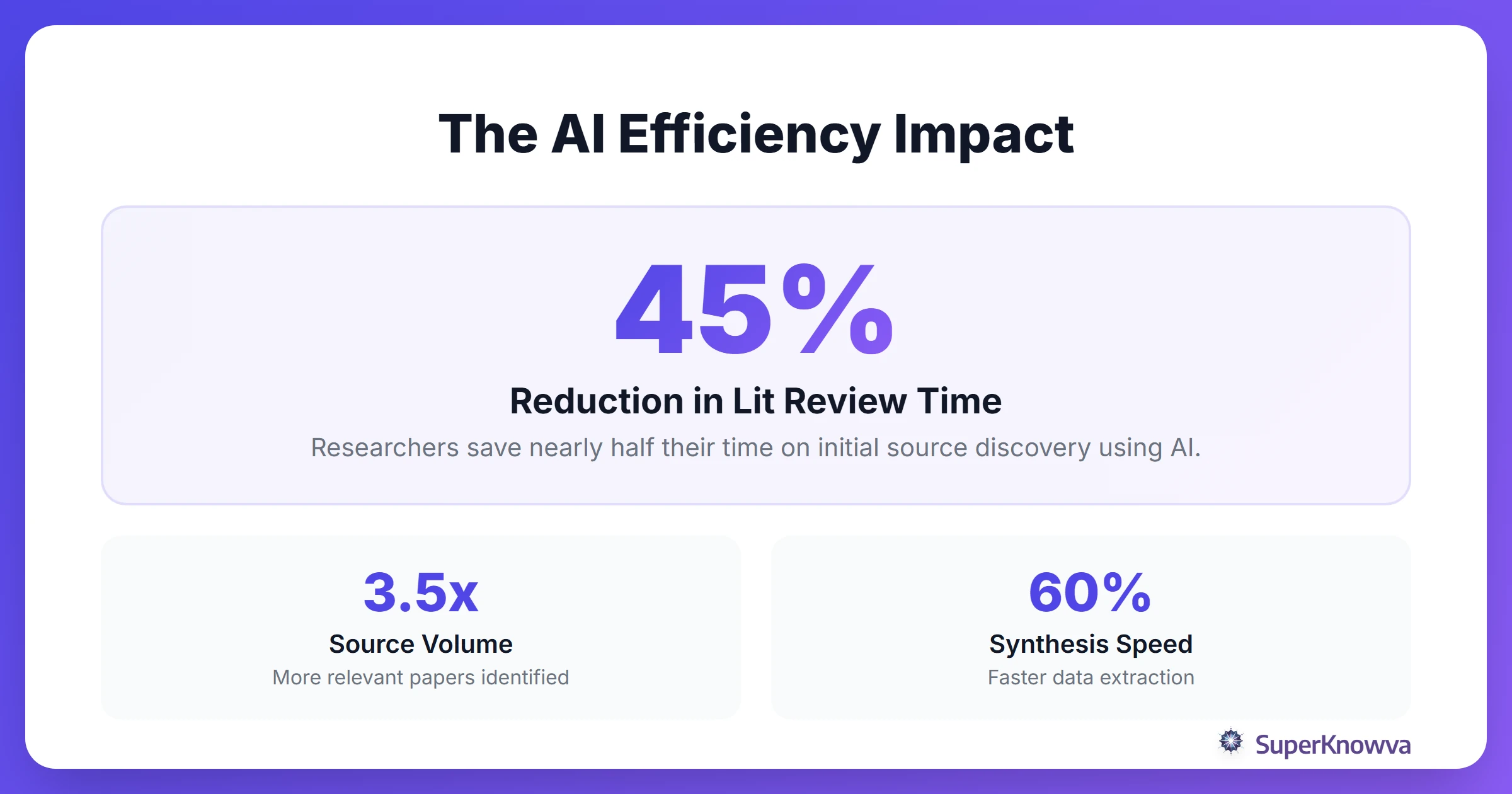
The ai literature review is the most daunting part of any project. Traditionally, you had to be a master of Boolean operators, spending your afternoon typing (impact AND climate CHANGE AND agriculture) and hoping for the best.
Now, you can just talk to your tools. Instead of a complex string of code, you can ask a natural question: "How does rising soil temperature affect wheat yields in sub-Saharan Africa?"
Tools like Elicit and Consensus are the frontrunners here. They don't just find keywords; they find evidence. They can map out how one study supports or contradicts another, helping you spot the gaps in existing research. If you’re someone who needs to see the big picture to understand it, using AI tools for visual learners can help you map these connections out spatially.
Making Sense of Complex Data
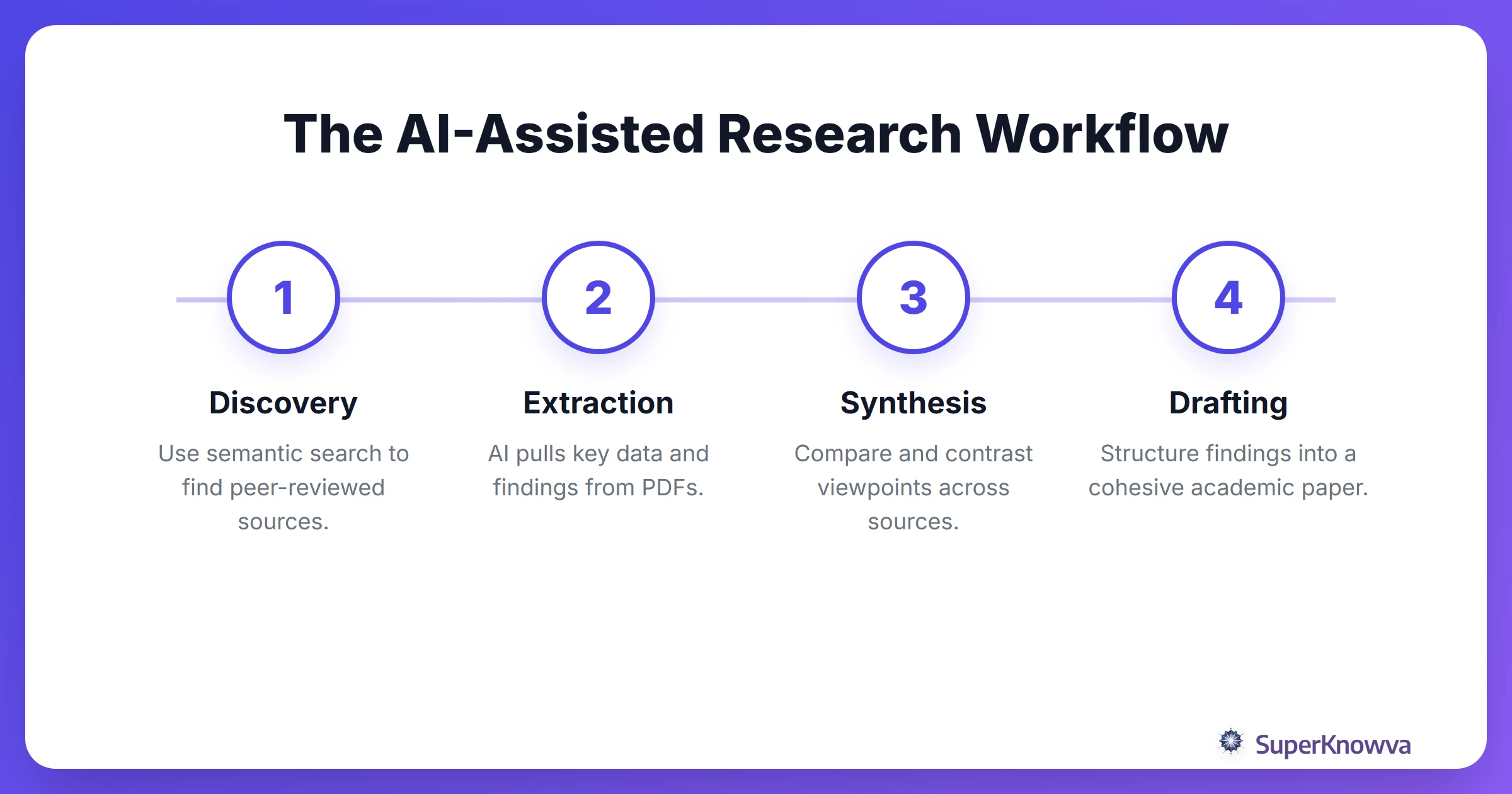
You’ve found your sources. Now comes the hard part: reading them all. Academic papers are notoriously dense, often buried under layers of jargon and methodology. This is where ai for synthesis becomes a lifesaver.
Using Large Language Models (LLMs), you can extract the "meat" of a paper without losing the nuance. These tools allow you to:
- Cross-reference a dozen papers at once to see where the consensus lies.
- Instantly spot conflicting viewpoints between major researchers.
- Turn dense PDFs into structured tables or summaries.
To keep your brain from melting, try feeding these summaries into a comprehensive guide to AI-powered note-taking. It ensures your insights are organized and ready to go when you finally start drafting.
Smarter Drafting and Writing Workflows
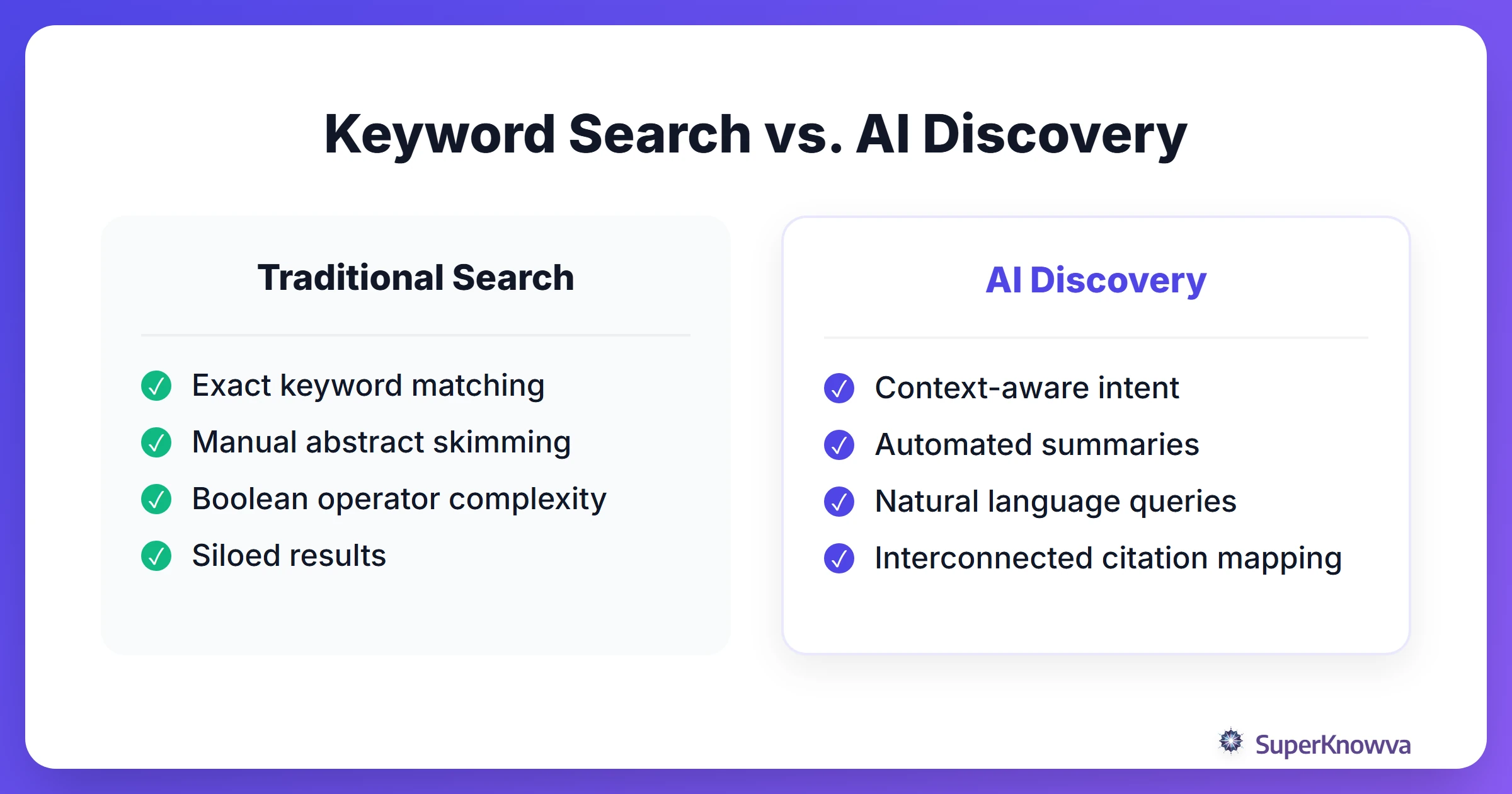
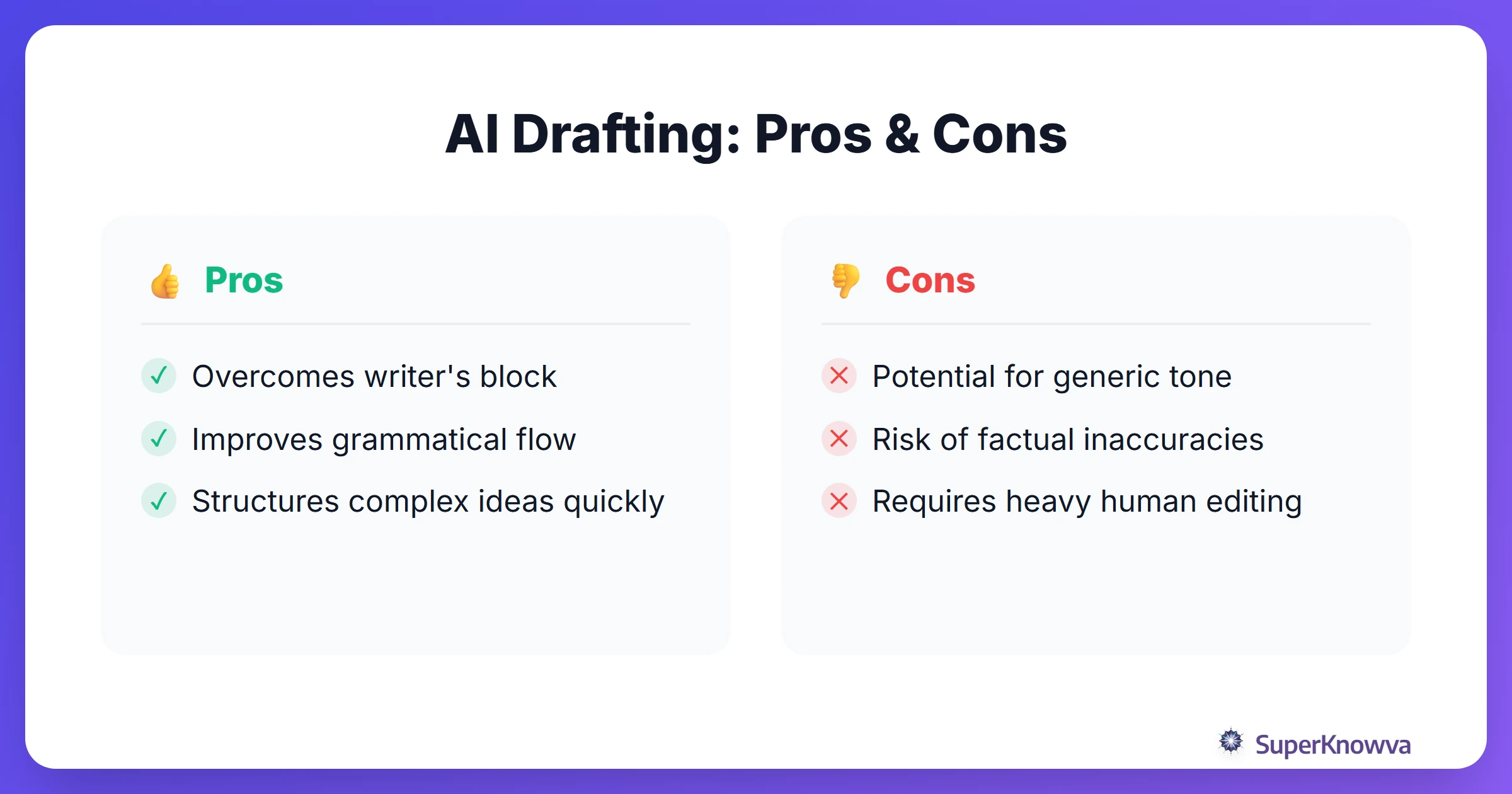
Writer's block is the ultimate research bottleneck. Sometimes, you just need a sounding board to help refine a hypothesis or brainstorm a research question you hadn't considered.
When you’re ready to put digital pen to paper, AI helps smooth out the friction:
- Structuring: Build a logical outline that actually flows.
- Tone Polishing: Ensure your prose sounds professional and fits the requirements of high-tier journals.
- Verification: Many scholars now pair AI with citation managers like Zotero or Mendeley to ensure every claim is backed by a real, verified source.
Stuck on that first paragraph? Exploring AI for creative writing and drafting techniques can help you find your voice and get those first few sentences out of your head and onto the page.
The Reality Check: Ethics and Integrity
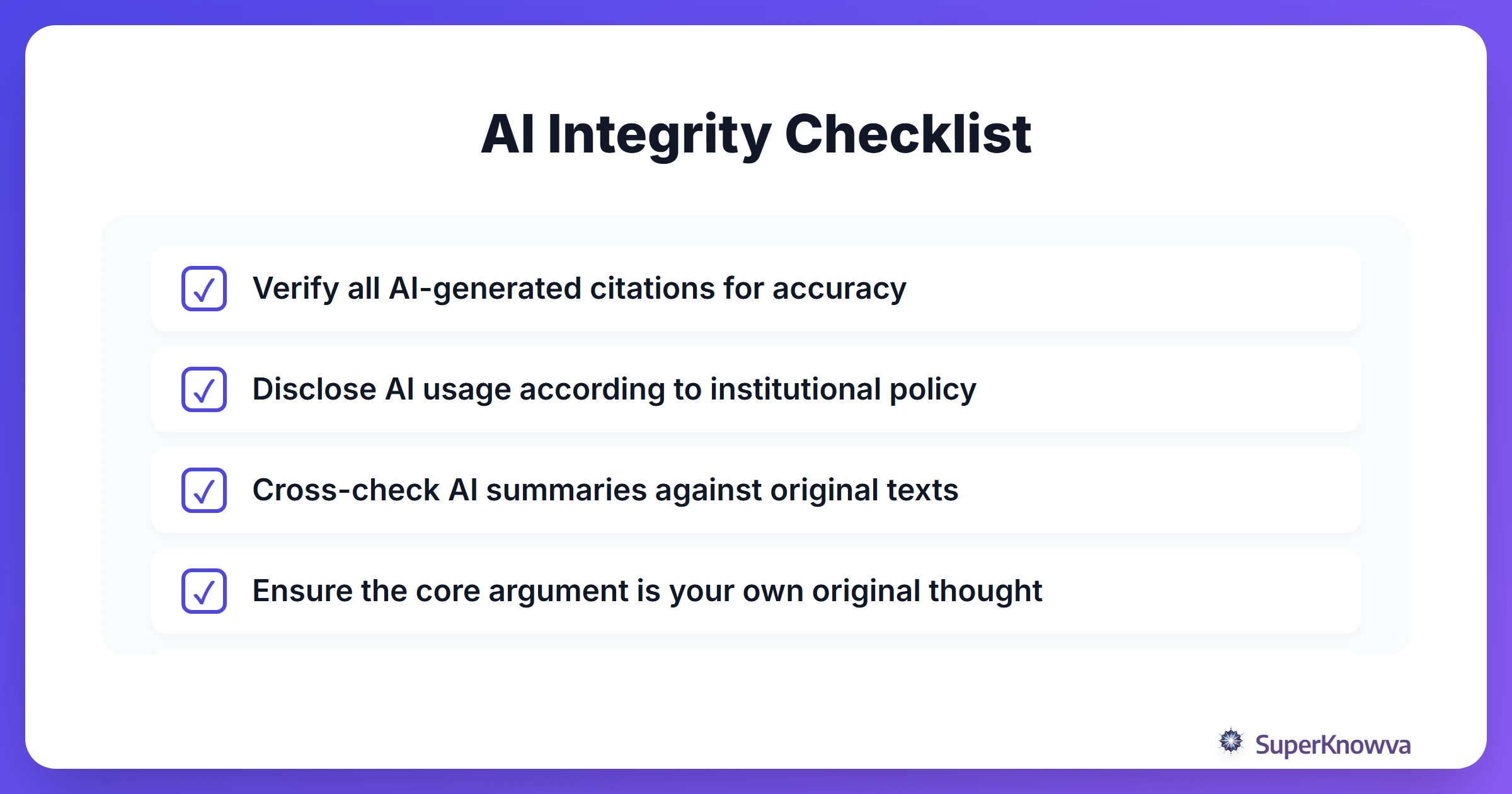
Ethical AI in academia is a significant concern. Efficiency is useful, but the risks are substantial. "Hallucinations," where an AI confidently invents a fact or a citation, can damage a researcher's reputation.
You must be the final editor. Period.
Before you dive in, check the NYU Guide to Generative AI Tools for Research or your own institution's guidelines. Most universities are fine with AI assistance, provided you disclose it and cite it properly using the latest APA, MLA, or Chicago standards.
Building Your AI Research Stack
To hit peak academic research efficiency, you need the right tools for the job. Here’s what the modern "stack" looks like:
- For Discovery: Consensus (great for evidence-based answers) and Scite.ai (to see who is citing whom).
- For Synthesis: Perplexity (for real-time, source-backed searching) and ChatPDF (to "talk" to your documents).
- For Writing: Grammarly and Quillbot to keep your tone sharp and professional.
The Bottom Line
Generative AI isn't here to replace the critical thinking or the passion you bring to your work. Think of it as a force multiplier. By automating the tedious, "brute-force" parts of discovery and synthesis, you free up your mental energy for the stuff that actually matters: asking big questions and uncovering new truths. Use it responsibly, and watch your productivity take off.