We’ve all been there: it’s late, you’ve got three tabs open, and you’re staring down a 30-page PDF that feels like it was written in a foreign language. By the time you hit the second paragraph of the methodology, your brain feels like it’s been through a blender. Between the gatekept terminology and the dizzying statistical models, reading academic papers faster feels less like a skill and more like a superpower you weren’t born with.
But what if you didn't have to decode every grueling sentence manually?
By pairing an AI paper summarizer with smart academic reading strategies, you can stop drowning in the details and start mastering complex research in half the time. This isn't about cutting corners; it's about finding the insights that actually matter.
The Mental Tax of Academic Jargon
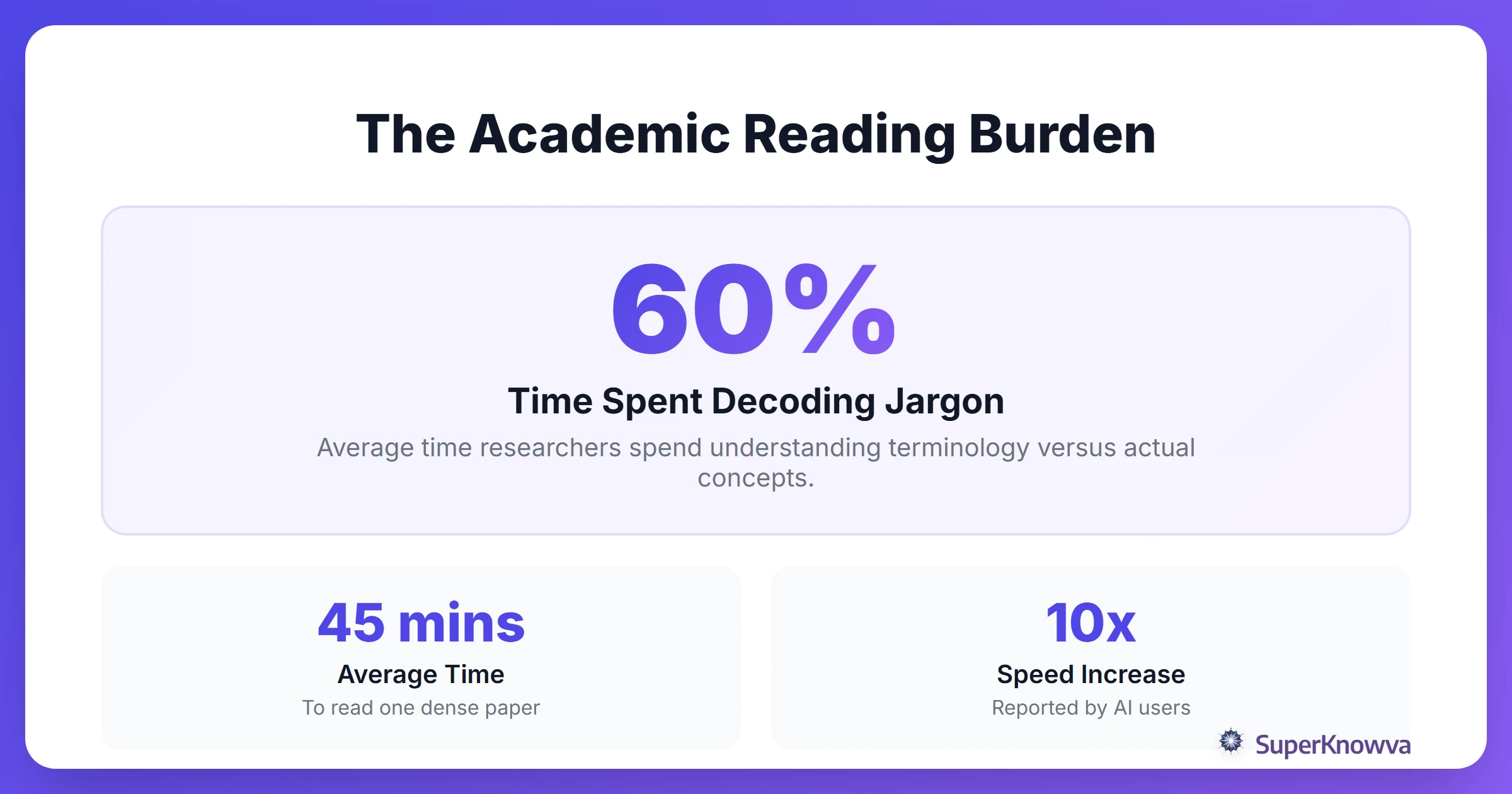
Why is reading a research paper so much harder than reading a news article? It comes down to cognitive load. When a paper is stuffed with dense scientific jargon, your brain spends all its "processing power" just translating the words. By the time you finish a sentence, you have zero energy left to actually understand the concept.
Getting stuck on a single, jargon-heavy paragraph can kill your momentum and lead straight to burnout. This is why "triaging" a paper, deciding if it is worth your time before you commit to a thorough reading, is the most important skill you can learn.
Traditional Triage vs. AI-Assisted Reading
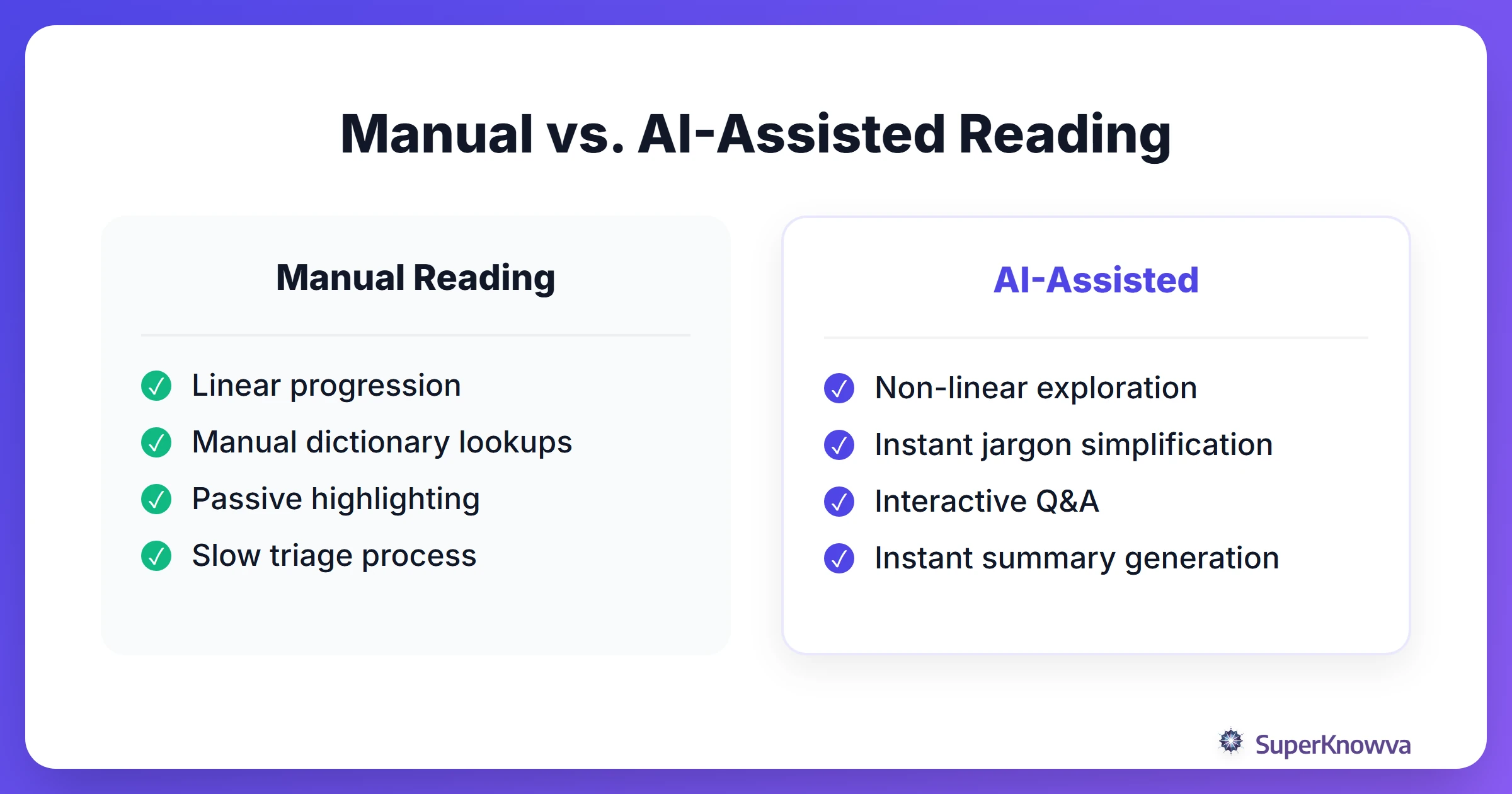
For years, professors have recommended the "Three-Pass Method." You skim the abstract, jump to the conclusion, and then (if you’re still interested) tackle the middle. It works, but it’s slow.
AI changes the math. Instead of hunting for the "Why" and "How" buried on page 14, you can use AI to instantly surface the core thesis.
- Manual Skimming: Takes 15–20 minutes just to figure out if the paper is relevant to your thesis.
- AI-Assisted Triage: Takes seconds. You get a high-level summary immediately, letting you decide if the full text is worth the "brain tax."
The Toolkit: Top AI for Research Papers
The world of research paper analysis is moving fast. You don’t have to settle for a generic chatbot that gets confused by citations; there are specialized tools built for the rigors of academia.
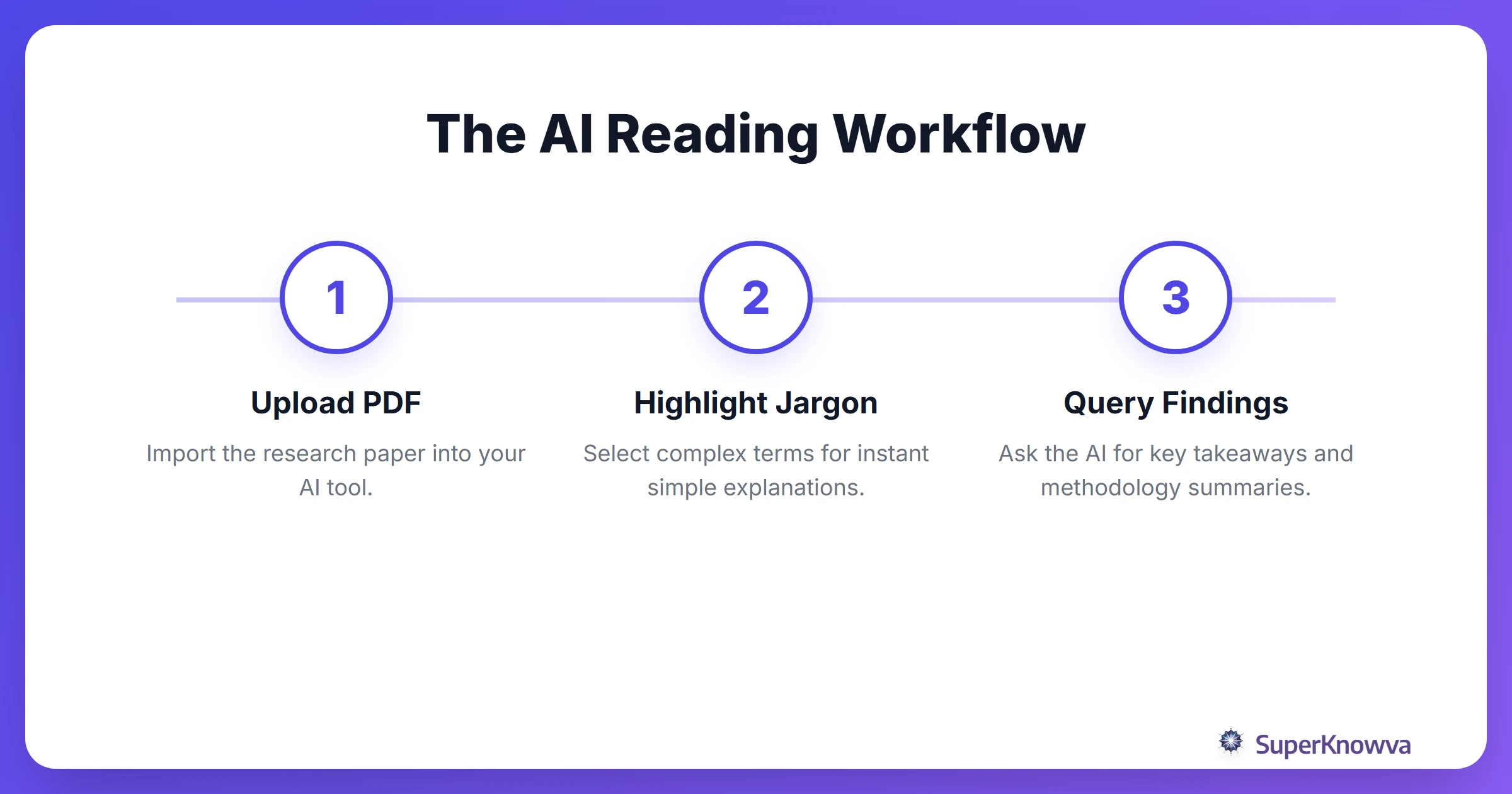
- Explainpaper: This is a lifesaver. You highlight a confusing sentence, and it gives you a simplified explanation. It’s like having a PhD tutor sitting over your shoulder.
- Interactive PDFs: Platforms like SuperKnowva turn static documents into a conversation. Instead of scrolling endlessly to find a sample size, you just ask, "What was the control group size?" and get an answer instantly.
- Specialized Models: Some tools now focus entirely on niche fields like NLP or protein folding, ensuring the AI actually understands the technical nuances of your major.
When picking your tools, look for a balance between speed and accuracy. If you’re looking to upgrade your entire workflow, don’t miss our breakdown of the best study apps of 2026.
How to Talk to Your AI: Better Prompts, Better Summaries
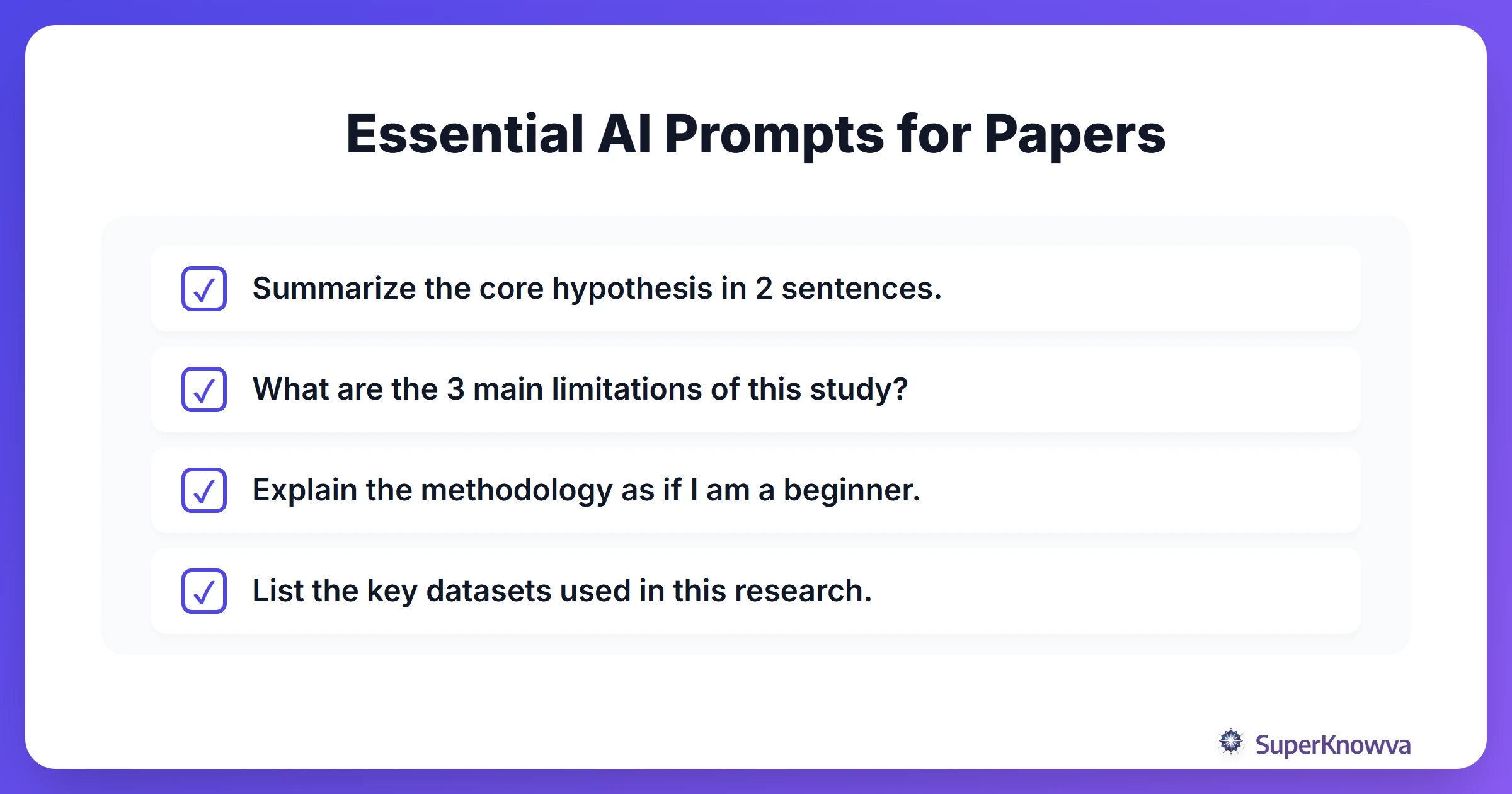
If you give an AI a vague prompt, you’ll get a vague (and likely useless) summary. To get the most out of an AI paper summarizer, you need to be specific.
Try the "Senior Undergrad" strategy. Tell the AI: "Explain the findings of this paper as if I am a senior undergraduate in this major." This keeps the explanation sophisticated enough for your work but strips away the unnecessary "gatekeeping" language.
Other prompts:
- "What are the 3 main limitations the authors acknowledge?"
- "Summarize the methodology: how exactly was the primary data collected?"
- "Did the results actually support the original hypothesis? Point out any discrepancies."
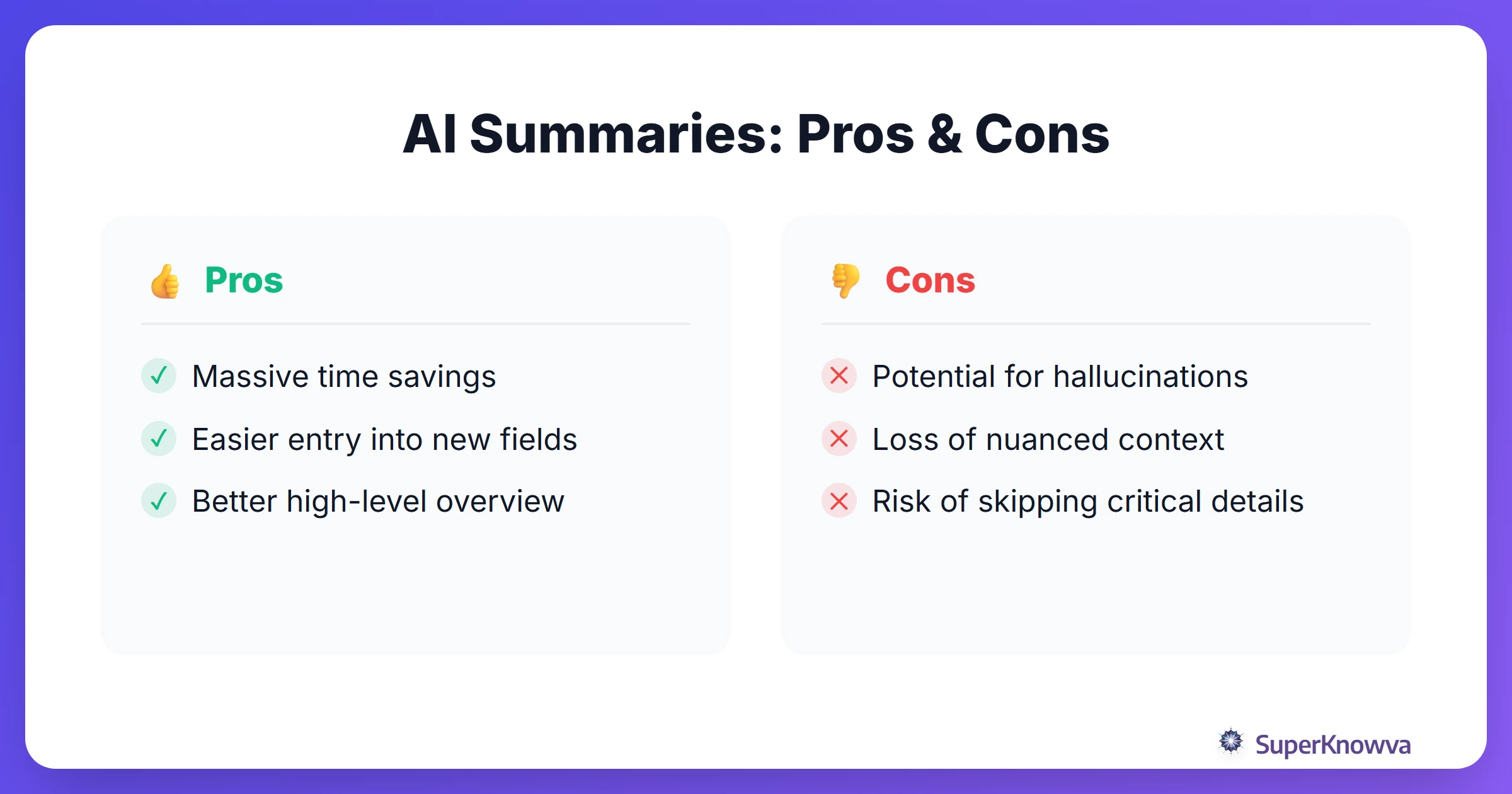
A quick word of caution: always spot-check the summary against the actual text. AI can "hallucinate" details, especially with complex data. For more boots-on-the-ground advice, the Reddit PhD Community Tips are a goldmine for peer-to-peer strategies.
Making the Knowledge Stick
Reading the paper is only the first step. If you don't do anything with the information, it’ll be gone by morning. The most effective students connect their AI tools to advanced note-taking strategies.
Once you have a summary, use it to build active recall techniques like flashcards or self-quizzing. This turns a passive summary into an active study session. If you feel overwhelmed by a long reading list, try the 5-minute rule to stop procrastinating. Commit to uploading one paper and asking one question. Usually, that is enough to get started.
A Reality Check: AI is a Bridge, Not a Shortcut
Speed is important, but it is not everything. AI helps with comprehension, but it does not replace critical thinking. There will be times when you must read the methods section yourself, especially if your lab work or thesis depends on those specific steps.
Over-relying on AI can make you miss the subtle nuances that make a paper great (or flawed). Use AI to build a bridge to the content, not to avoid it entirely. By letting AI handle the heavy lifting of "decoding," you save your mental energy for what humans do best: analysis, critique, and original thought.
Ready to conquer your reading list? Start using AI as your research assistant today. Stop wasting hours on jargon and start spending your time on the insights that actually move the needle.