If you have stared at an LSAT Logic Game and felt your brain turn into static, you are not the only one. For most aspiring law students, the Analytical Reasoning section, better known as Logic Games, is the most difficult part of the LSAT. The pressure of solving intricate puzzles while a clock counts down from the corner of the screen is enough to make anyone panic.
But here’s the good news: mastering this section isn't about having a "math brain" or brute-forcing your way through thousands of pages of prep books. It’s about pattern recognition. With the rise of lsat logic games ai practice, you can stop guessing and start using technology to sharpen your deductive reasoning.
In this guide, we’ll look at how AI-powered tools are flipping the script on logic games, turning a major source of anxiety into a reliable source of points.
The Anatomy of LSAT Logic Games
What exactly is the LSAT testing here? It’s not your knowledge of the law; it’s your ability to understand a system of relationships and see the "hidden" rules that connect them. According to the LSAC Analytical Reasoning Overview, this section is a core pillar of your score. Yet, it remains the most notorious "time-sink" for test-takers.
We’ve all been there: you get stuck on a single conditional rule, your heart starts racing, and suddenly your manual grid looks like a bowl of alphabet soup. When stress hits, simple transcription errors can ruin an entire game. That’s why mastering this section requires more than just logic; you need effective stress management techniques to keep your cool when the timer turns red.
How AI Simplifies Logic Game Diagramming
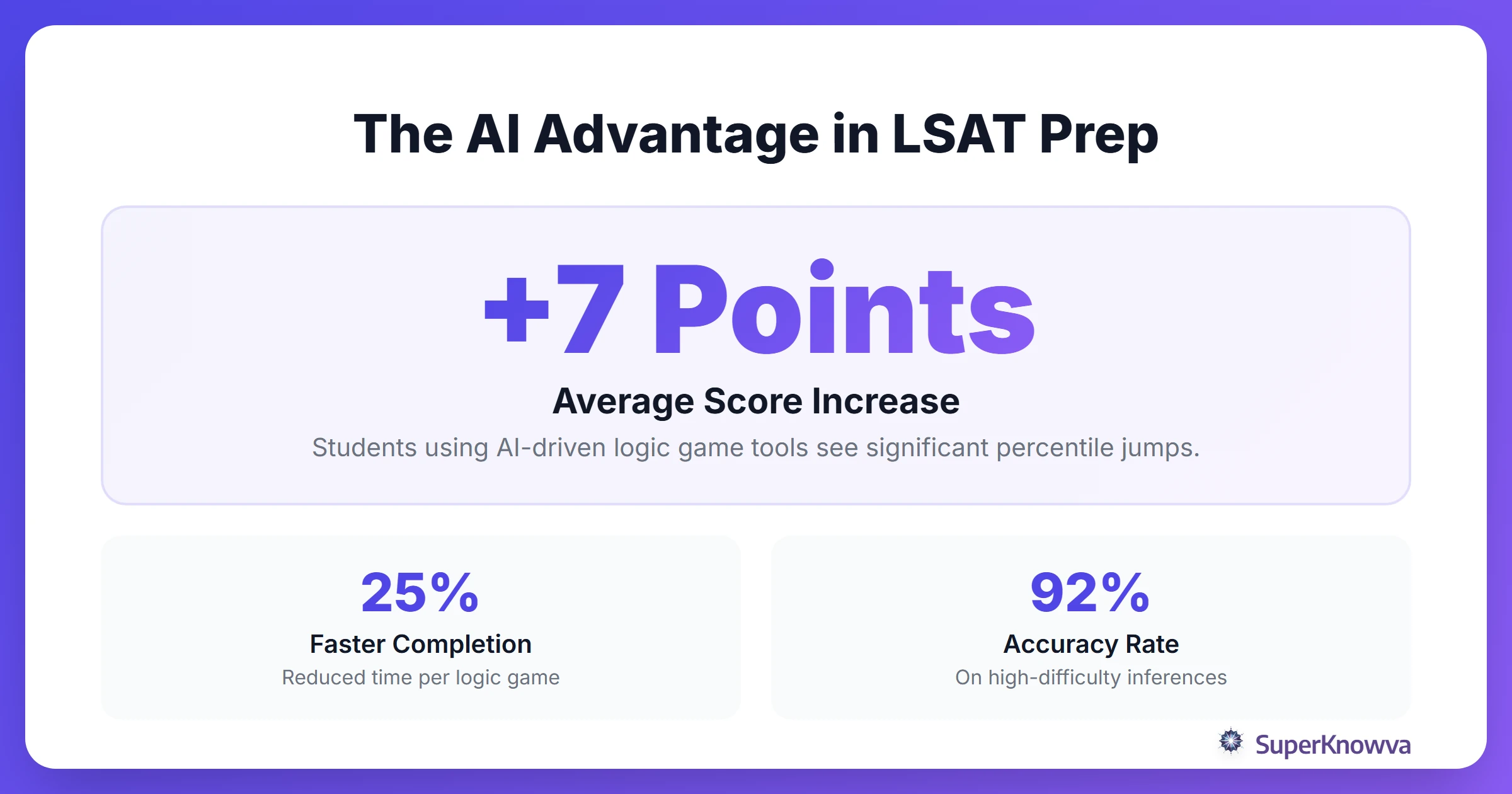
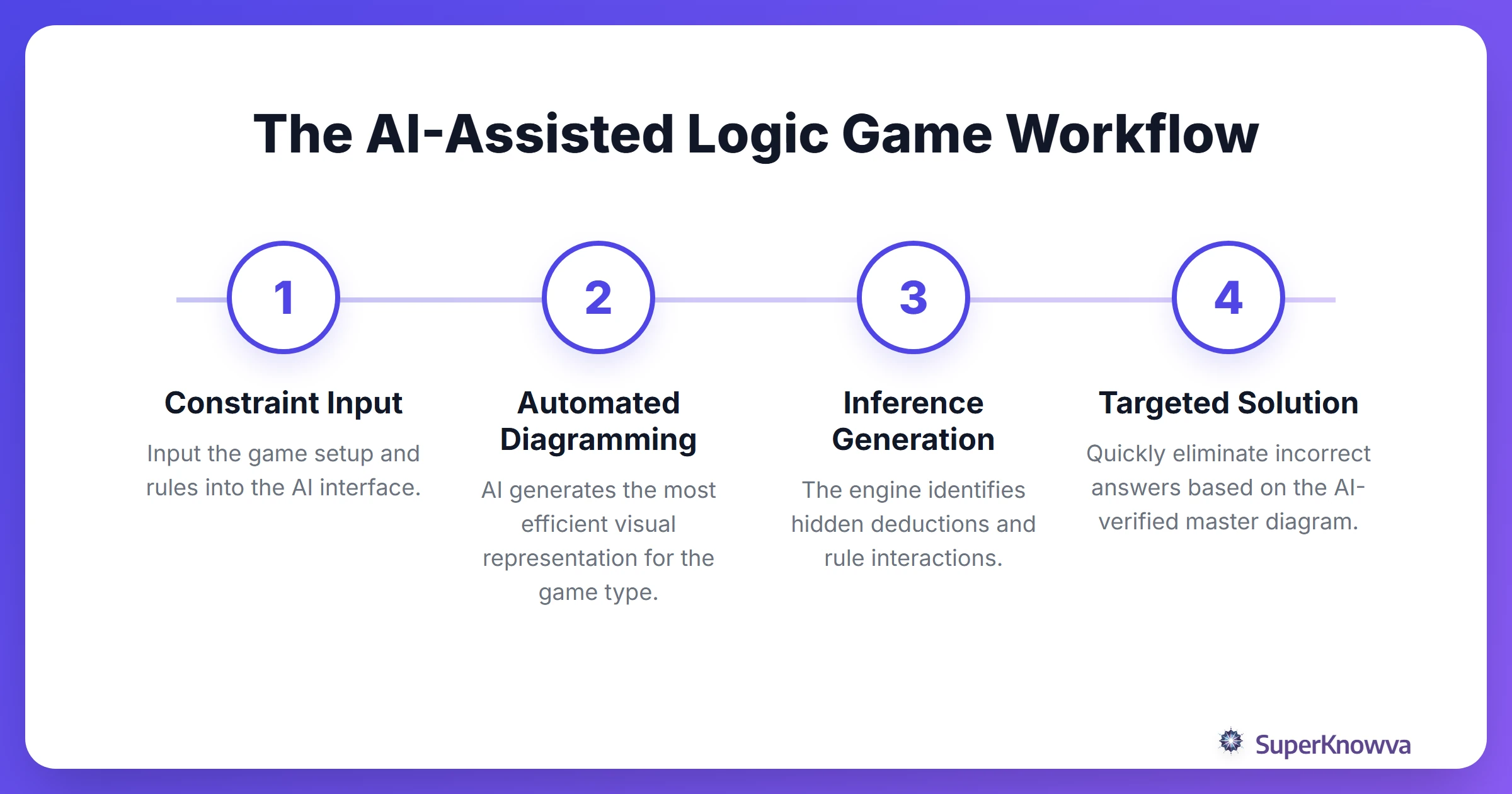
The "setup" is the make-or-break moment of any game. Whether you’re sequencing marathon runners or grouping committee members, your diagram is your roadmap. If the map is wrong, you’re going to get lost. AI-powered platforms like SuperKnowva are changing lsat logic game diagramming by moving away from static sketches and toward dynamic, interactive interfaces.
Instead of manual sketching, AI tools help visualize logic by:
- Dynamic Rule Processing: The AI flags when rules collide. For example, if "A cannot be next to B" and "B must be in slot 3," the AI shows visually that A is restricted from slots 2 and 4.
- Building the 'Master Diagram': AI-assisted interfaces guide you through a setup that incorporates all rules into one visual. This reduces time spent re-reading the prompt and focuses effort on selecting the right answers.
The Inference Engine: Finding What’s Unsaid
On the LSAT, the most important rules are the ones they don't tell you. These are "inferences." If Rule 1 says "X is before Y" and Rule 2 says "Y is before Z," the hidden truth is that "X is before Z."
Easy enough, right? But in advanced games, these inferences can be buried under three or four layers of conditional logic. This is where AI acting as an "inference engine" becomes your best friend. By predicting deductions based on how rules interact, AI-generated feedback loops train your brain to spot these patterns automatically. Interestingly, these same analytical muscles are exactly what you’ll need for the reading comprehension strategies found in other high-stakes exams.
Adaptive Learning: No More "One Size Fits All"
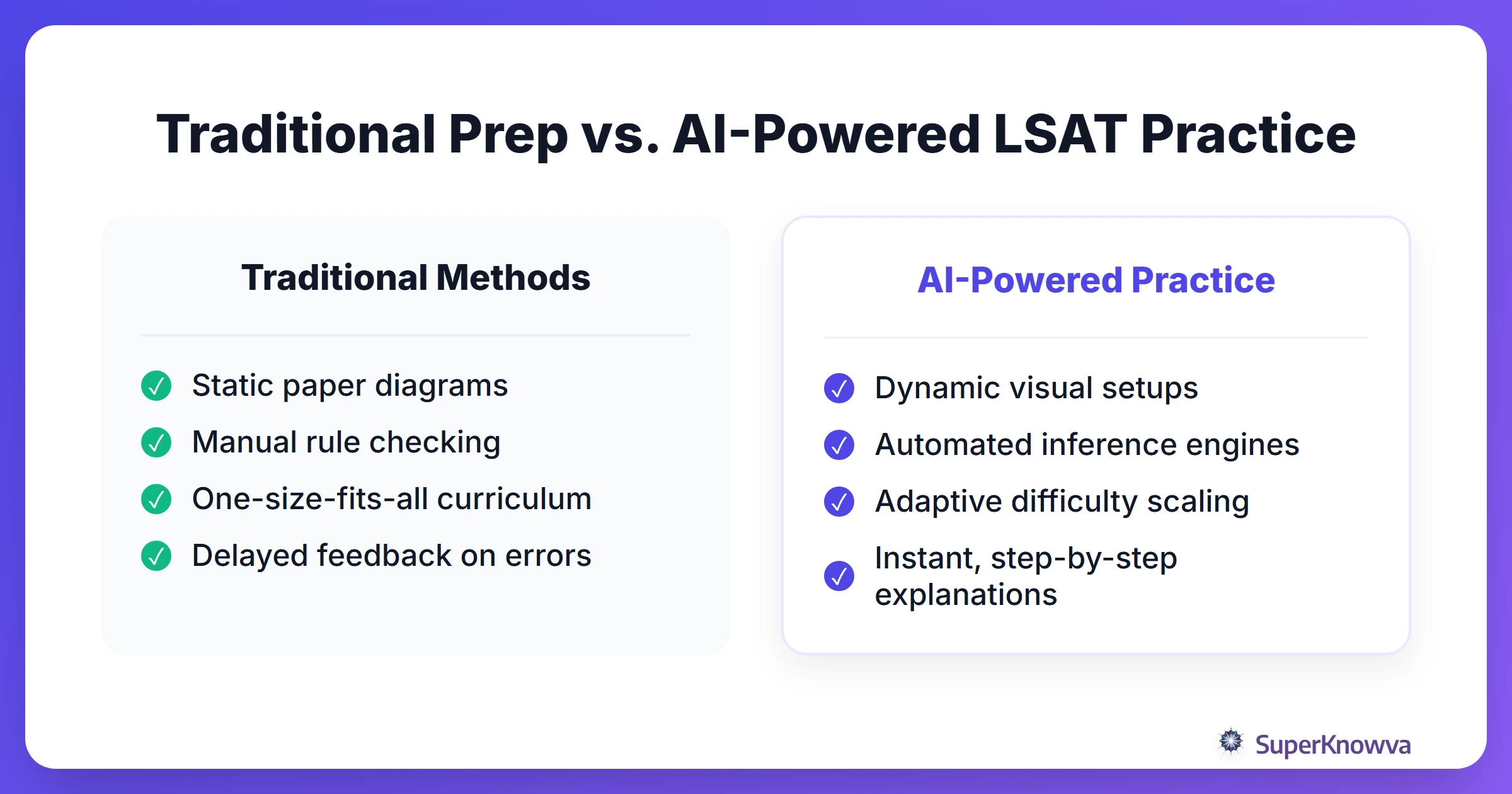
Why spend three hours practicing Basic Linear games if you’re already an expert at them? Traditional prep books treat every student the same, but adaptive lsat practice meets you where you are.
AI analyzes your performance in real-time to find your "weak spots":
- Targeted Drills: If the AI notices you’re acing Sequencing but hitting a wall on "Hybrid Grouping," it will pivot, serving you the specific puzzles you need to master.
- Spaced Repetition: Ever learn a strategy on Monday only to forget it by Friday? AI uses spaced repetition to bring back difficult game types right as they’re about to slip from your memory, cementing the logic for good.
Precision Under Pressure
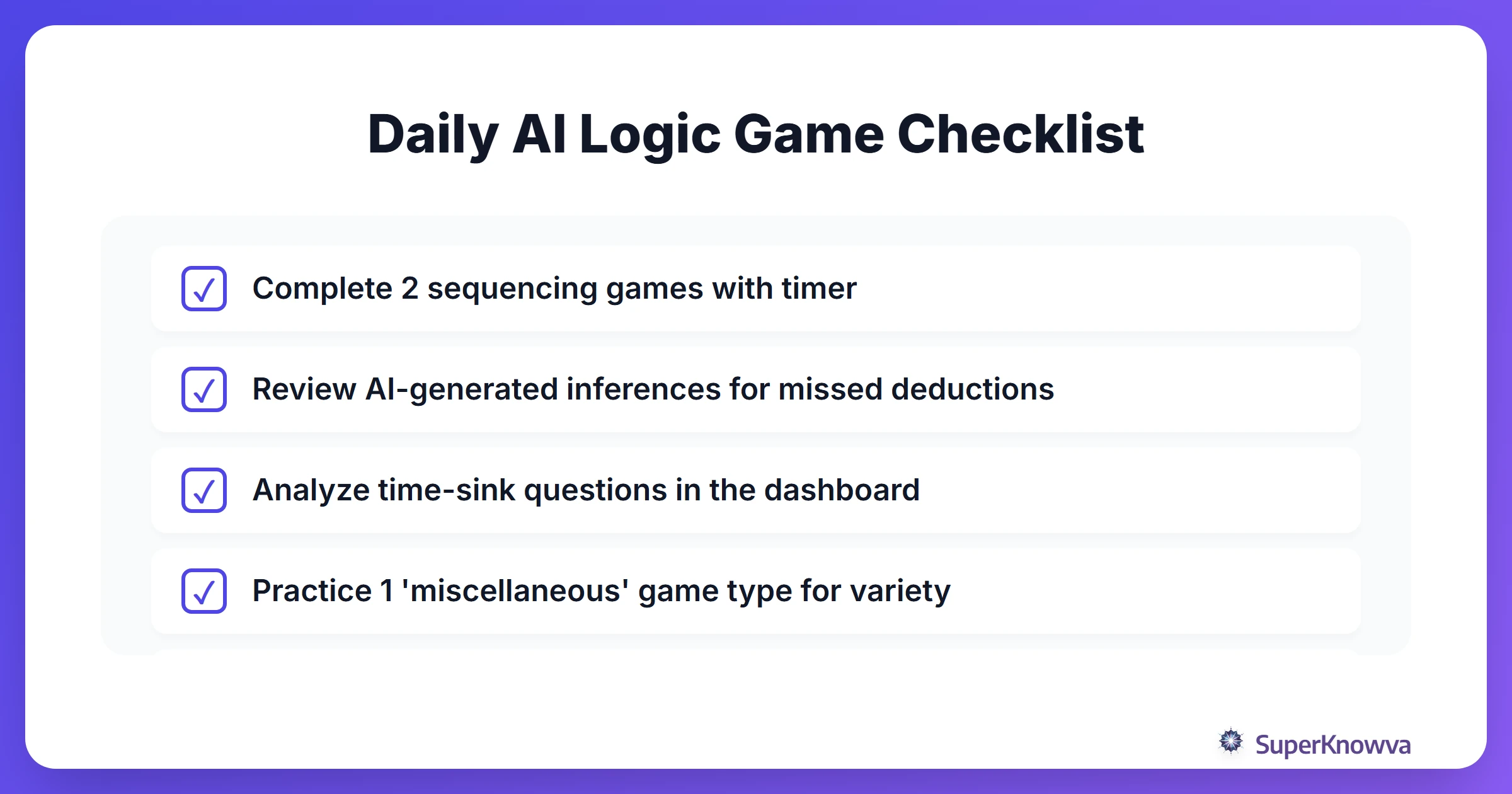
You have roughly 8 minutes and 45 seconds per game. That’s it. To win, you have to move past "getting it right" and start "getting it right fast." AI dashboards give you granular data on your "Time per Question," showing you exactly where you’re stalling.
By letting an AI tool handle the heavy lifting of rote deductions during your practice sessions, you lower your "cognitive load." This frees up your brain to focus on the high-level strategy needed to beat the 8-minute rule. It’s all about building a rhythm.
Beyond the LSAT: Logic as a Career Skill
The work you’re doing now with ai test prep for law school isn't just a hoop to jump through. The ability to parse complex conditions and spot inferences is the bread and butter of legal reasoning. Whether you’re dissecting a multi-million dollar contract or preparing for the Bar Exam, a logical mindset is your sharpest tool.
Think of it as a long-term investment. Just as these games prepare you for 1L, AI-driven practice questions will be there to help you tackle the Bar later on. If you're just starting out, pairing AI tools with a solid foundation like Khan Academy LSAT Prep can give you the best of both worlds.
Conclusion
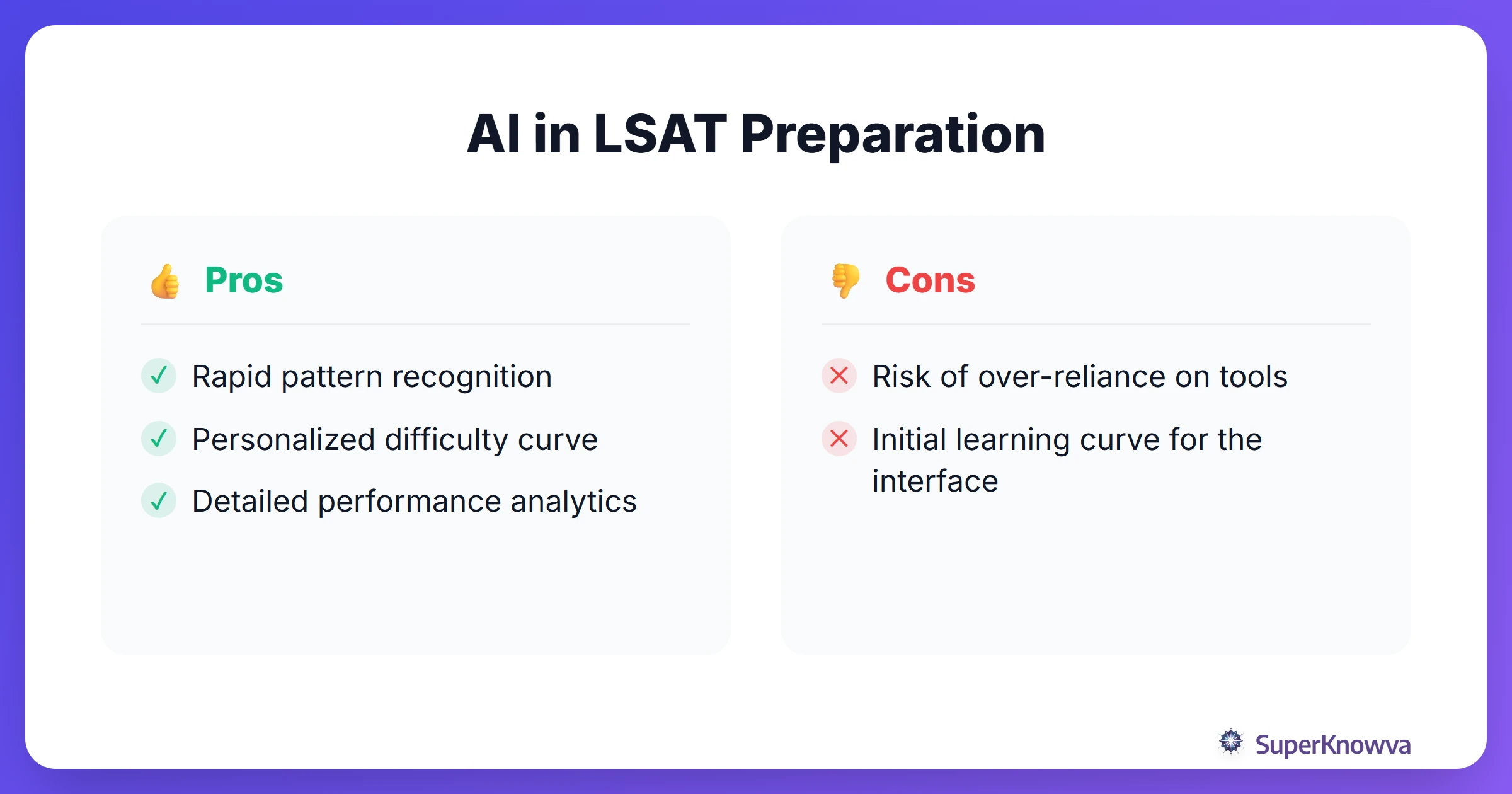
Mastering LSAT Logic Games requires discipline and pattern recognition. It is tough, but not impossible. By integrating AI-powered problem-solving into your study routine, you can demystify the most complex constraints and walk into the testing center with confidence.
Stop studying harder. Start studying smarter. The power of AI is ready when you are.