
The July LSAT is more than a practice run. It is an official exam. You have spent months mastering logic games, identifying reasoning flaws, and studying judicial philosophy. However, simple oversights like a dead laptop battery or a forgotten ID can still impact your performance.
This LSAT test day guide is your roadmap to avoiding those "what if" nightmares. We’re here to handle the logistics so the only thing you have to worry about is hunting down those easy points and securing your seat in next year's 1L class.
In-Person vs. Remote: Where Are You Battling?
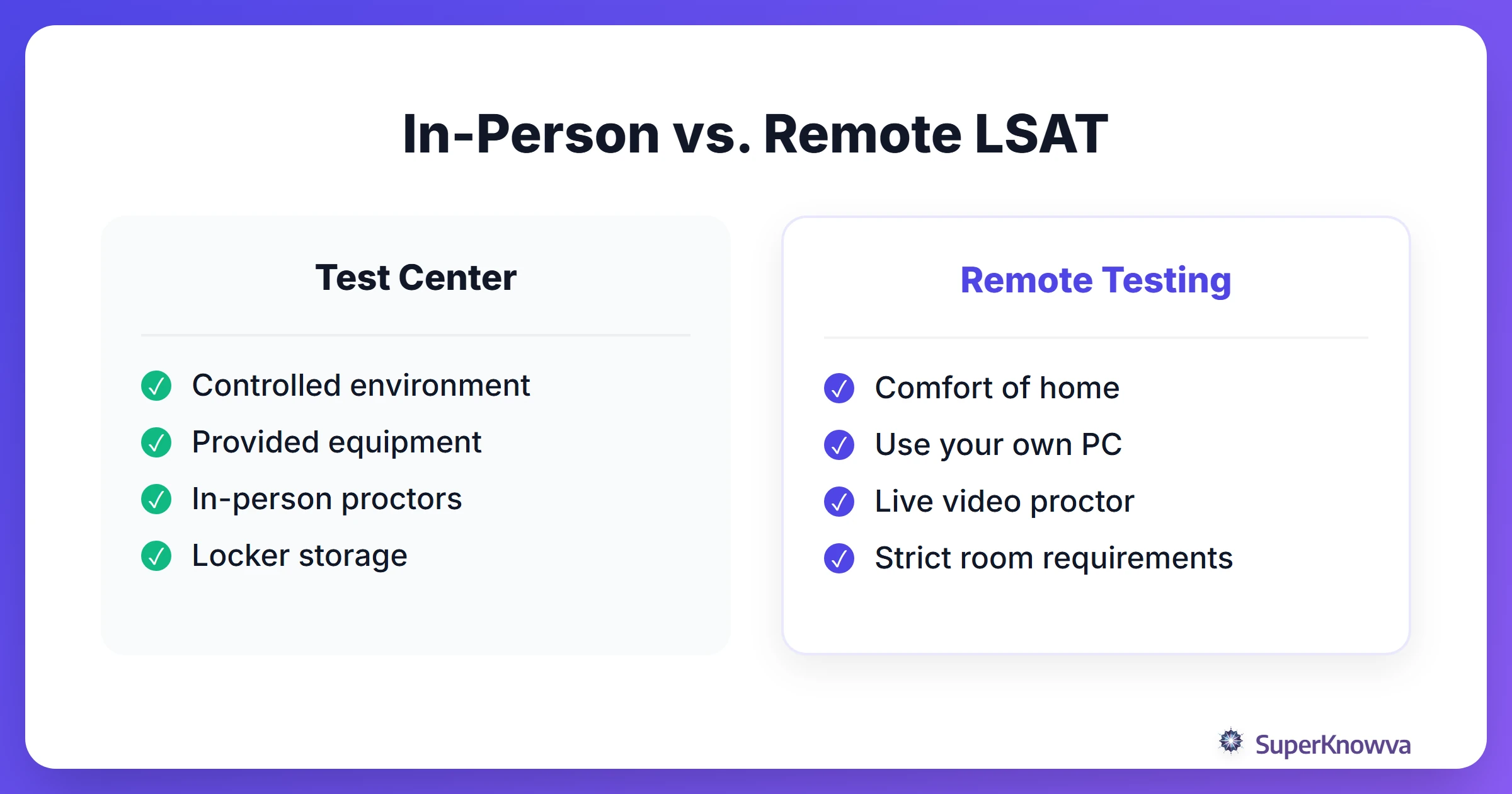
For the July LSAT, you have a choice to make: the sterile silence of a Prometric center or the familiar (but risky) comfort of your own desk. Each comes with a specific set of LSAC test day rules that you ignore at your own peril.
Prometric Centers: If you choose LSAT in-person testing, you’re paying for peace of mind. You won't have to panic about your Wi-Fi cutting out or your roommate deciding to vacuum right during Section 3. Prometric provides the hardware, and the proctors handle the security sweeps. You just show up and perform.
Remote Proctoring: Prefer your own chair and your own coffee? LSAT remote testing is the move. But remember, your room becomes a high-security zone. You need a door that closes, zero clutter, and absolutely no "unauthorized" materials in sight. If there’s a window or a glass wall, cover it up. The proctors are thorough, and they will ask you to move your camera around.
The Physical Checklist: Don't Get Turned Away at the Door
Imagine studying for 300 hours only to be disqualified because you brought a digital watch. It happens. Use this LSAT test day checklist to make sure you’re fully compliant.
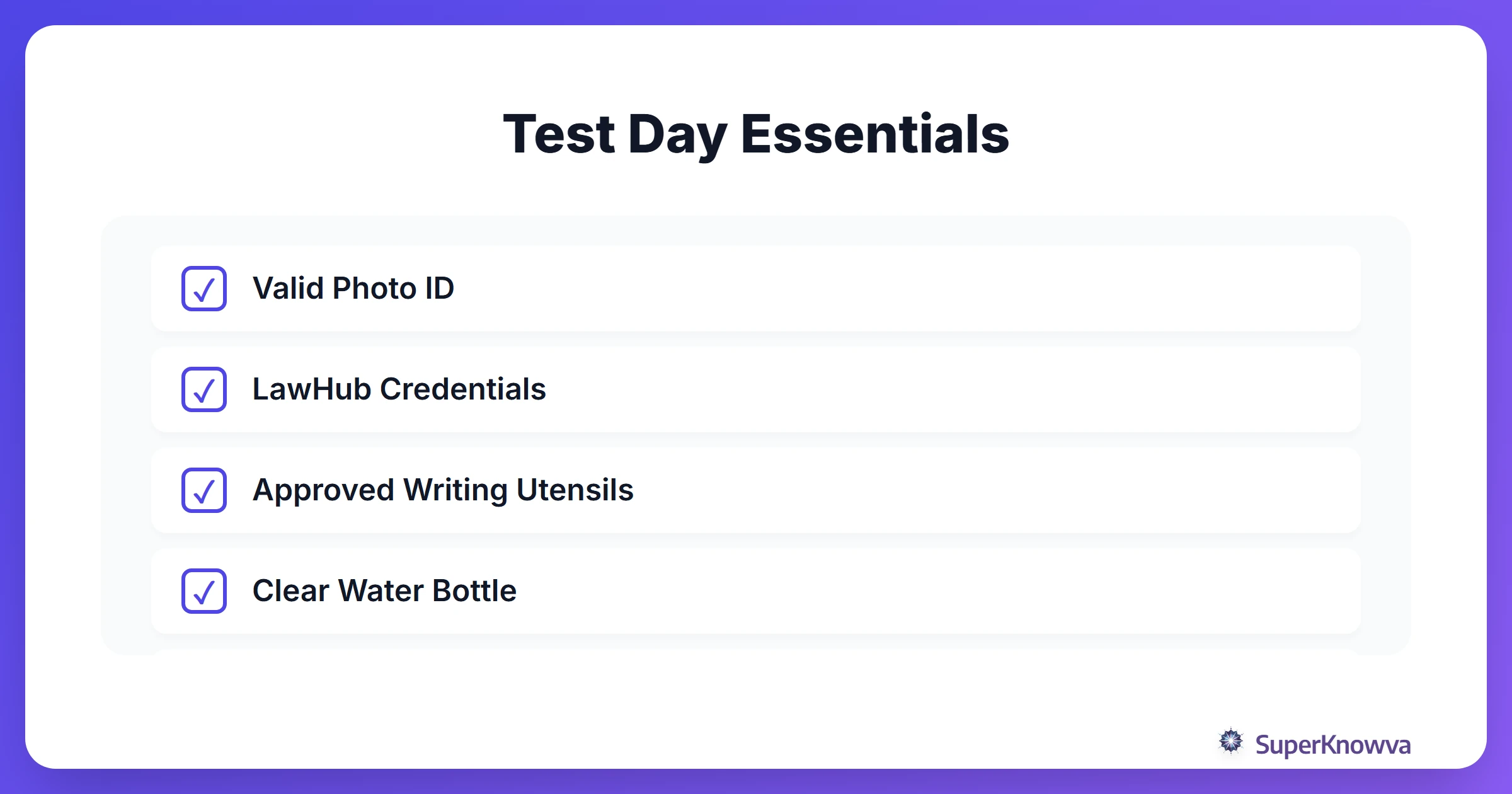
- Your ID: You need a valid, government-issued photo ID. Physical cards are required. Digital IDs on your phone are not accepted.
- LawHub Credentials: You must know your LSAC/LawHub username and password. Proctors cannot reset your password, and searching for login details during the exam wastes testing time.
- The "Must-Haves": In-person? Bring five HB pencils, an eraser, and an analog watch (with hands, not a screen). Remote? Check the Official LSAC Remote Testing Checklist for desk requirements.
- The "No-Go" Zone: Phones, smartwatches, and fitness trackers are prohibited. If you are at a center, lock them up. If you are at home, put them in another room.
Need the nitty-gritty details for a specific center? Peek at the Official LSAC In-Person Checklist.
Technical Readiness: Don't Let a Glitch Win
If you’re testing from home, congratulations: you’re now the Head of IT. Technical hiccups are the #1 cause of conquering test anxiety on the big day. Let’s avoid that.
- Chrome is King: The LSAT interface hates Safari. It dislikes Firefox. It barely tolerates Edge. Use Google Chrome. Period.
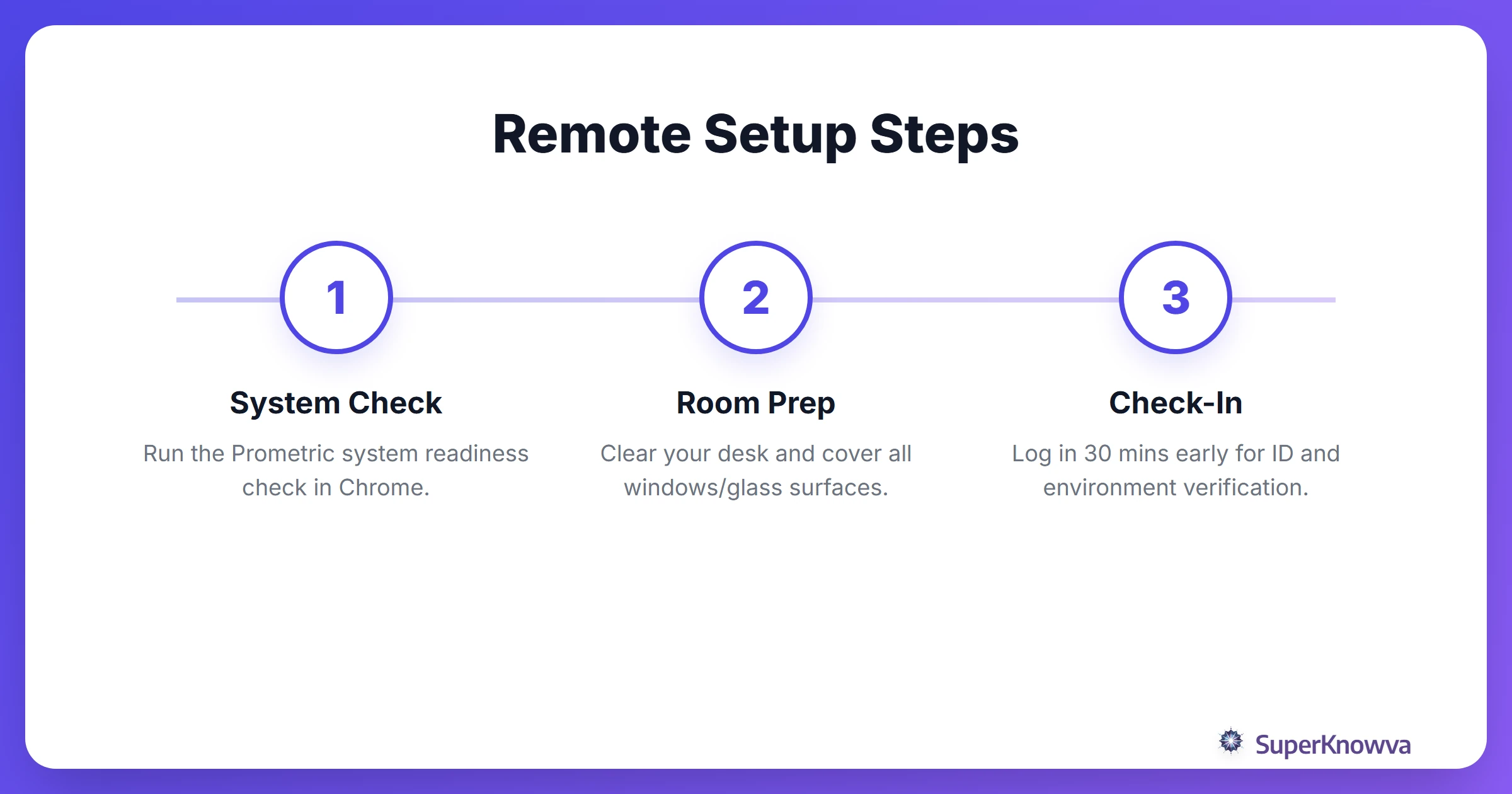
- The 24-Hour Rule: Run the Prometric system readiness check at least a day before. Test your mic, your camera, and your upload speeds. Do it at the same time of day as your test to see how your Wi-Fi holds up.
- Lighting Matters: If you have a bright window behind you, you’ll look like a silhouette. The proctor needs to see your face clearly, or they’ll flag your session. Front-facing light is your friend.
While you're practicing reading dense passages on a screen, it’s worth brushing up on advanced reading comprehension strategies to get comfortable with the digital interface.
The Test Day Timeline: What to Expect
What does the day actually look like? Whether you’re at a desk or a center, the rhythm is usually the same:
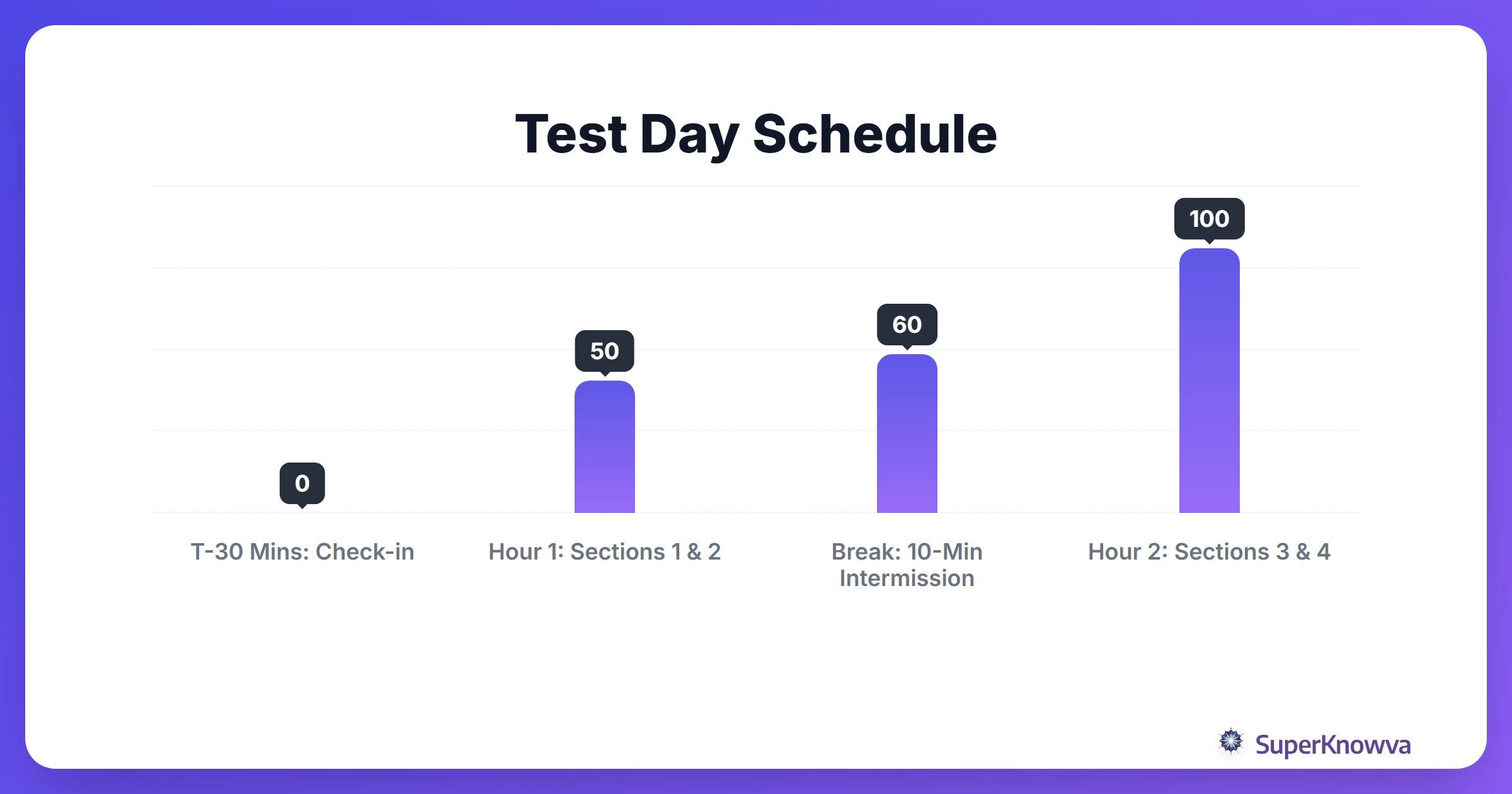
- The Check-In (30 Minutes Prior): This is the "hurry up and wait" phase. You’ll verify your ID and, if you're remote, perform a 360-degree webcam scan of your room.
- The Vow of Silence: You’ll type out a certifying statement promising you won't leak the questions.
- The Gauntlet: Four 35-minute sections. You’ll see Logical Reasoning and Reading Comprehension. One section is unscored (the "experimental" section), but LSAC won't tell you which one it is. Treat every section like it's the one that counts.
- The 10-Minute Intermission: After section two, you get a breather. It’s short, so use it wisely.
- The Finish Line: Once the fourth section is done, you’re free. Just remember: your score stays locked until you finish the LSAT Argumentative Writing task, which you do on your own time.
Managing your energy through this timeline is a great preview of the future of legal education, where digital endurance is a requirement, not an option.
Managing the "Brain Fog" and Pre-Test Nerves
LSAT anxiety management is a skill, just like identifying a "Sufficient Assumption." When the clock starts, your "fight or flight" response might kick in. Your heart races, your palms get sweaty, and suddenly a simple conditional logic statement looks like ancient Greek.
To stop the spiral, try a "Warm-Up" routine. You wouldn't run a marathon without stretching, right? Don't let the first question of the actual LSAT be the first one you've looked at all day. Do 5 or 10 easy drills an hour before you log in just to get your brain into "LSAT mode."

If you feel the panic rising during the test, try a quick grounding trick: take three deep breaths and "relabel" your anxiety as "excitement." It sounds cheesy, but reframing that nervous energy can actually keep your focus sharp.
The 10-Minute Intermission: A Tactical Reset
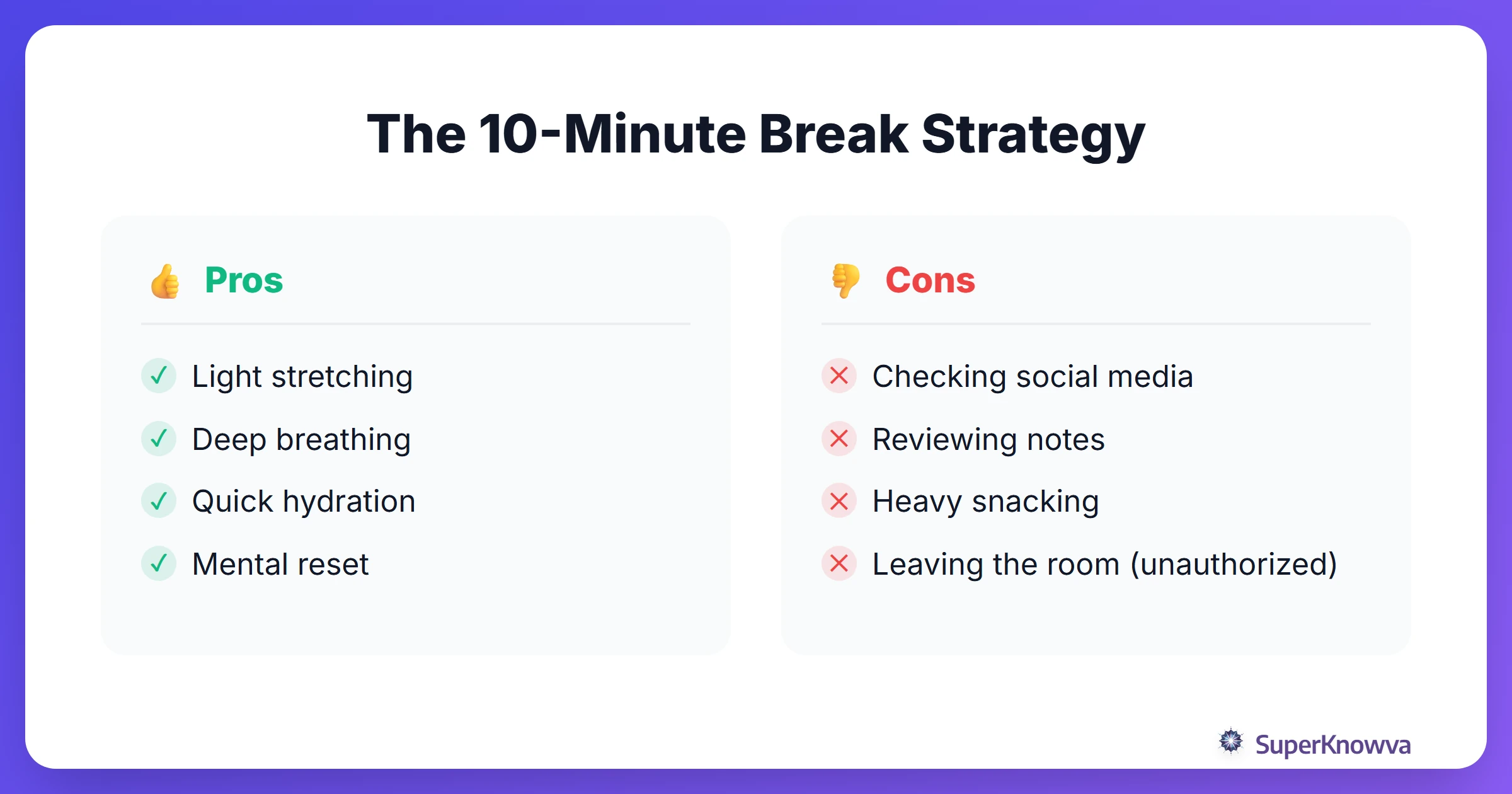
Ten minutes goes by fast, exactly 600 seconds. How you spend them determines your performance in the second half.
The Strategy:
- Do: Stand up. Stretch your neck. Drink some water. Use the restroom even if you don't think you have to. You don't want to be thinking about your bladder during a Reading Comp passage.
- Don't: Do NOT touch your phone. For remote testers, this is the quickest way to get your score canceled. Also, don't try to look up an answer from the first half. It’s over. Let it go.
When you sit back down, be ready for a "mini" security check. The proctor will likely want to see your ID and your workspace again before they let you start Section 3.
Conclusion
The July LSAT is as much a test of your nerves as it is a test of your logic. By following this LSAT test day guide, you’ve already won the battle against the logistics. Now, all that’s left is the execution. Trust the work you’ve put in, stay cool during the tech checks, and remember: every question is just another puzzle you’ve already learned how to solve.
You’ve got this. We’ll see you on the other side of the curve!