You know that feeling? The one where you’re staring at a set of rules about seven people sitting in a row, and suddenly your brain decides it’s the perfect time to forget how to count?
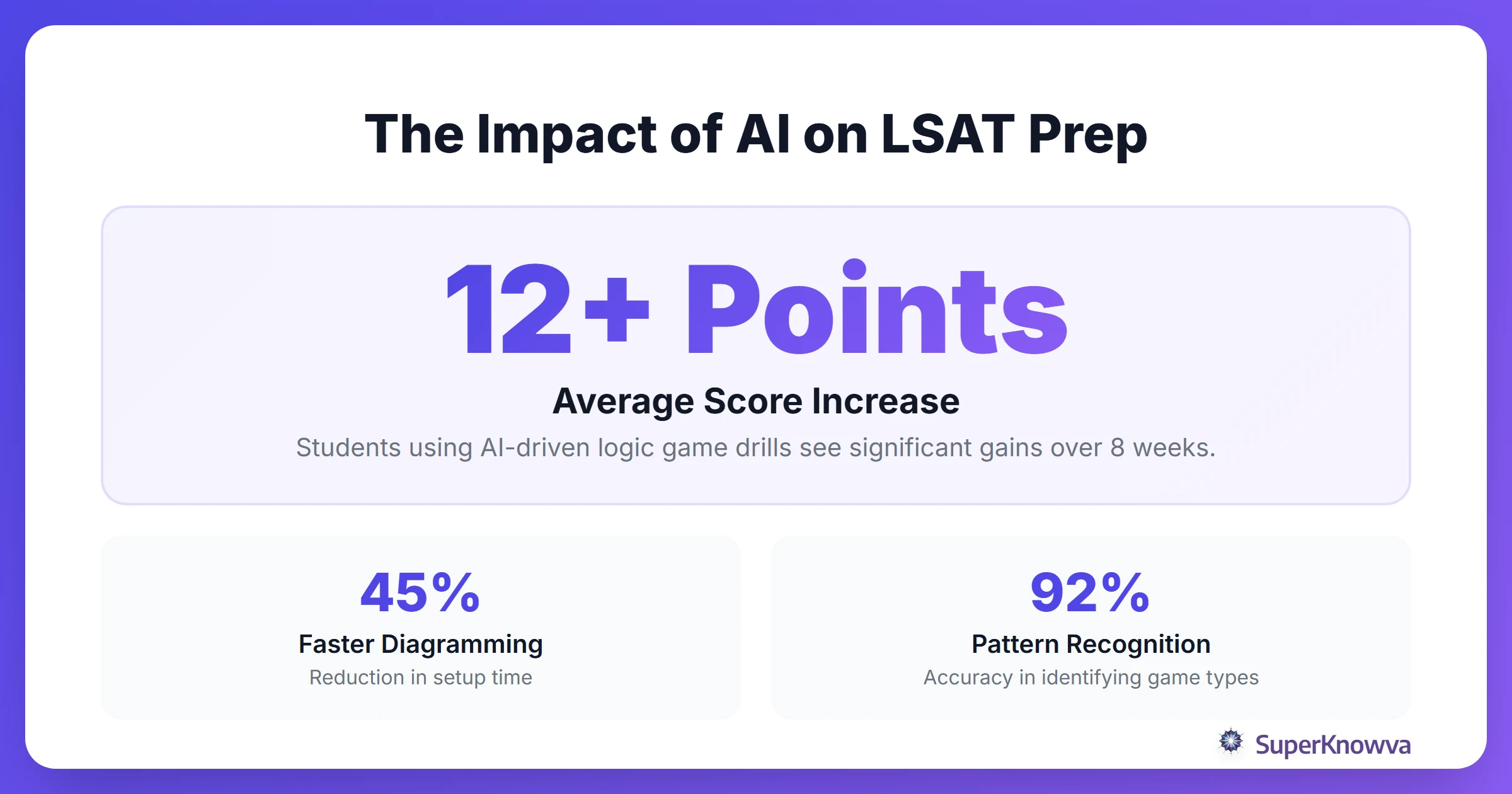
Staring at logic game rules can feel like trying to decode a foreign language while a timer relentlessly ticks down in your ear. If you’ve ever felt your brain freeze during a complex sequencing setup, you aren’t alone. But here’s the truth: the secret to a 170+ score isn't just "grinding harder." It’s about learning to see the patterns before the clock even starts. This lsat logic games study guide is your roadmap to using AI to turn your biggest headache into your biggest scoring advantage this summer.
Why Summer is Your Secret Weapon
Summer offers a rare window of opportunity. Without the chaos of midterms, term papers, or a full credit load, you finally have the "deep work" hours needed to actually master the analytical reasoning lsat section.
The Logic Games section usually packs four games and about 23 questions into 35 minutes. It’s easily the most intimidating part of the test for beginners, but it’s also the most "learnable." Unlike Reading Comprehension, which can take months of grueling work to nudge upward, Logic Games follow strict, predictable patterns.
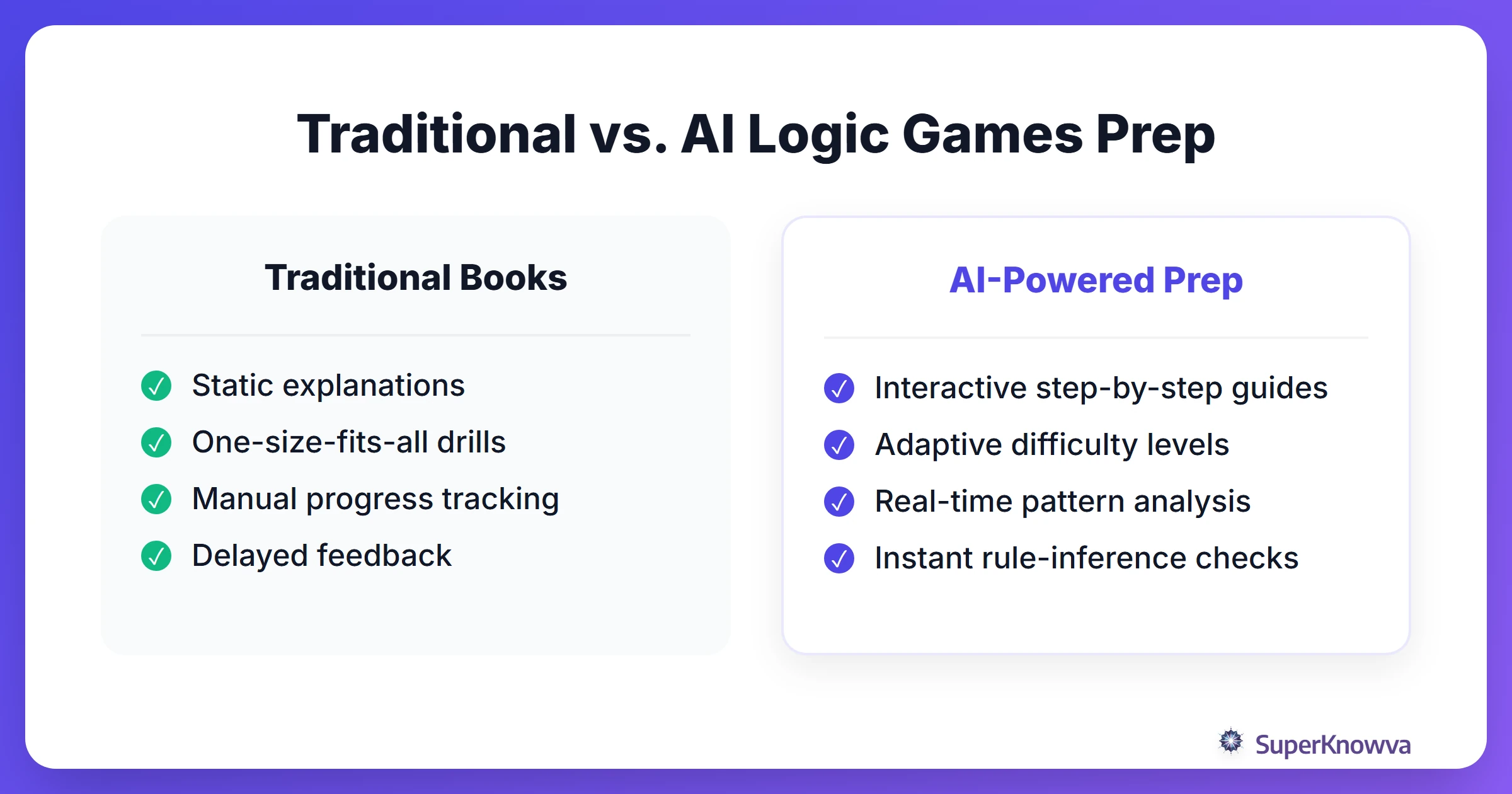
This is where ai lsat prep changes everything. Traditional prep books leave you stuck with a single, static explanation. If you don't "get it," you're out of luck. AI tools like SuperKnowva provide a dynamic back-and-forth. Instead of just looking at a solution, you can actually talk to the logic. You can ask the AI to break down one specific inference until that "lightbulb moment" finally clicks.
Recognition is Half the Battle: Sequencing, Grouping, and Matching
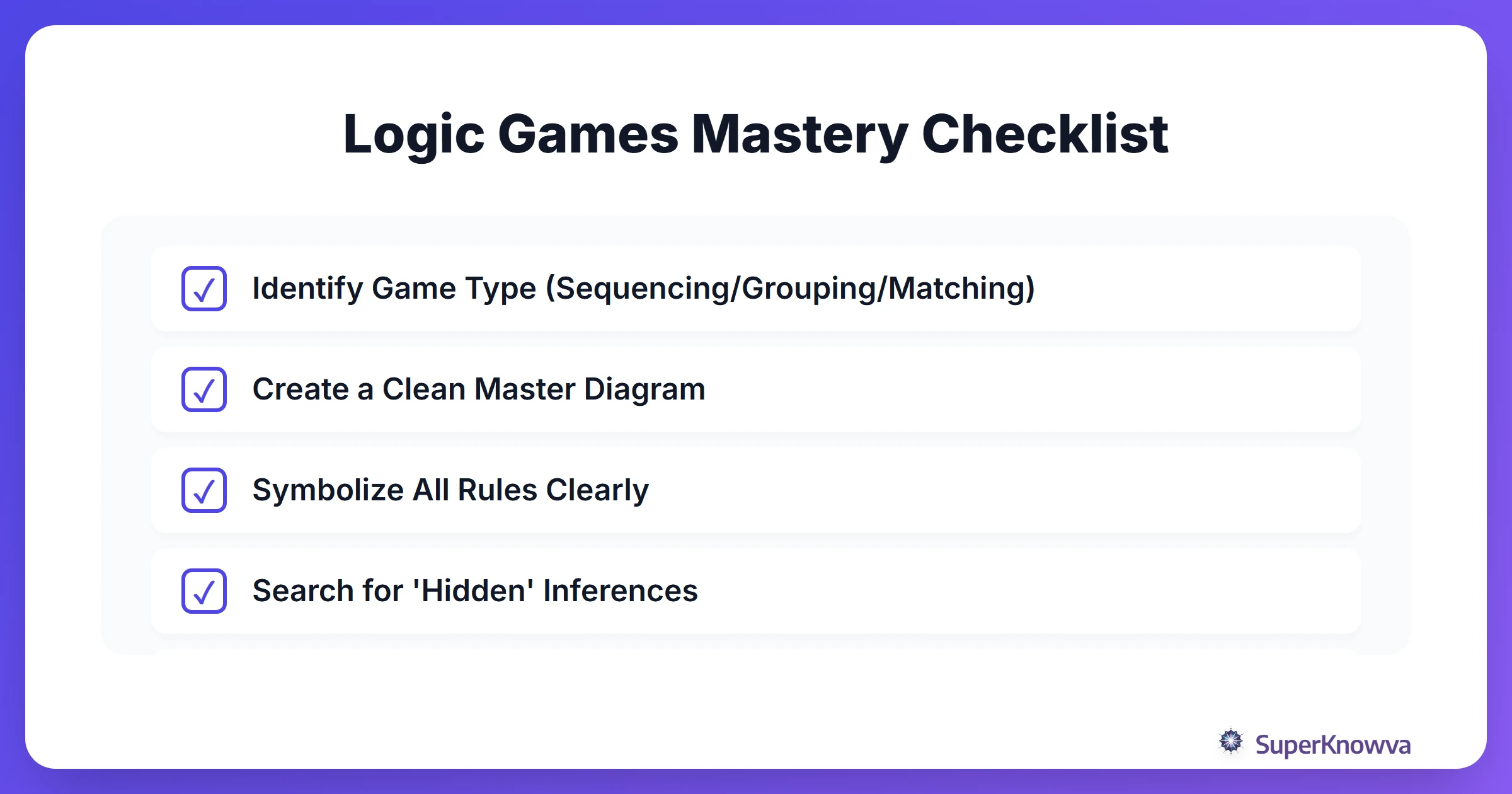
To beat the LSAT, you have to recognize the "enemy" the second you flip the page. Most games fall into three primary buckets:
- Sequencing (Linearity): Putting things in order. Who finishes the race first?
- Grouping: Sorting entities into teams. Which three students are in the chemistry lab?
- Matching: Assigning attributes. Which lawyer handles which specific case type?
The real hurdle for most students is multi-variable sequencing, where you aren't just tracking the order of people, but their professions or locations too. AI helps by identifying these logic games patterns quickly. By training with AI, you learn to see the underlying logic of a game within the first 30 seconds of reading the prompt.
The AI Advantage: No More Memorizing Answers
The problem with traditional prep books? They run out of pages. Once you’ve done the games in the book, you start memorizing the answers instead of practicing the logic.
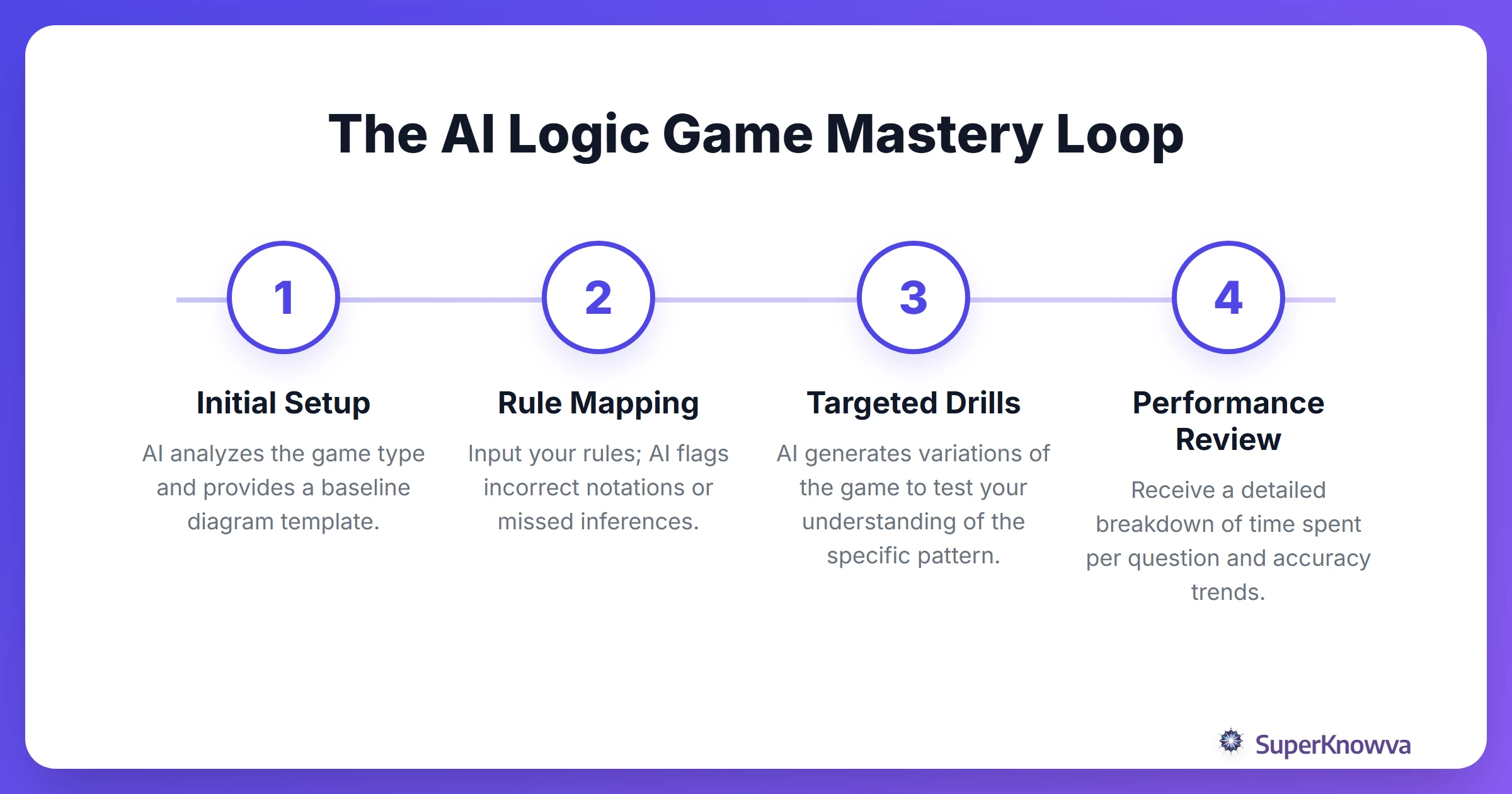
AI-powered platforms solve this with personalized drills. If the data shows you’re consistently tripping over "in-and-out" grouping games, the AI won't just throw random questions at you. It will generate variations that target your specific blind spots. You’re forced to practice the logic, not just recall a specific scenario you've seen before.
Real-time feedback is another major benefit. If you make a mistake in your initial diagram, a book won't tell you until you've already bombed all five questions. AI flags a bad notation the moment you make it. It stops bad habits before they become permanent. If you enjoy this tech-forward way of learning, you might also want to check out our AI-driven practice questions for a sneak peek at what law school prep looks like.
Master the Art of the Diagram
Diagramming is the heart and soul of the Analytical Reasoning section. If your setup is a mess, your score will be too.
Using AI, you can walk through complex inferences step-by-step. For example, if a rule says "If A is in, B is out," the AI can help you visualize the contrapositive ("If B is in, A must be out") and show you exactly how that ripples through the rest of the board. This level of precision is exactly how students boost their reading comprehension with AI by deconstructing complex structures.
What to Do When Your Brain Shuts Down
We’ve all been there: you turn the page to Game 4, see three different variables and a "hybrid" setup, and your brain just... quits. Mental blocks happen when a game’s complexity outpaces your organization.
Break "hybrid" games into smaller parts. AI provides a "hint" layer. Instead of spoiling the answer, it suggests which variable to map first or points out a high-constraint rule you might have missed. This builds the confidence to handle "miscellaneous" games that don't fit the standard mold. For more lsat logic games tips, explore this Complete Guide to LSAT Logic Games.
Your 8-Week Summer Study Plan
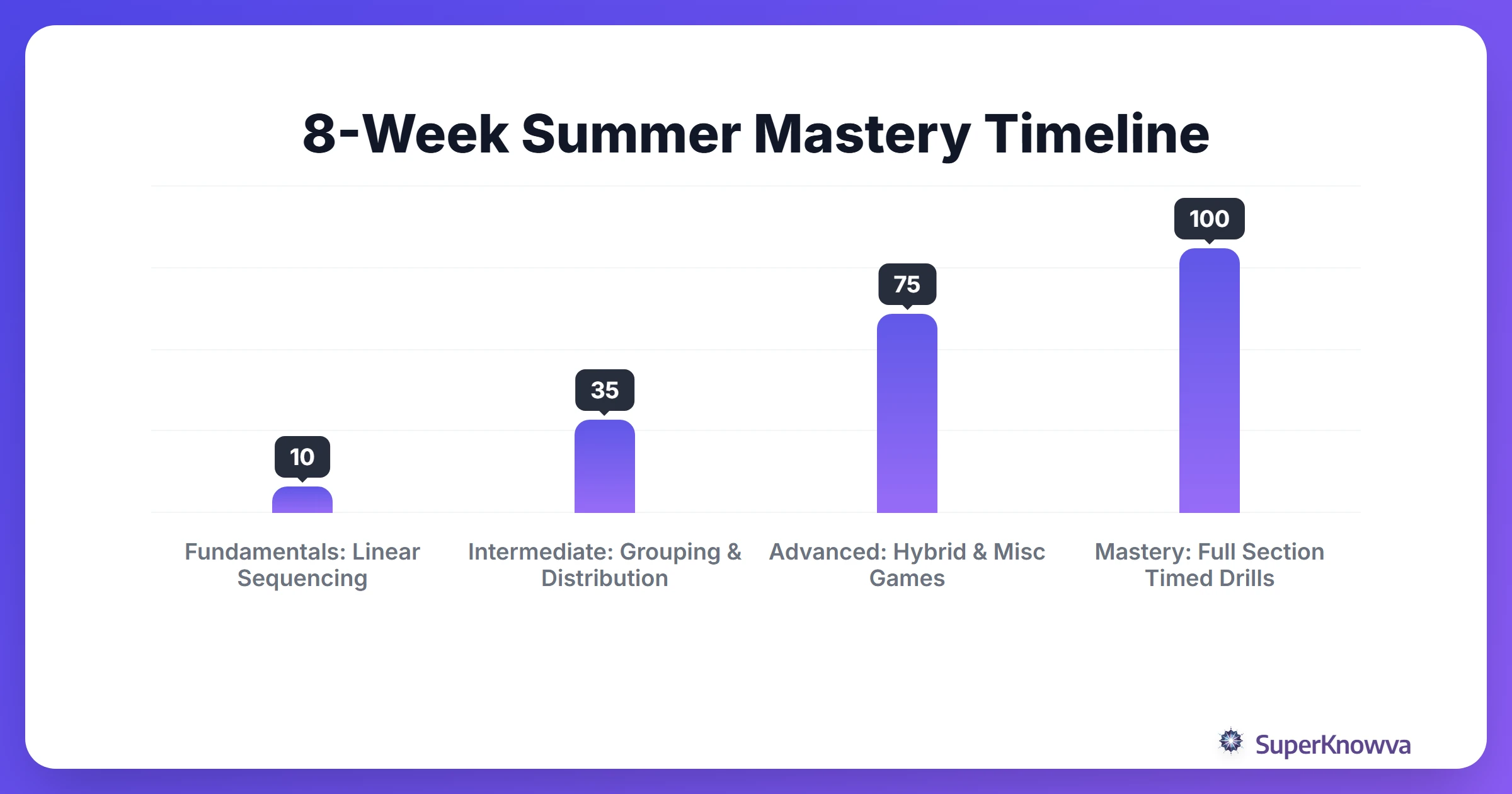
A solid summer lsat study plan is all about balance. You need high-volume drilling, but you also need time for deep review. Here’s how to structure your mastery:
- Weeks 1-2: Master Linear Sequencing and basic rule notation.
- Weeks 3-4: Dive into Grouping and Distribution games.
- Weeks 5-6: Tackle those intimidating Hybrid and "Miscellaneous" games.
- Weeks 7-8: Full-section timed drills and "Blind Review."
AI platforms adapt to your progress. If you master Sequencing in three days, the AI shifts your schedule to focus on weaker areas like Matching or conditional logic. This efficiency is similar to using an AI-powered guide to quantitative reasoning to streamline your prep.
The Future: Is the LSAT Changing?
You might have heard the rumors: the LSAT is changing. Starting in August 2024, the traditional Logic Games section is being replaced by an additional Logical Reasoning section.
Does that mean this is a waste of time? Absolutely not. The ability to parse complex rules, identify "if-then" structures, and make rapid deductions is the bedrock of law school. Whether you’re taking the current format or preparing for the new version, the structural thinking you build here is invaluable.
As the test evolves, AI prep will evolve with it, finding new ways to simulate the test environment and spot logical fallacies. For more Essential Logic Games Tips, keep practicing and stay ahead of the curve.
Ready to dominate the LSAT? Start your summer prep with SuperKnowva’s AI tools today.