May should be about spring weather and the home stretch of the school year. Instead, for most high schoolers, it’s a month-long gauntlet. Between finishing finals and staring down the barrel of college applications, you’re stuck trying to manage ap exam test anxiety while tackling the most grueling tests of your life.
If you feel like you’re drowning in flashcards and "what-ifs," you aren’t alone. It’s normal to feel the weight of these exams, but when that pressure starts to paralyze you, it’s time to change your game plan.
In this guide, we’re breaking down how to handle the high-pressure AP window with your sanity intact.
Recognizing the Signs: Physical and Mental Symptoms of AP Stress
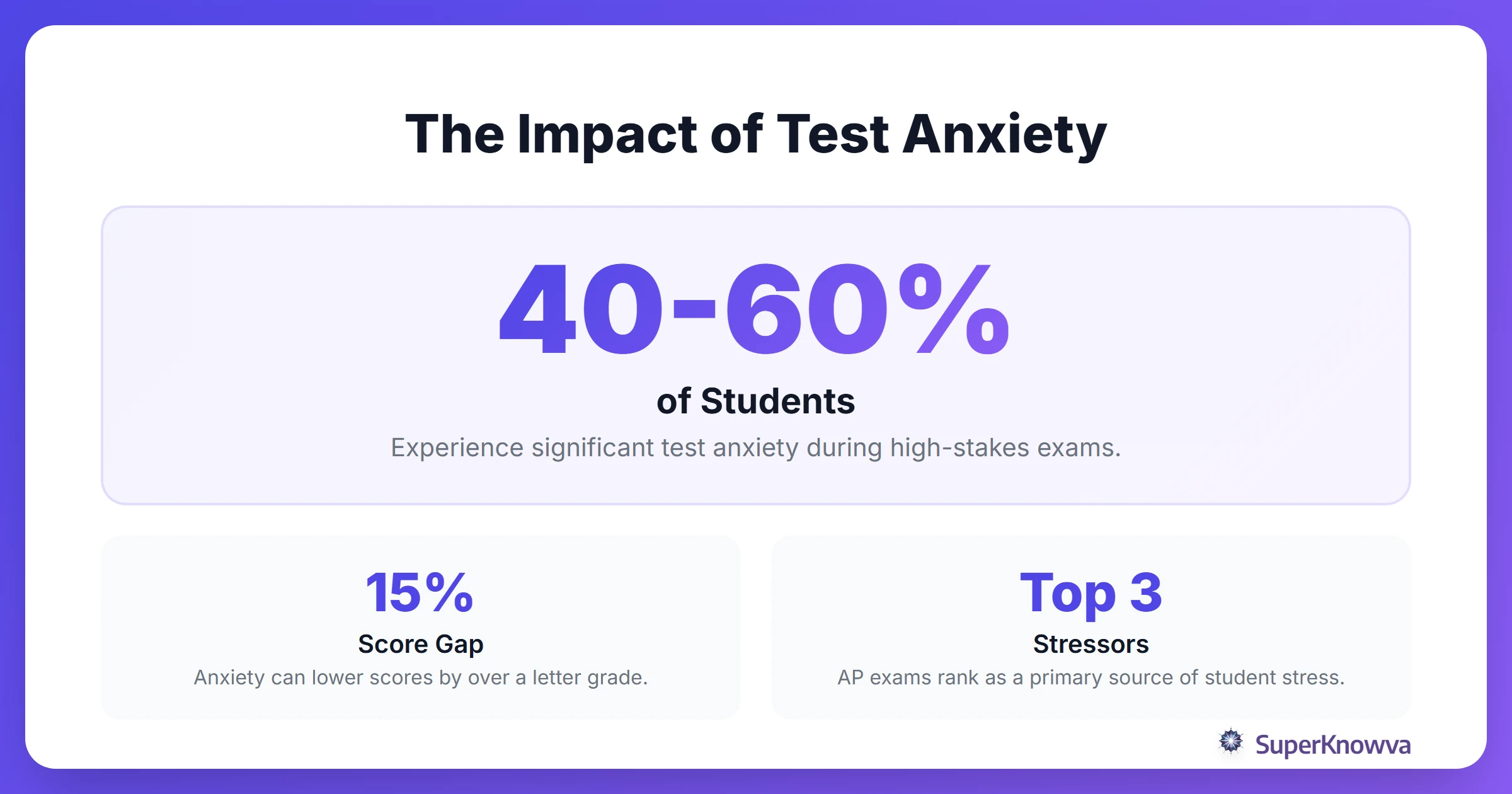
You can’t fix a problem you haven’t identified yet. Exam anxiety symptoms aren't just "all in your head"; they are physiological responses. Have you ever broken the seal on an exam booklet and immediately felt your heart racing, your palms sweating, or a sudden wave of nausea? That’s your body’s "fight or flight" mode kicking in at the worst possible time.
The mental side is just as frustrating. It’s the experience of "blanking out." You knew the causes of the French Revolution perfectly at 11:00 PM last night, but at 8:00 AM today, your mind is blank. Students in the Reddit community discussion on AP anxiety often describe this exact feeling: the talent is there, but the nerves won't let it out. The trick is learning to tell the difference between "good stress," the buzz of adrenaline that keeps you sharp, and the debilitating anxiety that shuts you down.
Pre-Exam Preparation: Building a Foundation of Confidence
The secret to overcoming test day nerves isn't a magic trick; it’s a solid foundation. When you walk into that gym or classroom feeling like you’ve already won half the battle, the anxiety has nowhere to root.
Think of your study schedule as a map. Without it, the AP syllabus looks like a terrifying, unscalable mountain. With it, that mountain becomes a series of small, manageable hills.
- Simulate the Stress: Don't just read your textbook. Take practice exams in a quiet room with a timer running. You need to desensitize your brain to the pressure of the clock.
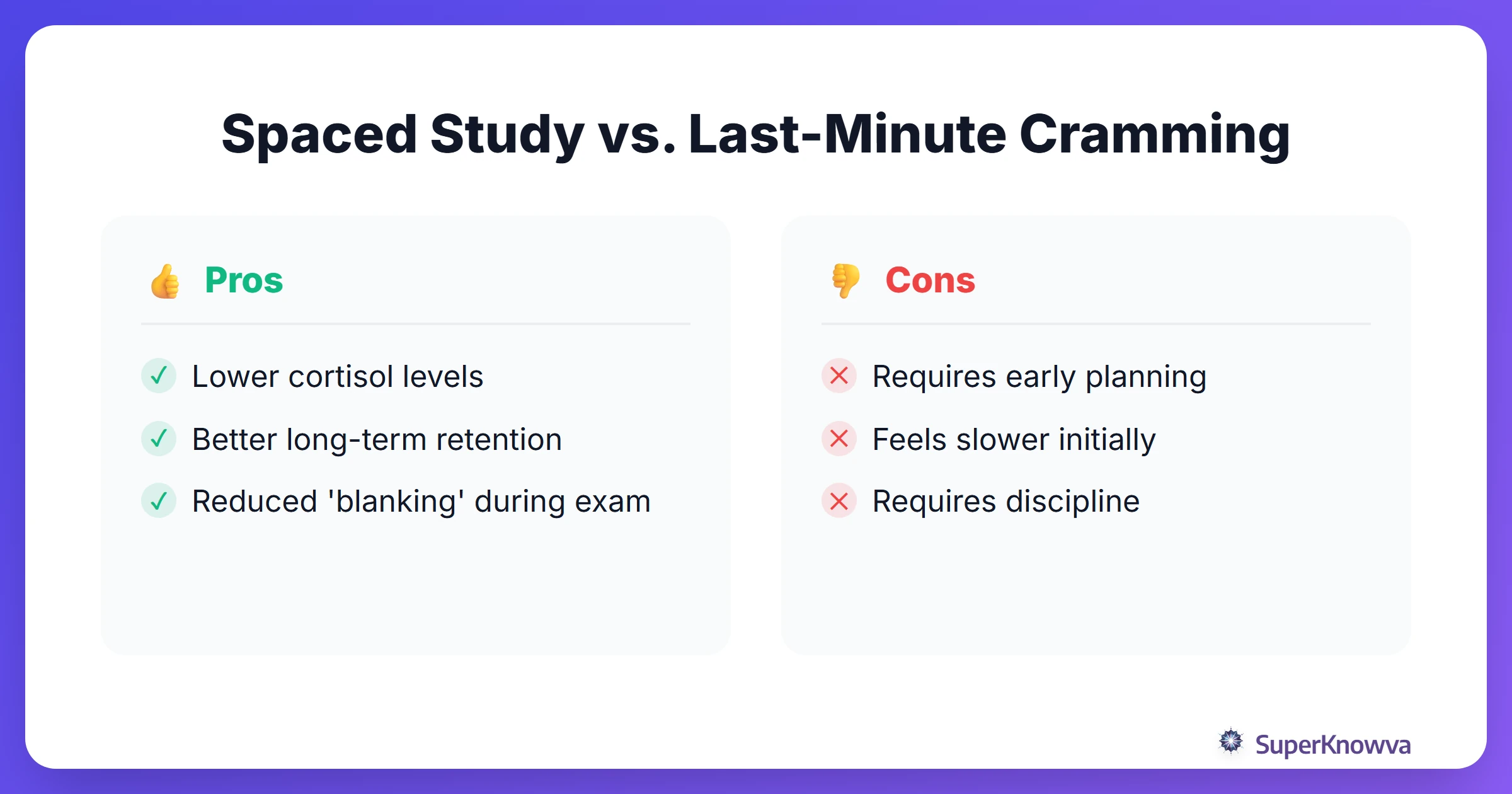
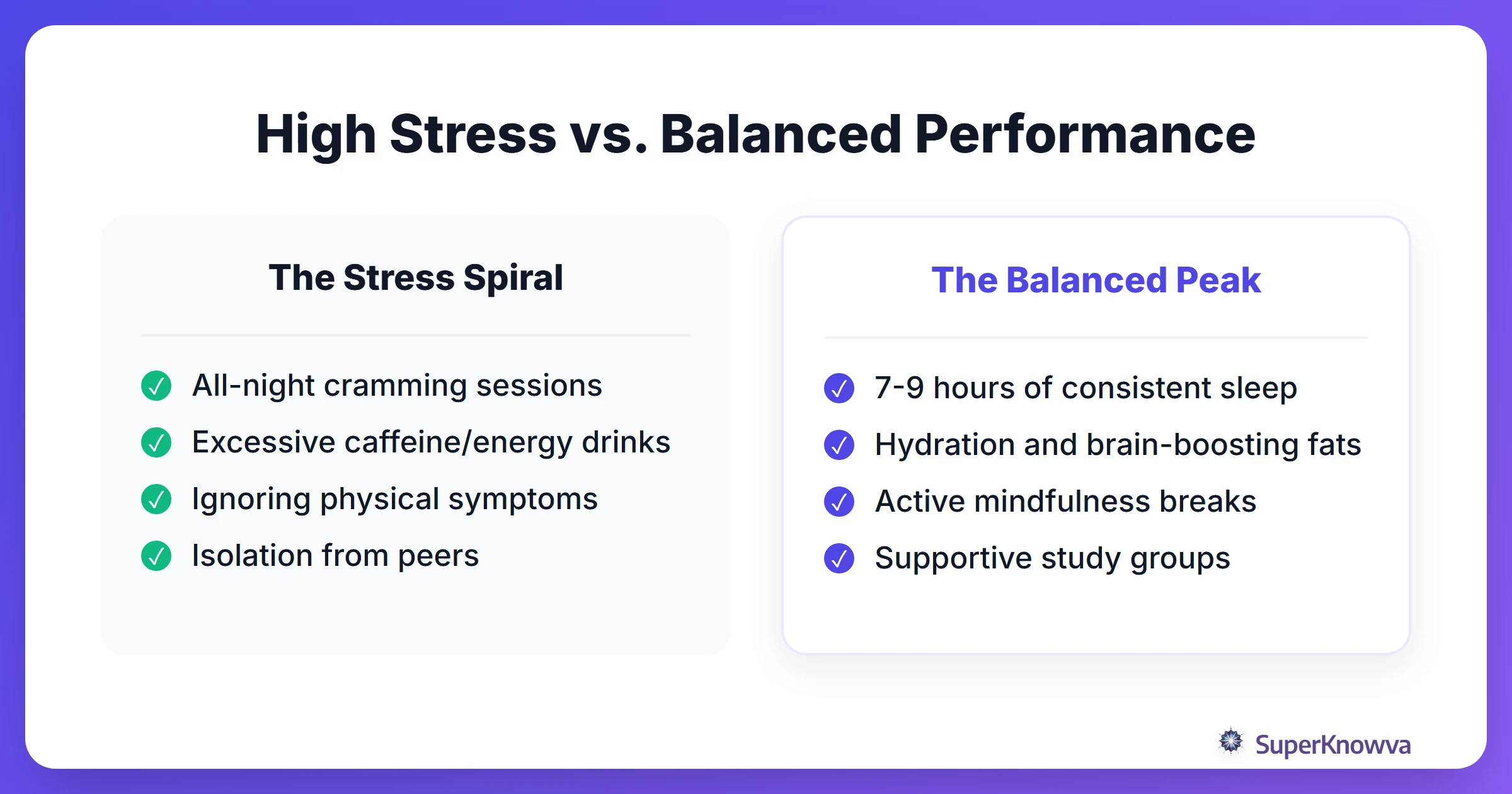
- Kill the Cramming: Stop the all-nighters. Seriously. Depriving yourself of sleep spikes your cortisol levels, making you more prone to panic.
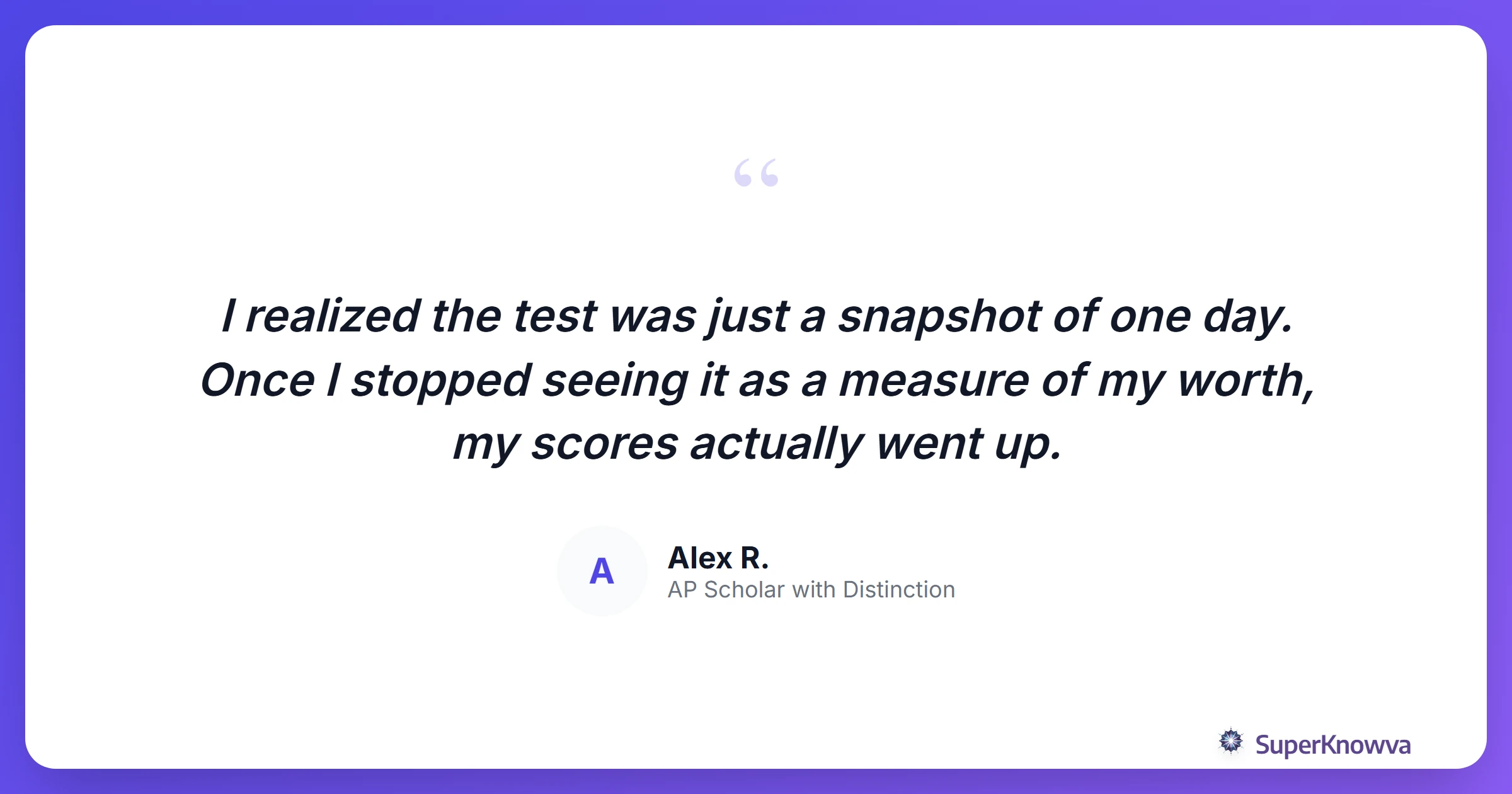
- Check Your Perspective: One exam is a snapshot of what you know on a Tuesday morning. It is not a final verdict on your intelligence or your future.
In-the-Moment Techniques: Mindfulness and Breathing
What happens when you’re halfway through a brutal Free Response Question (FRQ) and the panic spiral starts? You need tools that work in seconds, not hours. If you feel your focus slipping during the Multiple Choice section, leaning on mindfulness techniques for focus can pull you back from the edge.
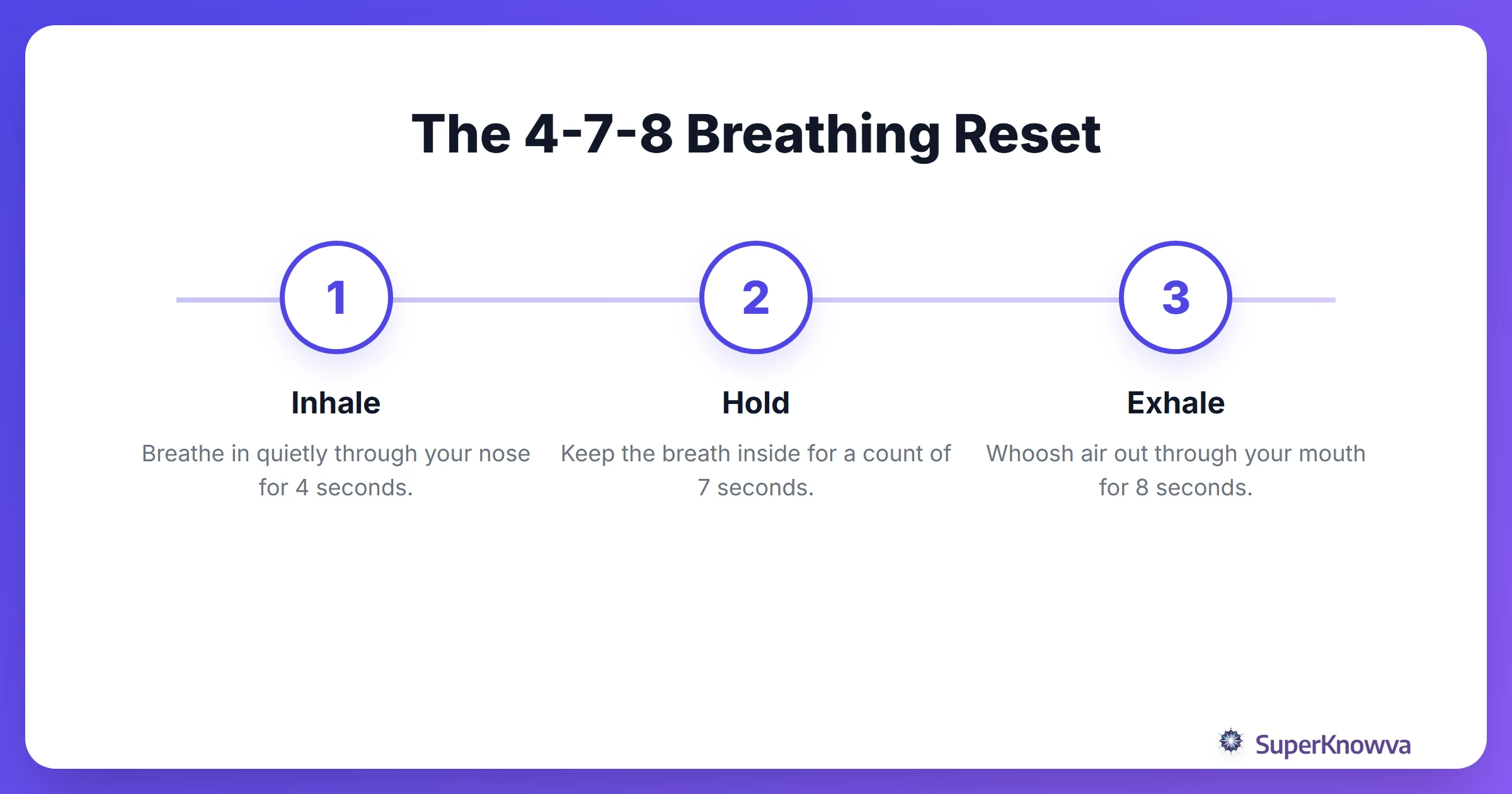
Try the 4-7-8 breathing technique to reset your nervous system:
- Inhale quietly through your nose for 4 seconds.
- Hold that breath for 7 seconds.
- Exhale forcefully through your mouth for 8 seconds.
If your brain is still racing, try the 5-4-3-2-1 grounding exercise. Stop and name 5 things you see, 4 you can touch, 3 you hear, 2 you smell, and 1 you taste. It sounds simple, but it forces your brain to quit obsessing over the "what-ifs" and return to the present. Remember: taking 30 seconds to breathe won't ruin your score, but panicking for 20 minutes definitely will.
The Physical Pillars: Sleep, Diet, and Movement
Your brain isn't a machine; it’s a biological organ that needs specific conditions to perform. Real AP test stress relief starts with how you treat your body. If you’re running on three hours of sleep, your amygdala, the brain's emotional "alarm system," becomes hyper-reactive. You cannot function at your best while starving and exhausted.
Watch what you’re putting in your system. A solid diet for exam performance focuses on proteins and healthy fats that keep your blood sugar steady. And a word of caution: be careful with the caffeine. While a cup of coffee might help you wake up, overdoing it can trigger heart palpitations that your brain misinterprets as a panic attack. Even a ten-minute walk can help; physical activity boosts cognitive function and burns off excess stress hormones.
Overcoming Imposter Syndrome and Comparison
AP student mental health often takes its biggest hit the moment the exam ends. We’ve all been there: you walk out of the room feeling decent, only to hear a group of classmates arguing about why the answer to question 14 was "C" when you definitely put "B."
This "post-exam chatter" is toxic. Research into strategies to reduce test stress suggests that external comparison is one of the leading causes of student burnout. Silence your inner critic. You’ve put in the work, you belong in that room, and your worth isn't defined by a number on a 1–5 scale.
Post-Exam Recovery: Avoiding the AP Burnout
Once you put that pencil down for the last time, give yourself permission to stop. The high-stakes intensity of May often leads to a massive "crash" once the adrenaline wears off. If you find yourself suddenly unable to care about your classes or your scores, you’re likely seeing signs of student burnout.
Schedule "zero-study" days. Your brain needs time to recover from the massive cognitive load of testing. By prioritizing rest and getting back to a balanced routine, you’ll ensure you finish the school year strong rather than just limping across the finish line.