You know the feeling. You’ve spent months buried in organic chemistry mechanisms and physics equations. You can draw a benzene ring in your sleep. But then you hit the Critical Analysis and Reasoning Skills (CARS) section, and suddenly, your science background feels useless.
For most pre-meds, the mcat cars section strategy is the final, frustrating hurdle between a good score and a ticket to medical school. With the June test date looming, the pressure is on. How do you stop guessing and start analyzing?
In this guide, we’re moving past generic advice. We’ll look at how to master AAMC logic, how to use AI to spot your own blind spots, and how to build a June-specific schedule that actually works.
The CARS Challenge: Why June is a Critical Month
June is the busiest month in the MCAT calendar for a reason. It is the ideal window to submit primary applications early while using the spring for practice exams. The "June Sprint" often exposes a reality: content knowledge won't save you here.
CARS is the great equalizer. It doesn’t care if you’re a biochemistry genius or a history buff. In fact, many high-achieving science students struggle because they try to "brute force" the passages through memorization. You can’t memorize a CARS passage. You have to dissect it.
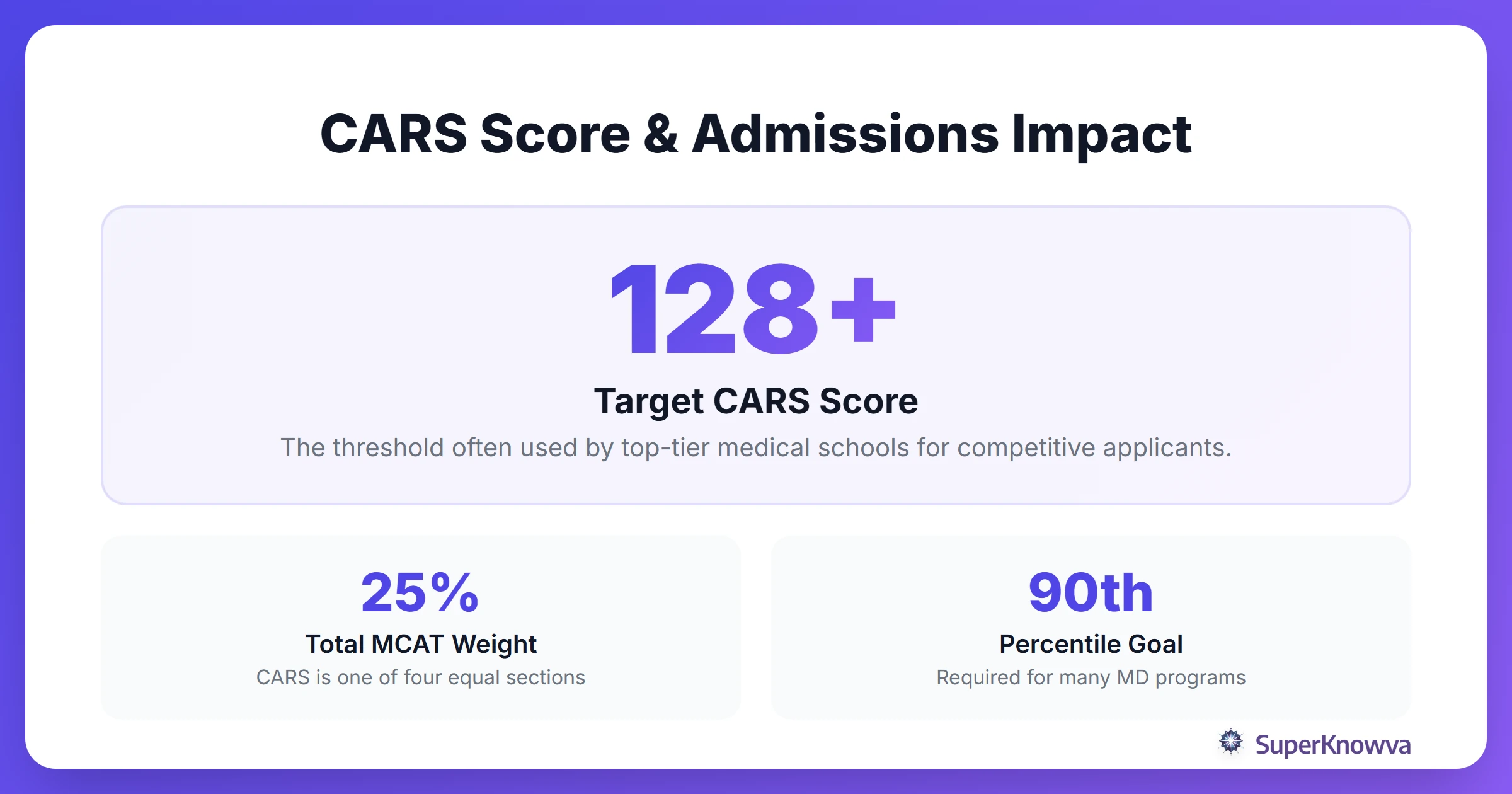
Think of CARS as a skill to be trained, much like AI tools as those used for SAT/ACT prep help high schoolers sharpen their reading comprehension. If you treat it like a workout rather than a lecture, you’ll handle the June pressure much better.
Active Reading: How to Use Your Highlighter Like a Scalpel
Most students read passively. They let their eyes glide over the words, hoping the meaning will just "sink in." By the time they reach the questions, they’ve already forgotten the author’s point. To win, you need an active CARS passage analysis technique.
- Hunt for the Author’s Voice: Ignore the dry facts. Look for descriptive words like adjectives and adverbs. If an author calls a theory "short-sighted" or "bold," they’re handing you the answer to three different questions.
- Map the Assertions: Every time a new person or a new argument is introduced, mark it. You aren't just reading; you're drawing a mental map.
- Claims vs. Evidence: Is the author stating a fact, or are they trying to convince you of something? AAMC often asks: "What would happen to the author's argument if [X] were true?" You can't answer that if you don't know what the original claim was.
- The Three-Second Pause: After every paragraph, stop. Summarize the main point in five words or less. If you can't, you didn't actually read it.
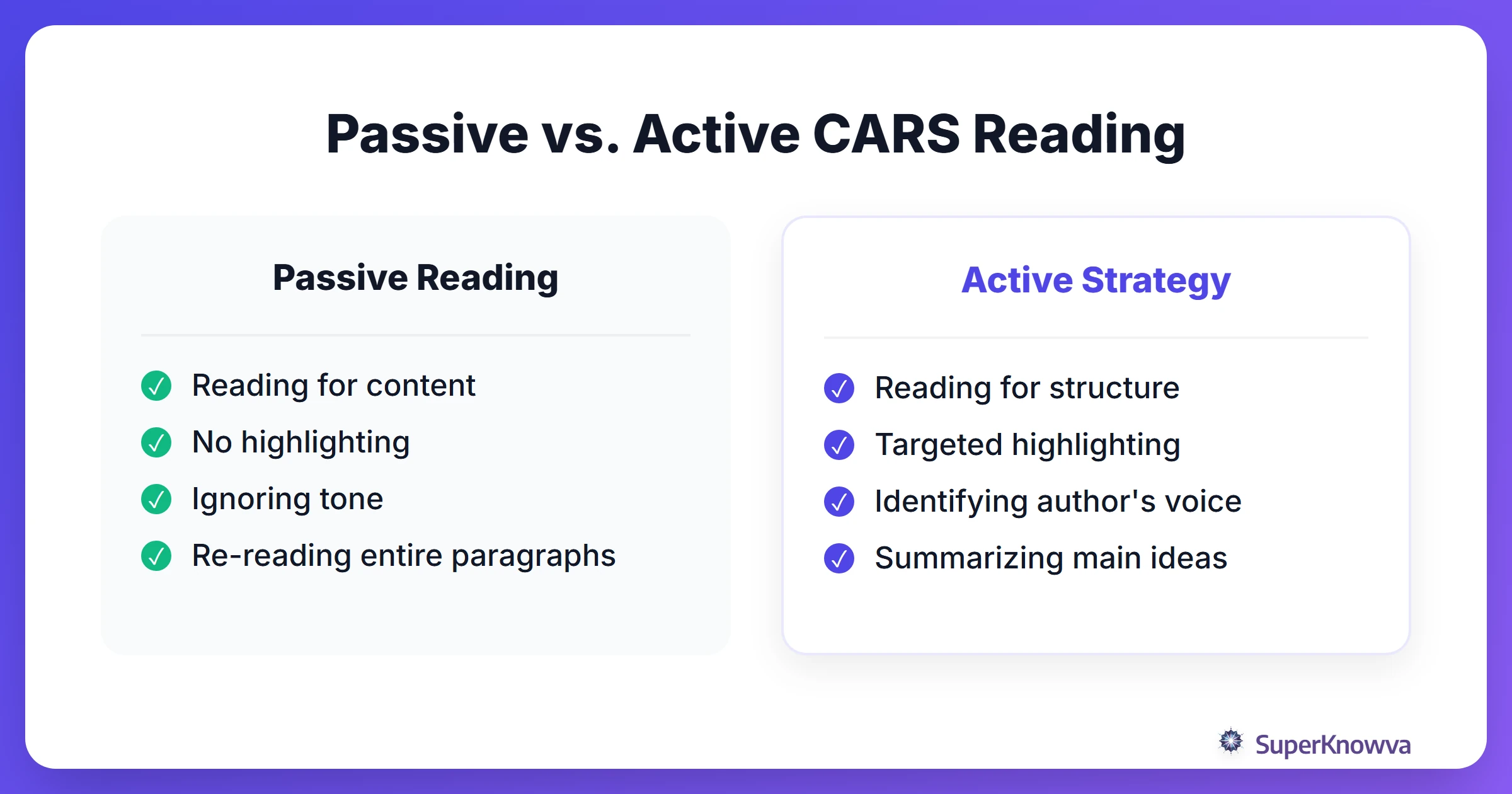
Many top scorers find that highlighting opinionated statements and new assertions is the only way to stay focused when the passages get mind-numbingly boring.
Cracking the AAMC Logic: Leave Your Brain at the Door
The biggest trap in CARS? Being too smart. If you’re a history major reading a passage about the French Revolution, you have to forget everything you learned in college. If it isn't on the page, it isn't true.
To master AAMC logic, you have to stop asking "What is the right answer?" and start asking "What does the test-maker want me to think?" Questions generally fall into three buckets:
- Foundations of Comprehension: What did the author literally say? (The "easy" points).
- Reasoning Within the Text: How do these two paragraphs talk to each other?
- Reasoning Beyond the Text: If the author were alive today, how would they feel about TikTok? (Okay, maybe not TikTok, but you get the idea).
Traditional prep often misses the "why" behind the logic. As Dr. Shemmassian points out, CARS is about inference, not memory. While most of CARS is general, you can even prepare for specific "logic traps" in philosophy or law by using tools like our guide on MCAT Ethics & Reasoning: Improve with AI.
Using AI to Spot Your "Logic Leaks"
In the final weeks of June MCAT prep, you don't have time to waste. This is where AI MCAT study platforms like SuperKnowva come in. Humans are notoriously bad at seeing their own patterns, but AI is great at it.
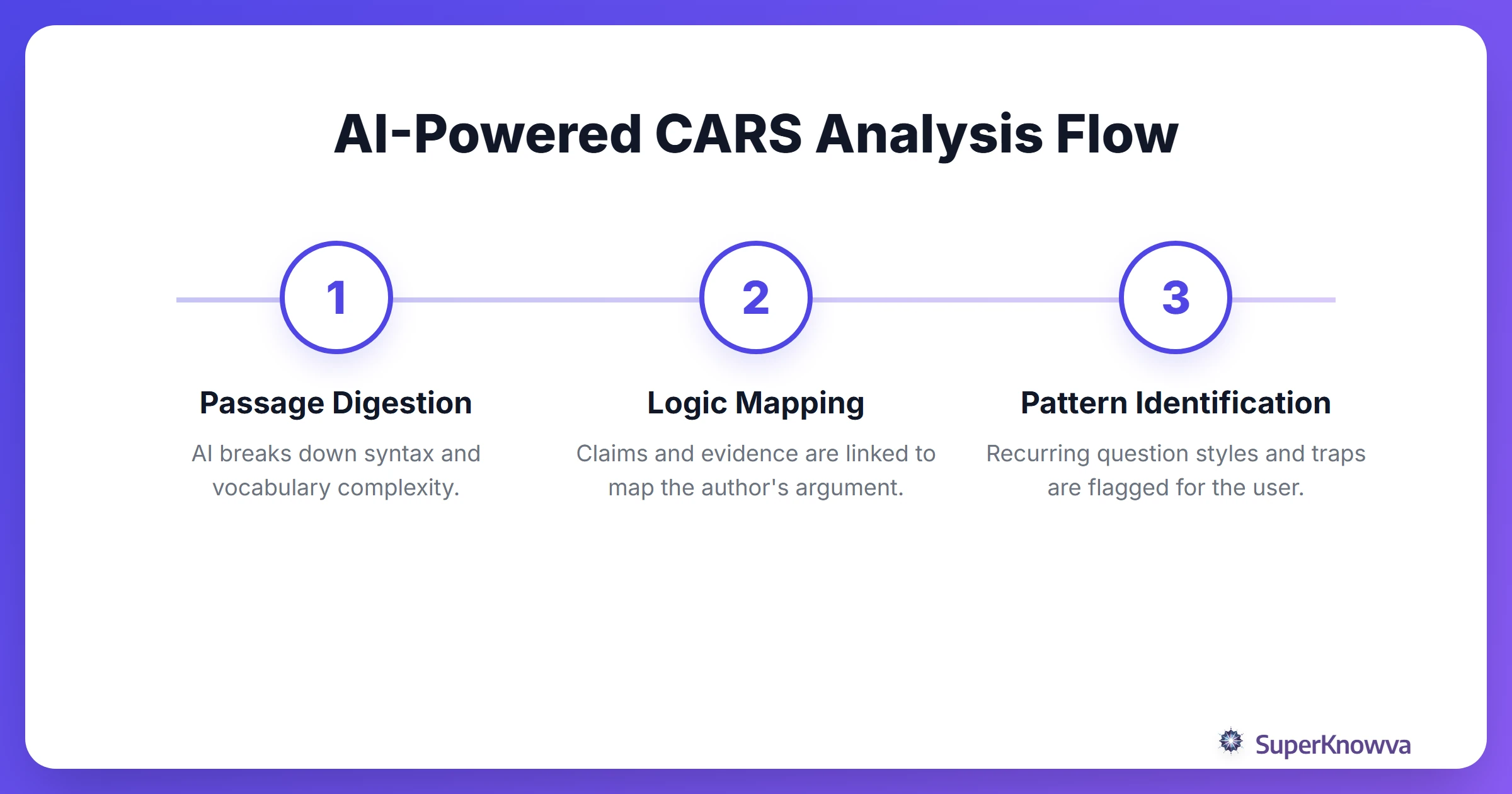
- Theme Hunting: Do you consistently bomb passages about Fine Arts but ace the ones about Economics? AI can tell you exactly where your "danger zones" are.
- The "Distractor" Detector: AI analysis can help you realize if you’re constantly falling for the "Extreme Language Trap" or the "Half-Right, Half-Wrong" answer choice.
- Personalized Feedback: Just as AI provides personalized feedback for medical students on the USMLE, pre-meds can now use these tools to find the specific "glitch" in their reasoning.
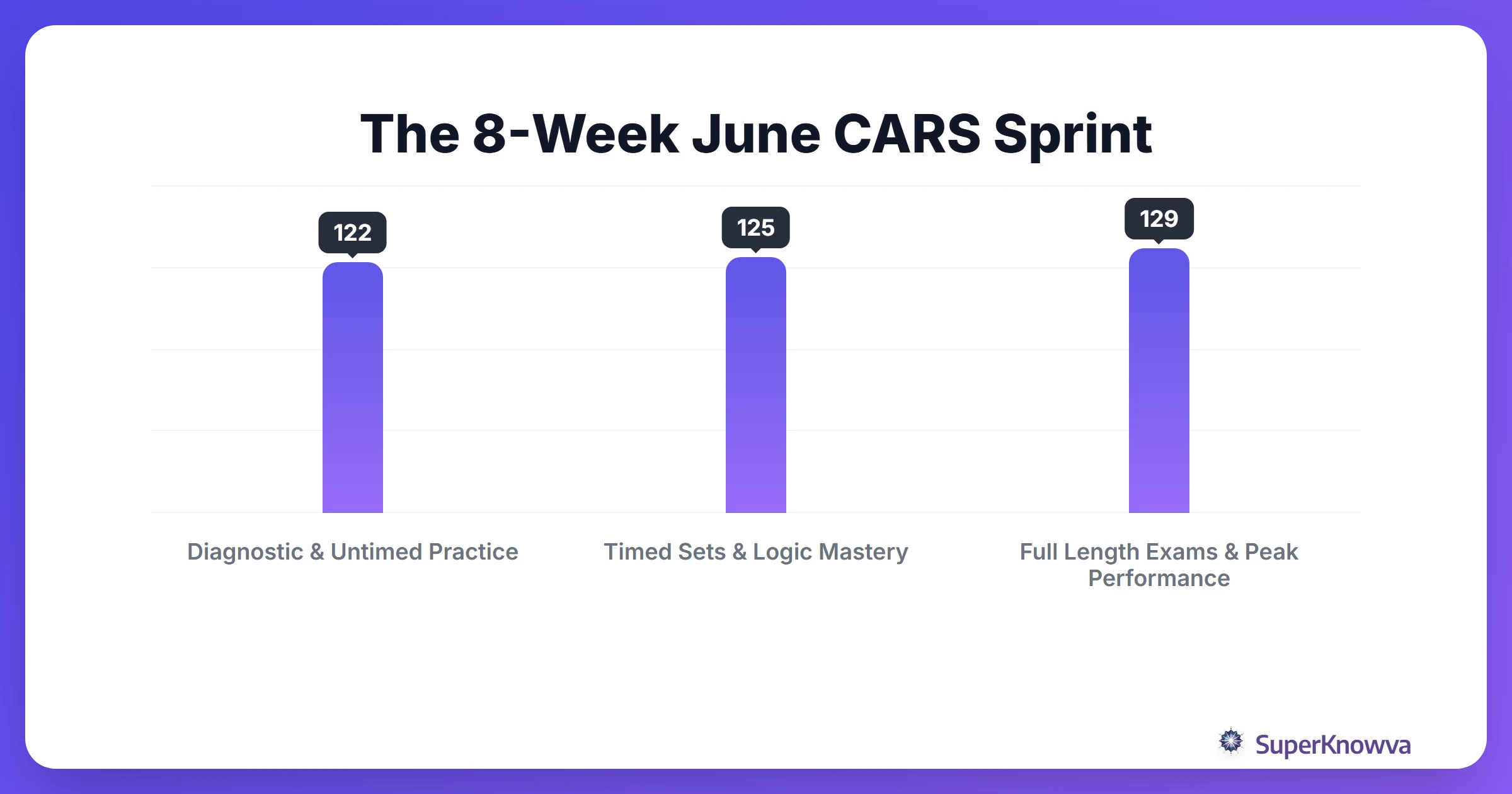
Your 8-Week June Prep Timeline
You can't cram CARS. It’s like training for a marathon; you need miles under your belt. If you’re testing in June, here is your roadmap:
- Weeks 1-2: The Accuracy Phase. Forget the timer. Focus entirely on your highlighting technique and the "Main Idea" summary. If you can't get the answers right with unlimited time, you won't get them right under pressure.
- Weeks 3-5: The Timing Phase. Start doing blocks of 3 passages in 30 minutes. Use AI tools to track which types of questions are slowing you down.
- Weeks 6-8: The Stamina Phase. Full-length exams only. You need to be able to read your 9th passage with the same focus as your 1st.
Common Pitfalls: Don't Trip at the Finish Line
Even the best mcat cars section strategy can fall apart under test-day stress. Watch out for these:
- The Chainsaw Highlighter: If 80% of your page is yellow, you’ve accomplished nothing. Use the highlighter for names, dates, and "opinion" words only.
- The Rabbit Hole: If a paragraph makes zero sense, don't read it four times. Get the "vibe" and move to the questions. Often, the questions will actually clarify what the paragraph was trying to say.
- Extreme Language: If an answer choice says "always," "never," or "only," be suspicious. The AAMC loves nuance; they rarely take extreme stances.
- Over-Thinking: If you find yourself saying, "Well, if you look at it from this very specific angle, B could be right..." stop. You’re over-thinking. The right answer is usually the most boring, direct one supported by the text.
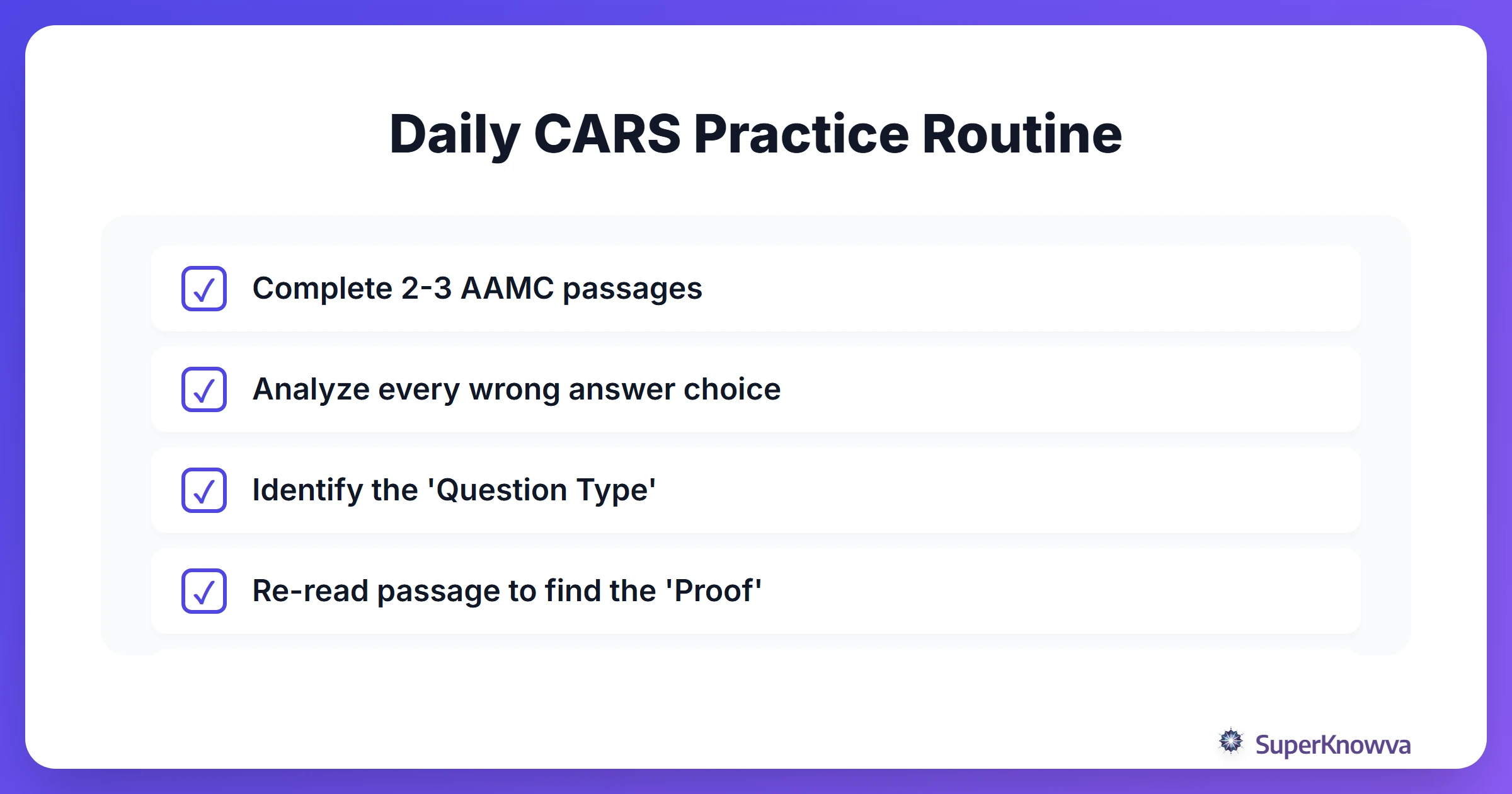
By combining disciplined active reading, a healthy respect for AAMC logic, and the precision of AI-driven analysis, you can turn CARS from a nightmare into your biggest competitive advantage. Stay consistent, trust your brain, and we'll see you in medical school. Good luck in June!