The sun is out, your friends are at the beach, and you’re staring at a 1,200-page stack of review books. It’s a brutal reality. Preparing for the Medical College Admission Test (MCAT) is a daunting rite of passage, but doing it during the summer brings a specific kind of torture. Without the structure of a classroom, most summer MCAT study plans start to crumble by mid-July.
If you’re aiming for a 515+ score, a static calendar is not enough. You need a strategy that moves as fast as you do. We will look at how to use AI-powered optimization to turn your three-month summer window into a high-yield result without the burnout.
The Summer MCAT Challenge: Why Rigid Plans Fail
Most pre-meds start by downloading a "standard" 3-month PDF schedule. It looks great on day one. By day ten, it’s usually a mess. Why? Because static plans are fragile.
- The "Life Happens" Factor: Summer is peak season for weddings, family trips, and spontaneous lake days. A PDF doesn’t care that you had a 10-hour flight or a random bout of food poisoning. It just tells you that you're "behind," which triggers a spiral of guilt and stress.
- Individual Learning Speeds: You might fly through General Chemistry but hit a brick wall with Kidney Physiology. A rigid plan treats every student the same, wasting your time on things you already know while rushing you through the topics where you're actually struggling.
- The Mindset Shift: To win, you have to stop acting like a student waiting for a syllabus. You’re the CEO of your own progress now.
The real trick to a resilient schedule? Buffer days. You need dedicated catch-up periods built into your week so you can breathe without falling off the wagon.
Phase 1: High-Intensity Content Review (Month 1)
The first four weeks are about laying the groundwork across the "Big Seven": Bio, Biochem, Gen Chem, Orgo, Physics, Psych, and Soc.
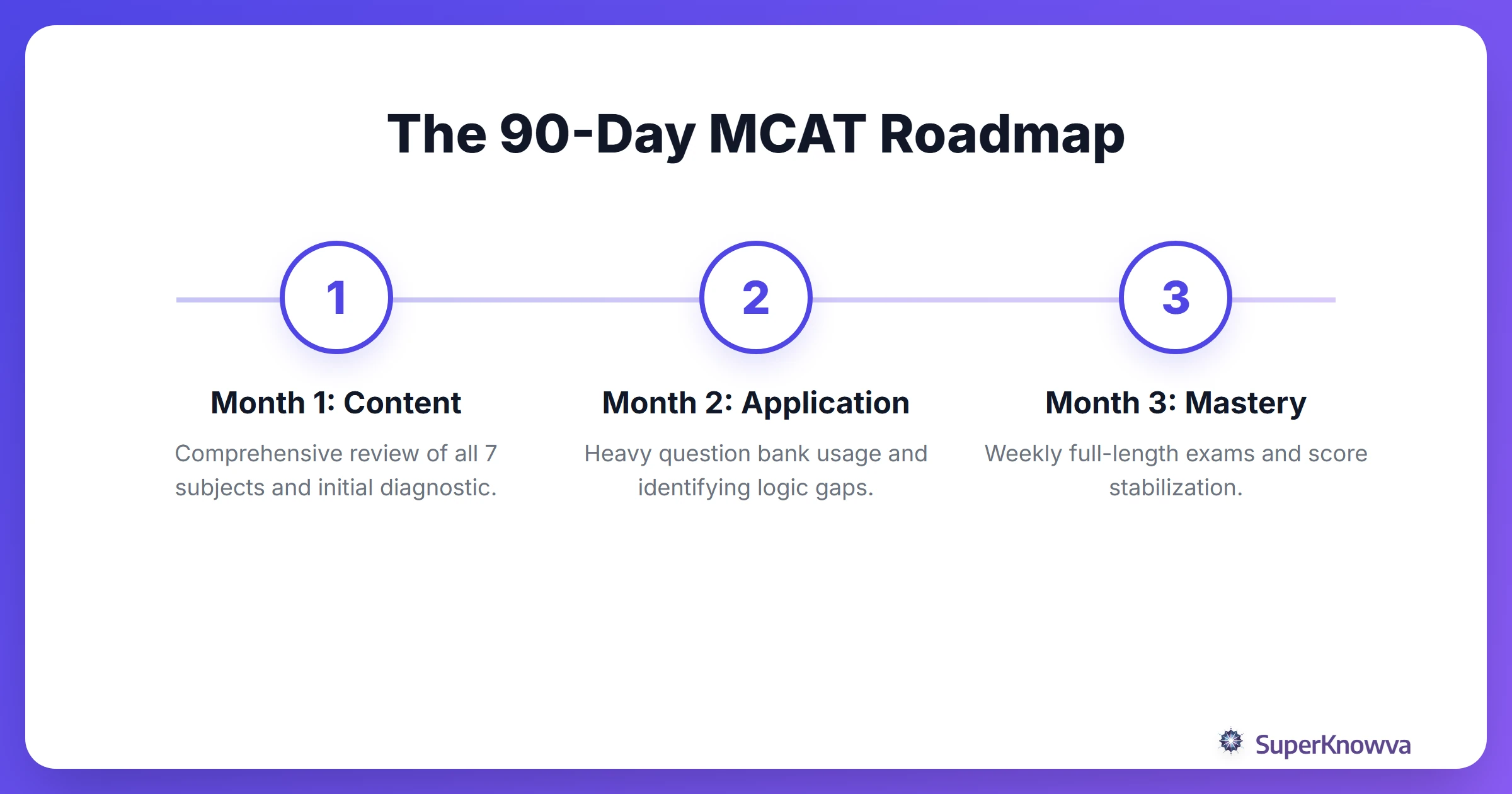
Don’t just start reading. Take an initial diagnostic test first. You need to know exactly where you’re starting. Once you have that data, use AI tools to triage your subjects. Instead of reading every single chapter with the same intensity, use AI to identify which topics need a "deep dive" and which only need a "quick refresh" based on your diagnostic errors.
During this phase, lean hard into active recall and spaced repetition. Reading is passive; it’s a trick that makes you feel like you’re learning. Using an AI-driven platform to generate flashcards ensures you’re actually forcing your brain to retrieve information, whether it’s amino acid structures or complex metabolic pathways.
Phase 2: Bridging the Gap with Practice Questions (Month 2)
Month two is where the real work begins. This is the transition from "learning" to "doing." It’s time to bring in the heavy hitters: UWorld and the official AAMC question banks.
The goal isn't just to get the right answer. It’s to decode the logic of the test. By using AI to analyze your mistakes, you can figure out if you have a "content gap" (you forgot the formula) or a "logic gap" (you knew the formula but the AAMC tricked you).
We highly recommend keeping a "wrong answer journal." In the past, this was a tedious notebook. With SuperKnowva, this process is automated. It creates a feedback loop that updates your study schedule based on how you’re actually performing in real-time. This is also the window to start mastering MCAT Ethics and Reasoning with AI to keep your CARS and behavioral science scores in the competitive range.
Phase 3: Full-Length Exams and Peak Performance (Month 3)
The final month is a 7-day revolving cycle. It’s all about stamina now.
- Day 1: Full-Length (FL) Exam. No phones, no snacks, exactly like the real thing.
- Day 2: Deep Review. Spend 8+ hours tearing apart every single question, even the ones you got right.
- Day 3-6: Targeted Drills. Practice sessions focusing only on your weakest links.
- Day 7: Total Rest. No books. No MCAT Reddit.
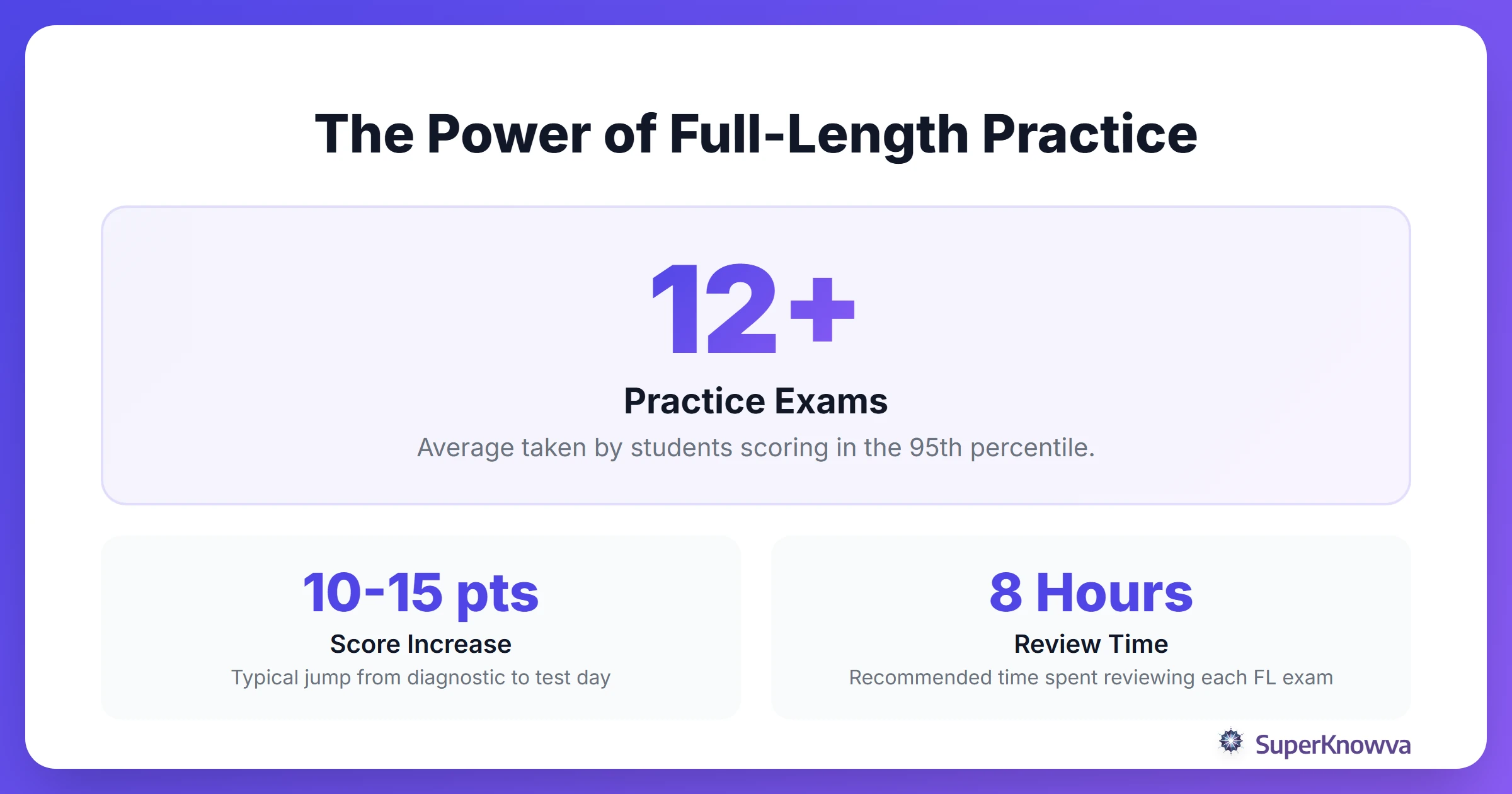
As the August heat kicks in, distractions will multiply. Use AI to track your scoring trajectory. If you see a plateau, it’s a sign to pivot your strategy. In the final week, you have to taper. Just like a marathon runner, you want to walk into that testing center fresh, not burnt out and brain-fogged.
Leveraging AI for an Adaptive Summer Schedule
This is where SuperKnowva changes things. Traditional prep is a one-way street; AI-powered prep is a conversation.
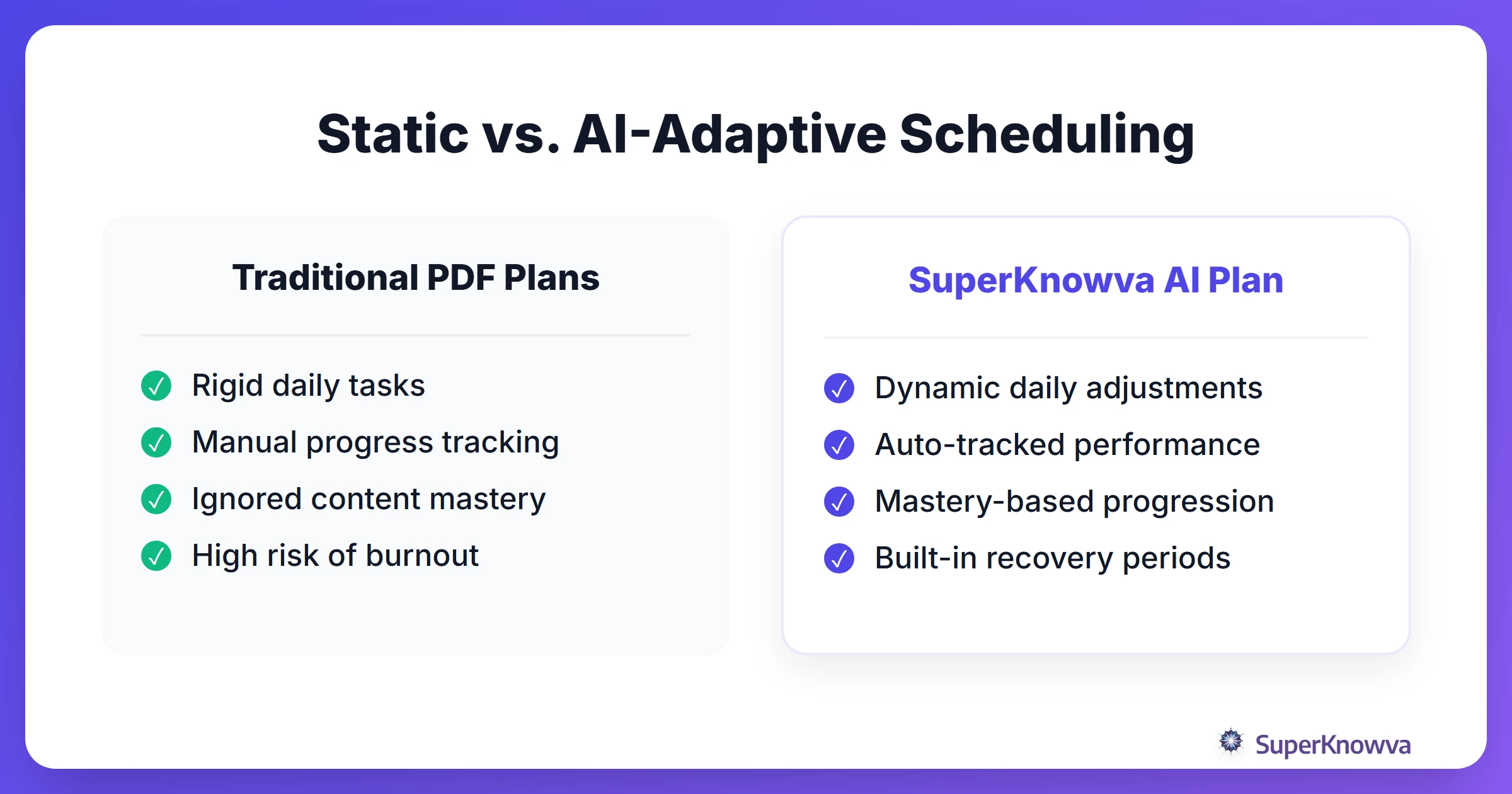
SuperKnowva’s AI adjusts your daily tasks based on how you did yesterday. If you tanked your Optics questions on Tuesday, Wednesday’s schedule will automatically prioritize lenses and mirrors. You don't have to spend an hour manually moving blocks around your calendar.
This tool provides personalized feedback for medical exams comparable to a private tutor. It helps you maintain a social life by identifying "safe zones," times when your mastery is high enough that taking a Saturday afternoon off won't hurt your 515+ goal.
Managing Summer Burnout and Mental Resilience
The MCAT is a 500-hour marathon. It’s hard to stay motivated when you see everyone else on vacation. You have to treat your brain like a high-performance engine.
- The 500-Hour Perspective: Don't stare at the summit. Just look at the next step.
- FOMO is Real: Remind yourself that one summer of sacrifice buys you a lifetime of practicing medicine. If you need a reality check, read this Reddit: 520 Scorer's 3-Month Summer Experience to see how others handled the social pressure.
- Sleep is a Variable: Nutrition and sleep aren't "extra." They are directly tied to your score. If you aren't sleeping, you aren't learning.
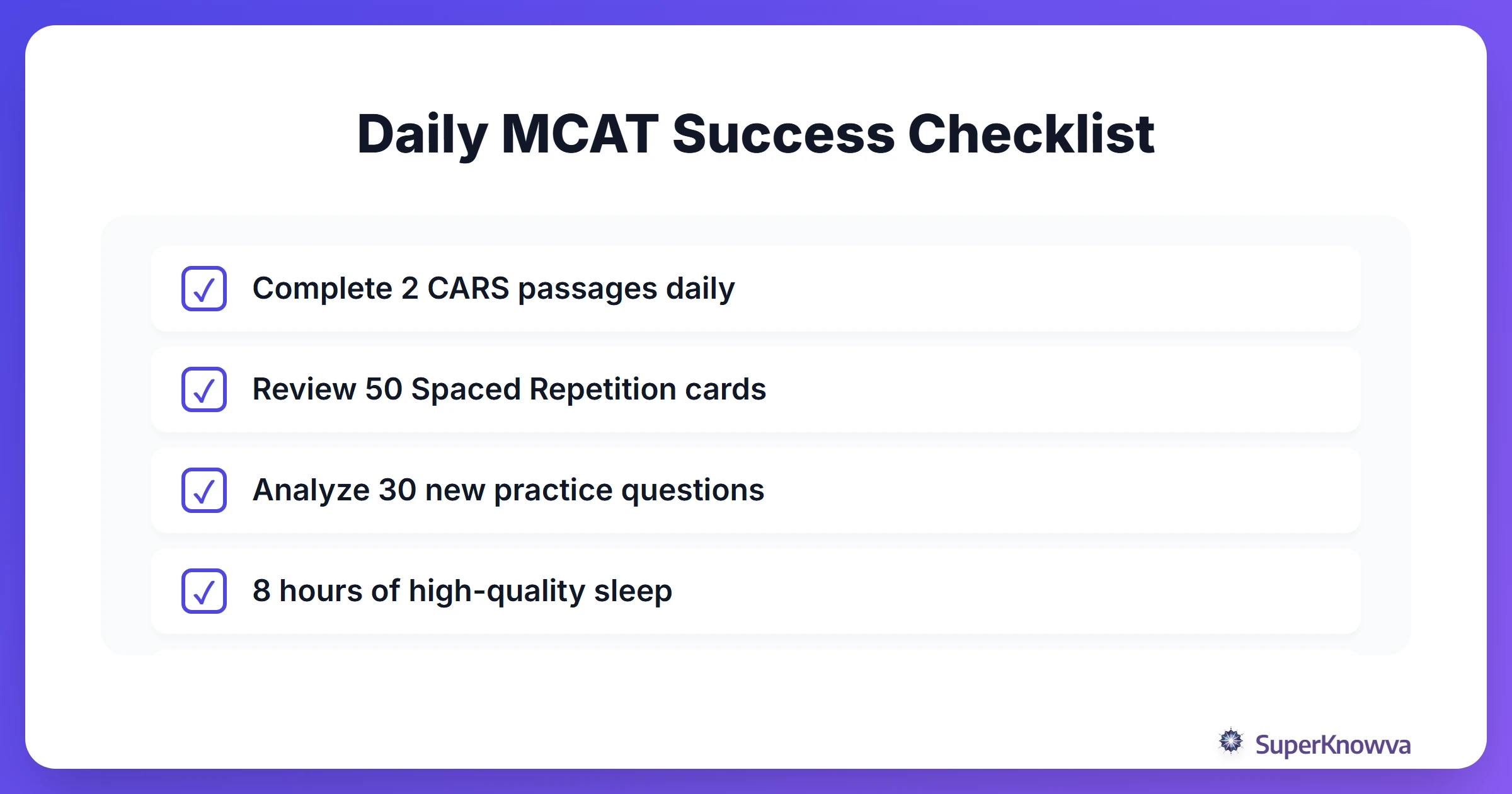
If your anxiety starts to spike during full-lengths, check out our guide on managing high-stakes test anxiety. It’s packed with science-backed ways to stay calm when the timer is ticking. And for the overachievers aiming for the top 1%, Theo Bennett's Guide to a Perfect 528 is the gold standard for discipline.
Conclusion
A top-tier MCAT score isn't about working harder than everyone else; it's about working smarter. By using an AI-optimized plan, you cut out the "planning fatigue" that makes so many students quit halfway through July.
Ready to build a schedule that actually works? Let SuperKnowva handle the logistics so you can focus on the science. Your white coat is waiting.