June is officially here. For medical school hopefuls, that means two things: the temperature is rising, and the pressure is hitting an all-time high. If you're aiming for a current-cycle submission, the June MCAT is likely your "make or break" moment.
But here’s the reality: whether you’ve been grinding through Anki cards for six months or doing a high-intensity three-month sprint, the final 48 hours require more than just raw content knowledge. You need a tactical execution plan. To make sure you walk into that Pearson VUE center feeling like a pro rather than a nervous wreck, we’ve put together the ultimate mcat test day success checklist. We’re combining the non-negotiable AAMC rigors with modern AI-powered prep strategies to give you the edge you need.
The Logistics: Don't Let an ID Error Sink Your Score
You’ve mastered the renal system and you can draw organic chemistry mechanisms in your sleep. None of that matters if you can't get past the front desk. The AAMC is notoriously rigid about identification. If your ID doesn't check every single one of their boxes, you’ll be sent home without a refund and a "void" on your record.
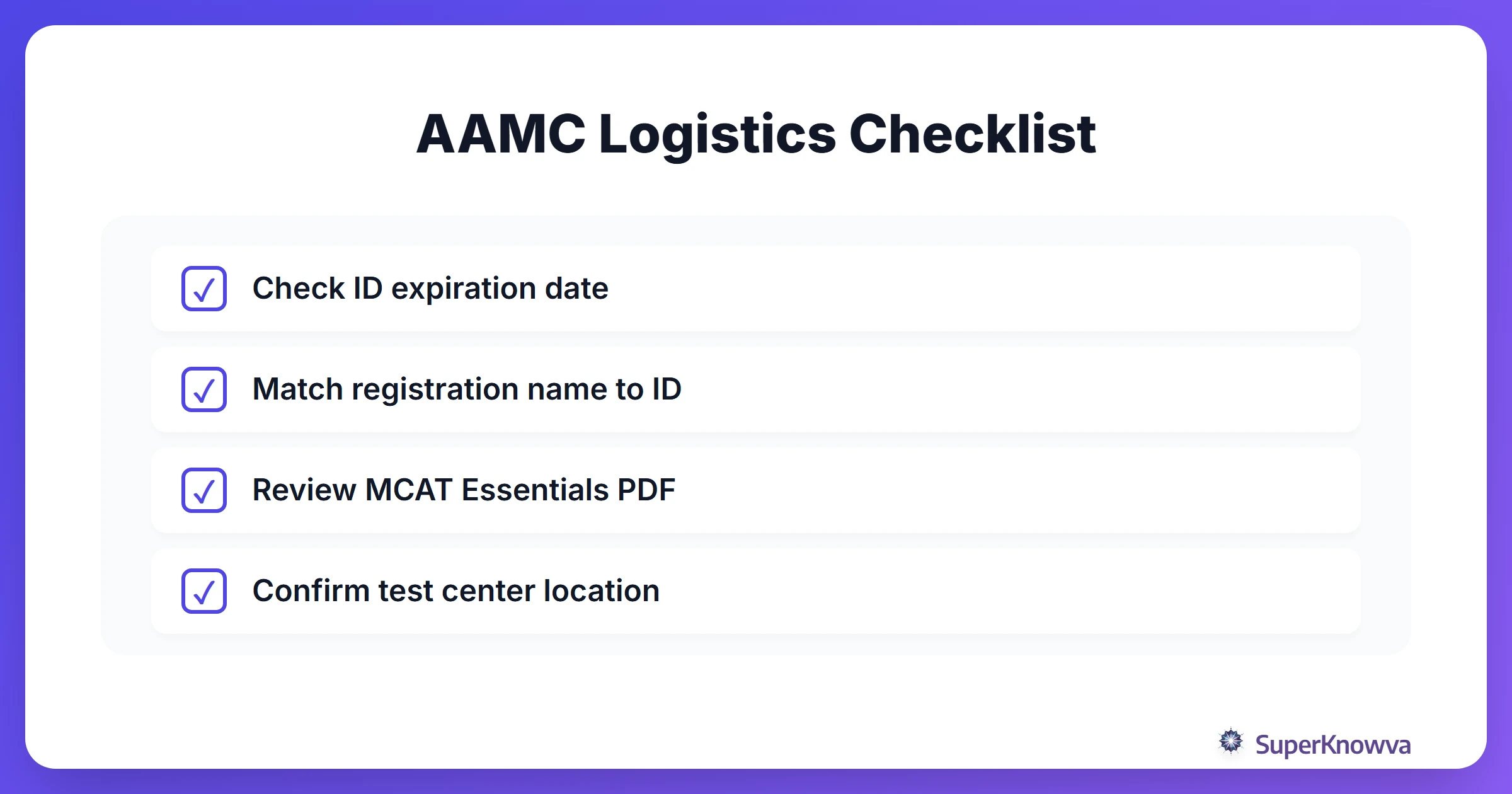
- Verify Your ID (Twice): It must be a government-issued, non-expired driver's license, passport, or state ID. It needs a clear photo and your physical signature.
- The Name Game: Does the name on your registration match your ID exactly? If your ID includes a middle name but your registration doesn’t (or vice versa), stop reading this and contact the AAMC right now.
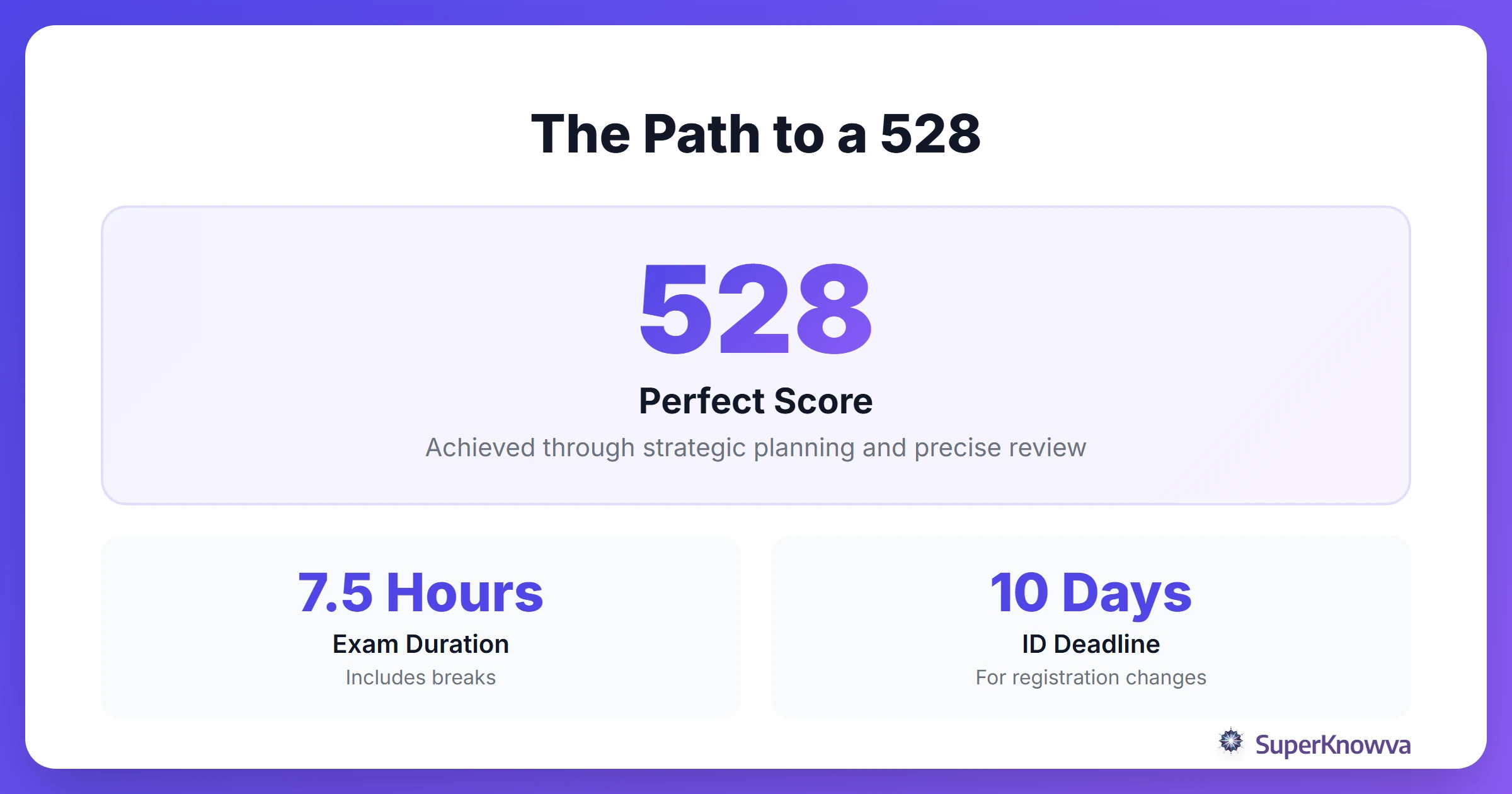
- Deadlines: By now, the 10-day window for changing your test center has likely passed. However, if you have a sudden ID crisis, the AAMC suggests reaching out at least 3 days before the exam.
- MCAT Essentials: Give the AAMC MCAT Essentials document one last skim. You don't want to be the person trying to argue that your "smart ring" or digital watch should be allowed in the testing room.
AI-Powered Rapid Review: Winning the 50/50 Toss-up
The final days before the exam are for refining your "differentials" instead of learning new chapters. You know the feeling: you have narrowed a question down to two choices, and both look right. How do you choose? This is where AI MCAT review helps you distinguish between them.
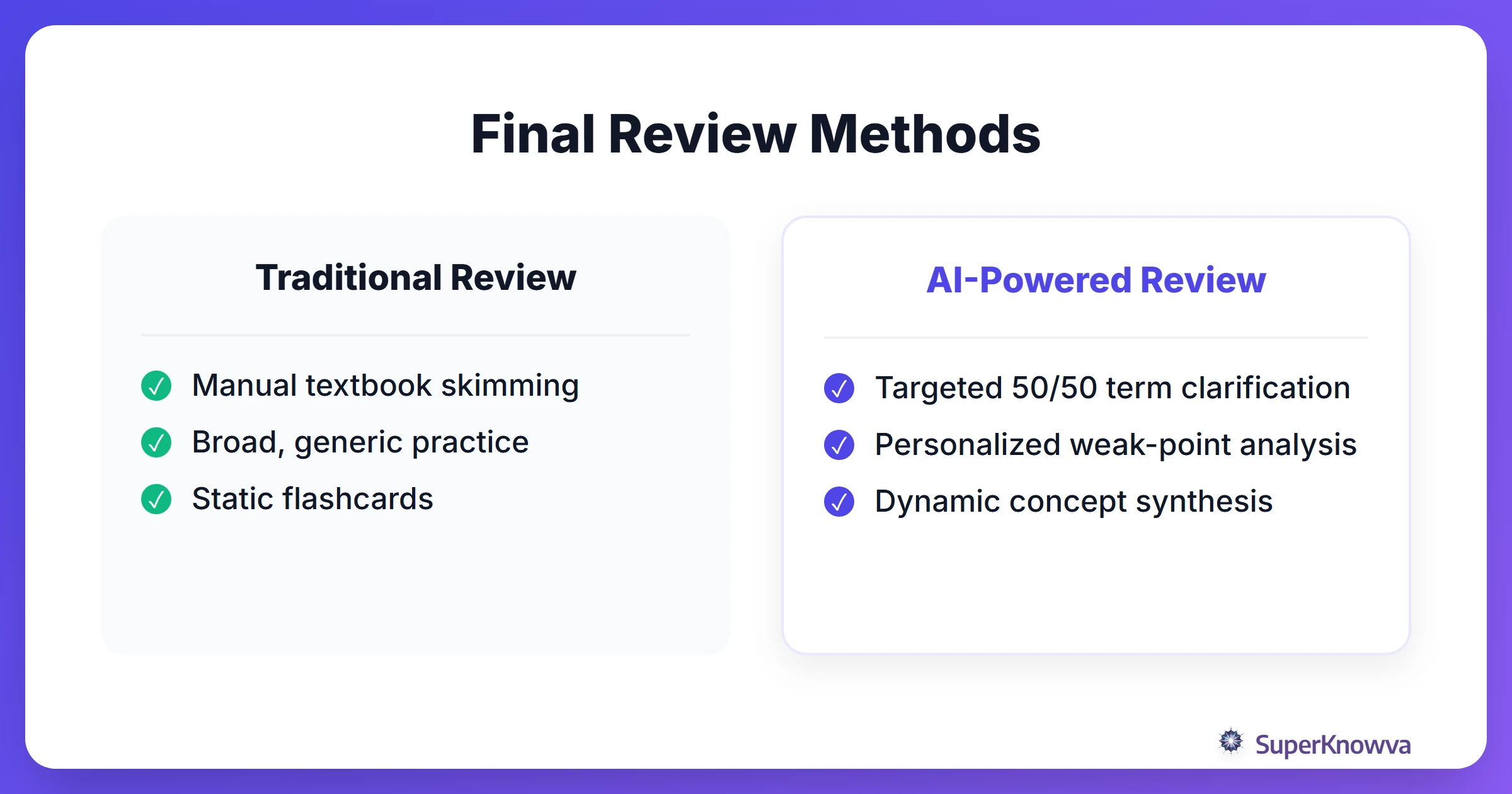
Instead of flipping through a massive textbook to find one specific distinction, use SuperKnowva’s AI tools to run high-speed drills on your "confused" terms. For example, in Psych/Soc, can you clearly explain the nuance between collective behavior and group behavior? If not, ask the AI to build you a comparison table or a targeted drill on mastering MCAT ethics and reasoning with AI.
Focus your last-minute AI queries on:
- High-yield differentials: Clarify the tiny differences between similar hormones or metabolic pathways.
- Personalized Weak Areas: Don't read a generic review sheet. Have the AI summarize your own missed-question logs.
- Reasoning Drills: Keep your brain tuned for improving reading comprehension for CARS by simulating CARS-style logic puzzles.
The Night Before: Priming Your "Brain-Body" Connection
Think of the MCAT as a 7.5-hour mental marathon. You wouldn't run 26 miles without sleeping or eating right, so why treat your brain any differently?
- Fix Your Internal Clock: June exams start early. If you have been a "night owl" throughout your prep, you need to shift your schedule at least a week out. Aim to be in bed by 9:00 PM the night before.
- Fuel Your Brain: Meal prep is a core part of the mcat test day success checklist. Go for low-glycemic foods like oats, nuts, and lean proteins. You want sustained energy, not a massive "glucose crash" right in the middle of the Bio/Biochem section.
- The Launchpad Method: Lay out everything the night before. Your clothes (think layers!), your ID, your keys, and your lunch. Eliminating morning decisions saves your mental energy for the questions that actually matter.
- Cortisol Control: Try mental visualization. Imagine yourself sitting at the computer, feeling calm, and methodically working through a difficult passage. This helps dampen your physiological stress response.
Test Center Mastery: Surviving the "Security Theater"
The testing environment can be a bit intense if you aren't expecting it. Between the palm scans and the silent rooms, it can feel a little clinical.
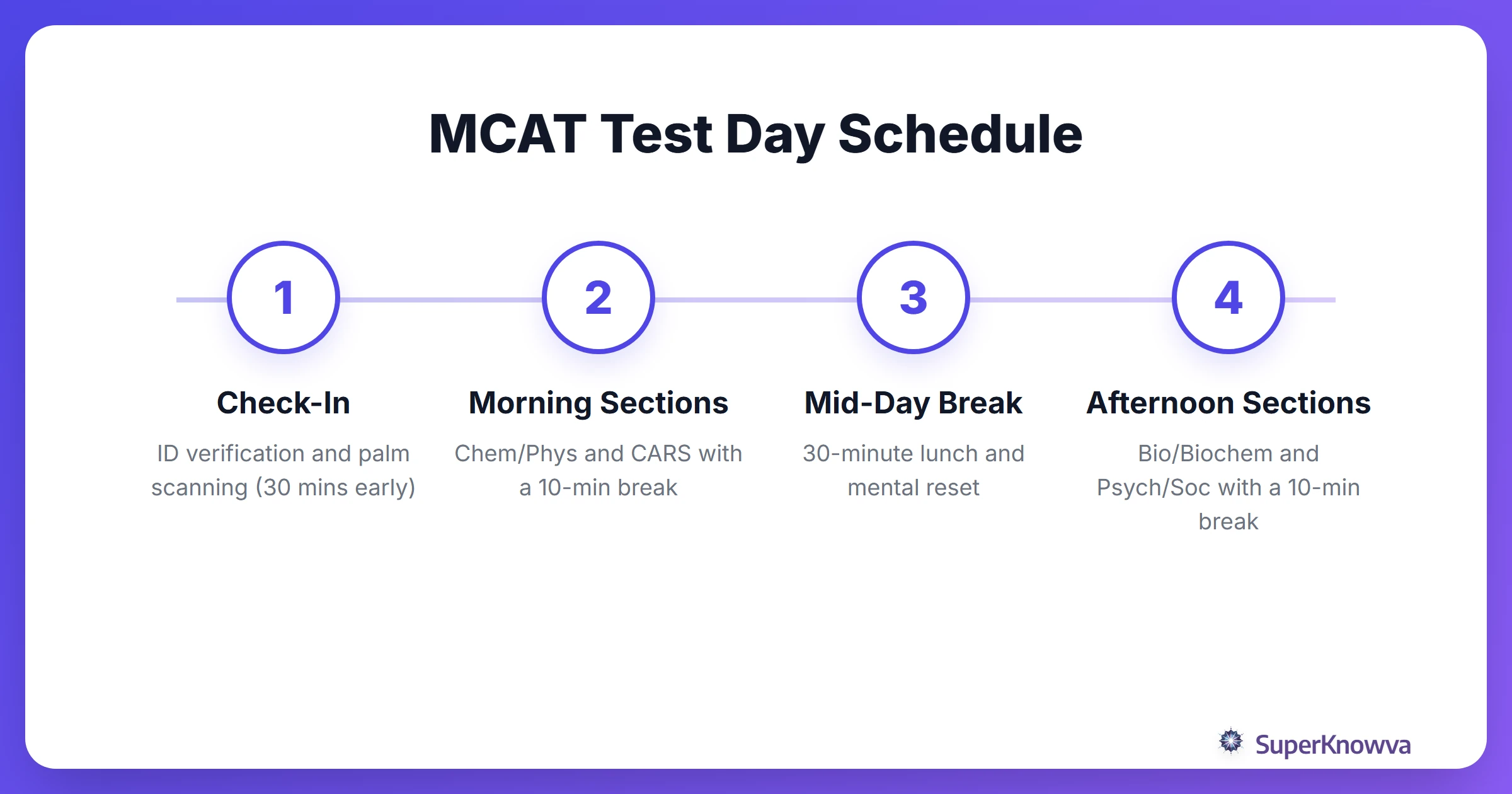
- The 30-Minute Rule: Arrive at least 30 minutes early. You’ll need every second of that for the check-in process, which includes a digital signature and a palm vein scan.
- The "Brain Dump" Strategy: You’ll be given a fine-point marker and a laminated booklet. Use the first few minutes (during the tutorial) to "dump" high-stress formulas or mnemonics onto the board. This way, you don't have to worry about forgetting them when the clock starts ticking.
- Control Your Environment: Testing centers are either freezing or surprisingly stuffy. Wear a sweater without a hood (hoods are often restricted or inspected). If the sound of other students typing drives you crazy, use the provided noise-canceling headphones.
Managing Test-Day Anxiety with AI Strategies
Let’s be honest: MCAT stress management is often what separates a 510 from a 515. When you hit a dense CARS passage and feel a "panic spiral" starting, you need a reset button.
During your 10-minute breaks, get away from your locker. Use the grounding exercises you’ve practiced. Many students find success by applying AI-driven stress management techniques originally developed for high-stakes professional exams like the Bar.
The confidence you built through AI-personalized feedback is real. If a section feels impossible, it’s likely impossible for everyone else in the room, too. Stay focused on the single question in front of you. As noted in Theo Bennett's 528 Score Strategy, a "neutral mindset" is the key to surviving the marathon.
The Final Checklist: What’s in Your Bag?
Before you walk out the door, do one last sweep. Your MCAT packing list should be lean and mean.
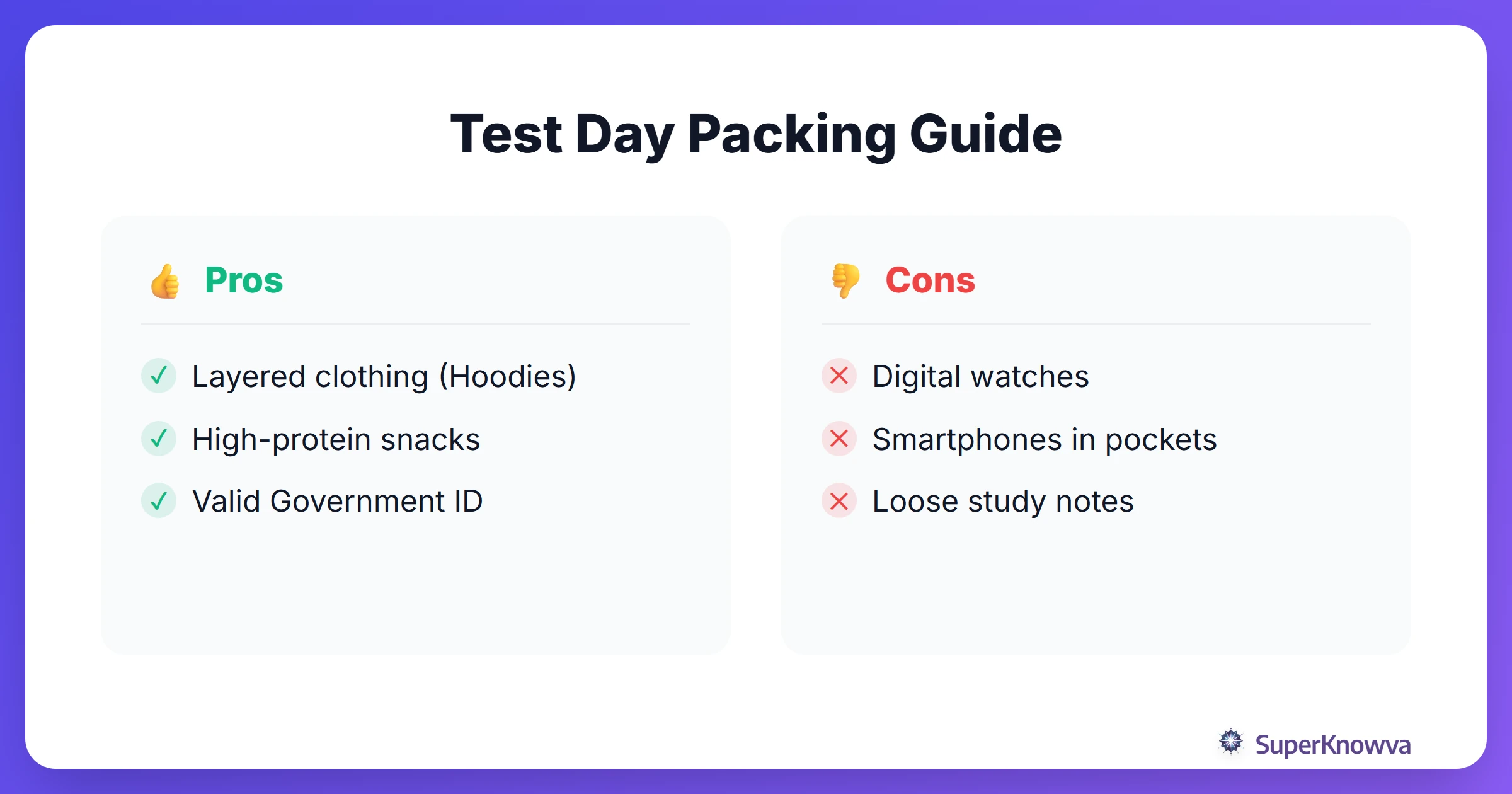
The Must-Haves:
- Valid ID: Seriously, check for it one more time.
- A Real Lunch: Think complex carbs and protein. No "sugar high" snacks.
- Water and Caffeine: If you’re a coffee drinker, have a plan for your caffeine intake so you don't crash by the Psych/Soc section.
The Forbidden List:
- Digital Devices: Phones and smartwatches must be powered off and sealed in a bag in your locker.
- Study Materials: You cannot look at notes or books during your breaks. Don't even risk it.
The Post-Test Plan: Once you hit "Submit," your job is done. Resist the urge to go home and Google the answers to questions you remember. It won't change your score; it will only fuel your anxiety. Instead, go celebrate. You just finished one of the hardest exams on the planet.
By following this mcat test day success checklist and leaning on your AI-driven review, you’ve done the work. Now, go show them what you’ve got. Good luck!